
Biography
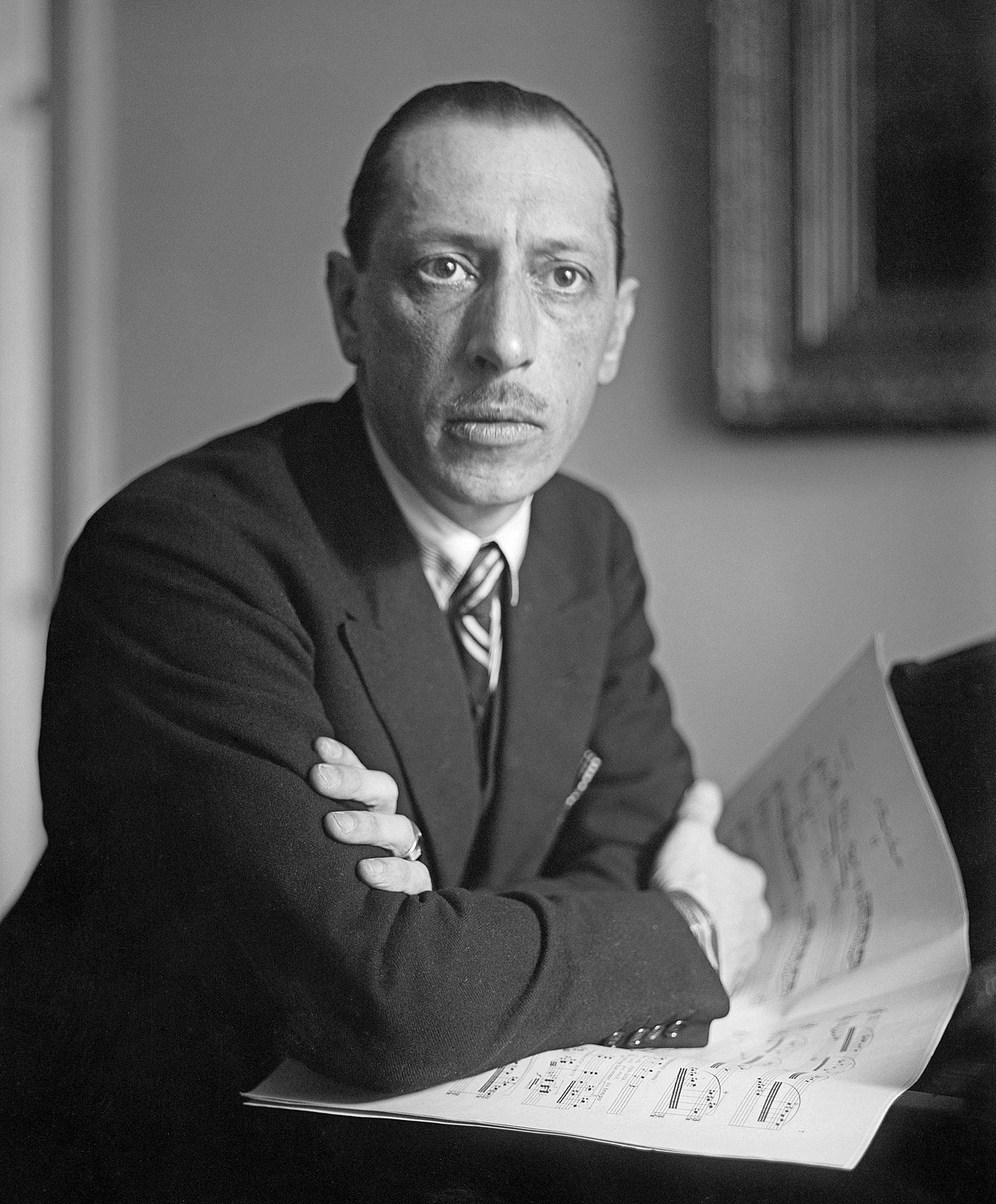
WikipediaIvan Alexandrovich Wyschnegradsky (US: vish-ne-GROD-skee; Russian: Ива́н Алекса́ндрович Вышнегра́дский May 14 [O.S. 2 May] 1893 – September 29, 1979), was a Russian composer primarily known for his microtonal compositions. For most of his life, from 1920 onwards, Wyschnegradsky lived in Paris. Life
Ivan Wyschnegradsky was born in Saint Petersburg on May 4, 1893. His father, Alexander, was a banker, and his mother, Sophie, wrote poems. His grandfather Ivan was a celebrated mathematician who served as the Minister for Finance from 1888 to 1892. After his baccalaureate, Wyschnegradsky entered the School of Mathematics. He studied harmony, composition, and orchestration with Nicolas Sokolov at the Saint Petersburg Conservatory. In 1912, he entered the School of Law. In November 1916, Wyschnegradsky had a spiritual vision. It inspired the composition of La Journée de l’Existence for narrator with orchestra and chorus. He worked on it for several decades, and it would not be performed until 1978. Most of his later work germinated from this singular experience. He completed his law studies the day before the revolution in 1917. His father died that November.
Wyschnegradsky moved to Paris in 1920. Three years later, he married Hélène Benois, the daughter of Alexandre Benois. It was her second marriage. Their son Dimitri was born in 1924. He grew up to become an influential blues historian using the pen name Jacques Demêtre. Wyschnegradsky and Benois divorced in 1926. His second wife was Lucile Markov (Gayden).
In 1942, Wyschnegradsky was arrested by the Germans and transferred to Royallieu-Compiègne internment camp, where he remained for two months. As an American, Lucile was interned at Vittel. After the war, he contracted tuberculosis and lived at the sanatorium of St. Martin-du-Tertre from 1947–50.
Lucile died in 1970. Wyschnegradsky's senescence in his Paris apartment is often described as impoverished and austere.
Works & Events
No recorded events found.
Gallery(3)




Are you a musician? Join Cadenza for free