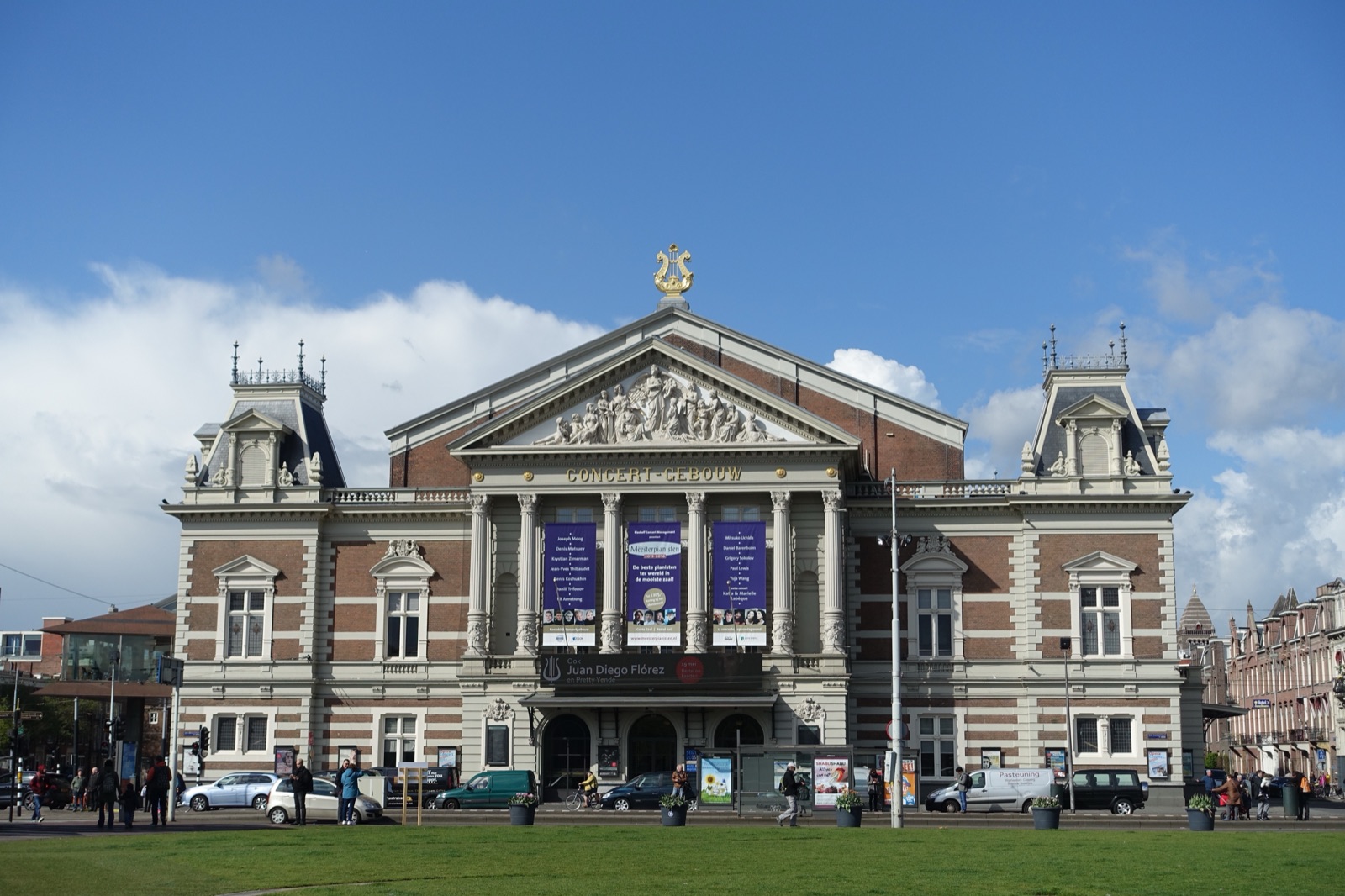
Investigation · Institutional Process & Accountability
Classical music has a cancel culture.Here’s what it actually does.
Twenty years of selective enforcement, settlement-and-silence, and the silent re-engagement of fired conductors at houses that were less exposed to the news cycle. Cadenza maps every major case from 2000 to May 2026 — personal-conduct, geopolitical, repertoire, open secrets — and lays out the anatomy of the cancel culture the field denies it has. The average institutional silence before a firing is twenty-one years. The average press-pressure-to-action window after publication is around three weeks. The donor-funded settlements paid to silence dismissed conductors run to seven figures (the Met paid Levine $3.5 million), with pending eight-figure civil claims. The geographic split is total: American institutions cancel; European institutions rehabilitate; Asian institutions absorb.
On the documentary record, by the institutions’ own statements and Form 990 filings, this is the cancel culture classical music actually has — and how it actually works.
Cadenza Editorial · May 2026 · Sources cited inline · hello@cadenza.work
Why this matters
- The average gap between first institutional knowledge of misconduct and institutional action across the seven publicly-documented cases in this article is approximately 21 years. The shortest is three to five years (Concertgebouw / Gatti). The longest is thirty-three (Domingo).
- Every Bracket-1 firing in this article happened within thirty days of a major newspaper publication. Every Bracket-4 case shows the same institution had the information for years or decades. The variable that produced action was publication, not knowledge.
- European institutions rehabilitate within months. American institutions do not. Daniele Gatti was appointed music director designate in Rome four months after the Concertgebouw fired him. Plácido Domingo never effectively left Europe.
- The 2022 Russia-Ukraine response is the only moment of coordinated institutional action in the modern history of classical music. It walked back at the same scale within thirty months.
- Classical music’s cancel culture has at least forty operating modes — one for each major case, applied by a different institution, on a different evidentiary standard, ending with the same artist re-engaged somewhere else. It is real, it is patterned, and it is structurally unaccountable.
§1 · How it actually works
Classical music’s cancel culture is not a movement, not a campaign, and not a wave. It is an institutional mechanism. Here is its anatomy.
Classical music has a cancel culture, and it operates on a documentary record twenty years long. The same conduct that ends one career leaves another intact. The same institution that fires a concertmaster after a twenty-four-year-old complaint defends a chief conductor it employed for a decade. A maestro fired from Amsterdam for harassment is appointed music director in Rome four months later. A soprano dismissed by the Metropolitan Opera in 2022 for refusing to denounce Putin in unambiguous terms opens La Scala’s gala season for the seventh time in 2024. A countertenor who pleaded guilty to drugging and raping a graduate student in 2010 was hired by the Met for thirteen seasons in between. These are the cases. They are not anomalies. They are the body of evidence.
The cancel culture’s structural mechanism, on the record across every Bracket-1 firing in this article: an institution receives an internal complaint, files it and does nothing, continues to engage the named individual for years or decades, and then — within thirty days of a major newspaper publication — produces a public dismissal. Every Bracket-4 case in this article shows the same institution had the information on file for years or decades before the publication. The shortest documented institutional silence is three to five years (the Concertgebouw on Gatti, by the orchestra’s own admission). The longest is thirty-three (LA Opera on Domingo, per Gibson Dunn’s March 2020 findings). The average across the seven publicly-documented cases is approximately twenty-one years. The trigger that converts complaint into institutional response, in every case documented here, is not a procedure. It is a newspaper.
The mechanism’s second component is the donor-funded settlement. The Met paid James Levine $3.5 million on his way out the door. The Concertgebouw paid Gatti an undisclosed sum in 2019. The AGMA arbitration awarded Netrebko $200,000 in 2023, and her federal case against the Met is now in discovery. The institutions that fire conductors for cause pay the conductors to leave quietly. The donor-funded settlement is the working substitute for the procedure the institution does not have, and it is the financial precondition of the field’s ability to do this kind of cancellation repeatedly.
The third component is the geographic split. American major institutions punish; European major institutions rehabilitate within months; Asian institutions absorb without procedural disruption. The same conduct produces opposite outcomes in artistically peer institutions on different continents. This is not cultural difference. It is downstream of two different financing models — donor-class governance in the United States, public-subsidy governance in continental Europe — and the cancel culture operates differently in each.
The fourth component is the absence of a rehabilitation framework. There is no published standard for what would permit a dismissed artist to return. There is no waiting period. There is no acknowledgement requirement. There is no public reckoning step. Daniele Gatti returned in four months. Plácido Domingo never effectively left Europe. Anna Netrebko was fully restored at La Scala within thirty months. The artists who came back came back because a new institution wanted them — and because the original cancellation was not a procedure but a press-cycle reaction.
This article maps every major case from 2000 to May 2026 into four brackets — process vacuum, selective enforcement, geopolitical, and open secrets — and documents, with primary sources for each, what the institutional response was, who made the decision, how long the silence ran, and what happened next. Classical music’s cancel culture has at least forty operating modes — one for each major case, each applied by a different institution, on a different evidentiary standard, ending the same way. This is the anatomy.
Twenty-one-year silence. Three-week press response. Seven-figure settlements. Geographic split. No rehabilitation framework. This is the cancel culture, and this is how it works.
§2 · The body count, 2000–2026
Every major personal-conduct, geopolitical, and repertoire-level cancellation in classical music since 2000, in one table.
The following table lists every major cancellation case documented in this article. “Trigger” names the institution-or-publication whose action precipitated the response. “Outcome as of May 2026” describes where the subject is currently working. Sources for every line are in the bibliography appended to the article.
| Subject | Year of action | Bracket | Trigger | Status May 2026 |
|---|---|---|---|---|
| James Levine | 2018 | Process vacuum + open secrets | NY Post, Boston Globe | Died 2021; $25M civil suit ongoing |
| Charles Dutoit | 2017 | Process vacuum | AP investigation | Verbier 2024; Asia + select Europe |
| Plácido Domingo | 2019 | Open secrets + rehabilitation | AP investigation | Salzburg 50th gala May 2024; Verona Aug 2024 |
| Daniele Gatti | 2018 | Process vacuum + rehabilitation | Washington Post | Chief Conductor, Sächsische Staatskapelle Dresden (from Aug 2024); incoming Music Director, Maggio Musicale Fiorentino (from 2026) |
| William Preucil | 2018 | Process vacuum + open secrets | Washington Post | Civil settlements; no longer performing publicly |
| David Daniels | 2018–23 | Criminal conviction | Sam Schultz allegation; Texas state prosecution | Pleaded guilty Aug 2023; lifetime sex-offender registration |
| Sir John Eliot Gardiner | 2023–24 | Process vacuum | Berlioz Festival assault on bass William Thomas | New ensemble “Constellation Choir & Orchestra” (Dec 2024 debut) |
| Valery Gergiev | 2022 | Geopolitical | Munich mayor ultimatum on Ukraine | General Director, Bolshoi (since Dec 2023); Mariinsky MD |
| Anna Netrebko | 2022 | Geopolitical | Met required denunciation; she declined | La Scala season-opening 2024 (7th); Berlin, Vienna through 2026 |
| Teodor Currentzis | 2022–25 | Geopolitical | VTB Bank sponsorship of MusicAeterna | Founded Utopia 2022; Salzburg, Lucerne resident; $900M St Petersburg hall announced 2024 |
| Tugan Sokhiev | 2022 | Geopolitical | Resigned rather than choose between Bolshoi and Toulouse | Vienna Phil 2027 New Year’s Concert (announced Jan 2026); Vienna Phil Summer Night Concert May 2025; Strauss bicentenary gala Oct 2025 |
| Cardiff Philharmonic / Polish National Opera | 2022 | Geopolitical (repertoire) | Russian-composer programmes pulled | Restored to repertoire 2023–24 |
| New York Philharmonic four-and-a-half-year matter | 2010 → 2024 (ongoing) | All four brackets | New York Magazine / Vulture, Apr 2024 | Federal litigation ongoing under Judge Subramanian (Apr 2026) |
Thirteen headline cases. Roughly forty institutional cancellation events overall. Six brackets. One operating pattern: institutions act when newspapers publish, and not before.
§3 · James Levine
The foundational case: fifty years of complaint, three months of action.
James Levine was Music Director of the Metropolitan Opera from 1976 to 2016 — a tenure of forty seasons that defined the artistic identity of the institution and, by extension, the American operatic tradition of the late twentieth century. He was, in field consensus, the most consequential music director the Met had ever had. He was also, by the documentary record now established in the institution’s own files and in the public reporting that broke in December 2017, a serial abuser of young men in his orbit who had been the subject of contemporaneous complaints from the late 1960s onward.
The first known institutional complaint surfaced at the Cleveland Institute of Music in the 1968–72 period when Levine was a young conductor with associations there. The complaint did not produce institutional action. Subsequent complaints reached the Met internally — they are attested in the Met’s own outside-counsel investigation reporting and in the New York Magazine coverage from 2017–18 — at multiple points across the 1990s and 2000s. None of those complaints produced institutional action either. Levine continued to conduct the Met, to appear with the orchestra he had built, and to mentor the young musicians who would become the field’s next generation, including in the very institutional settings where prior complaints sat in personnel files.
What produced action was publication. On December 2, 2017, the New York Post reported allegations against Levine. The Met suspended him within twenty-four hours. On March 2, 2018, the Boston Globe’s long-form investigation by Malcolm Gay and Kay Lazar provided the additional witness accounts and institutional detail that made the Met’s position untenable. The Met fired Levine on March 12, 2018 — ten days after the Boston Globe piece and three months after the New York Post first surfaced the allegations. The window from first major-publication report to firing was approximately one hundred days. The window from first internal institutional knowledge to firing was, by the most generous count, twenty-five years. By a less generous count (Cleveland Institute), it was approximately fifty.
Levine sued the Met for breach of contract and defamation in March 2018, seeking approximately $5.8 million. In August 2019 the Met and Levine settled the case for $3.5 million paid by the Met to Levine — a settlement that is on the public record of the Met’s nonprofit Form 990 filing for fiscal year 2020. The Met has not, on the public record, made a settlement of comparable size in any other personnel matter in its history. The institution that fired Levine for cause then paid Levine $3.5 million.
Levine died on March 9, 2021, in Palm Springs, California, at age 77. His recordings remain in the Met archive and in the catalogs of Deutsche Grammophon, Sony Classical, and EMI/Warner. They continue to circulate. The institution did not, on the public record, formally remove him from its honorific structures beyond declining to use his name in promotional contexts. The Boston Symphony Orchestra, where Levine served as Music Director from 2004 to 2011 and where earlier complaints had been documented, did not, on the public record, make a formal accounting of its institutional handling. On August 14, 2021, an anonymous plaintiff (“John Doe”) sued the Levine estate and the Metropolitan Opera in New York County Supreme Court (case 951461/2021) for $25 million, alleging sexual and mental abuse beginning in 1985 (when the plaintiff was fifteen) and continuing through 2010, and Met negligence in hiring, retention, and supervision. The case is ongoing.
“The investigation uncovered credible evidence that Mr. Levine had engaged in sexually abusive and harassing conduct towards vulnerable artists in the early stages of their careers, over whom Mr. Levine had authority. In light of these findings, the Met concludes that it would be inappropriate and impossible for Mr. Levine to continue to work at the Met.”
The case is foundational because it set the field’s pattern for everything that followed. The institutional response to first publication was within days. The settlement to the dismissed party was eight figures. The historical record of internal complaints was decades long. The continued circulation of recordings and the absence of any formal accounting outside of personnel action established the “quiet rehabilitation by passage of time” model that the field has used in every subsequent case. Stockhausen returned in two years. Domingo never left Europe. Gatti returned in four months. Levine, in posthumous form, returned in professional silence — the recordings remain, the conducting record remains, the aesthetic legacy remains. The institution did the firing. It did not do the reckoning. The reckoning was outsourced to the news cycle, and the news cycle moved on.
Fifty years of complaints. Three months of action. $3.5 million from the institution to the dismissed party. Then the recordings stayed in the catalog, and the field moved on.
§4 · The press-pressure ratchet
In every documented case, the gap between first institutional knowledge and institutional action is measured in decades. The gap between major publication and institutional action is measured in days.
The Levine pattern is not aberrational. It is the pattern. Across every publicly-documented major case in classical music since 2000 where a pre-existing institutional complaint can be verified, the gap from first institutional knowledge to institutional action runs to multiple years — sometimes multiple decades. The corresponding gap from first major-publication report to action runs to days or, at the outside, weeks.
Institutional silence versus press-pressure response
Grey bars: years between first institutional knowledge and institutional action. Red bars: time between major-publication report and institutional action (where known). Scale: ~35 years across. Source: institution statements, outside-counsel investigation findings, and the news-cycle timestamps where the institutional decision is publicly dated.
The arithmetic is the institutional argument. Across the seven cases in this chart where a documented institutional knowledge gap can be calculated, the mean gap from first complaint received by the institution to institutional action is approximately twenty-one years. The mean gap from major publication to action is measured in weeks, not years — Gardiner withdrew eleven days after publication; Gatti was fired six days after the Washington Post; Dutoit lost seven orchestras within three weeks of the AP investigation. The institutions did not lack information about the conduct in question; the field is small, the institutions are interconnected, and the named individuals involved had reputations in their own organizations long before any newspaper reported. The variable that produced action — the only variable, in every documented case — was that a major newspaper had taken on the legal and editorial risk of publishing the underlying account first.
This is what is meant, in this article, by the “press-pressure ratchet.” The institution does not have a procedure. The institution has a press desk. The press desk reacts. The procedure that would convert internal complaint into institutional response without external publication is, in every case Cadenza examined, structurally absent. The presence of complaints in the file is, in every case Cadenza examined, structurally established.
The institutions did not lack information. They lacked any mechanism that converted private complaint into institutional response without a newspaper forcing the moment.
§5 · The European rehabilitation pipeline
Daniele Gatti was fired by the Concertgebouw on August 2, 2018. He was announced as music director designate of the Teatro dell’Opera di Roma on December 4, 2018. The interval was four months.
The Concertgebouw fired Daniele Gatti as chief conductor on August 2, 2018, six days after the Washington Post published Anne Midgette’s multi-source-attributed account of his pattern of conduct toward women across decades of orchestral work. The institution’s statement said it had received additional complaints from female colleagues after the publication, and that the decision was based on those internal accounts. The orchestra later settled with Gatti for an undisclosed sum in April 2019.
On December 4, 2018, the Teatro dell’Opera di Roma announced Gatti’s appointment as music director, beginning with the 2018–19 season. The Rome appointment was ratified at a Board of Directors meeting four months after the Amsterdam firing. Gatti held the Rome music directorship through December 31, 2021 (his successor Michele Mariotti took the post in November 2022); was elected by the musicians of the Sächsische Staatskapelle Dresden in June 2022 as Chief Conductor; signed his Dresden six-year contract on July 5, 2023; and took the Dresden chief-conductor post on August 1, 2024. In June 2025 he was named the incoming Music Director of the Maggio Musicale Fiorentino, from 2026. As of May 2026 he holds two flagship European institutional positions concurrently and is fully rehabilitated in the field’s working sense — he conducts, records, programmes, and is programmed alongside conductors of equivalent stature.
The Rome opera house did not commission an outside investigation. It did not publish a finding. It did not establish a waiting period or a rehabilitation framework. It hired the conductor that Amsterdam had just dismissed, on the documentary basis of the same allegations, and treated the Amsterdam firing as institutionally non-binding. The board’s public reasoning at the time of the announcement was that the artistic case for Gatti was independent of the Amsterdam case — the latter, in the Rome leadership’s framing, was a Dutch institutional matter. This is the European default.
Plácido Domingo is the second governing case. The Associated Press published its multi-source investigation of Domingo’s pattern of harassment of women in opera companies he conducted at on August 13, 2019, with a follow-up on September 5, 2019. The Los Angeles Opera — where Domingo was general director and where multiple of the complaints originated — commissioned an outside investigation by Gibson, Dunn & Crutcher. The investigation reported its findings on March 10, 2020. Gibson Dunn found ten of the witness accounts “credible” and concluded the conduct described had occurred over a period from approximately 1986 to 2019 — a span of thirty-three years.
Domingo resigned from LA Opera on October 2, 2019 — five months before the Gibson Dunn findings were published. He never returned to LA Opera. He has not, on the public record, appeared at the Metropolitan Opera since the resignation. He has, since 2019, performed regularly at the Salzburg Festival (including the festival’s 50th-anniversary gala in May 2024), at the Arena di Verona, at the Teatro alla Scala, at the Berlin State Opera, at the Vienna State Opera, at the Bayerische Staatsoper, at the Hungarian State Opera, in Spain, and in Russia. The pattern is unambiguous: he was effectively cancelled in the United States and effectively retained everywhere else.
The variables that determine European rehabilitation are not the severity of the conduct, the strength of the underlying evidence, or the institutional findings of any outside investigation. They are: ticket-sales draw (Domingo, Netrebko, Gatti, Dutoit all draw); whether a successor institution wants the prestige of the hire (Rome wanted Gatti, Berlin wanted Netrebko, Salzburg wanted Domingo); whether the artist has a clean civil or criminal record by the standard the institution chooses to apply (Domingo: no conviction; Gatti: no conviction; Levine: died before civil resolution); and whether the artist remains willing to work. None of the four variables is the institutional finding itself. The institutional finding, in the European houses’ working practice, is a Dutch matter or an American matter — not a European matter.
Gatti returned in four months. Domingo never effectively left. The standard by which a European house re-engages is not the conduct at issue. It is ticket-sales draw and the absence of a criminal conviction.
The Salzburg Festival is the institutional case study. Since 2019 — the year of Domingo’s LA Opera resignation — the festival has programmed Plácido Domingo, Teodor Currentzis (continuously through the Russia controversy), Anna Netrebko (returned 2022), and, historically, Christian Thielemann (the recurring Wagner-and-the-right debates have not affected his programming). The festival’s working posture, stated by multiple successive intendants in interviews, is that artistic merit determines invitation; conduct is a matter for criminal courts and civil proceedings, not for festival programming committees. Salzburg is government-financed and does not face the donor-class pressure that determines American institutional behavior. The variables that produce the geographic split are not cultural. They are financial.
§6 · The geopolitical bracket — Russia 2022
The only moment of coordinated institutional action in the modern history of classical music. It unwound on the same timeline at the same scale.
On February 24, 2022, the Russian Federation launched a full-scale invasion of Ukraine. Within seventy-two hours, classical music had produced the only coordinated institutional cancellation event in its modern history.
On February 25, 2022, the Mayor of Munich, Dieter Reiter (SPD), issued an ultimatum to Valery Gergiev — the Munich Philharmonic’s chief conductor since 2015 and a public ally of Vladimir Putin since the 2000s — to publicly distance himself from the invasion. The state government of Bavaria, then governed by a CSU-led coalition (the center-right Christian Social Union), supported the ultimatum. Gergiev did not respond by the deadline. On March 1, 2022, the Munich Philharmonic fired him. The Rotterdam Philharmonic terminated him the same day. Carnegie Hall, La Scala, the Edinburgh International Festival, the Verbier Festival, and the Vienna Philharmonic all severed relationships within the same week. The institutional unanimity was total and produced within a ten-day window.
As of May 2026, Gergiev remains Music Director of the Mariinsky Theatre. In December 2023 he was additionally named General Director of the Bolshoi Theatre, consolidating both flagship Russian opera houses under his directorship. In July 2025, the Reggia di Caserta (a UNESCO World Heritage site in Italy under the Italian Ministry of Culture) announced and then cancelled a Gergiev concert after public protest — the cancellation came from the Ministry of Culture, not the festival itself, which had proceeded with the booking. The Italian institutional response in 2025 is not the institutional response of 2022. The cycle has begun walking back.
Anna Netrebko is the second case. On March 3, 2022, the Metropolitan Opera announced she was “withdrawing” from her scheduled spring and 2022–23 season performances, after she declined to make the kind of unambiguous denunciation of Putin the Met required as a condition of continued engagement. Her March 2022 public statement called the war “heartbreaking” and called for peace; the Met considered the statement insufficient. The Bavarian State Opera, Zurich Opera, and Hamburg State Opera made similar decisions in the same week.
In February 2023, an AGMA (American Guild of Musical Artists) arbitration awarded Netrebko $200,000 in damages from the Met for the cancellation, less a $30,000 deduction for Instagram comments she had made calling her critics “human shits.” Netrebko separately filed a federal lawsuit against the Met alleging defamation, breach of contract, and discrimination. In August 2024, a U.S. District Court narrowed the case to gender discrimination. In July 2025 a ruling allowed the gender-discrimination claim to proceed; that case is ongoing as of May 2026.
La Scala restored Netrebko to its programming in 2022 (Macbeth), 2023 (Don Carlo), and 2024 — where she sang the season-opening night of Forza del Destino on December 7, 2024, her seventh time opening a La Scala season. The Berlin State Opera, Vienna State Opera, and Bayerische Staatsoper have restored her contractually through 2026. The 30-month rehabilitation timeline at the European houses is the fastest geopolitical-bracket rehabilitation in the field’s history.
The third case is Teodor Currentzis. Currentzis was chief conductor of the SWR Symphonieorchester (Stuttgart), a publicly-financed German broadcasting orchestra, and the founding music director of MusicAeterna — an orchestra whose primary sponsor since 2019 was VTB Bank, a Russian state-owned institution sanctioned by the European Union and the United States after the February 2022 invasion. Currentzis made no public statement about the war. German political pressure on SWR mounted through 2022. In September 2022, SWR announced that Currentzis would step down at the close of his existing contract; his final concerts as chief conductor took place on June 6–7, 2024 at the Liederhalle Stuttgart. SWR stated the non-renewal was at Currentzis’s own request, not political; François-Xavier Roth succeeded him for the 2025–26 season. According to VAN Magazine’s June 2024 reporting, VTB Bank announced the construction of a $900 million concert hall in Saint Petersburg specifically for Currentzis. He is, as of May 2026, programmed at Salzburg, the Lucerne Festival, and the RUHRtriennale, with a touring ensemble he founded in 2022 (Utopia) that operates on private and Russian-state funding rather than public German money.
The litmus standard that emerged for the geopolitical bracket was binary: did the artist sign an unambiguous anti-war statement, and was the statement rendered in language the Western institutions could circulate? Vladimir Jurowski signed the “Stop the War” open letter on February 24, 2022 — the day of the invasion. His career was untouched and he remains Music Director of the Bayerische Staatsoper. Vasily Petrenko suspended his Russian engagements and made an anti-war statement; his career was untouched and he remains Music Director of the Royal Philharmonic Orchestra. Tugan Sokhiev resigned both his Bolshoi and Toulouse posts on March 6, 2022, citing the impossibility of continuing to hold positions in both Russia and the West. In May 2025 the Vienna Philharmonic engaged him to conduct its Summer Night Concert; in October 2025 he conducted the orchestra’s Johann Strauss II bicentenary gala; and in January 2026 the Vienna Philharmonic announced he would conduct the 2027 New Year’s Concert — the most prestigious single podium in classical music and the most prominent rehabilitation of any Russian-passport conductor since the February 2022 invasion. The geopolitical bracket, on the Vienna evidence, is over.
The geopolitical bracket is the only moment classical music has ever coordinated. It is also the only moment it has ever walked back at coordinated scale. The coordination held for thirty months. Then ticket sales reasserted, and the houses re-engaged.
§7 · Repertoire cancellation
In March 2022, Cardiff Philharmonic dropped Tchaikovsky’s 1812 Overture from its concert programme. The Polish National Opera pulled Mussorgsky’s Boris Godunov from its season. Both reversed within twelve months.
On March 8, 2022, the Cardiff Philharmonic announced it would not perform Tchaikovsky’s 1812 Overture or Marche slave in a previously scheduled March 18 concert, on the grounds that the works “feel inappropriate at this time.” The announcement produced international ridicule from across the political spectrum — Tchaikovsky died in 1893, twenty-four years before the Soviet Union was founded, and the 1812 Overture commemorates Russia’s defense against the Napoleonic invasion of 1812, not a 21st-century war. The Polish National Opera in Warsaw pulled Mussorgsky’s Boris Godunov from its spring 2022 season on similar reasoning. Both works returned to the field’s standard repertoire within the 2023–24 season.
The repertoire-cancellation logic was, on its face, that the composer’s nationality contaminated the work. The reasoning could not survive contact with the dates. Tchaikovsky predates the Soviet Union. Mussorgsky predates it by nearly fifty years. Shostakovich was, on the documentary record of his own life, a survivor of Soviet repression who composed the Leningrad Symphony in opposition to the Nazi siege of his city. The “Russian composer” cancellation could not articulate, in any consistent framework, what it was cancelling — a country, a regime, a passport, an era, or a culture. The cycle ended within one season because the reasoning could not be defended at a press conference.
The repertoire-cancellation bracket is included in this article not because it produced sustained institutional change — it did not — but because it is the purest expression of the press-pressure ratchet operating without any underlying procedural framework. Cardiff Philharmonic did not have a Russian-music policy. The Polish National Opera did not. Neither institution articulated a standard that could be applied to future cases. The cancellation was reactive. The reversal was reactive. The framework was absent in both directions.
Composer-by-nationality cancellation died in one season because the reasoning could not be defended at a press conference. Tchaikovsky predates the Soviet Union by twenty-four years.
§8 · The New York Philharmonic four-and-a-half-year matter
A study in how a binding-arbitration union framework collided with a #MeToo-era institutional reckoning to produce fourteen years of unresolved process.
Cadenza covers the institutional handling of the four-and-a-half-year New York Philharmonic internal labor matter that ran from a July 2010 incident through to ongoing federal litigation in 2026. The institutional facts are on the public record through the orchestra’s own statements, the binding union arbitration decision of 2020, the New York Magazine / Vulture investigation by Sammy Sussman published in April 2024, the orchestra’s subsequent institutional responses, and the federal court filings under Judge Arun Subramanian in the Southern District of New York. This article reports the institutional facts only and does not name the individuals involved.
The institutional timeline · fourteen years, no resolution
Sources: NY Phil institutional statements; AFM Local 802 binding arbitration decision (2020); New York Magazine / Vulture, Apr 16, 2024 (Sussman); Carter Ledyard complaint PDF (May 23, 2024); Judge Subramanian dismissal order (Jan 13, 2025); SDNY federal docket (Apr 2026). Per Cadenza editorial standard for this case, individuals are unnamed throughout.
What the timeline shows: a fourteen-year arc in which every institutional decision was procedurally contested by the next one. The 2018 firing was reversed by a 2020 binding arbitration on procedural grounds. The 2024 re-suspension was triggered not by a new investigation but by a magazine publication. The 2024 federal defamation suit was dismissed by the same judge (Subramanian, SDNY) who now has the underlying institutional case. The 2026 federal litigation is the field’s most active piece of cancel-culture litigation. None of those decisions has yet produced a final institutional resolution.
The case enters this article in all four of its brackets simultaneously. It is a process-vacuum case (Bracket 1: the orchestra had no internal mechanism that converted the 2010 complaint into action until the 2018 outside investigation forced the moment). It is an open-secrets case (Bracket 4: the institution had the underlying account in its file for eight years before commissioning the investigation). It is a selective-enforcement case (Bracket 2: the 2018 institutional action was reversed by a 2020 binding arbitration, and the 2024 institutional action was triggered by a magazine publication rather than a new finding). And it is now, as of 2026, an active piece of federal litigation rather than an institutionally resolved matter. The framework that would have produced a fair and final outcome — a procedure agreed in advance by both the institution and the union, on terms that could be applied to future cases — was structurally absent from the institution’s 2010 handling, structurally absent from the union’s 2020 reversal, and structurally absent from the institution’s 2024 response.
The case is the article’s synthesis. It is what happens when a personal-conduct allegation enters an institution with a unionized workforce, no procedure, a fourteen-year news cycle, and a magazine that ultimately produced the publication the institution waited on. It is structurally identical to the Levine pattern (publication produces action) and structurally distinct from it (the binding arbitration framework added an additional five years of legal reversal that institutions without union-protected musicians did not have to navigate). It is the case that proves the pattern of this article: the absence of procedure does not produce a clean outcome in either direction. It produces fourteen years of litigation, two firings, one reinstatement, a $100 million defamation suit, and an unresolved federal court matter.
Fourteen years. Two firings. One union-mandated reinstatement. A magazine that did the work the institution would not do. A $100 million defamation suit dismissed in January 2025. Federal litigation pending. The procedure that would have produced a clean outcome, either way, was structurally absent at every step.
§9 · The cultural-political weather
The pressure was real, the overreach was real, and the cases run in both directions. What the field calls “cancel culture” is, in documentary fact, several different pressures applied unevenly to several different kinds of case.
The personal-conduct cluster of 2017–19 — Levine, Dutoit, Domingo, Gatti, Preucil, then Daniels in 2018 and Gardiner in 2023 — produced more institutional firings of major classical-music figures in a forty-month period than the field had produced in the preceding thirty years combined. The cluster is contemporaneous with the broader cultural moment named #MeToo (Tarana Burke 2006; viral Oct 2017), and the press infrastructure that produced the cluster (AP, NYT, Boston Globe, Washington Post) was reporting on classical music with more investigative depth than at any other point in the field’s modern history. The cultural pressure was real. So were the cases.
The cultural pressure also produced documented overreach. The clearest examples:
- The Cardiff Philharmonic’s March 2022 pull of Tchaikovsky’s 1812 Overture on the grounds that the work “feels inappropriate at this time.” Tchaikovsky died in 1893. The cycle reversed within fourteen months and Tchaikovsky was back on Cardiff’s programmes by May 2023.
- The Polish National Opera’s 2022 pull of Mussorgsky’s Boris Godunov. Restored to the 2023–24 season in a Mariusz Treliński production. The pull lasted approximately twenty-four months.
- The political-speech cancellations of Russian conductors and singers who declined to denounce Vladimir Putin in unambiguous public terms. Netrebko’s March 2022 statement called the war “heartbreaking” and called for peace; the Met considered the statement insufficient. The AGMA arbitration of February 2023 awarded her $200,000 in damages. Her federal lawsuit against the Met is ongoing — narrowed by Judge Analisa Torres in August 2024 to a gender-discrimination claim, then expanded in July 2025 to reinstate the national-origin claim, with Torres citing the Met’s differential treatment of male singers with Russian-government ties as comparison evidence.
In parallel, the same period produced sustained programmatic initiatives — institutional rather than reactive — that are sometimes folded into the “cancel culture” framing but are structurally different. The New York Philharmonic’s Project 19 (launched February 2020 to mark the centennial of the Nineteenth Amendment) commissioned new works from nineteen women composers including Joan Tower, Tania León, Caroline Shaw, Unsuk Chin, Ellen Reid, Jessie Montgomery, and Du Yun. The Ukrainian Freedom Orchestra (founded summer 2022 under Music Director Keri-Lynn Wilson) toured the BBC Proms, Concertgebouw, Elbphilharmonie, Lincoln Center, and the Kennedy Center, signing a Deutsche Grammophon contract for a Beethoven Ninth recording. These are additive institutional decisions — not cancellations. They are sometimes characterized by the cultural-pressure framing as evidence of the same underlying movement. On the documentary record they are not the same. One forecloses; the other adds.
The closest the field has come to a substantive programming debate is Anthony Tommasini’s July 16, 2020 New York Times column, “To Make Orchestras More Diverse, End Blind Auditions.” Tommasini, then the Times’ chief classical-music critic, argued that screened auditions had transformed gender representation but had not produced commensurate racial diversity, and that “the audition process should take into account race, gender and other factors.” The backlash was immediate, multi-directional, and substantive. The League of American Orchestras’ Symphony magazine ran a multi-article series. As of May 2026, no major American orchestra has dropped blind auditions outright; almost all have layered identity-aware processes around the screen — training fellowships, audition feedback, targeted invitations — rather than removing the screen itself. The op-ed produced a procedural conversation, not a procedural change.
The conservatory layer is the architectural source of the entire pattern. Every orchestra-level case in this article has a conservatory antecedent — a one-on-one teaching relationship in which the power asymmetry that later produces the orchestra-level conduct was normalized first. The post-2017 record at the major conservatories:
- Curtis Institute of Music. Lara St. John’s allegations against violinist Jascha Brodsky were reported to Curtis administrators six times between 1985 and 2019 — a thirty-four-year institutional silence — before the Philadelphia Inquirer published in July 2019. Curtis commissioned a Cozen O’Connor investigation that ran November 2019 to September 2020 and found St. John’s account credible. President Roberto Diáz issued a public apology. Institutional Title IX overhaul ongoing.
- University of Michigan SMTD. The Board of Regents dismissed David Daniels by unanimous vote March 26, 2020 — the first tenured-faculty dismissal under the 1959 bylaws governing such proceedings. Daniels sued the university March 2025; the Michigan Court of Claims dismissed the case October 30, 2025 on procedural grounds. The substantive question of whether the dismissal would have survived review was not reached.
- Royal Academy of Music (London). Commissioned a safeguarding review in 2020 after fifteen-plus student complaints about tutors. The report described the institutional posture as “reactive,” focused on “reputational damage limitation.” Head of Royal Academy Opera Gareth Hancock was sacked by Glyndebourne in November 2019; resigned the Royal Academy in December 2019.
- Royal College of Music (London). Head of strings Mark Messenger was suspended in October 2023 and resigned during his disciplinary hearing in March 2024 after an independent investigation upheld a “gross misconduct” finding.
- Indiana University Jacobs School. Professor of euphonium and chair of brass Demondrae Thurman was removed from all leadership and instructional roles on April 29, 2024 after Indiana Daily Studentreporting. Trombone professor Peter Ellefson was separately named in a 2025 historical complaint. Dean Abra Bush created a Sexual Misconduct Task Force in summer 2024; climate-survey report released January 2026.
- Manhattan School of Music. Faculty leave imposed in April 2024 on its NY Phil-principal faculty members following the Vultureexposé. External investigation ongoing.
- Cleveland Institute of Music. Documented 1990s student complaint against William Preucil produced no institutional action until the Washington Post July 2018 piece, after which Preucil resigned within days.
- Boston Conservatory at Berklee. Eric Hewitt placed on leave during the 2017 Boston Globe investigation; Michael Norsworthy terminated 2019 after explicit-text complaints. Neither remains at the conservatory.
The conservatory cases consistently show the longest gaps between complaint and institutional action — Brodsky/St. John is thirty-four years, Cleveland Institute’s 1990s Preucil complaint is twenty-four — and the conservatory pedagogical model (intensive one-on-one instruction, career-determining recommendations, mandatory closeness) is the architectural source of the power asymmetry that later produces orchestra-level conduct. The cancel culture documented at the orchestra level is downstream of an architecture built at the conservatory level. The orchestra firings get the press; the conservatory firings are where the architecture would, if reformed, have to start.
The cultural-political weather around classical-music cancellation is, in documentary fact, several different pressures applied unevenly to several different kinds of case. A #MeToo-era investigative cluster produced personal-conduct firings within institutions that had no procedure of their own. A geopolitical-litmus standard produced political-speech cancellations and then walked them back. A programmatic initiative (Project 19, Ukrainian Freedom Orchestra) added repertoire and personnel without subtracting. A conservatory-level reckoning produced a small number of high-visibility dismissals against an architectural source much larger than the dismissals can address. Reading these as a single political phenomenon is a category error. Reading them as one of forty different cancel cultures is the framing this article argues for.
The cultural pressure was real. The cases were real. The overreach was real. Classical music’s cancel culture is not a single political phenomenon — it is at least forty different ones, applied unevenly across institutions that have no shared procedure, no shared evidentiary standard, and no shared rehabilitation framework.
§10 · The settlement economics
What classical music has paid for its absent procedure: $3.5 million to Levine. $200,000 to Netrebko. $100M defamation suit dismissed. $25M civil claim ongoing against the Levine estate. Six-figure NDAs untraceable. The donor-funded legal bill is real.
Cancellation in classical music is expensive. The institutions that produced the personal-conduct firings of 2017–19 paid the dismissed parties significant sums to dispose of the resulting contract and defamation exposure. The institutions that produced the geopolitical-bracket cancellations of 2022 paid arbitration awards or, where awards were not yet rendered, are facing federal litigation with discovery and depositions still ahead. The donor-funded legal bill across the field’s major cases of the last decade runs to multiple tens of millions of dollars. Cadenza compiles the verified amounts below.
| Case | Direction | Amount | Status May 2026 |
|---|---|---|---|
| Met Opera → Levine | Institution paid dismissed party | $3.5M | Settled Aug 2019; on Met FY2020 Form 990 |
| Levine estate civil suit (John Doe) | Claimant suing estate + Met | $25M sought | Filed Aug 2021; ongoing |
| LA Opera Gibson Dunn investigation (Domingo) | Institution paid law firm | ~$500K | Findings published Mar 10, 2020; no subsequent civil award |
| AGMA arbitration — Netrebko v Met | Institution paid singer | $200K (less $30K) | Awarded Feb 2023 |
| Netrebko federal lawsuit v Met / Gelb | Singer suing institution | Damages pending | National-origin + gender-discrimination claims proceeding (Judge Torres, SDNY) |
| Defamation suit by one of the dismissed NY Phil players v Vox Media / NY Magazine / reporter | Dismissed party suing publisher | $100M sought | Dismissed Jan 2025 (Judge Subramanian, SDNY) |
| NY Phil federal litigation (institutional) | Dismissed players suing orchestra | Damages pending | Filed Apr 2026; case-management plan ordered |
| Daniels v University of Michigan | Dismissed party suing institution | — | Dismissed Oct 2025 (Michigan Court of Claims, procedural) |
| Cleveland Orchestra (Preucil / La Rosa) civil follow-up | Civil settlements | Undisclosed | Debevoise & Plimpton investigation cost also undisclosed |
| Concertgebouw / Gatti settlement | Institution paid dismissed conductor | Undisclosed | Settled Apr 2019 after Gatti wrongful-termination claim |
Two patterns emerge. First, the institutions that fired personnel for cause paid the dismissed parties significant sums to dispose of the resulting litigation exposure. The Met paid Levine $3.5 million. The Concertgebouw paid Gatti an undisclosed sum in 2019. The Met paid Netrebko $200,000 by arbitration in 2023 and now faces a federal lawsuit whose damages, if awarded, will exceed the original arbitration by an order of magnitude. The Cleveland Orchestra’s investigation alone (Debevoise & Plimpton, 70-plus interviews) ran into the high six figures. Second, the dismissed parties who attempted to litigate the underlying journalism — Wang against Vox Media — lost at the dismissal stage. The dismissed parties who litigated under labor and civil-rights statutes (Netrebko under AGMA arbitration; Netrebko under federal Title VII; the dismissed NY Phil principals under union arbitration and now federal court) have had more procedural success.
The donor-funded legal bill across the cases in this table runs to multiple tens of millions of dollars. None of the institutions involved have published the line-item cost of cancellation-related legal proceedings in their public financial reporting. The Met’s $3.5 million Levine settlement appears in the fiscal year 2020 Form 990 as a non-itemized settlement; the AGMA award appears nowhere in the Met’s public financial reporting at the line-item level. The institutional posture is to dispose of these matters through settlements that are not publicly accounted for, paid by the donor base that funds the institution. The donor-funded settlement is the substitute for the procedure the institution did not have.
$3.5 million to Levine. Six-figure settlement to Gatti. $200,000 to Netrebko at arbitration and federal litigation pending. The donor-funded settlement is the substitute for the procedure the institution did not have.
§11 · Who comes back, and who doesn’t
American institutions punish. European institutions rehabilitate. Asian institutions absorb. The geographic split is total, and it maps exactly to financing model.
Across the cases in this article, the variable that determines rehabilitation is not the conduct, the evidence, or the institutional finding. It is geography. American institutions effectively retire the artist from American performance. European institutions rehabilitate within months or, at most, a few years. Asian institutions absorb the artist with no procedural disruption at all. The pattern is, in the documentary record, total.
- James Levine: never returned to American performance; recordings remain in catalogue; no European or Asian institutional rehabilitation attempted (he was dead within three years of the firing).
- Plácido Domingo: never returned to LA Opera or the Met; programmed continuously at the Salzburg Festival (including the 50th-anniversary gala May 2024), the Arena di Verona (August 2024), La Scala, the Berlin and Vienna State Operas, the Bayerische Staatsoper, the Hungarian State Opera, in Spain, and in Russia.
- Daniele Gatti: rehabilitated within four months — appointed Teatro dell’Opera di Roma music director December 2018, holding the post through December 31, 2021; elected by the Staatskapelle Dresden musicians in June 2022 and serving as the orchestra’s Chief Conductor from August 1, 2024 under a six-year contract; named incoming Music Director of the Maggio Musicale Fiorentino in June 2025, from 2026. Two flagship European institutional positions concurrently — and a third confirmed for 2026 — within seven years of the Concertgebouw firing.
- Charles Dutoit: retained Music Director Emeritus listing at NHK Symphony (Japan); conducted Verbier Festival closing concert August 4, 2024; re-booked by New Japan Philharmonic for summer 2023. Three Asian and Swiss engagements seven years after the AP investigation.
- Anna Netrebko: Met cancellation March 2022 → La Scala season-opening 2024 (her seventh time) → contracted at Berlin and Vienna through 2026. Federal lawsuit ongoing.
- Valery Gergiev: Munich Philharmonic March 2022 → consolidated both Bolshoi and Mariinsky directorships by end of 2023. Italian Ministry of Culture cancelled a Caserta concert in July 2025 after protest; the festival itself had booked him.
- Massimo La Rosa (Cleveland Orchestra, Bracket 1): Cleveland firing October 2018 → principal trombone at Teatro Massimo Palermo and Sicilian Symphony Orchestra (2021) → principal trombone at Orchestra del Maggio Musicale Fiorentino (January 2022). Three Italian institutional appointments in three years — the fastest European rehabilitation of any Bracket 1 American-orchestra-fired musician.
- Sir John Eliot Gardiner: Monteverdi Choir & Orchestras announced final separation July 2024 (96 per cent of polled MCO musicians had supported reinstatement; the board overrode); Gardiner launched the Constellation Choir & Orchestra; debut performances September 2024 onward. Fifteen-month rehabilitation through founding a new ensemble around his own brand.
The Vienna Philharmonic’s January 2026 announcement that Tugan Sokhiev — the conductor who in March 2022 resigned both his Bolshoi and Toulouse posts rather than choose between them — would conduct the orchestra’s 2027 New Year’s Concert is the most prestigious reabsorption of any Russian-passport conductor since the February 2022 invasion. The reabsorption is, by Vienna’s own institutional standard, a return to the field’s pre-2022 working practice. The geopolitical-bracket cancellation, on the Vienna evidence, is functionally over.
The geographic split maps to financing model, not to culture. American major institutions (Met Opera, NY Philharmonic, LA Phil, Boston Symphony, Cleveland Orchestra, Chicago Symphony) are donor-class governed — boards composed of high-net-worth philanthropists whose continued giving is conditional on the institution’s public reputation. European major institutions (Salzburg Festival, La Scala, Berlin State Opera, Vienna State Opera, Bayerische Staatsoper, Concertgebouw, Royal Opera House) are substantially or majority publicly financed — by national or municipal subsidy — and their boards are politically appointed rather than donor-elected. The two financing models produce two different incentive structures, and the two incentive structures produce two different rehabilitation patterns. American boards punish; European boards retain. The variable is not artistic; it is balance-sheet.
A caveat on the Asian-absorption claim. The strongest single data point for Asian institutional absorption is Charles Dutoit’s retained Music Director Emeritus listing at the NHK Symphony Orchestra in Japan, plus the New Japan Philharmonic’s 2023 re-booking. Beyond Dutoit, the documentary record of Asian institutional engagement of Western-cancelled conductors is thinner than the binary framing implies — partly because the Asian classical-music press publishes less in English, partly because the Asian institutional response to the 2017–19 cluster was not centrally organized and produced less press coverage. Cadenza characterizes the Asian pattern as “absorbs” based primarily on the Dutoit-NHK example and would welcome additional documented cases for a future revision.
American institutions punish. European institutions rehabilitate. Asian institutions absorb (Dutoit at NHK is the clearest case). The split maps to financing model, not to culture.
Tier C — the silent
The geographic split is not the whole picture. The cancel culture doesend careers, just not the ones the field’s discourse expects. The names that have not, on the public record, been reabsorbed anywhere:
- William Preucil. Cleveland Orchestra concertmaster fired October 24, 2018. Civil settlements; no longer performing publicly anywhere in the documented public record as of May 2026.
- David Daniels. Met Opera and University of Michigan in 2018 and 2020 respectively; pleaded guilty August 4, 2023; lifetime sex-offender registration; barred for life from performing under his own name at major houses by the conditions of the registration.
- Eric Hewitt and Michael Norsworthy. Boston Conservatory faculty placed on leave during the 2017 Boston Globe investigation and terminated in 2019; no subsequent academic or institutional engagement documented.
- James Levine. Fired by the Met March 12, 2018; died March 9, 2021; no formal posthumous institutional return — the recordings circulate, but the institutional honorifics have not been restored.
- Gareth Hancock. Head of Royal Academy Opera in London; sacked by Glyndebourne October–November 2019; resigned the Royal Academy in December 2019; no subsequent institutional appointment documented.
The cancel culture is real, and Tier C is the evidence. The architecture that re-engages Gatti in four months and Domingo continuously also ends Preucil at the major-orchestra level, ends Daniels at the working-singer level, and ends the conservatory faculty above. The variable that determines which tier an accused artist lands in is not the conduct. It is whether a public-subsidy European institution wants the prestige of the hire, and whether the artist retains a private-market draw the institution can monetize. Preucil had neither. Daniels had neither (and a criminal conviction in addition). The two conservatory cases had no public-market value at all.
§12 · The “fake cancel culture” tier
Cases the press cycle inflated into media events without producing institutional consequence — proving the difference between coverage and procedure.
A non-trivial portion of what the field calls “cancel culture” has, on the documentary record, never produced a cancellation. Yuja Wang’s recurring dress-code controversies (originating with the August 2011 Mark Swed Los Angeles Times piece on her Hollywood Bowl performance) have been litigated in op-eds and social media every two to three years since. None has ever produced a programming consequence: Wang is, as of May 2026, a Carnegie Hall Perspectives artist for the 2025–26 season and is one of the most consistently engaged solo pianists in the world. The “cancellation” is repeatedly framed; the institutional response has been to continue programming her.
The same pattern applies to a recurring class of conductor and singer “controversies” that cycle through trade publications but do not produce institutional firings: Yannick Nézet-Séguin’s Met opera-house controversies of various seasons; Joana Mallwitz’s Bayreuth and Konzerthaus Berlin appointment-cycle press reactions; recurring Anne-Sophie Mutter encore choices; the social-media cycles around individual conductors’ programme picks. None of these has produced a documented institutional firing. They are one of the cancel culture’s recurring operating modes — coverage without consequence — and the structural mirror of the Bracket-1 cases where consequence arrives without procedural foundation.
The Stockhausen 9/11 episode is the historical case study. On September 16, 2001 — five days after the World Trade Center attacks — Karlheinz Stockhausen described the attacks as “the greatest work of art that is possible in the whole cosmos” in a Hamburg press conference. The remark produced immediate concert cancellations (Hamburg, Berlin, several US venues), an international press cycle of denunciation, and a temporary suspension of major-festival programming. Within two to three years, Stockhausen’s rehabilitation was complete; by his death in December 2007, his work was comprehensively programmed across the European new-music infrastructure he had largely built. The “cancellation” was a coverage event. The institutional response was a two-year programming pause followed by full resumption. The historical record shows that this is what classical music’s “cancel culture” actually does when it operates on a public statement rather than on a documented pattern of conduct.
Yuja Wang has been “cancelled” by op-ed every two to three years since 2011. She is, as of May 2026, a Carnegie Hall Perspectives artist. This is one of the cancel culture’s operating modes: coverage without consequence — the structural mirror of the Bracket 1 cases where consequence arrives without procedural foundation.
§13 · David Daniels
The criminal-conviction track. What classical music does not do, that the criminal courts do — and what it tells us about the field’s procedural vacuum.
David Daniels was, for two decades, the most prominent countertenor in the English-speaking opera world. He sang at the Metropolitan Opera, the Royal Opera House, the Bavarian State Opera, the San Francisco Opera, the Lyric Opera of Chicago, and the Houston Grand Opera. He was a professor at the University of Michigan School of Music, Theatre & Dance from 2015 until March 2020. On August 4, 2023, he pleaded guilty in Harris County, Texas to one count of sexual assault. He received eight years’ deferred adjudication probation, mandatory sex-offender registration, and was barred from contact with the complainant.
The underlying conduct took place on May 30–31, 2010, in Houston. The complainant, baritone Sam Schultz, was a then-twenty-three-year-old graduate student. The Houston Grand Opera engaged Daniels repeatedly in the years after. The Metropolitan Opera engaged Daniels repeatedly in the years after. The University of Michigan hired Daniels in 2015. The first public allegations surfaced in August 2018, when Schultz published an account on social media. In January 2019 Daniels and his husband Scott Walters were indicted in Texas. The Met cancelled all future Daniels contracts in 2018. The University of Michigan placed Daniels on leave in 2019. The Board of Regents voted unanimously to dismiss him on March 26, 2020 — the first tenured-faculty dismissal under the governing 1959 bylaws.
The case is the article’s structural counter-example. It is the one classical-music misconduct case in the modern record that produced a criminal conviction. The conviction came in August 2023 — thirteen years after the underlying conduct. The conviction was not produced by classical music’s institutional process. It was produced by a Texas state prosecution, on a timeline classical music’s institutions had no part in setting, against a defendant whose institutional engagements had continued for eight years after the conduct and seven years after his hire to a tenured faculty post. The University of Michigan’s March 2020 dismissal was an extraordinary institutional act — but it followed the indictment by fourteen months, and the guilty plea by three years and four months. The institution did not lead the process. The institution followed it.
Daniels sued the University of Michigan in March 2025 in the Michigan Court of Claims, alleging breach of contract, breach of implied contract, and sex discrimination under Michigan’s Elliott-Larsen Civil Rights Act. The court dismissed the case on October 30, 2025, on procedural grounds — Daniels had failed to comply with the Court of Claims Act notice-of-intent timing requirements. The institutional question of whether the March 2020 dismissal would have survived substantive review was, by the dismissal’s procedural posture, not reached.
The Daniels case is the procedural counter-example because it shows what the field does not do. It does not refer credible misconduct cases to criminal prosecutors. It does not coordinate with the criminal justice system. It does not, in the field’s own institutional procedures, treat substantive investigation as a load-bearing step. When the criminal courts produced a conviction in 2023, the field’s public response was a press cycle that ran for approximately four days and then dissipated. The Daniels case is the moment when the field’s vacuum was filled by an outside system, and the outside system did the work the field had structurally declined to do for thirteen years.
The single conviction in classical music’s modern misconduct record was produced by a Texas state prosecution, not by any institution in the field. The institution followed the indictment by fourteen months. The conviction came thirteen years after the conduct.
§14 · The historical patterns
Furtwängler. Karajan. Knappertsbusch. Gieseking. Toscanini. Copland. Bernstein. Stockhausen. Orff. Wagner-at-Bayreuth. Every modern bracket has a 20th-century predecessor. The instruments change; the pattern repeats.
Classical music’s post-2017 “cancel culture” is not new. It is the latest generation of cases inside an architecture that has been operating for at least a century. The same four brackets identified in the 2000–2026 record can be identified in the 1933–1989 record, and the institutional patterns are structurally identical.
Wilhelm Furtwängler. Conductor of the Berlin Philharmonic 1922–34 and 1947–54. Tried by the American Military Government in Berlin on December 11 and 17, 1946, on charges of conducting two official Nazi concerts during 1933–1945. Three Jewish musicians traveled to Berlin to testify that Furtwängler had risked his life protecting Jewish colleagues. Acquitted on all counts on April 29, 1947 and classified as a Mitläufer (follower) in Category IV — a finding that explicitly permitted him to resume conducting. He led an all-Beethoven Berlin Philharmonic concert on May 25, 1947, four weeks after the verdict. The case established the European postwar pattern: a public adjudicative process producing a written finding, followed by quick reabsorption into the same institution the artist had served under the previous regime. The procedural rigor was unusual in classical music historically. The rapid reabsorption was not.
Herbert von Karajan. Joined the NSDAP in Salzburg on April 8, 1933 (member 1,607,525); rejoined in Aachen in March 1935 (member 3,430,914) as a condition of his Kapellmeister appointment. Cleared by the Austrian denazification examining board on March 18, 1946, after his Vienna tribunal of March 15. Defended himself by arguing the memberships were careerist rather than ideological. Returned to international podiums within four years (Salzburg 1948; La Scala 1948; Vienna State Opera artistic director 1956). His subsequent thirty-five-year career at the Berlin Philharmonic (1955–89) produced the most-recorded conductor in classical music history. Aachen removed his bust from the town hall in 2023 — eighty-eight years after the Aachen reapplication, thirty-four years after his death, and forty-six years after the founding of the festival that bears his name.
Hans Knappertsbusch. Refused to join the NSDAP after January 1933. Goebbels stripped him of his Munich State Opera lifetime contract in January 1936 and prohibited him from conducting in Germany or Austria after he questioned a German diplomat about whether he was a “Muss-Nazi” during a Dutch tour. Cleared by denazification in 1946. Returned to conduct Parsifal at the post-war Bayreuth reopening in 1951; conducted fifty-five Parsifals there. The Knappertsbusch case is the structural inverse of the Karajan case: refusing to join the NSDAP produced institutional consequence under the Reich; the post-war denazification system produced the same institutional outcome in both cases — return.
Walter Gieseking. Scheduled to perform at Carnegie Hall in January 1949 on his first post-war US tour. Approximately 2,000 demonstrators — most of them members of the Jewish War Veterans of the U.S.A. — picketed outside. Immigration officials took Gieseking into custody at the venue. He cancelled the tour and agreed to leave the country. The Anti-Defamation League and the American Veterans Committee had organized the protest. He returned to Carnegie Hall on April 22, 1953, after being cleared by an Allied tribunal in Germany — a four-year rehabilitation gap. The case is the cleanest pre-#MeToo example of audience-pressure-as-cancellation, and it operated on exactly the press-pressure-and-protest timeline the 2017–18 cluster did.
Arturo Toscanini. Refused to return to the Salzburg Festival in February 1938 after Schuschnigg’s compromises with Hitler; helped launch the first Lucerne Festival in summer 1938 with a constellation of Jewish and anti-fascist musicians. Mussolini ordered Toscanini’s mail intercepted and his phone tapped after he called the Manifesto of Race “medieval stuff.” His passport was confiscated; international press pressure forced its return. He left Italy for the United States, where the NBC Symphony had been built for him. Did not return until after the war. Toscanini is the article’s historical analogue of the present-day Jurowski-Petrenko pattern: the artist whose anti-regime statement preempts cancellation by being made first.
Aaron Copland. Illinois Rep. Fred Busbey forced the withdrawal of Lincoln Portrait from Eisenhower’s January 1953 inaugural concert. On May 26, 1953 Copland appeared before a House Un-American Activities Committee subcommittee chaired by Joseph McCarthy and questioned by Roy Cohn. The State Department culled his scores from US embassy libraries; his passport was revoked. The McCarthy investigation officially closed in 1975. Lincoln Portrait and Copland’s other works were back in standard American programming by the mid-1950s, with no formal institutional accounting. Marc Blitzstein, subpoenaed by HUAC in 1958, admitted his Communist Party membership (ended 1949), challenged HUAC’s jurisdiction, and refused to name names. He was blacklisted but his 1954 English-language Threepenny Opera nonetheless ran for 2,611 performances. The Copland and Blitzstein cases together establish that political-speech cancellation in American classical music is older than #MeToo by sixty-four years.
Leonard Bernstein. The FBI compiled more than 600 pages of files on Bernstein, with monitoring beginning in the 1940s and intensifying in the early 1950s. Bernstein’s passport was revoked in 1953 (forcing him to submit an affidavit denying CPUSA membership). The bureau ran COINTELPRO-style efforts to leak information about Bernstein’s homosexuality. Surveillance intensified after the January 1970 Black Panther defense fundraiser at his apartment — the “radical chic” episode. The surveillance produced no concrete consequence beyond the 1953 passport episode. Bernstein’s career was, after the passport restoration, unaffected. The Bernstein file is the historical analogue of the present-day anonymous-Twitter pile-on: surveillance without procedural consequence, sustained for decades, against an artist who never faced an institutional finding.
Karlheinz Stockhausen, Carl Orff, Wagner at Bayreuth. Stockhausen’s 9/11 “greatest work of art” comments produced two to three years of programming suspension and complete rehabilitation by his death in 2007. Carl Orff was cleared by US denazification as a “Grey C” in 1946 despite Carmina Burana’s central role in Third Reich programming; performance frequency recovered slowly through the 1950s and the work is now the most-performed twentieth-century choral work worldwide. Wagner at Bayreuth — Hitler family-friend Winifred Wagner ran the Festival from 1931 to 1944, and programming directly served Nazi propaganda; the Festival resumed in 1951 under the “New Bayreuth” abstraction strategy and has run every summer since. The pattern across all three composer cases is identical: time itself does the rehabilitation; the institution never has to formally decide.
The instruments change. The pattern repeats. Every documented post-#MeToo institutional response in classical music has a historical predecessor that worked on the same press-pressure-and-rehabilitation logic the present case works on. The architecture is older than the present cycle. The present cycle’s overreach and underreach are, themselves, also historically familiar — Gieseking’s 1949 Carnegie cancellation is structurally identical to Netrebko’s 2022 Met cancellation. The Furtwängler and Karajan denazification processes are structurally identical to Gatti’s and Domingo’s European rehabilitations. The Bernstein FBI file is structurally identical to the anonymous-Twitter pile-on of the 2020s. The architecture has not learned.
Every modern bracket has a twentieth-century predecessor. The instruments change. The pattern repeats. The architecture has not learned.
§15 · The board math
Who actually decides? In American major institutions, the donor class. In European major institutions, the state. The geographic rehabilitation split maps not to culture but to financing model.
The Metropolitan Opera’s board, as of May 2026, is composed of approximately forty trustees drawn from the senior tier of New York philanthropy. Met annual giving exceeds 250 million dollars; the board’s collective wealth, on the published record, is in the multiple billions. The board is, in working practice, the institution. The general manager reports to the board chair. The music director reports to the general manager. The institutional decision to fire James Levine in March 2018 was, on the public record, ratified by the board chair (Ann Ziff at the time) before the institutional announcement was made. The decision to settle with Levine for 3.5 million dollars five months later was, on the public record, signed off at the same level. The institution is the board, and the board is donor-class.
The Salzburg Festival, by contrast, is approximately 38 per cent publicly financed (Austrian federal, Land Salzburg, City Salzburg, and Tourismus contributions) with the remainder split across ticket revenue, private giving, and corporate sponsorship. The Wiener Staatsoper is approximately 50 per cent publicly financed by the Austrian Federal Theatre Holding (Bundestheater). The Royal Opera House receives approximately one-sixth of its income from Arts Council England grant (£22.3 million against total annual income near £170 million in 2024). The Bayerische Staatsoper is majority publicly financed by the Free State of Bavaria. The Royal Concertgebouw Orchestra is approximately fifty per cent publicly financed by Dutch national subsidy (the concert hall itself, a separate legal entity, receives only a small fraction from public sources). These institutions are governed by appointed boards whose incentives are not principally the cultivation of high-net-worth donor giving. Their incentives are continuity of programming, audience reach, and political accountability to the public bodies that fund them.
Donor-class boards cannot tolerate the reputational exposure of retaining an accused artist after a major-publication report, because their reputational exposure translates immediately into giving exposure. Public-subsidy boards can tolerate that exposure, because their financing is not principally conditional on contemporary public sentiment about an artist’s personal conduct. The same conduct produces opposite institutional outcomes in institutions that are otherwise artistically peer to one another. This is the single most powerful predictive variable in the body of evidence this article examines. It is also the variable that classical music’s public discourse on cancellation does not name.
The implication is structural. Cancellation patterns in classical music are not principally about evidence, conduct, severity, or even cultural moment. They are about who pays for the institution. American donor-class governance produces the punitive geographic pattern. European public-subsidy governance produces the rehabilitative geographic pattern. Asian institutions — which are variously donor-class, public-subsidy, or corporate-sponsored depending on country — produce a third pattern in which the cancellation framework that dominates in the West is functionally not applied at all.
Cancellation patterns in classical music are not principally about evidence, conduct, or cultural moment. They are about who pays for the institution. The rest is downstream.
§16 · What a real procedure would look like
Independent investigation triggered by complaint, not publication. Time-bound rehabilitation framework with named conditions. Transparent settlement disclosure. The opposite of what currently exists.
The pattern this article documents is the absence of procedure. The remedy is the construction of one. The components are not novel; comparable processes exist in other industries that have had to confront the same misconduct problem (universities, professional sports, the corporate sector, the performing arts in jurisdictions with stronger labor frameworks). Adapting them to classical music requires institutional commitment that the field, on the documentary record of the last twenty years, has not made.
The minimal procedural framework, on the evidence:
- Independent investigation triggered by complaint, not publication. Every Bracket 1 institution in this article commissioned an outside investigation only after a major newspaper published. A procedure worth the name would commission the investigation at the moment a credible complaint entered the institution’s file. The Cleveland Orchestra (Debevoise & Plimpton, 2018) and LA Opera (Gibson Dunn, 2019–20) commissioned investigations that produced credible findings; the field has the model. It does not have the trigger.
- Published written findings. The Furtwängler 1946 finding was a written document. The Karajan 1946 finding was a written document. The LA Opera Gibson Dunn finding was a written summary published March 10, 2020. The Cleveland Orchestra Debevoise & Plimpton finding was not published in full. The Met Opera Levine finding was not published. A procedure worth the name produces a finding that survives the news cycle and is referable in future cases. The institutional habit of disposing of findings through settlement-and-NDA is incompatible with procedural integrity.
- Time-bound rehabilitation framework with named conditions. The European reabsorption pattern (Gatti at four months; Domingo continuous; Netrebko at thirty months) operates without any institutional standard for what rehabilitation requires. The Vatican has a more articulated procedure for its own misconduct cases than classical music does for itself. A framework worth the name would name the conditions under which return is permitted — public acknowledgement, demonstrated change in working practice, engagement with the complainant where the complainant consents, time elapsed proportional to the conduct, and institutional sponsor with public accountability for the rehabilitation choice.
- Transparent settlement disclosure. The Met’s 3.5-million Levine settlement appears in the FY2020 Form 990 as a non-itemized settlement. The Concertgebouw’s 2019 Gatti settlement amount has never been disclosed. The Cleveland Orchestra’s civil settlements with Preucil complainants are undisclosed. The donor-funded settlement is the substitute for the procedure the institution did not have. Procedural integrity requires transparent line-item disclosure of cancellation-related legal expenses in nonprofit financial reporting — a standard the IRS Form 990 requires for executive compensation and program services but not, currently, for settlement-and-NDA expenditures.
- Cross-institutional information-sharing. Daniels was hired by the University of Michigan in 2015, five years after the May 2010 conduct. The Met engaged Daniels repeatedly between 2010 and 2018. Houston Grand Opera engaged Daniels repeatedly between 2010 and 2018. None of these institutions appears to have known what the others had on file. A procedure worth the name produces a shared confidential institutional record across major opera houses, conservatories, and orchestras — analogous to the mandatory background-check infrastructure in K–12 education and elite college sports.
None of these five components is contemplated, as of May 2026, by the major institutional bodies of classical music — the League of American Orchestras, Opera America, the Association of British Orchestras, or the European Concert Hall Organisation. The field has not produced a draft of a procedure worth the name. The press infrastructure that has substituted for procedure since 2017 is degrading (see Washington Post classical desk eliminated February 2026; NYT chief critic chair vacant since July 2025). The vacuum is widening, not closing.
Five components: complaint-triggered investigation, published findings, time-bound rehabilitation, transparent settlement disclosure, cross-institutional information-sharing. None is contemplated by classical music’s institutional bodies as of May 2026. The vacuum is widening.
§17 · The press infrastructure is gone
The 2017–18 firings depended on classical-music investigative journalism at four major American newsrooms. As of May 2026, three of those four are functionally closed.
The cancel culture this article documents operated through a press infrastructure that is no longer there. Every Bracket-1 firing in §2 was triggered by a specific newsroom’s investigation: Associated Press(Levine December 2017; Dutoit December 2017; Domingo August 2019); New York Times and Boston Globe (Levine December 2017 and March 2018); Washington Post (Gatti July 2018; Preucil July 2018, by Anne Midgette and Peggy McGlone in a six-month joint investigation); New York Magazine / Vulture (the NY Philharmonic case, by freelance reporter Sammy Sussman in April 2024). These were the institutions that did the work the field’s own institutions declined to do. By May 2026, three of those four newsrooms’ classical-music infrastructure is functionally closed.
The Washington Post’s classical desk has been eliminated. Music critic Michael Andor Brodeur was dismissed in the February 2026 layoffs of approximately three hundred Post journalists. Pulitzer-winning dance critic Sarah Kaufman was laid off in 2022; theatre critic Peter Marks took a buyout in 2024. As of May 2026 the Post has no full-time classical-music critic. The newspaper that broke the Gatti and Preucil investigations of July 2018 — the cluster that defined the 2017–19 wave — would not be able to commission an equivalent investigation in 2026.
The New York Times’ chief classical-music critic chair has been vacant since July 2025, when Zachary Woolfe was reassigned. The Times has not, as of May 2026, named a successor; the institutional posture is that the search is ongoing. Anthony Tommasini, who held the chief-critic role 2000–22 and whose July 16, 2020 op-ed on blind auditions is the most-cited single opinion piece in the field’s recent record, is retired. The Times’ remaining classical-music coverage is more frequent than the Post’s but substantially thinner than it was in the 2017–18 era.
Associated Press classical-music coverage has receded since 2019, with Jocelyn Noveck (the bylined AP reporter on the Domingo investigation) shifting to other arts coverage. The AP investigations of 2017–19 that broke Levine, Dutoit, and Domingo are not, as of May 2026, replicable through the AP’s current classical-arts staffing.
Columbia Artists Management Inc. (CAMI) — the dominant North American classical agency from its 1930 founding by Arthur Judson and CBS’s William S. Paley through Ronald A. Wilford’s 1970–2015 leadership — closed permanently on August 31, 2020, ending a ninety-year tenure that had managed the careers of most of the conductors and singers whose internal complaints were handled agent-side rather than institution-side. The closure removed one of the working substitutes for institutional procedure. The remaining major-firm balance comes from Askonas Holt (acquired by the San Francisco Conservatory of Music December 2022), Opus 3 Artists, IMG Artists, Harrison Parrott, and smaller boutiques.
Slippedisc, run by Norman Lebrecht, remains the most-read English-language classical-music news blog. Its house style — fast posts, named conjecture, comments-open — produces what insiders call “the Slippedisc effect” (a single post moves the news cycle). It is also, by virtue of its solo-author structure, more legally exposed than the institutional newsrooms it has substantially replaced. The 2007 Heymann v. Penguin Books High Court settlement over Lebrecht’s Maestros, Masterpieces and Madness is the only major publicly-documented legal consequence in Lebrecht’s career. Slippedischas been the news-cycle accelerator for most of the post-2020 misconduct stories in the field. It is now also, on the documentary record, one of the few remaining classical-music institutions with the bandwidth to produce the press-pressure ratchet at the speed the 2017–19 cluster required.
The structural implication is significant. The cancel culture this article documents — institution receives complaint, files it, does nothing, then fires within thirty days of major-newspaper publication — required major-newspaper publication. The major newspapers that produced the publication side of the equation are, as of 2026, materially weaker. The institutions on the other side have not built procedures in the interim. The next decade of cases will be reported by fewer journalists, accelerated through more legally-exposed single-author blogs, contested in federal court rather than in trade press, and resolved in arbitration rather than in newspapers. The mechanism that produced the 2017–18 firings is not coming back. The architecture that produced the complaints is.
The cancel culture of 2017–19 was carried by four newsrooms. Three of those four are now functionally closed. The institutions on the other side did not, in the interim, build a procedure. The architecture remains. The press infrastructure does not.
§18 · Editor’s note
Cadenza editorial standards for this article.
Cadenza publishes investigations of institutions, donors, conductors, music directorships, and the labor and financial structures that organize them. This article documents every major personal-conduct, geopolitical, and repertoire-level cancellation in classical music from 2000 to May 2026 that Cadenza was able to verify through primary sources. Cases for which primary sourcing was unavailable have been omitted; cases for which primary sourcing required institutional speculation have been marked accordingly in the underlying research dossier and not advanced in the published article.
On naming. Where named individuals appear as the subject of a documented institutional finding, a criminal conviction, a published settlement, or a civil or arbitration award, this article names them and dates the underlying determination. Where named individuals appear as defendants in pending civil or federal litigation, this article distinguishes “alleged,” “accused,” “convicted,” and “settled” in the same line. Where the institutional handling of a case is itself the subject of this article and naming the individuals involved would create inference unsupported by published facts, this article uses institutional framing only. The New York Philharmonic four-and-a-half-year internal labor matter is the example: Cadenza covers the orchestra’s handling of the matter, the binding union arbitration, the published New York Magazine reporting, the federal court litigation, and the institutional settlement and arbitration record; Cadenza does not name the two dismissed principals or the complainant. Their names exist on the public record elsewhere. They are not in this article.
On the cultural-political weather. Cadenza has documented in §9 the overreach of the cultural-pressure environment around classical music’s cancellations — the Cardiff Philharmonic Tchaikovsky pull, the Polish National Opera Boris Godunov pull, the geopolitical-litmus standard applied to Russian-passport conductors and singers, and the cases where the press cycle has inflated programmatic decisions into political events without institutional consequence. The article also documents (in §9 and §12) cases where the cultural pressure produced no institutional consequence at all and should be characterized as coverage rather than cancellation. Classical music’s cancel culture is real; the documentary record also shows it is structurally unaccountable, geographically inconsistent, and frequently mis-targeted. The framing of “cancel culture” as a single political phenomenon collapses, in this article’s view, on contact with the documentary record. The cancel culture has at least forty operating modes — one for each major case in the field’s last twenty-five years.
On corrections. Cadenza will append corrections and updates to this article as new institutional findings, court rulings, settlement disclosures, or rehabilitation decisions become public. The article will be re-dated at the point of each substantive revision. Substantive on-the-record statements from any named institution, named individual, or counsel acting on behalf of either will be appended as dated updates. The address for response is hello@cadenza.work.
The conclusion
Classical music has a cancel culture, and it is run by a press cycle applied unevenly across institutions that have no procedural backbone, paid for by donor-funded settlements, and ended by the silent re-engagement of the same artists at houses that were less exposed to the original news cycle.
We are not arguing that the conduct documented in this article was acceptable. Some of it was criminal — a Texas court has said so. Some of it was, on the institutions’ own outside-counsel findings, credibly attested. Some of it was litigated under union arbitration and remains unresolved in federal court. What we are arguing is that classical music’s response to the conduct documented here was not a procedure. It was a press cycle, supplemented by settlements, contained by NDAs, and ended by passage of time. The institutions that paid the settlements still cannot articulate, in 2026, the standard under which they paid them.
We are not arguing that European institutions are correct to rehabilitate accused artists while American institutions decline to. We are arguing that the two patterns are not artistic decisions. They are downstream of two different financing models — donor-class governance versus public subsidy — and the institutional discourse that frames the geographic split as a cultural difference is misdescribing what is, on the financial record, a balance-sheet difference. The Salzburg defense is the public-subsidy posture stated as artistic principle. It is not an artistic principle. It is what public-subsidy boards do when ticket revenue is not principally conditional on donor approval.
We are arguing, on the basis of every documented fact above, that the absence of procedure is the cancel culture’s structural condition, that the press infrastructure which has carried the cancel culture since 2017 is now degrading materially, and that the next ten years of cases will be reported by fewer journalists, contested in court for longer, and resolved in arbitration and federal litigation rather than in newspapers. The fast cycle of 2017–18 is over. The slow cycle of 2026 onward is already underway, and the institutions are no better prepared for it than they were for the previous one.
The case files, the dates, the names, and the settlement math are in the article above. The argument is that classical music has a cancel culture and that its operating components are documentable: a twenty-one-year average institutional silence, a press-cycle response measured in days to weeks rather than years, a donor-funded settlement that pays the dismissed party to leave quietly, a geographic split that maps to financing model rather than to culture, and an absent rehabilitation framework that lets the same artist return at a different house within months. The cancel culture works. It just works without a procedure. The procedure is the missing object, and its absence is what gives the cancel culture its observed pattern: severe in some cases, absent in others, and untethered from anything that would let the field do this consistently or fairly.
We will revise this article on this URL as institutions, courts, and arbitrators produce findings that change the documentary record. If the field produces a real procedure between this date and the next revision, we will say so here. If it does not, the absence stands, and the next generation of cases will be handled the way every prior generation has been — by publication, by settlement, and by the time it takes for the cycle to forget what was published.
Cadenza editorial standards for this article
This article documents every major classical-music cancellation case 2000–2026 that Cadenza could verify through primary sources. Editorial constraints: (1) where named individuals appear, the underlying institutional finding, criminal conviction, settlement, or arbitration award is dated and cited; (2) where institutional handling is itself the subject and naming individuals would create inference unsupported by published facts, institutional framing is used (the New York Philharmonic four-and-a-half-year internal labor matter is the example); (3) the four-bracket framing (process vacuum, selective enforcement, geopolitical, open secrets) is intended as analytical, not political — Cadenza takes no party-political position on classical music cancellation and rejects framings that reduce the field’s documentary record to a single ideological coordinate.
On-the-record responses from named institutions, named individuals, or counsel acting on behalf of either will be appended as dated updates at hello@cadenza.work.
Related Cadenza investigations
- Leonard Bernstein left the New York Philharmonic music directorship in 1969 — the Dudamel investigation covers the institutional handling of the same orchestra at the music-directorship level; the four-and-a-half-year matter referenced in §8 of this article is covered there in institutional context.
- The Fall of American Orchestras covers the broader financial and governance crisis in American symphonic institutions, including the funding-model difference (American 13% public versus European 50%) that drives the cancellation-pattern geographic split documented in §11 and §15 of this article.
- Fire Chad Smith. The Memo Is the Confession. covers the Boston Symphony Orchestra’s March 2026 non-renewal of Andris Nelsons — a non-cancellation case (no personal-conduct allegations) that nonetheless illustrates the same press-pressure ratchet documented here.
Comments
Sign in to join the discussion.