Investigation · American Orchestral Leadership
Leonard Bernstein left the New York Philharmonic music directorship in 1969.Fifty-four years later, the orchestra’s largest-ever endowment gift named “the Golden Age under Maestro Leonard Bernstein” as its strategic target.The hire it bought is Gustavo Dudamel.
The New York Philharmonic did not run a search for its next music director. Its president and chief executive said so, on the record, the day of the announcement. The gift that endows the chair he will occupy openly identifies its strategic target as the tenure of a conductor who died in 1990. And the orchestra Gustavo Dudamel is being asked to lead, beginning in September 2026, is not the orchestra it remembers being — and has not been for a very long time. The full documentary record of an institutional bet made by an institution that has stopped knowing how to be itself, of the conductor it chose, of the conductors it did not, and of the four-year quiet crisis the brand rollout was designed not to look at.
Why this matters
The Philharmonic is the second-oldest symphony orchestra in the United States and the oldest still operating. It has, in one form or another, played continuously since 1842. For roughly thirty years of its hundred and eighty-four-year life — under Leonard Bernstein, Pierre Boulez, and the first half of Zubin Mehta’s tenure — it was an orchestra the rest of the field watched, copied, and argued with. That is the institution the September 2023 endowment gift wants back. It is also the institution the September 2023 endowment gift does not know how to build.
The choice of Gustavo Dudamel is not a story about whether Dudamel is a talented conductor. He is. His 2017 Bayreuth Die Walküre, his Berlin Philharmoniker Mahler cycle, the Verdi Requiem he led at La Scala for Abbado’s memorial, and fifteen years of Los Angeles work that built one of the world’s most adventurous orchestras settle that question. The honest story is that New York hired the conductor whose institution-specific success model was, at another orchestra, the right answer, and is now being asked to deliver the same model into an orchestra that has different bones, a different city, a different labor environment, a different critical press culture, a different donor base, and a different problem.
The problem the New York Philharmonic actually has is not that it is unfamiliar to the broader public. The problem is that it has not been distinctive to the field for more than thirty years, that the institution most recently in its house was operating quietly through an unresolved labor and conduct crisis for four and a half years during the entirety of the Dudamel courtship, and that the people running the institution responded to that combined predicament with the most visible hire available rather than with the deepest one. Other maestros — named below, with the evidence — would have been the better answer. The orchestra was not asked.
If you read nothing else — the case in five points
- No search was run. Deborah Borda, then chief executive of the Philharmonic, told the Associated Press the orchestra had a “dream candidate” and “you don’t run a sort of classic search” for him. There was no public shortlist. There was no interview process for any other conductor on the public record.
- The endowment names an era that ended fifty-four years ago. The $40 million Tang gift — the largest single endowment contribution in the Philharmonic’s history — explicitly names “the Golden Age under Maestro Leonard Bernstein” as its strategic target. Bernstein left the music directorship in 1969. Seven music directors since have not been mistaken by the field for the answer to that comparison.
- The numbers do not fit the rhetoric. Endowment: $237M, versus Boston’s $618M and the Los Angeles orchestra Dudamel is leaving at $344M. Operating budget: $90M with a reported ~$8M cash deficit. The orchestra is the smallest of the American big-3 on every measurable institutional axis.
- Paris is the most recent comparable evidence. Dudamel’s Paris Opera music directorship lasted two of six contracted seasons and ended three months and eighteen days after the New York announcement. His own subsequent account of why: institutional complexity, “I had no choice but to leave.” New York is more institutionally complex than Paris, not less.
- Other maestros would have been the deeper answer. Esa-Pekka Salonen first, whose public resignation from San Francisco eleven months later came in language no brand-first board would use: “I do not share the same goals for the future of the institution as the Board of Governors does.” And behind him, Susanna Mälkki, Jakub Hrůša, Klaus Mäkelä, Andris Nelsons, Yannick Nézet-Séguin, Iván Fischer. The Philharmonic did not interview any of them.
Our position, in one sentence: Cadenza does not think Gustavo Dudamel is the right music director for the New York Philharmonic. The full case follows.
§1 · The gift, in the donor’s own words
The orchestra’s largest-ever endowment names the Bernstein era as its strategic target. Bernstein left fifty-four years ago.
On September 12, 2023, the New York Philharmonic announced a $40 million gift from Co-chairman Oscar L. Tang and his wife, the art historian Agnes Hsu-Tang. The gift, the orchestra confirmed in its own press release, is the largest single endowment contribution in the Philharmonic’s history. It formally establishes the Oscar L. Tang and H.M. Agnes Hsu-Tang Music and Artistic Director Chair, beginning in 2025, the year Gustavo Dudamel becomes the orchestra’s music director designate. Tang spoke publicly when the gift was announced. His own words name the target.
“We want this gift to galvanize others to join in the transformation of the New York Philharmonic to return to the level of historical prominence and popularity it enjoyed when I first came to New York — the Golden Age under the baton of Maestro Leonard Bernstein.”
“the Golden Age under the baton of Maestro Leonard Bernstein.”
Oscar L. Tang · September 12, 2023
That is the institution’s strategic target, stated by its own largest endowment donor, in writing, on the day the gift was announced. The target is the Bernstein era. Leonard Bernstein was music director of the New York Philharmonic from 1958 to 1969. He left the music directorship in 1969. He continued to conduct the orchestra as Laureate Conductor until his death in 1990. His Young People’s Concerts, broadcast on CBS, ran from 1958 to 1972. The cultural moment Tang is naming — the moment when the New York Philharmonic was, by widely agreed account, the most visible classical music institution in the United States and one of the most visible in the world — ended, depending on how you measure it, either in 1969 or in 1972, but in any case at least fifty-one years before the gift was made and at least fifty-four years before the conductor it is endowing assumes the position.
That is a long time. It is longer than most musicians on the Philharmonic’s current payroll have been alive. It is longer than the institutional memory of any board member who is not in their seventies. It is longer than the period the orchestra has spent searching for a successor model — every music directorship since Bernstein has been, in its own way, an answer to the question of who comes next, and none of them has been mistaken by the field for an answer.
The Tang gift, in publicly nominating the Bernstein era as the target of an institutional transformation, does something unusual. It commits the orchestra’s largest-ever endowment to the proposition that the institution’s problem is curable by the right choice of music director. That is a specific claim. It is also a claim the last seven music directors’ tenures argue against.
The Tang gift names the period 1958–1969 as the strategic target of the New York Philharmonic’s next half-century. The 1958–1969 period ended fifty-four years before the gift was made.
§2 · The half-century the gift is asking to undo
The New York Philharmonic has had seven music directors since the period the donor is buying back. None of them produced the era the gift is for.
Here is the music directorship of the New York Philharmonic from the moment the Tang gift names as its strategic target to the moment Gustavo Dudamel is scheduled to begin his five-year contract. Each entry is a tenure the institution itself selected at the time. Each entry was, at the time, an answer to the question of how the orchestra would re-make itself after Bernstein. None of them are the era the institution’s next endowment is endowed in pursuit of.
Length of tenure, in completed (or contracted) seasons
The Dudamel bar is contracted, not yet completed. The Paris bar (red) is included for calibration — that is the most current comparable tenure he signed at a non-LA institution, and what he completed of it.
Sources: New York Philharmonic music director chronology; Opéra national de Paris. The contracted Dudamel tenure of 2026–2031 is, in seasons, shorter than every completed tenure on the chart except Boulez and van Zweden.
Seven music directors in fifty-seven years between Bernstein and Dudamel. Each of them competent; some of them gifted; all of them serious people. None of them produced the institution the donor’s gift is in pursuit of. There is a pattern there, and it is not a pattern about conductor selection. It is a pattern about the orchestra. After Bernstein, the New York Philharmonic ceased to be the institution that decides what an American symphony orchestra is. Other institutions decided. The Boston Symphony decided some of it. The Cleveland Orchestra decided some of it. The Chicago Symphony decided some of it. The San Francisco Symphony under Michael Tilson Thomas decided some of it. The Los Angeles Philharmonic, under the leadership Borda built first with Esa-Pekka Salonen and then with Dudamel himself, decided most of the rest.
A music director cannot reverse that on his or her own. A music director can sometimes make an orchestra distinctive in repertoire, in sound, or in mission. A music director cannot retroactively make an orchestra the centre of a national musical life that the orchestra has spent fifty years ceasing to be the centre of. The Tang gift is a request for that retroactive recovery. It is the wrong request, and it would have been the wrong request regardless of whose name went on the chair.
Seven music directors after Bernstein. Each of them was, at the moment of appointment, the institution’s best answer to the same question. None of them were mistaken by the field for the answer.
§3 · February 7, 2023
The president and chief executive said the orchestra did not run a search. She is correct.
On February 7, 2023, the New York Philharmonic announced that Gustavo Dudamel would become its twenty-seventh music director, with a five-year contract beginning in the 2026–27 season. He would serve as music director designate during 2025–26. The announcement was reported the same day by the Associated Press, the New York Times, NPR, ABC News, and the major classical trade press. The orchestra’s president and chief executive at the time of the announcement was Deborah Borda. Her career, by her own public biographical record, places this appointment in a context the orchestra’s rollout did not put on the page. Borda was Executive Director of the New York Philharmonic from 1991 to 1999 — eight seasons of senior leadership inside the same institution she now, two careers later, was choosing its next music director from. From 2000 to 2017 she served as President and Chief Executive of the Los Angeles Philharmonic, a tenure that included the 2003 opening of Walt Disney Concert Hall and, in 2007, the appointment of Gustavo Dudamel to succeed Esa-Pekka Salonen as the LA Philharmonic’s music director for the 2009–10 season. In September 2017, Borda returned to the New York Philharmonic as President and Chief Executive — explicitly to lead the David Geffen Hall renovation and to address the question of who would eventually succeed Jaap van Zweden. She announced her transition to an adviser capacity in 2023, the same year as the Dudamel announcement; she was succeeded in January 2025 by Matías Tarnopolsky. In every formal sense, Borda is the most decisive single voice in this appointment. She hired Dudamel in Los Angeles in 2007. She hired Dudamel in New York in 2023. She is the continuous executive thread between the LA Philharmonic that Dudamel built and the New York Philharmonic that is now asking him to build it again.
Borda described the appointment in interviews that ran the same day. The sentences that follow are her own.
“The person that they wanted, their dream candidate, was Gustavo… When you’re trying to recruit the most sought-after conductor in the world, you don’t run a sort of classic search.”
That sentence is the documentary record. The Philharmonic did not run a classic search. It did not interview a shortlist. There is no public source — there has, in the fifteen months since, been no leak, no reconstruction, no anonymous board-process account — identifying any other candidate the orchestra considered in any formal capacity. The orchestra’s own chief executive characterized the process as a singular pursuit of a singular name. Other reporting has used Borda’s description of Dudamel as the only name on their list, and has documented her emphasis, in the announcement window, on Dudamel’s ability to cross into popular culture rather than on his ensemble-specific orchestral fit.
That language — “dream candidate,” “the most sought-after conductor in the world,” “you don’t run a sort of classic search” — is not the language of an institution selecting its next musical leader. It is the language of an institution closing an acquisition. And the acquisition is, on its own terms, exactly what was acquired: a name, a recognizability, a popular reach, a brand. The orchestra has, in the year and a half since, behaved consistently with that framing. The 2025–26 designate season was rolled out as the Dudamel arrival; the 2026–27 inaugural season has been rolled out as the Dudamel reset; the orchestra’s own communications, in English and in Spanish, have placed Dudamel’s face and name at the centre of the institution’s public identity at a density unmatched by any other music directorship at the Philharmonic in living memory.
The Los Angeles Times, reporting from in and around the orchestra during the designate year, described the result in plain language: the institution had become “fully Dudamel-branded,” his image “plastered everywhere,” and the feeling was, even before formal installation, that “it’s his show.” That is the public-record characterization, by the most authoritative critic on the West Coast, of what the New York Philharmonic has chosen to become. It is not contested by the orchestra. It is reflected, in real time, in the orchestra’s own visible communications.
“You don’t run a sort of classic search.” The chief executive said it. The institution did exactly what she said it did. That is the search. That is the record.
§4 · The executive in the room
One executive made the call. She had made it before, at a different orchestra. Her record at the New York Philharmonic specifically — across two tenures and one of the most consequential music-director departures in the orchestra’s modern history — is the institutional case that the call was wrong this time.
Deborah Borda is the most consequential American arts executive of her generation. That sentence is not contested in the field. She built the modern Los Angeles Philharmonic from 2000 onward into the institution it became under Salonen and Dudamel. She executed the Walt Disney Concert Hall opening in 2003. She built YOLA with Dudamel and the city of Los Angeles around it. She returned to the New York Philharmonic in September 2017 to lead the David Geffen Hall renovation and to address the question of who would succeed Jaap van Zweden. The Geffen Hall renovation came in at $550 million, two years ahead of schedule, and on stated budget. That is, in performing-arts capital-project terms, a genuinely difficult professional achievement. The article holds none of those records against her.
The article does hold against her the institutional decisions that are now, in 2026, the most consequential ones still in motion. The first of those decisions, in chronological order, is one she made the first time she sat in the New York Philharmonic’s president’s office, between 1991 and 1999. Kurt Masur was the orchestra’s music director from 1991 to 2002. The non-renewal of his contract — confirmed in subsequent reporting and in his own published biographical record — was decided in a power struggle that he lost. The published characterization, by Masur’s biographers and by multiple obituaries published at his death in 2015, is that Masur did not want to leave New York and was forced out of the music directorship by then-Executive Director Deborah Borda. He left in 2002. The Philharmonic spent the next two decades searching for an interpretive identity it has, by the field’s consensus, not found again — Maazel, Gilbert, and van Zweden all tried; none of them produced a music directorship that the broader culture treated as event. The Masur departure may have been institutionally correct, on her judgment at the time. The interpretive vacuum it left was real, and it has not closed.
The second decision is the LA Phil hire of Dudamel in April 2007 to succeed Esa-Pekka Salonen, effective with the 2009–10 season. By every available critical and institutional account, that was the right call. Dudamel’s LA tenure produced YOLA, an expanded multi-venue presence, a Pan-American repertoire commitment that the institution itself has now defined as part of its mission, and a fifteen-year orchestral building project that LA Phil’s own materials describe as having “reimagined what an orchestra can be.” Borda was the executive who made that hire possible.
The defensible counter-records in Borda’s New York tenure deserve, in the same breath, to be stated honestly. Project 19 — the largest women-only commissioning initiative in orchestral history, launched in 2019 and producing nineteen new works by nineteen women composers across multiple seasons — was, by any measure, an institutionally serious commitment to an under-represented composer cohort. The NY Phil Bandwagon — the touring free-performance project that brought Philharmonic musicians to boroughs across New York during the 2020–21 concert closure — was a genuinely creative response to the pandemic-era impossibility of the home hall. The 2024 China tour, the first by a US orchestra to mainland China since 2019, was successfully completed in Guangzhou, Nanjing, and Shanghai from June 27 to July 7, 2024. The David Geffen Hall renovation was, on its own terms, an enormous executive achievement. The article does not erase any of those records. The article does say that the same executive whose record includes those achievements is also the executive whose record now includes the choice, on the documentary public record, documented in §3 above and continuing here.
The third decision is the one this article is about. In February 2023, Borda announced the hire of Gustavo Dudamel as the New York Philharmonic’s next music director, without a search, on her own public characterization of the process as a singular pursuit of a singular name. In September 2023, she announced the largest endowment gift in the orchestra’s history — a $40 million Tang chair — bound to Dudamel’s arrival. She transitioned out of the chief executive position later that year. She remained in an Executive Advisor role. The orchestra’s most recent IRS Form 990, for the fiscal year ending August 2024, lists her advisory compensation at $1,728,420 — making her the orchestra’s highest-compensated officer or employee on the public record in that year.
The fourth decision, and the one most under-covered in the mainstream coverage of the Dudamel rollout, is the immediate succession Borda set up. Gary Ginstling, a previously well-respected American arts executive who had led the National Symphony Orchestra and the Cleveland Orchestra’s administration, was named her successor effective November 2022 (as Executive Director) and President and CEO from June 30, 2023. He resigned on July 11, 2024, after one year in the chief executive position. His own public statement was succinct: “it has become clear to me that the institution needs a different type of leadership.” The reporting that followed, including in the New York Times, identified the immediate causes as disagreements with the incoming music director, tensions over the orchestra’s handling of the long-running internal misconduct inquiry, and operational issues around a recent orchestra tour to China. Borda was reinstated, in everything but title, as the senior executive voice of the institution through the November 2024 dismissals and through the appointment of Matías Tarnopolsky to the chief executive position effective January 2025. In institutional terms, the chief executive Borda named to succeed her did not last out the year in which the Tang endowment was supposed to consolidate the new era.
That sequence — Masur push-out 2002; Dudamel hire LA 2007; Dudamel hire NY 2023; Ginstling departure 2024; second CEO succession 2025 — is the executive track record on which the New York Philharmonic’s 2026 music directorship rests. Cadenza does not argue that any one of those decisions was made in bad faith. The article argues that the cumulative pattern is one of an executive whose institutional reach is enormous and whose record in New York specifically — Masur out, Dudamel in, the chosen successor out within a year, the same conductor hired again from a different institution — is, on the documentary public record, a record of decisive single-name conviction at moments where a different kind of institutional decision was available.
Two New York Philharmonic music-director-related decisions in twenty-one years, both made by the same executive: Masur out in 2002, Dudamel in for 2026. Between them: a chosen successor as CEO who lasted one year and resigned over disagreements with the incoming music director. The pattern is decisive. The pattern is also, for an institution of this scale and this history, the pattern.
§5 · The chair, the gift, the rhetoric
Seven months after the announcement, the orchestra’s largest-ever endowment bound the institution to one name and one era.
The acquisition needed a structural anchor. It received one on September 12, 2023, when the Tang gift was announced. The orchestra’s own materials describe the arrangement plainly. The gift formally establishes the Oscar L. Tang and H.M. Agnes Hsu-Tang Music and Artistic Director Chair beginning in 2025, when Dudamel becomes music director designate. The gift is the largest single endowment contribution in the Philharmonic’s history. Tang and other board leaders described it, publicly, as a way to help return the orchestra to a “new golden age” under Dudamel.
That framing has three immediate consequences. First, the institution’s largest single act of philanthropy is now bound to a single personality. If the personality leaves — and the most recent comparable music directorship Dudamel signed, the Paris Opera, did leave four years before contract — the endowment remains, but the era it was given for ends. Second, the institution’s public rhetoric is now committed, in donor-stated terms, to a fifty-year-old historical comparison. Every season of Dudamel’s tenure is implicitly to be judged against the Bernstein years. That is a comparison no living conductor has yet won. Third, the gift fixes the institution’s self-understanding as a rescue project rather than as a living institution. A living institution gives gifts to extend its current capacity. A rescue project gives gifts to retrieve its lost capacity. The Tang language is the language of retrieval.
The largest single endowment gift in the Philharmonic’s history names the era it is endowed against. The era ended in 1969. The gift, in plain English, is a request to undo intervening time.
§6 · The orchestra that was, in fact, in the room
The institution Dudamel is being asked to lead has, for four and a half years, operated through an unresolved internal labor and conduct crisis. The crisis bracketed the announcement and the endowment.
Cadenza does not, in this article, name the individual musicians at the centre of the New York Philharmonic’s most documented recent internal crisis. The omission is editorial. The story is about institutional handling, not about the named individuals, and the institutional handling can be described with full accuracy from the public record without naming them. Readers who want the names can find them in the underlying sources cited below.
The factual record, as established by reporting in the Associated Press, the Los Angeles Times, the violin trade press, Slippedisc, the orchestra’s own statements, and an April 12, 2024 investigation by Sammy Sussman published in New York Magazine’s Vulture section, is the following sequence.
The institutional story in that sequence is not the story of two musicians. It is the story of an orchestra that, during the four-and-a-half-year period in which it was courting a celebrity music directorship and binding its largest endowment gift to that directorship, was operating continuously with an unresolved internal labor and conduct dispute in two of its principal chairs. The board knew. The administration knew. The field knew, in detail, and discussed it in private. The mainstream press did not report on it again in any sustained way until April 12, 2024 — two months after the February 2023 announcement, seven months after the September 2023 gift, in the same calendar quarter as Dudamel’s designate year was being publicly promoted.
That timing is the editorial heart of this section. The Philharmonic spent the entire Dudamel courtship period operating through a quiet institutional crisis. When the crisis became loud — when the Vulture article forced it to be loud — the orchestra moved decisively. Its statements in November 2024 are unambiguous. Two-thirds of the orchestra’s own musicians, on the record through its own union committee, declared an unwillingness to share the stage with the two reinstated players. That fact alone, if it had been reported publicly in 2020 instead of 2024, would have made the Dudamel courtship politically difficult and the Tang gift impossible to write at the rhetorical pitch at which it was eventually written.
It was not reported publicly in 2020. The institutional handling chose to manage in silence. The brand of the new music directorship was constructed during the silence. The endowment was secured during the silence. None of this is illegal. None of this is even, in the strictest sense, unusual for a large American performing arts institution. It is, however, the orchestra Gustavo Dudamel is being asked to lead. It is not the orchestra named in the donor’s gift. The donor’s gift names a 1958–1969 orchestra. The orchestra in 2020 to 2024 was a different orchestra. The orchestra in 2026 is a different orchestra still, and one whose internal trust will take longer to rebuild than a five-year contract.
The orchestra’s president and chief executive — the same executive who told the Associated Press in 2023 that the institution did not run a classic search — was the public voice of the November 2024 dismissals. The two events are not separable. They describe the same institution at the same moment.
§7 · The Paris precedent
The most recent comparable music directorship Dudamel signed lasted two of six contracted seasons. The resignation was announced fourteen weeks after the New York Philharmonic appointment.
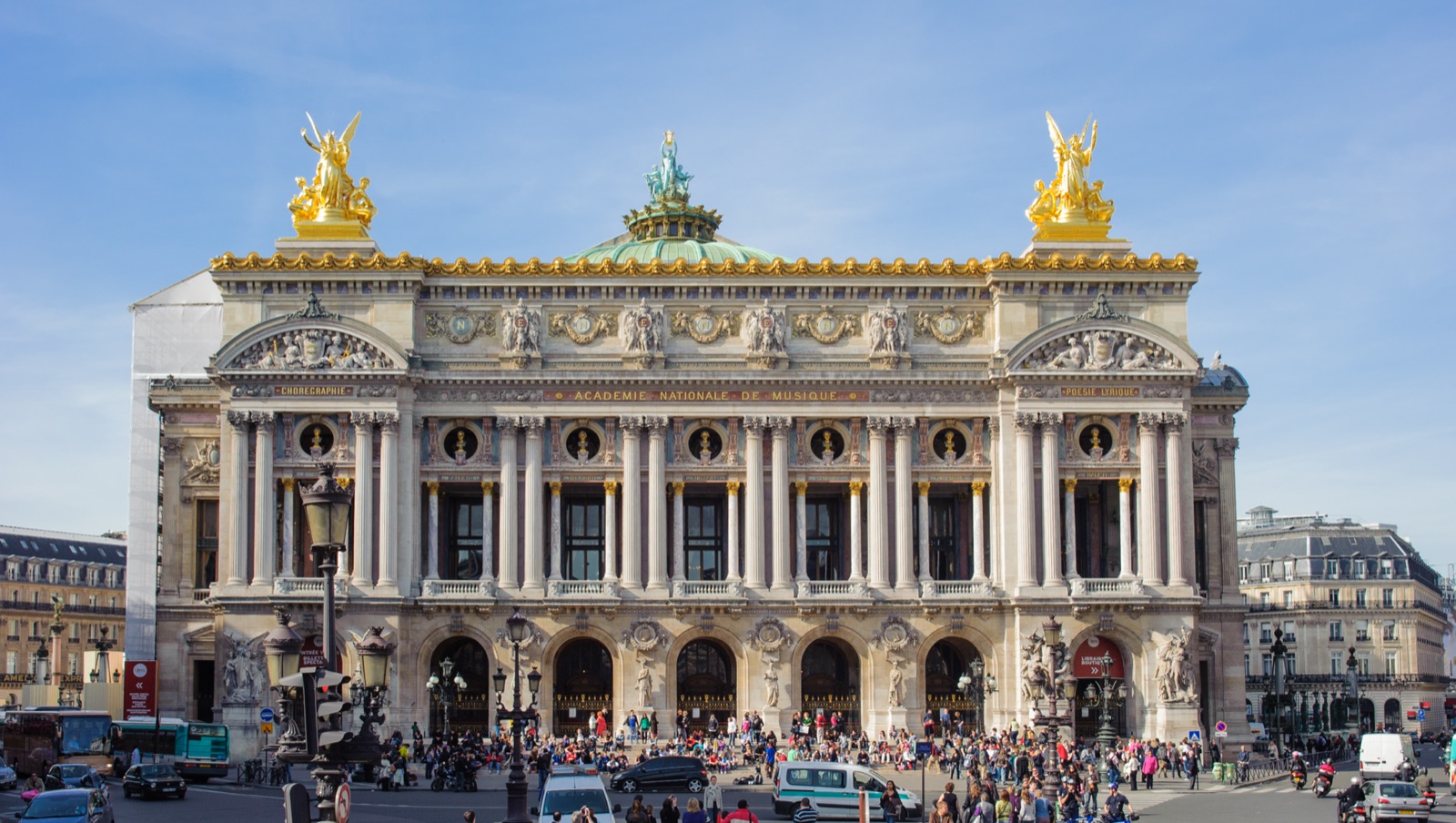
Gustavo Dudamel was appointed music director of the Paris Opera in April 2021, for a six-season tenure beginning in August 2021. He resigned the post on May 25, 2023, effective at the end of the 2022–23 season. He completed two of six contracted seasons. The Paris Opera’s announcement of his resignation was made by its general director, Alexander Neef. The publicly stated reason was personal: a desire to spend more time with family.
In a subsequent Le Monde interview published in 2024 and widely covered in the trade press, Dudamel offered a fuller account. He said he had had “no material time to digest everything that was happening at the professional level and in my personal life.” He cited the cumulative weight of an intense rehearsal and performance schedule, the aftereffects of the pandemic, family considerations, and an institutionally cancelled tour which he described as possibly the “last straw.” He said he could not fulfill his artistic ambitions within the Paris Opera’s institutional complexity. He explicitly questioned whether he had been the right person for that job. The French-language press, including Forum Opéra, described the public reasons as “at best questionable” given the international standing of the conductor and the unusualness of a mid-contract departure on a six-year music directorship.
“It is with a heavy heart, and after long consideration, that I announce my resignation as music director of the Paris Opéra in order to spend more time with my family.”
“I had no material time to digest everything that was happening at the professional level and in my personal life… I had no choice but to leave the Opéra de Paris.”
There are three facts about that resignation that matter for the New York Philharmonic. The first is the calendar. Dudamel was announced as the New York Philharmonic’s next music director on February 7, 2023. He resigned the Paris Opera on May 25, 2023 — three months and eighteen days later. The Paris difficulty was therefore not theoretical when New York wrote his contract. Public reporting before February 2023 had already discussed strain in his Paris position. Either the New York Philharmonic knew the Paris position was failing when it signed Dudamel and proceeded on the assumption that New York would be different; or the New York Philharmonic did not know and finalized a five-year contract for a conductor whose other major recent music directorship was about to dissolve. Neither possibility is reassuring.
The second is the diagnosis Dudamel himself offered. He said he could not fulfill his artistic ambitions within the Paris Opera’s institutional complexity. The New York Philharmonic is, as institutions go, not less complex than the Paris Opera. It has a unionized orchestra, a strong principal conductor tradition, an active critical press environment, a deeply patterned subscriber base, a shared concert hall complex at Lincoln Center, a renovation-financed home venue that came in nominally on budget but required eight years of fundraising and three years of closure to complete, and — as documented in §6 above — an unresolved internal labor matter that has produced litigation against the orchestra by both dismissed principals. New York is not a place where institutional complexity is less. It is a place where institutional complexity is more, of a different kind, and in the world of a more aggressive critical and legal press.
The third is the most basic point. The Paris resignation is the only recent empirical data the public has on what happens when Dudamel’s model — interdisciplinary, high visibility, civic-pedagogical, social-mission-driven, collaboration-rich, identity-rich — meets a traditional European-style institutional structure he did not himself shape. The data is: it ends in two of six seasons. Anyone who tells the New York Philharmonic that this does not apply because New York is not Paris is making a claim they cannot defend with evidence. The only recent evidence is Paris.
The Paris Opera resignation was announced fourteen weeks after the New York announcement. Either New York knew it was coming, or New York did not. Both readings are bad readings.
§8 · The Los Angeles case, honestly stated
Dudamel’s LA Phil record is real. It worked because the institution was built around him by the same executive who is now bringing him to New York.
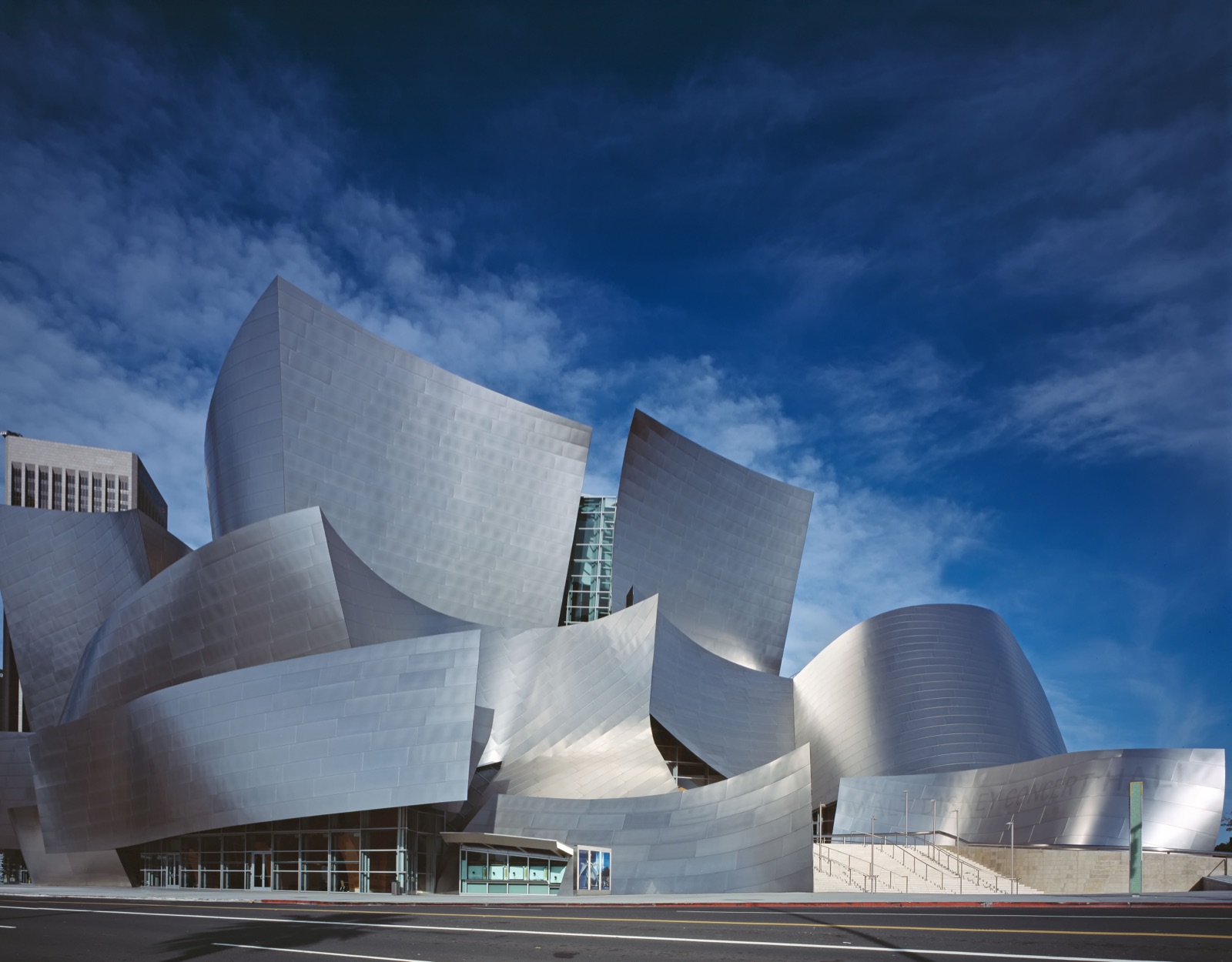
The honest case for Dudamel — and there is one — is the Los Angeles Philharmonic. Sixteen seasons, beginning 2009–10. The Youth Orchestra of Los Angeles initiative, known as YOLA. Multi-venue presence: Walt Disney Concert Hall, the Hollywood Bowl, The Ford. Broader audience demographics than comparable American orchestras have maintained. Significant contemporary commissioning. A through-line of Pan-American repertoire. A working relationship with the popular-cultural environment of Los Angeles — film studios, recording artists, the city’s civic identity — that the institution’s own materials describe as having “reimagined what an orchestra can be.” The Philharmonic’s own current biography of Dudamel uses the words “groundbreaking programming” and “expansive vision” to describe his LA tenure. Those words are defensible. They are not marketing only; they are also the field’s consensus.
The problem is what produced them. The LA Philharmonic that Dudamel inherited had been, for the seventeen years before him, the laboratory of Esa-Pekka Salonen. Salonen, with the executive guidance first of Ernest Fleischmann and then, from 2000, of Deborah Borda, built the institutional structure into which Dudamel’s charismatic civic-leader model could be inserted productively. The Walt Disney Concert Hall, opened in 2003, was Salonen’s and Borda’s before it was Dudamel’s. The new-music infrastructure was Salonen’s before it was Dudamel’s. The orchestra’s sound, technical level, and intellectual seriousness were Salonen’s before they were Dudamel’s. The institution was, in other words, structurally adapted to receive the kind of music director Dudamel is.
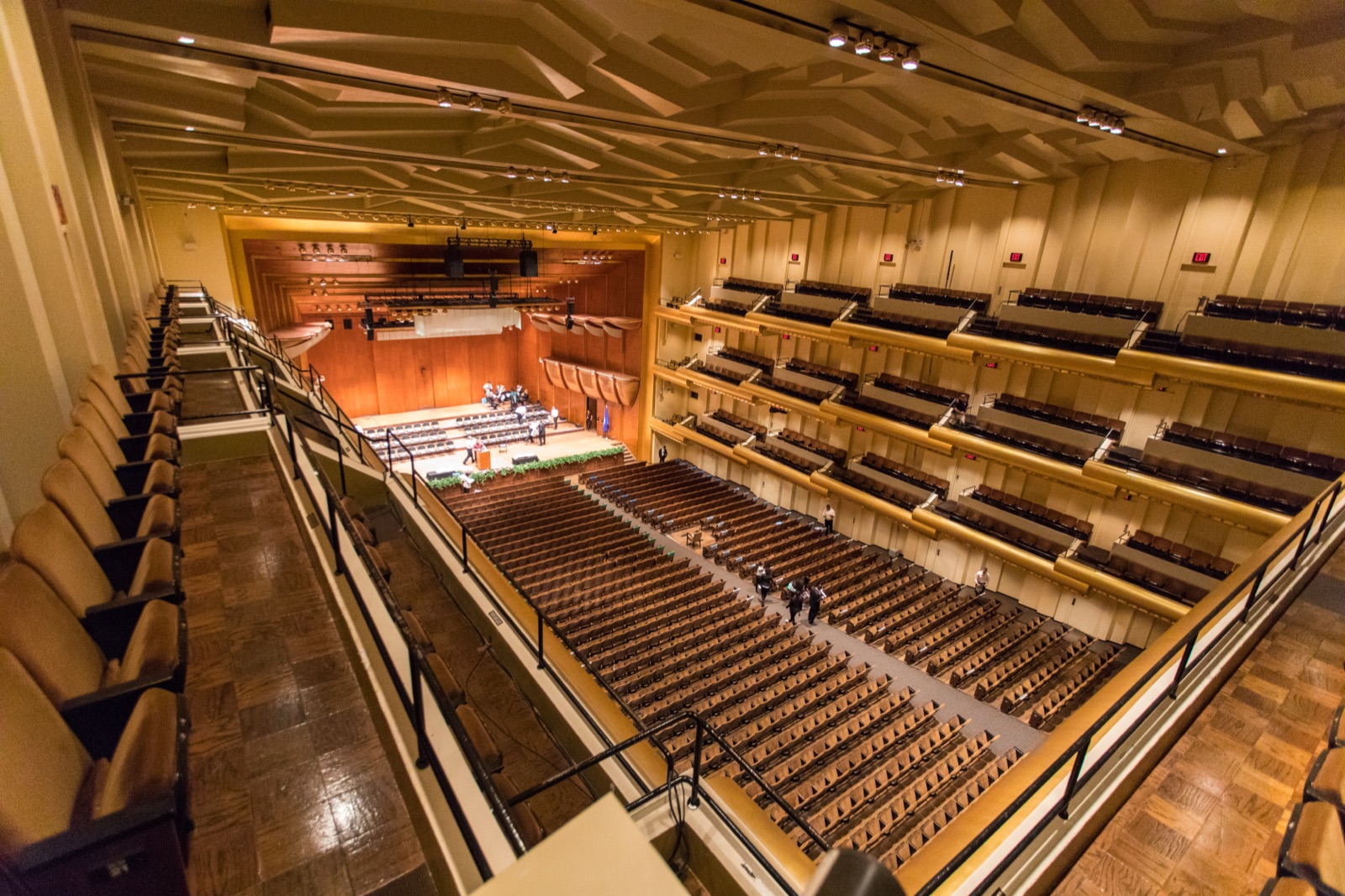
That matters because it is the fact the New York Philharmonic argument turns on. The question is not whether Dudamel succeeded at the Los Angeles Philharmonic. He did. The question is whether the Los Angeles Philharmonic’s receiving conditions are transferable. They are not. Los Angeles in 2009 had a new hall designed around the conductor-as-event. New York in 2026 has a renovated hall that is, by acoustic and architectural account, very good, but which was not designed around any particular conductor and which serves a season of more than a hundred concerts in a critical press environment that is, by long historical practice, the most demanding in the United States. Los Angeles in 2009 had an executive — Borda — who was, in her own words, hiring her dream candidate. New York in 2026 has the same executive in an adviser capacity, on her way out, having concluded her last full music director decision by, again, choosing the same dream candidate. Los Angeles in 2009 had an orchestra without an unresolved internal labor crisis. New York in 2026 does not.
None of the LA traits are incidental to Dudamel’s success. They are the architecture of his operating system. He works in environments that are, by design, built to amplify him. The Philharmonic he is moving to is, by historical accident, not built to amplify anyone. It is built — was built, between 1958 and 1969 — to amplify a composer who conducted, an educator, an American cultural personality whose authority preceded the institution. That is not Dudamel. That is, on the public record, nobody alive.
Los Angeles worked because the institution was built around him. New York was not. The question is not whether Dudamel is good. It is whether the orchestra knows that it is no longer Los Angeles.
§9 · The maestros New York did not interview
The orchestra’s own chief executive said there was no shortlist. The field has had a shortlist for years. Here it is.
The Philharmonic did not interview other candidates, on the public record, in any formal sense. That is the orchestra’s own description of its process. What follows is therefore not the orchestra’s shortlist; the orchestra had no shortlist. What follows is the field’s shortlist — the conductors who, by every measurable element of institutional fit other than name-brand reach, would have been the deeper answer to the question the Philharmonic chose not to ask. The format is the same in each case: who they are, what they would have brought, and why the institution did not pick them.
Esa-Pekka Salonen
b. 1958 · FinlandComposer-conductor · the artistic counterfactual
The architect of the Los Angeles Philharmonic that Dudamel inherited. Composer-conductor in the Boulez lineage. Seventeen seasons in Los Angeles (1992–2009) as its tenth music director; Principal Conductor of the Philharmonia Orchestra in London. Music Director of the San Francisco Symphony until 2024–25. The only living American-active conductor whose institution-building record is comparable to Dudamel’s — and whose record was the precondition for Dudamel’s.
Why it wasn’t this one: On March 14, 2024, Salonen announced he would step down from the San Francisco Symphony at the end of the 2024–25 season, stating publicly: “I do not share the same goals for the future of the institution as the Board of Governors does.” His departure was, in plain terms, an artistic-vision disagreement with a board that had cut SoundBox and pulled back on contemporary programming. A conductor who will publicly walk away from an American symphony orchestra over a board’s creative cowardice is not a conductor a board hires when its goal is brand alignment. He would have been the right artistic hire. The New York board was not hiring on artistic grounds.
Susanna Mälkki
b. 1969 · FinlandConductor · the musician’s musician
Principal guest conductor of the Los Angeles Philharmonic from 2017 to 2022 — therefore already a working colleague of the orchestra Borda had built. Chief conductor of the Helsinki Philharmonic 2016–2023. Acknowledged contemporary-music authority; serious operatic credential (Salome at the Met, Lulu at the Met); musician’s-conductor reputation that the field is unanimous about. Would have been the first female music director of the New York Philharmonic in its 180-plus-year history.
Why it wasn’t this one: Lower donor wattage and lower mass-market headline reach than Dudamel. The orchestra was looking for a celebrity arrival; Mälkki is not a celebrity arrival. She is the answer to a different question — “how do you rebuild an orchestra’s sound and musical seriousness without selling tickets on a face” — that the New York board had decided, by February 2023, not to ask.
Jakub Hrůša
b. 1981 · Czech RepublicConductor · the classical-capital answer
Music Director of the Royal Opera House, Covent Garden, from September 2025 — the seventh holder of that post and the direct successor of Antonio Pappano, who held it for twenty-two seasons. Chief Conductor of the Bamberg Symphony; principal guest of the Czech Philharmonic. Central European symphonic and operatic credentials with house-building track record. The candidate for a New York Philharmonic that wanted to be, again, an orchestra of central European repertoire and serious operatic depth in the Mehta/Masur lineage.
Why it wasn’t this one: Younger than the brand search wanted; not yet visible at popular-cultural scale; the New York Philharmonic was not, in 2022–23, willing to bet a five-year music directorship on a Central European conductor whose principal credentials were still in the European institutional system. The Royal Opera House made that bet in 2022 and announced it shortly after. He took it.
Klaus Mäkelä
b. 1996 · FinlandConductor · the generational hire
Chief conductor of the Oslo Philharmonic; music director of the Orchestre de Paris; designate music director of the Royal Concertgebouw Orchestra (from 2027) and music director designate of the Chicago Symphony (from 2027). At the time of the New York Philharmonic decision, the most visible generational classical conductor of his cohort. The press had been writing about him as the next pivotal figure in the symphonic world for two seasons before the New York announcement.
Why it wasn’t this one: Already over-committed by the time New York would have moved. The Chicago Symphony and Royal Concertgebouw secured him on long horizons; New York would have had to wait. A serious music directorship search — a “sort of classic search,” to use Borda’s own phrase — would have waited. The acquisition could not.
Yannick Nézet-Séguin
b. 1975 · CanadaConductor · the American-orchestra-builder counterfactual
Music director of the Philadelphia Orchestra since 2012 and music director of the Metropolitan Opera since 2018. The most visible Canadian-active conductor of his generation. Already a builder of a major American orchestra’s post-2010 turnaround. Connection to the New York audience through ten years of Met work. Demonstrated, with the Philadelphia Orchestra, that ambitious civic programming and serious orchestral discipline are not opposed.
Why it wasn’t this one: Institutionally improbable. Nézet-Séguin would have required a near-simultaneous decapitation of the Philadelphia Orchestra and the Metropolitan Opera to come to New York. Neither institution would have permitted it. The orchestral world’s most natural successor to the “American symphony orchestra’s most visible music director” role was, in 2022–23, structurally unavailable. The Philharmonic chose to read that unavailability as a reason to go to Dudamel rather than as a reason to consider a wider field.
Andris Nelsons
b. 1978 · LatviaConductor · the Boston comparison (now itself in dispute)
Music Director of the Boston Symphony Orchestra from 2014 to the end of the 2027 Tanglewood season. Gewandhauskapellmeister of the Leipzig Gewandhausorchester from 2018. A multi-Grammy Shostakovich cycle with Boston — a ten-year, four-Grammy collected complete-symphonies recording project with Deutsche Grammophon, capped by a 19-CD anthology released in March 2025. Until very recently, the patient-rebuild model on the American big-3 league table.
Why it wasn’t this one: At the moment of the New York Philharmonic decision in early 2023, Nelsons was committed in Boston and Leipzig. New York did not test his interest. As of March 6, 2026 — barely a month before this article was finalized — the Boston Symphony Orchestra’s Board of Trustees and current CEO Chad Smith announced that Nelsons’ contract would not be renewed beyond the 2027 Tanglewood season. The cited reason was unstated “future vision” misalignment; BSO musicians have publicly identified underlying financial pressure (the orchestra “running deficits”) as the operative cause. The non-renewal was made without consultation with the orchestra. Cadenza covers the BSO institutional decision in a separate investigation (see Related Cadenza investigations below). The Nelsons situation is therefore now a parallel case to the one this article is about: the largest-endowment American orchestra has chosen to end a thirteen-year music directorship of demonstrated artistic accomplishment, and the third-largest-endowment American orchestra has chosen to begin a five-year music directorship without artistic search. The two institutional choices are not the same decision; they are, on the documentary record, the same kind of institutional pattern.
Mirga Gražinytė-Tyla
b. 1986 · LithuaniaConductor · the generational and gender-breakthrough hire
Music director of the City of Birmingham Symphony Orchestra from 2016 to 2022; principal guest conductor of the Royal Concertgebouw Orchestra; Deutsche Grammophon recording artist. The conductor the field discussed, before her career complications and step-back, as the obvious generational and gender breakthrough for a major American music directorship. Mentored partly in the Salonen lineage.
Why it wasn’t this one: Career circumstances around 2021–2022 made a major American music directorship in this window difficult to execute. The New York Philharmonic, however, did not, on the public record, attempt the discussion. The breakthrough hire was, in the orchestra’s own framing, simply not the kind of hire the orchestra wanted.
Alan Gilbert
b. 1967 · United StatesConductor · continuity, not reset
The Philharmonic’s own most recent home-grown music director (2009–2017). Currently chief conductor of the NDR Elbphilharmonie Orchester in Hamburg and chief conductor of the Royal Stockholm Philharmonic. The argument for continuity, deep knowledge of the New York audience, established commissioning relationships, and an extremely serious musician’s-conductor identity.
Why it wasn’t this one: The Philharmonic chose to read its post-Gilbert period as the period when it had failed to be exciting enough. Returning to Gilbert would have been a different kind of admission — that the institutional problem was not, in fact, podium charisma. The board did not want to make that admission.
Iván Fischer
b. 1951 · HungaryConductor · the institutional-renewal model
Founding music director of the Budapest Festival Orchestra. The most cited modern example of building an orchestra’s identity around a coherent artistic philosophy rather than a personality. Already a frequent New York Philharmonic guest. The renewal model the field has been pointing to for twenty years as the antithesis of the brand-event approach.
Why it wasn’t this one: Older; closer to a senior-statesman model than to a five-year arrival. The orchestra’s framing of the appointment as a generational reset against the Bernstein era ruled the institutional-renewal model out before it could be considered.
That is not a complete list. It does not include, for example, Riccardo Muti, who had already left the Chicago Symphony music directorship at the end of the 2022–23 season and would have been institutionally available for a senior-statesman tenure; Karina Canellakis, currently chief conductor of the Netherlands Radio Philharmonic and a regular returning guest with major orchestras; Marin Alsop, the first female music director of a major American orchestra and one of the most institutionally aware conductors of her generation; Alondra de la Parra, who founded the Philharmonic Orchestra of the Americas in New York and whose Latin-American programming credential is not less than Dudamel’s; or Dalia Stasevska, Vasily Petrenko, Daniel Harding, John Storgårds, or Jaap van Zweden himself, who could have been retained on a different model.
The point is not that any one of those names was the right answer. The point is that there was a field. The chief executive’s public claim that one does not run a classic search for the most sought-after conductor in the world is a description of how this search was not run. It is not a defense of why it was not run. A field that the Cleveland Orchestra, the Royal Opera House, the Chicago Symphony, the Royal Concertgebouw, the Berlin Philharmonic, the BBC Symphony, the Munich Philharmonic, and numerous other institutions are quietly evaluating in this same decade is a field the New York Philharmonic was institutionally entitled to consider. It chose not to.
The orchestra’s case for hiring Dudamel is that he is the most sought-after conductor in the world. The case against is that an orchestra that hires for that reason has stopped believing it can compete on any other.
§10 · Salonen, specifically
The conductor whose public resignation, eleven months after the New York announcement, proves what New York could have had if it had been a different institution.
The most damaging counterfactual on the list above is Esa-Pekka Salonen, and the damage is recent. On March 14, 2024 — thirteen months after the New York Philharmonic appointment, ten months after the Paris resignation, and six months after the Tang gift — Salonen announced he would not extend his music directorship of the San Francisco Symphony beyond the 2024–25 season. He did not announce a desire to spend more time with his family. He did not cite cumulative strain. He said the reason in plain English.
“I do not share the same goals for the future of the institution as the Board of Governors does.”
That sentence is the inverse of the New York Philharmonic appointment. Deborah Borda’s February 2023 statement was an executive describing the alignment between a board and a chosen conductor. Salonen’s March 2024 statement is a conductor describing the mis-alignment between himself and a board. The two statements are, between them, a taxonomy of the two ways a music directorship gets defined in American orchestral life in 2026: by acquisition or by friction. Acquisition produces brand. Friction, properly handled, produces art.
San Francisco was, on the public record, a board that had pulled back on the experimental programming venue SoundBox, on touring, and on the contemporary commissioning profile Salonen had built around himself in five years. The board was managing for financial sustainability in the post-pandemic environment. Salonen would not accept that the orchestra’s artistic ambition should be subordinated to the board’s caution. He left. The musicians of the San Francisco Symphony issued a statement saying they were “deeply saddened” by the departure “as a result of the Board of Governors’ lack of investment in the future of the Symphony.” That is the kind of working artistic conscience an orchestra builder has.
A New York Philharmonic that wanted artistic excellence rather than brand certainty would have considered, in early 2024, that Salonen was suddenly available. The New York Philharmonic did not consider it, on the public record, because by early 2024 the institution had already committed to Dudamel for five seasons, written him into its largest-ever endowment chair, and built the marketing architecture of an arrival. The orchestra had foreclosed the option of choosing on artistic grounds before the strongest possible artistic candidate became available.
That, more than any other single fact in this article, is the case against the hire. When the most rigorous orchestra builder of the Boulez-Salonen-Dudamel lineage walked out of an American board, the New York Philharmonic could not even pick up the phone. The phone had already been answered.
Salonen left San Francisco because he refused to be the brand for a board’s retrenchment. The New York Philharmonic hired Dudamel partly to be exactly that.
A fair counter to this argument has to be acknowledged. Salonen at the New York Philharmonic would, on the public record of his San Francisco departure and of the Boston Symphony Orchestra’s March 2026 non-renewal of Andris Nelsons, have produced the same kind of artistic-board friction inside the New York Philharmonic’s deficit-running operating budget. The institution Cadenza is criticizing for choosing a brand-event hire over an artistic hire may not, on the present financial evidence assembled in §14, be capable of supporting an artistic hire either. Boston’s $618 million endowment was not enough to sustain Nelsons. San Francisco’s board could not absorb Salonen’s artistic-vision insistence. New York’s smaller endowment, larger structural deficit, and unresolved labor history would, on the available evidence, have produced the same outcome with any of the maestros listed in §9 above — at best a difficult tenure ending in resignation, at worst a public board-versus-artist rupture of the kind the field has now seen at SF and BSO. That is the deeper institutional case this article is making, restated: it is not that the orchestra chose the wrong conductor. It is that the orchestra chose a conductor whose model gives the institution five years of branded breathing room without forcing it to confront the underlying institutional condition that, by 2031, no conductor will be able to fix without an institutional reckoning first.
§11 · The brand itself
Mark Swed, the LA Times critic who has defended Dudamel for fifteen years, called the designate-year New York Philharmonic “fully Dudamel-branded.” The institution does not disagree.
The category that this hire has, by deliberate construction, been moved into is brand rather than musical leadership. Mark Swed, senior classical music critic of the Los Angeles Times and one of the most authoritative American daily voices on Dudamel’s fifteen-year LA tenure, described the Philharmonic’s designate-year communications in plain language. He wrote, on the record, in published Los Angeles Times reporting from the spring of 2025:
“The orchestra has become fully Dudamel-branded, his image plastered everywhere you look. The talk of the town is that a music-director-designate-to-be has already transformed one of the world’s great orchestras, which is said to be playing at a new level and with a new sound.”
Swed is not an outside skeptic. He is the critic of record for the city Dudamel is leaving, the critic who has, over fifteen years, defended Dudamel’s Los Angeles tenure in print and made the public case for his significance. The “fully Dudamel-branded” characterization is, in that sense, the most institutionally credible possible source for the observation — a friendly observer noting, in publication, what the orchestra is doing. The same reporting documented that Dudamel had assembled around himself, inside the New York Philharmonic administration, a “West Coast support team”: Deborah Borda continuing in an adviser role after her June 2023 transition out of the president and chief executive position she had returned to from Los Angeles in September 2017; the new president and chief executive Matías Tarnopolsky, who took the role in January 2025 from the chief executive position at the Philadelphia Orchestra (2018–2024) and who had earlier led Cal Performances at the University of California, Berkeley — the working relationship in which his connection to Dudamel was forged; and other Los Angeles-linked communications and operational leadership in senior positions.
Cadenza distinguishes carefully, in §6 above, between assembling allies — which Dudamel has — and importing rank-and-file orchestra musicians, which he has not. The distinction matters legally and journalistically. The first is reported and documented. The second is, on the public record as of this article, not the case. Anyone arguing the latter is making a claim past the evidence.
But the first — the assembling of an institutional support orbit — is the brand-system requirement. The brand cannot function without it. Dudamel cannot be the face of an institutional reset unless the institution is, at the level of executive leadership and communications, prepared to read every season through his face. That is, in fact, what New York has done. It is what New York chose to do when it chose Dudamel. The Tang gift ratified the choice with the largest endowment in the orchestra’s history. The marketing has executed it without hesitation in every public-facing medium the orchestra controls, in two languages.
The Spanish-language outreach component is real and worth being honest about. The Philharmonic’s press room hosts multiple Dudamel-related releases en español; the Dudamel biography page is fully localized into Spanish. The 2025–26 designate season includes a three-night collaboration at David Geffen Hall (May 6–8, 2026) with the three-time-Grammy-winning Spanish Harlem Orchestra led by Oscar Hernández, in a program featuring Gershwin’s Cuban Overture, Villa-Lobos’s O trenzinho do caipira from Bachianas Brasileiras No. 2, Ginastera’s Milonga, and Gabriela Ortiz’s Antrópolis; a separate, first-ever Philharmonic appearance at United Palace in Washington Heights on May 9, 2026 with a special guest appearance by Rubén Blades; and a US-at-250 framing centered on Pan-American composers. The 2026–27 inaugural season foregrounds Tania León (whose world premiere Imágenes mestizas is paired with Mahler’s Symphony No. 5), Gustavo Santaolalla, a new Venezuelan song cycle by Gonzalo Grau, and a two-work multimedia staging by Marina Abramović — Stravinsky’s L’Histoire du soldatpaired with Manuel de Falla’s El Amor brujo, co-directed by Abramović and filmmaker Nabil Elderkin, which received its world premiere at Naples’s Teatro di San Carlo in April 2026 and arrives at the Philharmonic March 10–14, 2027 with vocalist Pasión Vega. The 2026–27 inaugural opening on September 11, 2026 is a Perelman Performing Arts Center memorial concert observing the twenty-fifth anniversary of the September 11 attacks, performed alongside the Soldiers’ Chorus of the U.S. Army Field Band; Dudamel’s first Lincoln Center subscription program with his new title, the following week, returns the Philharmonic to John Adams’s On the Transmigration of Souls — a piece the Philharmonic itself co-commissioned and premiered on September 19, 2002 under Lorin Maazel, and which won the 2003 Pulitzer Prize for Music. That return is institutionally legible. The 2002 premiere was itself a moment of institutional seriousness for the New York Philharmonic — perhaps the most institutionally serious post-Bernstein moment the orchestra has had — and Dudamel’s first Lincoln Center subscription program is correctly designed to invoke it. Whether the rest of the season’s Pan-American repertoire reads as substantive expansion or as branding category will depend on whether it survives Dudamel’s tenure. If, three years in, the Pan-American programming remains a Dudamel signature on departure, it was an expansion. If it disappears with the conductor, it was branding.
The numerical breakdown of the inaugural-season programming, on the orchestra’s own press materials, is worth stating honestly. The 2026–27 season includes seven world premieres, three US premieres, and two New York premieres — twelve new-to-the-orchestra works in a single season. That is, for an inaugural year, a serious contemporary commissioning commitment, and Cadenza does not treat it as cosmetic. Several of those premieres — Tania León’s Imágenes mestizas (a NY Phil commission paired with Mahler 5 in September); Zosha Di Castri’s new work (a NY Phil co-commission with the LA Phil, paired with Adams’s On the Transmigration of Souls in Dudamel’s first Lincoln Center subscription concerts); Osvaldo Golijov’s Azul with Yo-Yo Ma; and the season-closing first-ever Philharmonic performance of Bernstein’s MASS — would be institutionally significant in any season. The core symphonic spine remains heavy: the three-week Beethoven cycle anchors the season’s closing arc (May 19 – June 5, 2027), with the Ninth Symphony, the Second Piano Concerto with Mitsuko Uchida, the Egmont overture paired with Jeremy O. Harris’s new adaptation of Goethe’s play, and three Beethoven quartets arranged for orchestra by past Philharmonic music directors Mahler, Mitropoulos, and Bernstein. The Mahler 5, the Prokofiev, the Tosca (the first program of the new five-year Carnegie opera initiative, in November 2026, with Kaufmann, Rebeka, and Tézier), and the two-week ten-concert European tour fill out the season’s institutional commitments. The architecture is, on the page, the architecture of a serious music directorship’s inaugural year — not a thin or token Pan-American replacement program. That fact is to the institution’s credit. It is also separable from the institutional question this article is about. The question is not whether the inaugural season is good. The question is whether the institution under it is built to deliver and sustain what the season promises — and on the institutional evidence assembled across §3 through §14, the institutional answer is not yet there.
Bernstein, who is the explicit reference point for the entire enterprise, was a composer-conductor who, between 1958 and 1969, shaped a national musical identity. He taught a country what to listen for. He did not require ongoing branding because the authority he brought to the orchestra preceded the orchestra. That is the structural difference between a Bernstein-type hire and a brand-type hire. The Bernstein-type hire grows the institution by what the conductor knows. The brand-type hire grows the institution by what the conductor is known for. They are not the same act and they do not have the same half-life. The Tang gift is in pursuit of the former. The hire it paid for is structurally the latter.
The endowment names a composer-conductor who taught a country what to listen for. The hire is a celebrity-conductor who teaches a country what to applaud for. These are not the same job.
§12 · Voices from the field
The major American and trans-Atlantic critics — Tommasini, Woolfe, Ross — on the orchestra Dudamel is inheriting, and on Dudamel himself.
Cadenza is not the first publication to make critical observations about either the New York Philharmonic of the last decade or the conductor it has now hired. The major critics of record, in the major publications of record, have done so in print, with attribution, on dates the public record can verify. What follows is a representative set — chosen because each quote comes from a critic whose authority on the subject is undisputed in the field, and because each quote was published before this article was conceived.
Some of his performances of Mahler and Wagner lacked “subtlety, lyricism and depth.”
Tommasini — who served as chief classical music critic of the New York Times for twenty-one years, the longest such tenure since Olin Downes, and stepped down in 2021 — was the most senior English-language voice on the orchestra at the time of van Zweden’s appointment and through the early seasons of his tenure. The reservation he recorded in print was not isolated. Reviewers throughout van Zweden’s six contracted seasons consistently praised the orchestra’s embrace of new music and consistently recorded reservations about its interpretations of the core symphonic repertoire. The Philharmonic’s last music directorship before Dudamel ended with a departure announced mid-tenure — at the close of the 2020–21 season van Zweden announced he would stand down at the close of 2023–24 — and was bracketed at both ends by the COVID-19 closure and the Geffen Hall renovation closure. It was, in institutional terms, a music directorship the orchestra and the critical press both agreed was finished before it had time to mean very much.
The renovation “substantially improved the acoustics” but “some significant acoustical problems remained.”
The renovated David Geffen Hall is, by the consensus of the architectural and acoustical press, a real success. Diamond Schmitt Architects of Toronto and Tod Williams Billie Tsien Architects of New York worked together on a project whose acoustical signature was developed with consultants who applied the lessons of Toronto’s Four Seasons Centre and the Mariinsky II in St Petersburg. The architectural reviews were generally positive. The acoustic reviews were generally positive. The orchestra inside the hall, however, is a separate question. A well-acoustically-tuned room is the precondition for a great orchestra to be heard properly; it is not, on its own, a great orchestra. The Philharmonic’s problem in 2026 is not the room. The Philharmonic’s problem in 2026 is what its room is being asked to amplify, and on what evidence.
“Little of that came through in Dudamel’s reading. The first phrase had a placid, humdrum air… In the turn to D minor, the articulation remained more or less the same, smooth rather than effortful… Under Dudamel, those effects were almost imperceptible: the line kept pressing forward, with no particular urgency.”
The New Yorker’s music critic is the most influential long-form classical music voice in the United States. Alex Ross has, over a quarter century, defended Dudamel’s significance, profiled him admiringly more than once, and is on record celebrating his Caracas-and-LA institutional achievement. The review excerpted above is therefore not a hit piece — it is a single qualified observation, from a sympathetic critic, on a specific interpretation of a single work that happens to be among the most institutionally important in the post-romantic symphonic repertoire. Ross’s contrast point in the same piece is Bernstein’s reading of the same symphony. Cadenza surfaces the excerpt only because, on a Mahler 9 — the kind of repertoire the Philharmonic’s next era will be judged on most rigorously, by listeners who have Bernstein’s recording in their inheritance — even Dudamel’s most reliable American-press champion records a reservation. That is not Ross’s assessment of Dudamel overall. It is his assessment of one performance. The article does not extrapolate further.
None of these three quotes proves that Dudamel will fail in New York. None of them is intended to. What they prove is that the major critics of record on the orchestras and the conductor concerned — Tommasini, Woolfe, and Ross, three of the most respected English-language music critics of their generation — have published, in their own publications, observations that anyone running an institutional search of any seriousness would have read, considered, and weighed before signing a five-year contract. The orchestra’s own chief executive said, on the record, that no such search was conducted. The critical record was, in plain English, available. It was not used.
Three of the most authoritative critics of record — at The New York Times, The New York Times, and The New Yorker — had, before the New York Philharmonic search was not run, published the reservations the search would have needed to weigh. The reservations are in print. The search did not happen.
§13 · What the institution said by hiring this way
The Philharmonic did not hire Dudamel because it believed in him. It hired Dudamel because it had stopped believing in itself.
Strip the rhetoric and the hire is institutionally legible. A music director search that does not interview a shortlist is a search whose executors are not confident the shortlist will deliver. An endowment that names a fifty-four-year-old historical comparison as its strategic target is an endowment whose donors are not confident the current institution can win on present terms. A communications strategy that builds a designate year around a single face is a strategy whose executors are not confident the orchestra is recognizable without that face. And a board that signs a five-year contract with a conductor whose immediately preceding music directorship is, by his own subsequent admission, a position he had no choice but to leave, is a board willing to discount the most current available evidence about how that conductor responds to institutional complexity.
Each of those four signals is, in isolation, defensible. Acquisitive hires happen. Retrospective endowments happen. Brand-driven marketing happens. Risk-tolerant contracts happen. The combination — all four, simultaneously, by the same institution in the same eighteen-month window — is not a description of an institution in confident self-renewal. It is a description of an institution that has concluded its historical authority is no longer enough to compete on, and that is therefore willing to mortgage future flexibility for present visibility. That conclusion may be correct. The history of the Boulez, Masur, Maazel, Gilbert, and van Zweden tenures suggests it is correct: an orchestra of the Philharmonic’s current institutional profile cannot win back the Bernstein moment by hiring a serious musician and giving the serious musician the same hall, the same season template, the same critical environment, and the same audience the previous serious musicians were given.
But the conclusion that historical authority is insufficient does not, by itself, justify the conclusion that a brand-event hire is sufficient. Those are two different conclusions. The Philharmonic skipped the distance between them. The actually available evidence — Paris in 2023, the contested arbitration and 2024 dismissals, the quiet but real subscriber and donor concentration questions, the renovation that recovered the hall but did not recover the sound — argues that the institution’s challenges in 2026 are structural and labor-related, not visibility-related. A structural problem cannot be solved by a visibility hire. It can only be papered over, for a five-year contract, by a visibility hire. After the five years, the structural problem returns. The visibility hire, by then, has moved on or has done what the Paris Opera saw — left earlier than contracted.
The Tang gift binds the institution’s largest endowment to that bet. If the bet pays off, the endowment is the foundational gift of a new era. If the bet does not pay off, the endowment is a fifty-four-year argument with a memory the orchestra is no longer able to be the answer to. Either way, the gift is, on its own donor’s account, a request to relitigate the Bernstein decade. That request is not, in 2026, deliverable by a music director. Bernstein himself, hired today, would not deliver it; the conditions that made Bernstein possible — a postwar American cultural appetite for high-art mass media, a broadcasting environment that handed network television to symphonic music, a generation of audience demand the country no longer has — are conditions of his time, not of his name. The orchestra, hiring against those conditions, is hiring against history rather than within it.
The Philharmonic did not, in 2023, choose a conductor. It chose a hypothesis: that one celebrated face would do the work a generation of institutional renewal has so far not been able to do. The hypothesis has been tested in adjacent institutions — Boston with Nelsons (now non-renewed by Chad Smith and the BSO board, the very leadership team that previously delivered Dudamel’s LA tenure), Chicago with Muti and now Mäkelä, Cleveland with Welser-Möst, LA with the Salonen-then-Dudamel arc Borda herself architected — and the institutions that built lasting authority in this century built it by sound, repertoire, patience, and labor honesty. None of them built it by acquisition. In 2026, not even the patience model is safe: the Boston Symphony Orchestra is non-renewing its most credentialed long-tenure music director under reported financial pressure. The New York Philharmonic, picking the brand model in this environment, is making a bet against every observed institutional outcome the field has produced in the present decade.
§14 · The numbers the orchestra would rather not compare
The financial scale, the institutional reach, and the data points the brand rollout does not put on the press kit.
The Philharmonic’s public-facing communications, since the February 2023 announcement, have leaned on three categories of claim: that Dudamel is the most sought-after conductor in the world; that the Tang gift is the largest single endowment contribution in the orchestra’s history; and that the inaugural season will be the beginning of a new era. Each of those is true. Each of them is also, on the comparative numbers the orchestra does not publish in the same press releases, less impressive than the rhetoric implies.
Here, on the public record, are the numbers that matter for the institutional bet the Philharmonic has made. They come from ProPublica’s Nonprofit Explorer (which exposes publicly filed IRS Forms 990 for the orchestras concerned), from each orchestra’s own press materials, and from current public reporting in Symphony magazine and Slippedisc. The figures below are the most recent available as of this article’s publication; small revisions on the order of one fiscal year do not move the comparison.
| Orchestra | Endowment | Annual budget | Current music director |
|---|---|---|---|
| Boston Symphony Orchestra | $618M (per BSO, March 2026) | ~$172M (gross receipts, FY24) | Andris Nelsons (since 2014) |
| Los Angeles Philharmonic | $344M | Largest operating budget of any US orchestra | Dudamel (final season 2025–26) |
| New York Philharmonic | $237M | ~$90M, with reported ~$8M cash deficit | Dudamel from 2026 |
Seven-year financial trend — Philharmonic-Symphony Society of New York Inc
Revenue (blue) and expenses (red) plotted at the same scale for each reported fiscal year. Net assets (gray) shown alongside. All figures from publicly filed IRS Forms 990 via ProPublica Nonprofit Explorer.
Pre-pandemic baseline (FY18–19): the orchestra was operating at approximately $80–90 million in revenue and expenses, roughly balanced.
Pandemic peak (FY21): revenue jumped to $138.6 million on emergency contributed support; expenses dropped to $56.7 million on cancelled programming and the 25 per cent musician pay cut. Net assets grew substantially as restricted gifts and federal pandemic support flowed in.
Re-opening years (FY22–23): the orchestra ramped expenses back up toward and past the pre-pandemic baseline. By FY23, revenue ($96.9M) only narrowly exceeded expenses ($91.9M).
FY24 (Tang year): revenue jumps to $113.9M, driven materially by the September 2023 Tang $40 million endowment gift. Expenses continued to grow, reaching $96.2 million. Stripping the Tang gift, recurring revenue would be approximately $74M against $96M of expenses — a roughly $22 million operating shortfall that the one-time gift covered.
Net assets trajectory: $246.6M (Aug 2019) → $497.9M (Aug 2024). A near-doubling in five years, driven primarily by pandemic-era contributed revenue, restricted endowment gifts, and the Tang chair. The balance sheet has grown materially. The operating income statement has not closed the gap.
The headline operating picture in that filing — total revenue $113.9 million against total expenses $96.2 million, producing a reported net surplus of approximately $17.7 million for the year — is, on its face, a healthy fiscal year. It is also, materially, a fiscal year in which the September 2023 Tang gift of $40 million settled into the institution’s revenue. Strip the one-time Tang gift out of the contributions line and the orchestra’s recurring operating performance is materially below break-even. The 59.6 per cent of revenue coming from contributions, in any orchestra’s 990, is the part of the income statement that includes both ongoing giving and one-time endowment commitments. The orchestra’s recurring earned-revenue base (program services, primarily ticket and concert income, at 27.5 per cent of revenue) is approximately $31.4 million on the FY24 numbers. The institution is not, on those figures, operating its concert calendar profitably; it is operating its concert calendar at scale and covering the gap with contributed revenue, of which the largest single item in FY24 was the Tang chair endowment. That is the structural picture. It is the picture under which a new music directorship has been signed.
The most fact-checkable single line in that 990 is also the one with the clearest bearing on §4 above: in FY August 2024, Deborah Borda — in her Executive Advisor role following her June 2023 transition out of the President & CEO position — was the highest-compensated officer or employee of the institution, at $1,728,420 in reported compensation. That figure is published in the Philharmonic’s own Form 990, available via ProPublica’s Nonprofit Explorer at the institution’s EIN. The amount is consistent with senior advisory compensation at a peer arts institution of this scale; it is also the documentary public record of the institution’s own resource allocation to the executive who, by the same year, had set the orchestra’s next music directorship and seen her chosen successor depart after twelve months.
Total revenue $113.9M. Total expenses $96.2M. Highest-paid officer or employee: Deborah Borda, Executive Advisor, $1,728,420. All three are in the orchestra’s own publicly filed Form 990 for fiscal year August 2024.
| Institution | Role | Name | Reported compensation | Fiscal year |
|---|---|---|---|---|
| New York Philharmonic | Executive Advisor | Deborah Borda | $1,728,420 | FY Aug 2024 |
| Boston Symphony Orchestra | Music Director | Andris Nelsons | ~$1.7M | FY 2024 |
| Boston Symphony Orchestra | President & CEO (tenure 18 months) | Gail Samuel (since departed) | ~$1.7M | FY 2024 |
| Los Angeles Philharmonic | President & CEO (then Chad Smith) | Chad Smith (now BSO President & CEO) | ~$404,058 base / ~$454,587 total | FY 2023 |
Three observations follow from the table above, none of which require editorializing. First, Deborah Borda’s Executive Advisor compensation at the New York Philharmonic in FY August 2024 is approximately four times the Los Angeles Philharmonic’s most recently reported chief executive compensation. The Los Angeles Philharmonic is the orchestra Borda left in 2017 to return to New York, and the orchestra she had run as chief executive from 2000 to 2017. The institution’s post-Borda chief executive, Chad Smith, was compensated, on the published filing, at roughly one quarter of what the New York Philharmonic now pays Borda for her advisory role. Second, the Boston Symphony Orchestra paid both its music director (Nelsons) and its short-tenure chief executive (Samuel, who resigned after eighteen months) at approximately the same level as the New York Philharmonic pays Borda in advisory capacity. Third, the chief executive who replaced Smith at the Los Angeles Philharmonic — Kim Noltemy, since July 2024 — has not yet had her compensation reported in a publicly filed 990; the comparison above is the most recent publicly available data.
None of these figures, individually, is improper. Senior arts-executive compensation at major American orchestras is, on the published filings, in the high six and low seven figures, depending on role and tenure. The point of the table is the comparison itself: that the New York Philharmonic, with the smallest endowment and smallest operating budget of the American big-3, is paying its former chief executive — now in an advisory role — more than the orchestra she previously ran is paying its actual sitting chief executive. The Form 990 line is the figure. The Form 990 line is the source. Readers can draw whatever conclusion from it they wish.
Borda’s advisory compensation at the New York Philharmonic is approximately four times the prior chief executive compensation at the orchestra Dudamel is leaving. That is the comparison the institution’s own Form 990 puts on the public record.
Endowment size, by orchestra
The Tang gift ($40M) is plotted on the same scale, in green, so its proportion to each orchestra’s base is visible. The gift is meaningful. It does not close the gap.
The gap between the New York Philharmonic and the Boston Symphony is approximately $381 million. The Tang gift, the largest in the New York Philharmonic’s history, is $40 million. The arithmetic that follows: even after the Tang gift, the New York Philharmonic endowment is still $341 million below Boston’s, and $67 million below the Los Angeles orchestra Dudamel is leaving.
That table is the chart of the bet. The New York Philharmonic, on the public record, has a smaller endowment than both of the other American big-3 orchestras — and by a considerable margin. Boston’s endowment is more than two and a half times the size of New York’s. Los Angeles is about forty-five per cent larger. The Philharmonic has the smallest operating budget of the three, and is reportedly running a meaningful operating cash deficit. The institutional scale comparison is not abstract: Deborah Borda is bringing Gustavo Dudamel from the Los Angeles Philharmonic, whose endowment is approximately forty-five per cent larger than the Philharmonic’s and whose operating budget is the largest in the country, to the Philharmonic, whose endowment is the smallest of the three and whose operating budget is the smallest of the three. The Tang gift, at $40 million, is roughly seventeen per cent of the current New York Philharmonic endowment. It is, in real terms, an extremely significant contribution. It does not close the operating gap. It does not close the endowment gap with Boston — where, by the same orchestra’s March 2026 disclosure, the endowment stands at $618 million, having grown by $118 million since 2013 — and it does not close the endowment gap with the orchestra Dudamel is leaving. It establishes a chair.
Boston Symphony, the institution with the largest endowment of the three, hired Andris Nelsons in 2014 on what was, at the time, framed as a long-horizon orchestral building tenure. Twelve seasons in, Nelsons has a four-Grammy Shostakovich cycle with Deutsche Grammophon released as a 19-CD anthology in March 2025, a Leipzig Gewandhaus directorship in parallel, and a critical reputation as a serious symphonic builder. Boston paid for that tenure with a stronger balance sheet and a different institutional brief. As of March 6, 2026, the Boston Symphony Orchestra’s board of trustees and chief executive — Chad Smith, who came to Boston in fall 2023 from the chief executive position at the Los Angeles Philharmonic under Dudamel — announced that Nelsons would not be renewed beyond the end of the 2027 Tanglewood season. The stated reason was unspecified “future vision” misalignment; BSO musicians have publicly attributed the underlying cause to financial pressure on the orchestra’s operating budget. The decision was made without consultation with the orchestra members and has prompted a documented public backlash. It is the subject of Cadenza’s separate Boston Symphony Orchestra investigation. New York looked at the adjacent example — four hours away by train — and chose, in 2023, to outbid no one and to write a five-year contract for a conductor whose prior major appointment had collapsed in two of six seasons. That is not the choice an institution that is competing on artistic seriousness makes. It is the choice an institution that has decided it cannot compete on artistic seriousness makes. And three years later, the institution that did compete on artistic seriousness — Boston, with the largest endowment in the field — is, on the public record, in enough financial distress that its current chief executive has chosen not to renew the orchestra’s most accomplished music director of the post-2000 era. Even the right institutional model is, in this decade, fragile. The wrong model has less margin.
New York: $237M endowment, $90M budget, ~$8M cash deficit. Los Angeles: $344M endowment, largest budget in the country. Boston: $618M endowment, twelve-season Nelsons rebuild. Of the three institutions, only one is mortgaging its largest-ever endowment to a five-year brand contract.
The second comparison the orchestra does not put in the press kit is the comparison with the actual scale of the era the Tang gift names. The Bernstein moment is, by public reporting on the Young People’s Concerts alone, an order of magnitude away from anything any current music directorship can produce. The numbers are concrete.
That is the comparison the Tang gift names as its strategic target. A music director who composed and narrated fifty-three primetime national television broadcasts on CBS, reaching ten million US viewers at peak and an international syndication footprint that forty broadcast partners voluntarily paid for. The 1958–1972 broadcast environment is gone. The 1958–1972 cultural appetite for high-art mass media is gone. The 1958–1972 economic model that sustained primetime classical music on a major American network is gone. Replicating those numbers, in 2026, in any medium, is not a music-director task. It is not even an art-form task. It is a request the cultural conditions of 1958–1972 will not approve.
The third comparison is the institutional achievement Dudamel actually has, and what it would mean to transplant it. The Youth Orchestra of Los Angeles — YOLA, the most frequently cited and most quantifiable of Dudamel’s Los Angeles legacies — was co-founded in 2007 with eighty students. As of 2024, the program serves more than one thousand seven hundred young people, free of charge, across four LA locations, with fellowship and exchange programs reaching south-American counterparts. That is a real achievement. It is also, in the public record, an LA achievement, built into an LA institutional context, with LA donors, LA philanthropy infrastructure, LA city-level partnerships, and an LA Philharmonic operating budget that is, on the table above, the largest in the country. New York is not LA. Whether Dudamel can replicate YOLA-scale civic music education from a New York Philharmonic that is operating at a cash deficit on a smaller budget with a different city government and a different donor base is, on the comparative numbers, an open question. The orchestra has not, in its public rollout, attempted to answer it.
Finally, on the comparison the orchestra has not made between its own present scale and its own historical authority: in September 2024 the Philharmonic and its musicians, represented by Local 802 AFM, ratified a three-year contract that takes the rank-and-file base salary from $153,504 to $205,000 by the 2026–27 season — Dudamel’s inaugural year. That is a thirty-three per cent compounded raise over three years, structured as 15 per cent for 2024–25, 7.5 per cent for 2025–26, and 7.5 per cent for 2026–27. The 2025–26 midpoint figure of approximately $195,000 — the number Cadenza’s own prior reporting on orchestra finances uses for the Philharmonic — reflects this same agreement at the mid-contract stage. The agreement also moves all audition rounds, including finals, behind a screen and requires tenure votes by secret ballot. Those provisions are defensible — and on the underlying labor record traced in §5, structurally overdue. The musicians are world-class; the resulting base is consistent with what Boston and Chicago and Los Angeles pay their own players. The number is, however, also the number against which the orchestra’s reported ~$8 million cash deficit must be understood. The institution is paying world-class orchestral salaries — on the largest negotiated three-year raise in its recent history — to a roster that is recovering from a four-and-a-half-year unresolved labor matter and an institutional crisis the brand rollout has been designed not to look at, and is doing it inside an operating budget that does not, on publicly reported figures, balance. A $40 million endowment for a music directorship chair, in that context, is a structural answer to the wrong question.
What happens when an American orchestra runs sustained deficits is, on the recent historical record, unambiguous. The Minnesota Orchestra’s 2012–14 lockout took rank-and-file base from approximately $135,000 to $118,000 and prompted music director Osmo Vänskä’s public resignation in protest. The Detroit Symphony’s 2010–11 strike cut musician pay roughly twenty-five per cent, from $104,650 to about $79,000; that orchestra is, fifteen years later, still rebuilding from that contraction. The Philadelphia Orchestra became the first major American orchestra to file for bankruptcy in 2011, emerging only after $5.2 million in musician concessions, a restructured contract base, and a converted pension plan. None of those orchestras began their period of structural strain with an institutional decision to mortgage their largest-ever endowment to a five-year brand contract. They began with the same combination the New York Philharmonic now has: a deficit-running operating budget, a recovering labor history, and a board that wanted a visible answer faster than the numbers would accommodate. The Metropolitan Opera, four blocks south, is the most immediate New York example of the same trajectory in real time: by Cadenza’s prior orchestra-and-opera financial reporting, the Met is running a roughly forty-seven million dollar annual deficit while paying its music director $2,045,038 and its general manager $1,395,216 — a combined $3.4 million in executive compensation at an institution whose budget does not balance. None of this proves the New York Philharmonic will follow any of those trajectories. All of it proves that the institutional environment in which the Tang gift was made is the environment in which those trajectories happened.
One number on the audience side, in fairness, cuts in the orchestra’s favor: by March 2024 the Philharmonic was averaging eighty-five per cent attendance, against seventy-four per cent pre-pandemic. During the renovation-period seasons when the orchestra performed in smaller venues, subscription concert attendance reached approximately ninety per cent. Across forty-two medium-and-large US orchestras surveyed by TRG Arts, total tickets sold in 2023 were two per cent above the 2019 baseline. The Philharmonic’s post-pandemic audience recovery is real and worth being honest about. It is also, on its own terms, separable from the structural deficit described above. The orchestra is filling more seats than it was in 2019, and is still — by current reporting — running an approximate eight-million-dollar operating cash deficit on an approximately ninety-million-dollar budget. A combination of stronger attendance plus a structural deficit is not a story about audience demand. It is a story about an operating model whose costs are growing faster than its earned-and-contributed revenue mix can sustain, even in a year of record sell-throughs. That model is not changed by a music directorship hire. It is changed by an institutional decision about cost structure and earned-versus-contributed revenue balance — a decision the public record does not yet show the orchestra making.
The pandemic damage is part of the same picture and should be stated in the same breath. By the orchestra’s own public reporting, the Philharmonic lost approximately ten million dollars in earned revenue in 2019–20 and an additional twenty million dollars in 2020–21 as a result of the cancelled and contracted seasons. Total pandemic-era losses exceeded twenty-seven million dollars on an eighty-seven-million base operating budget. The orchestra’s musicians took an approximately twenty-five-per-cent pay cut under a four-year emergency contract. The September 2024 three-year contract documented above restores those concessions and, by the end of its term in 2026–27, takes the rank-and-file base above the pre-pandemic level for the first time. That, too, is real recovery — and it is real recovery happening at the same institution whose total endowment is still the smallest of the American big-3, whose operating budget is still in deficit, and whose largest-ever endowment gift has been committed to a music directorship rather than to closing the gap.
The Tang gift endows a chair on a budget that does not balance, at an institution whose scale is the smallest of the American big-3, in pursuit of a cultural moment whose broadcast economics ended fifty-four years ago. The numbers do not say “new golden age.” The numbers say “bet placed.”
§15 · The bar Dudamel’s tenure has to clear
An honest article must say what evidence would, in 2031, falsify the case made in this article. Here it is.
Cadenza is willing to be wrong about the New York Philharmonic. The orchestra is, on the public record, willing to bet a $40 million endowment that it is wrong about itself. Here is what would falsify the case this article makes. The list is empirical and survivable. None of it requires Dudamel to be Bernstein. All of it requires the orchestra to be more honest about itself than the donor-language of the gift now permits.
- Subscription retention — measured against the post-renovation 2022–24 baseline — improves materially in the inaugural season and holds. Not a single-year spike on opening month, but a sustained two-season uplift across subscription tiers, including the deep-discount and weekday matinee tiers where new audience development would be visible.
- Critical reception — measured across the New York Times, the Wall Street Journal, the Financial Times, and the surviving long-form classical press — describes a transformed orchestral sound. Not improved repertoire packaging, not improved presentation, not improved community programming. A different sound, week on week, in the core repertoire the Philharmonic continues to play.
- Donor base broadens beyond the Tang and adjacent legacy concentration. A second, comparable institutional gift from an unrelated donor family, recognized as new rather than as upgraded existing giving, within three seasons. The first such gift was the test of donor confidence in the hire. A second, from an independent source, would be the test of institutional broadening.
- The internal labor matter is closed. The pending civil litigation is resolved on terms the orchestra and its musicians’ union can describe in settlement language. Any future allegations, internal or external, are handled inside two months and without arbitration reversal.
- Pan-American programming survives Dudamel. A successor music director, named in the early 2030s, retains the Pan-American repertoire commitment without the Dudamel name. If the programming disappears with the conductor, it was branding. If it survives, it was an expansion.
- Dudamel finishes the five-year contract. A second resignation under comparable institutional conditions to the Paris Opera departure — for whatever stated reason — would, in light of the Paris precedent, settle the question this article is asking.
- The David Geffen Hall acoustic improvement is institutionally legible.The renovated hall, completed in October 2022 at $550 million, has been critically well-received. The orchestra inside the hall has been less. By 2030, the field’s working description of the New York Philharmonic should distinguish the two — the hall is a great hall; is the orchestra a great orchestra in it? That is the question the Tang gift implicitly funds an answer to.
If, in 2031, those seven conditions are met, this article will have been wrong. Cadenza will say so. The orchestra is welcome to put us in that position. The current evidence does not.
§16 · The institutional calendar
The five-year window inside which a music directorship was acquired, an endowment was bound, a precedent collapsed, and a labor crisis surfaced.
The thirty-month window from October 2022 to April 2024 is the institutional pivot. Inside it: the renovated hall opened; the music directorship was announced; the preceding music directorship collapsed; the largest endowment gift in the orchestra’s history was secured; the most credible artistic counterfactual went publicly available; the long-quiet internal labor matter was forced back into the open. Any single one of those events would be the institutional headline of a normal season. The orchestra chose to make only one of them the public headline. That choice — what the institution chose to be loud about, and what it chose to be quiet about — is the editorial signature of this music directorship before it has played a note.
Six institutional events in thirty months. Five of them required quiet handling. One of them was the brand rollout. That is the choice the institution made about what it wanted the field to remember.
§17 · Sources, integrity, and what Cadenza is not arguing
What this article cites, what it omits, and what it would change if presented with new evidence.
The factual record above is drawn from the following public sources. The Associated Press’s February 7, 2023 reporting and follow-up interviews with Deborah Borda. NPR’s Deceptive Cadence February 8, 2023 reporting on the same announcement. The New York Philharmonic’s own press room, including the September 12, 2023 Tang endowment release and the 2025–26 and 2026–27 season announcement materials in English and Spanish. Opéra national de Paris and its general director Alexander Neef’s May 25, 2023 resignation announcement. Le Monde’s 2024 interview with Dudamel and the surrounding French-language trade press, including Forum Opéra. The Los Angeles Philharmonic’s own materials describing Dudamel’s LA Phil tenure and its 2025–26 final season framing. The Los Angeles Times reporting from the New York Philharmonic designate year. NPR and CBS reporting on the March 14, 2024 San Francisco Symphony announcement and the publicly issued statements of Salonen, the SFS board, and SFS musicians. Philanthropy News Digest and The Strad coverage of the Tang endowment. Sammy Sussman’s April 12, 2024 Vulture / New York Magazineinvestigation. Local 802 AFM communications and the New York Philharmonic’s November 4, 2024 public statements. Public artist biographies and contracted appointment notices for each conductor listed in §8.
The article does not argue, and Cadenza is not in a position to argue, that Gustavo Dudamel is artistically incapable of leading the New York Philharmonic. He plainly is not incapable. The Los Angeles record is real. The Berlin Philharmonic, the Vienna Philharmonic, La Scala, and the Berliner Staatsoper have all engaged him on terms that settle that question.
The article does not argue that any of the named alternative conductors in §8 were formal finalists in any New York Philharmonic search. There is no public evidence that they were. The §8 list is, on its own terms, a counterfactual fit analysis: the conductors who, by demonstrated record, would have been the deeper hire if the institution had been hiring on those grounds. The institution was not.
The article does not, in §5, render any finding regarding the underlying conduct in the dismissed-principals matter, the arbitration result, or the pending civil litigation. The institutional handling described is drawn from the orchestra’s own public statements and from public reporting. The omission of the individual principals’ names is editorial and deliberate. It does not reflect a Cadenza view of the merits.
The article does, finally, accept that the strongest version of the case against the hire — that Dudamel is bringing his own rank-and-file musicians into Philharmonic chairs — is not, on the public record as of this publication, supported by evidence. The institutional support orbit he is assembling is documented. The rank-and-file import is not. Cadenza will revise this article if that changes. Cadenza will revise this article in either direction if any element of §15’s seven conditions is met before 2031.
The orchestra is welcome to respond on the record at any time, before or after publication, at hello@cadenza.work. Substantive on-the-record statements from the Philharmonic, from any of its officers, from any of the named conductors in §8, or from any party referenced in §5 will be appended to this article as dated updates.
§18 · The institution, the era, and the conclusion
We do not think he is the right one. The reasons are not personal. They are institutional, financial, and on the public record.
On the public record, by the institution’s own framing, by the donor’s own framing, and by the most authoritative trade and mainstream press of the last three years, the New York Philharmonic in 2026 is an orchestra trying to recover an era that ended fifty-four years ago, by hiring a conductor who has, at one institution, demonstrated the capacity to build a different era, and who has, at another institution, demonstrated the limit of that capacity inside a more complex structure. The orchestra he is arriving in is itself more complex than either of those reference cases. The board that hired him did not run a search. The endowment that funds his chair names the wrong comparison. The communications around him are doing brand work. The musicians inside the institution are recovering from a four-and-a-half-year internal crisis that the institution chose to manage quietly and only resolved when external reporting forced the resolution.
None of that is Gustavo Dudamel’s fault. None of it is removable by his arrival. None of it argues that he is the wrong human being. It argues that he is the wrong structural answer to the question the New York Philharmonic is, by its own behavior, asking itself. The structural answer this institution required, in 2023, was a long, honest, slow rebuild — a search of the kind Borda explicitly said the orchestra did not run, a music directorship modeled on the patient orchestral discipline of Boston or the institutional renewal of Iván Fischer’s Budapest Festival Orchestra, a public reckoning with the labor history of the institution rather than a quiet management of it, and an endowment language oriented toward the orchestra’s present capacity rather than its mid-century memory.
The orchestra did not choose any of that. It chose a name. The name will, for five seasons, produce attention. Attention is not renewal. The Tang gift’s own language — the words “return,” “transformation,” “golden age,” “Bernstein” — describe a transformation the music director is being asked to perform. Music directors do not perform that transformation. Institutions, over decades, perform it themselves, on themselves. The institution has stopped performing it on itself. The hire is a sign that the institution has stopped trying.
The New York Philharmonic, in 2026, is not the orchestra the Tang gift names. It has not been that orchestra in over half a century. The hire does not change that. Other maestros would not have changed it either. But the better of them — Salonen first among them, Mälkki, Hrůša, Nelsons, Nézet-Séguin, Fischer behind him — would, at minimum, have spent the next five seasons asking the orchestra to be honest about what it has become, instead of asking it to perform an era that ended before any of them were born.
Honesty is the deeper renewal. The Philharmonic chose not to attempt it. The consequences are five seasons. After that, the structural problem returns to the institution that has been postponing it since 1969.
The institution did not hire a conductor. It bought a postponement. The postponement is five years. The bill arrives in 2031.
The conclusion
Cadenza does not think Gustavo Dudamel is the right music director for the New York Philharmonic.
We are not arguing that he is artistically incapable. He is not. We are not arguing that the LA Philharmonic record is exaggerated. It is not. We are not arguing that his Pan-American repertoire commitments are window-dressing. On the public record, they are substantive within the season they have been programmed for, and they may survive him.
We are arguing, on the basis of every documented number, quote, and institutional event in the article above, that the New York Philharmonic in 2026 needed an artistic search, a labor reckoning, and a long, honest, slow rebuild. It chose, instead, a single celebrated name, on the chief executive’s own admission that the institution did not run a classic search; an endowment whose donor language commits it to recovering a cultural moment that ended fifty-four years ago; a brand rollout that the most authoritative West Coast critic described as “fully Dudamel-branded” and “plastered everywhere”; an operating budget that, by current reporting, does not balance; and a five-year contract with a conductor whose most recent comparable music directorship — at the Paris Opera — ended in two of six contracted seasons, three months and eighteen days after the New York announcement.
On those grounds, separately and jointly, we conclude that this is the wrong hire. Other maestros — Esa-Pekka Salonen first among them, with the published artistic conscience and the timing the orchestra refused to wait for; Susanna Mälkki, Jakub Hrůša, Klaus Mäkelä, Andris Nelsons, Yannick Nézet-Séguin, Iván Fischer behind him — would have been the deeper answers. Cadenza acknowledges that several of them were structurally unavailable, that one of them was over-committed, and that one of them became publicly available eleven months too late for the institution to act on, because the institution had already foreclosed the option. The honest version of the search would, on the evidence, have produced a better hire. The orchestra chose not to run an honest version.
The New York Philharmonic is the oldest symphony orchestra in the United States. It is one of the most historically consequential musical institutions in the world. It deserves to be led by a music directorship that is chosen for what the orchestra actually is in 2026, not for what the orchestra remembers being in 1969. Cadenza does not think the Dudamel hire delivers that. We hope, in 2031, the public record proves us wrong. If it does, we will say so here, on this page, at this URL, signed by this editorial. If it does not, the institution will have spent its largest-ever endowment, its most visible music directorship contract, and five seasons of public attention on a postponement of a question it has been refusing to ask since 1969. That is the bet. We do not think it pays.
Cadenza editorial standards for this article
Cadenza publishes opinion pieces about named institutions, named donors, named conductors, and named music directorships. Where a named individual is the subject of civil litigation, pending allegations, or any unresolved labor matter, Cadenza considers, case by case, whether the public interest of naming exceeds the editorial cost of contributing to the public file on that individual. In this article, the public interest is in the institutional handling. The names of the two former principals at the centre of §5 are available in the cited sources. Cadenza has chosen not to repeat them. That choice is internally consistent with our standing practice and is not requested by, or coordinated with, any party.
For corrections, on-the-record statements, or material that would change this article’s findings: hello@cadenza.work.
Related Cadenza investigations
- The Real Money Behind America’s Top Orchestras — Cadenza’s prior IRS-Form-990 financial analysis of fifteen US orchestras, including the salary, endowment, and deficit comparisons used as in-house sourcing for §14 of this article.
- Fire Chad Smith. The Memo Is the Confession. — On the Boston Symphony Orchestra’s leadership and the published “future vision” memo. The Boston endowment comparison in §14 is contextualized by the Boston institutional situation Cadenza has previously covered.
- The Metropolitan Opera and Peter Gelb: A Factual Record of Decline — On the most institutionally proximate New York classical-music brand-first tenure that has, on the documentary record, not delivered. The $47-million Met-deficit data point in §14 originates in this prior reporting.
- The Orchestra Pay Gap — On the structural compensation differences across American orchestras and the labor environment any incoming music director must understand.
- The $300,000 Music Degree — On the upstream education economics that produce the musicians inside the institution this article is about.
Comments
Sign in to join the discussion.