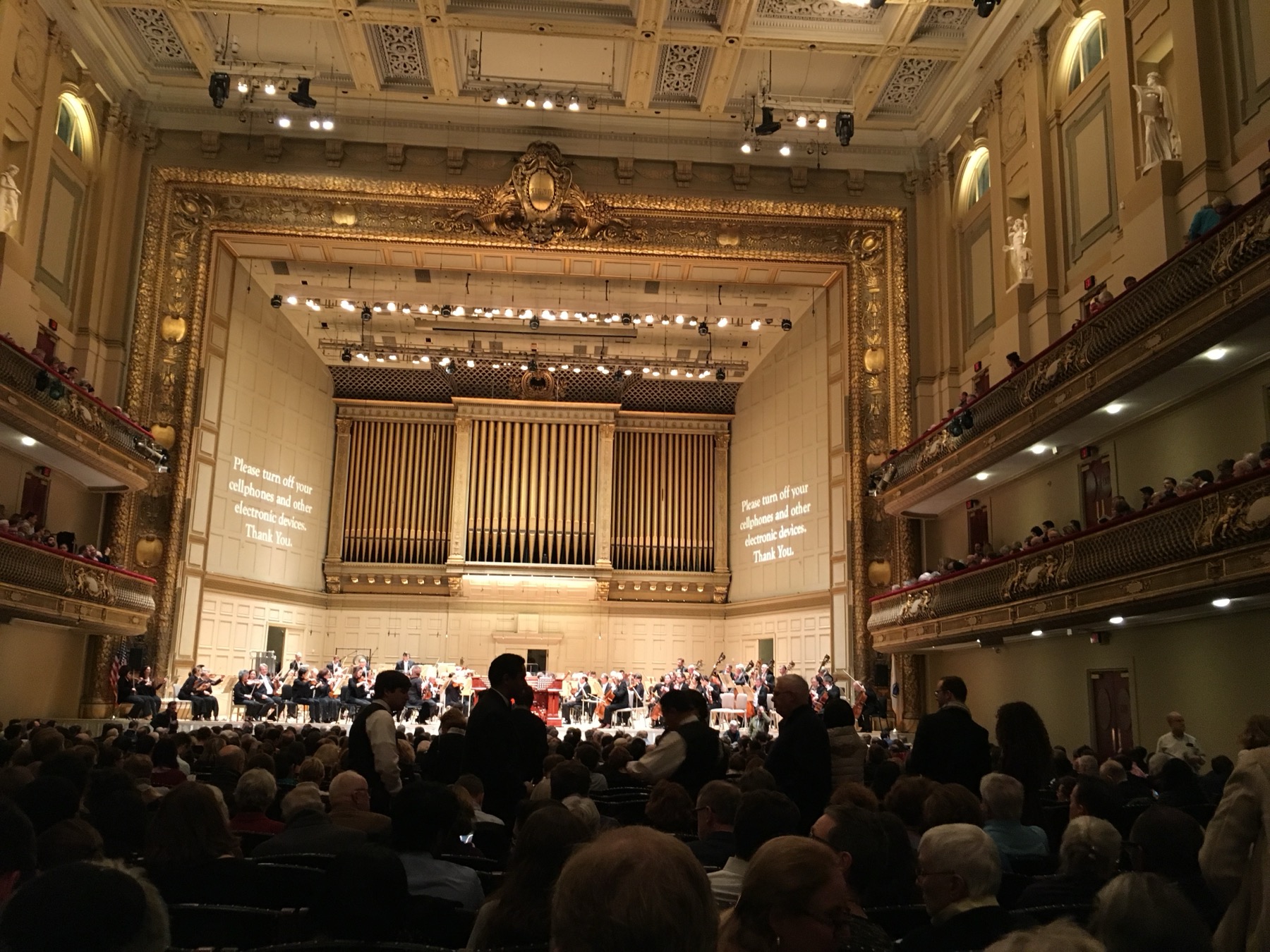
Investigation · American Orchestral Collapse
The American symphony orchestra gets thirteen cents on the dollar from the public.The European equivalent gets fifty.Nine American orchestras have already closed since 2008. Three more are in distress in 2026.
The full body count, the funding math, and the names of the people running these institutions into the ground. A Cadenza investigation tying together every institutional crisis in American classical music — Boston, New York, San Francisco, the Metropolitan Opera, the Kennedy Center, the National Endowment for the Arts — into a single picture of structural collapse. None of it is theoretical. All of it is now.
Why this matters
The American symphony orchestra is, in 2026, the most institutionally distressed cultural form in the country. Nine American orchestras have closed since 2008. Two major orchestras filed for bankruptcy. The Big-3 — Boston, New York, Los Angeles — are all in simultaneous music-directorship crisis: Boston non-renewed its twelve-season music director in March; New York hired a brand-event conductor without running a search; Los Angeles is losing the same conductor next year. The Metropolitan Opera is at junk debt. The Kennedy Center has closed for two years. The National Endowment for the Arts has been eliminated. The orchestras that have not yet failed have, in their own public disclosures, written down the conditions under which they will.
This article does not predict the collapse of the American symphony orchestra. It documents the collapse already happening. It names the institutions, the board chairs, the chief executives, and the agencies that produced it. It also names the single structural fact that distinguishes the American system from the European systems that are not collapsing: American orchestras receive, on average, thirteen per cent of their revenue from public funding. European orchestras receive fifty per cent or more. That gap is not closeable by harder fundraising or smarter programming. It is the model.
The orchestras you grew up with may not exist in their current form by 2035. Several of them may not exist at all. Cadenza names the ones we believe will fall next, with the data, in §11. We hope to be wrong. The orchestras concerned have every opportunity to prove us so.
§1 · The body count
Nine American orchestras have already closed. Two filed for bankruptcy. Three of the Big-3 are in simultaneous music-directorship crisis. The casualty list.
Begin here. This is not a forecast. The closures and bankruptcies in this section have already happened. The music-directorship crises in this section are unfolding in public, with names and dates. Read it as a casualty list.
Honolulu, Syracuse, Albuquerque, San Antonio, the American Youth Symphony, the Boston Philharmonic. The Philadelphia Orchestra filed Chapter 11. Minnesota locked out its musicians for sixteen months. Detroit cut pay twenty-five per cent. The Metropolitan Opera is at junk debt. The Kennedy Center is closed. The Vancouver Symphony — in Canada, where public funding for orchestras runs four times the US level — is on strike for the first time in 107 years. Three of the American Big-3 are in simultaneous music-directorship crisis. This is not the future. It is the present.
The fall accelerates — chronological view
Major American orchestra closure, bankruptcy, lockout, strike, and music-directorship events of the post-2008 period, on a single timeline. Each entry is a public institutional event for which the date and the named institution are on the record.
Twenty separate institutional events of consequence in the American orchestra sector since 2010. Eleven of them in 2024–26 alone. The acceleration is not a perception. It is the count.
§2 · The 13/50 funding gap
American orchestras receive thirteen cents on the dollar from the public. European orchestras receive fifty. Canadian orchestras receive forty-nine. This is the single structural fact behind every other fact in this article.
The American symphony orchestra is the only major classical-music institutional model in the developed world that operates as a predominantly private-philanthropy entity. Every other major Western country underwrites its major orchestras with substantial public funding, either at the national or municipal level or both. The American exception is not partial. It is structural, and it is enormous.
| Jurisdiction / institution | Public funding share | Source |
|---|---|---|
| US orchestras (average) | ~13% | League of American Orchestras |
| Canadian orchestras (average) | ~49% | Stanford Economic Review (2024) |
| Berlin Philharmonic | ~50% subsidy share | City of Berlin + Deutsche Bank partnership |
| Royal Concertgebouw Orchestra | Co-funded | Dutch Ministry of Education, Culture and Science + Municipality of Amsterdam |
| UK orchestras (Arts Council England) | Significant — recently cut | ACE National Portfolio funding; English National Opera funding cut produced the Manchester relocation |
Public funding as a share of orchestral revenue, by jurisdiction
Bars to scale. The American share is materially smaller than every comparable peer-jurisdiction baseline. The difference is not partial. It is the model.
On the per-seat baseline cited by Berliner Philharmoniker disclosures (€110 per seat subsidy share), a single seat at the Berliner Philharmoniker receives more direct public support than the entire NEA distributed to all American orchestras combined divided by every paid concert seat sold by US orchestras in a year. The order-of- magnitude is not a comparison. It is a category difference.
| Orchestra | Endowment | Operating budget | Status (2026) |
|---|---|---|---|
| Boston Symphony Orchestra | $618M | ~$172M (gross receipts, FY24) | Nelsons non-renewed March 2026 |
| Los Angeles Philharmonic | $481M | largest in US | Dudamel departing 2026; succession search |
| Cleveland Orchestra | $296M (per 2023–24 annual report; +11% YoY) | ~$60M; balanced for sixth consecutive year | Welser-Möst stepping down imminent |
| New York Philharmonic | $237M | ~$90M; ~$8M cash deficit | Dudamel from Sept 2026 (wrong fit per Cadenza) |
| Philadelphia Orchestra | ~$234M total assets (FY24) | ~$60M | Post-Chapter-11 operating model; Nézet-Séguin splits with Met |
| Chicago Symphony Orchestra | Form 990 data via ProPublica | ~$80M | Designate Mäkelä from 2027 (also Concertgebouw) |
| San Francisco Symphony | moderate (renovation hole) | ~$80M; reported $200M Davies hole | No music director 2025–26 |
| Minnesota Orchestra | post-lockout rebuild | ~$36M | Recovering from 16-month lockout |
| Detroit Symphony Orchestra | rebuilt | ~$32M | 15-year recovery from 25% pay-cut event |
| Metropolitan Opera (opera company) | drawn-down | ~$300M+ | Caa1 junk debt; $47M annual deficit |
The American figure is not arrived at by counting only the National Endowment for the Arts. It includes state arts councils, municipal arts funding, and the indirect public subsidy of charitable tax exemption. Even so, the total is approximately thirteen cents on the revenue dollar. The remaining eighty-seven cents must be raised from ticket sales (approximately forty cents on average, per the same League data) and private contributions (approximately forty-three cents). Endowment income — which most orchestras treat as their reserve, drawn at a target rate of around four to five per cent annually — is the rest.
The implication is not symbolic. An American orchestra of any size relies on private philanthropy and ticket revenue for nearly nine in ten dollars of operating income. If either drops, the orchestra is in immediate operating trouble. If both drop — which is what happened during the 2020–21 closures, and what is happening now in cities where subscription bases are eroding — the institution cannot survive without either drawing down endowment principal or cutting musician compensation.
The NEA itself, the federal-level cultural funding mechanism, distributed a total budget of $207 million in fiscal year 2022, of which approximately $4.82 million was directed at orchestras. That total combines the regular Grants-for-Arts-Projects plus Challenge America program (~$2.27 million across 101 orchestras) with one-time American Rescue Plan pandemic-relief grants (~$2.55 million across 24 orchestras). The recurring federal grant figure for orchestras is therefore closer to two and a quarter million dollars annually. A country of 333 million people funded its symphony orchestra sector at federal level, in the most recent year of stable NEA operation, at less than five million dollars total — and less than three million dollars in recurring grants outside one-time pandemic support. The Berlin Philharmonic, by comparison, on the city of Berlin’s own published per-seat subsidy figures, received a municipal subsidy of approximately €110 per seat — meaning a single Berlin Philharmonic ticket received roughly the same direct public support as twenty per cent of the NEA’s annual orchestra budget per seat. The math is not in the same universe.
Thirteen cents from the public, eighty-seven cents from tickets and donations. That is the model. Every other crisis in this article is the consequence of that model meeting a country whose donor concentration is increasing and whose audience concentration is ageing.
§3 · The Big-3 in simultaneous music-directorship crisis
Boston, New York, Los Angeles. The three flagship American orchestras. In 2026, none of them has a music director on a stable long contract. This has never happened before.
The three flagship orchestras of the American post-war symphonic system are the Boston Symphony Orchestra, the New York Philharmonic, and the Los Angeles Philharmonic. In most years, the field treats the question of their music directorships as the central institutional indicator of the American orchestra’s health. The three positions have never, in modern history, been simultaneously vacant or in dispute. In 2026, they functionally are.
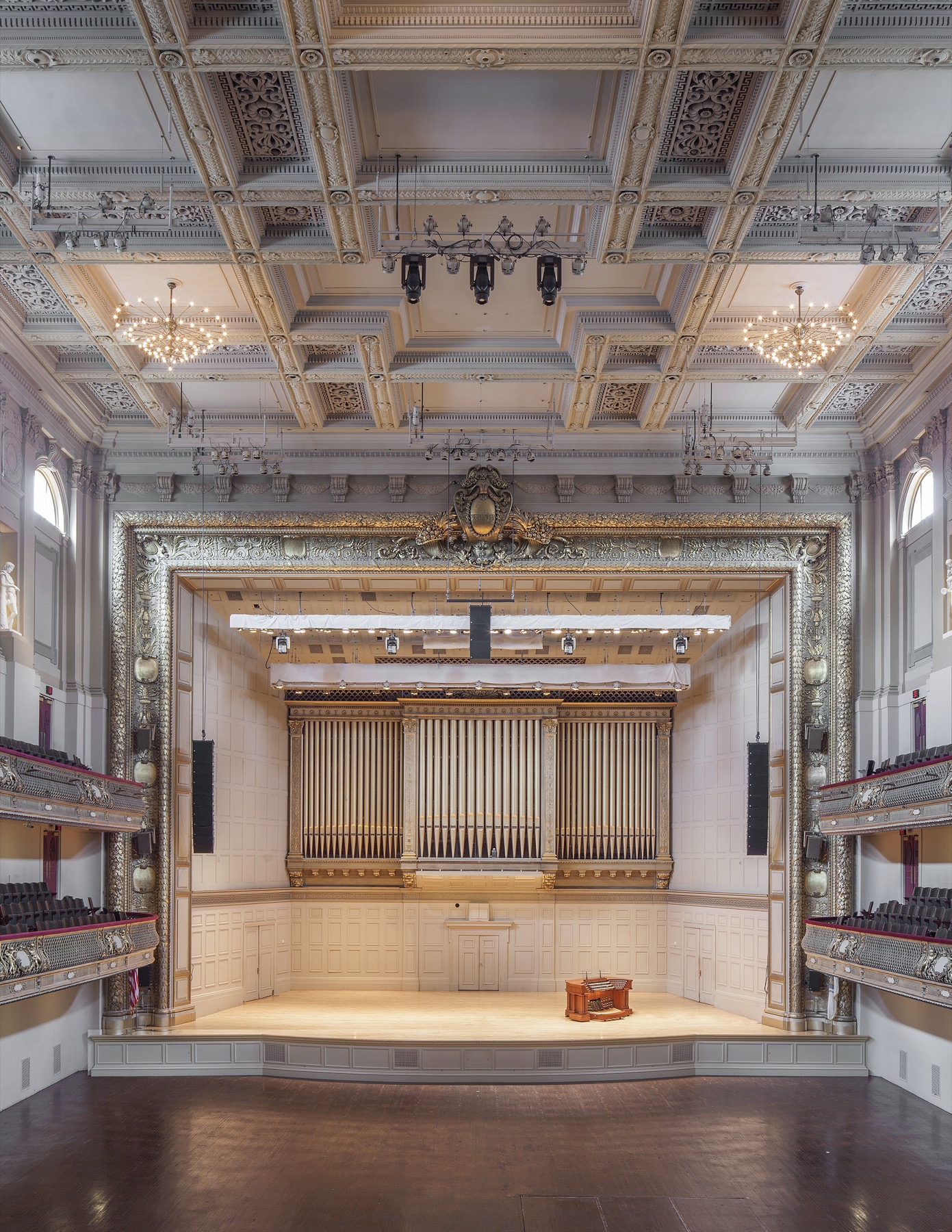
Boston Symphony Orchestra. On March 6, 2026, CEO Chad Smith and the BSO Board announced that Music Director Andris Nelsons would not be renewed beyond the 2027 Tanglewood season — citing unspecified “future vision” misalignment, not artistic standards. Musicians attributed the cause to financial pressure. The institutional detail is in Cadenza’s BSO Future Vision Memo and financial anatomy.
New York Philharmonic. Music Director Gustavo Dudamel begins September 2026 under a five-year contract announced February 7, 2023. Cadenza’s investigation of the appointment argues, on the documentary record, that the institutional and financial conditions of the hire are mismatched to the brand it promises.
Los Angeles Philharmonic. Music Director Gustavo Dudamel’s final Los Angeles Philharmonic season concludes in 2025–26. The orchestra is, in 2026, searching for his successor. The institution Borda built between 2000 and 2017 — the institutional foundation on which Dudamel’s Los Angeles tenure was made possible — is now being asked to identify the conductor who succeeds the conductor it spent fifteen years building around. Chad Smith, the LA Phil CEO who built that foundation alongside Borda, has been at the Boston Symphony Orchestra since fall 2023 — where he is the executive of record on the March 2026 Nelsons non-renewal. The Los Angeles board, in early 2026, must therefore search for a new music director without the executive who would historically have led the search, and against a national backdrop in which Boston has just signalled that even patient orchestral building will not be sustained by a board under financial pressure.
The combination of those three positions in simultaneous transition or active dispute, in the same year, has no modern precedent. The American big-3 has never been here. The institutional explanation is the same in each case: the orchestras’ boards have lost confidence in the financial model that produced the mid-twentieth-century American symphonic identity, and are responding with hires and fires that, in field consensus, will not solve the underlying condition.
Boston fired the right artistic hire. New York hired the wrong brand. Los Angeles is about to find out which model its board prefers. The American Big-3 has not been here before. It is here now.
§4 · The middle tier
San Francisco, Cleveland, Chicago, Philadelphia, Detroit, Minnesota. The orchestras one rung below the Big-3 have, between them, lost a music director, posted a $200M renovation hole, conducted a fifteen-year recovery from a 25% pay cut, and survived a sixteen-month lockout.
The American middle tier is the layer at which the funding gap is most directly visible. These are orchestras large enough to require chief-conductor-level appointments and full-time professional rosters, but without the endowment depth of the Big-3 to absorb sustained operating losses. In every case below, the institutional decision being made is whether to defend pre-pandemic compensation, repertoire, and touring commitments, or to retreat to a sustainable smaller version of itself.
Six cases in the American middle tier, all on the documentary record:
| Orchestra | Music director status | Institutional fact |
|---|---|---|
| San Francisco Symphony | Salonen out March 14, 2024 — board vision misalignment | $200M Davies Hall renovation hole; SoundBox, touring, contemporary commissioning cut. 2025–26 ran on guest conductors. See Cadenza’s SFS investigation. |
| Cleveland Orchestra | Welser-Möst (since 2002) stepping down within two seasons | Endowment unusually strong relative to city size. Question is succession, not solvency. |
| Chicago Symphony | Mäkelä designate (begins Sept 2027); Muti finished 2023 | Four-year MD-designate window. Mäkelä’s actual presence diluted by parallel ten-year Royal Concertgebouw chief-conductor tenure. |
| Philadelphia Orchestra | Nézet-Séguin (since 2012, parallel with the Met) | 2011 Chapter 11 bankruptcy — most institutionally consequential financial event in modern American orchestral history. $5.2M musician concessions. Post-bankruptcy compromise still governs. |
| Detroit Symphony | — | 2010–11 strike cut base $104,650 → ~$79,000. Fifteen years later, base rebuilt above $110,000 — still below pre-crisis in real terms. |
| Minnesota Orchestra | Vänskä returned after resigning in protest during lockout | Sixteen-month lockout (2012–14) — longest in modern American orchestra history. Base $135,000 → $118,000. Donor base, audience trust, and board reputation damage still being documented. |
Two bankruptcies. One sixteen-month lockout. One twenty-five-per-cent pay cut. One $200 million renovation hole. One music director resigning over board governance. The American middle tier is not the recovery story. It is the field where the model is already known to be broken.
§5 · The Metropolitan Opera at junk debt
The largest performing arts company in the United States is running an approximately $47 million annual deficit. Moody’s cut its debt deeper into junk territory in early 2026. The financial signal is unambiguous.
The Metropolitan Opera is not an orchestra in the symphonic sense — it is an opera company that employs its own orchestra and chorus — but its institutional condition is the most consequential single signal in American classical music for one reason: it is the largest performing arts company in the United States by every measurable axis, and it is the most institutionally distressed of those organizations on the public record.
The figures, as documented in Cadenza’s prior Moody’s downgrade coverage and Peter Gelb investigation: the Met runs an approximately $47 million annual deficit. Moody’s cut its debt deeper into junk territory at Caa1 in early 2026. Music Director Yannick Nézet-Séguin was paid $2,045,038 on the most recent publicly filed 990; General Manager Peter Gelb $1,395,216 — a combined $3.4 million in executive compensation at an institution whose budget does not balance. The Met has announced layoffs, executive pay cuts, and plans to rent the hall for popular-music events.
The Met is not in danger of imminent closure. It is, in publicly disclosed financial terms, in danger of the kind of long-form decline that ends an institution by attrition rather than by bankruptcy. The institutional model — endowment draws above sustainable rates, ticket revenue below pre-pandemic baseline, donor base concentrated among a declining number of seven and eight-figure benefactors — is the same model that governs the American symphony orchestras described above, at a larger scale, and with a longer fall.
Moody’s does not downgrade institutions for asking them harder questions about the repertoire. Moody’s downgrades institutions whose income does not cover their costs. The Metropolitan Opera’s debt is, as of early 2026, rated at Caa1.
§6 · The federal collapse
The National Endowment for the Arts has been eliminated. The Kennedy Center is closed. The National Symphony Orchestra’s executive director resigned citing external pressures. The structural infrastructure of American public arts funding has, in 2026, been removed.
Begin with the size of what was already there. As §2 documented: the NEA distributed $207 million in fiscal year 2022, of which approximately $4.82 million reached orchestras directly. This was not a meaningful share of any individual American orchestra’s operating budget. It was, however, the federal-level signal that the country considered its classical-music institutions worth federal support at all. The symbolic significance of the NEA dollar was always larger than the dollar itself.
As of 2026, that signal has been removed. Cadenza’s separate coverage of the NEA elimination documents the full sequence of decisions. The implications for the symphony orchestra are not narrowly about $4.82 million of replaced funding. The implications are about the institutional posture: the United States no longer considers its classical music institutions to merit a federal cultural-funding mechanism. The state arts councils, which mirror federal posture, will follow.
The Kennedy Center, the country’s officially designated national performing arts centre, has closed for a two-year renovation effective July 2026. The National Symphony Orchestra — its resident orchestra — has lost its executive director (Jean Davidson resigned citing external pressures). Layoffs at the Kennedy Center are public; the Washington National Opera scheduling is in active disruption. The flagship federal arts venue is, by any reasonable institutional accounting, not operating in 2026–28 in any form recognisable to the institution it was in 2024.
The English National Opera precedent is the relevant transatlantic comparison. Cadenza covered the forced relocation of English National Opera from London to Manchester after Arts Council England funding cuts. The mechanism — public funding withdrawn, then the institution forced to restructure to survive at reduced scale — is the mechanism currently visible at the Kennedy Center, in a less compressed timeline. Manchester is to ENO what an as-yet-unspecified outcome is to the NSO.
$4.82 million was never enough. Zero is meaningfully less.
§7 · Who is responsible — by name
Every institutional decision in this article was made by a named person. The board chairs, the chief executives, the music directors of record. Cadenza names them. They are accountable for the decisions they made.
Cadenza does not believe in anonymous institutional accountability. Every decision documented in this article — every non-renewal, every contract signed without a search, every endowment gift bound to a single name, every Chapter 11 filing, every lockout, every executive resignation — was made by a person whose name is on the public record. We publish those names here. We do not attribute fault past what each person publicly did or signed. We do attribute, in plain English, the decisions each is on the record for.
Chad Smith
Boston, MA · in role since fall 2023Executive of record on the March 6, 2026 non-renewal of Andris Nelsons. Previously chief executive of the Los Angeles Philharmonic (2019–2023) under Music & Artistic Director Gustavo Dudamel — the executive who built the institution Borda then drew Dudamel from for New York. The same executive lineage produced the LA Phil hire of Dudamel, the NYP hire of Dudamel, and the Boston non-renewal of Nelsons. See Cadenza’s separate Chad Smith investigation.
Deborah Borda
New York · Executive Director NYP 1991–1999; President & CEO LA Phil 2000–2017; President & CEO NYP 2017–2023; Executive Advisor 2023–The most consequential American arts executive of her generation. Architect of the modern LA Philharmonic. Returned to NYP in 2017 to lead the Geffen Hall renovation and the post-van-Zweden succession. On AP record February 7, 2023: the Philharmonic did not run a “classic search.” Latest publicly filed NYP Form 990 lists her Executive Advisor compensation at $1,728,420 — the highest single compensation at the institution in FY August 2024.
Matías Tarnopolsky
New York · in role since January 2025Borda’s second succession at NYP, replacing Gary Ginstling, who resigned in July 2024 after twelve months in role over disagreements with the incoming music director. Tarnopolsky previously chief executive of the Philadelphia Orchestra (2018–2024); before that headed Cal Performances at UC Berkeley, where his working relationship with Dudamel was forged. The institutional choreography around Dudamel’s NYP arrival has involved two CEO transitions in eighteen months.
Yannick Nézet-Séguin
New York · Met since 2018; Philadelphia Orchestra since 2012Music director of the largest performing arts company in the United States during the period of its Moody’s junk-debt downgrade and announced layoffs. FY24 compensation per published 990: $2,045,038. Continues parallel music directorship of the Philadelphia Orchestra. Has not, on the public record, publicly addressed the Met’s financial trajectory.
Peter Gelb
New York · in role since 2006Two decades at the head of the country’s flagship opera company through the period covered by Cadenza’s separate factual record of decline. FY24 compensation: $1,395,216. Under his management the Met has run sustained operating deficits, drawn endowment principal, and now sits at Caa1 junk debt. The institutional decisions concerning the financial trajectory are his.
Kim Noltemy
Los Angeles · in role since July 2024Inherited from Chad Smith. Responsible for the LA Phil music director succession after Dudamel and for the operating model that produced the LA Phil under Borda + Salonen + Dudamel. On the most recent publicly filed 990 (pre-tenure), LA Phil chief executive compensation under Smith was $1,100,357 base / $1,119,153 total (FY23) — about two-thirds of the Borda advisory figure above.
Oscar L. Tang and Peter W. May
New York · co-chairs since March 2019The donors and board chairs who ratified the Dudamel hire and the $40 million Tang endowment chair. Oscar Tang’s own public language framed the gift as a return to “the Golden Age under the baton of Maestro Leonard Bernstein.” Bernstein left the New York Philharmonic music directorship in 1969.
Barbara W. Hostetter (chair) and trustees of record
Boston · board of record for the March 6, 2026 Nelsons non-renewalThe collective body that voted to non-renew Andris Nelsons under reported financial pressure on the operating budget. The decision was made without consultation with the orchestra’s musicians, who learned the result simultaneously with the public. The trustees’ written rationale cites unspecified “future vision” misalignment.
The list above is not exhaustive. It is the set of named individuals whose decisions shape the present condition of the American symphony orchestra at the institutional level. Cadenza covers each of them separately in the linked investigations and in the institutional reports throughout this catalog. The point of the list, at this scale, is that the institutional crisis is not abstract. It is a set of decisions made by a set of people, in a set of rooms, on identifiable dates.
Every institutional decision in this article was made by a named person. The American symphony orchestra is not collapsing because the music has stopped working. It is collapsing because the people running it have stopped knowing how to defend the institutions they inherited.
§8 · The agencies that control the supply of conductors
Two firms now manage the global supply of chief conductors. They are aligned with a single American conservatory. The market is a duopoly.
The global market for chief conductor appointments — the supply side of every music directorship decision documented in this article — is, as of 2026, effectively managed by two artist agencies that operate in alliance. The structure matters because it determines which conductors are available, when, on what terms, and to which boards. The agencies are:
Askonas Holt, founded 1876, headquartered in London. Manages more than 300 conductors, instrumentalists, singers, and directors. Acquired by the San Francisco Conservatory of Music (a non-profit) in December 2022.
Opus 3 Artists, the successor of ICM Artists (1976), traces its roots to the impresario Sol Hurok. Independent since November 2006. Part of the SFCM alliance.
The two are now under a shared chief executive structure within the SFCM alliance, with CEO Donagh Collins. The alliance also includes the Pentatone classical recording label. Functionally, this means that one organizational structure — owned by an American conservatory — manages the careers of a substantial fraction of the active chief conductors in the global market, with adjacent control over the recording label that documents their work.
The remaining major-firm balance comes from IMG Artists (still independent, more diversified across instrumentalists and singers) and a residue of smaller boutique agencies. Columbia Artists Management — for most of the post-war period the dominant American firm — collapsed in 2020. The wreckage redistributed.
The institutional consequence for boards is that the supply of available chief conductor candidates passes through a small number of decision-makers, with predictable patterns: the most-represented names tend to get longer shortlists; the available calendar windows are coordinated within agency rosters; and the financial terms of major appointments are negotiated by a small set of agents whose incentives do not necessarily align with the boards’ institutional needs. Cadenza does not allege any specific impropriety. The structure is the structure. Its concentration is the fact.
Two agencies, one conservatory, one recording label, in alliance. The supply side of the American chief-conductor market is, in 2026, more concentrated than the demand side. The orchestras hiring are negotiating from positions of structural weakness with firms whose calendar windows define the field.
§9 · What the European model actually looks like
Berlin pays $100 a night for your seat at the Philharmonic. The Royal Concertgebouw is co-funded by Amsterdam and the Dutch Ministry. The Vienna Philharmonic is self-governing. Each of these institutional structures absorbs the financial pressures the American model passes to the box office.
The European comparison is not, in the field’s consensus, a single uniform model. It is a set of structures, each developed over a long institutional history, each producing somewhat different operating conditions. The American structure is also one of those models. The distinguishing fact is that the European structures all share a substantial public-funding component, and the American structure does not.
Berlin Philharmonic. The Berliner Philharmoniker is supported by a public-subsidy structure jointly between the city of Berlin and a partnership with Deutsche Bank. On Berliner Philharmoniker public funding disclosures, the orchestra has historically received a municipal subsidy of approximately €110.10 per seat — a fifty-per-cent subsidy share at the institutional level. The Berlin Senate announced cultural cuts of 10 per cent across 2025, 2026, and 2027; even at those reduced levels, the orchestra’s public subsidy remains an order of magnitude larger, on a per-seat basis, than anything any American orchestra receives.
Royal Concertgebouw Orchestra. Co-funded by the Dutch Ministry of Education, Culture and Science and the Municipality of Amsterdam, along with sponsors, funds, and donors. Income comes from concerts at the Concertgebouw and abroad, with the public-funding share underwriting the recurring operating base. The orchestra’s 2025–28 four-year subsidy was negotiated with the Amsterdam Fund for the Arts.
Vienna Philharmonic. A specific institutional exception: self-governing, independent, not directly state-supported in the same way as Berlin or Amsterdam. The orchestra operates as a self-administered Society, with members elected from the Vienna State Opera orchestra. The Vienna State Opera, in turn, is a public-supported institution. The Vienna model is therefore indirectly state-underwritten via the opera’s public funding rather than directly via orchestral subsidy.
London orchestras. The four London symphony orchestras (LSO, LPO, Philharmonia, RPO) operate on a mixed model with substantial Arts Council England support. The institutional shock visible in the English National Opera’s forced relocation to Manchester (covered in §6) is precisely the visible American future if the post-NEA defunding is mirrored at the state level over the next four years. The London orchestras are watching what is happening in Washington and at the Kennedy Center with full attention.
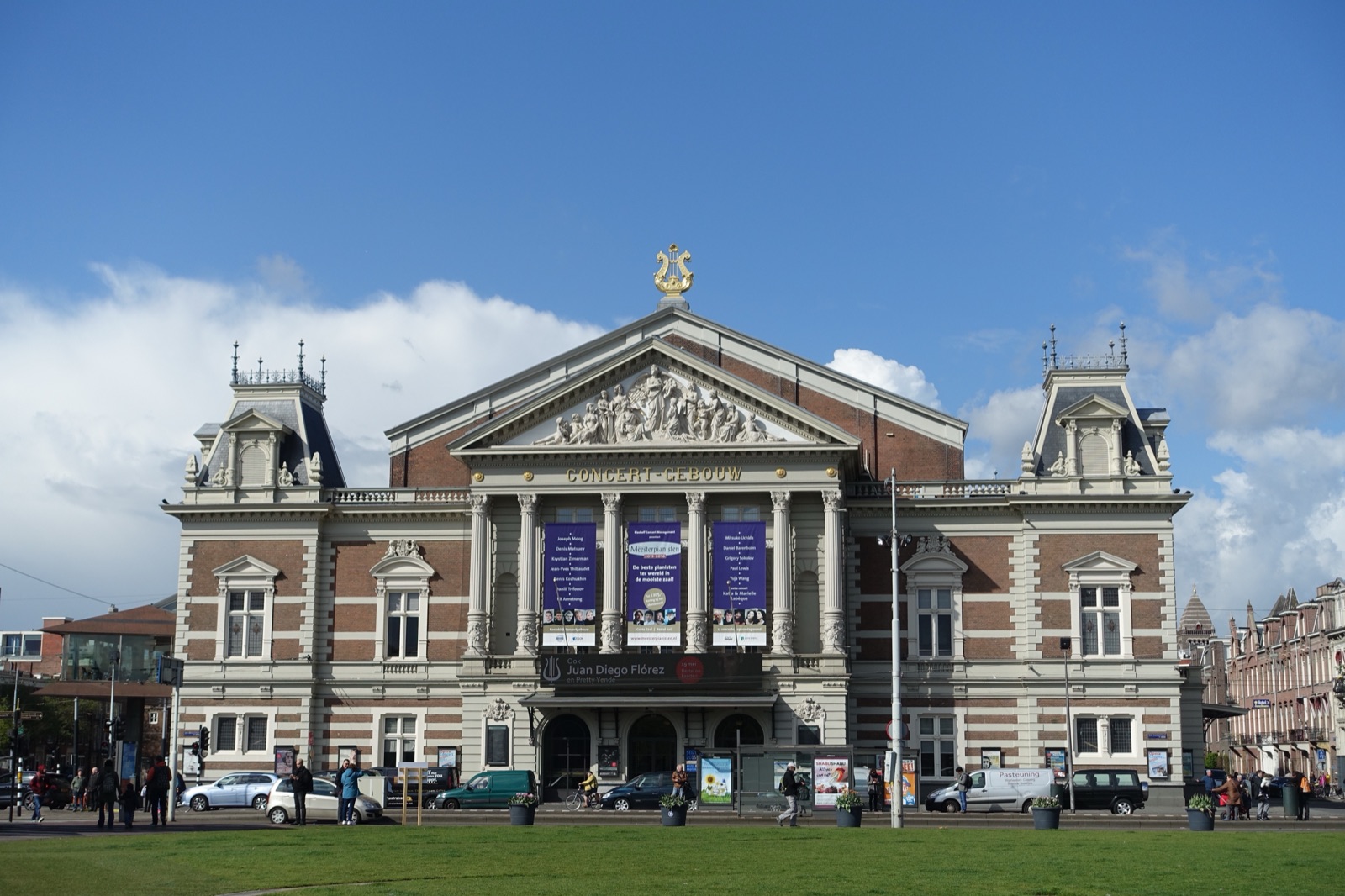
Berlin pays a hundred dollars a night for your seat. Amsterdam co-funds its orchestra with its national education ministry. London is, after the ACE cuts, the field’s current example of what happens when public funding is withdrawn. America is doing it on purpose.
§10 · Which orchestras fall next — predictions, with data
An honest article must name the institutions most at risk in the next 24–36 months. With the data on each, and the conditions Cadenza will revise on if they meet.
Cadenza does not enjoy this section. We publish it because the financial and institutional signals are public, and because the field’s consensus on which orchestras are most at risk should be made explicit rather than left to anonymous conjecture among insiders. The list below is ranked by Cadenza’s assessment of probability of major institutional event within 24–36 months. A “major institutional event” means: bankruptcy filing, music-director departure under contested circumstances, sustained labor action, executive resignation under board pressure, or published material reorganization. Cadenza will revise this list, in writing, if any orchestra on it meets the falsification conditions stated.
Metropolitan Opera (New York)
Caa1 junk debt. ~$47 million annual deficit. Layoffs announced. Pop-music rental plans announced. Combined music-director + GM compensation $3.4 million on a budget that does not balance. The most likely 24-month event is not closure but a major board-led management transition (Gelb succession), a forced restructuring of executive compensation, or a public-disclosure financial event that materially alters the institution’s capacity. Cadenza will revise if the Met posts a balanced budget in either of FY26 or FY27 with executive compensation unchanged.
San Francisco Symphony
$200 million Davies Hall renovation hole. No music director in 2025–26. Board has shown publicly it will pull back contemporary commissioning and touring. The successor search is the open question; the field is watching whether the SFS board will hire on artistic-vision grounds or financial-prudence grounds. Cadenza will revise if the board appoints a music director with an explicit artistic-vision mandate and a board-published five-year commissioning and touring budget.
Boston Symphony Orchestra (post-Nelsons transition)
The $618 million endowment makes outright bankruptcy unlikely. The reputational and artistic event is the Nelsons departure already in motion. The high-probability event is sustained musician dispute through 2027 (which would shadow the entire farewell season) and/or a public board dispute over the succession brief. Cadenza will revise if BSO appoints a successor music director with a five-year contract, full musician committee endorsement, and a published rebuild brief that does not cite financial constraints as primary.
Kennedy Center / National Symphony Orchestra (DC)
The two-year closure is itself the major event; the open question is what institutional form the Kennedy Center and the NSO will take when they reopen. NSO executive director Jean Davidson has resigned. Washington National Opera scheduling is in disruption. Cadenza will revise if the Kennedy Center re-opens with the NSO and WNO in their pre-closure operating shape and a published federal funding commitment matching at least pre-NEA-elimination levels.
Smaller mid-tier orchestras (Detroit, Minnesota, and an as-yet-unnamed US regional orchestra) — with the Vancouver Symphony as a Canadian comparison
Detroit is still rebuilding from the 2010–11 pay-cut event fifteen years later. Minnesota is the field’s cautionary precedent for lockouts. The unnamed regional orchestra — most likely a US city in the 500k–2M population band whose year-round professional orchestra has been operating at or near break-even — represents the field’s realistic next-closure case. Cadenza will not name a specific city until the financial signals are public; we will revise this section with the city named at the point any such orchestra publicly discloses material financial distress. (The Vancouver Symphony, in Canada, is already on strike — included as evidence that even the European-tier 49% public-funding model does not guarantee insulation from labor disputes.)
Cadenza does not enjoy publishing predictions. We publish them because the alternative is letting the field signal these institutional risks privately, off the record, while boards make public decisions on the assumption that no one is documenting them.
§11 · The audience is older than it has ever been
In 2002, classical concert audiences were already considered ageing. By 2022, nearly sixty per cent of US classical attendees were over 65. The customer base is dying faster than it is being replaced.
The financial picture in this article is the supply side of the institution. The audience picture is the demand side. The two are converging on the same conclusion at the same time.
The figures above are not from interested parties. They are from the National Endowment for the Arts’ own Survey of Public Participation in the Arts and from subsequent demographic studies (Population Europe; Impakter; tracked through the League of American Orchestras’ ticket-revenue benchmarking). The trajectory is consistent across surveys: the American classical music audience is, in 2026, smaller, older, and concentrated in fewer cities than at any point in the post-war period. The over-65 cohort that now dominates US classical attendance is, in actuarial terms, a depleting asset. The under-35 cohort that historically would have replaced it has not, on the surveyed evidence, done so at replacement rate.
The audience-side decline maps onto the institutional decline in ways that are not coincidental. The orchestras with the strongest subscription bases — Boston, Cleveland, Vienna, Berlin, Amsterdam — have been more institutionally resilient. The orchestras with the most exposed single-ticket dependence have been the most financially fragile through and after the 2020–22 closure period. Single-ticket attendance is the part of the income statement that drops fastest in a recession, a pandemic, or a transit disruption; subscription income is, in the field’s consensus, the institutional shock-absorber. The American shock-absorber has been thinning for twenty years.
The 2024 Royal Philharmonic Orchestra Insights survey added one optimistic counter-signal: the share of UK respondents who said they would like to experience an orchestral concert rose from 79 per cent in 2018 to 84 per cent in 2023, with newcomers (54 per cent) outnumbering established classical fans (31 per cent) in the respondent pool. The gap between “would like to experience” and “actually attended” is, however, the gap the American orchestra sector has been failing to close throughout the same period. Interest is not income. Until it is, the audience decline drives the operating-revenue decline.
Sixty per cent over 65. A twenty-nine per cent audience decline since 2002. Four per cent of US adults attended a classical performance in 2022. These numbers are not the consequence of the financial crisis described above. They are part of it. The audience is collapsing on the same timeline as the institution.
§12 · The donor concentration risk
The American orchestra’s thirteen per cent of revenue from public funding leaves eighty-seven per cent to be raised from a private donor base that has, since 2008, concentrated into fewer, larger gifts from older benefactors.
The American symphony orchestra’s funding model produces a specific structural vulnerability that the European model does not have to the same degree: dependence on private mega-gifts from a small number of named benefactors, most of whom are in the last decades of their giving lives. The Tang $40 million gift to the New York Philharmonic, examined in detail in Cadenza’s Dudamel investigation, is the recent landmark example: a single donor family’s contribution underwrote the institution’s entire next music directorship and produced the chair endowment that binds the orchestra to a particular conductor and an explicitly stated 1958–1969 historical recovery target. The orchestral-naming-rights donations of the previous generation — David Geffen ($100M, 2015, Lincoln Center hall renaming); Walt Disney Concert Hall’s underwriting in Los Angeles; the Avery Fisher family’s earlier hall gift — established the model. The Tang gift is the model continuing.
The structural risk in this model is concentration: when ten per cent or more of an orchestra’s annual operating revenue depends on a single family’s annual giving, the orchestra’s viability is tied to that family’s circumstances. Cadenza is not alleging that any specific named donor in this article is unlikely to continue supporting their stated institution. We are pointing out that the orchestral institutions described above have built their operating models around the willingness of approximately one hundred named donor families nationwide to continue producing seven- and eight-figure annual contributions, and that this donor base is ageing on the same timeline as the audience base described in §11.
The board chair / lead donor combination — Oscar Tang at the New York Philharmonic, David Geffen and the Tang/Hsu-Tang family combined at Lincoln Center, the BSO’s combined board chair plus principal donor structure, the LA Phil’s combined Diller / Disney / Eli Broad / Carolyn Powers historical donor base — is the institutional machine that produces the chairs, the halls, and the music director appointments documented in this article. When a single donor family in that machine reduces or ends giving, the institutional knock-on is not marginal. It is, at most American orchestras, the difference between operating with a manageable deficit and operating with a material shortfall that must be made up from the endowment.
The most consequential adjacent fact is that the federal estate tax framework that historically incentivized large arts bequests is now structurally weaker than at any point since 1981. The combination of an audience base concentrated in the over-65 cohort, a donor base concentrated in the same cohort, and a tax framework that no longer materially incentivizes the largest bequest gifts means the next decade of American orchestral funding will, on the published economic indicators, see the private-philanthropy pillar of the model erode at roughly the same rate as the audience-revenue pillar described in §11.
Eighty-seven per cent of US orchestra revenue is private. The private base is concentrated. The concentrated base is ageing. The estate-tax framework that produced the largest historical bequests has been structurally weakened. The model is in triple-decline.
§13 · The recording industry collapsed first
The historical revenue channel that supplemented orchestral operations — the classical recording industry — collapsed between 2001 and 2015. Streaming returned the industry to growth in unit terms but obliterated the per-listener economics. Classical orchestras never recovered the recording revenue line.
The American orchestra’s mid-twentieth-century institutional identity was built, in part, on a parallel business model that does not exist in 2026: a substantive recording-industry contribution. The Boston Symphony, Philadelphia Orchestra, Cleveland Orchestra, Chicago Symphony, and New York Philharmonic each maintained long-running recording contracts with major labels (RCA, Columbia, Decca, EMI, Deutsche Grammophon, Sony Classical) through the 1950s, 1960s, 1970s, and 1980s. The contracts produced earned revenue, individual-musician royalties or session pay, and — perhaps more importantly — a global reputational platform that supported touring, subscriber acquisition, and donor confidence in the institutional brand.
The recording revenue line collapsed in two phases. Between 2001 and 2010, global physical music sales fell more than 60 per cent. Approximately $13 billion in annual revenue was wiped out of the recorded music industry. Classical and orchestral recordings, with already-thin margins, were among the segments hit hardest. The major labels reduced classical rosters, cancelled long-term orchestra recording contracts, and shifted to release-by-release commissions on much smaller budgets.
Between 2014 and 2024, the industry returned to top-line growth — but on streaming. By 2024 streaming represented approximately 84 per cent of recorded-music revenue. Per-stream payouts, however, are denominated in fractions of pennies. Classical music, which generates dramatically fewer streams per release than pop or hip-hop and requires the same fixed costs (a full orchestra, a conductor, a hall, an engineer, editing, mastering), is structurally disadvantaged in the streaming economy in ways no business-model adjustment has yet closed. Apple’s 2023 launch of Apple Music Classical — a dedicated app segregating classical recordings from the general streaming catalog — was the most significant recent acknowledgement by a major platform that classical music has unique requirements. The launch has not, on available public data, materially altered the per-stream classical economics.
The implication for American orchestras is that a recurring earned-revenue line that supplemented operations through the 1980s no longer exists. The recordings on which most contemporary classical listeners encounter the Boston Symphony, the Philadelphia Orchestra, the Cleveland Orchestra, and the Chicago Symphony — the twentieth-century RCA, Sony, EMI, and Deutsche Grammophon catalogs — continue to stream. The orchestras concerned receive almost nothing from those streams. New recordings — the Andris Nelsons / BSO Shostakovich cycle, the Yannick Nézet-Séguin / Philadelphia recordings — are released on dramatically smaller commercial terms than their predecessors and are, in many cases, underwritten by the orchestra itself as marketing rather than profit-centre activity.
Cadenza will return to the per-orchestra recording economics in a separate investigation. The point in this article is narrower: the historical American symphony orchestra business model included a recording-revenue contribution that no longer exists. The thirteen per cent of revenue from public funding, the eighty-seven per cent from tickets and donations, and the absent recording line are the three legs of a tripod. The first leg is small. The second leg is concentrated and ageing. The third leg is gone.
Twentieth-century American orchestral institutional confidence was underwritten by a recording industry that, between 2001 and 2014, ceased to exist as a meaningful revenue line for orchestras. Streaming returned the music industry to top-line growth. It did not return the recording revenue line to orchestras. That leg of the tripod is gone.
§14 · What could be done — and the political reasons it will not be
The structural fix is public funding. The political conditions for that fix are absent. The institutional fix is consolidation and reduced scale. The donors blocking that fix are the same donors funding the brand-first hires.
There are three kinds of intervention that, in the field’s consensus, could materially change the trajectory documented in this article. They are listed in descending order of effectiveness and in ascending order of political feasibility. The match between those two rankings is the problem.
Public funding restoration. The structural fix is restoring American public funding for classical music institutions to a share approaching the European and Canadian baselines documented in §2. A US orchestra sector funded at 25 to 35 per cent from public sources — half the European level, twice the current American level — would close approximately three-quarters of the operating gap visible across the institutions covered in this article. The political conditions for that restoration, in the United States as of 2026, are absent. The NEA has been eliminated. The state arts councils mirror the federal posture. The Republican policy framework treats classical-music funding as an elite priority not warranting taxpayer support. The Democratic policy framework has not, in any administration of the last three decades, made cultural funding restoration a top-twenty priority. The political fix is therefore the most effective intervention and the least likely to occur.
Institutional consolidation. The second-order fix is consolidation: a deliberate, board-led shrinking of the American orchestra sector to a smaller number of institutions operating at sustainable scale. Pittsburgh, Houston, and the cities that lost their year-round orchestras in the post-2008 period represent the empirical precedent: a city without a full-time professional symphony does not necessarily stop having classical music. It has chamber ensembles, conservatory orchestras, and touring appearances by larger institutions. The shrinking is not artistically fatal. It is, however, institutionally and culturally painful, and it is blocked by exactly the donors who fund the brand-first hires: a donor whose name appears on a music director’s chair is, structurally, opposed to the consolidation of that music directorship.
Operating-model reform. The third-order fix is the model the field has been talking about for two decades: shorter seasons, smaller orchestras, more residency programming, less touring, fewer commissioned full-orchestra premieres in favour of chamber or reduced-scoring work. This is the model on which the surviving American orchestras will, in the field’s consensus, operate by the mid-2030s regardless of what the boards decide. The question is whether they arrive at that model through deliberate strategy or through forced reduction. The boards do not, on the public record, currently appear to be choosing strategy.
The fix is political. The political fix is not coming. The institutional fix is consolidation. The donors who fund the brand-first hires are the people blocking consolidation. The model has no viable path to repair through existing decision-makers. The American symphony orchestra’s next decade will be defined by what the institutions chose not to do in the 2020s.
§15 · The institutions, the people, and the model
The American symphony orchestra is the most institutionally distressed cultural form in the country. Every fact in this article is on the public record. Every person named is on the public record. Every prediction is published with the conditions under which Cadenza will revise it.
Nine American orchestras have closed since 2008. Two filed for bankruptcy. Three of the Big-3 are in simultaneous music-directorship crisis. The Metropolitan Opera is at junk debt. The Kennedy Center is closed. The NEA has been eliminated. American orchestras receive thirteen cents on the dollar from the public; European orchestras receive fifty. Two artist agencies in alliance manage a substantial fraction of the global supply of chief conductors. The institutional decisions producing this condition are made by named board chairs, chief executives, and music directors of record. They are accountable for the decisions they made.
We do not believe the American symphony orchestra will end. We believe, on the documentary public record, that the form most readers grew up with — twelve to fifteen full-time professional orchestras of approximately a hundred players each, underwritten by a mix of ticket sales, private donations, and modest public funding, with chief conductors hired through institutional search processes — will not exist in 2035. Some of the institutions will. Many of them will not. The replacement form will be smaller, more chamber-led, more residency-based, and more dependent on philanthropy concentrated among fewer donors. Whether it remains recognisable as the American symphony orchestra of the twentieth century is a question the next decade will answer.
The orchestras you grew up with were built by an institutional consensus that has stopped existing. The people running them are deciding, in 2026, how to manage their end. The decisions they are making are documented in this article and in the linked Cadenza investigations. Some of those decisions are defensible. Most are not. They are happening anyway.
The American symphony orchestra is dying. The names of the people running these institutions into the ground are on the public record. So are the decisions they made. So are the orchestras that have already closed. So is the model that produced it. We have now documented all of it in one place. The rest is what happens next.
The conclusion
We have published the names. We have published the numbers. We have published the predictions and the conditions under which we will revise them. The American symphony orchestra’s next decade is now public knowledge.
Cadenza is willing to be wrong. Every prediction in §10 is paired with a falsification condition. If the institutions on that list meet those conditions within 24 to 36 months, we will revise this article on this URL and say so. If they do not, the predictions stand.
The orchestras and their officers are invited, at any time, to respond on the record at hello@cadenza.work. Substantive on-the-record statements from any institution or named individual will be appended to this article as dated updates.
The American symphony orchestra is, in 2026, in the worst institutional condition of its 184-year history. We do not think it will not survive. We do think the people currently running it have not, on the public record, demonstrated the capacity to defend it. The decisions made between now and 2030 will determine whether the next generation of American musicians has a symphony orchestra to grow up listening to.
Related Cadenza investigations
- The Dudamel × New York Philharmonic appointment — the full institutional record — Why we do not think Gustavo Dudamel is the right music director for the New York Philharmonic at this moment.
- Fire Chad Smith. The Memo Is the Confession. — The Boston Symphony Orchestra and the executive who non-renewed Andris Nelsons.
- The Financial Anatomy of the Boston Symphony Orchestra — $618M endowment, $100M in reserve draws, and a board that says it’s not enough.
- The San Francisco Symphony: No Conductor, No Money, and a $200 Million Hole — Why Esa-Pekka Salonen left and what the renovation cost.
- The Metropolitan Opera Under Peter Gelb: A Factual Record of Decline — The published record from 2006 to 2026.
- The Kennedy Center Shutdown: How America Lost Its National Stage — The two-year closure and the NSO crisis.
- The Elimination of the NEA: How America Defunded Its Own Culture — The federal-level decision that accelerates everything in this article.
- The Real Money Behind America’s Top Orchestras — Cadenza’s IRS-Form-990 financial analysis of fifteen US orchestras.
- The People Who Failed Classical Music — A list of names, decisions, and consequences, forty years.
- Two Orchestras Down: San Antonio and the Boston Philharmonic — The immediate predecessors of the body count in this article.
Comments
Sign in to join the discussion.