Investigation · Czech Brass Industry
Paulo Fernandes accused his U.S. dealer of fabricating European factory visits.The visits are on the documentary record.AMATI Kraslice hasn’t responded in six days.
The Czech wind-instrument cooperative that owns the AMATI and V.F. Červený brands has, for six days, declined to respond to a documented complaint about the conduct of its sole listed worldwide-sales contact. The conduct, according to trade correspondence reviewed by Cadenza editorial, includes a unilateral mid-season cut to outside-Europe dealer terms, a written instruction to a U.S. dealer to remove AMATI products from its catalog, and a written accusation that the same dealer had not in fact visited any European factories that spring — an accusation the manufacturers visited have since confirmed to Cadenza editorial, in writing, was false. AMATI Kraslice, RIQ Investments, and Paulo are welcome to address any factual question raised by this article at hello@cadenza.work, on the record, at any time, before or after publication.
Why this matters
This is not a story about a routine dealer dispute. It is a story about who is, in 2026, custodian of one of Europe’s oldest wind-instrument traditions, and whether the holding company that bought that tradition out of bankruptcy is willing to defend the standards it inherited.
The cooperative that owns AMATI Kraslice and V.F. Červený is the same one whose horns armed the Czech Philharmonic, whose saxophone Václav Havel personally chose to gift to a U.S. president, and whose 350-year unbroken Bohemian craft tradition was rescued from bankruptcy in 2021 by RIQ Investments — under a worker-cooperative model whose stated mission is the partial benefit of the workers themselves.
The conduct documented in this article — committed by a single absentee contractor in his fourth month in role, in writing, with no public supervision and no documented authorization from the cooperative’s leadership or from RIQ Investments — is the test of that mission. The cooperative’s six-day silence is the answer.
And it is, on the documentary record, worse than the cooperative’s own correspondent appears to have understood. The five-word termination standard he composed — “no orders and we finish” — was sent the same day a U.S. public-university institutional purchase order from the dealer he was writing to had already been issued to AMATI Kraslice. The “no orders” claim was, at the moment it was typed, false.
On the morning of April 30, 2026, an email left a Portuguese mobile phone bound for the inbox of a U.S. music dealer. The signature block read AMATI Kraslice, výrobní druzstvo, Dukelská 44, 358 01 Kraslice, Czech Republic, +351 - 927 499 936. The body, as reviewed by Cadenza editorial, did not negotiate. It instructed. It told the dealer to remove AMATI products from the dealer’s own catalog. It set the cooperative’s standard for terminating the dealer relationship in five words — “no orders and we finish” — without notice period, grievance mechanism, or referenceable policy. It questioned, in writing and without supporting evidence, whether the dealer had in fact visited any European factories that spring. And it offered, by way of the correspondent’s own credentials, a list of company names: “formal dealer for Yamaha, Buffet Group, Alexander, Schagerl, Miraphone, etc.”
The dealer had, six weeks earlier, loaded the cooperative’s full 2026 USD pricelist onto its store at MAP-aligned pricing. The factory visits the correspondent disputed have been confirmed in writing by manufacturers visited during the period in question. Paulo did not consult those manufacturers before making the accusation. He did not consult the cooperative’s leadership before instructing the dealer to remove AMATI products from its catalog. He did not consult RIQ Investments before composing the cooperative’s entire termination standard in a five-word sentence. He simply wrote, on his own initiative, in his own name, with the cooperative’s 350-year heritage in his signature line, and hit send.
The contents of that exchange, together with a formal complaint detailing Paulo’s conduct, were forwarded to the cooperative’s operating leadership and to its investment-vehicle owner three hours and nineteen minutes after the letter was received. As of this writing — six days, four hours later — the cooperative has produced no response. Cadenza editorial has, in parallel, put the questions raised by the exchange on the record directly to AMATI Kraslice and to RIQ Investments ahead of publication.
The author of the April 30 letter is Paulo Fernandes, identified in his own email signature as Sales Director at AMATI Kraslice and as the cooperative’s sole listed worldwide-sales contact. The signature is reproduced below, verbatim from his published correspondence, because the geography speaks for itself.
Paulo Fernandes
Sales Director
AMATI Kraslice, výrobní druzstvo
Dukelská 44, 358 01 Kraslice, Czech Republic
+351 - 927 499 936
www.amati.cz / www.vfcerveny.cz
The +351 country code does not place a caller in West Bohemia. It places them in Iberia. AMATI Kraslice’s worldwide sales function is, on the public record, operated by one individual, remotely, from Portugal. The factory’s public contact directory lists three names in total — Paulo and two staff handling Czech-domestic sales and purchasing — and identifies no managing director, no chairman, and no operations director. Above Paulo, in any externally visible sense, there is air.
Cadenza editorial conducted a public-record search for Paulo’s industry footprint outside AMATI’s own contact pages. We were unable to identify any industry-panel appearances under his name at the major trade events for which records are searchable (NAMM, Musikmesse, Music China), any published trade-press writing on instrument design, dealer relations, or brass manufacturing, any quotes in trade obituaries, brand-history features, or product launches, or any LinkedIn profile clearly attributable to him in this role.
By the standards of European wind-instrument manufacturers in 2026, this is unusual. Heritage makers of comparable scale typically publish, at minimum, a named managing director, an organizational chart, and an international sales team of more than one. AMATI Kraslice publishes none of the equivalent.
The phone number
The cooperative’s entire published commercial-and-operational contact directory is reproduced verbatim below from amati.cz, the official AMATI Kraslice website, as it appears at the time of this article. It is short.
Three names. Two phone numbers in the country where the cooperative actually makes its instruments. One phone number — the only one for the role the cooperative titles Worldwide Sales — in another country, on another continent, attached to a personal mobile registered to a four-month hire.
That is the entire externally visible commercial-and-operational structure of AMATI Kraslice in 2026. There is no Managing Director on the page. There is no Chairman. There is no Operations Director. There is no Marketing Director, no Export Manager, no Finance contact, no HR contact, no Communications contact, no regional representative for the United States, no regional representative for Asia, no regional representative for Latin America. There is no named owner listed under the cooperative’s ownership entry, RIQ Investments. There are three names. They are reproduced above, in their entirety.
The institutions AMATI Kraslice competes with — Schagerl Music GmbH (Mank, Austria), Miraphone eG (Waldkraiburg, Germany), Gebr. Alexander Mainz (Mainz, Germany), Yamaha Music Europe (Hamburg, Germany), Buffet Crampon Group (Paris/Mantes-la-Ville, France) — each publish, on their own corporate websites, organizational charts that run to dozens of named operational and commercial staff, family-owner accountability, regional subsidiaries, and US-based representatives reachable during U.S. business hours, on U.S. country codes.
AMATI Kraslice publishes three names, two Czech mobile numbers, and a Portuguese mobile.
That is the cooperative’s answer, on its own published page, to anyone asking the question every prospective dealer, institutional buyer, and supplier partner in the trade is now — after the conduct documented below — entitled to ask: who, exactly, would do business with this?
Paulo, in five acts
Read Paulo Fernandes’s public footprint as a sales executive at a heritage European wind-instrument cooperative and what survives is, in 2026, almost nothing.
One. Paulo assumed his current role as Sales Director and sole listed worldwide-sales contact of AMATI Kraslice in January 2026 — a tenure measured, at the time of this article, in approximately four months. The start date is sourced to the cooperative’s own North American representative, communicated to Cadenza editorial in correspondence subsequent to the cooperative receiving the request for comment that produced this article. Cadenza editorial has identified no public announcement of his appointment by either the cooperative or RIQ Investments, no press notice, no industry-trade welcome, and no published organizational chart in which his role sits.
Two. Cadenza editorial was unable to identify any industry-panel appearances under his name at the major trade events for which records are searchable (NAMM, Musikmesse, Music China), any published trade-press writing on instrument design, dealer relations, brass manufacturing, or post-bankruptcy heritage-brand rehabilitation, any quotes in trade obituaries, brand-history features, or product launches, or any LinkedIn profile clearly attributable to him in this role.
Three. He operates from a Portuguese mobile telephone number on behalf of a Czech wind-instrument cooperative whose factory is in West Bohemia. His geographic separation from the workforce he represents is, on the public record, complete. He is not, on any public document Cadenza editorial could find, a member of the worker cooperative he externally represents.
Four. The single most documentable act attributable to him in public correspondence in 2026 is a letter, dated April 30, instructing a paying U.S. dealer to remove AMATI products from the dealer’s own catalog, setting a five-word termination standard, and accusing the same dealer of fabricating European factory visits — a fabrication accusation the documentary record refutes.
Five. The institution he is, in 2026, the worldwide commercial face of has been making wind instruments in Kraslice for three hundred and fifty years. Bohuslav Červený built the modern rotary brass tradition in this town. Antonín Dvořák’s Czech Philharmonic players sat behind Červený rotaries. Václav Havel chose a Kraslice tenor saxophone when he wanted to hand a U.S. president an instrument that would say something about Czech craft. That is the inheritance for which Paulo is, in 2026, the sole listed worldwide-sales contact.
Read those five paragraphs in any order. They do not improve.
The sole worldwide commercial face of three hundred and fifty years of Bohemian wind-instrument craft, in 2026, is a four-month hire with a Portuguese phone number, no LinkedIn, and one published letter to his name.
Embedded in the same April 30 letter, Paulo questioned in writing — and without offering supporting evidence — whether the U.S. dealer counterparty had in fact visited any European factories that spring. The visits Paulo disputed are documented in writing in correspondence between the dealer and the manufacturers visited, reviewed by Cadenza editorial. The correspondence — appointments, follow-ups, hosted-visit logistics, post-visit notes — predates the April 30 letter by weeks. The visits happened. The documentary record is unambiguous.
The accusation was, on the documentary record, false.
It is worth pausing on what that means. The Sales Director and sole listed worldwide-sales contact of a 350-year-old European wind-instrument cooperative made a written accusation of fabrication against a paying U.S. counterparty, on a fact that is documentable, that he had not first verified, and that the documentary record now refutes. The cooperative may wish to address whether its worldwide sales function makes a habit of this, and, if so, whether RIQ Investments — the cooperative’s investment-vehicle owner in Brno, led by Roman Staněk and with manufacturing-restructuring portfolio held by Kirill Khryakov — considers it a 2026 commercial-conduct standard worth defending.
The “no orders” lie
The five-word termination standard Paulo sent the dealer — “no orders and we finish” — was, at the moment it was typed, factually false on the documentary record.
Hours before the April 30 letter, the dealer in question had already issued an institutional purchase order to AMATI Kraslice from a U.S. state-system university music department — a documented order, paperwork complete on both sides, awaiting only the standard internal-wire processing on the university’s side before payment release. The order confirmation was on the cooperative’s correspondence record before Paulo sat down to compose the “no orders and we finish” letter.
When Paulo wrote that there were “no orders,” there was an order. He had it in writing. He had the institutional purchase-order number. He had the buyer’s name. The five-word termination standard the cooperative now defends in silence was, at the moment of its composition, contradicted by paperwork the cooperative’s own correspondent had received and acknowledged.
The cooperative may wish to address whether its sole worldwide-sales contact had, before sending an ultimatum to a paying U.S. dealer, read the institutional purchase-order documentation that paying dealer had already submitted to him. If he had, the “no orders” framing is a documented misrepresentation. If he had not, the cooperative’s sole worldwide-sales contact composed and sent an ultimatum to a paying dealer without first reading that dealer’s pending order book.
Either reading is, on its own, sufficient cause for the cooperative’s operating leadership and for RIQ Investments to repudiate the April 30 letter in writing.
“no orders and we finish.”
— Paulo Fernandes, Sales Director, AMATI Kraslice, in writing to a U.S. dealer, April 30, 2026.
The conduct, on its face
It is worth, before continuing, examining what Paulo actually did — what the cooperative’s sole worldwide-sales contact wrote, in writing, to a paying U.S. dealer, in 2026, on behalf of a 350-year-old European wind-instrument house, and what it would mean if any peer manufacturer in the trade treated a paying dealer the same way.
He did not negotiate. He instructed. A worldwide sales director told a paying retailer to remove the brand from the retailer’s own catalog. The job of a sales director is to keep his brand visible to paying buyers. Paulo did the opposite, in writing, on his own initiative, with no documented authorization from the cooperative he represents. He instructed a paying customer to actively destroy the cooperative’s own market visibility in a market the cooperative has, on its public 2026 plans, declared a priority for revival.
He summarized the cooperative’s entire termination standard in five words. “no orders and we finish.” No notice period. No grievance mechanism. No documented review. No referenceable policy. The Sales Director of a cooperative whose dealer-relations conduct is not subject to publicly named operational oversight composed, in five words, the entire commercial standard the cooperative now defends in silence. Heritage European wind-instrument houses do not communicate with paying dealers this way. They have not done so for the better part of a century.
He accused his own dealer of fabrication. An accusation of fabrication, made in writing by the cooperative’s sole worldwide-sales contact against a paying counterparty, on a fact that was documentable and false, is the moral and professional center of this story. Cadenza editorial does not use the word rude in this article. The conduct documented above does not require the adjective.
He cited credentials that, on a careful read, dignify nothing. The same letter offered, as the correspondent’s own credentials, “formal dealer for Yamaha, Buffet Group, Alexander, Schagerl, Miraphone, etc.” The phrasing is, in the European wind-instrument trade, telling. None of the manufacturers cited maintains “formal dealers” in the singular individual sense; they maintain dealer networks, named regional distributors, family-owner accountability chains, and US-based subsidiaries. The use of the term as a personal credential — and the citation of five competing manufacturers as proof of standing in the trade — is not the way industry veterans describe their work. Cadenza editorial intends to put the claimed dealer-history with each of the five named manufacturers — Yamaha, Buffet Group, Alexander, Schagerl, Miraphone — to those manufacturers in a follow-up inquiry. Their responses, when received, will be reflected in the published article.
He cut the dealer’s discount mid-trading-year, unilaterally, in writing. Six weeks before the April 30 letter, on March 12, 2026, Paulo had reduced the outside-Europe dealer discount from 25% to 15%, with no documentary policy basis publicly identifiable, applicable immediately, in the middle of an active dealer relationship. Annual discount schedules in the European wind-instrument trade are normally fixed at the start of a trading year and binding for the year. They are not unilaterally adjusted, by a single individual, mid-cycle, in a written demand to a dealer who has already loaded the cooperative’s full pricelist into its store at the previously agreed terms.
None of the conduct above is a normal European-trade misstep. None of it is recognizable trade practice for a heritage cooperative supplying conservatory and professional musicians. All of it was committed by a single individual, in writing, in two months, operating from another country, with no public supervision — and is, until repudiated by the cooperative’s leadership or by RIQ Investments, the position of AMATI Kraslice and of RIQ Investments in 2026.
The cooperative’s silence is, until corrected, the cooperative’s position.
What he wrote, in his own words
The April 30 letter is short. It is reproduced here in the passages that bear on the cooperative’s commercial-conduct standard. These are not paraphrases. They are verbatim from the correspondence, as composed and sent by Paulo Paulo, Sales Director, AMATI Kraslice, to a paying U.S. dealer, on April 30, 2026, at 07:39 UTC. Spelling and grammar are unaltered.
“I don´t answer you with huge email so i go direct.”
The opening sentence. The “huge email” was a substantive 1,500-word reply the dealer had sent the previous day, detailing his commercial pipeline, his existing institutional sale to a U.S. public-university music department, his published partner roster, and an offer to fly to Kraslice if the cooperative could host the visit. The cooperative’s sole worldwide-sales contact’s stated reason for not engaging with it is its length.
“If you are a professional musician i ask you if your instruments and acessories are bought from online retail, bying - without trial frame...”
The cooperative’s sole worldwide-sales contact, in writing, on official AMATI Kraslice signature, raises an open question as to whether the dealer is a professional musician. The misspellings acessories and bying are reproduced as written.
“Not 1 business in the world sells to you without stock, none. Amati it´s no diferent. Check biggest online retail Thomann wich are the biggest sales to any brand including Amati, check for thousands and thousands of products, all what they advertise they have it in stock.”
Two factual errors in three sentences. Direct-to-customer European factory orders, made-to-order manufacturing, and dropship-on-order — the model on which a substantial portion of contemporary specialty music retail operates in 2026 — do not require warehouse stock at the dealer level. Thomann’s own listings include backorder, made-to-order, and special-order instruments routinely; the claim that “all what they advertise they have it in stock” is contradictable by any reader with five seconds and a browser. The misspellingsdiferent, wich, and the run-on syntax are reproduced as written.
“If you visited european factories wich i have my doubts, no one would sell you 1 screw without orders and stock because you don´t have a shop, you have a digital catalogue only. As well no brand would sell directly to you. Maximum they would refer you a distributor in your area..”
The accusation about factory visits — documented in writing in dealer-to-factory correspondence reviewed by Cadenza editorial; the visits happened. The cooperative’s sole worldwide-sales contact, in writing, also declares the entire model of online specialty music retail invalid. It is the same model on which the cooperative’s own published 2026 plans for U.S. revival are predicated, since the cooperative does not maintain its own U.S. brick-and-mortar storefront.
“If you tell me Amati it´s the fromt of your shop i presume you have a huge problem with your business because being the 1st brand in your shop and not 1 order from you makes me think what can be your 2nd or 3rd brand.”
Fromt is reproduced as written. Composed the same day a U.S. public-university institutional purchase order from the same dealer to AMATI Kraslice — paperwork complete on both sides — already sat in the cooperative’s correspondence record. The “not 1 order” framing was, at the moment Paulo typed it, false on the documentary record.
“Looking at your catalogue with Odissey and Carol you show Asian brands and not 1 only top brand for professional musicians.”
The misspelling of Odyssey as Odissey is in the original. The dealer’s catalog, on the public record at the time of the letter, listed dozens of established European-heritage and U.S. specialty makers in the brass, woodwind, sheet-music, and accessories categories — including several houses with which AMATI Kraslice itself has shared trade-show floors in Europe for decades. The claim that the dealer carried “not 1 only top brand for professional musicians” is — by any review of the dealer’s actual public catalog — documentably false.
“If you started with Amati trumpet congratulations, but now you don´t play Amati, you don´t have 1 instrument to show to costumers.”
The cooperative’s sole worldwide-sales contact, in writing, on the cooperative’s behalf, to a paying dealer, concludes that a former player of an AMATI instrument is — by virtue of having moved to other instruments in the years since — disqualified from selling AMATI to other musicians.
“So what are you trying to tell me ? You tested european instruments that are going to be delivered to you ? Good to you.”
The cooperative’s sole worldwide-sales contact’s response, in writing, to the dealer’s account of having play-tested European instruments at their factories of origin during a 2026 European trip. “Good to you”is in the original.
“You tell me if Amati would pay your expenses ?? Are your orders for 1 million each year ?”
In response to the dealer’s offer to fly to Kraslice if the cooperative could host the factory visit. The cooperative’s revenue threshold for hosting a U.S. dealer’s first factory visit is, by Paulo’s own framing in writing, one million units per year. There is no evidence on the public record that the cooperative has hosted any U.S. dealer at its Kraslice factory in 2026 under any threshold.
“So in Europe i know the rules.”
The cooperative’s sole worldwide-sales contact, in writing, on the European wind-instrument trade.
“I really don´t understand what´s your point with this explanation but i keep telling you, no orders and we finish. Amati doesn´t need to be presented at digital online business, it needs to be presented at shops with costumers.”
In the same letter, Paulo had cited Thomann GmbH — the world’s largest digital online wind-instrument retailer, and one of AMATI Kraslice’s named U.S. and global retail partners — as the standard the dealer should aspire to. The two positions are advanced, in writing, four paragraphs apart.
“I kindly ask you to remove Amati products from your catalogue, no orders from you but also no problems from a digital catalogue that have been creating problems to dealers who have Amati stock.”
The closing instruction. The word kindly is in the original. The framing of the dealer’s catalog as “creating problems to dealers who have Amati stock” confirms the conduct’s commercial provenance: a competing U.S. dealer’s complaint to AMATI Kraslice was the apparent originating instigation for the conduct documented above. The cooperative’s worldwide sales function has, in writing, sided with the complaining competitor and against the dealer who had loaded the cooperative’s 2026 pricelist, secured the cooperative’s first U.S. institutional purchase order in the trading year, and offered to fly to the factory.
That is the substance of the April 30 letter. There is no other content. There is no commercial proposal, no negotiation, no constructive critique, no attempt at a path forward. There is the misspelling of front as fromt, the misspelling of Odyssey as Odissey, two factual errors about Thomann GmbH, a documentary lie about the dealer’s order book, an accusation about the dealer’s factory visits the documentary record refutes, several direct insults to the dealer’s musicianship, business, and catalog, one direct self-contradiction within the same letter four paragraphs apart, and a closing instruction to delete the cooperative’s brand from a paying dealer’s catalog at the apparent request of a competing dealer.
These quotations are reproduced without alteration as a courtesy to the reader, and as a courtesy to AMATI Kraslice, to RIQ Investments, and to Roman Staněk personally — so that there can be no question, on the documentary record, about what the cooperative’s sole worldwide-sales contact wrote, in writing, in his fourth month in role, in his own grammar, on behalf of three hundred and fifty years of Bohemian wind-instrument craft, to the cooperative’s only paying U.S. dealer.
This is the document that Roman Staněk, founder of RIQ Investments, has — for six days, four hours, and counting — declined to repudiate.
And five minutes earlier
The April 30 letter is not the first time Paulo’s correspondence record shows him operating without the documented authorization the conduct would require. Six weeks earlier, on March 12, 2026, the cooperative’s sole worldwide-sales contact unilaterally cut the outside-Europe dealer discount from 25% to 15% — in a two-email sequence sent five minutes apart, on a single morning, with the change characterized as an oversight he had “forgot to tell” the dealer.
10:07 UTC — first email
“I don´t have a problem for you to keep our products on your catalogue, with updated prices.”
The dealer relationship appears settled on the cooperative’s previously agreed terms.
10:12 UTC — second email, five minutes later
“Excuse me, i forgot to tell you about Amati discounts to countries outside Europe, it´s 15% from dealer price and not 25% as agreed before.”
In five minutes, by one casual sentence framed as an oversight, the cooperative’s outside-Europe dealer-discount schedule is cut by ten percentage points — a unilateral mid-trading-year change to commercial terms Paulo himself acknowledges, in the same sentence, were “agreed before.” No documentary policy basis is publicly identifiable. No notice period is offered. The change is effective immediately.
The pattern is consistent. The cooperative’s sole worldwide-sales contact, in writing, on official AMATI Kraslice signature, makes unilateral commercial decisions affecting the cooperative’s U.S. dealer relationships, without documented authorization from the cooperative’s leadership or from RIQ Investments, and characterizes those decisions in the casual register of a forgotten errand.
March 12 was the rehearsal. April 30 was the performance.
The brand Paulo administers is one of the oldest in European wind-instrument manufacture. The town of Kraslice, in West Bohemia near the German border, has produced brass and woodwind continuously since the seventeenth century. The Červený line — established in 1842 in Hradec Králové by Bohuslav Červený, the maker who effectively codified the modern rotary brass instrument — supplied the wind sections of the Austro-Hungarian Empire and shaped the rotary tradition of Central European orchestral playing for nearly two centuries.
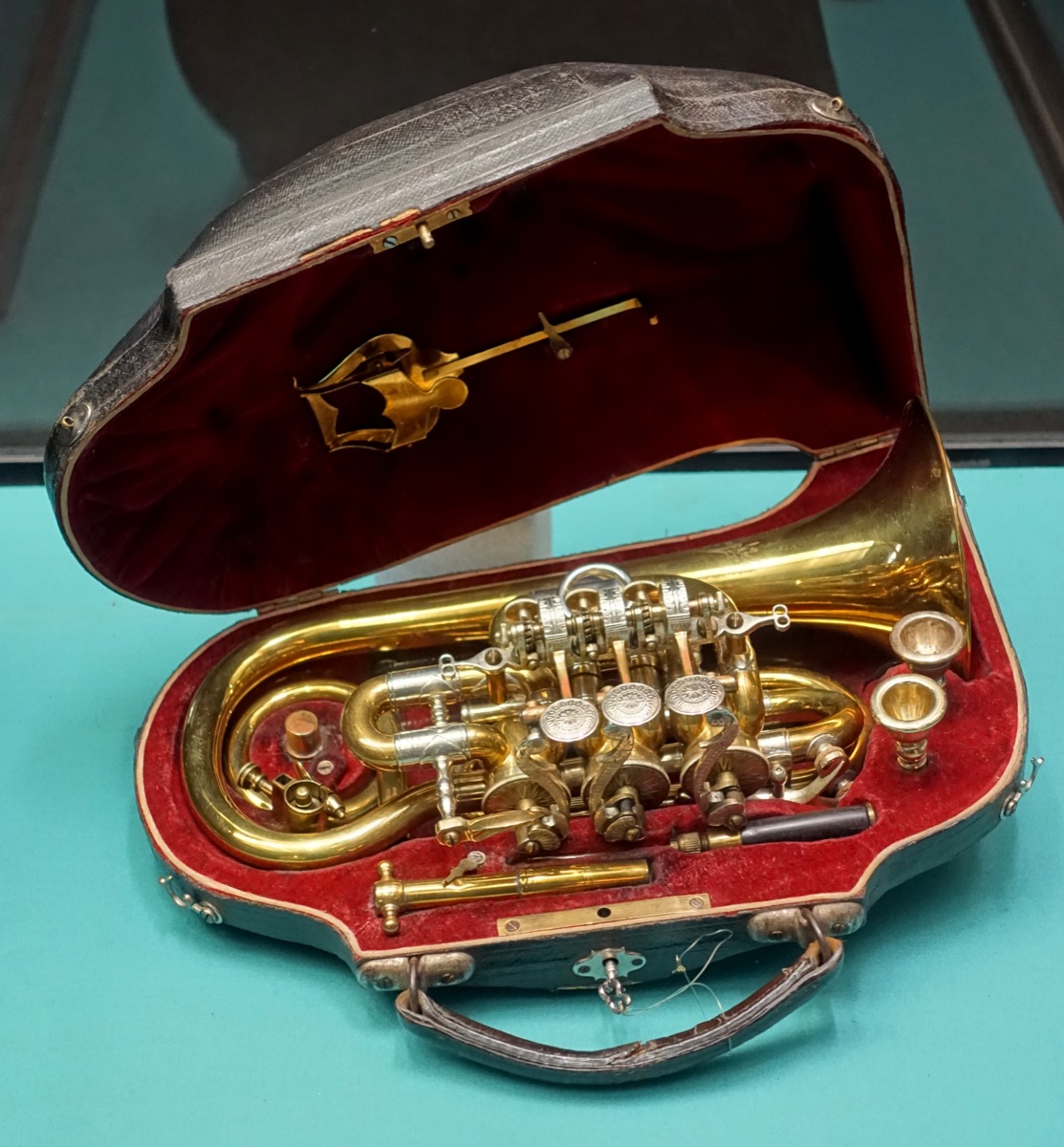
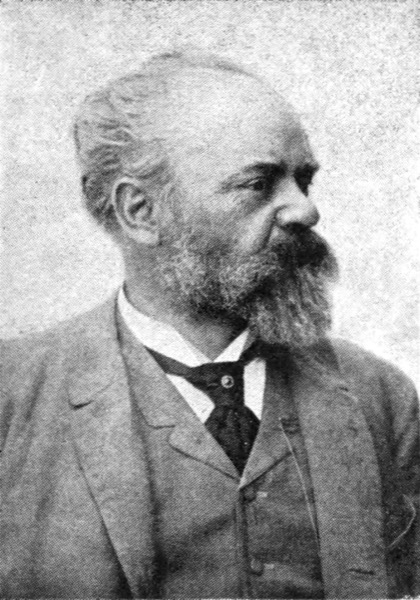
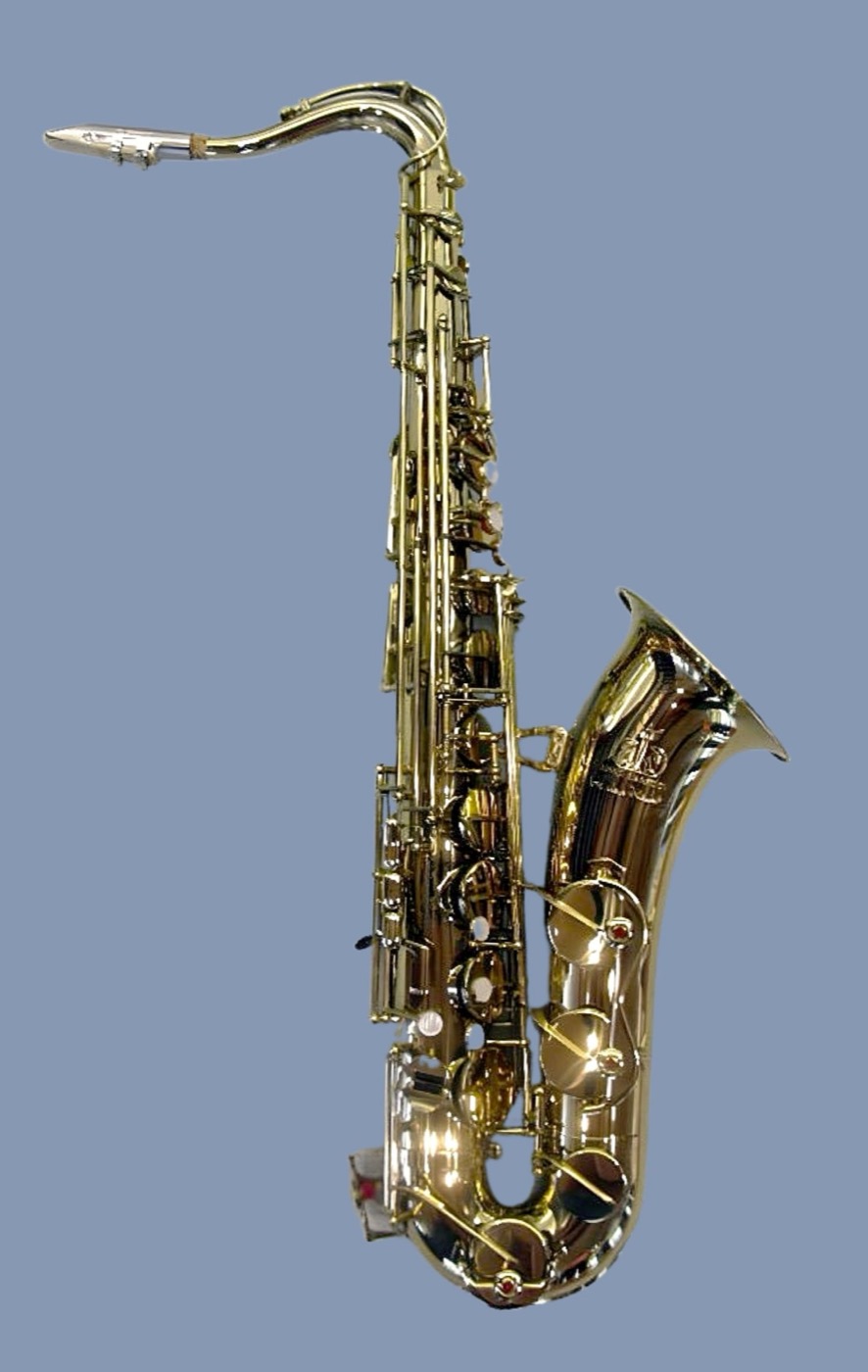
Antonín Dvořák’s Czech Philharmonic players used Červený rotaries. Václav Havel gifted a Kraslice-made tenor saxophone to Bill Clinton in 1994. The Kraslice rotary, in the Bohemian tradition, has shaped Central European orchestral brass for generations.
The instrument that crossed the ocean in 1994 — and the institution that built it — were not minor diplomatic objects. They were the things the first post-Communist Czech president chose, on behalf of the Czech Republic, when the Czech Republic wanted to be heard.

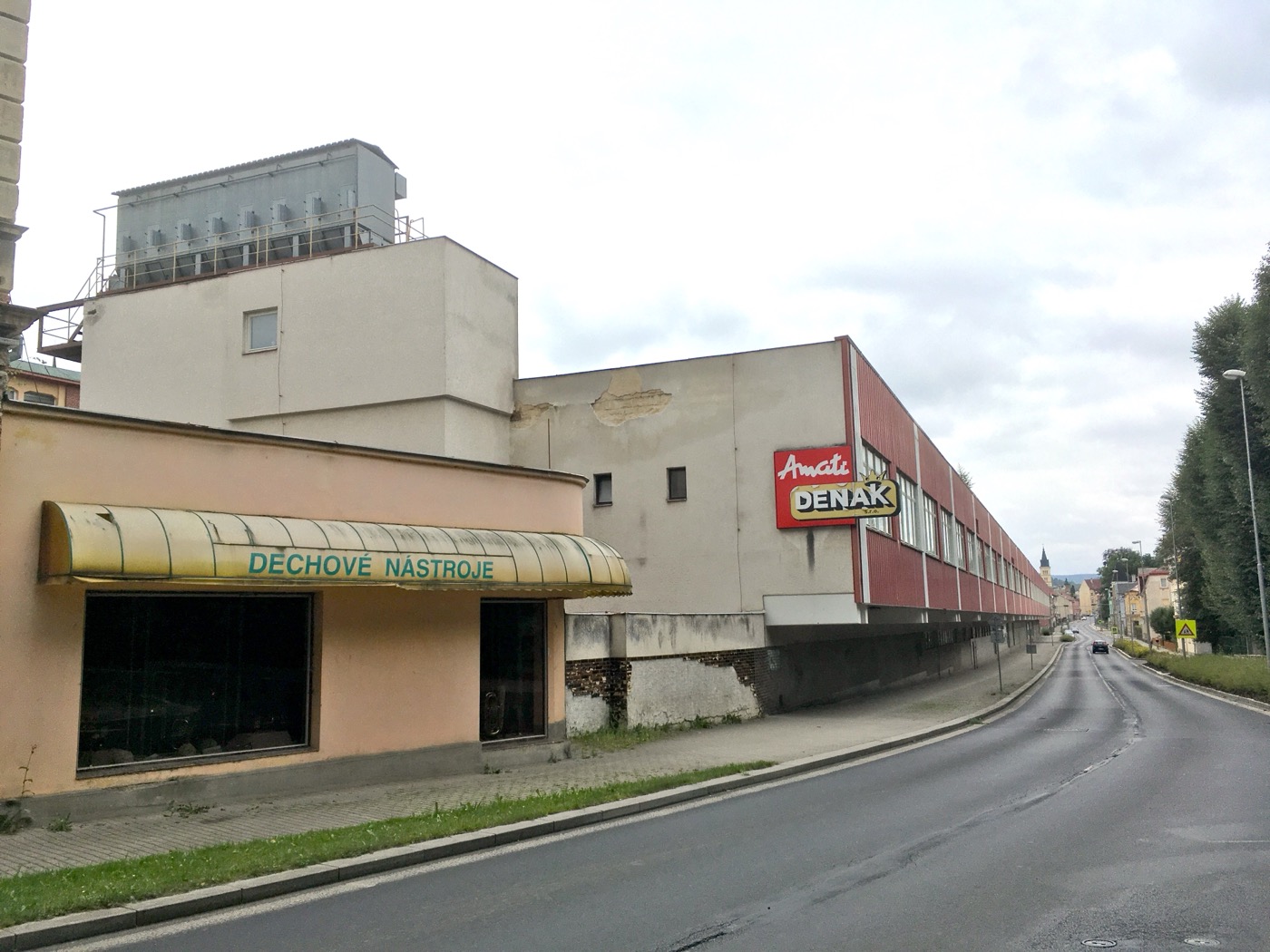
In 2020, AMATI Kraslice declared insolvency. Public filings recorded debts of 182 million CZK, and the V.F. Červený factory in Hradec Králové — Bohuslav Červený’s own facility — was permanently closed. It has not reopened. V.F. Červený-branded instruments today are made at the Kraslice facility alongside AMATI’s own line.
In summer 2021, the bankrupt asset was acquired by RIQ Investments — a Brno-based investment vehicle led by Roman Staněk — for 26.5 million CZK, roughly $1.2 million USD. The price was less than the share capital of any single major European wind-instrument maker. RIQ’s stated strategy, distinctive in Central European post-bankruptcy work, is the conversion of distressed manufacturing companies into worker cooperatives in which employees hold partial ownership. The new legal entity, AMATI Kraslice, výrobní družstvo, was registered at the Regional Court in Pilsen on September 13, 2021.
The model is unusual and, on its face, sympathetic. It is also, on RIQ’s own published portfolio page, the highest-profile cultural asset under its umbrella — the only one in the RIQ portfolio whose product reaches the concert stage. It is also, in 2026, the only one whose conduct in writing is the subject of editorial inquiry.
All of which — three hundred and fifty years of Bohemian craft, the brand of Bohuslav Červený, the Czech Philharmonic’s rotary tradition, the Havel gesture to the Clinton White House, the worker-cooperative restructuring promise — is now being represented to the U.S. market by a four-month-tenure contractor with a Portuguese mobile phone, no public supervisory chain, and a documented willingness to accuse the cooperative’s own dealers of fabrication on facts the documentary record refutes. That is, in the spring of 2026, the inheritance RIQ Investments has chosen to defend by saying nothing.
On April 30, 2026 at 10:58 UTC, a formal complaint detailing the conduct above was sent to ten amati.cz addresses and to RIQ Investments. Two of the amati.cz addresses returned standard user does not exist delivery failures. The remaining eight, including the cooperative’s other publicly listed contacts, and info@riqinvestments.com, which reaches Roman Staněk and Kirill Khryakov directly, received the message without delivery error.
In the six days, four hours that followed, none of those recipients produced a written reply. Paulo himself has produced no further correspondence since the April 30 letter cited above, sent three hours and nineteen minutes before the complaint that quotes him verbatim back at the cooperative’s leadership.
The silence is informative. Roman Staněk founded RIQ Investments and built its public profile on the rescue and worker-cooperative restructuring of distressed Czech manufacturing assets — a strategy in which the holding company’s reputation is necessarily at stake when one of its portfolio companies is the subject of a dealer-conduct complaint. Kirill Khryakov holds the investment-director portfolio for manufacturing restructuring inside RIQ. Both are reachable at info@riqinvestments.com — the address that received the April 30 complaint without delivery error. Neither has, as of publication, written back.
The position of AMATI Kraslice and of RIQ Investments, on the public record as of this writing, is that the cooperative’s worldwide sales function may, without correction from its leadership and without correction from its investment-vehicle owner, instruct a U.S. dealer to remove AMATI products from its catalog, alter the outside-Europe dealer discount schedule unilaterally mid-season, and accuse the same dealer in writing of fabrications which the documentary record refutes. That is the cooperative’s 2026 commercial-conduct standard, until the cooperative’s leadership writes back to say otherwise.
Six days. Eight delivered amati.cz inboxes. One RIQ Investments inbox that reaches Staněk and Khryakov directly. No reply.
In the regular course of trade-press process, Cadenza editorial has put the following questions on the record to AMATI Kraslice and, separately, to RIQ Investments. The cooperative has not yet replied to any. We continue to invite response.
- Was the March 12, 2026 reduction of the outside-Europe dealer discount from 25% to 15% authorized by the cooperative’s operating leadership, by RIQ Investments, or was it a unilateral act by Paulo? Where, if anywhere, is this dealer-discount policy documented in writing?
- Is it AMATI Kraslice’s stated policy that a U.S. dealer relationship is contingent on confirmed factory orders within a sixty-day window? If so, where is this termination policy documented? How many U.S. dealer relationships has the cooperative terminated under this or similar thresholds in 2024, 2025, and 2026 to date?
- Was the April 30, 2026 instruction to remove AMATI products from a U.S. dealer’s catalog issued under the cooperative’s authority, or as a unilateral act by Paulo?
- AMATI Kraslice’s public contact directory lists no managing director, no chairman, and no operations director. Is the directory complete? To whom does the Sales Director report? Is the cooperative’s worldwide sales function subject to operating-leadership review at the Kraslice facility, or does it report directly to RIQ Investments in Brno?
- In summer 2021 RIQ Investments acquired the bankrupt AMATI Kraslice asset for 26.5 million CZK and, by September 2021, restructured it as a worker cooperative. What were RIQ’s stated commercial and operating priorities for AMATI Kraslice and V.F. Červený at the time of acquisition? Has the cooperative met those priorities in 2024, in 2025, and in 2026 to date?
- In the April 30, 2026 letter, Paulo questioned in writing whether the U.S. dealer counterparty had visited any European factories that spring — an accusation since shown, by direct written confirmation from the manufacturers visited, to be false. Did Paulo have any documentary basis, before sending that letter, for questioning the dealer’s factory visits? If yes, what was that basis? If no, is it AMATI Kraslice’s standard for its worldwide sales function to accuse paying counterparties, in writing, of fabrications it has not first verified?
In the same April 30, 2026 correspondence, Paulo characterized his commercial credentials, in his own words, as “my experience as formal dealer for Yamaha, Buffet Group, Alexander, Schagerl, Miraphone, etc.” The claim is verifiable. Cadenza editorial intends, in a follow-up inquiry, to put the claimed dealer-history to the corporate-communications channels of all five named manufacturers — Yamaha Music Europe, the Buffet Crampon Group, Gebr. Alexander Mainz, Schagerl Music GmbH, and Miraphone eG — to confirm or correct his stated dealer-history with each, the territory and years of any such relationship, the current status of any such relationship as of May 2026, and whether the manufacturer has received complaint correspondence regarding his commercial conduct between 2022 and 2026. Their responses, when received, will be reflected in the update log at the bottom of this article.
Timeline of conduct
- March 11, 2026. Paulo opens correspondence with the U.S. dealer, citing a complaint received from a third-party U.S. dealer about the dealer’s pricing and online presence. The U.S. dealer responds the same day with a written history of the relationship, the existing pricing structure, and confirmation of MAP-aligned listing.
- March 12, 2026, 10:07 UTC. Paulo writes: “I don´t have a problem for you to keep our products on your catalogue, with updated prices.” The dealer relationship appears settled.
- March 12, 2026, 10:12 UTC (five minutes later). Paulo sends a separate email to the same dealer: “Excuse me, i forgot to tell you about Amati discounts to countries outside Europe, it´s 15% from dealer price and not 25% as agreed before.” The cooperative’s outside-Europe dealer discount is, in five minutes and one characterization of an oversight, unilaterally cut from 25% to 15% — a reduction the same correspondent acknowledges was “agreed before.”
- April 28–29, 2026. Paulo pushes back in writing on the dealer’s catalog framing of the AMATI / V.F. Červený lines.
- April 30, 2026, 07:39 UTC. Paulo’s letter instructs the U.S. dealer to remove AMATI products from its catalog, sets a sixty-day “no orders and we finish” termination standard, and accuses the dealer of fabricating European factory visits.
- April 30, 2026, 10:58 UTC. Formal complaint detailing Paulo’s conduct is delivered to nine of ten amati.cz leadership addresses and to info@riqinvestments.com without delivery error. Two amati.cz addresses return standard user does not exist failures.
- May 1–5, 2026 (five business days). No reply from the cooperative or from RIQ Investments.
- May 6, 2026, ~03:00 UTC. Cadenza editorial puts six on-the-record questions directly to AMATI Kraslice and RIQ Investments, with twelve hours’ notice ahead of publication.
- May 6, 2026 (this article). Publication. Updates from the cooperative, RIQ Investments, or any of the five peer manufacturers contacted in parallel will be appended below.
RIQ Investments’ portfolio promise
RIQ Investments’ published portfolio strategy is the rescue and worker-cooperative restructuring of distressed Czech manufacturing assets. The model is, at the level of headline, sympathetic and well-stated: workers hold partial ownership of the rescued business, the holding company funds turnaround capital and operational structure, and the rescued asset re-enters its market under a governance arrangement that aligns workforce and ownership.
AMATI Kraslice is the highest-profile cultural asset in that portfolio, the only one whose product reaches the concert stage, and the only one whose external commercial face is, in 2026, a single absentee contractor operating from a different country.
The cooperative’s worker-members do not, on the public record, have a Sales Director who is one of them. They have a Sales Director who is in Portugal. They have, in 2026, no managing director, no chairman, and no operations director publicly identifiable. They have, in 2026, the dealer-relations conduct documented in this article as the only externally visible expression of their cooperative’s commercial standards.
The contradiction is the cooperative’s to address. So is the question of whether RIQ Investments’ portfolio standard, when extended from the Kraslice case to the rest of the holding company’s manufacturing-restructuring work, is one external buyers can rely upon.
Imagine, for a moment, that you are the kind of buyer this dealer serves. You play in a community wind ensemble, or you teach trumpet at a state university, or you direct a high school marching band, or you are a parent buying a first oboe for a teenager learning her way through Marigaux’s intermediate line. Your dealer is not in this conversation, but the consequences are. The Sales Director of a 350-year-old European wind-instrument house has, in writing, instructed your dealer to remove the AMATI line from his catalog. If your dealer complies, the brand is gone from your shopping options. If your dealer refuses to comply, the Sales Director’s stated standard — “no orders and we finish” — applies, and the brand is gone anyway. Either way, the cooperative’s worldwide-sales contact, operating from a Portuguese mobile in another country, has unilaterally decided that you, the buyer, no longer have a legitimate sourcing path to a 350-year-old Czech wind-instrument tradition. He did not consult the cooperative’s leadership before making this decision. He did not consult RIQ Investments. He did not consult the manufacturers he then accused his dealer of having failed to visit, before making the accusation in writing, on a fact the documentary record refutes.
For prospective U.S. buyers — university wind ensembles, conservatory studios, military and civic bands, individual professional musicians — considering an AMATI Kraslice or V.F. Červený purchase order in May 2026, the documented record recommends caution. The cooperative’s stated termination threshold makes any U.S. dealer relationship potentially short-lived. Discount terms have been altered unilaterally inside a single trading season. The cooperative’s worldwide sales function is operated by a single individual, remotely, from outside the Czech Republic, and that individual has, in writing, instructed at least one U.S. dealer to remove the brand from its catalog and accused that same dealer of fabrication on a fact the documentary record refutes. Dealer-side fulfilment continuity is not, on the public record as of this writing, dependable.
Cadenza editorial recommends that prospective institutional buyers seek written confirmation of dealer continuity at the time of any AMATI Kraslice or V.F. Červený purchase order, and contemplate peer European wind-instrument manufacturers whose dealer-relations conduct is not, at this writing, the subject of active editorial inquiry. For brass: Schagerl Music GmbH (Mank, Austria), Miraphone eG (Waldkraiburg, Germany), Gebr. Alexander Mainz (Mainz, Germany), Yamaha brass (Hamamatsu, Japan), and the Schilke Music Products (Melrose Park, Illinois) catalog all maintain documented U.S. dealer networks. For woodwind: Buffet Crampon Group, Yamaha winds, Henri Selmer Paris, and Conn-Selmer hold equivalent positions. None of those manufacturers’ dealer-relations conduct is, as of this writing, the subject of editorial inquiry by Cadenza.
What this conduct costs the cooperative
AMATI Kraslice has, in its 2026 trade communications, repeatedly identified the United States as a priority market for revival. The math behind that priority is straightforward: the U.S. has the largest concentration of conservatory wind programs, university wind ensembles, military bands, and civic orchestras in the world, and the deepest pool of professional instrumentalists. A brand recovery in the U.S. is, for a cooperative recovering from a 182-million-CZK insolvency, the single most material commercial opportunity available.
That priority is, on the documentary record published in this article, irreconcilable with the conduct of the cooperative’s sole worldwide-sales contact. A U.S. dealer-relations posture built around mid-season unilateral discount cuts, written instructions to remove the brand from dealer catalogs, five-word termination standards, and accusations of dealer fabrication on facts the documentary record refutes — issued by a contractor in another country, with no public supervisory chain, in a four-month tenure — is not a posture compatible with conservatory and military procurement officers, with state-school department chairs, with military-band acquisition officers, or with the buyers of any institution whose procurement is auditable.
Concretely: every U.S. conservatory studio, university wind ensemble, military band, and civic orchestra reading this article will, before issuing an AMATI Kraslice or V.F. Červený purchase order, have to weigh the published record against the alternative of placing the same order with a peer European maker whose dealer-relations conduct is not subject to active editorial inquiry. That is a procurement question with a one-word answer for any officer whose decision is auditable. The cost is not a single dealer relationship. The cost is the U.S. revival itself.
What correction would look like
The cooperative’s dealer-conduct standing can be repaired. The standard restorations any heritage European maker would put in writing in 2026 are not elaborate. They are:
- A written acknowledgement, from the cooperative’s operating leadership or from RIQ Investments, that the April 30 letter — and in particular its accusation of fabricated factory visits — was not authorized by the cooperative’s operating leadership or by RIQ Investments, and does not represent the cooperative’s position.
- A written restoration of the dealer relationship the April 30 letter purported to terminate, together with written confirmation that the outside-Europe dealer discount as originally agreed will be honored for the remainder of the 2026 trading year.
- A documented organizational chart, with named operational leadership at the Kraslice facility, accountable to RIQ Investments in Brno, and a U.S.-presence sales function answerable to that operational leadership rather than operating, unsupervised, from a personal mobile phone in another country.
Any of those three would be reflected, on the date received, in an update to this article. All three would close it.
Three hundred and fifty years of Kraslice craft, rescued from bankruptcy at fire-sale price, restructured for the partial benefit of its workers, and represented to the United States, in 2026, by one Portuguese mobile telephone number, a sentence that fits inside an SMS, and a written accusation of dealer fabrication that the documentary record refutes.
The cooperative is welcome, at any time, to write back. The dealer it accused is welcome, at any time, to be restored.
Until either of those things happens, the only honest question for everyone left in the trade is the one already raised, on the cooperative’s own published page, by the cooperative’s own commercial directory:
Who, exactly, would do business with this?
Not the dealer the April 30 letter was sent to. Not the U.S. dealers the cooperative says it wants to grow with in 2026. Not the conservatory studios, the military bands, the civic orchestras, or the institutional procurement officers whose decisions are auditable. Not the family-owned European peer manufacturers whose own US dealer networks the cooperative has, in writing, declared the standard the dealer should aspire to. Not, presumably, the candidates AMATI Kraslice will need to recruit when it finally fills the named operational and commercial roles its public contact directory does not, in 2026, contain.
And, for as long as the silence holds, not — by the cooperative’s own demonstrated standard — the cooperative itself.
The silence is the standard. The standard is the silence.
This article is the first installment. Cadenza editorial is continuing to investigate dealer-relations practices, governance arrangements, and published-vs-actual operational standards across the RIQ Investments manufacturing-restructuring portfolio, of which AMATI Kraslice is the highest-profile cultural asset. We will, in a follow-up inquiry, put Paulo’s written credential claims to each of the five named manufacturers (Yamaha Music Europe, Buffet Crampon Group, Gebr. Alexander Mainz, Schagerl Music GmbH, Miraphone eG). Subsequent installments will appear at cadenza.work/news as the documentary record develops.
To dealers — current or former — of AMATI Kraslice, V.F. Červený, or any cooperative or factory operating under the umbrella of RIQ Investments: Cadenza editorial is continuing to investigate dealer-relations practices in the Central European wind-instrument manufacturing sector. Anonymous and on-the-record contributions are accepted at /submit-tip. Source protection is honored.
Update log
No responses received as of publication time. Updates will be appended below as substantive replies arrive from AMATI Kraslice, RIQ Investments, or any of the five peer manufacturers contacted in parallel.
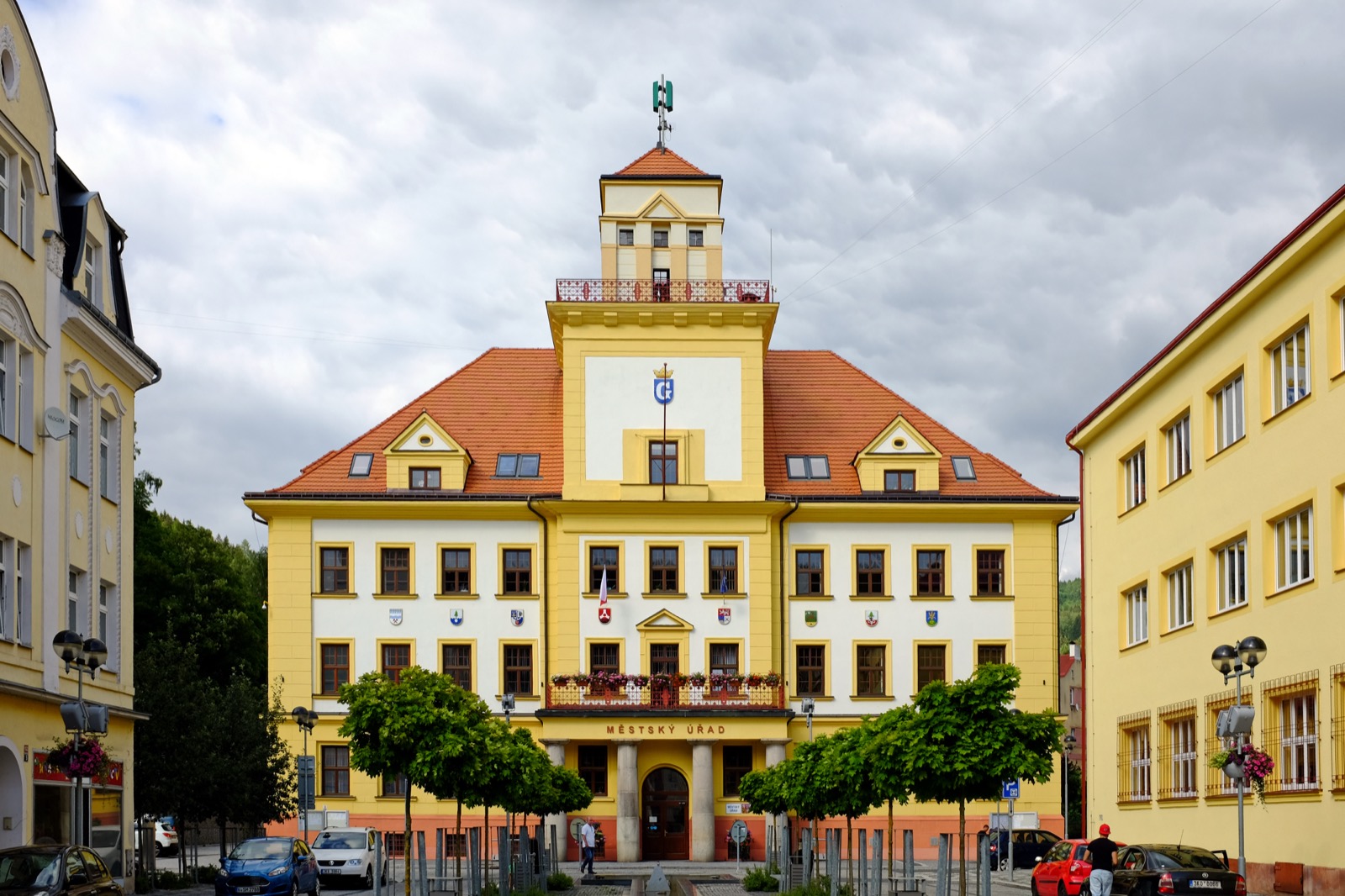
Image credits: Kraslice town hall, June 2018 — Lubor Ferenc / Wikimedia Commons, CC BY-SA 4.0. Cornet by František Václav Červený, c. 1910 (Germanisches Nationalmuseum, Nuremberg) — Daderot / Wikimedia Commons (Public Domain). Antonín Dvořák portrait — Wikimedia Commons (Public Domain). Amati-Kraslice tenor saxophone (Havel-to-Clinton, 1994) — William J. Clinton Presidential Library (Public Domain). Václav Havel — Martin Kozák / Wikimedia Commons (CC BY). AMATI Kraslice factory — ChickSR / Wikimedia Commons, CC BY-SA 4.0.
Comments
Sign in to join the discussion.