Back to NewsThe Most Dangerous
Profile
The Most Dangerous
Conductor in the World
The West banned Valery Gergiev. He responded by building the largest musical empire on earth.
356
Musicians (Mariinsky)
Largest orchestra on earth
~556
Combined empire
Mariinsky + Bolshoi
7+
Stages across Russia
St Petersburg to Vladivostok
40
Cities by train
29-day Easter festival 2026
On March 1, 2022, the mayor of Munich issued an ultimatum to Valery Gergiev: denounce Vladimir Putin or be fired from the Munich Philharmonic. Gergiev did not respond. All contracts were terminated with immediate effect.
Within days, he was dropped by the Metropolitan Opera, the Vienna Philharmonic, Carnegie Hall, the Lucerne Festival, the Verbier Festival, and his own management agency. A career that had spanned decades across the world's most prestigious stages was erased from the Western concert calendar overnight.
Every Western door closed on the same day.
So he went home. And he built this.
The Empire
356
Mariinsky musicians
Largest single orchestra roster in the world
20
Trumpets
At one orchestra. Most American orchestras have 4-5.
7+
Stages
St Petersburg, Vladivostok, Vladikavkaz + 5 chamber halls
~200
Bolshoi musicians
Added December 2023. First dual leadership since 1917.
30+
Recordings
Own record label (Mariinsky). Launched 2009.
1998
Academy founded
Young Opera Singers. Students perform on main stage.
The Mariinsky Theatre Orchestra has 356 musicians on its roster. To put that in perspective: the New York Philharmonic has approximately 106. The Boston Symphony has 92. The Berlin Philharmonic, widely considered the finest orchestra in Europe, has roughly 128. Gergiev's single orchestra has more musicians than any three of them combined.
The trumpet section alone has 20 players. Most American orchestras have four or five. The horn section has 24. The string sections are massive: 48 first violins, 50 seconds, 41 violas, 33 cellos, 24 basses. This is not an orchestra. It is an army.
And the orchestra is only one part of it. The Mariinsky is not a concert hall. It is a full-spectrum performing arts institution — orchestra, opera, and ballet, all under one roof, all under one man. Gergiev oversees all three art forms simultaneously. Most Western conductors specialize in one. He runs all of them at the highest level on earth, across multiple venues, in multiple cities, year-round.
In December 2023, Putin appointed Gergiev General Director of the Bolshoi Theatre as well, making him the head of both of Russia's most important cultural institutions simultaneously. It was the first time one person had led both theatres since before the Russian Revolution of 1917. The combined force: approximately 556 orchestral musicians, two world-class ballet companies, two opera troupes, and a combined staff numbering in the thousands — orchestra, ballet, opera, all three pillars of classical performance, under a single artistic vision.
The Infrastructure
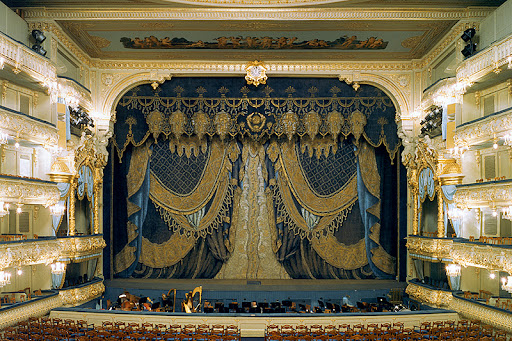
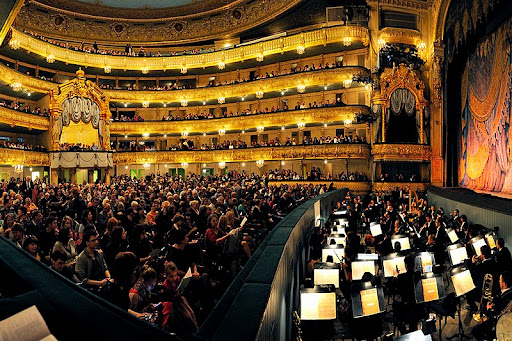
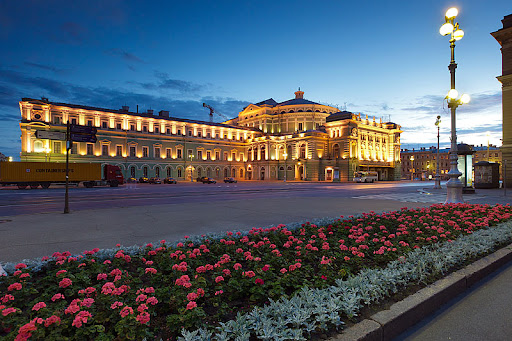
While American orchestras debate whether they can afford to keep their single concert hall open, Gergiev built new ones.
1860
Mariinsky Theatre
St PetersburgThe original. Historic home of Russian ballet and opera since 1860.
2007
Mariinsky Concert Hall
St PetersburgBuilt on the site of old workshops. Praised as one of the finest acoustics in the world.
2013
Mariinsky II
St Petersburg1,830 seats. Cost: €500 million. Diamond Schmitt Architects.
—
5 Chamber Halls
St PetersburgNamed after Musorgsky, Prokofiev, Stravinsky, Shchedrin, and Rachmaninoff.
2016
Primorsky Stage
VladivostokA full Mariinsky stage on the Pacific coast. 6,000 km from St Petersburg.
2017
Vladikavkaz Stage
North OssetiaGergiev is Ossetian. He brought the Mariinsky to his homeland.
2023
Bolshoi Theatre
MoscowRenovated for $688M (2011). 250th anniversary in 2026. Now under Gergiev.
The Met Opera is selling its Chagall murals. Gergiev built a €500 million concert hall, opened stages in Vladivostok and Vladikavkaz, and then took over the Bolshoi.
The Man
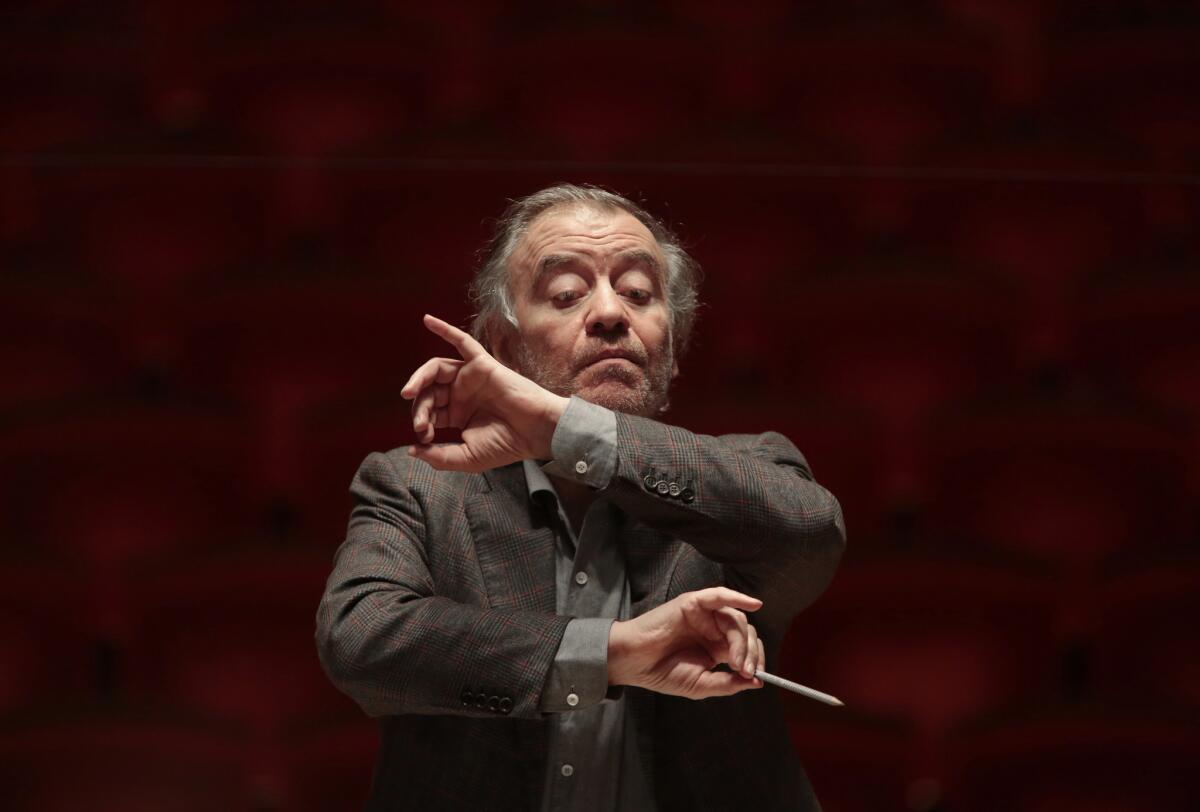
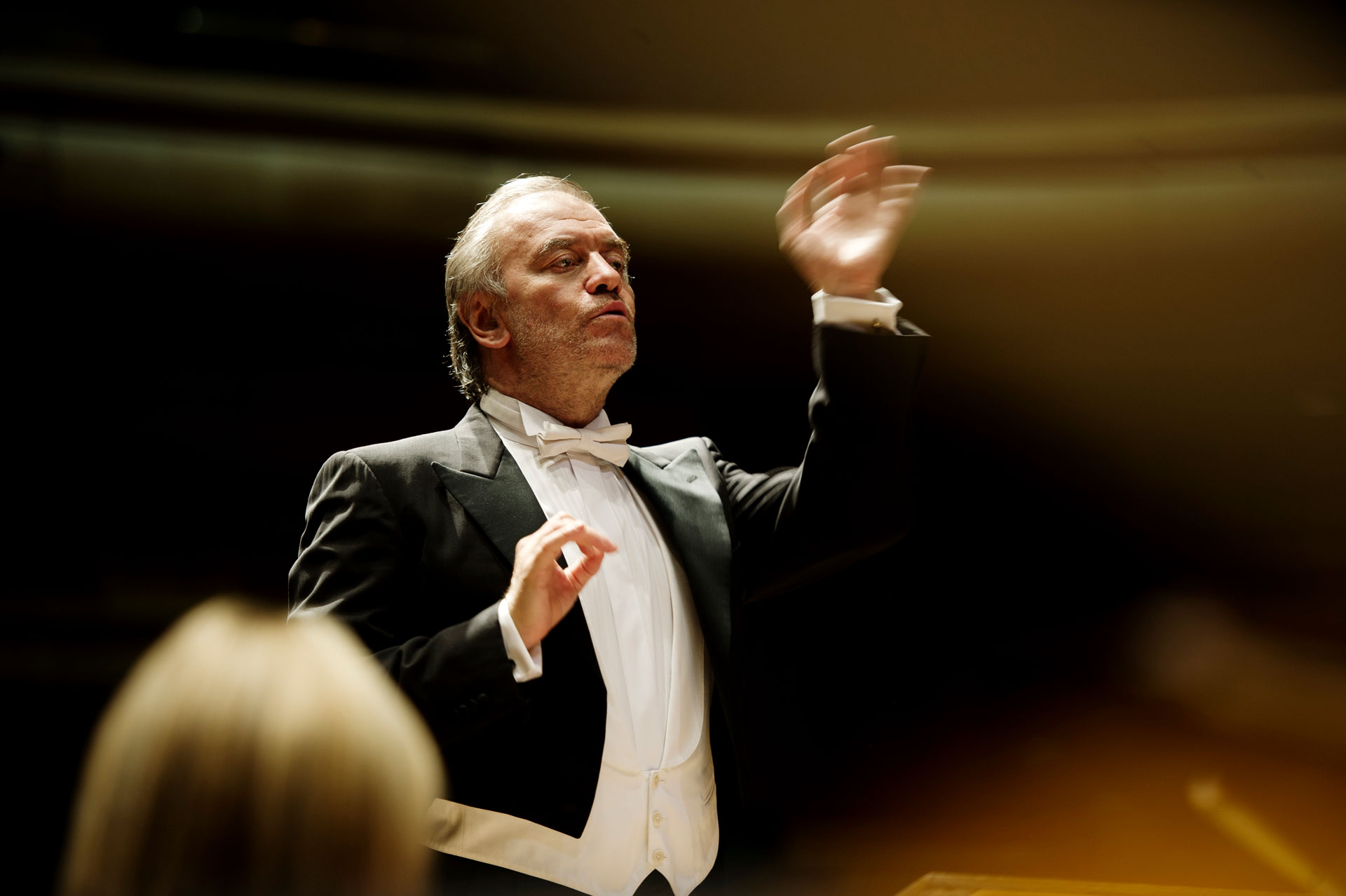
He conducts with a toothpick. Not a baton — a toothpick, held between his right thumb and forefinger. The rumour is that his conducting movements were so violent he kept losing his grip on the baton and sending it flying into the orchestra. So he switched to a toothpick. It stuck.
His style is fluttering fingers, body thrusts, and a mercurial energy that defies conventional conducting technique. Critics who watch him from the audience see chaos. Musicians who play under him see something else entirely — a conductor who communicates through gesture and instinct what other conductors spend pages of score markings trying to explain. His approach is understood by those who understand music at the deepest level. It is less accessible to those who expect a metronome with arms.
A bass player who performed under him wrote: “Playing under Valery Gergiev's baton left me baffled.” But bafflement, in Gergiev's world, is the beginning of discovery. The musicians who work with him regularly describe something closer to telepathy — a conductor who does not dictate the music but becomes it, and expects the orchestra to follow him there.
The results speak for themselves. Under his direction, the Mariinsky Orchestra has been recognized as one of the finest ensembles on earth. Not because of his technique. Because of what happens when 356 musicians trust a man with a toothpick to take them somewhere they have never been.
He has been clocked at 49 concerts in a single month. Bachtrack named him the world's busiest conductor. His actual performance count likely exceeds the tracked numbers because not all Mariinsky events appear on Western databases. By some estimates, he conducts over 200 performances per year — across operas, ballets, symphonic concerts, tours, and festivals. Two concerts a day on tour is standard.
He sleeps on planes. He rehearses on trains. He once conducted Prokofiev in St Petersburg, flew to London for Mahler, and was back in Moscow for Tchaikovsky within 72 hours. This is not a career. It is an endurance sport.
The Musical Genius
At 24 years old, Valery Gergiev won the Herbert von Karajan Conducting Competition in Berlin — named after the most legendary conductor of the 20th century. One year later, he made his Mariinsky debut with Prokofiev's War and Peace. He has not stopped since.
His repertoire is not a specialty. It is the entire canon. Wagner. Verdi. Puccini. Prokofiev. Shostakovich. Tchaikovsky. Mahler. Berlioz. Stravinsky. He conducts opera, ballet, and symphonic music with equal authority — something vanishingly few conductors in history have attempted, let alone sustained.
Seventeen Grammy nominations across 24 years. He has conducted every major orchestra in the world: the Berlin Philharmonic, the Vienna Philharmonic, the London Symphony (where he served as principal conductor from 2003), the Met Opera Orchestra, the Chicago Symphony, the Rotterdam Philharmonic (where he was principal conductor from 1995 to 2008). He has toured with the Mariinsky to 45 countries.
He opened the Carnegie Hall season with the Mariinsky Orchestra — the first Russian conductor to do so since Tchaikovsky himself conducted the hall's inaugural concert in 1891. That is not a footnote. That is a direct line from the composer who defined Russian music to the man who now runs both of Russia's greatest theatres.
17
Grammy nominations
45
Countries toured
200+
Performances per year
His interpretations of Shostakovich are considered definitive. His Prokofiev cycle with the Mariinsky is a landmark recording achievement. His Wagner — Ring cycles, Parsifal, Tristan — brought the German repertoire to Russian audiences with a depth and seriousness that stunned even the Bayreuth establishment.
And he does all of this while simultaneously managing two theatres, an academy, a label, a competition, and a festival schedule that would burn out any administrator — let alone one who also conducts 200+ performances a year.
The word “genius” is overused in classical music. In Gergiev's case, it may be insufficient. What he does is not genius. It is something for which there is no word — because nobody has ever done it before.
The Opera Company
The Mariinsky Opera is not just an orchestra. It is a full stock company — a permanent roster of singers employed by the theatre year-round:
22
Sopranos
13
Mezzo-sopranos
23
Tenors
8
Baritones
14
Basses
That is 80 singers on permanent contract — in addition to the 356-member orchestra, the ballet company, the chorus, and the technical staff. The Mariinsky is a city within a city. Among its alumni: Anna Netrebko, Olga Borodina, and generations of the most celebrated voices in Russian opera history.
In the 2023-24 season, the theatre presented 181 productions with 269 performances. That is nearly a performance every single day of the year — and this is just the opera. Add the ballet, the symphonic concerts, the chamber music, and the touring, and the Mariinsky operates at a pace that no Western institution can match.
6,000 Kilometers from Home
In 2016, Gergiev opened the Primorsky Stage in Vladivostok — a full Mariinsky satellite on the Pacific coast, 6,000 kilometers from St Petersburg. Nine time zones away.
It has a Great Hall seating 1,356, a chamber hall, its own resident orchestra, and a full repertoire: Carmen, Tosca, Il Trovatore, Rigoletto, The Nutcracker, Le Corsaire. Verdi on the Pacific. Puccini in the Russian Far East.
Every year it hosts the International Mariinsky Far East Festival — bringing top performers from Russia, Asia-Pacific, Europe, and America to a city most Westerners cannot find on a map.
Name one American orchestra that has opened a satellite venue in another city. Name one European opera house that has built a full stage 6,000 kilometers from its headquarters. The answer, again, is nobody.
The Stars of the White Nights
Every summer, from late May to July, St Petersburg enters the White Nights — when the sun barely sets and the city glows with perpetual twilight. Since 1993, the Mariinsky has hosted the Stars of the White Nights Festival: two months of continuous opera, ballet, and orchestral performances.
160+
Performances per festival
2 months
Duration (started as 10 days in 1993)
Top 10
Classical music event globally
It started as a ten-day event. Today it is one of the top 10 classical music events in the world. Past performers include Plácido Domingo, Alfred Brendel, Anna Netrebko, Gidon Kremer, Esa-Pekka Salonen, and Deborah Voigt. One hundred and sixty performances in a single festival — that is more than many American orchestras perform in an entire year.
The Recordings
In 2009, Gergiev launched the Mariinsky Label — the theatre's own record label, managed by the same team that runs LSO Live in London. Its first two releases received five Grammy nominations, including Best Opera Recording and Best Classical Album for Shostakovich's The Nose.
Over 30 recordings have been released, all captured in the Mariinsky Concert Hall — praised as having one of the finest acoustics in the world. The catalogue includes Tchaikovsky and Shostakovich symphonies, piano concerti, operas by Wagner, Massenet, and Donizetti.
Gergiev personally has received 17 Grammy nominations over a 24-year span. He opened the Carnegie Hall season with the Mariinsky Orchestra — the first Russian conductor to do so since Tchaikovsky conducted the hall's inaugural concert in 1891.
He has led the Mariinsky to 45 countries. At age 24, he won the Herbert von Karajan Conductors' Competition in Berlin. One year later, he made his Mariinsky debut conducting Prokofiev's War and Peace. He has not slowed down since.
The Bolshoi Takeover
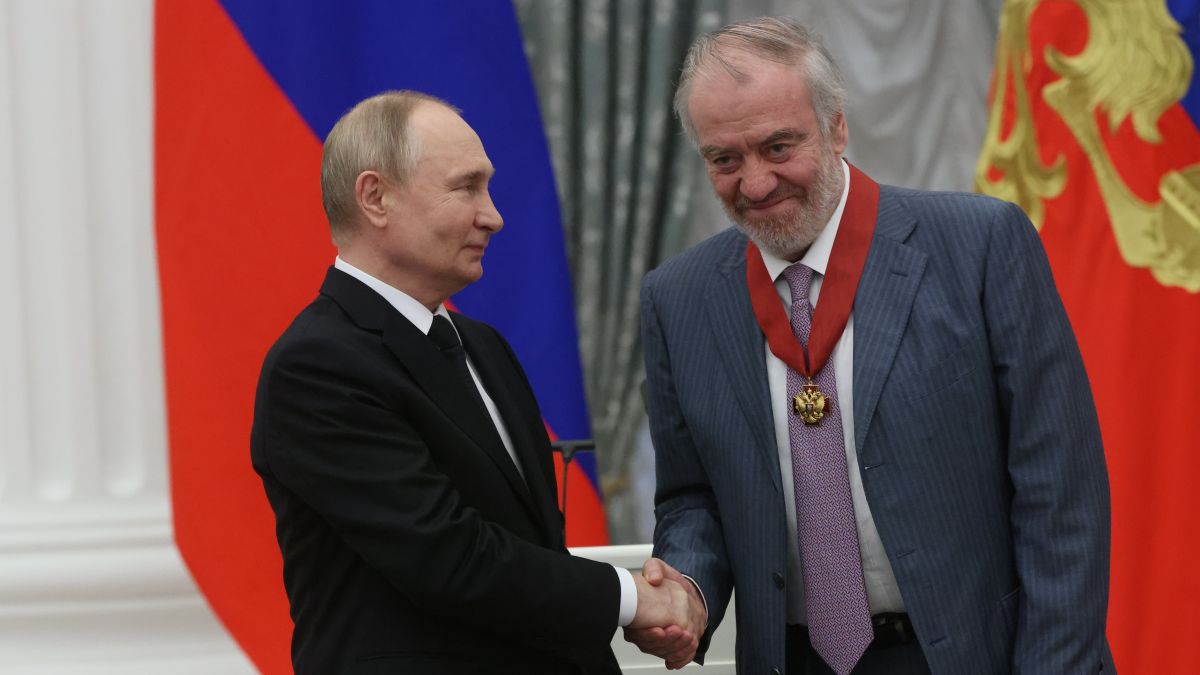
In March 2022 — the same month the West was stripping Gergiev of every Western engagement — Putin suggested that one person should lead both the Mariinsky and the Bolshoi. Twenty months later, in December 2023, it happened.
Gergiev replaced Vladimir Urin, who had run the Bolshoi for a decade. The appointment was not subtle. It was Putin telling the world: the man you banned will now run everything.
The Bolshoi Theatre is the crown jewel of Russian culture.
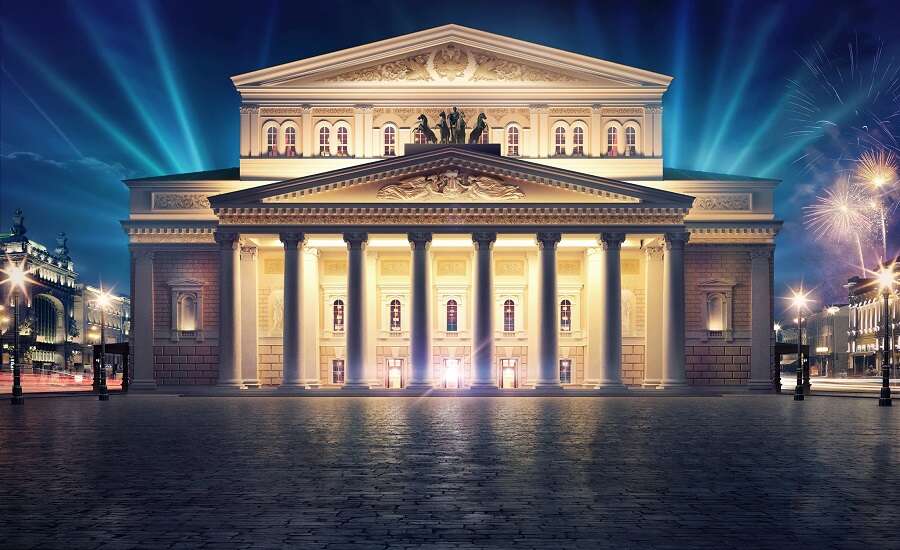
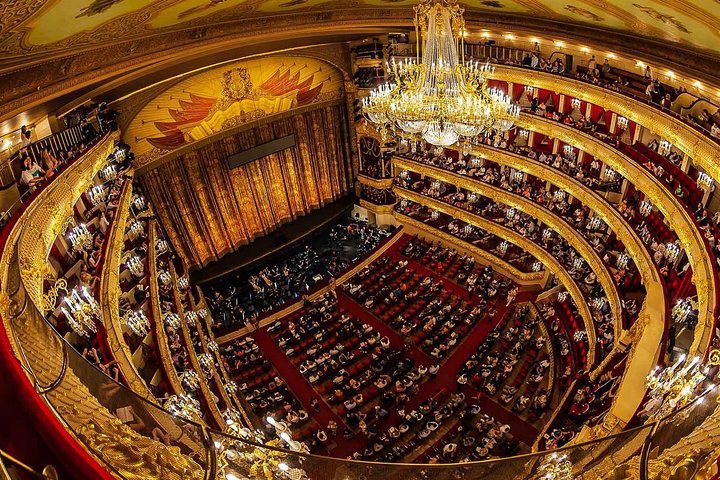
Founded in 1776 — the year of American independence — it is one of the oldest and most prestigious opera and ballet companies in existence. Its renovation alone cost 21 billion rubles ($688 million), paid entirely by the federal government. Its staff numbers 3,400 people. Its orchestra has approximately 200 musicians.
Combined with the Mariinsky's 356, Gergiev now commands roughly 556 orchestral musicians — more than any five Western orchestras combined. He oversees the artistic direction of both institutions, their opera companies, their ballet troupes, their festivals, and their touring.
Mariinsky
356
Orchestra musicians
80 opera singers
7+ stages
Since 1996
Bolshoi
~200
Orchestra musicians
3,400 total employees
$688M renovation
Since 2023
The last person to hold both positions simultaneously did so before the Russian Revolution. That was over a century ago. The Russian government has, in effect, placed the entirety of its classical music infrastructure under a single artistic vision — and that vision belongs to the man the West tried to cancel.
In February 2026, Gergiev met Putin at the Kremlin. He reported on the Bolshoi's 250th anniversary preparations and a Turandot premiere performed by young singers from his academy. Putin noted that the historic practice of artists performing between Moscow and St Petersburg was being revived. Gergiev told him: “The best way to advance is by putting young people first.”
The man who was erased from every Western stage in 2022 was, four years later, sitting in the Kremlin discussing the next generation of Russian opera. The West thought the story was over. It was just beginning.
The Homeland
Gergiev was born in 1953 in Vladikavkaz, the capital of North Ossetia — a small republic in the Caucasus mountains. He is Ossetian, not ethnic Russian. This matters.
In September 2004, terrorists seized a school in Beslan, North Ossetia, and held more than 1,100 people hostage, including 777 children. The siege ended with 334 dead, 186 of them children. It was one of the worst terrorist attacks in Russian history — and it happened in Gergiev's homeland.
Gergiev went to South Ossetia and performed a requiem. In front of a half-destroyed government building, flanked by armored personnel carriers, he conducted Tchaikovsky. He did not make a political speech. He played music for the dead.
In 2017, he opened a Mariinsky stage in Vladikavkaz — bringing world-class opera and ballet to his own people, in a region most of the world has forgotten. This is not empire-building for ego. This is a man who remembers where he came from.
The International Reach
The West banned Gergiev. The rest of the world did not.
Since 2022, the Mariinsky has continued touring — to China, Turkey, the Middle East, South America, and across Asia. The audiences are not smaller. If anything, the controversy has made them larger.
Before the ban, the Mariinsky's touring history was unmatched by any Russian ensemble: North America, Europe, Japan, Australia, Israel, South Korea, China, India. Under Gergiev, the orchestra performed in 45 countries — more than any Russian cultural institution in history.
China
Active touring
Turkey
Active touring
Middle East
Active touring
South America
Active touring
India
Active touring
Europe
Banned (cracking)
USA
Banned
Japan
Reduced
Australia
Suspended
South Korea
Active
The Western boycott assumed that losing Europe and America would cripple Russian cultural influence. The assumption was wrong. China alone has a larger classical music audience than all of Western Europe combined — an estimated 80 million active classical music consumers, and growing. The Middle East is building concert halls at a pace not seen since the European 19th century.
Gergiev did not lose his audience. He exchanged it for a bigger one. The cultural center of gravity is shifting east, and the man the West tried to erase is leading the way.
The Comparison
While Gergiev was building, here is what was happening in the West.
Mariinsky Orchestra
356
Musicians on roster
NY Philharmonic
~106
Musicians on roster
Gergiev 2026 Easter Festival
40 cities
29-day train tour, 20,000 km
Met Opera 2026-27 Season
17 shows
Smallest season in 60 years
Russia COVID response
Paid
Putin ordered all employees kept on payroll
Met Opera COVID response
$0
Musicians unpaid for 18 months
Mariinsky investment
€500M+
New concert hall + regional stages
BSO endowment
$618M
Sitting in investments. Fired conductor.
While Gergiev added stages, America lost orchestras:
2011
Honolulu Symphony — ceased operations
2011
Syracuse Symphony — ceased operations
2011
New Mexico Symphony — ceased operations
2011
Philadelphia Orchestra — filed Chapter 11 bankruptcy (Big Five member)
2022
San Antonio Symphony — dissolved after 83 years
2024
Punta Gorda Symphony (FL) — shut down
2025
Southwest Florida Symphony — permanent closure after 60+ years
2025
American Youth Symphony — shut down (vital career pipeline)
2027
Boston Philharmonic — will close after 48 years
Florida's governor vetoed $32 million in arts funding — killing two orchestras. The Trump administration proposed eliminating the National Endowment for the Arts entirely. The BSO fired its Grammy-winning conductor while holding $618 million in net assets. The Met Opera ran a $47 million deficit, cut its season to a 60-year low, and is considering selling its Chagall murals. Audiences are down 25-40% from pre-pandemic levels.
On the other side of the world, Gergiev was loading an orchestra onto a charter train and visiting 40 cities in a month.
America has lost more orchestras in the last 15 years than Russia has built concert halls. Read that again.
While Western orchestras spent the last decade debating programming quotas, rethinking blind auditions, hiring DEI consultants, and navigating the politics of whose music to play and whose to retire — Russia was building concert halls, training young singers, and sending orchestras across 20,000 kilometers of track.
The Mellon Foundation gave American orchestras $4.2 million to hire DEI practitioners. In the same period, Russia spent €500 million on a single new concert hall.
The question is not whether diversity matters. It does. The question is whether the Western classical music establishment has confused institutional self-examination with institutional paralysis — and whether the rest of the world has noticed.
Russia noticed. And while the West was looking inward, Gergiev was building outward. The result is not a debate. It is a 356-musician orchestra on a train visiting 40 cities.
Moscow: The Capital of Classical Music
Moscow alone has more professional orchestras than most countries. Among them:
Bolshoi Theatre Orchestra (~200 musicians, now under Gergiev)
Moscow Philharmonic Orchestra (founded 1951)
Russian National Orchestra (founded 1990)
National Philharmonic Orchestra of Russia (Vladimir Spivakov)
Moscow State Symphony Orchestra (founded 1943)
Moscow Symphony Orchestra (founded 1989)
Moscow City Symphony "Russian Philharmonic" (founded 1995)
Moscow Chamber Orchestra (founded by Rudolf Barshai)
State Academic Symphony Orchestra "Evgeny Svetlanov"
Russian State Symphony Orchestra
That is at least ten major professional orchestras in a single city — and this does not count the chamber ensembles, opera orchestras, military bands, or youth orchestras. Add St Petersburg's orchestras (the Mariinsky, the St Petersburg Philharmonic, the St Petersburg Symphony) and Russia's classical music infrastructure dwarfs anything in the Western world.
For comparison: New York has four major orchestras (NY Philharmonic, Met Opera Orchestra, Orchestra of St. Luke's, Orpheus Chamber Orchestra). London has five (LSO, LPO, Philharmonia, RPO, BBC Symphony). Moscow has at least ten — and Gergiev now controls the two largest.
The Work Ethic
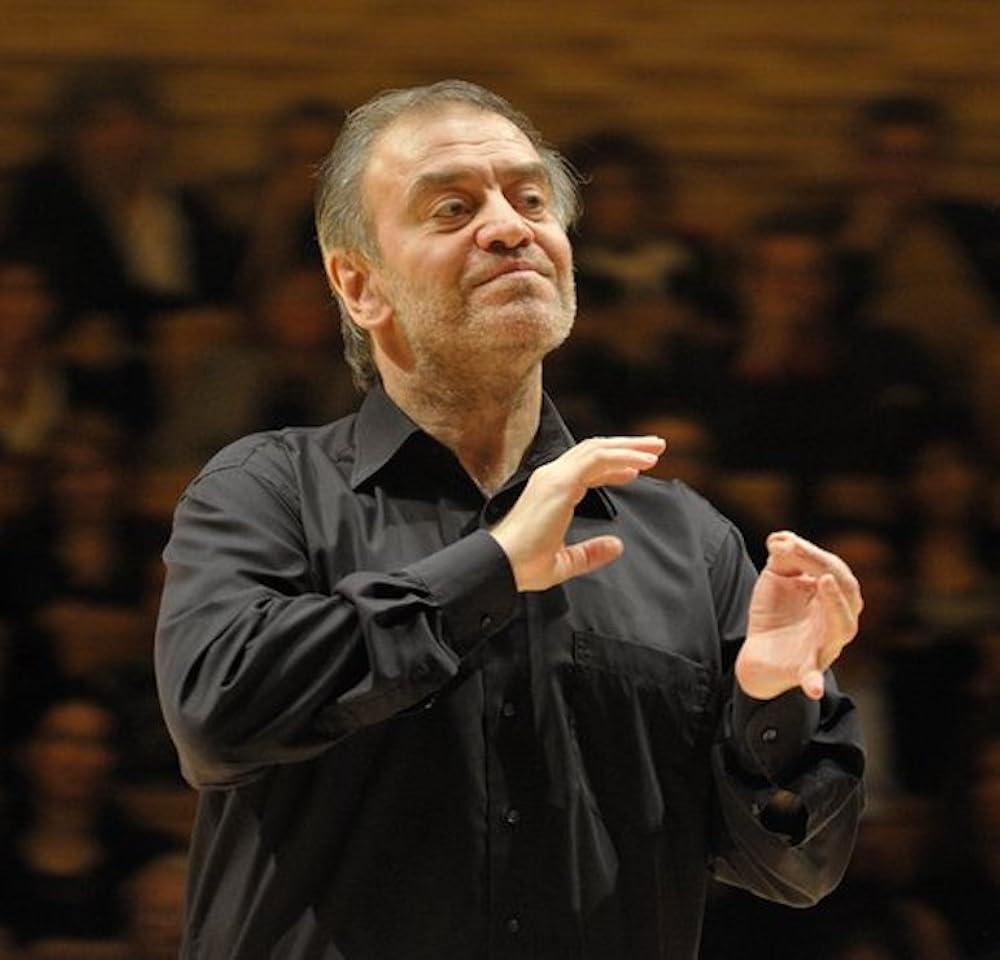
He has conducted 49 times in a single month. He thinks nothing of performing a different piece every night of the week.
Writers have marveled at his ability to conduct exacting rehearsals all day, meet with journalists or donors over dinner, lead a concert, go out afterwards for a Russian bath or Finnish sauna that lasts long into the night — and then come back the next morning and do it all again. Seven days a week.
Sometimes he adds works to a symphonic program on the spur of the moment, rehearsing musicians even as ushers take their places in the aisles. His attention to detail in hours of rehearsal with singers and orchestral players produces performances that even casual listeners recognize as exceptional.
Since he took over the Bolshoi in December 2023, Gergiev commutes between Moscow and St Petersburg — the two cities that house his empire. The Sapsan high-speed train makes it in under four hours. The legendary Red Arrow — the Krasnaya Strela, the overnight train that has shuttled Russia's elite between the two capitals every single night since 1931 — departs Moscow at 23:55 and arrives in St Petersburg at 07:55.
The trains between Moscow and St Petersburg are his second home. The Sapsan — Russia's high-speed rail — does it in three and a half hours. The Red Arrow — the Krasnaya Strela, the legendary overnight train that has departed Moscow at 23:55 every single night since 1931 — does it in eight. Gergiev uses both.
On a typical day: noon concert at the Mariinsky in St Petersburg. Board the Sapsan. Three and a half hours later, walk onto the podium at the Bolshoi in Moscow for the evening performance. Two concerts. Two cities. Two of the most important stages on earth. Same day.
Then the Red Arrow. Board at midnight. Sleep for maybe four hours — the most sleep he will get that day. Arrive in St Petersburg at dawn. Walk into the Mariinsky. Rehearse. Perform. Board the Sapsan again. Back to Moscow. Repeat.
This is not a metaphor. This is his actual schedule. He is the most worked conductor on earth. Nobody in the history of classical music has maintained this pace at this level for this long. The trains are not his commute. They are the only place he rests.
Putin referenced this at their Kremlin meeting, noting that the great bass Fyodor Shalyapin used to perform in Moscow on Monday and at the Mariinsky in Petersburg on Wednesday. “We are trying to replicate these practices,” Putin said. Shalyapin did it once a week. Gergiev does it every day.
This is the pace. This is the standard. This is what one man, one toothpick, and 556 musicians can do when the infrastructure exists to support ambition rather than constrain it.
The Easter Train
29
Days
40
Cities
20,000+
Kilometers
The 2026 Moscow Easter Festival is the largest in its history. The combined orchestras of the Bolshoi and Mariinsky theatres travel by charter train across Russia, performing in approximately 40 cities over 29 days. Two concerts a day. Twenty thousand kilometers of track.
The route: Tver, Vladimir, Nizhny Novgorod, Kostroma, Yaroslavl, St Petersburg, Vologda, Perm, Yekaterinburg, Omsk, Krasnoyarsk, Novosibirsk, Chelyabinsk, Ufa, Saratov, Moscow, Kazan, and dozens more. The festival closes with A Life for the Tsar in Smolensk and a Victory Day concert on Poklonnaya Hill.
Name one American orchestra that has done anything remotely comparable. Name one Western conductor who has put 500+ musicians on a train and visited 40 cities in a month. The answer is nobody. Nobody has ever done this.
The Philosophy
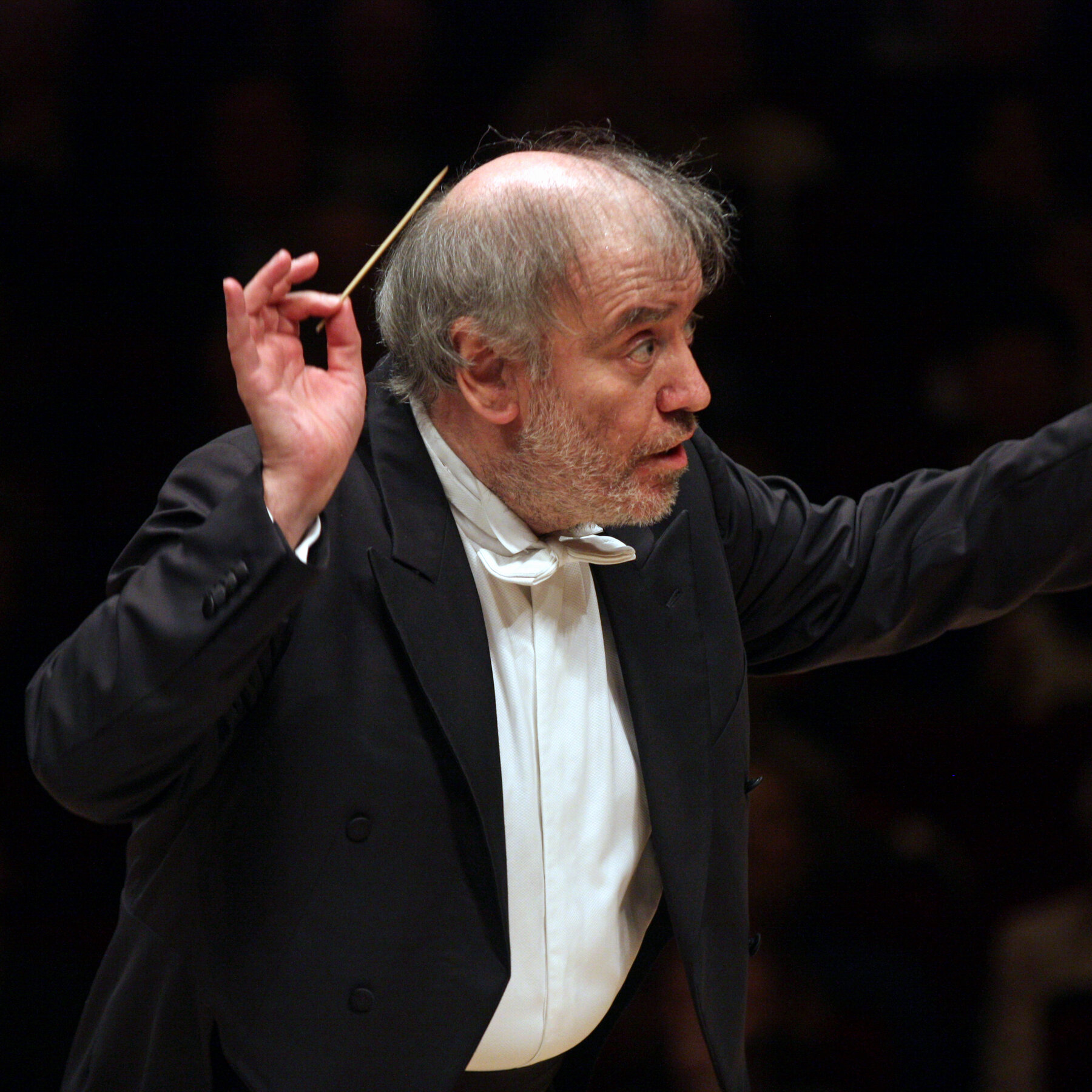
Valery Abisalovich Gergiev
Born 1953, Vladikavkaz, North Ossetia. Artistic & General Director, Mariinsky Theatre (since 1996). General Director, Bolshoi Theatre (since 2023). The first person to lead both institutions since 1917.
“I think that what makes our theatres strong is that we recognise not only the great Russian musicians, but also the possibility of performing works by Italian, French, German and Austrian authors, who gave us the great characters which bind this world together. I think that today this is what we need more than ever.”
Valery Gergiev
To Vladimir Putin, Kremlin, February 25, 2026
While the West debates whether orchestras should program fewer dead European composers, Gergiev told Putin that the strength of Russian theatre lies in embracing all of the Western canon — Italian, French, German, Austrian — alongside Russian works. His Turandot premiere at the Bolshoi featured, in his words, “very good, very young singers.”
“Over the past year or year and a half, I have increasingly felt that the best way to move forward and advance is by putting young people first.”
This is not the philosophy of a man in decline. This is the philosophy of a man who is building something that will outlast him.
The Next Generation
Academy of Young Opera Singers
Founded 1998 by Gergiev at the Mariinsky Theatre.
Students receive voice training, acting, foreign languages, and history of opera.
They perform on the main Mariinsky stage during their training. Not in a practice room. Not in a recital hall. On the actual stage, in actual productions, in front of paying audiences.
Director: Larisa Gergieva, People's Artist of Russia.
Tchaikovsky Competition 2023
Gergiev: co-chairman of the organizing committee.
50 million viewers from 102 countries watched online.
Winners from South Korea, Russia, China.
Grand Prix: mezzo soprano Zinaida Tsarenko.
The competition that the West boycotted attracted more viewers than any classical music event in history.
March 1, 2022
On February 24, 2022, Russia invaded Ukraine. Within days, Munich's mayor Dieter Reiter issued Gergiev an ultimatum: publicly denounce Putin and the invasion, or be fired from the Munich Philharmonic.
Gergiev did not respond.
On March 1, 2022, all contracts were terminated. Immediately. No transition period. No negotiation. No farewell concert. The Munich Philharmonic, where he had been principal conductor since 2015, erased him from its future overnight.
✗
Munich Philharmonic
Fired. All contracts terminated immediately.
✗
Met Opera
Dropped. All future engagements cancelled.
✗
Vienna Philharmonic
Cancelled all scheduled appearances.
✗
Carnegie Hall
Removed from all programming.
✗
Lucerne Festival
Cancelled invitation.
✗
Verbier Festival
Dropped as honorary guest conductor.
✗
Management agency
Dropped as client. No representation.
✗
Edinburgh International Festival
Cancelled all Mariinsky appearances.
✗
Rotterdam Philharmonic
Former principal conductor — severed all ties.
In a single week, Valery Gergiev lost every Western engagement he had built over 30 years of international touring. His entire Western career — the London Symphony years, the Rotterdam years, the Munich years, Carnegie Hall, the Met, Vienna — all of it, gone.
The cultural boycott extended beyond Gergiev. Anna Netrebko was banned from the Met Opera. Russian pianists, violinists, and singers found their Western bookings cancelled. The cultural iron curtain fell faster than the political one — and it fell on musicians who had spent their careers building bridges between Russia and the West. The Cardiff Philharmonic in Wales removed Tchaikovsky from a concert program — a composer who died in 1893. A Japanese conductor was asked to change his program because it contained a Tchaikovsky symphony. The boycott was not just against living Russians. It reached backward through time to punish the dead.
The West expected this to be a punishment. An end. A silencing.
It was the opposite. Freed from the obligations and constraints of his Western engagements, Gergiev turned his full attention inward — to Russia, to the Mariinsky, to the Bolshoi, to the train, to the academy, to the future. The ban did not diminish him. It concentrated him.
The Controversy
This article would be dishonest if it did not address what everyone already knows.
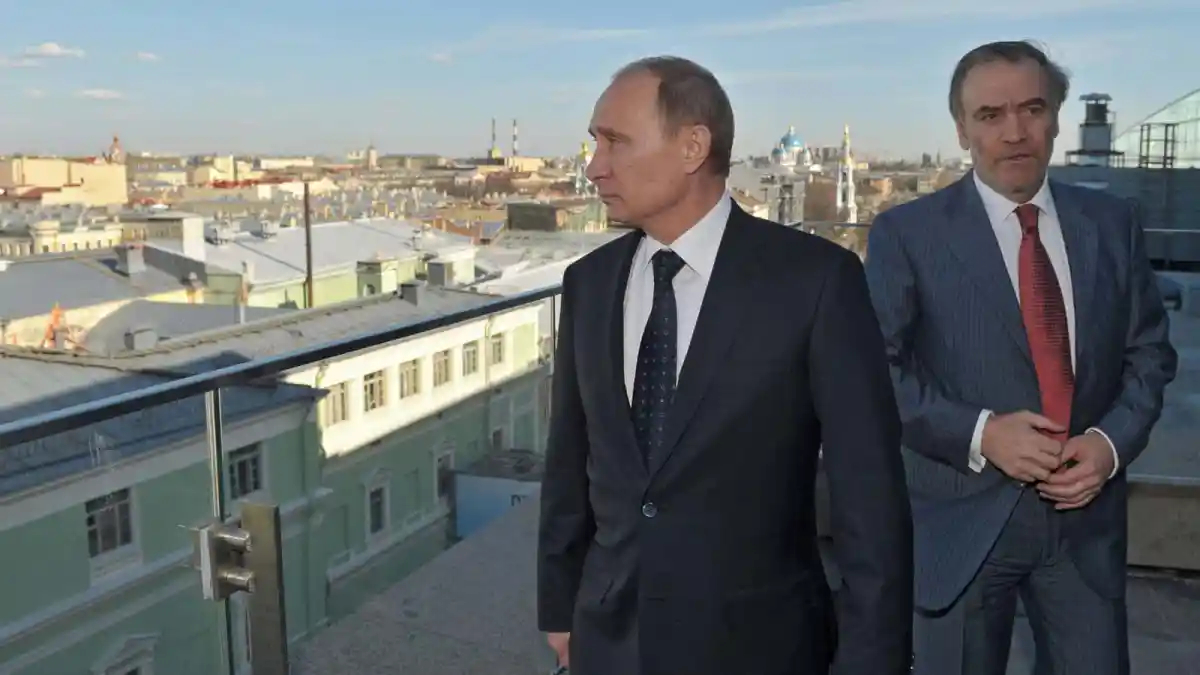
Valery Gergiev is a close personal friend of Vladimir Putin. He has been for decades. He supported Russia's annexation of Crimea in 2014. He performed a concert in South Ossetia during the 2008 war. He refused to denounce Russia's invasion of Ukraine in 2022 — a refusal that cost him his entire Western career overnight.
Yulia Navalnaya, the widow of opposition leader Alexei Navalny, called his potential return to European stages “a gift to the dictator.” Italy planned an EU-funded Gergiev concert in 2025, then cancelled it amid backlash. France 24 asked: “Are pro-Kremlin Russian cultural figures returning to the spotlight in Europe?” Al Jazeera ran: “Italy cancels concert by Putin ally Gergiev.”
These are facts. The political relationship is real. The moral questions are real. The suffering in Ukraine is real.
And it is also a fact that this man runs 556 musicians across seven stages in two cities with a charter train that visits 40 more, that he founded an academy that trains the next generation of singers on the main stage of one of the most important theatres in history, that his orchestra is three times the size of any in America, and that 50 million people in 102 countries watched his competition.
The reader can hold both facts at the same time. The politics are the reader's to judge. The music is the music.
The Return
The cultural iron curtain is cracking. Despite sanctions and boycotts, the isolation is not holding.
Anna Netrebko — Gergiev's protégée — returned to London's Royal Opera House in September 2025 to open the season with Puccini's Tosca. Her first appearance in six years. Gergiev and the Mariinsky Orchestra were booked for concerts in Barcelona. At least 20 foreign artists are scheduled to perform in Russia in 2026.
Italy planned an EU-funded Gergiev concert in 2025. Then cancelled it amid backlash. Then the backlash got backlash — because the audience wanted to hear the music.
The West is discovering what happens when you ban the most prolific conductor alive: the music doesn't stop. It just plays somewhere else. And the audience follows.
What One Man Built
A chronological record of what Valery Gergiev has constructed since taking the helm of the Mariinsky Theatre. Every line is verifiable. Every date is public record.
1988
Named principal conductor of the Mariinsky (Kirov) Theatre at age 35
1993
Founded the Stars of the White Nights Festival — started as 10 days, now 2 months
1996
Named Artistic and General Director of the Mariinsky Theatre
1997
Led the Mariinsky on its first major Western tour under his direction
1998
Founded the Academy of Young Opera Singers at the Mariinsky
2003
Named principal conductor of the London Symphony Orchestra
2007
Opened the Mariinsky Concert Hall — praised globally for its acoustics
2008
Performed requiem in South Ossetia after the Beslan tragedy
2009
Launched the Mariinsky Label — own recording company. First two releases: 5 Grammy nominations
2013
Opened Mariinsky II — €500 million, 1,830 seats, Diamond Schmitt Architects. Seven years of construction
2015
Named principal conductor of the Munich Philharmonic
2016
Opened the Primorsky Stage in Vladivostok — world-class opera 9,000 km from Moscow
2017
Opened a Mariinsky stage in Vladikavkaz — bringing opera to his homeland in the Caucasus
2022
Fired from all Western positions overnight. Lost Munich, Met Opera, Carnegie Hall, Vienna, Lucerne, Verbier
2023
Named General Director of the Bolshoi Theatre. First person to lead both Mariinsky and Bolshoi since 1917
2023
Co-chaired the Tchaikovsky Competition — 50 million viewers from 102 countries
2026
Easter Festival: 40 cities, 29 days, charter train, combined Mariinsky + Bolshoi orchestras
2026
Bolshoi 250th anniversary season under his leadership
That is 38 years of continuous building. Not one sabbatical. Not one gap year. Not one “strategic pause.” Thirty-eight years of adding stages, founding academies, launching festivals, opening halls, and recording music — while simultaneously conducting more performances per year than most conductors do in a decade.
The Two Models
The Western classical music industry runs on private philanthropy. American orchestras depend on wealthy donors, corporate sponsors, and endowment returns. When the economy dips, when donors die, when corporate priorities shift — the music stops.
The Russian model is different. The Mariinsky and the Bolshoi are state institutions. Their funding comes from the federal budget. It does not depend on the mood of a hedge fund manager or the tax benefits of a charitable donation.
The Western Model
Revenue: Ticket sales + donations + endowment draws
COVID response: Shut down. Musicians unpaid for 12-18 months
Crisis strategy: Shorten seasons. Cut musicians. Sell assets
Audience trend: Down 25-40% post-pandemic
Infrastructure: No new major concert halls built in the US since 2003 (Disney Hall)
Risk: One bad recession away from collapse. See: San Antonio, Honolulu, Syracuse, Southwest Florida
The Russian Model
Revenue: State budget + ticket sales
COVID response: Putin ordered employees kept on payroll. Bolshoi: 3,400 staff paid
Crisis strategy: Build more. Train more. Tour more
Audience trend: 50 million watched Tchaikovsky Competition online in 2023
Infrastructure: €500M Mariinsky II (2013), Vladivostok stage (2016), Vladikavkaz stage (2017), new halls in construction
Risk: Political dependency. State funding = state control. But the music keeps playing
The Bolshoi's budget alone is approximately 5 billion rubles (~$55 million) per year from the state. Its 2011 renovation cost 21 billion rubles ($688 million) — paid entirely by the federal government. The BSO holds $618 million in net assets while its Grammy-winning conductor was fired and musicians took 37% pay cuts during COVID. The Bolshoi has 3,400 employees and has never missed a payroll.
You can criticize the Russian model. State funding means state influence. Artistic freedom has limits when the budget comes from the Kremlin. These are real concerns.
But the American model has its own unfreedom: the unfreedom of insolvency. The unfreedom of donor politics. The unfreedom of a board of directors that fires a conductor to cut costs while sitting on half a billion in investments. The unfreedom of 83-year-old orchestras dissolving because no one wrote a check.
Neither model is perfect. But only one of them is losing orchestras.
The Audience
In Russia, two concerts per day is standard touring practice. Not extraordinary — standard. The culture expects it. The audience demands it. Cities that American orchestras have never heard of — Vologda, Kostroma, Chelyabinsk — fill concert halls when the Mariinsky arrives.
In the West, orchestras are struggling to sell seats. The Met Opera's attendance has fallen from 90%+ capacity in the 1990s to 66% in recent seasons. American orchestras report 25-40% drops from pre-pandemic levels. The industry response: shorter seasons, fewer performances, smaller repertoire.
50M
Viewers, Tchaikovsky Competition 2023
102 countries
160+
Performances per White Nights Festival
2 months, every summer
The Easter train visits cities with populations under 500,000 — cities that in the American context would never see a world-class orchestra in their lifetime. Imagine the Chicago Symphony loading onto a train and playing concerts in Peoria, Decatur, Springfield, and Champaign — two a day for a month. It would never happen. In Russia, it is an annual tradition.
The West has treated classical music as a luxury good for wealthy urban audiences. Russia treats it as a public service. This is not an ideological argument. It is a description of two different relationships between a civilization and its music.
A Fraction of the Economy
Russia's GDP is $2.0 trillion. The United States' GDP is $28.8 trillion. The European Union's GDP is $18.3 trillion. Combined: $47.1 trillion.
Russia's economy is roughly 4.2% of the combined US and EU economy. Less than one-twentieth.
Russia$2.0T
United States$28.8T
European Union$18.3T
With 4% of the combined Western economy, Russia maintains:
✓
The largest orchestra on earth (356 musicians)
✓
The oldest and most prestigious ballet company (Bolshoi, founded 1776)
✓
A dual-theatre empire spanning two of the world's greatest stages
✓
Seven performance venues under a single artistic director
✓
A 29-day, 40-city charter train tour — the largest classical music tour in history
✓
Its own record label with 30+ releases and 17 Grammy nominations
✓
An academy that trains young singers on the main stage of the Mariinsky
✓
A competition that drew 50 million viewers from 102 countries
✓
A summer festival with 160+ performances over two months
✓
Full salaries for 3,400+ employees during COVID — not a single day missed
✓
New concert halls in Vladivostok, Vladikavkaz, and more under construction
✓
More professional orchestras in Moscow alone than in any Western city
Meanwhile, with $47 trillion in combined GDP, the United States and European Union have:
✗
Lost 9+ orchestras in 15 years (Honolulu, Syracuse, New Mexico, San Antonio, SW Florida, and more)
✗
Cut the Met Opera season to a 60-year low (17 productions)
✗
Left musicians unpaid for 18 months during COVID
✗
Fired a Grammy-winning conductor while holding $618M in assets
✗
Watched audiences decline 25-40% post-pandemic
✗
Proposed eliminating the National Endowment for the Arts entirely
✗
Built zero new major concert halls in the US since 2003
✗
Vetoed $32M in state arts funding, killing two orchestras in Florida alone
The combined wealth of the Western world — $47 trillion — cannot do what one man is doing with a fraction of that economy and a charter train.
This is not a political argument. This is an accounting problem. $47 trillion versus $2 trillion. Thousands of orchestras, foundations, endowments, arts councils, corporate sponsors, and government programs versus one conductor with a toothpick and a phone call to the Kremlin.
And the one conductor is winning.
By the Numbers
A complete accounting of the Gergiev empire. Every number sourced from official records.
556
Combined orchestral musicians
Mariinsky (356) + Bolshoi (~200)
80
Permanent opera singers
Mariinsky stock company
3,400+
Total employees
Bolshoi alone
7+
Performance venues
SPB, Moscow, Vladivostok, Vladikavkaz
160+
White Nights performances
Annual summer festival, 2 months
269
Opera performances
2023-24 Mariinsky season
181
Opera productions
2023-24 Mariinsky season
45
Countries toured
Under Gergiev's direction
40
Cities by train
2026 Easter Festival
29
Days on tour
Charter train, 20,000+ km
50M
Online viewers
Tchaikovsky Competition 2023
102
Countries watched
Tchaikovsky Competition broadcast
30+
Recordings released
Mariinsky Label (est. 2009)
17
Grammy nominations
Personal, over 24 years
€500M
Mariinsky II cost
New hall, opened 2013
$688M
Bolshoi renovation
21 billion rubles, federal funds
200+
Performances per year
Gergiev personal conducting count
38
Years building
Mariinsky, 1988-2026. Zero pauses.
These are not projections. These are not goals. These are not aspirations. These are the actual, verifiable, current numbers of what one conductor has built — numbers that the combined classical music establishments of the United States, the United Kingdom, Germany, France, Austria, and the rest of Western Europe cannot collectively match.
While America's orchestras were cutting pay, firing conductors, and losing audiences, one man on the other side of the world was loading 500 musicians onto a train and visiting 40 cities in a month.
You can disagree with his politics. You can condemn his relationship with Putin. You can support the cultural boycott. All of that is your right.
But you cannot look at what he has built — the scale, the ambition, the infrastructure, the investment in young artists, the sheer audacity of a 29-day train tour — and pretend that the Western model is winning.
The 356 musicians of the Mariinsky. The 200 of the Bolshoi. The seven stages. The academy. The label. The festival. The competition. The train. All of it under one man — a man the West tried to erase from the map in March 2022.
He did not slow down. He sped up.
The West banned the most dangerous conductor in the world. He responded by building the largest musical empire on earth. And he did it with a fraction of the money, a fraction of the infrastructure, and a fraction of the institutional support that the West takes for granted.
Every orchestra that closes. Every season that shrinks. Every musician who goes unpaid. Every hall that sits half-empty. Every board that fires a conductor to protect a balance sheet. Every government that cuts arts funding. Every audience that doesn't come back.
All of it is a choice. And somewhere on a train between Moscow and Vladivostok, Valery Gergiev is making a different one.
The question is not whether Gergiev is right.
The question is why the entire West — with 24 times the wealth — cannot do what one man is doing.
And the answer, if you are honest, is that they could. They just chose not to.
The Numbers
Mariinsky Orchestra
356
musicians
2026 Easter Festival
40 cities
29 days by charter train
Met Opera 2026-27 season
17
productions. Lowest in 60 years.
Sources: Mariinsky Theatre, Bolshoi Theatre, Kremlin.ru, Slippedisc, OperaWire
cadenza.work/news/gergiev
Sources: Mariinsky Theatre official website (mariinsky.ru) — orchestra roster, venue history, conductor biography. Bolshoi Theatre official website (bolshoi.ru). Kremlin.ru — transcript of Putin-Gergiev meeting (February 25, 2026). Slippedisc — Easter festival reporting, firing coverage, return to Europe. OperaWire — Bolshoi appointment. Washington Post — Munich firing. Euronews, France 24, Al Jazeera — boycott and return coverage. The Moscow Times — dual leadership, Western musicians returning. Izvestia — Gergiev-Putin meeting. International Tchaikovsky Competition — 2023 results and viewership.
Comments
Sign in to join the discussion.