← Back to News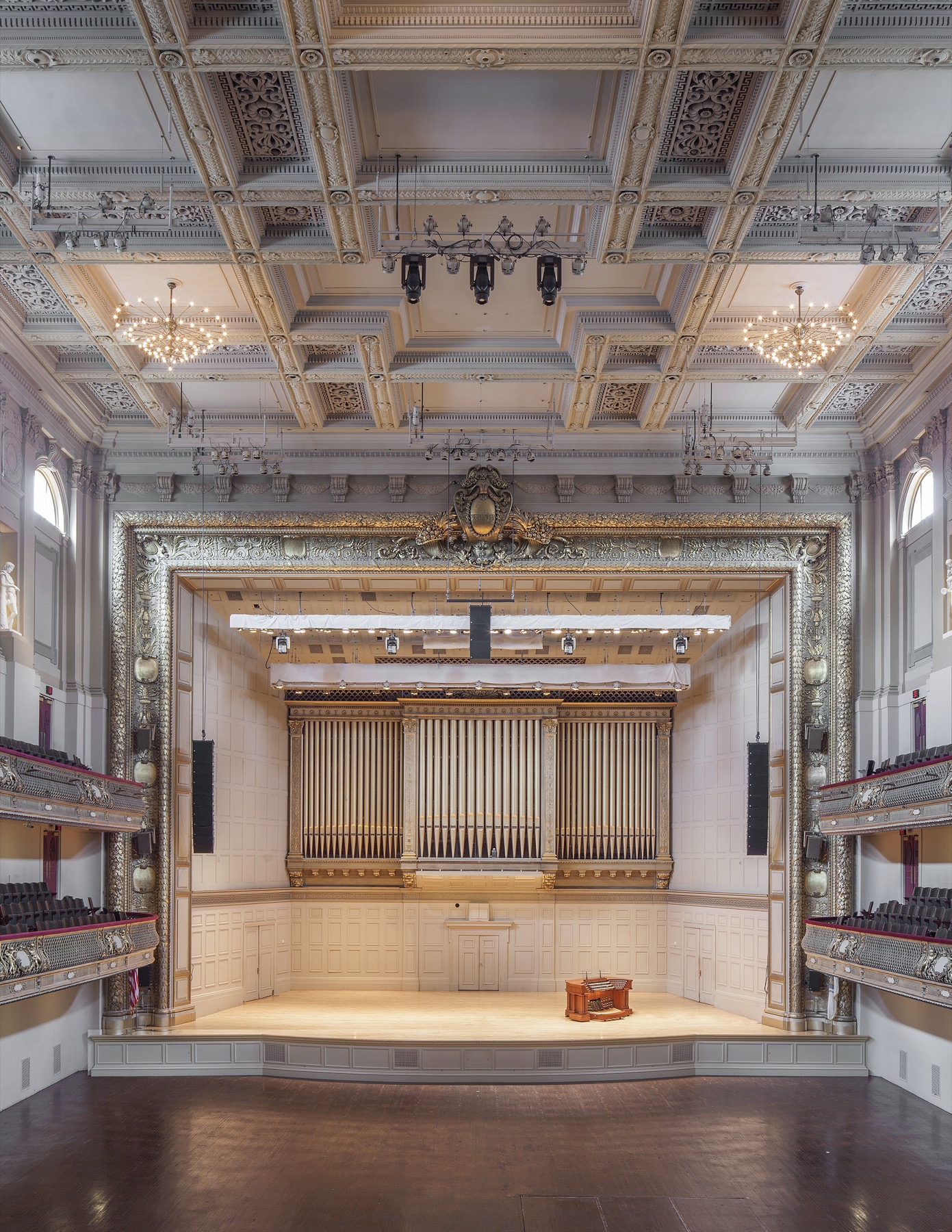
Symphony Hall, Boston. The institution whose board fired Andris Nelsons in March 2026, sent its 170 largest donors a long memo on April 21, and on April 22 sent its own staff a message blaming internal critics — then rescinded it after thirty minutes. Photo: Tneorg via Wikimedia Commons, CC BY-SA 3.0.
Investigation · Opinion
Fire Chad Smith. The Memo Is the Confession. The Orchestra Needs to Fight Back.
On March 6, 2026, the Boston Symphony Orchestra fired Andris Nelsons over what its board chair called “future vision.” For seven weeks, the board would not say what that vision was. On April 21, board chair Barbara Hostetter sent ~170 major donors a long memo. The next day, the same leadership sent BSO staff a follow-up — and rescinded it after thirty minutes when its accusations were noticed. The Boston Globe obtained both. This is what they say. This is what they leave out. This is why every person who signed them should be gone, and why the orchestra they wrecked should have been the ones to say so first.
Cadenza Editorial·May 2026·Sources: Boston Globe (Malcolm Gay reporting; April 29, May 3, May 4 Editorial Board / opinion / letters); GBH; Slippedisc (Norman Lebrecht); Harvard Crimson; Boston Musical Intelligencer; WBUR; CBS Boston; AP; BSO official communications; IRS Form 990 (Boston Symphony Orchestra Inc., EIN 04-2103550); BSO Players' Committee statements; ICSOM; Cadenza prior coverage.
Editor's note. This article is the fifth in Cadenza's ongoing investigation of the firing of Andris Nelsons by the Boston Symphony Orchestra. It builds on the original investigation of the firing, the peer-orchestra collapse pattern, and the playbook for the BSO musicians. It does not relitigate those arguments. It documents what the board has now written in its own hand, what the orchestra has not yet done in response, and what the historical record shows is owed. Every disputed claim is attributed to a named primary or secondary source. Where two participants in the same event have given conflicting accounts on the public record, both are reproduced.
What This Article Asks For
Cadenza has, in the past, declined to call for resignations. It has named names. It has documented decisions. It has counted the cost. It has not, until now, said the word fire.
The memo dated April 21, 2026, and the staff memo of April 22, 2026, change the calculus. The board has now written down — in writing, signed, on its own stationery, distributed to its own donors and its own employees — a record of its behavior that is no longer defensible by any reading of the document, the institution, or American nonprofit law. There are three things that follow from that record. They are not opinions. They are the minimum the public-record evidence demands.
1. Chad Smith should resign as President and CEO of the Boston Symphony Orchestra. If he does not, the Board of Trustees should terminate him.
2. Barbara Hostetter should resign as Chair of the Board of Trustees. The Trustees who voted unanimously for the firing of Andris Nelsons and signed off on the April 21 and April 22 memos should be replaced on a calendared timeline. The Massachusetts Attorney General's nonprofit oversight unit should review whether the board has met its fiduciary duty.
3. The musicians of the Boston Symphony Orchestra should fight back. They should vote no confidence in the board. They should file with the Massachusetts Attorney General. They should, when the next music director is named without their consent, refuse to play under that conductor until the search is reopened on terms the players have agreed to. Cadenza published the historical playbook for this on March 29, 2026. Six weeks have passed. The orchestra has issued letters and worn red rose pins. It has not used the playbook. It is time.
What follows is the case for those three demands. It is built entirely on the board's own words and the public record around them.
What Chad Smith Said in March. What the Memo Said in April.
On March 6, 2026, at 3:45 p.m. on a Friday — the hour reserved for institutional announcements that hope to disappear by Monday — the Boston Symphony Orchestra announced it was not renewing Andris Nelsons' contract. The official reason given by the board was that the BSO and Nelsons were “not aligned on future vision.”
In the weeks that followed, the board and Chad Smith were asked, repeatedly, to specify what the “future vision” was that Nelsons did not share. They declined. The Boston Globe's Malcolm Gay published a piece on March 24 titled, with characteristic directness, “BSO leadership clearly had a vision for the future when it ousted Andris Nelsons. Why don't we know what it is?” The board did not answer.
Three days later, on March 27, Chad Smith sat for an extended interview with the Globe. It was the first time he had been asked, on the record, to articulate the artistic disagreement that had cost the BSO its six-time Grammy-winning music director. He could not.
We have a lot of work to do to rebuild trust with the musicians. Of course I wish this had played out differently and that we could have landed at a more amicable resolution.
When pressed on what specifically had gone wrong artistically — what Nelsons did that violated the “future vision” — Smith pivoted. He spoke about declining ticket sales. He spoke about an aging audience. He spoke about $90 million in deferred maintenance. He framed the firing as institutional sustainability rather than artistic philosophy.
That pivot, on the record, was the first leak of what the board really meant by “future vision.” The artistic framing was the public-facing language. The financial framing was the actual one. Smith said it himself, in plain English, to the reporter for the city's newspaper of record, twenty-one days after he fired the conductor.
Then, on April 21, the financial framing arrived in writing. Board chair Barbara Hostetter — the wife of one of America's wealthiest cable-television families, previously of the Isabella Stewart Gardner Museum's board — sent a memo titled State of the Boston Symphony Orchestra to ~170 members of the BSO's non-voting Board of Advisors. The memo, per the Globe's reporting, ran several pages. The Boston Globe obtained it. On April 29, Malcolm Gay published the document's contents.
What follows are the words the board wrote when it thought only its donors were listening.
The Memo, Annotated
Eight passages from the April 21 memo carry the document's argument. Each is reproduced verbatim, as quoted by the Boston Globe, with what each reveals.
From the memo
“Business as usual will no longer suffice.”
The opening line. It has now been quoted by the Globe, GBH, Slippedisc, the Harvard Crimson, the Boston Musical Intelligencer, every wire service that picked up the story, and every subsequent letter to the editor. It is the line the memo is now known by.
Read it again. Note who, in this sentence, is described as not having sufficed. Business as usual — the activity of the institution itself. Not the board. Not management. Not Hostetter, Smith, Loder. The line diagnoses the institution as the patient. It is written by people who have just removed the conductor over “future vision” and now describe the institution they removed him from as the source of the problem. They are not in the diagnosis. They are the diagnosticians.
From the memo
“At current rates of deficit spending, unless something changes, our existing unrestricted endowment assets will be gone within just a few years.”
This is the central financial argument of the memo. It is also the line the public March 6 announcement of Nelsons' non-renewal did not contain. The board fired the conductor before it told anyone that, on its own forecast, the unrestricted portion of the endowment had a runway measured in years rather than decades.
The endowment is approximately $600 million. The Globe reports — citing the same memo — that approximately 90 percent of it is restricted. Which is to say: roughly $60 million of the $600 million is unrestricted; the rest is encumbered by the donor agreements that established it (endowed chairs, named series, the Charles Munch chair, and the like). It is the $60 million the memo is referring to when it says “within just a few years.”
The forecast may be accurate. But its presence in this memo, addressed to the donors most likely to fund the gap, with no comparable disclosure to the public, to the orchestra, or to subscribers, makes the document a fundraising appeal, not a statement of strategy. The memo's answer to its own forecast appears in the same column inches: more philanthropy.
From the memo
“Massive amounts of new philanthropy — potentially hundreds of millions.”
This is the ask. Hundreds of millions. Not from the public. Not from new audiences. From the same ~170 donors the memo is addressed to, plus their networks. The memo's implicit theory is that the institution's sustainability problem is a fundraising problem, and that the fundraising problem can be solved by asking the existing donor base to write substantially larger checks.
That theory has at least one obvious problem. The Globe's own May 3 editorial column — published one week after the memo leaked — observed that fundraising at the BSO has plunged since the firing of Nelsons. The donor base is not writing larger checks. It is writing smaller ones, or none, in protest of the very decision the memo is now asking them to fund the consequences of.
In other words: the strategy in the memo is to raise money from the people who are currently withholding money in protest of the action the money would now be used to survive. The document is, on its own terms, asking for money to fix a problem the document declines to acknowledge it caused.
From the memo
“This ‘kicking the can down the road’ approach is no real solution.”
A characteristic clause. The implication is that someone — someone other than the board — has been kicking the can. The line does not name who. The memo does not, at any point, identify a single specific decision made by the board, by Smith, or by Hostetter that contributed to the “business as usual” condition the memo describes as no longer sufficient.
It does, however, name names elsewhere — at greater specificity than the memo's own self-examination reaches.
From the memo
“Certain BSO personnel and other members of the BSO community are spreading false and misleading rumors.”
This is the accusation. It is leveled, in writing, by the chair of the Board of Trustees against unnamed members of the institution she chairs. The memo does not specify what the rumors are. It does not specify which personnel. It does not name what is false or misleading. It accuses, declines to specify, and asks for hundreds of millions of dollars in the same document.
When a chief executive's response to internal criticism is to send a written accusation of dishonesty to her largest donors, she has stopped governing the institution and started litigating against it.
From the memo
“Compelling artistic vision, superlative musicality and podium skills.”
These are three of the qualities the memo specifies the board will require of the next music director. They are also, in plain language, three qualities every public statement by every BSO musician — including principal flute Lorna McGhee's widely-quoted letter calling Nelsons' firing “a form of artistic suicide” — has attributed to Andris Nelsons. The board agrees, on paper, that the qualities it wants in the next music director are the qualities his musicians say the conductor it just fired had.
Two further specifications in the memo do, however, code as direct retrospective complaints about Nelsons.
From the memo
“Make the Boston Symphony the principal focus of his or her artistic endeavors.”
Andris Nelsons is also Kapellmeister of the Leipzig Gewandhaus. The Leipzig role is a tenured European symphonic appointment of the highest rank. It is also an appointment Nelsons held throughout his BSO tenure, with the BSO's knowledge, with no public objection from the board, until the firing. The complaint that Nelsons did not make the BSO his principal focus is now in writing in this memo. The board did not raise it as the public reason on March 6. It is in the memo as a specification for the next music director, which makes it, by elimination, the specification Nelsons did not meet.
From the memo
“Emphasize heavily the central works of the Western classical canon. Affinity programming will not displace the BSO's central focus on the classical canon.”
This is the second coded complaint. “Affinity programming” is the term of art, in nonprofit cultural management, for repertoire selected for the cultural identity of its composer or its connection to a specific community of listeners. The memo here promises donors that the next music director will emphasize the core canonical repertoire and that the institution will not let identity-driven programming displace it.
The promise is a promise away from a programming direction. That direction, by every public account of the BSO under Chad Smith's administration, has been what the institution was moving toward. The memo, addressed to donors, promises donors a course correction.
The board fired Nelsons over “future vision” on March 6 and has, in this memo to donors on April 21, told donors the future vision is a return to the Western classical canon. Whatever else may be said about that programming direction — its merits, its risks, its public defensibility — the document confirms that the firing was not over vision the board could not articulate. It was over vision the board would not articulate publicly, and which it has now articulated to its donors. The public would not be told. The donors would.
170 Donors. One Memo. Fundraising Plunged.
The Rescinded Email
The April 21 memo to 170 advisors was not the only document the board sent that week. On April 22, BSO leadership sent a follow-up message to the BSO's entire staff. It was rescinded approximately thirty minutes after it went out. The Boston Globe and Slippedisc both obtained the rescinded version. It contained one sentence the April 21 memo did not.
From the memo
“The determination of some within the BSO to resist suggestions for changes to business-as-usual is unfortunately nothing new. Many of those who are now attempting to undermine and discredit Chad Smith and the Board of Trustees employed the same tactics in 2021 and 2022 against the last new CEO the BSO engaged.”
The reference is to Gail Samuel, the BSO's previous CEO and the first woman ever to lead the institution. Samuel joined in June 2021 and stepped down on January 3, 2023 — eighteen months on the job. The memo's framing is that the same internal forces that opposed Samuel are now opposing Smith — and that the opposition is by definition illegitimate, because it is the same opposition.
Read the framing again. The board's diagnosis of Samuel's departure is that internal critics caused it. The board's diagnosis of the current fundraising crisis is the same: internal critics. The board's response to internal critics is to send a written accusation of bad faith to its donors — and, until the message was rescinded, to its staff. In the board's account, the cause of every BSO problem is the same cause, and the cause is not the board.
The message was rescinded after thirty minutes. Sources both inside and outside the institution have publicly speculated that the rescission followed someone in leadership recognizing what the document said in writing. By that point, the message had circulated. It is now in the public record.
The Numbers the Memo Either Cites or Implies
$600M+
BSO total endowment — the largest of any U.S. symphony
90%
Share of endowment that is restricted, per the memo
$60M
Approximate unrestricted portion of the endowment
~few yrs
Memo's own forecast for unrestricted endowment runway
$1 → $1.80
Memo's claim of investment returns on $1 drawn from endowment
$100M
Estimated combined deferred maintenance for Symphony Hall + Tanglewood
40%
Decline in paid attendance at Symphony Hall over 20 years
60%
Decline in subscriber base over 20 years
$6.6M
BSO accounting deficit per Globe coverage
0
Performances Beatrice Venezi conducted at La Fenice — see /news/venezi
0
Specific decisions by Smith or the board the memo identifies as causes
170
Recipients of the April 21 memo (Board of Advisors)
Every number above appears either in the April 21 memo or in coverage citing the memo. Two are zero. The fact that they are zero is the case for every other number in the table.
What Hostetter Built
Barbara Hostetter has chaired the BSO Board of Trustees through the recruitment and tenure of the two most consequential CEOs of the last five years: Gail Samuel (2021–2022) and Chad Smith (2023–present). Her track record before the BSO is substantially in museum governance — most notably at the Isabella Stewart Gardner Museum, where she chaired the board through the 2012 Renzo Piano expansion. Her public profile is institutional rather than artistic. She is not herself a musician.
The previous Cadenza investigation into Nelsons' firing — The BSO Investigation: They Fired the Best Conductor in America — documented the institutional pattern Hostetter has presided over: hiring CEOs from the Los Angeles Philharmonic on transformation mandates, commissioning composers on identity-first criteria, and changing Nelsons' contract from fixed-term to rolling so that he became terminable on notice. That piece argued the firing's cause was ideological. This piece does not relitigate that argument. It documents what Hostetter has now written down, on her own letterhead, when she thought only her donors were reading.
The April 21 memo is signed on behalf of Hostetter as Board Chair. Vice chair John Loder is named in coverage of the memo's circulation. The trustees who voted for Nelsons' non-renewal have not, individually or collectively, given a public statement explaining their vote. The Boston Symphony Orchestra has, per public reporting and the demands of the Players' Committee, 42 voting Board members and 27 Life Trustees — a 69-person governance body. Not one has, between March 6 and today, given an interview to the Globe, GBH, the Boston Musical Intelligencer, or any outlet, on the record, explaining the vote.
They have collectively endorsed two memos — one to donors and one, briefly, to staff — accusing the institution's critics of bad faith. They have not, in writing or in speech, taken responsibility for any aspect of the decision they made together.
Hostetter should resign. The trustees who voted unanimously should be replaced on a calendared timeline. The Massachusetts Attorney General's nonprofit oversight unit, which has broad authority over the conduct of public charities under Mass. Gen. Laws ch. 12, should examine whether the board has met its fiduciary duty of care. Cadenza's prior coverage documents the AG's authority and the historical precedent for its use.
Lockhart Breaks Ranks
On April 30, 2026 — nine days after the April 21 memo, eight days after the rescinded staff email, one day after the Globe published its first piece on the memo — Keith Lockhart, the Boston Pops conductor, sat for an extended interview on GBH Boston Public Radio. Lockhart has led the Pops since 1995. He is, by any measure, the most senior public artistic figure at the institution other than the music director the institution has just fired. He is also one of the few people employed by the BSO who could not credibly be accused, by either the board or its critics, of hidden allegiance to either side.
Lockhart spoke. He spread blame. And he said something out loud that no public figure inside the institution had said until that moment.
We've been living on borrowed time. The symphony needs big resets and big decisions. The board and management seriously miscalculated their announcement of Nelsons' dismissal. People felt blindsided by it.
Lockhart did not call for resignations. He criticized Nelsons' camp as well — accusing them of having “created an emotional turmoil that did not have to be” and contrasting their handling of the exit unfavorably with the BSO's own neighbor on the Boston civic stage, Red Sox manager Alex Cora, who Lockhart described as having “made a very gracious goodbye.”
The Cora comparison is interesting only because it is the only figure of comparison Lockhart could find. Lockhart, fishing for an analogue to the way a senior public figure exits a Boston institution with grace, did not find one in classical music. He went to baseball. The classical music profession does not, in his account, have a recent gracious-exit story he could cite.
What Lockhart said matters because of who said it. Up to April 30, every public voice criticizing the board had a stake — the musicians' livelihoods, the critics' reputations, the donors' investment, Cadenza's editorial line. Lockhart is on the BSO payroll. He conducts the Pops, the BSO's commercial-revenue arm, and reports through the same chain of command. When he said the board seriously miscalculated on the record, the institutional break was no longer external. It was internal.
The Globe Editorial Board, and the Quotes the Globe Cut
On May 3, 2026, the Boston Globe published an opinion column titled “BSO board can't get out of its own way even as fund-raising falls.” The headline was the editorial position. The body of the piece made the institutional case the BSO musicians had been making, with citations, in the Globe's own pages. It cited the April 21 memo verbatim. It noted fundraising had plunged since the firing. It compared the BSO's $100 million renovation estimate unfavorably to the Cleveland Orchestra's 2000 Severance Hall renovation, which cost $36 million and was completed under then-music director Christoph von Dohnányi. The Globe column referenced current Cleveland Orchestra music director Franz Welser-Möst by name as a governance and budget comparator. It used the Globe's own credibility to say plainly what it had previously reported.
On May 4, the Globe published a letters page titled “Internal memo does little to ease the discord surrounding BSO.” The letters were from subscribers, donors, and concertgoers. Every published letter was critical of the board. None defended it.
And then there were the quotes the Globe deleted.
On April 29, when the Globe's Malcolm Gay published the original story on the memo, the online version of the article reportedly contained six paragraphs that did not appear in the print edition. The deleted paragraphs included two anonymous quotes — one from a member of the BSO Board of Advisors, one from a sitting orchestra musician — both of whom had spoken to the Globe on condition of anonymity citing fear of retaliation. The deletions were first noted by Norman Lebrecht at Slippedisc, and confirmed in a public comment by BSO violist Katie Sievers.
You want to rebuild trust, and you want us to have confidence in this institution.
The implication for us is that they've transferred blame to the players. They blew this up. Firing Andris precipitated a crisis of trust.
These two quotes, and the four paragraphs surrounding them, were reported by Slippedisc to have been removed from the Globe's online article between its initial April 29 publication and Slippedisc's May 5 documentation of the redaction. The deletion was confirmed in a public Slippedisc comment by BSO violist Katie Sievers. Cadenza is republishing the two anonymous quotes solely as Slippedisc reported them, with attribution to that reporting. The Globe has not, as of this article's publication, explained the redaction. Cadenza does not have inside knowledge of the Globe's editorial process and does not speculate about the reason.
What can be said from the public record is this: two anonymous voices — one from the board the memo was sent to, one from the orchestra the memo was about — said the same thing the published memo says in reverse. The advisors are losing confidence. The musicians believe blame has been transferred to them. Both said so to the city's newspaper of record. The newspaper of record published the quotes, then took them down. The quotes are now in this Cadenza article. The record is not erased by deletion from a single archive. It is in the public domain and remains so.
The Silence of the Players
And now to the part of this article that is uncomfortable.
The BSO musicians have been the moral spine of the public reaction to the firing. Lorna McGhee's letter calling the dismissal “a form of artistic suicide” — comparing it to firing Karajan from the Berlin Philharmonic — has been quoted in every subsequent piece of coverage, including this one. Tom Van Dyck, of the BSO double bass section, wrote his own letter. The Players' Committee issued a statement on March 27 demanding that the minutes of their March 19 meeting with Smith and the board be distributed to all 42 trustees and 27 Life Trustees, and indicating support for reinstating Andris Nelsons. Red rose pins appeared on Symphony Hall lapels at every concert through March and April. A Change.org petition launched by audience member George Whiting demanded a public town hall.
These are the things the orchestra has done. They are not nothing.
They are also not the historical playbook for what an American orchestra does when its board fires its conductor in bad faith.
On March 29, 2026 — two months ago, three weeks after Nelsons' non-renewal — Cadenza published A Playbook for the Musicians of the Boston Symphony Orchestra: How Orchestras Have Fought Back — and Won. That piece documented, with primary sources, what successful labor action by orchestra musicians looks like in practice. The historical record, as Cadenza published it:
- Chicago Symphony, March 2019. The musicians struck for seven weeks over a board attempt to convert their defined-benefit pension to a 401(k). They performed free concerts under the name Musicians of the CSO during the strike. They won. The pension was preserved. The board chair stepped down within a year.
- Minnesota Orchestra, October 2012. The musicians outlasted a 16-month board lockout — the longest in modern U.S. orchestra history. Music director Osmo Vänskä, a Grammy winner, resigned in protest. The musicians eventually accepted concessions in early 2014. The CEO resigned. The board chair followed.
- Berlin Philharmonic. The orchestra elects its own music director by a vote of the players. Boards do not impose conductors on Berlin. The orchestra hires the conductor it has agreed it wants. That structural fact has produced the most consistent music-directorial succession of any major orchestra on earth.
- Massachusetts Attorney General's nonprofit oversight unit. Mass. Gen. Laws ch. 12 grants the AG broad authority to examine the conduct of public charities, the duty of care of trustees, and the use of charitable funds. The authority has been used in past Massachusetts cultural disputes. It is, currently, available to the BSO musicians. Filing has not been initiated, on the public record, as of this article's publication.
Cadenza published that map on March 29. Six weeks have passed. The BSO musicians have not voted no confidence in Hostetter or Smith. The Players' Committee has not authorized a strike. The orchestra has not initiated an AG complaint. The orchestra has not, on any public record, indicated that when the board names the next music director — without their consultation, on the criteria the April 21 memo specified — the players will refuse to perform under that conductor until the search is reopened on terms they have agreed to.
They have written letters. They have worn red pins. They have demanded that minutes of their meeting with the board be distributed to the trustees. The board, in response, sent the trustees and the donors a memo accusing them of “spreading false and misleading rumors.”
The asymmetry is the problem. The board acts. The musicians document. The board writes memos. The musicians write letters. The board has hired a CEO to execute its vision, named a successor process to its own specifications, and asked donors for hundreds of millions to fund the consequences. The orchestra has held meetings.
The musicians of the BSO are paying the cost of inaction. The board is paying the cost of nothing. Until the players close that asymmetry — by using the labor and legal tools the historical record proves work — the institution they are trying to save will continue to be governed by the people who fired the conductor they all loved.
No one outside the BSO orchestra can tell its musicians what to do. Their personal risk is real. Their mortgages, families, and careers are not abstractions. The decision is theirs, made together, on their own timeline.
But the public record now contains the board's own words. Cadenza published the map of what fighting back looks like. The Globe published the document the board wrote when it thought only its donors were listening. Lockhart broke ranks. The Globe's own editorial board called the situation what it is. The advisors, anonymously, said they were losing confidence. Two musicians, anonymously, said the board had transferred blame to the players. Even those quotes were deleted, and recovered.
The case is made. The map exists. The moment is now.
Chad Smith Drove Off the BSO's Donors. The Memo Asks Them Back for Hundreds of Millions.
What Fighting Back Looks Like, Specifically
Cadenza's prior Playbook for the Musicians of the Boston Symphony Orchestra documented the historical record — Chicago's 2019 strike, the Minnesota lockout, the Berlin Philharmonic's self-governance model, the Massachusetts Attorney General's authority. This is the tactical version. It names the specific tools, the specific officials, the specific deadlines, and the specific levers. The work below is offered to the BSO musicians and to the Players' Committee. The decisions remain theirs. The map below is a map, not a command.
Step One — Within Two Weeks
The No-Confidence Vote
The Players' Committee can convene a vote of the BSO musicians on a public resolution of no confidence in Chad Smith, in Barbara Hostetter, and in the Trustees who voted unanimously for the non-renewal of Andris Nelsons. The vote is non-binding. It is also the loudest single artifact a unionized orchestra can produce in American institutional politics. It produced CEO resignations at Minnesota and at the Chicago Symphony. It will be on the Boston Globe's front page within 24 hours of being announced.
Mechanism: A vote of the Players' Committee membership, followed by a vote of the full orchestra under the procedures established by Boston Musicians' Association — AFM Local 9-535 — and the Players' Committee's own bylaws. The resolution is then released publicly, with a press conference at Symphony Hall the same day.
Recommended deadline: May 31, 2026.
Step Two — Within Six Weeks
File With the Massachusetts Attorney General
The Massachusetts Attorney General's Non-Profit Organizations / Public Charities Division has jurisdiction under Mass. Gen. Laws ch. 12, §§ 8–8M over the conduct of public charities incorporated in Massachusetts and over the fiduciary duties of their trustees. The Boston Symphony Orchestra Inc. (EIN 04-2103550) is incorporated in Massachusetts. Its trustees are subject to the division's authority. The current Attorney General is Andrea Joy Campbell, in office since January 2023. The Public Charities Division is at One Ashburton Place, Boston.
Mechanism: A formal complaint requesting the Public Charities Division open an inquiry into whether the BSO Board of Trustees has met its duty of care to the institution. The April 21 “State of the Boston Symphony Orchestra” memo and the rescinded April 22 staff memo are documentary evidence already in the public record and can be attached as exhibits. The complaint can be filed by the Players' Committee jointly with concerned donors and members of the Board of Advisors who, per the Boston Globe's deleted-online quote, have publicly indicated they have lost confidence in the board.
Recommended deadline: June 15, 2026. This is one day after the date by which Hostetter and Smith should be expected to have stepped down voluntarily. If they have not, the AG filing is the next institutional pressure point.
Step Three — In Parallel
Solidarity From the Peer Orchestras
Every major American orchestra has a Players' Committee or equivalent body. Many of them have been through some version of this fight. Their public statements of solidarity are free, fast, and impossible for a board to argue with.
The Players to contact, in order of recent relevant experience:
- Chicago Symphony Orchestra Members Committee — Chicago struck for seven weeks in 2019 over a board attempt to convert their pension. They won. The board chair stepped down. CSO musicians are the closest historical analogue to BSO's current position.
- Minnesota Orchestra Musicians' Association — Minnesota outlasted a 16-month board lockout. Their CEO, board chair, and Music Director Osmo Vänskä all left in the aftermath. They know the endgame.
- San Francisco Symphony Musicians — Esa-Pekka Salonen resigned in March 2024 over the same board posture the BSO is now exhibiting. SFS is months ahead of Boston on this curve, not years. Cadenza documented their collapse in The San Francisco Symphony Had 12 Grammys, a Visionary Conductor, and a $400 Million Endowment. Then It Fell Apart.
- Philadelphia Orchestra Members' Association — Philadelphia's 2018-2020 fight against management cuts produced public organizing under the “Save the POO” banner. They have institutional muscle memory for fights of this size.
- New York Philharmonic Players' Committee — Operates under a board that has, by recent comparison, exhibited fewer of the symptoms now visible at Boston. Useful as a public comparator: this is what good governance looks like; here is what isn't.
- Metropolitan Opera Orchestra Musicians — Endured Peter Gelb's suspension of all musician paychecks for seventeen months during COVID. Their public organizing during that period — documented in Cadenza's The Silence of Yannick Nézet-Séguin and Peter Gelb: Why Does Everyone Hate Him? — is a template.
A joint public statement from any three of these committees — published the same week as the BSO no-confidence vote — would close the asymmetry the BSO board is currently exploiting. The board can dismiss internal critics. It cannot dismiss the players of every other major American orchestra.
Step Four — June 2026
The Tanglewood Leverage
Tanglewood is the BSO's summer home in Lenox, Massachusetts. The 2026 Tanglewood season runs from late June through Labor Day weekend. Tanglewood ticket revenue, donor cultivation, and the Tanglewood Music Center fellowship program are central to the BSO's annual operations and to its national cultural profile.
The musicians of the BSO play Tanglewood. They are not legally required to do so under conditions they consider intolerable. A public letter from the Players' Committee announcing that the orchestra will not perform the 2026 Tanglewood season unless and until specific institutional demands are met — Smith's resignation, Hostetter's resignation, the convening of a new music director search committee that includes Players' Committee representation — would force the board into a binary choice. Either they meet the demands or they cancel Tanglewood. Cancelling Tanglewood is a financial catastrophe for the BSO and a public-relations catastrophe for the Massachusetts cultural sector. They will not cancel. They will negotiate.
Recommended deadline for the public letter: May 25, 2026, ahead of the formal Tanglewood season announcements.
Step Five — When the Board Names the Next Music Director
The Refusal
The April 21 memo specifies the criteria the board will apply to the next music director. Those criteria were set without the orchestra. Whoever the board names will arrive on a podium where the players have not been consulted. The historical record at peer institutions is that the next conductor, in this exact situation, does not last.
The Players' Committee can announce, in advance, that the orchestra will not perform under the next music director until the search is reopened on terms the Players have agreed to. This is the Berlin Philharmonic model in inverse: Berlin's players elect the conductor; Boston's players cannot, but they can refuse to play under one not chosen with their consent. The announcement is itself the leverage — the board cannot announce a music director if the orchestra has already announced it will not play.
Mechanism: A public statement from the Players' Committee, signed by the principal players individually, naming the search criteria the orchestra requires (international major-house experience, demonstrated repertoire commitment, and consultation with the players in the search process). The statement is released the day after the no- confidence vote.
Step Six — In the Worst Case
The Free-Concerts Strategy
If the board fires the orchestra wholesale or attempts to lock the players out of Symphony Hall — the Minnesota Orchestra precedent — the Chicago Symphony's 2019 strategy is the proven path. The Chicago players performed free concerts across the city under the name Musicians of the CSO, in churches, community centers, and alternative venues. They maintained an active website and social media presence. They reframed the dispute as a fight to preserve a great American institution rather than as a labor dispute.
Boston has more concert venues than Chicago. Boston Symphony Orchestra players playing Mahler in Symphony Hall on Friday and free chamber music at New England Conservatory on Saturday is an institutional signal the board cannot match. Subscribers will follow the music. The board will be left renting Symphony Hall to itself.
Each step above is independently effective. Together they constitute the closing of the asymmetry. The board has the institution's name, the building, and the endowment. The players have the music, the audience's loyalty, the historical precedent, and — when they choose to use them — the labor and legal tools the record above documents. The musicians of the Boston Symphony Orchestra are among the most accomplished classical performers in the world. They are not without power. They are choosing not to use the power they have. That choice can change this week.
The Loop
Map the chain of decisions from March 6 to today. Every step is the board's own action.
→ Board fires Andris Nelsons. (March 6)
→ Donors revolt. Fundraising plunges.
→ Board sends memo to donors blaming critics. (April 21)
→ Board sends memo to staff repeating accusation. Rescinds it 30 minutes later. (April 22)
→ Memo leaks. Patron revolt grows. Globe runs the document. (April 29)
→ Lockhart breaks ranks publicly. (April 30)
→ Globe editorial board calls the board out. (May 3)
→ Globe letters page is unanimously hostile. (May 4)
→ Fundraising falls further. Board has not reversed course.
No external agent appears at any step. There is no economic shock. There is no scandal forced on the institution. There is no rival outbidding the BSO for talent. Every action in the chain is a board decision, a board response to its own previous decision, or a public response to a board decision the board itself has made.
A board that has produced a feedback loop in which every move it makes worsens its position has, by definition, lost the ability to govern its way out. The remaining question is whether the board recognizes this on its own and resigns, or whether the institution's constituencies — musicians, audience, donors, the AG's office — force the recognition externally.
What Comes Next
Five things will happen in the next twelve months. Three of them the board can still influence. Two of them are now out of its hands.
The next memo
There will be one. The April 21 document was a fundraising appeal. The fundraising appeal has produced no fundraising. The next memo will arrive when the board concludes that what the first memo lacked was specificity, urgency, or a redirected blame target. It will not solve the problem. The problem is the decisions, not the messaging about the decisions.
The music director announcement
The board has set the criteria for the next music director, in writing, in the April 21 memo. The criteria are: principal-focus, central canon, no affinity programming displacing the canon. The candidate pool that satisfies those criteria is small and well-known. The announcement will arrive on a Friday afternoon in 2026 or 2027. The board will announce that the candidate satisfies the criteria. The orchestra will not have been consulted in any meaningful sense, because the criteria were set without them. At that point, the orchestra has its decision.
The musician departures
Senior players do not leave one of the great orchestras in the world unless the institution has become unbearable. If two or three principals leave by September 2026, the signal is clear. If five or more leave, the institution is in genuine personnel crisis. The historical comparator — the Minnesota Orchestra after its 2012-14 lockout — saw senior departures the institution has never replaced.
The Massachusetts Attorney General
The AG's nonprofit oversight unit has, on the public record, examined similar institutional misconduct in past cultural-organization disputes. The authority is broad. The threshold for examination is the appearance of fiduciary breach by trustees, mismanagement of charitable assets, or violation of duty of care. The April 21 memo, in which trustees accused unspecified members of their own institution of bad faith without specifying the accusations, may itself be evidence of governance breakdown. The AG's office is currently held by Andrea Joy Campbell. Filing has not, on the public record, been initiated by the BSO musicians as of today. It can be.
The Globe editorial board call
In September 2019, the Boston Globe's editorial board published an editorial titled “Peter Gelb, step down.” It was an unprecedented intervention by Boston's newspaper of record into the governance of a New York cultural institution. It set a precedent. The Globe has, between March 6 and today, published news, opinion, and letters on the BSO with increasing severity. It has not, yet, called for resignations by name. If the editorial board follows its own 2019 precedent and calls for Hostetter and Smith to step down, the Boston civic consensus has shifted. When that call arrives — if it arrives — the institutional politics of the BSO changes overnight. Watch for it.
The Verdict
On March 6, 2026, the Boston Symphony Orchestra fired the most successful conductor in its modern history because, the board said, he and the board were not aligned on future vision.
On April 21, 2026, the board wrote down the future vision. It is a fundraising appeal demanding hundreds of millions of dollars. It diagnoses the institution as the patient. It accuses the institution's critics of dishonesty. It specifies, in writing, two artistic complaints about Andris Nelsons that the board would not say in March: he was not principally focused on the BSO, and his programming was not the Western classical canon. It frames the next music director's job as a return to the canon, on terms set by the board, without consultation with the orchestra. It is signed by board chair Barbara Hostetter on behalf of trustees who have not, individually or collectively, given a public statement explaining their vote.
On April 22, the same leadership sent BSO staff a follow-up memo accusing the orchestra's internal critics of being the same critics who pushed out the previous CEO. Thirty minutes after sending it, the leadership rescinded the memo. The rescission did not undo the document. The document is now in the public record.
On April 30, Boston Pops conductor Keith Lockhart, on Boston public radio, said the BSO had been “living on borrowed time” and that the board had “seriously miscalculated” the announcement. On May 3, the Boston Globe editorial board said the board “can't get out of its own way.” On May 4, the Globe's letters page was unanimously hostile to the board. The two anonymous quotes the Globe ran online and then deleted — one from an advisor, one from a musician — are reproduced in this article.
Cadenza has, in earlier coverage, declined to call for individual resignations. That position is no longer defensible against this record. Cadenza calls for the following.
Chad Smith should resign as President and CEO of the Boston Symphony Orchestra by June 30, 2026. The Boston Globe editorial board should follow its September 2019 precedent and say so on its own pages.
Barbara Hostetter should resign as Chair of the Board of Trustees by June 30, 2026. Vice Chair John Loder, who signed the April 21 memo's circulation, should resign with her. The Trustees who voted unanimously for Andris Nelsons' non-renewal should be replaced on a calendared timeline by September 30, 2026, with replacements chosen on a process that includes the Players' Committee, the BSO subscriber base, and Boston civic leadership not previously affiliated with the current board.
The musicians of the Boston Symphony Orchestra should vote no confidence in the board by May 31, 2026. They should file a complaint with the Massachusetts Attorney General's nonprofit oversight unit by June 15, 2026. They should, when the board names the next music director on its April 21 criteria, refuse to play under that conductor until the search is reopened on terms the players have agreed to. The historical record proves these tactics work. The institutional moment is now.
The Massachusetts Attorney General, Andrea Joy Campbell, should examine, on her office's own initiative, whether the April 21 memo and the April 22 rescinded memo together constitute evidence of fiduciary breach by trustees of a Massachusetts public charity. The threshold for examination has been met by the documentary record itself. The authority is in Mass. Gen. Laws ch. 12.
The Boston Globe Editorial Board should, on its own pages, call for the resignation of Chad Smith and Barbara Hostetter and the replacement of the trustees who voted unanimously for the non-renewal of Andris Nelsons. The Editorial Board did so on September 25, 2019, when it called for Peter Gelb to step down at the Metropolitan Opera. The threshold for that intervention has been met here, on a record more thoroughly documented in the Globe's own pages than the Met record was. The precedent is the Editorial Board's own.
The BSO Board of Advisors, the ~170 members to whom the April 21 memo was addressed, should formally request the convening of an emergency meeting of the Board of Trustees to consider the resignations of Chad Smith and Barbara Hostetter. The advisors are not voting members of the board. They are also the largest constituent group of donors and stakeholders the institution has. A formal advisory-board petition for an emergency trustees meeting is, on Massachusetts nonprofit governance, a procedurally available tool. The threshold has been met by the memo addressed to them.
ICSOM — the International Conference of Symphony and Opera Musicians — and the American Federation of Musicians should issue a public statement, signed by their national leadership, in support of the BSO musicians and in opposition to the institutional posture documented in the April 21 and April 22 memos. ICSOM's standing positions on transparency in orchestral governance, on the duty of boards to consult their players in artistic-leadership decisions, and on the protection of musicians from board retaliation are already on the public record. The Boston situation meets the conditions ICSOM's own published positions describe. The statement is owed.
The BSO subscriber base, with whom the board has not communicated honestly since March 6, should consider withholding subscription renewals for the 2026-27 season pending the resignation of Smith and Hostetter and the convening of a music director search committee that includes Players' Committee representation. Per the Boston Globe's own coverage, the subscriber base has declined by approximately sixty percent over the past two decades. The board has now demonstrated, in writing, that its response to declining subscription is to ask for hundreds of millions in new philanthropy from the donor base while accusing internal critics of dishonesty. Subscribers are not obligated to fund a board that treats them this way.
Fire Chad Smith. Replace the Trustees. End the Orchestra's Silence.
Andris Nelsons will be fine. He has Leipzig. He has the Vienna Philharmonic. He has the Berlin Philharmonic, the Royal Concertgebouw, the Bavarian Radio Symphony. He will record Mahler and Strauss and Shostakovich at the highest level in Europe for the next two decades.
The Boston Symphony Orchestra will not, on the current board's trajectory, be fine. The institution that hired Nelsons in 2014, the institution that won six Grammy Awards under his baton — including the 2026 Best Orchestral Performance Grammy for Olivier Messiaen's Turangalîla-Symphonie, awarded by the Recording Academy weeks before the firing — the institution that recovered post-pandemic attendance and built an international recording catalog with Deutsche Grammophon, has been dismantled by people who, when finally given the chance to articulate why they were dismantling it, wrote a fundraising memo and accused their critics of dishonesty.
The Boston Symphony Orchestra is one of the great orchestras of the world. It is, today, controlled by people who have proven, in writing, that they are not competent to govern it. The musicians who play in it are the people most able to force the change. The Cadenza playbook has been published. The historical record has been documented. The Globe is on the case. The Attorney General's authority is in the Massachusetts statutes. Boston's civic consensus is shifting in real time. The pattern is not unique to Boston, either: in April 2026 La Fenice in Venice fired its incoming first female music director, Beatrice Venezi, after months of musician revolt — Cadenza's investigation is at Meloni's Conductor Accused La Fenice of Nepotism. La Fenice Fired Her. Different institutional reflex; same governance failure.
What is left is the decision the players make, together, in the rehearsal room, before the next memo and the next music director announcement and the next senior departure. The decision is theirs. Cadenza will not pretend otherwise.
But the case has been made. The map has been drawn. The board has confessed. The Globe has cut the quotes that survived the cut. The orchestra needs to fight back.
Timeline
2014
Andris Nelsons becomes BSO music director.
January 2024
Nelsons signs an 'evergreen' contract with the BSO.
2023
Chad Smith arrives as BSO President and CEO from the Los Angeles Philharmonic.
June 2021 – January 3, 2023
Gail Samuel serves as BSO President and CEO — first woman to lead the BSO. Departs after 18 months.
September 2025
Per the Harvard Crimson, the BSO board begins negotiations seeking Nelsons' resignation.
March 6, 2026 (3:45 p.m. Friday)
BSO board announces non-renewal of Nelsons' contract. Stated reason: "future vision."
March 7, 2026
GBH, WBUR, AP, Boston.com, CBS Boston, NBC Boston, and The Violin Channel report the firing.
March 9, 2026
Globe critic calls the dismissal "deeply unusual" on GBH.
March 17, 2026
WBUR critic publishes commentary on Nelsons' tenure.
March 19, 2026
BSO Players' Committee meets with Smith and trustees.
March 20, 2026
Nelsons returns to the podium at Symphony Hall to a rafter-shaking ovation.
March 24, 2026
Boston Globe (Malcolm Gay): "BSO leadership clearly had a vision for the future... Why don't we know what it is?"
March 27, 2026
Chad Smith Globe interview. Pivots to declining tickets, aging audiences, deferred maintenance. Players' Committee issues post-meeting statement.
March 28, 2026
Nelsons performance, second standing ovation.
March 29, 2026
Cadenza publishes A Playbook for the Musicians of the Boston Symphony Orchestra.
April 21, 2026
Board chair Barbara Hostetter sends ~170 Board of Advisors members the long memo titled "State of the Boston Symphony Orchestra."
April 22, 2026
Same leadership sends BSO staff a follow-up memo invoking 2021/2022 Gail Samuel ouster. Rescinded ~30 minutes later.
April 25, 2026
Boston Musical Intelligencer publishes "BSO Blues."
April 27, 2026
Harvard Crimson publishes overview: "What The Hell Happened: Public Scandal and Hidden Turmoil at the Boston Symphony Orchestra."
April 29, 2026
Boston Globe (Malcolm Gay) publishes "Internal memo offers glimpse into BSO's turmoil." Online version contains six paragraphs not in print, including two anonymous quotes from a Board of Advisors member and a sitting orchestra musician. Both later deleted from the online version and archive.
April 30, 2026
Boston Pops conductor Keith Lockhart on GBH: BSO has been "living on borrowed time."
May 3, 2026
Boston Globe opinion column: "BSO board can't get out of its own way even as fund-raising falls."
May 4, 2026
Boston Globe letters page: "Internal memo does little to ease the discord surrounding BSO."
May 4, 2026 (this article)
Cadenza publishes the formal calls for Smith and Hostetter to resign and for the BSO musicians to file an AG complaint and authorize labor action.
August 2027
Date Andris Nelsons' tenure formally concludes after the Tanglewood season.
A note on sources
This article was assembled from public-record sources only: the Boston Globe's ongoing reporting (Malcolm Gay, the editorial board, and the letters page); GBH Boston Public Radio (Keith Lockhart April 30 appearance); Slippedisc (Norman Lebrecht), including the documentation of the deleted Globe online quotes and the comment confirmation by BSO violist Katie Sievers; the Harvard Crimson; the Boston Musical Intelligencer; WBUR; CBS Boston, NBC Boston, AP, Boston.com, and The Violin Channel for the March 6-7 announcement; the Berkshire Eagle; the World Socialist Web Site for labor-perspective coverage; and the IRS Form 990 for Boston Symphony Orchestra Inc. (EIN 04-2103550), available on ProPublica's Nonprofit Explorer. The April 21 memo was obtained by the Boston Globe and quoted extensively in subsequent coverage; this article reproduces only the verbatim passages already in the public record. The April 22 rescinded staff memo's text was obtained by the Boston Globe and Slippedisc and is reproduced only as verbatim quoted in those outlets. No anonymous sources were used by Cadenza. Where two anonymous quotes from the Globe's online edition are reproduced in this article, they are reproduced as the Globe published them, with attribution to the Globe and notation that they were subsequently removed.
This article is the fifth in Cadenza's ongoing investigation of the firing of Andris Nelsons. It builds on The BSO Investigation, Every Orchestra That Did This Before Them Is Now Collapsing, A Playbook for the Musicians of the Boston Symphony Orchestra, and The People Who Failed Classical Music. It does not relitigate those arguments. It documents what the board has now written in its own hand, what the orchestra has not yet done in response, and what the historical record shows is owed.
The financial figures in this article — the $600 million endowment, the 90 percent restricted share, the approximately $60 million unrestricted, the “within just a few years” runway forecast, the $1-to-$1.80 endowment-investment return claim, the $100 million combined Symphony Hall and Tanglewood deferred maintenance estimate, the $36 million 2000 Cleveland Orchestra renovation comparator, the 40 percent paid attendance decline over twenty years, the 60 percent subscriber decline over twenty years, and the $6.6 million accounting deficit — are all attributed in this article to the April 21 memo (as quoted by the Boston Globe) or to coverage citing it. Cadenza has not independently audited these figures. The IRS Form 990 for fiscal year 2024 is, as of publication, the authoritative public-record source for an independent audit; it is available on ProPublica's Nonprofit Explorer at the EIN above.
The calls for resignation, replacement of trustees, AG investigation, and orchestra labor action expressed in this article are Cadenza's editorial position. They follow the precedent set by the Boston Globe's September 2019 editorial calling for Peter Gelb to step down at the Metropolitan Opera. They are made on the documentary record above.
Update · 2026-05-05. After publication, Cadenza received the following firsthand account from a 32-year veteran of the Boston Symphony Orchestra. The author asked to remain anonymous; we have verified their tenure and role to our internal satisfaction. The piece is reproduced below in full, with light copy-edits, at the author’s request.
From Concertos to Condos: A 32-Year Perspective on the BSO’s Decline
By a 32-year BSO veteran. Cadenza is withholding the author’s name at their request.
The blueprint for the current chaos at the BSO was drawn decades ago, but to understand what we’ve lost, you have to look at where we began — or perhaps more accurately, where it ended.
From the first moment I walked into Symphony Hall, I knew I was one of the privileged few chosen to serve such a storied institution. When I started my 32-year career, I worked under a board of true visionaries — leaders who treated the orchestra as a sacred trust. Under the guidance of Kenneth Haas, that administration set a world-class standard for integrity and distinction. They were stewards who understood that artistic excellence and fiscal honesty were inseparable.
The tragedy of the last thirty years has been the slow erosion of that stewardship. As the “old guard” was phased out, they were replaced by a new crop of leadership that, in my view, neither came close to the highwater mark nor possessed the gravitas of their predecessors. We moved away from that gold standard into an era of prestige-driven governance that felt more like an insular social circle than a professional board.
In my opinion, this newer leadership became heavily dependent on a management team that, as a whole, lacked the professional DNA required to lead an icon. I witnessed a culture of collective executive blind spots, where the senior leadership was treated as beyond reproach despite evidence of operational mismanagement. I observed a board that would rather write checks to cover recurring deficits than tackle the alarming yearly decline in attendance.
The personal irony of this trajectory is sharp: in 2019, the board leadership specifically sought my candid assessment of the senior management team. While I provided a detailed evaluation in good faith, that inquiry effectively placed a bullseye on my back. When the pandemic arrived, the board abandoned its scrutiny and entrusted total control to the very leadership they had been investigating.
The unceremonious dismissal of Andris Nelsons in March 2026 was a shock to the world, but for me, it was a familiar script. It reflects the same staggering failure of business logic that allowed management to “eliminate” my position as Boston Pops Business Director in 2020. At the time, I was deep into the planning of Keith Lockhart’s 25th anniversary gala, having secured Sting and an award-winning film crew for the event, in addition to many other private concert contracts already in place.
Despite my involvement in these essential revenue streams — and having generated over $100 million throughout my career — I was among the first to be furloughed. By August of 2020, my job was gone, and with it, millions in unrealized revenue. In a clear conflict of interest, the board stood by and did absolutely nothing to stop it.
I paid the price for my honesty, just as the BSO is now paying the price for its systemic incompetence. I would often half-jokingly comment to colleagues that if we didn’t fix this soon, Symphony Hall would be the home of condos, not concertos. Today, with $100M in deferred maintenance and a global leadership crisis, that joke has become a reality. A sacred trust has been broken, and it is painful to watch 145 seasons of excellence eroded by a lack of visionary stewardship. The board must be held accountable for this decline if we are to save the future of the BSO.
Submitted to Cadenza editorial 2026-05-05. The author was the Boston Pops Business Director until their position was eliminated in 2020. Cadenza has separately documented the board’s March 2026 firing of Andris Nelsons, the $600 million endowment with 90 percent restricted, the $100 million combined deferred maintenance figure, and the 40 percent twenty-year paid-attendance decline cited throughout this article. The veteran’s account is consistent with that documentary record.
Comments
Sign in to join the discussion.