Profile
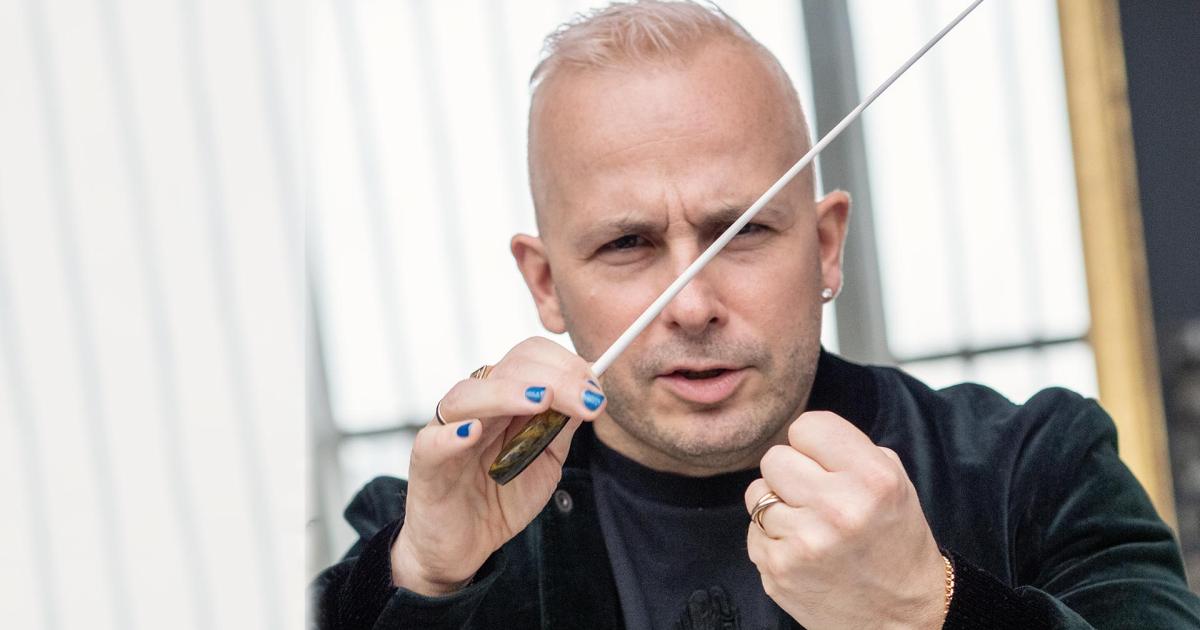
The Silence of Yannick Nézet-Séguin
Based on public tax filings, he earns over $3.5 million a year from two orchestras. When his musicians were furloughed without pay, he said nothing publicly for 11 months.
March 31, 2020
On March 19, 2020, as COVID-19 tore through New York City, the Metropolitan Opera announced that it would stop paying its orchestra, chorus, and stagehands effective March 31. No transition. No partial pay. No bridge funding. Just a date — and after that date, nothing.
The musicians of the Met Orchestra — one of the finest ensembles on earth — woke up on April 1, 2020, with no income. No salary. No benefits timeline. No indication of when it would end.
It would not end for approximately seventeen months. Some partial payments began in spring 2021 after negotiations, but the Met did not fully reopen until September 2021.
$0
Paid to musicians from April 2020
18
Months without pay
$41M
Saved by the Met in wages in 4 months
General Manager Peter Gelb announced he would waive his own $1.45 million salary. This was widely reported as a gesture of solidarity. Note: Form 990 compensation disclosures report on a calendar-year basis that lags the fiscal year, so the waiver's impact would appear in a later filing. Gelb's most recent publicly available 990 (FY ending July 2024) shows total compensation of $2,237,377.
What Happened to the Musicians
This is not a policy story. This is what happened to real people.
A young wind player cancelled the lease on his New York apartment. He moved his possessions into a storage unit in the Bronx. He got on a plane and flew home to live with his parents. He had been supporting them with a portion of his paycheck. Now he needed them to support him.
A 25-year veteran of the Met Orchestra — a quarter century on that stage — was living on unemployment benefits and liquidating his retirement assets. After decades of service, he was cashing out his future to pay for groceries.
Chelsea Knox, principal flute, gave birth during the final performance at the Met on March 11, 2020. She had just received tenure — her dream job — in the spring of 2019. One year later: a new baby, a new title, and $0.
Five musicians interviewed by VAN Magazine requested anonymity to speak frankly about their employer. All five described feeling "abandoned" by the Met. All five were living on some combination of savings, unemployment, and the occasional teaching job.
One-third of the Met Orchestra's 97 musicians left New York City entirely. They could not afford to live there without income. Ten retired during the pandemic — compared to two or three in a normal year. The pipeline of talent that took decades to build was hemorrhaging.
While the musicians lost their apartments, liquidated their savings, and scattered across the country, the Met's directors and leading patrons watched their stock portfolios skyrocket. The S&P 500 gained 68% from its March 2020 low to the end of 2020. The people who fund the Met got richer. The people who are the Met got nothing.
The Met Opera saved $41 million in wages. Its musicians lost their homes. Its general manager was still paid $1.46 million. And its music director said nothing.
The Silence
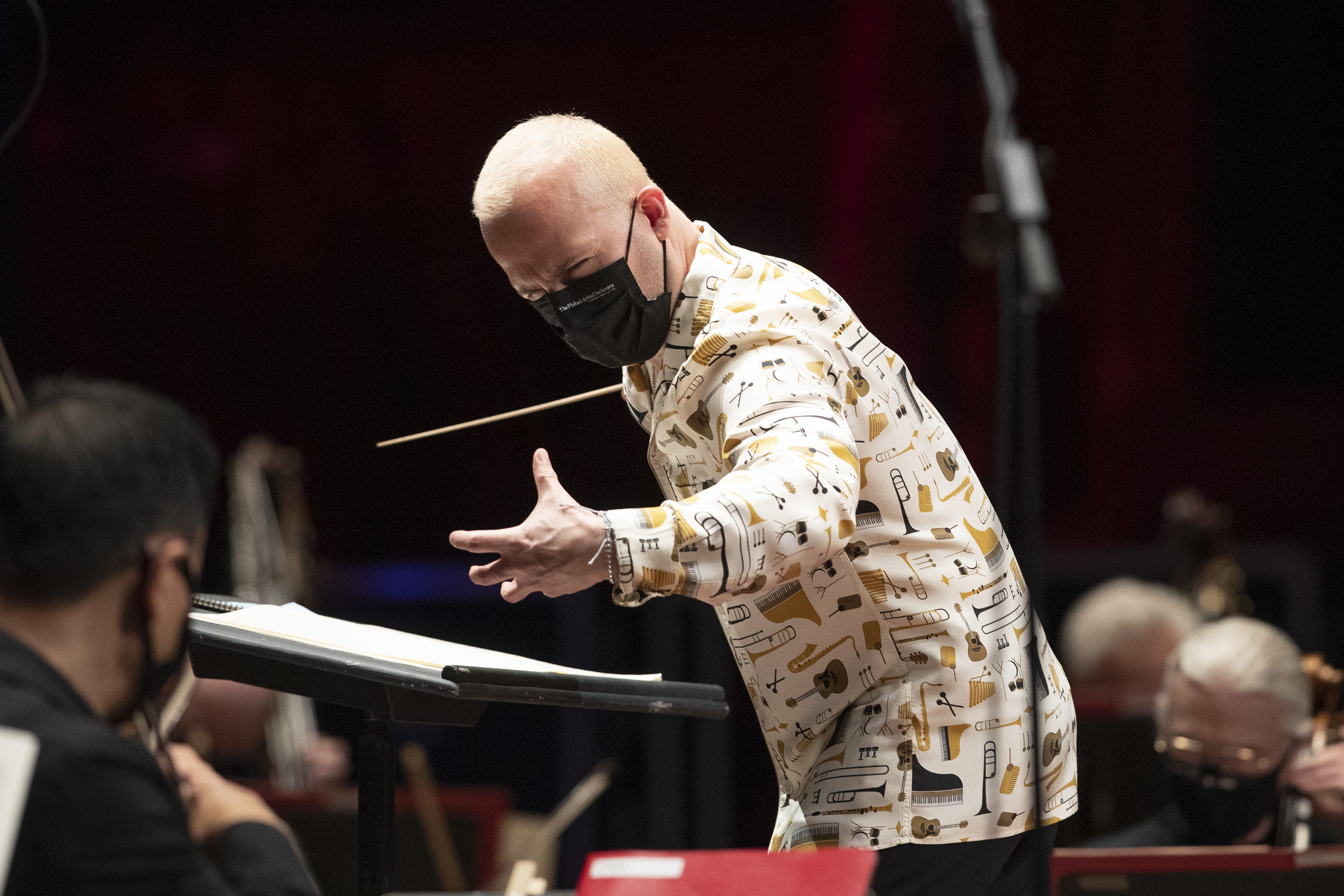
Yannick Nézet-Séguin is the Music Director of the Metropolitan Opera. He is the public face of the institution on a musical level. He is the person the musicians look to. He is, in the language of leadership, their conductor — the person who stands in front and sets the direction.
For eleven months, he set no direction. He stood nowhere. He said nothing.
Timeline of Silence
Musicians furloughed. $0 pay begins. Yannick: silence.
Musicians draining savings. Some leaving NYC. Yannick: silence.
One-third of orchestra has left the city. Yannick: silence.
Gelb locks out stagehands. Demands 30% pay cut from musicians. Yannick: silence.
Riccardo Muti — not their conductor — issues public statement: “Give your musicians back their dignity.”
Yannick finally speaks. 11 months later. Calls the situation “increasingly unacceptable.”
“Increasingly” unacceptable. As if it had been acceptable at some point. As if there was a phase during which musicians losing their homes was merely concerning, and only after 11 months did it cross into unacceptable territory.
“Without music and the musicians who bring it to life, civil society is doomed to spiritual poverty and barbarism. Music is not entertainment, but rather, an essential food for the mind and soul.”
Riccardo Muti
January 2021. He was not their music director.
“I am finding it increasingly hard to justify what has happened. The situation is increasingly unacceptable and painful.”
Yannick Nézet-Séguin
March 2021. 11 months after the furlough began. He was their music director.
Muti spoke because he believed it was wrong. Yannick spoke because the silence had become untenable. One was an act of conscience. The other was reputation management.
The musicians noticed.
A conductor who was not theirs spoke for them in January. Their own conductor did not speak for them until March. The musicians did not forget.
The Relationship That Never Recovered
Before the pandemic, Yannick Nézet-Séguin was beloved at the Met. He was the conductor who replaced the disgraced James Levine. He was young, energetic, warm, collaborative. The musicians were excited. The press was excited. The future looked bright.
After the silence, something broke. Not publicly — Yannick is too well-mannered for public conflict, and the musicians are too professional. But privately, in the rehearsal room, in the hallways, in the conversations that happen after the curtain falls — the trust that existed before April 2020 did not survive the 11 months that followed.
The musicians went back to work. They play beautifully under his baton. They respect his musicianship. But the word that defined the relationship before the pandemic — love — is no longer the word that defines it now. What replaced it is something cooler, more professional, more transactional. They play for him. They do not fight for him.
When the BSO fired Andris Nelsons, his musicians wept. They issued a public statement. They fought. That is what a relationship built on trust looks like when it is tested.
When Yannick's contract was extended through 2030, the Met issued a press release. There were no tears. No public outpouring. Just a corporate announcement, received like a corporate announcement.
The relationship between Yannick and the Met Orchestra was never the same after the silence. It may never be. Because trust, once broken by 11 months of absence in the worst crisis the musicians had ever faced, does not rebuild on the strength of a matching gift and a carefully worded letter.
The musicians went back to work. They play beautifully. The relationship was never the same. Everyone at the Met knows it. Nobody says it out loud.
What Peter Gelb Did While They Starved
While the musicians received nothing, General Manager Peter Gelb was not idle. He was negotiating. Not to restore pay — to cut it further.
Gelb demanded a 30% permanent pay cut from musicians when they returned. Not a temporary reduction. A permanent restructuring. Half of the cut would only be restored if — and only if — box office and donations returned to pre-COVID levels. The other half? Gone.
For context: the New York Philharmonic reached a deal with its musicians for a 25% temporary cut, with a clear restoration timeline. Gelb went further. He wanted permanent concessions — and he used 18 months of $0 pay as leverage to get them.
Gelb announces all union employees will not be paid after March 31
Gelb announces he will waive his $1.45M salary "until normal operations resume."
Gelb locks out IATSE stagehands. Threatens to hire non-union construction shops "in this country and around the world."
Met musicians issue solidarity statement with stagehands. Gelb demands 30% pay cut from musicians.
Met workers rally at Lincoln Center chanting "We are the Met."
Slippedisc reports the Met saved $41 million in wages in just 4 months of COVID.
Musicians finally accept concessions. The Met reopens in September 2021.
Gelb is paid $2,237,377. The Met runs a $47 million deficit. The musicians came back to less.
The musicians accused management of “using the pandemic opportunistically” and “seeking permanent cuts” rather than developing a short-term crisis plan. They were right. The crisis was real. The exploitation of the crisis was a choice.
While Gelb threatened to hire non-union labor and demanded permanent pay cuts, the Met's directors and leading patrons — the board members who approved all of this — watched the S&P 500 gain 68% from its March 2020 low. The people who control the Met got wealthier. The people who are the Met got locked out.
The Two Orchestras: A Study in Contrast
This is the detail that tells you everything. Yannick Nézet-Séguin is the music director of both the Metropolitan Opera and the Philadelphia Orchestra. Both institutions faced COVID. They responded differently. He responded differently.
Philadelphia Orchestra
Musicians: Volunteered a 20% temporary pay reduction in March 2020
Yannick: Forewent 20% of his own compensation immediately
Pay cuts: Structured on a sliding scale, deepened to 25% later
Musicians' response: “We appreciate the leadership of our musical director, whose deep respect for us was evident in his support for a fair contract.”
Budget: Reduced from $51M to $37M. Managed.
Outcome: Orchestra survived. Relationship intact.
Metropolitan Opera
Musicians: Furloughed. $0 pay. 18 months.
Yannick: Silent for 11 months
Pay cuts: Gelb demanded 30% permanent. Half conditional on revenue recovery.
Musicians' response: “Using the pandemic opportunistically.” “Seeking permanent cuts.”
Savings: $41M in wages in 4 months. Gelb filed $1.46M on his 990.
Outcome: 1/3 of orchestra left NYC. 10 retired. Relationship broken.
Same conductor. Same pandemic. Two different responses. In Philadelphia, he led. At the Met, he hid.
In Philadelphia, the musicians' committee chair — a double bassist — praised Yannick's “deep respect.” At the Met, five musicians requested anonymity just to say they felt “abandoned.”
In Philadelphia, Yannick took the same cut as his musicians from day one. At the Met, his musicians took a 100% cut — they got nothing — and he said nothing for 11 months.
This is not a man who doesn't know how to support musicians during a crisis. He proved in Philadelphia that he does. He chose not to do it at the Met. Or — more precisely — he chose to say nothing while someone else did the opposite of what he had done in Philadelphia.
The Cellist's Bow
A 41-year-old cellist in the Met Orchestra had to sell his Russian 19th-century bow to keep up with house payments. He reverted to a bow he had used as a student.
He described it as “if you were a race car driver that drove Ferraris on the Formula One circuit and suddenly you had to get on the track in a Toyota Camry.”
This was a musician in one of the finest orchestras in the world — an ensemble that performs at a level most musicians will never reach. And he was selling his tools to pay his mortgage while his general manager filed a $1.46 million tax return and his music director said nothing.
The orchestra committee helped members fill out unemployment forms. They applied for mortgage forbearance. They negotiated interest-free credit card debt arrangements. They did this for themselves because no one else was doing it for them.
And then — unpaid, scattered, desperate — the musicians did something extraordinary. They created the MET Orchestra Spotlight Series: self-produced performances, educational initiatives, community outreach. They paid for it out of their own pockets. Musicians with $0 income funded their own concerts to keep the Met's connection to its audience alive.
The musicians with no income spent their own money to keep the Met alive. The music director with $3.5 million in annual compensation spent 11 months finding the right words.
The Letter He Did Write
There is an important footnote. During the same period that Yannick was silent about his musicians, he was not silent about everything.
In January 2021 — two months before he finally spoke about the Met musicians — Yannick published an open letter to President Joe Biden and Vice President Kamala Harris urging “immediate action on the arts.” The letter was published by CBC Music. It called for federal support for the arts sector.
He had time to write to the President of the United States. He had time to make a public case for the arts to the incoming administration. He had the platform, the credibility, and the words.
He did not have the words for his own musicians until two months later.
He wrote to Joe Biden in January 2021. He wrote to Peter Gelb in March 2021. The public record shows he found his voice for the arts sector before he found it for his own musicians.
The Money
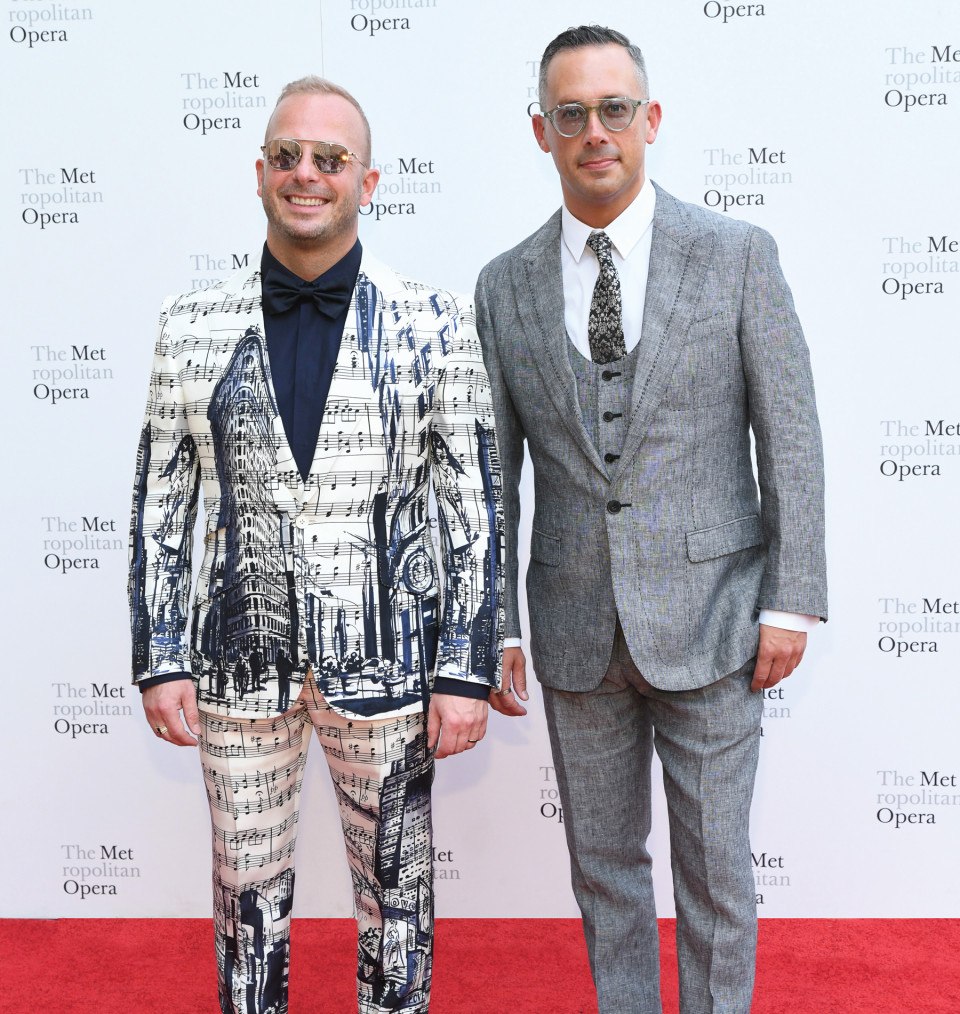
While his musicians received $0, Yannick Nézet-Séguin continued to hold three of the most prestigious conducting positions in the world.
Music Director, Metropolitan Opera
IRS Form 990, FY ending July 2024
56% raise from prior year ($1,307,583)
$2,045,038
Music & Artistic Director, Philadelphia Orchestra
IRS Form 990, FY 2019 (most recent public)
14th season. Contract extended.
~$1,600,000
Artistic Director, Orchestre Métropolitain (Montréal)
Canadian nonprofit filings
Has held this position since 2000
Undisclosed
Combined compensation from the Met and Philadelphia alone: approximately $3.5 million per year. Plus Montréal. Plus guest conducting. Plus recording royalties with Deutsche Grammophon.
His 56% raise at the Met — from $1.3 million to $2.05 million in a single year — came at an institution running a $47 million deficit, selling tickets at two-thirds capacity, and preparing to cut its season to 17 productions, the lowest in 60 years.
The musicians who survived the 18-month furlough came back to a Met that demanded 30% pay cuts. Their music director got a 56% raise.
The musicians came back to 30% pay cuts. Their conductor got a 56% raise. This is the same institution. The same stage. The same music.
The Man He Replaced
Whatever you think of James Levine — and his legacy is permanently stained by the sexual misconduct allegations that ended his career — one thing is beyond dispute: he gave the Metropolitan Opera everything.
James Levine at the Met
Tenure: 1976-2016 (40 years as Music Director)
Performances: 2,577 at the Met alone
Repertoire: 85 different operas
Other positions: None simultaneous during peak Met years
Founded: Lindemann Young Artist Program (1980)
Founded: Met Orchestra Carnegie Hall series (1991)
Legacy: “No artist in the 137-year history of the Met had as profound an impact.”
Yannick Nézet-Séguin at the Met
Tenure: 2018-present (8 years)
Performances: A fraction of Levine's — split across three institutions
Other positions: Philadelphia Orchestra + Orchestre Métropolitain simultaneously
Founded: Nothing new at the Met
Critical assessment: “Faceless. Everything sounds reasonably good, but nothing sticks in the mind.”
Met Opera status: $47M deficit. 2/3 capacity. Season at 60-year low.
Levine gave the Met 2,577 performances and 40 years of undivided attention. He built the Lindemann program that trains the next generation of opera singers. He created the Carnegie Hall concert series that gave the Met Orchestra a life beyond the pit. He was the Met — for better and worse, in sickness and scandal — he was theirs.
Yannick gives the Met a portion of his calendar. The rest goes to Philadelphia, Montréal, Vienna, Salzburg, and the global guest-conducting circuit. The question is not whether Yannick is talented enough to lead the Met. He is. The question is whether he is present enough. Whether a music director who splits his life across three institutions and a dozen guest engagements has the time, the focus, and the singular commitment that the most important opera house in the Western hemisphere requires.
Levine's answer to that question was 2,577 performances. Yannick's answer is a 56% pay raise and a contract extension through 2030 — at an institution he shares with two other orchestras and an international touring schedule.
Levine gave the Met 2,577 performances and 40 years. Yannick gives it a fraction of his time — and a fraction is what the Met has become.
The Faceless Conductor
“Seven seasons into his tenure at the Met, Nézet-Séguin has yet to make much of a mark. There is something faceless about his music-making; everything sounds reasonably good, but nothing sticks in the mind.”
The New Yorker
May 2025
“Faceless.” The word carries weight. Seven seasons. Hundreds of performances. And the most prestigious music publication in America says nothing sticks in the mind.
Is this because Yannick is not a great conductor? No. He is. The musicians say so. The recordings prove it. His Grammy-winning Florence Price cycle with the Philadelphia Orchestra is genuinely important work.
The problem is not talent. The problem is presence. A music director who splits his time between the Met, Philadelphia, and Montréal — who guest-conducts in Vienna, Salzburg, and around the world — cannot be fully present at any of them. He is everywhere and therefore nowhere. His music sounds “reasonably good” because he arrives, conducts beautifully, and leaves. He never stays long enough to build something that “sticks in the mind.”
2/3
Met Opera capacity sold
−$47M
Met Opera deficit
17
Productions 2026-27. Lowest in 60 years.
Compare this to what a fully dedicated music director can achieve. Gergiev conducts 200+ performances a year across a single institution. He built seven stages, launched a record label, founded an academy, and put 500 musicians on a charter train for 40 cities. He is not “faceless.” He is omnipresent.
The Met does not have a conducting problem. It has an attention problem. And the attention problem is arithmetic: three orchestras, one conductor, 365 days. The math does not work.
The Forgery
On January 1, 2026, Yannick conducted the Vienna Philharmonic New Year's Concert — the most-watched classical music event in the world. He was the first openly gay conductor in its history. He programmed works by female composers for the first time. It should have been a triumph.
He included a piece billed as Florence Price's “Rainbow Waltz.” Price was the first Black woman to have a symphony performed by a major American orchestra. Yannick had championed her work — his 2022 recording of her First and Third Symphonies with the Philadelphia Orchestra won a Grammy.
There was one problem. The arrangement performed in Vienna — by arranger Wolfgang Dörner — contained none of Florence Price's melodies, harmonies, rhythms, or form. Scholars called it a forgery. The Austrian rights agency listed it not as a work by Price, but as public domain. Katherine Needleman traced the paper trail. Scholar John Michael Cooper called it “The Sincerest Form of Insult.”
The man who championed Florence Price premiered a forgery of her work at the most-watched classical music event on earth.
The Vienna Philharmonic chairman said Dörner had taken “somewhat greater liberties.” Yannick said the arrangement “highlighted connections to the Viennese waltz tradition.”
A Black woman's music was rewritten to sound more Viennese, performed under her name without containing any of her actual music, at a concert watched by tens of millions — and the conductor who championed her described it as “highlighting connections.”
If you are stretched across three orchestras, you may not have time to check whether the arrangement of a piece you are premiering on global television actually contains the composer's music. That is what happens when one person tries to do everything. The details slip. And sometimes the details are an entire composer's legacy.
What He Did Not Deserve
One thing must be said clearly, because this article will not be used as cover for bigotry.
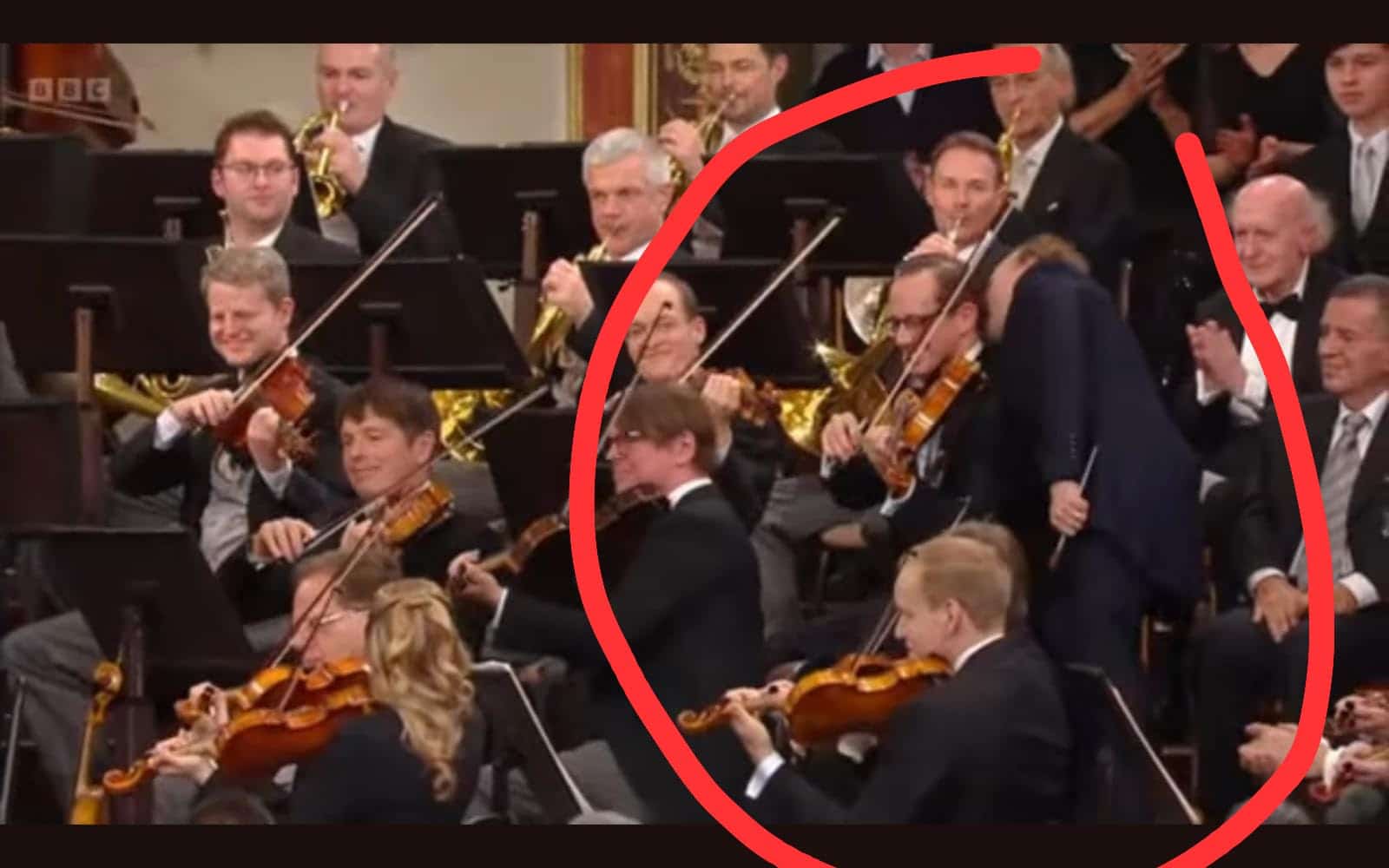
Yannick Nézet-Séguin is the first openly gay conductor to lead the Vienna Philharmonic New Year's Concert. He is married to violist Pierre Tourville. During the 2026 concert, a camera captured what appeared to be Yannick kissing the back of a violist's neck while dancing through the Musikverein audience. The moment was most likely arranged — the concert is choreographed to the smallest detail, and the musician smiled.
The homophobic backlash was immediate and vicious. Social media filled with attacks that had nothing to do with his conducting and everything to do with who he is.
This article is not that. This article is about leadership, accountability, and the gap between compensation and commitment. Yannick's sexuality is irrelevant to whether he should have spoken for his musicians in April 2020. His marriage is irrelevant to whether the Florence Price arrangement was a forgery. His identity is his own. His silence is ours to examine.
The people who attacked him for being gay were wrong. The people who question why the most powerful conductor in North America could not speak for 11 months while his musicians lost their homes — they are asking a fair question.
The Defense
Fairness requires presenting the strongest case for Yannick. Here it is.
1. He did give money. In January 2021, Yannick and his partner Pierre Tourville offered to match donations dollar for dollar, up to $50,000 — $25,000 each to the orchestra and the chorus — through the #WeWillMETAgain campaign. The matching gift was met in three days. This was a genuine act of personal generosity.
2. He may have advocated privately. We do not know what Yannick said to Gelb or the board behind closed doors. It is possible — perhaps likely — that he pushed for the musicians in meetings, phone calls, and emails that were never made public. Absence of public speech is not proof of private inaction.
3. His role is not Gelb's role. The music director conducts. The general manager runs the business. Yannick does not set pay policy, negotiate contracts, or control the budget. Holding him accountable for Gelb's decisions conflates two different positions.
4. Every orchestra was in crisis. COVID shut down the entire performing arts industry. The Met was not the only institution that furloughed musicians. Singling out Yannick for a systemic failure is arguably unfair.
5. The musicians themselves welcomed his statement. When Yannick finally spoke in March 2021, the Met Orchestra Musicians' website published his letter and stated they “welcomed” it. They did not reject it as too late.
All of this is true. And none of it changes the timeline.
The $50,000 matching gift was generous. It was also 0.014% of his estimated annual compensation. The private advocacy — if it happened — did not produce results for 11 months. His role is not Gelb's, but Muti proved that a conductor who is not even the music director can speak publicly when it matters. Every orchestra was in crisis, but Yannick's own Philadelphia Orchestra handled the same crisis with his active, visible leadership from day one. And the musicians “welcomed” his statement the way a person dying of thirst welcomes a glass of water brought 11 months after the well ran dry — gratefully, but with the memory of every waterless day.
The Pattern
When you line up the events, a pattern emerges. It is not a pattern of malice. It is a pattern of avoidance.
Musicians furloughed at the Met (April 2020)
Silence for 11 months. Then a letter calling it "increasingly unacceptable."
Musicians take voluntary pay cuts in Philadelphia (March 2020)
Immediately matches the cut. Praised by musicians for "deep respect."
Gelb locks out stagehands (December 2020)
Silence. No public statement of solidarity with locked-out workers.
Arts funding crisis in America (January 2021)
Publishes open letter to Biden and Harris urging "immediate action on the arts." Two months before speaking about his own musicians.
Florence Price arrangement at Vienna (January 2026)
Describes a forgery as "highlighting connections to the Viennese waltz tradition."
New Yorker calls his tenure "faceless" (May 2025)
No public response. Contract extended through 2030 anyway.
Met runs $47M deficit, season cut to 60-year low (2026)
Accepts 56% pay raise to $2.05 million.
The pattern is consistent. When there is no political cost, Yannick is generous, warm, and present. When there is a political cost — when speaking would put him in conflict with Gelb, with the board, with the institution that pays him $2 million — he is silent.
This is not evil. This is not corruption. This is something more common and more damaging: the unwillingness of a good person to risk anything for the people who depend on him.
What a Music Director Is
A music director is not an employee. A music director is not a guest. A music director is not a brand ambassador who shows up, conducts beautifully, and flies to the next city.
A music director is the person who stands between the musicians and the institution. When the board makes a decision that harms the musicians, the music director is supposed to be the one who says: not on my watch.
When the BSO fired Andris Nelsons in 2026, the musicians wept. They issued an unprecedented public statement of opposition. They fought for him. Because he had fought for them. Because he was theirs. Because when it mattered, he was present — not splitting his attention across three institutions and a guest-conducting calendar.
When Yannick's contract was extended in 2024, the Met issued a press release. There was no public outpouring from the musicians. No statements of devotion. No social media campaigns. The extension was received the way a corporate announcement is received — noted, filed, moved on from.
Musicians who spoke to reporters during the pandemic described Yannick as talented, kind, and respectful. They also described feeling “abandoned.” Both things can be true. He is talented and kind. And when 97 musicians needed more than talent and kindness — when they needed someone to stand up and say this is wrong — they got silence. Eleven months of silence. Followed by a carefully worded letter. Followed by a contract extension. Followed by a 56% raise.
Silence is not leadership. Silence is the absence of leadership wrapped in good intentions.
The Question
Yannick Nézet-Séguin is not a bad person. Everyone who works with him says the same thing: he is kind, respectful, collaborative, and deeply musical. He is one of the most talented conductors of his generation. He has expanded repertoire, championed underrepresented composers, and broken barriers as an openly gay leader in classical music.
But kindness is not leadership. Talent is not presence. And breaking barriers does not excuse breaking trust.
When 97 musicians needed their music director to stand between them and an institution that was taking everything, he was not there. He arrived 11 months late with a statement that called the devastation “increasingly” unacceptable — as if it had been gradually worsening rather than catastrophic from day one.
When the most-watched concert in classical music featured a forgery of a Black woman's work, he described it as a stylistic choice. When critics called his tenure “faceless,” the answer was self-evident: a conductor split across three institutions cannot leave a face anywhere.
He was everybody's conductor. And when it mattered most, he was nobody's.
The musicians of the Met Orchestra did not need a matching gift. They did not need a carefully worded statement 11 months after the fact. They needed their music director to say, on April 1, 2020, the day the checks stopped: “This is wrong. I will not conduct for this institution until my musicians are paid.”
He did not say that. Nobody expected him to. And that is the problem.
The most powerful conductor in North America — with $3.5 million in annual compensation and contracts through 2030 — could not risk one sentence on the day it would have mattered.
The musicians remember. They went back to work. They play beautifully. They will never forget.
The Numbers
Yannick's Met Opera salary
$2.05M
56% raise. $47M deficit.
Musicians paid during furlough
$0
April 2020 — partial payments began spring 2021
Days before Yannick spoke publicly
~330
Riccardo Muti spoke first. In January 2021.
Sources: IRS Form 990 (Metropolitan Opera, EIN 13-1624087), Met Orchestra Musicians, Ludwig Van Toronto, VAN Magazine, Slippedisc, Philadelphia Inquirer
cadenza.work
Disclosure: All compensation figures are from IRS Form 990 filings available through ProPublica Nonprofit Explorer (Metropolitan Opera EIN 13-1624087, Philadelphia Orchestra EIN 23-1352289). Musician accounts are from published reporting by VAN Magazine, Classic FM, NPR, and the Met Orchestra Musicians official website. The timeline of public statements is verified against the Met Orchestra Musicians website, Ludwig Van Toronto, OperaWire, CBC Music, and Slippedisc. Florence Price reporting is from the Philadelphia Inquirer (March 21, 2026), Slippedisc, and scholar John Michael Cooper. We do not know what Yannick Nézet-Séguin said privately to Met Opera management during the furlough period. This article documents the public record only. Yannick Nézet-Séguin is widely regarded as one of the finest conductors of his generation, and his personal generosity ($50,000 matching gift) and leadership in Philadelphia are acknowledged in this article. The questions raised here concern the gap between his public silence at the Met and his visible leadership elsewhere during the same crisis.
Comments
Sign in to join the discussion.