← Back to News
→ 
Data Investigation
Is the Orchestra Racist?
The data says something nobody wants to hear. Not the answer you expect.
Cadenza Admin·April 2026·Sources: League of American Orchestras, Harvard/Princeton (Goldin & Rouse), Mellon Foundation, US Census
The Screen
Before we answer the question, we need to tell you a story about a screen.
In 1969, a Black jazz bassist named Art Davis filed a racial discrimination lawsuit against the New York Philharmonic. He had auditioned twice and been rejected both times. The hearings lasted ten sessions. The commission found a pattern of preference for students of current orchestra members — but no formal discrimination in the auditions themselves.
Davis lost the case. He lost his career. Other Black musicians who challenged hiring practices lost work and industry connections. Davis went back to school and earned a doctorate in clinical psychology from NYU. He never played in a major orchestra.
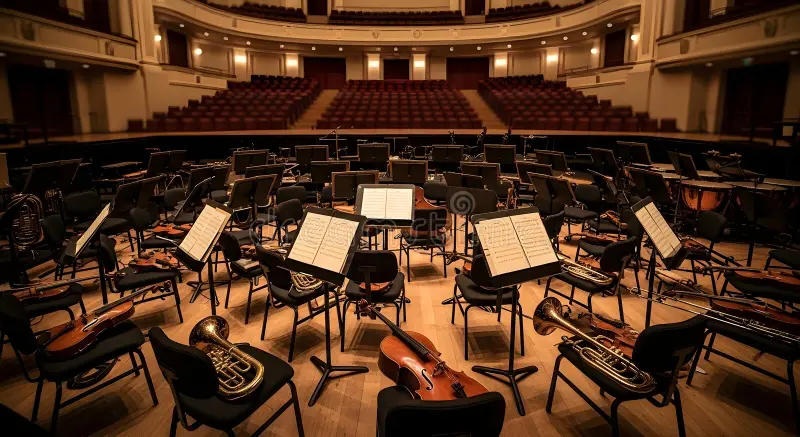
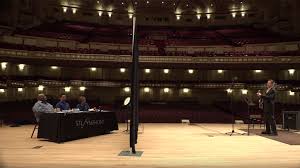
But his fight led to something: the blind audition. A screen between the performer and the judges. No name. No face. No gender. No race. Just the music.
A Black man fought for meritocracy. He paid for it with his career. And the system his fight helped create became the most successful anti-discrimination tool in the history of performing arts.
In 1980, a trombonist named Abbie Conant auditioned behind a screen for the Munich Philharmonic. She competed against 32 men. She was the 16th to play. No candidate who played after her was advanced. She was the overwhelming first choice.
The committee had addressed her as “Herr Conant” in correspondence. When she walked out from behind the screen, they discovered their winner was a woman.
The conductor, Sergiu Celibidache, demoted her to second trombone two years later. His explanation: “We need a man for solo trombone.”
Conant sued the City of Munich. She regained her position in 1984. The full legal victory came on March 10, 1993 — thirteen years after she won the blind audition. Malcolm Gladwell called her story “my inspiration” for his bestseller Blink. It is the book's concluding chapter.
The Munich Philharmonic stopped using blind auditions after her case.
The Proof
In 2000, economists Claudia Goldin (Harvard) and Cecilia Rouse (Princeton) published the most cited study on blind auditions. Their conclusion: blind auditions increased the probability that a woman would advance from preliminary rounds by 50%, and could explain 30-55% of the increase in female hires.
A note on the research: The Goldin/Rouse study has been criticized for small sample sizes and contradictory results within its own data. Columbia statistician Andrew Gelman has said “the data are too noisy to form any strong conclusions.” A 2017 Australian government study found that blind hiring could actually impede women's advancement in some contexts.
We include the study because it is widely cited and influenced the debate. But we do not rest the argument on it. We rest the argument on the actual outcome:
Women in US Orchestras
1970 (top 5)
<5%
1978 (all)
38%
2025 (all)
~47%
Sources: Goldin & Rouse (1970 figure, top 5 orchestras only); League of American Orchestras EDI Data Hub (1978 and 2025 figures, all surveyed orchestras)
Whether blind auditions caused all, some, or none of this increase is debated by statisticians. What is not debated is the outcome: women went from near-invisibility in 1970 to near-parity today. This happened during the same decades that orchestras adopted blind auditions. It also happened during decades of changing attitudes, expanded conservatory enrollment, and legal protections against sex discrimination. Isolating the screen's effect is difficult.
But here is what is not difficult: no one has produced evidence that the screen harmed women. No one has shown that removing the screen would help anyone. And the principle that the screen embodies — judge the music, not the musician — is one of the few ideas in this debate that everyone from Art Davis to Claudia Goldin to the Black orchestral musicians who pushed back on Tommasini can agree on.
The Numbers
Now here is where it gets uncomfortable. The League of American Orchestras publishes demographic data for its member orchestras. The most recent data (2025):
Orchestra Musicians by Race/Ethnicity (2025)
White75.8%
Asian11.6%
Hispanic4.1%
Multiracial2.3%
Black2.1%
American Indian0.2%
Native Hawaiian0.7%
US Population by Race/Ethnicity (Census 2020) — for comparison
White (non-Hispanic)57.8%
Hispanic18.7%
Black12.1%
Asian5.9%
Multiracial4.1%
Black Americans are 12.1% of the US population and 2.1% of orchestra musicians. That number has barely moved in a decade — from 1.9% in 2015 to 2.1% in 2025.
Hispanic Americans are 18.7% of the population and 4.1% of orchestra musicians.
Asian Americans are 5.9% of the population and 11.6% of orchestra musicians. Nearly double their population share. Nobody talks about this.
The screen took women from 5% to 47%. It did not do the same for Black musicians. The question is why. And the answer is not the screen.
The Pipeline
Here is the part that nobody who argues about auditions wants to talk about. The problem starts long before the audition. It starts at age five.
1.3 million
Elementary school students in the US with zero access to music classes
7,000
Schools with no music program — predominantly in Black, immigrant, and low-income communities
2x
White students are twice as likely as Black and Latino students to receive arts education
3.6 million
Students without access to music education, concentrated in majority Black/Hispanic/Native schools
93%
Of all music educators in the US are white
$60-150/hr
Cost of private lessons — the prerequisite for competitive conservatory preparation
$251
Average cost per student for a quality school music program — 85% goes to teacher salaries
60%
Of urban music educators consider fundraising a necessity to provide adequate instruction
You cannot win an orchestra audition — blind or otherwise — if you never learned to play an instrument. You cannot learn to play an instrument if your school cut its music program. You cannot afford private lessons at $100 an hour if your family is below the median income. You cannot prepare for a conservatory audition if you have never seen the inside of one.
The pipeline to an orchestral career is a funnel, and the funnel is shaped by money, geography, and access — not by a screen in an audition room.
The orchestra is not racist at the audition. The system is racist at age five — when it decides who gets an instrument and who doesn't.
Asian Americans are overrepresented in orchestras (11.6% vs 5.9% population share). Why? Because Asian American families disproportionately invest in music education. The Suzuki method. Private lessons starting at age 3-4. Youth orchestras. Pre-college programs. This is not genetics. This is access, investment, and culture — the same factors that explain the underrepresentation of Black and Hispanic musicians.
The screen does not discriminate. The pipeline does.
The Columnist
“Blind auditions are no longer tenable.”
Anthony Tommasini
Chief Classical Music Critic, The New York Times — July 16, 2020
On July 16, 2020, the chief classical music critic of The New York Times published a column titled “To Make Orchestras More Diverse, End Blind Auditions.”
His argument: the screen had helped women but not Black and Latino musicians. Therefore the screen should be removed. Orchestras should “take into account race, gender and other factors” when hiring musicians.
Let us be precise about what Anthony Tommasini proposed. He proposed dismantling the only hiring mechanism in the performing arts that has empirically, measurably, demonstrably eliminated bias — a mechanism that took women from 5% to 47% — because it had not solved a problem that has nothing to do with auditions and everything to do with who gets to start playing music at age five.
He proposed removing the cure because it hadn't fixed a different disease.
The backlash was immediate and universal. Conservatives called it “sheer blasphemy.” Progressives called it “hollow and missing the point.” The World Socialist Web Site called it “de facto racial quotas in classical music.” Musicians across the political spectrum said the same thing: removing the screen is useless unless you fix the pipeline.
Slippedisc ran two pieces in a week dismantling the argument. The League of American Orchestras published a measured response that essentially said: the problem is before the audition, not during it. The Times softened its position.
Tommasini retired from the Times in 2023.
What Tommasini Got Wrong
1.
He blamed the screen for a problem the screen cannot solve. Blind auditions evaluate who shows up. They cannot create candidates who never had access to training.
2.
He proposed removing the single most successful anti-discrimination mechanism in performing arts history — the same mechanism that transformed gender representation from 5% to 47%.
3.
He ignored that Asian Americans are overrepresented behind the same screen — proving the screen rewards preparation, not race.
4.
He did not mention that 1.3 million elementary school students have no music classes, or that 93% of music educators are white, or that private lessons cost $60-150/hour.
5.
A Black man — Art Davis — fought for the blind audition and lost his career for it. Tommasini proposed undoing his legacy from the comfort of a New York Times column.
The Money
While the debate raged about screens and auditions, here is where the money went:
$2.1M
Mellon Foundation → League of American Orchestras Catalyst Fund (2021)
DEI practices in 20 orchestras
$2.1M
Mellon Foundation → Earlier pilot program (2019)
Grants to 49 orchestras for EDI consultants
$1.8M
Mellon Foundation → National Alliance for Audition Support
4-year program: mentoring and audition prep for Black/Latinx musicians
$900K
Mellon Foundation → Cincinnati Symphony diversity fellowship
Fellowship program with University of Cincinnati
$850K
Mellon Foundation → Cincinnati renewal grant
Two additional classes of fellows
$12-25K
Individual orchestra grants
Per orchestra, per year, for hiring EDI consultants
Total Mellon Foundation spending on orchestra diversity programs: approximately $8 million over several years. Most of it went to consultants, training, organizational audits, and “facilitation activities.”
In the same period, the result was:
Black orchestra musicians
2015
1.9%
2025
2.1%
Ten years. Eight million dollars. 0.2 percentage points.
At least eight million dollars on consultants, audits, and facilitation — while the pipeline problem that actually determines who shows up to audition received a fraction of that investment.
A school music program costs $251 per student. Eight million dollars could have funded music education for 31,872 students. Instead it funded workshops, audits, and facilitators.
$8 million on DEI consultants produced 0.2 percentage points. The same money could have given 31,872 children a music education. Which approach would have actually changed who shows up to audition in 2040?
The Global Comparison
If the American orchestra is racist, what does that make the rest of the world?
1997
Vienna Philharmonic
Did not admit a single female member until 1997. Harpist Anna Lelkes had played for them since 1974 — her name was never listed in the program. First flutist Dieter Flury said in 1996 that admitting women would be "gambling with the emotional unity" of the orchestra. They changed only after pressure from the Austrian government, feminist groups, and international media. Today: 24 women.
1982
Berlin Philharmonic
First female member: Madeleine Carruzzo, violinist, admitted in 1982. The orchestra resisted for decades. Karajan reportedly said he would not conduct "an orchestra that looked like it needed a fashion consultant." Today the Berlin Phil is among the most diverse top-tier European orchestras.
—
NHK Symphony (Japan)
Japan's premier orchestra. Predominantly Japanese. No public diversity data. Classical music in Japan is treated as a discipline, not a demographic exercise.
—
China National Orchestra
Entirely Chinese. The country's investment in classical music training has produced an estimated 80 million active classical music consumers and a pipeline of world-class soloists. No DEI programs. No consultants. Just investment in training from childhood.
—
Mariinsky Orchestra (Russia)
356 musicians. No diversity programs. No audition debates. The orchestra reflects the population it draws from — and Gergiev trains the next generation through his academy. No one asks whether it is "diverse enough."
The diversity debate is almost entirely American. European orchestras were historically worse on gender and remain overwhelmingly white. Asian orchestras are ethnically homogeneous and nobody questions it. Russian orchestras train from childhood and fill seats with whoever survives the pipeline.
Only in America has the response to underrepresentation been to question the audition process itself rather than the training pipeline that feeds it. The rest of the world invested in training. America invested in consultants.
The Audience
If the orchestra stage is not diverse, the audience is even less so.
Orchestra audiences identifying as BIPOC (2023)
14%
vs 43% of US population
Live theater patrons identifying as BIPOC
25%
Nearly double orchestras
In 2016-17, works by white male composers constituted 96% of orchestral repertoire. By 2023, that dropped to 75.1%, with works by everyone else at 24.4%. Orchestras responded to diversity pressure by changing what they play.
Did it change who comes?
Black, Hispanic, and Asian music-lovers each accounted for less than 10% of orchestra ticket buyers in 2019. By 2023, the proportion of BIPOC patrons grew only slightly. Programming changes did not meaningfully diversify the audience.
This is not because diverse audiences don't care about music. It is because the barrier to the concert hall is the same barrier as the stage: access, geography, price, and exposure. The same zip codes that lack school music programs lack concert halls. The same families that can't afford lessons can't afford $85 tickets.
What Actually Worked
There is one organization that has produced measurable results. The Sphinx Organization, founded in 1997 in Detroit, focuses on developing young Black and Latino classical musicians — not through audition manipulation, but through the pipeline.
Sphinx Organization — 25 Years
8,000 full scholarships provided to educational partners
$10 million+ in scholarships awarded
1,000+ alumni
National Alliance for Audition Support — mentoring, audition prep, financial support for Black/Latinx musicians
SphinxConnect — annual convening for classical musicians of color
Sphinx Competition — the only national competition for Black and Latinx string players
When Sphinx launched 25 years ago, Black and Latinx musicians made up about 1.5% of American orchestras. That number has nearly tripled — but it's still less than 5%.
The progress is real but slow. Because the pipeline is long. A child who starts violin at age 6 will not audition for an orchestra until age 22 at the earliest. You cannot fix a 16-year pipeline with a 3-year grant. You cannot undo decades of educational neglect with a workshop.
What Sphinx proves is that investing in the pipeline works — slowly, incrementally, measurably. What it also proves is that there are no shortcuts. The children who received Sphinx scholarships 15 years ago are the musicians auditioning now. The ones who start today will audition in 2040.
Sphinx invested in children. Mellon invested in consultants. One of them produced musicians. The other produced reports.
A Timeline of the Screen
1969
Art Davis files racial discrimination lawsuit against the NY Philharmonic. Loses the case. Loses his career. His fight leads to the adoption of blind auditions.
1970s
Major US orchestras begin adopting screens for auditions. Women are less than 5% of top orchestra musicians.
1980
Abbie Conant wins blind audition for Munich Philharmonic principal trombone, beating 32 men. Is demoted when they discover she is a woman.
1993
Conant wins her 13-year legal battle. Full equal pay and seniority restored.
1997
Vienna Philharmonic admits its first female member — Anna Lelkes, a harpist who had been playing with them since 1974 without being listed in the program.
1997
Sphinx Organization founded in Detroit. Begins providing scholarships and training for Black and Latino musicians.
2000
Goldin & Rouse publish landmark study proving blind auditions increased female hiring by 30-55%. The screen works.
2014
Women reach 47.4% of US orchestra musicians. The blind audition has transformed gender representation.
2015
Black musicians: 1.9% of US orchestra musicians. The pipeline problem persists.
2019
Mellon Foundation awards $2.1 million for DEI pilot program across 49 orchestras.
2020
Anthony Tommasini writes "To Make Orchestras More Diverse, End Blind Auditions" in the NYT. Backlash from every direction.
2021
Mellon awards another $2.1 million for DEI Catalyst Fund. $1.8 million for National Alliance for Audition Support.
2023
Tommasini retires from the New York Times.
2025
Black musicians: 2.1% of US orchestra musicians. Ten years of DEI spending. 0.2 percentage points of change.
He Won the Audition. They Gave the Job to Someone Else.
In September 2025, clarinetist James Zimmermann was invited to audition for principal clarinet at the Knoxville Symphony Orchestra. The audition was blind. He won. Unanimous vote.
Two days later, KSO CEO Rachel Ford called to inform him he would not be hired.
The reason, according to Zimmermann: his prior departure from the Nashville Symphony Orchestra, where he had been fired in 2020 after objecting to DEI hiring practices. The position was given to the runner-up — a musician still in college.
A man won a blind audition by unanimous vote. The orchestra overrode the result. The screen chose him. The institution rejected him. This is what happens when politics overrules merit.
Zimmermann filed a lawsuit against the Knoxville Symphony on December 23, 2025, seeking a year's salary plus $25,000 for the 100 hours he spent preparing for the audition. His complaint alleges he was rejected because he was “a white male who had previously expressed opposition to DEI.”
The case is disputed. Nashville claims Zimmermann was fired for threatening behavior — allegations that included references to owning firearms, which the orchestra took seriously enough to hire armed guards. Six of his former colleagues and the orchestra's own documents tell a different story — that he was the target of retaliation after supporting a Black oboist and then questioning DEI hiring practices. The truth may lie somewhere in between.
Whatever the truth of the Nashville dispute, one fact is undeniable: he won the blind audition. The screen selected him. The committee was unanimous. And the institution overrode the screen — the exact mechanism that Tommasini wanted to eliminate, now being eliminated in practice, not by policy but by politics.
Art Davis fought for the blind audition so that music would be the only thing that mattered. Zimmermann won behind that same screen. And the screen's verdict was overruled.
The Programs That Got Caught in the Crossfire
In March 2025, the San Francisco Conservatory of Music and the San Francisco Symphony paused their joint Emerging Black Composers Project — a program that had commissioned 11 new works and awarded $15,000 commissioning fees to Black composers since 2020.
The reason: a memo from the Department of Education's Office for Civil Rights warning that schools could lose federal funding for engaging in “race-based preferences.” The program was restructured — the Symphony took sole administrative control, removing the Conservatory from the line of fire — and resumed in August 2025.
This is the collateral damage of the DEI debate. Programs that actually commission music and develop artists get caught in a political crossfire that has nothing to do with them. The EBCP did not remove blind auditions. It did not hire consultants. It did not produce reports. It paid composers to write music. That is the kind of investment that creates culture.
Meanwhile, the Mellon-funded consultant programs that produced 0.2 percentage points of change in a decade continued without interruption. The programs that actually make music got paused. The programs that produce PowerPoints kept going.
What They Said
“To Make Orchestras More Diverse, End Blind Auditions.”
Anthony Tommasini
NYT Chief Classical Music Critic, July 2020
Proposed dismantling the only proven anti-discrimination tool in performing arts because it hadn't solved a pipeline problem. Retired 2023.
“We need a man for solo trombone.”
Sergiu Celibidache
Conductor, Munich Philharmonic, 1982
Demoted a woman who won his own blind audition. Lost a 13-year lawsuit. The screen proved him wrong.
“If ensembles are to reflect the communities they serve, the audition process should take into account race, gender and other factors.”
Anthony Tommasini
Same column, same day
Proposed exactly what Art Davis fought against in 1969: judging musicians by something other than their music.
“The introduction of blind auditions increased the probability that a woman would advance from preliminary rounds by 50 percent.”
Claudia Goldin & Cecilia Rouse
Harvard & Princeton, NBER Working Paper 5903
The most cited study on blind auditions. Methodology debated (see above), but the overall trend — women from <5% to ~47% — is undisputed.
“Removing screens is useless unless you fix the pipeline.”
Multiple Black orchestral musicians
Response to Tommasini, 2020
The people actually on stage — including Black musicians — said the same thing this article says.
The Uncomfortable Truth
Here is the part that both sides of this debate refuse to say out loud.
The diversity industry needs the problem to persist. If the pipeline were fixed — if every child in America had access to music education regardless of zip code — the consulting contracts, the foundation grants, the DEI officer salaries, the facilitation workshops, the organizational audits would all become unnecessary.
There is an entire professional class whose livelihood depends on orchestra diversity remaining a problem. They are paid to diagnose, not to cure. They publish reports. They host convenings. They facilitate discussions. They do not put instruments in children's hands.
The average DEI consultant contract for an orchestra is $12,000 to $25,000 per year. For that money, an orchestra could fund 50 to 100 children in a music education program. Instead it funds a consultant who produces a report that recommends... more consulting.
$25K
Per orchestra, per year, for one DEI consultant
100
Children who could receive music education for the same cost
0.2%
Change in Black representation after a decade of the first approach
The uncomfortable truth is that fixing orchestra diversity is not complicated. It is expensive, slow, and boring. It requires funding music programs in 7,000 schools. It requires subsidizing private lessons for talented low-income students for 15 years before you see a single result. It requires training tens of thousands of music educators. It requires patience that no foundation grant cycle rewards and no headline celebrates.
Hiring a DEI consultant is fast, visible, and makes the board feel like they did something. Funding 50 children's music lessons is invisible, takes a decade to bear fruit, and nobody writes a press release about it.
One of these approaches changes who shows up to auditions in 2040. The other produces a PDF.
The Question Nobody Asks
Why is Asian overrepresentation in orchestras never discussed?
Asian Americans are 11.6% of orchestra musicians and 5.9% of the US population. They are nearly double their population share. By the same logic that identifies Black underrepresentation as a problem of systemic racism, Asian overrepresentation should be identified as a problem of systemic... what?
Nobody asks this question because the answer is inconvenient. Asian American families — particularly East Asian families — invest heavily in classical music training from early childhood. Suzuki method. Daily practice. Youth orchestras. Pre-college programs. Private teachers. Conservatory preparation starting in middle school.
This is not a racial argument. This is an access and investment argument. The demographic group that invests most heavily in the pipeline is the most overrepresented on stage. The demographic groups with the least access to the pipeline are the most underrepresented.
The screen does not know who invested. It only hears who prepared. And the data on who prepared tracks perfectly with the data on who had access to preparation.
If the screen were racist, it would discriminate against all non-white musicians equally. It does not. It overrepresents Asians and underrepresents Black and Hispanic musicians — in exact proportion to their access to training. The screen is measuring access, not race.
The Answer
Is the orchestra racist?
The audition is not racist. The screen cannot see race. It has been empirically proven to eliminate gender bias, and it rewards preparation regardless of background — as demonstrated by the overrepresentation of Asian American musicians who invested in that preparation.
The pipeline is racist. Not in the sense that anyone designed it to exclude. But in the sense that access to music education in America is determined by zip code, income, and school funding — and those factors correlate with race in ways that are devastating and well-documented.
What Does NOT Work
✗ Removing blind auditions
✗ Hiring DEI consultants at $12-25K per orchestra
✗ Organizational audits and “facilitation activities”
✗ Programming quotas that audiences skip
✗ Writing New York Times columns proposing racial quotas
✗ Spending $8M to move the needle 0.2 points in 10 years
What Would Actually Work
✓ Fund music education in the 7,000 schools that have none
✓ Put instruments in the hands of children in underserved communities
✓ Subsidize private lessons for talented low-income students
✓ Expand youth orchestras in every major city
✓ Train and hire music educators of color (currently 93% white)
✓ Keep the screen. It is the one thing that actually works.
Art Davis fought for the blind audition in 1969. He lost his career so that future generations could be judged by their music, not their appearance. Abbie Conant proved the screen works when she beat 32 men for principal trombone in Munich. Goldin and Rouse proved it with data that has withstood 25 years of peer review.
The screen is not the problem. The screen is the proof that when you remove bias, talent wins. The problem is that millions of children — disproportionately Black and Hispanic — never get the chance to develop that talent in the first place.
Fix the pipeline. Keep the screen.
The answer to “is the orchestra racist?” is: the orchestra is a mirror. It reflects who had access. Fix the access, and the mirror changes. Remove the screen, and you destroy the only thing that guarantees the music is all that matters.
The Data
Women in orchestras (1970 → 2025)
<5% → ~47%
During the era of blind auditions
Black musicians in orchestras (2015 → 2025)
1.9% → 2.1%
After $8M in DEI spending
Children without music education
1.3M
Predominantly in Black and low-income schools
Sources: Goldin & Rouse (Harvard/Princeton), League of American Orchestras, Mellon Foundation, US Census, Save the Music Foundation, Children's Music Workshop
cadenza.work
Disclosure: This article contains no opinion. Every statistic is sourced from peer-reviewed research (Goldin & Rouse, NBER), the League of American Orchestras EDI Data Hub, the Andrew W. Mellon Foundation grants database, the US Census Bureau, and published education research. The article does not argue for or against diversity programs. It presents the data and asks what interventions actually produce results. The reader draws the conclusions.
Comments
Sign in to join the discussion.