Forty-seven days have passed since the Boston Symphony Orchestra fired Andris Nelsons. The board has still not explained why.
Not a single trustee has given an interview. Not a single sentence of artistic reasoning has been offered. Not a single musician has been told, in private or in public, what Nelsons did that made him disposable. The official communication has been a subscriber letter that blames "declining attendance over twenty years" — a trend that predates Nelsons by a decade and was actually reversing under his leadership. That letter was forty days ago. Since then, nothing.
The silence is not an administrative delay. It is the strategy. The board knows that the honest answer — the answer the musicians already suspect, the answer the Boston Globe is circling, the answer the data will eventually force into the open — is an answer it cannot say out loud in the current American cultural moment without detonating the institution from the inside. So the board says nothing instead. The nothing has lasted seven weeks.
What we can say — because the musicians have said it, because the Boston Globe has published it, because Chad Smith's own official biography puts it in writing — is that Andris Nelsons did not fail. He did the opposite of fail. He won five Grammy Awards as BSO Music Director. He conducted the post-pandemic audience recovery that made the BSO one of the top two or three American orchestras by attendance. The Recording Academy had, weeks before his firing, named his Turangalîla-Symphonie the best orchestral recording of the year. His musicians — the people who work inside a conductor's technique six nights a week for a decade — called him the best they had ever worked with. Principal flute Lorna McGhee, in a letter that has been quoted in every subsequent piece of coverage, said working with Nelsons was "the artistic highlight of my life." She called the firing "akin to firing Karajan from the Berlin Philharmonic." She called the decision "a form of artistic suicide."
The board fired him anyway.
The reason is not artistic. The reason is ideological. And the evidence — the hires, the language, the contract manoeuvres, the pattern at every peer institution that has done this before — points in a single direction.
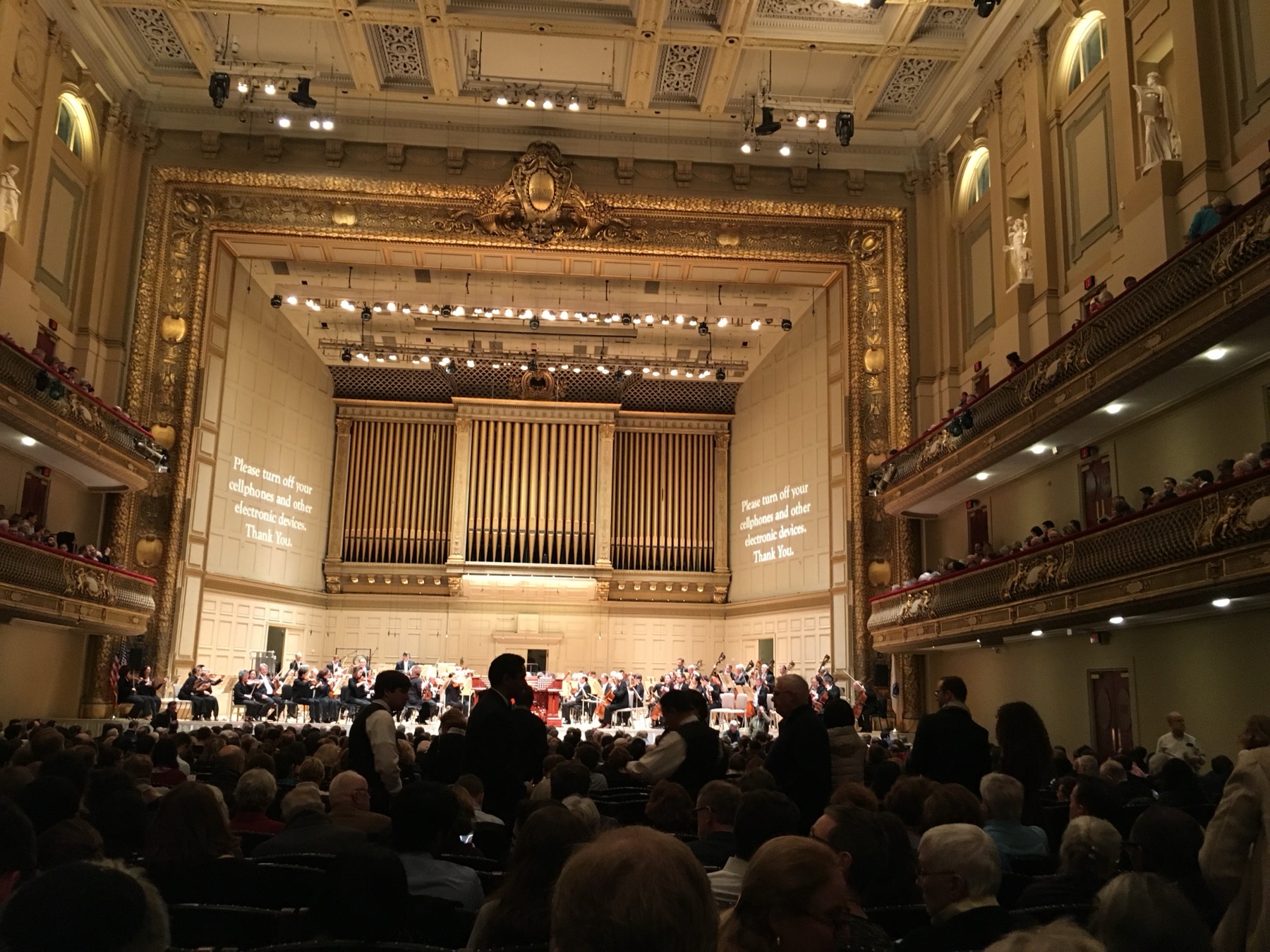
Symphony Hall, Boston. Built in 1900. Modeled on the second Leipzig Gewandhaus. Widely considered one of the three finest concert halls on earth. Photo: ArnoldReinhold via Wikimedia Commons (CC BY 3.0).
The Man They Hired to Fire Him
Chad Smith came to the BSO from the Los Angeles Philharmonic, where he had spent over two decades. His official biography — published on the BSO's own website — describes his LA Phil work in language that is not ambiguous. Smith "invested in visionary programs to foster a culturally diverse talent pipeline and expand new audiences." That is a direct quote. It is not a euphemism for better Beethoven. It is a description of a specific institutional priority: diversifying the racial, cultural, and demographic composition of the orchestra's personnel, programming, and audience.
The BSO's messaging confirms the direction. Under Smith, the BSO has achieved "some of its most diverse and representative seasons to date, with many new faces on stages and in audiences." Smith expanded the "Susan W. and Stephen D. Paine Resident Fellows Program, which presents rising musicians from historically unrepresented backgrounds with valuable professional experience." The BSO's composer-in-residence, Carlos Simon, is presented in BSO press materials through the frame of his biography and his identity at least as prominently as through the music itself.
None of this is hidden. It is on the BSO's website. It is in Chad Smith's own official biography. It is the publicly stated mandate of the institution.
Read that biography again. "Culturally diverse talent pipeline." "Historically unrepresented backgrounds." "New audiences." This is the vocabulary of corporate DEI training modules. It is not the vocabulary of orchestral leadership. Chad Smith was hired by a board — chaired by Barbara Hostetter, whose signature achievement at the Isabella Stewart Gardner Museum was overseeing the 2012 Renzo Piano expansion wing — for the explicit purpose of redirecting the BSO along these lines. Nelsons was not. Nelsons is a Latvian who grew up in the Soviet Union and was trained in the European conducting tradition. He speaks the language of music at the highest level. He does not speak the language of institutional transformation.
For the people who now control the Boston Symphony Orchestra, that second language has turned out to be more important than the first.
The Contract Tell
Before firing Nelsons, the board changed the terms of his engagement. His original contract was fixed-term — the industry standard, offering security to both parties and requiring a deliberate non-renewal decision at a defined point. Chad Smith changed that contract to rolling. The effect: Nelsons became terminable, with notice, at any time.
This is not an administrative adjustment. It is preparation. The board knew — before the public knew, before the musicians knew, before Nelsons himself may have fully understood — that the separation was coming. The contract change was the mechanism. The "future vision" was the pretext.
The Cultural-Sensitivity Tell
The Boston Globe's investigation reported that "Nelsons' lack of social awareness signaled to some that he lacked the cultural sensitivity necessary to lead a modern American orchestra."
Read that sentence again. Not "musical sensitivity." Not "artistic sensitivity." Cultural sensitivity — a term with a precise meaning in contemporary institutional discourse. It is the language of mandatory DEI workshops, corporate bias-training modules, and the bureaucratic apparatus of identity politics that has captured every major American institution in the last decade. It is not the language of orchestral music-making.
The specific incident cited against Nelsons: in 2017, asked whether classical music had a sexual-harassment problem, he responded, "No... many things are artificially exaggerated or made too important." The comment was tone-deaf. It was also, in its substance, accurate — classical music's harassment problem was real but not on the scale of Hollywood, politics, or corporate America. What Nelsons lacked was not the correct assessment but the correct vocabulary: the fluency in American cultural-politics discourse that a board captured by that discourse now requires of the people who work for it.
That is the heart of the matter. The European maestro cannot pass the American discourse test. So he is fired, and the next conductor will be hired on the basis of passing it — whether or not he or she can actually conduct the orchestra.
The Pattern Beyond Boston
The Boston Symphony Orchestra is not an isolated case. It is the most recent American cultural institution to display the clinical symptoms of what has come to be called, in the wider public discourse, institutional capture — the systematic replacement of artistic and professional standards with ideological ones, administered through hiring, programming, and the disciplining of dissent.
Museums have caught it. Universities have caught it. Newspapers have caught it. Some in the public discourse call it institutional capture. Others call it the woke mind virus. The terminology varies with the political temperature of the caller. The substance does not. The pattern is consistent everywhere it appears: a governing body, captured by the language of institutional transformation, imposes that transformation on an organization whose purpose predates and outlasts the transformation mandate. The institution's original mission — scholarship, art, journalism, performance — is redescribed as a site for political correction. The people who built the original mission are pushed out, one by one, for inadequate fluency in the new vocabulary. The institution is told, publicly, that it is becoming more just. Privately, the professionals who made it good are asking each other which other organization they can leave for.
The BSO's board will deny that this is what they have done. Every board at every captured institution has denied it — the ENO's board, the San Francisco Symphony's board, the Metropolitan Opera's board. The denial is ritual. It is performed because the alternative — saying out loud that the institution's artistic criteria have been subordinated to the board's political criteria — would cost them the audience, the donors, and their own social standing. The silence from the BSO's board is the sound of this calculation being made in real time.
The Peer Ward — Four Institutions Already Further Into the Disease
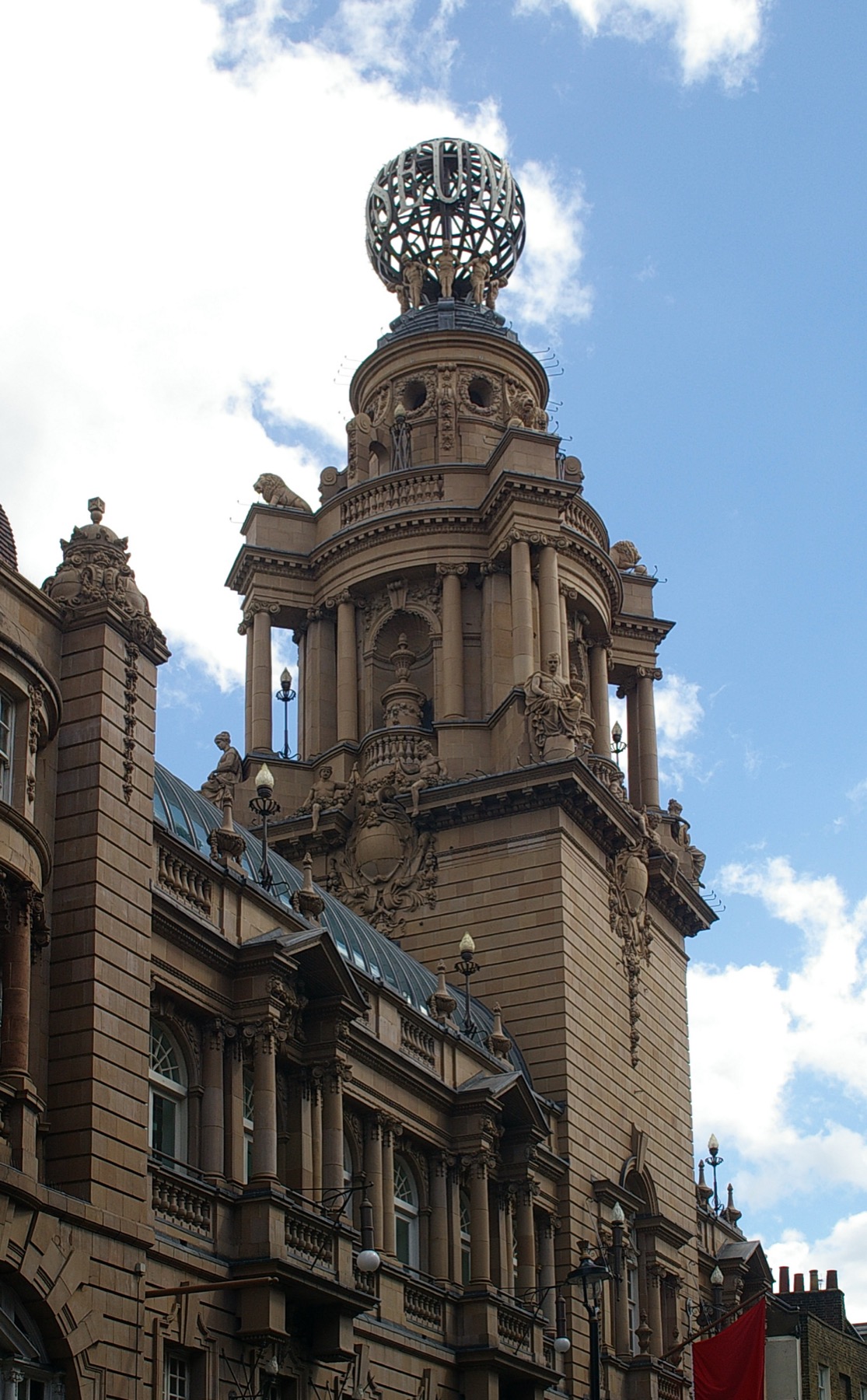
The London Coliseum on St Martin's Lane, home of the English National Opera for a century. In 2022, the Arts Council England imposed a "levelling up" mandate that stripped the ENO's funding unless it relocated to Manchester. Photo: Jim Osley via Wikimedia Commons (CC BY-SA 2.0).
The English National Opera was given a November 2022 Arts Council England mandate to relocate outside London or lose its £12.6 million annual Arts Council grant entirely. The stated rationale was "levelling up"; the effect was destruction. Many of the chorus and orchestra auditioned for the new Manchester positions with no intention of moving. The institution that remains — at 60 percent of its former size, in a different city, serving a different audience — is a successor organization with the same name. The artistic identity of the ENO is gone. The political mandate was delivered. One or the other had to yield; the politics did not.
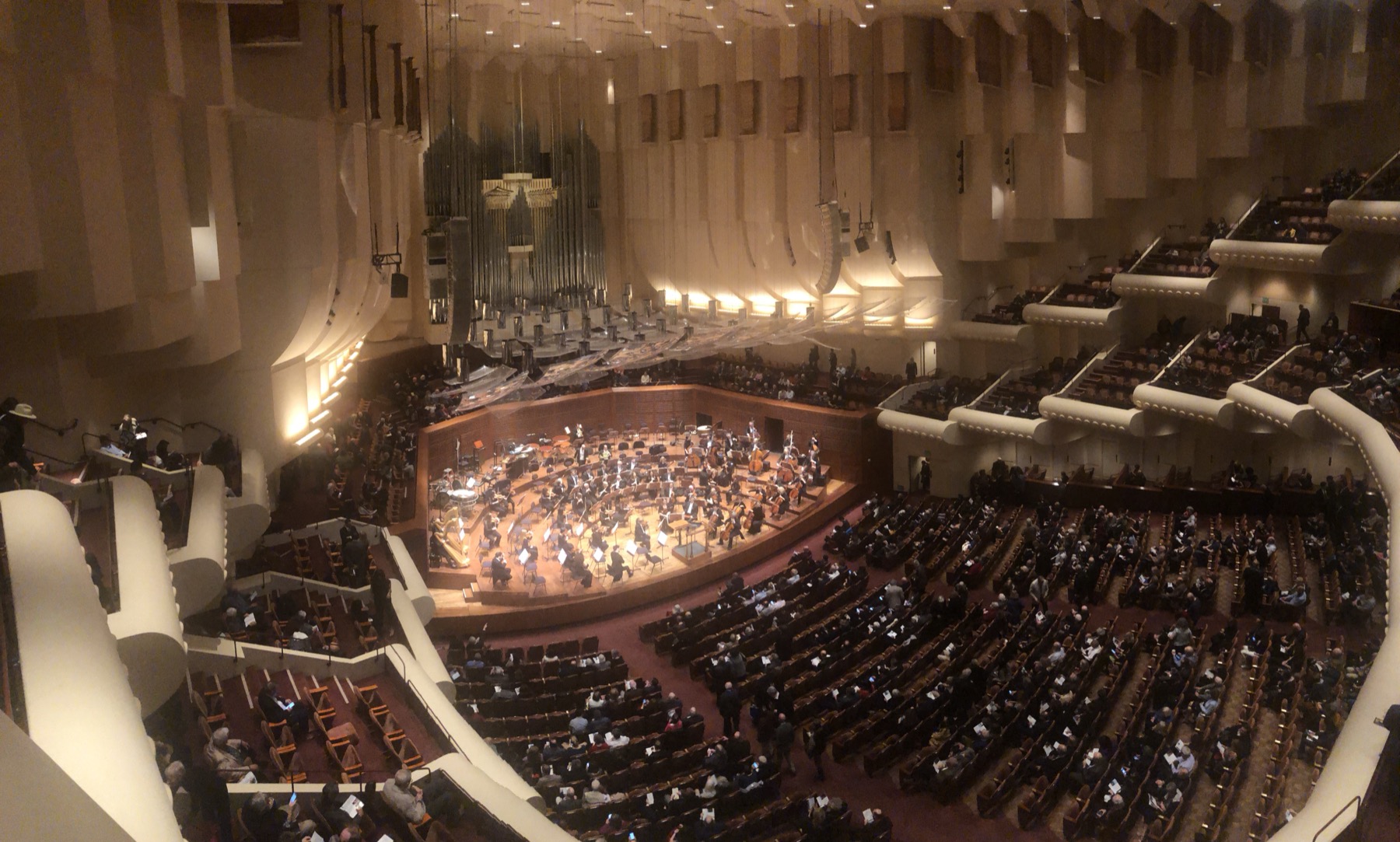
Davies Symphony Hall, San Francisco. Esa-Pekka Salonen walked out in 2024. The Symphony has no music director, a renovation gap estimated at more than $100 million, and a board that still calls its strategic direction "visionary." Photo: Melinda Stuart via Wikimedia Commons (CC BY-SA 4.0).
The San Francisco Symphony hired Esa-Pekka Salonen in 2020 as a "visionary" music director on an equity-forward programming mandate. Salonen delivered the seasons. The board declined to fund the institution at the level his role required. Salonen resigned in March 2024, publicly citing the board's posture. The SF Symphony today has no music director, a renovation gap at Davies Symphony Hall that public estimates put at more than $100 million, and a deficit that keeps widening. A Grammy-laden Mahler cycle under Michael Tilson Thomas. Financially healthy before the "visionary" era began. One board, one mandate, four years — and the institution is adrift.
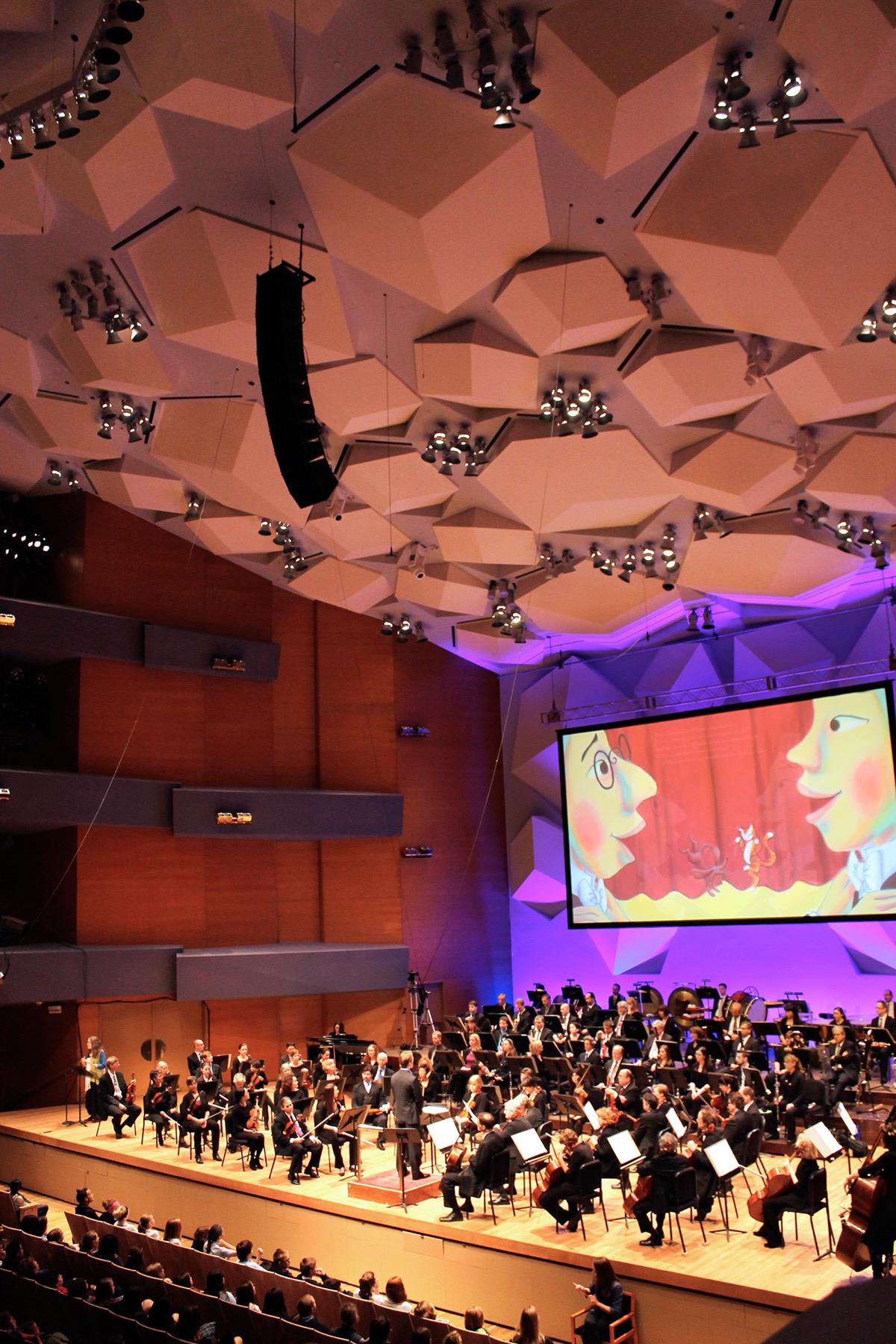
Orchestra Hall, Minneapolis — the stage that sat dark for fifteen months while the board and the musicians fought each other instead of making music. Photo: Beast 0110 via Wikimedia Commons (CC BY-SA 3.0).
The Minnesota Orchestra locked out its musicians in October 2012. The board demanded a roughly 30 percent pay cut. The lockout lasted fifteen months — the longest in modern U.S. orchestra history. Music Director Osmo Vänskä, a Grammy-winning conductor, resigned in protest. The musicians eventually accepted concessions in early 2014. The orchestra today is recovered in name. The international Grammy-era reputation is not. Several of Vänskä's senior players left during the lockout and never returned.
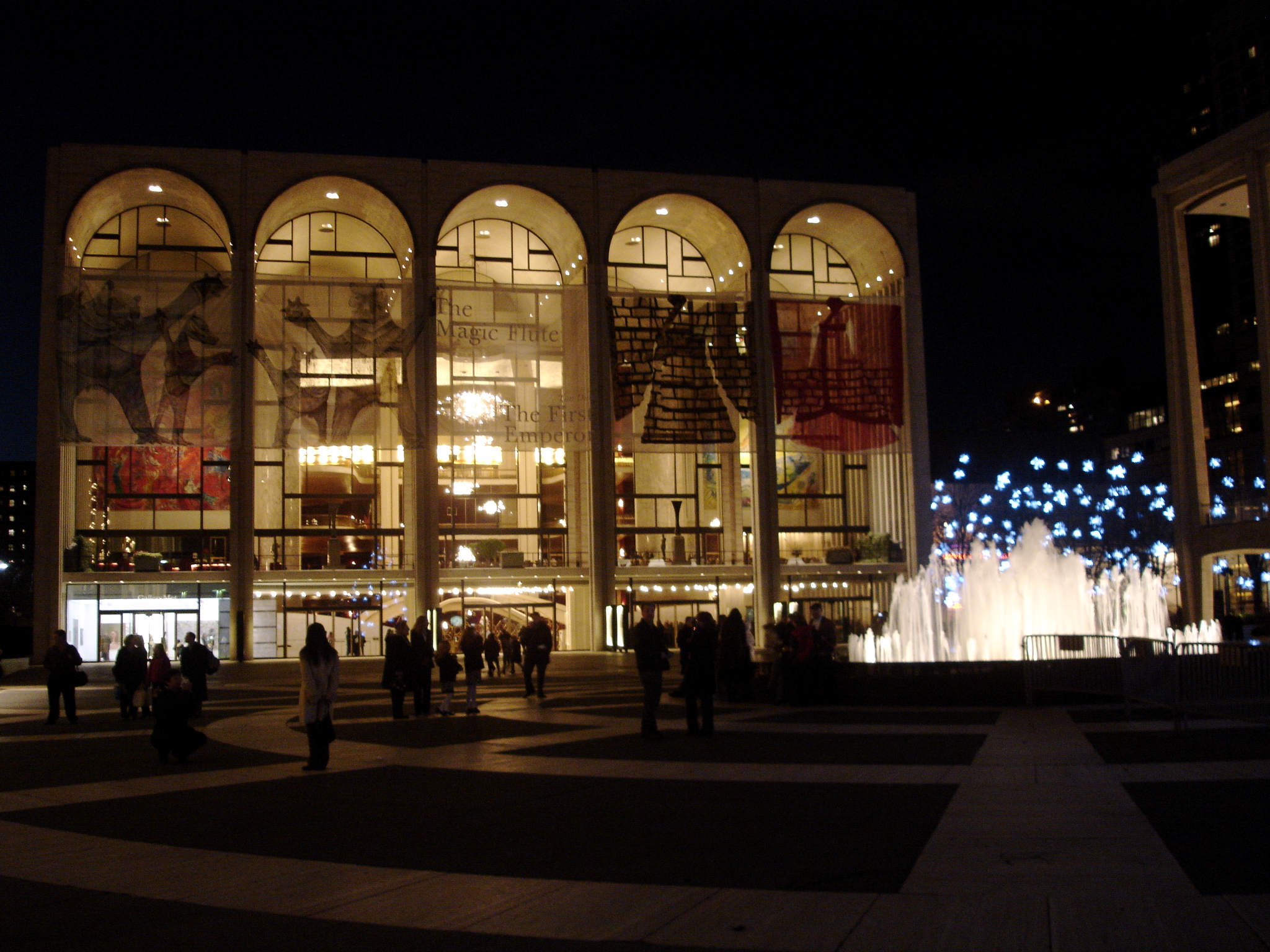
The Metropolitan Opera House at Lincoln Center. Under twenty years of Peter Gelb: a structural deficit deep enough to force $120 million in endowment draws since 2023, Moody's at Caa1 (deep junk), a 17-production season (the smallest in over 60 years), and Chagall murals considered for sale. The endpoint of the trajectory the BSO has just begun. Photo: Blehgoaway via Wikimedia Commons (CC BY-SA 3.0).
The Metropolitan Opera is the endpoint of the disease. Twenty years of Peter Gelb. A $47 million annual operating deficit. A $120 million endowment raid — more than a third of the fund. Moody's Caa1 junk rating. Fifty to sixty-five percent box-office capacity on the contemporary commissions that were the point of his programming mandate. The biggest soprano in the world — Netrebko — fired. The biggest tenor alive — Kaufmann — stopped appearing after a public 2018 scheduling dispute. Opera News, an 87-year-old publication, abolished after a critical column. The Chagall murals on the auction block. The institution can no longer cover operations, service its debt, or fill its seats. Gelb has announced his retirement for 2030. On current trajectory, the Met he will hand over will be a rescue operation, not an opera company. The Boston Globe called for his resignation in 2019. It is the model Boston has now chosen to follow.
The Programming Ledger: What Ideological Commissioning Actually Sells
The board will not describe its "future vision." The vision's programming, however, is not a mystery. The institutions two or three transformation cycles ahead of the BSO have already published the sales data in the form of box-office percentages.
At the Metropolitan Opera, Gelb's most ideologically-framed contemporary commissions and revivals have produced the following attendance, per Opera News and the Met's own season reporting:
- Grounded (Jeanine Tesori, 2024-25 new commission): 50 percent capacity. The worst-performing new production of the Met's season. Gelb blamed the critics.
- El Niño (John Adams revival): 58 percent.
- The Hours (Kevin Puts): 61 percent.
- Dead Man Walking (Jake Heggie): 62 percent.
- Fire Shut Up in My Bones (Terence Blanchard): 65 percent. A genuine artistic breakthrough — but 35 percent of the seats sat empty in revival.
- The First Emperor (Tan Dun, 2006): described by Anthony Tommasini of the New York Times as "essentially awful." Never entered the repertoire.
The same seasons, the Met's performances of Puccini, Verdi, Mozart, and Strauss sold at or near capacity. The audience did not refuse new music. The audience refused this variety of new music — work commissioned on identity-first criteria, programmed on political priorities, and marketed on the biographies of the composers rather than the music.
The BSO's composer-in-residence, Carlos Simon, is programmed under the same logic. The BSO press materials emphasize his identity, his biography, and the institutional priority of commissioning "unrepresented voices" as much as the music itself. Simon has significant credits — a 2025 presidential inauguration commission, major orchestral premieres in Chicago and Kennedy Center programming. The artistic merit is not the question. The question is whether the marketing-by-identity logic — which the Met has already tested at 50-to-65 percent of capacity — produces an audience at the rate the prior logic did. The question they will answer is the one the Met's audience has already answered: will we buy tickets for this programming at the rate we bought tickets for the programming that preceded it?
The pattern elsewhere suggests the answer is no. The BSO audience under Nelsons accepted, and in many cases loved, his Mahler, Shostakovich, and Strauss. That audience will let subscriptions lapse if the Mahler is traded for DEI-framed commissioning at Met-documented 50-to-65 percent rates. The subscribers who paid for Nelsons will not pay, at the same rate, for the transformation mandate. The transformation mandate will insist, publicly, that the institution is becoming more relevant. The subscription numbers will, privately, say the opposite. The 990 filings will eventually say so publicly.
Nelsons Is Fine. It Is Boston That Is Finished.
Andris Nelsons is forty-seven. He is at the absolute peak of his powers. He has the Leipzig Gewandhaus, where he is already Kapellmeister. He has an open invitation from the Vienna Philharmonic, where he has guest-conducted repeatedly. He has the Berlin Philharmonic, the Amsterdam Concertgebouw, and the Bavarian Radio Symphony, each of which would hire him tomorrow. He will conduct Mahler, Strauss, and Shostakovich at the highest level in Europe for the next two decades. His career does not end with the BSO. It continues, uninterrupted, in the only countries on earth that still treat the European symphonic tradition as something worth maintaining on its own terms.
The BSO's career, in a meaningful sense, does end with him. The orchestra that won five Grammys, recovered the audience, loved its conductor, and built an international recording catalog on Deutsche Grammophon is finished. What replaces it will be called the Boston Symphony Orchestra. It will play in Symphony Hall. Its musicians will, for a time, be the same musicians. But the institution — in the sense that matters artistically — will be different.
The new music director, when announced, will satisfy the board's demographic and ideological criteria. The press release will emphasize firsts and milestones. The musicians will know within a season whether the conductor can lead them. The audience will know within two. The subscription base will slide. The senior players will leave for Europe, where the work is comparable and the institutional posture is calmer. The endowment will continue reserve-draws. The board, in public statements, will insist that the strategic framework is yielding results. The results will be the decline.
That is the disease. The disease has a name. The Boston Symphony Orchestra has just been diagnosed with it.
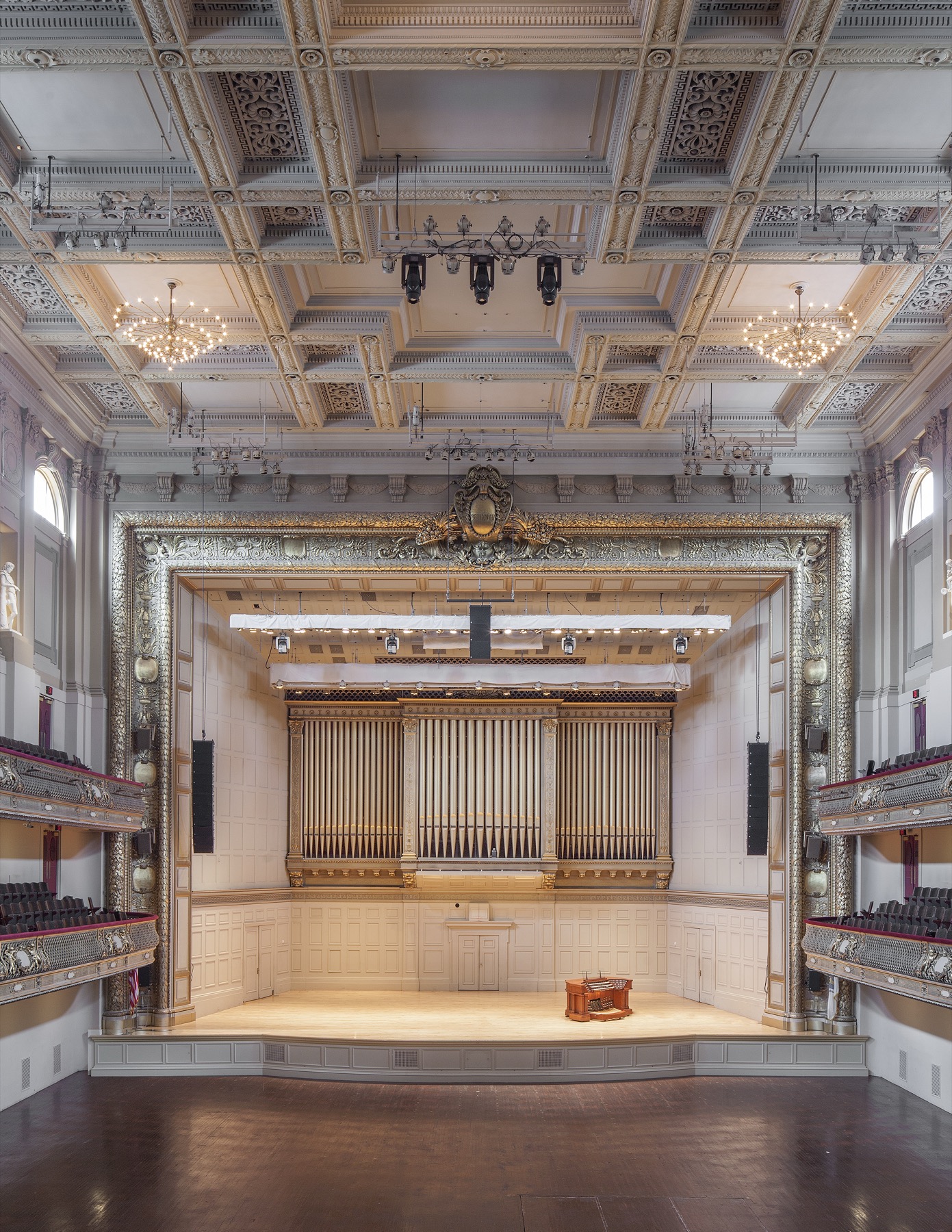
Symphony Hall, Boston. The institution that was, for thirteen years under Andris Nelsons, one of the great orchestras of the world. Photo: Tneorg via Wikimedia Commons (CC BY-SA 3.0).
The Verdict
Andris Nelsons did nothing wrong. He did everything right. He won the Grammys. He recovered the audience. He made the orchestra love him. He built a catalog with Deutsche Grammophon that will outlast every person who voted to fire him. His crime, in the eyes of the board that ended his Boston tenure, was that he was a European maestro in the classical mold — fluent in music, clumsy in American cultural politics, unwilling or unable to speak the language of institutional transformation that the board has now declared the first requirement of the job.
The board chose the language. It did not choose the music. That is the choice.
Every institution that has made this choice before Boston is now visibly worse than it was. The ENO is a successor organization in Manchester. The San Francisco Symphony is directorless and $200 million underwater. The Minnesota Orchestra survived a 15-month labor war and has not recovered its Grammy-era stature. The Metropolitan Opera is junk-rated, cutting its season to a 60-year low, and contemplating the sale of Chagalls. Each of those institutions was once, like the BSO, one of the great American cultural institutions. Each was walked into decline by a board that prioritized the politics over the work.
Boston is next. The variables are cosmetic; the equation is the same. In three years the BSO will be a respected regional orchestra with a diminished recording catalog, a shrunken subscription base, a music director who satisfies the board's political criteria, and a quietly-exiting roster of senior musicians. In six years, the 990 will look like San Francisco's. In ten years, the comparison will be Minnesota's.
The board will not reverse this because the people who built the transformation were hired to execute it and will not vote to terminate their own professional identity. The transformation will continue until the board is replaced. The BSO will, in the meantime, be what the board has decided to build: an institution that satisfies the political requirements of the people who sit on it. Whether it remains, in any meaningful sense, a great orchestra is not part of the specification.
Andris Nelsons will be in Leipzig. He will be in Vienna. He will be in Amsterdam. He will record Mahler and Strauss and Shostakovich with orchestras that still understand what a great orchestra is for. Six seasons from now, when Bostonians want to hear the kind of music-making Nelsons delivered from Symphony Hall's stage for thirteen years, they will have to fly to Germany to get it. By then the BSO's board will have announced that its strategic framework is working.
That is what ideology costs when it is applied to institutions whose purpose is art. The art suffers. The institution suffers. Andris Nelsons keeps conducting. Boston loses the orchestra it did not know it was about to lose the day the board changed a fixed-term contract to rolling and wrote a subscriber letter that blamed twenty years of decline on the one conductor who had reversed the trend.
The next volume, in due course, will be titled Boston. The volume before it was titled Lincoln Center. The volume before that was titled Manchester. The volume before that was titled Davies Hall. The volume before that was titled Minneapolis. The pattern is not an accident. It is the virus running its course. The Boston Symphony Orchestra is the most recent patient. It will not be the last.
What to Watch
Four signals, in the next twelve months, will tell you exactly which volume Boston is reading from.
The music director search. If the board hires a conductor whose public identity is built on the same "culturally diverse talent pipeline" framework Chad Smith brought from the LA Phil, the transformation is locked in and the decline begins. If the board surprises the world and hires a conductor whose primary qualification is being a great conductor on the European model, the board has reversed course. Bet on the first.
The 2026-27 season announcement. If the programming emphasizes "relevance" and identity-commissioning at the expense of the core repertoire that fills Symphony Hall, the ENO path is open. If the programming looks like a normal BSO season — Mahler, Strauss, Brahms, Beethoven, with selective ambitious commissions alongside — the board is being responsive. Bet on the first.
The musician departures. Senior players do not leave one of the great orchestras in the world unless the institution has become unbearable. If two or three principals leave by September 2026, the signal is clear. If five or more leave, the signal is the ENO signal.
The Boston Globe's editorial board. The Globe has been the paper of record on this story. If the Globe's editorial board, in the next six months, calls for Barbara Hostetter and the trustees to resign — as it did for Peter Gelb and Ann Ziff in September 2019 — the institutional consensus in Boston has shifted. If the Globe remains a news outlet but does not editorialize, the consensus has not yet shifted. The signal will arrive. The direction it arrives in will tell the rest of the country what Boston has decided its orchestra is for.
Andris Nelsons will be fine. The question is whether there will be a Boston Symphony Orchestra left to regret its decision.
When BSO Musicians Start Looking, Cadenza Is Where They Look
Senior BSO musicians are quietly looking at Europe. Leipzig, Vienna, Berlin, Amsterdam — plus 1000+ American openings. Cadenza aggregates every major orchestral audition and salaried position on one platform. Free for musicians. For orchestras hiring into the vacuum, our Hiring OS puts your opening in front of the artists actually playing at the level you need.
Browse orchestra openings → · Hiring OS for orchestras → · See plans
Get the next investigation in your inbox
We publish long-form investigations like this every few weeks. The Boston Globe, The New York Times, and Slippedisc have cited Cadenza's reporting. Get the next one first — no spam, unsubscribe anytime.
Sources: Boston Globe ongoing coverage of the Andris Nelsons firing and the BSO board (March-April 2026). IRS Form 990 filings: Boston Symphony Orchestra Inc. (EIN 04-2103550), Metropolitan Opera Association (EIN 13-1624087), San Francisco Symphony (EIN 94-1156284), Minnesota Orchestral Association (EIN 41-0693899). Moody's Ratings (March 18, 2026 Metropolitan Opera downgrade to Caa1). Arts Council England 2022 funding reallocation announcement. Public statements by Osmo Vänskä (October 2013 Minnesota resignation), Esa-Pekka Salonen (March 2024 San Francisco Symphony resignation), Lorna McGhee (BSO principal flute, public letter April 2026), Tom Van Dyck (BSO double bass, public letter April 2026). Anna Netrebko v. Metropolitan Opera arbitration ruling (February 2023, arbitrator Howard Edelman). Boston Globe editorial, September 25, 2019 ("Peter Gelb, step down!"). Cadenza prior coverage: bso-nelsons-investigation-why-fire-success-2026 (11,614 views at time of writing), metropolitan-opera-peter-gelb-factual-record-of-decline, peter-gelb, music-degree-cost.
These orchestras are on Cadenza — are you?
The institutions named above have unclaimed profiles. If you work at one of them, claiming takes 30 seconds and is free. If your email domain matches the organization website, approval is automatic.
- Leipzig Gewandhaus — claim this profile
- Arts Council England — claim this profile
- Boston Symphony — claim this profile
- Los Angeles Philharmonic — claim this profile
- Vienna Philharmonic — claim this profile
- The Metropolitan Opera — claim this profile
- San Francisco Symphony — claim this profile
- Bavarian Radio Symphony — claim this profile
- Berlin Philharmonic — claim this profile
- English National Opera — claim this profile
- Minnesota Orchestra — claim this profile
- Boston Symphony Orchestra — claim this profile
Comments
Sign in to join the discussion.