Quick Facts
- Born
- 1846
- Died
- 1916
- Era
- Romantic
Tags
composermusicologistmusic educatorpianistuniversity teacher
Biography
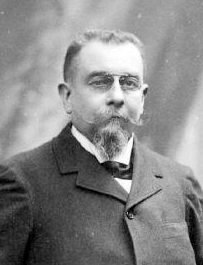
WikipediaAlexandre Jean Albert Lavignac was a French music scholar, known for his essays on theory, and a minor composer. Biography
Lavignac was born in Paris and studied with Antoine François Marmontel, François Benoist and Ambroise Thomas at the Conservatoire de Paris, where later he taught harmony. Among his pupils were Henri Casadesus, Claude Debussy, Vincent d'Indy, Amédée Gastoué, Philipp Jarnach, Henri O'Kelly, Gabriel Pierné, Wadia Sabra, Florent Schmitt. See: List of music students by teacher: K to M#Albert Lavignac.
In March 1864, at the age of eighteen, he conducted from the harmonium the private premiere of Gioachino Rossini's Petite messe solennelle.
His condensed work, La Musique et les Musiciens, an overview of musical grammar and materials, continued to be reprinted years after his death. In it he characterised the particular characteristics of instruments and of each key, somewhat in the way Berlioz and Gevaert (Traité d'orchestration, Gand, 1863, p. 189) had done:
Major keys: C-sharp major: ? ("?")
F-sharp major: Rough ("rude")
B major: Energetic ("énergique")
E major: Radiant, warm, joyous ("éclatant, chaud, joyeux")
A major: Frank, sonorous ("franc, sonore")
D major: Joyful, brilliant, alert ("gai, brilland, alerte")
G major: Rural, merry ("champêtre, gai")
C major: Simple, naive, commonplace ("simple, naïf, franc, ou plat et commun")
F major: Pastoral, rustic ("pastoral, agreste")
B-flat major: Noble and elegant, graceful ("noble et élégant, gracieux")
E-flat major: Vigorous, chivalrous ("sonore, énergique, chevaleresque")
A-flat major: Gentle, caressing, or pompous ("doux, caressant, ou pompeux")
D-flat major: Charming, suave, placid ("plein de charme, placide, suave")
G-flat major: Gentle and calm ("doux et calme")
C-flat major: ? ("?")
Minor keys: A-sharp minor: ? ("?")
D-sharp minor: ? ("?")
G-sharp minor: Very somber ("très sombre")
C-sharp minor: Brutal, sinister, or very sombre ("brutal, sinistre ou très sombre")
F-sharp minor: Rough, or light, ae…
Works & Events
No recorded events found.
Gallery(2)

Quick Facts
- Born
- 1846
- Died
- 1916
- Era
- Romantic
Tags
composermusicologistmusic educatorpianistuniversity teacher




Are you a musician? Join Cadenza for free