Competitive Comparison
Cadenza vs the Classical Music Platform Stack
Most competitors solve one slice of the market: listings, applications, ticketing, fundraising, or CRM. Cadenza is built to make the whole client path work from discovery to payment, fulfillment, and follow-up.
The Bottom Line
Cadenza is not a better job board or another enterprise ticketing system — it is the classical music operating layer: one place where organizations publish, sell, review, convert, and keep their artist and patron pipeline moving.
Where Competitors Are Strong
The market is real, but it is fragmented. That fragmentation is the opening.
Listing Boards
Musical Chairs and traditional job boards
They win on
Recognized audience for jobs, auditions, competitions, and quick posting.
Their gap
Some bundle an applicant workflow, but adoption is low and none sell ticketing, donations, patron follow-up, or self-serve card checkout.
Cadenza wins by
Cadenza keeps discovery but connects it to organization profiles, listings, applications, billing, and buyer-facing commerce.
Application Platforms
Acceptd, SlideRoom, YAP Tracker, and audition portals
They win on
Strong application intake, media uploads, reviewer workflows, and adjudication.
Their gap
Most are application systems first. They are not built as the front door for all classical opportunities, events, donations, rooms, and revenue operations.
Cadenza wins by
Cadenza covers applications and prescreening while also giving artists and organizations a broader marketplace and operating dashboard.
Ticketing and Arts CRMs
Eventbrite, AudienceView, Spektrix, Tessitura, and box-office systems
They win on
Excellent at selling tickets, tracking patrons, running campaigns, and managing mature venue operations.
Their gap
They do not solve recruiting musicians, posting opportunities, school discovery, auditions, or classical career-side demand.
Cadenza wins by
Cadenza adds ticketing and donations around the classical opportunity graph instead of forcing organizations into a general event stack.
DIY Forms and Websites
A school page, a form builder, email, and a payment link
They win on
Cheap to start and familiar to internal teams.
Their gap
Poor discovery, duplicated data entry, manual applicant tracking, weak checkout confidence, and no unified revenue follow-up.
Cadenza wins by
Cadenza makes the buyer and applicant path straightforward while giving teams a real dashboard for what happens after launch.
This is the actual product
One platform, photographed.
Boards list. Cadenza runs admissions, auditions, and the box office — these are real workspaces, not mockups.
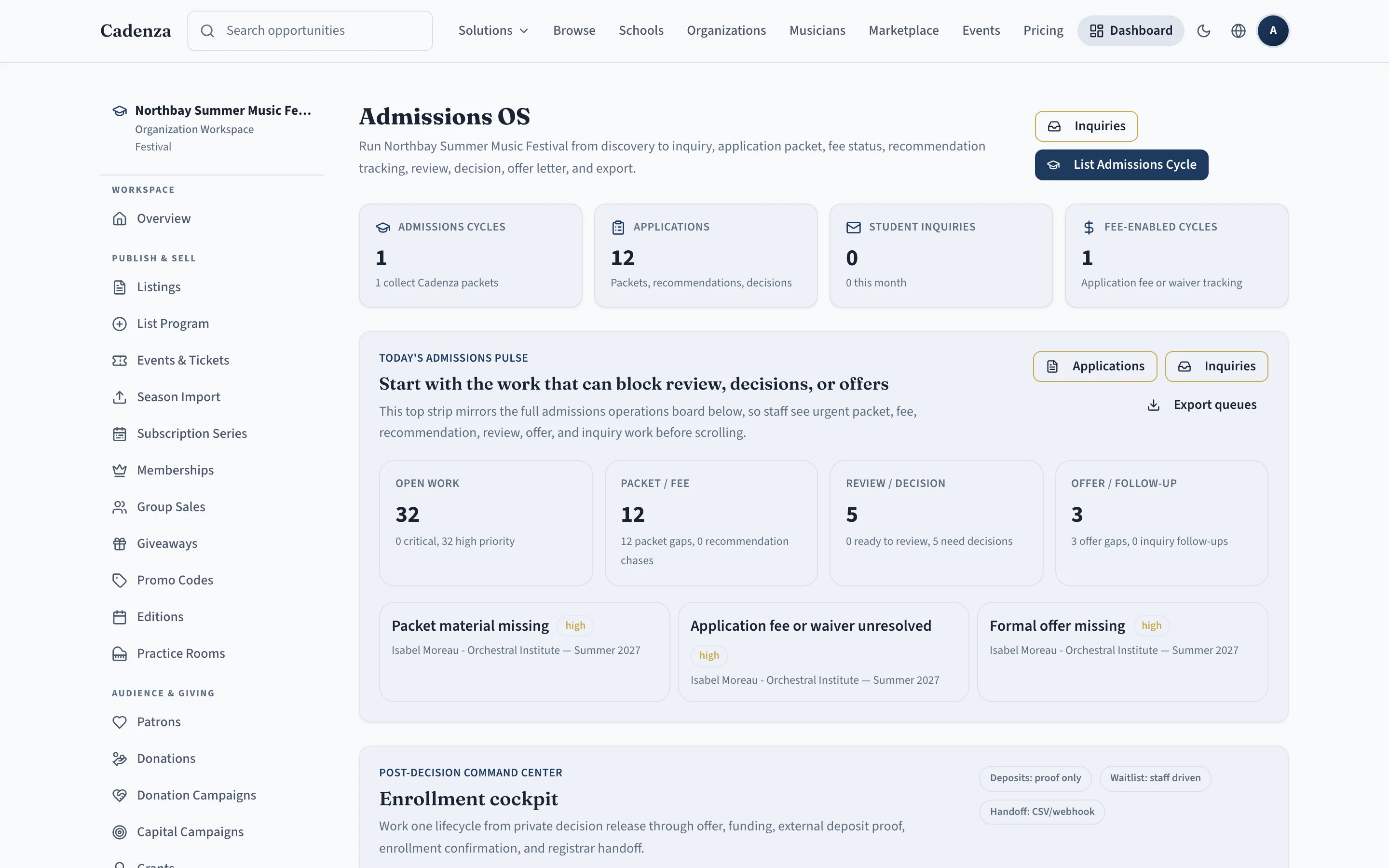
Admissions
The cycle an office can actually run.
Applications with media and references, blind faculty review, decisions, offers, and scholarships — one funnel from inquiry to enrolled.
- One reviewable packet per applicant
- Weighted, blind jury scoring
- Named scholarships tracked like money
The box office
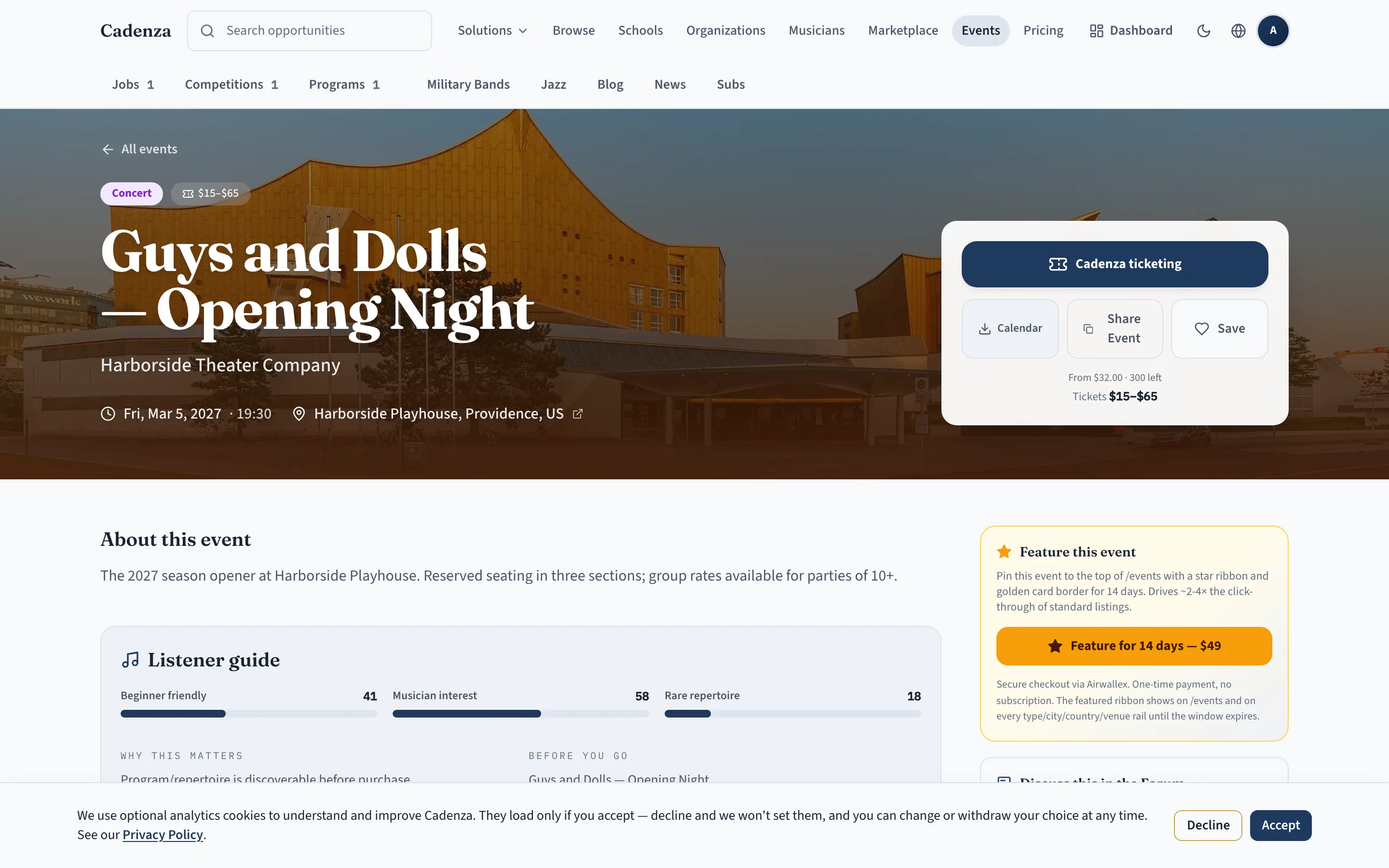
Tickets, seats, and group sales included.
The event page your buyers see, reserved seating priced by your tiers, and a group-sales pipeline — rails no listing board carries.
- Live prices and remaining inventory
- Reserved seating with sold/held counts
- Group inquiries tracked new → won
Feature Coverage
A buyer should be able to see the difference immediately: Cadenza spans more of the workflow with less setup, especially for small and mid-sized arts teams.
| Capability | Cadenza | Listing Boards | Application Tools | Ticketing/CRM | DIY Site |
|---|---|---|---|---|---|
| Classical and jazz opportunity discovery | |||||
| Organization profiles and claimed dashboards | |||||
| Self-serve listings and paid plans | |||||
| Applications, prescreening, and jury review | |||||
| Tickets, subscriptions, donations, and merchandise | |||||
| Practice rooms and organization inventory | |||||
| School discovery and comparison | |||||
| Revenue, payment, and conversion dashboard | |||||
| Low setup burden for small teams |
One platform for the whole workflow
Launch listings, collect payments, review talent, sell tickets, and keep every high-intent applicant or buyer in one follow-up loop — without stitching together disconnected tools.