20 years as General Manager. $2.2 million salary. $47 million deficit. $120 million raided from the endowment. Moody's junk rating. 17 productions — a 60-year low. The most powerful man in American opera. The most criticized man in classical music.
The Cadenza editorial team·April 2026·Sources: IRS Form 990, ProPublica, Moody's, OperaWire, Slippedisc, VAN Magazine, City Journal, The Boston Globe
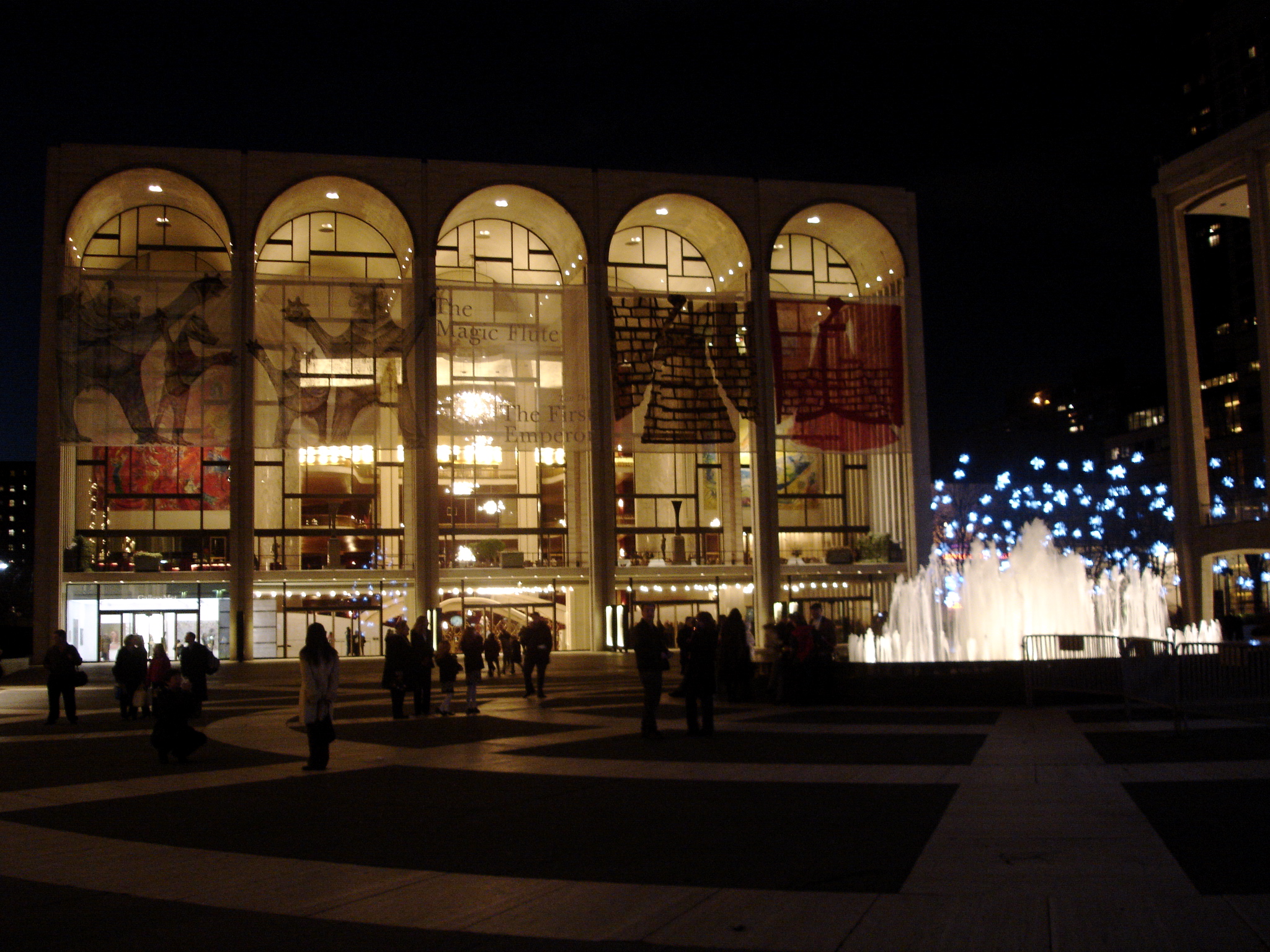
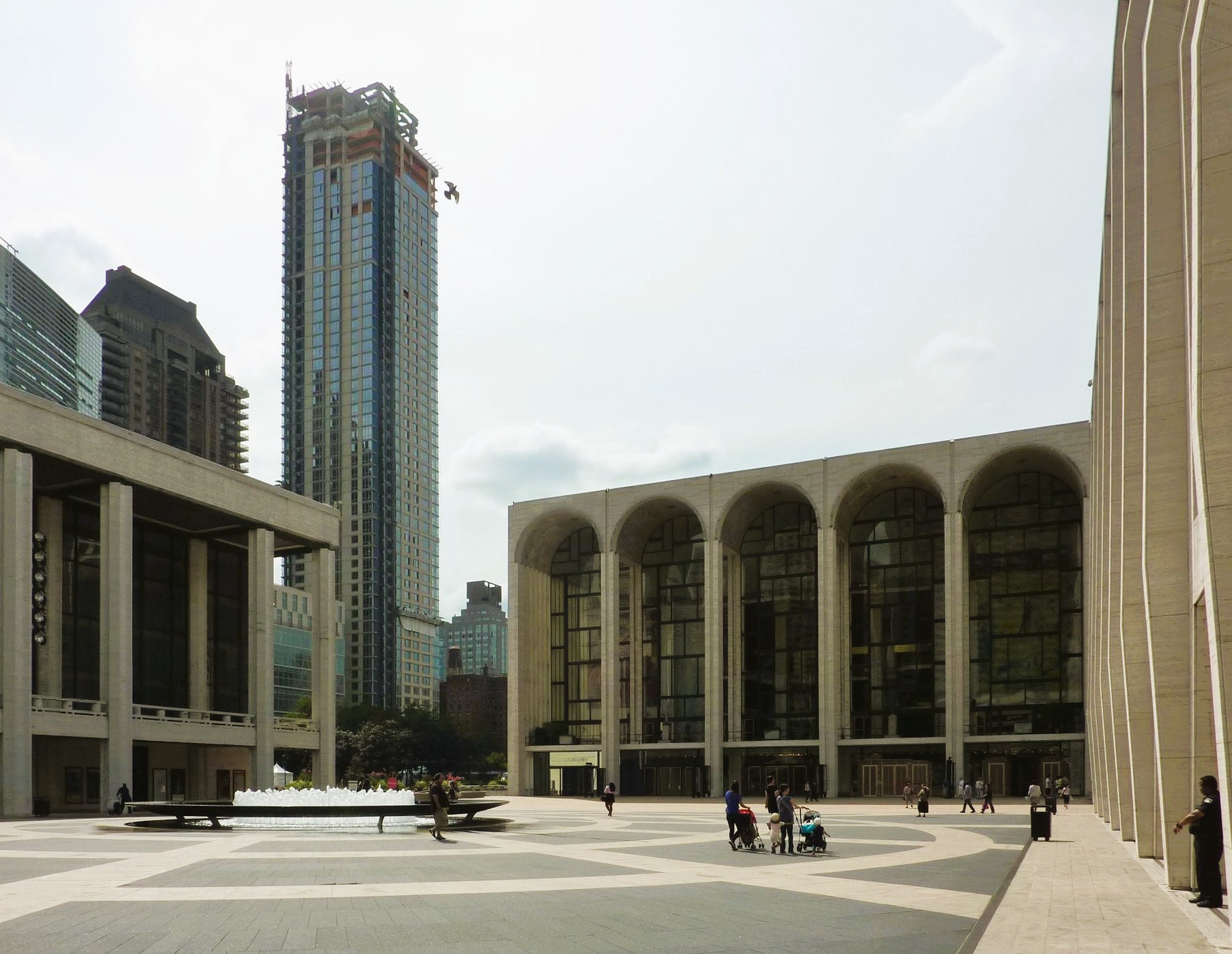
The Metropolitan Opera House at Lincoln Center. Photo: Blehgoaway via Wikimedia Commons (CC BY-SA 3.0).
The Numbers
Before the arguments, before the opinions, before the politics — the numbers. Every figure from public filings and published reporting.
$2.2M
Gelb salary (FY2024)
$47M
Operating deficit
$120M
Raided from endowment
Junk
Moody's credit rating
72%
Capacity sold
17
Productions 2026-27
60%
Of box office potential
20
Years as GM
Peter Gelb has been the General Manager of the Metropolitan Opera since August 1, 2006. In that time, the Met has gone from the undisputed center of the opera world to a company selling one-third of its seats empty, raiding its own endowment, carrying junk-rated debt, and preparing to sell the paintings off its walls.
His salary for the fiscal year ending July 2024: $2,237,377. The Met's operating deficit in the same period: $47 million.
Before and After
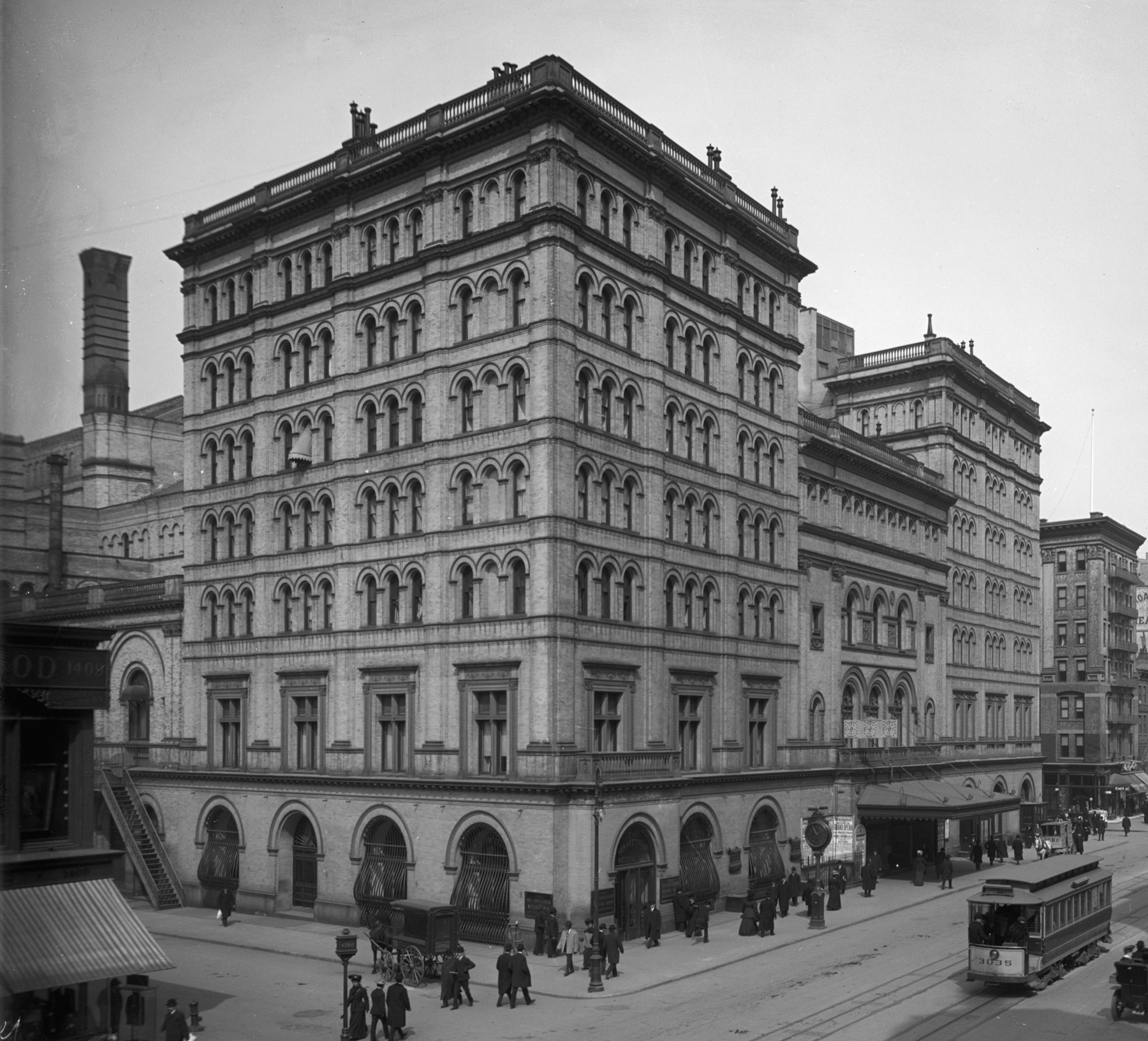
The old Metropolitan Opera House at Broadway and 39th Street, 1905. The Met operated here for 83 years before moving to Lincoln Center in 1966. Photo: Detroit Publishing Company / Library of Congress (Public Domain).
Gelb's First Season (2006-07)
Box office: Capacity increased 7.1 points
Sold-out shows: 88 (vs 22 the prior season)
HD Live: Launched cinema broadcasts — brilliant innovation
Cinema audience: Would grow to 400,000+ per broadcast
Endowment: Intact
Reputation: “A new era for the Met”
Gelb's 20th Season (2025-26)
Box office: 72% capacity. One-third empty.
Revenue: 60% of box office potential realized
Cinema audience: Lost half. ~200,000 per broadcast.
Endowment: $120M withdrawn. A third of the fund.
Credit: Moody's junk rating
Season: 17 productions — 60-year low
Chagall murals: Considering selling them ($55M)
Naming rights: Being shopped
In 2006, he filled the house and launched a global cinema empire. In 2026, the house is one-third empty, the cinema audience is halved, and the endowment has been raided for $120 million. Same man. Same building. Twenty years of decline.
The HD Collapse
The Met Opera: Live in HD was Peter Gelb's best idea. Launched in 2006, it broadcast Met performances to 2,200 cinema screens in over 70 countries. At its peak, it drew over 400,000 viewers per broadcast and was a “very significant source of net profit.”
Today the audience is approximately 200,000 — half of what it was. Revenue has dropped over $10 million from pre-pandemic levels. Instead of generating profit, the broadcasts now break even.
Gelb himself used the word “cannibalization” to describe what happened: the HD broadcasts reduced ticket sales at Lincoln Center. He created a revenue stream that ate his own live audience. Then he lost the cinema audience too.
HD audience (peak)
400K+
HD audience (2025)
~200K
He built the most innovative distribution platform in opera history. Then he watched it decay. The cinema industry declined post-COVID — but Gelb had two decades to diversify distribution. Instead, the Met's digital strategy remained tethered to a dying medium: movie theaters.
The Machine
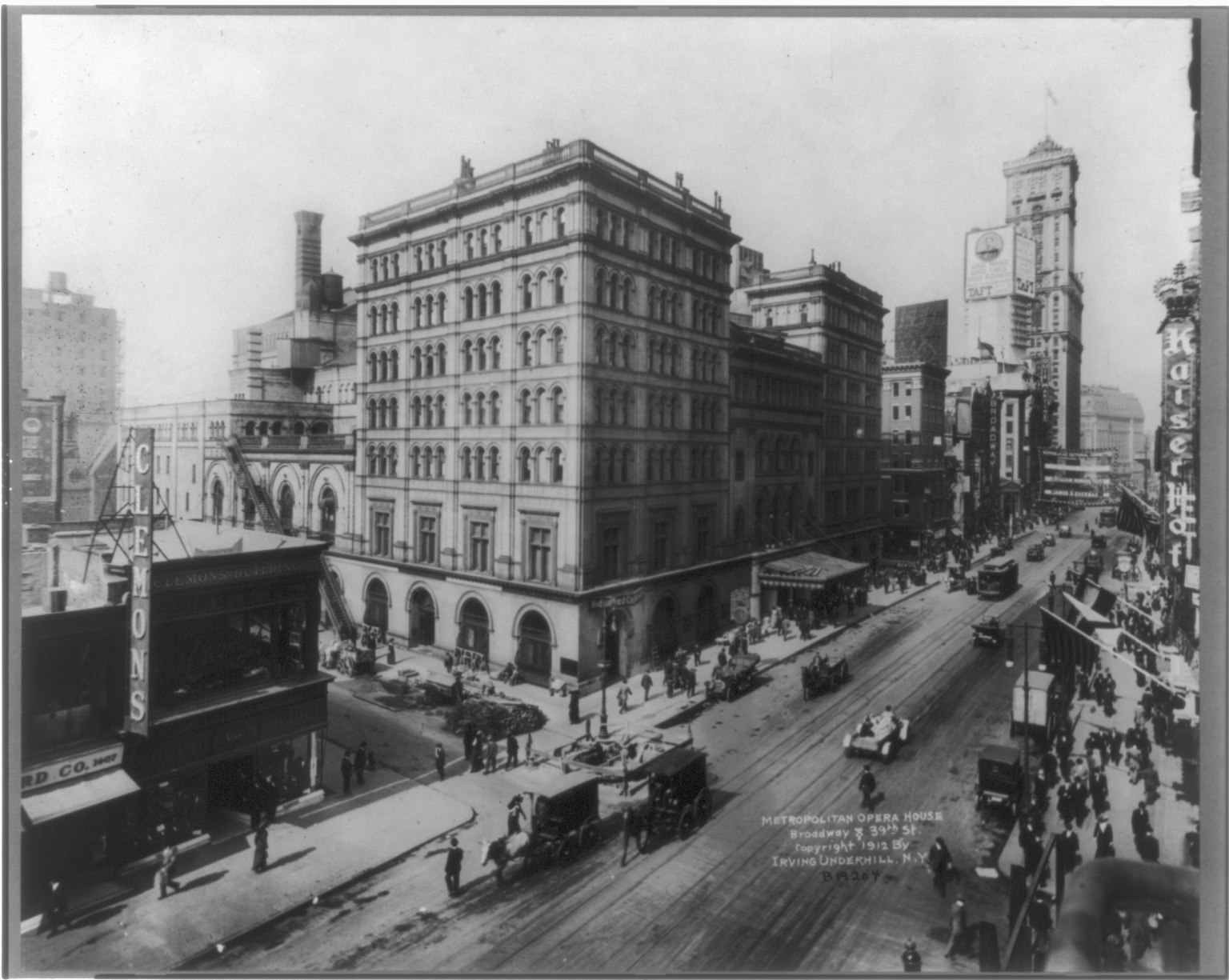
The old Met, 1912. In its heyday, the house premiered operas by Puccini, Humperdinck, and Giordano, and served as Caruso's home stage for 18 seasons. Photo: Library of Congress (Public Domain).
In 2010, Gelb debuted a new production of Wagner's Ring cycle directed by Robert Lepage. The centerpiece was “The Machine” — a 45-ton mechanical set of rotating planks that was supposed to transform for each scene.
The Machine broke. Repeatedly. During performances. In front of paying audiences.
The cost: reportedly $16-20 million. The critical reception: devastating. The audience response: they didn't come. The production became the symbol of Gelb's era — expensive, technically ambitious, critically panned, and empty.
The budget increase tells the story. Under Gelb, the Met's total budget grew by nearly 50% to $327 million — while labor costs stayed flat. The money went to productions like the Lepage Ring. The musicians who make the music saw none of it.
The Big Bet That Lost
Gelb's strategy for reviving the Met: commission new operas. Contemporary works by living composers. A bold bet that the Met could lead the art form into the future.
The 2024-25 season opened with “Grounded” by Jeanine Tesori — a Met-commissioned opera about a female Air Force pilot. It had already received a dismal world premiere at Washington National Opera. Despite thorough revision, the Met run sold 50% of seats — the worst performer of all ten operas presented in the season's first half.
Gelb's response: the critics had an “agenda.”
City Journal called it “The Met's Big Bet on Contemporary Opera Looks Like a Loser.” VAN Magazine documented “The problem with Peter Gelb's commissioning spree.” The audiences voted with empty seats.
When the opera sells 50% of seats, Gelb blames the critics. When the critics write honest reviews, Gelb says they have an “agenda.” When the audience doesn't come, nobody is to blame but the audience. It is never Peter Gelb.
Anna Netrebko
In February 2022, after Russia invaded Ukraine, Peter Gelb gave soprano Anna Netrebko an ultimatum: publicly denounce Vladimir Putin, or be fired from the Metropolitan Opera.
Netrebko — widely considered the most popular opera singer in the world — had called for peace. She had not endorsed the invasion. She was an Austrian citizen of Russian origin. Gelb fired her on March 3, 2022. Days after the invasion.
Here is what Gelb did not do with the same speed:
Ildar Abdrazakov (bass)
Allowed to "pause" his relationship with the Met — even as he performed at Putin-sponsored events and endorsed Putin throughout the war.
Hibla Gerzmava (soprano)
Pictured celebrating Putin's birthday. Endorsed Putin's invasion of Crimea. It took Gelb TWO MONTHS to remove her.
Anna Netrebko (soprano)
Called for peace. Did not endorse the invasion. Fired in DAYS.
In February 2023, arbitrator Howard Edelman ruled that the Met violated its union's collective bargaining agreement when it cancelled Netrebko's contracts. She was awarded $209,103. The Met had fought the claim through every stage of arbitration and lost.
In August 2023, Netrebko sued Gelb and the Met for $360,000 — alleging national origin discrimination, defamation, breach of contract, and emotional distress. A federal judge dismissed three of the four claims. The remaining claim — gender discrimination — is proceeding to trial. The argument: the Met treated male artists with Putin connections more favorably than it treated Netrebko.
The double standard is now a matter of court record.
He fired the most popular soprano in the world in days. He gave male artists with deeper Putin ties months. An arbitrator ruled against him. A federal judge allowed a gender discrimination claim to proceed. He fought the payment through every stage of arbitration. He lost.
Jonas Kaufmann Walked Away
Jonas Kaufmann is one of the most celebrated tenors alive. He announced he will not return to the Metropolitan Opera.
His reason was not about himself. It was about the musicians.
“I didn't like the way the chorus or orchestra were treated during the pandemic. They didn't get paid at all. Musicians had to move out of New York or move in with their parents.”
Jonas Kaufmann
On why he won't return to the Met
The biggest tenor in the world did not leave because of a contract dispute. He did not leave because of scheduling. He left because of principle. He watched Peter Gelb furlough the musicians with $0 pay for 17 months, demand 30% permanent cuts, lock out the stagehands, and threaten non-union labor — and he decided he could not perform for that institution anymore.
When your star tenor leaves because of how you treated the people in the pit, the problem is not the tenor.
The Levine Firing
James Levine was the Music Director of the Metropolitan Opera for 40 years, from 1976 to 2016. More than any other person in the institution's modern history, he was credited with restoring the Met's artistic reputation — building the orchestra into one of the great ensembles on earth, premiering works by Philip Glass, John Corigliano, and John Harbison, and guiding the house through the Wagner, Verdi, and Mozart repertoires that became its defining sound.
Then came the allegations.
On December 3, 2017, following public accusations from four men of sexual abuse dating back decades, Peter Gelb suspended Levine. On March 12, 2018, after an internal investigation, the Met fired him — citing “credible evidence” of “sexually abusive and harassing conduct.”
Three days later — March 15, 2018 — Levine sued the Met for $5.8 million, alleging breach of contract and defamation. The Met countersued. The case dragged through discovery for 17 months.
In August 2019, the Met settled. It paid James Levine $3.5 million — an institution that had publicly accused a man of sexual abuse wrote him a multi-million-dollar check to make the lawsuit go away.
Levine died on March 9, 2021, at the age of 77.
Levine spent 40 years building the artistic reputation of the Met. Gelb paid him $3.5 million to go away. He paid Anna Netrebko nothing. He paid the musicians $0 for 17 months. The math of Peter Gelb's settlements is not about justice. It is about who can sue him and win.
What remains of Levine's 40-year legacy is the orchestra pit itself. The Met Orchestra he built is still, by general critical consensus, the finest opera orchestra in the world. Under Gelb's administration, those musicians went 17 consecutive months without pay during COVID, were asked to accept 30% permanent cuts, and watched their principal conductor abandon the house in protest.
The Met paid $3.5 million to settle with a fired Music Director. It paid its actual musicians $0.
Alagna Walks Off — Gelb's First Season
The pattern did not begin with Netrebko. It did not begin with Kaufmann. It did not begin with Levine.
It began on December 10, 2006 — Peter Gelb's opening Aida, in his first season as General Manager of the Metropolitan Opera.
French-Sicilian tenor Roberto Alagna was singing Radamès. Midway through “Celeste Aida,” a section of the audience booed. Alagna stopped singing. He walked off the stage, past the conductor, and out of the wings. Understudy Antonello Palombi took over mid-act, pulled from the dressing room and hurled onto the stage in jeans and a black shirt while the orchestra played on.
Gelb and Alagna mutually cancelled the rest of his contracted performances. Alagna did not return to the Met stage for approximately 13 years.
This was Gelb's first season. Day one of the Gelb era, and a major tenor walked off the stage mid-aria. Nineteen years later, the pattern is everywhere.
The Cast-Out List
A pattern emerges. Under Peter Gelb, the biggest names in opera have been removed, banned, or driven away from the Metropolitan Opera:
James Levine
Music Director, 1976–2016
Fired March 2018 after sexual abuse allegations. Sued the Met for $5.8M. The Met settled for $3.5M in August 2019. The institution that accused him of abuse paid him millions to go away. See "The Levine Firing" above.
Roberto Alagna
Tenor — Radamès, Romeo, Don José
Walked off stage mid-aria in Gelb's opening-season Aida, December 10, 2006. Did not return to the Met for approximately 13 years. The first walk-off of the Gelb era.
Anna Netrebko
Most popular soprano in the world
Fired March 3, 2022 — within days of Russia's invasion of Ukraine. Arbitrator Howard Edelman ruled against the Met in February 2023, awarded Netrebko $209,103. She then sued for $360,000 in federal court; the gender discrimination claim is proceeding to trial. The Met fought the arbitration through every stage and lost.
Yusif Eyvazov
Tenor — Netrebko's husband
Banned alongside Netrebko in March 2022. The Met effectively cancelled an opera marriage over a geopolitical litmus test it did not apply to its Russian bass, Ildar Abdrazakov, who continued performing at Putin-sponsored events.
Jonas Kaufmann
One of the greatest tenors alive
Announced he will not return to the Met. Public reason: "I didn't like the way the chorus or orchestra were treated during the pandemic. They didn't get paid at all."
Plácido Domingo
51-year Met career — more than any other singer
All performances cancelled September 2019 after AP published allegations from more than 20 women. None of the alleged incidents occurred during his Met career. Domingo later paid $500,000 to settle AGMA-related claims; Met never brought him back.
Joyce DiDonato
Mezzo-soprano — one of the Met's most-booked stars of the Gelb era
One of the most celebrated American mezzos of her generation. A vocal public advocate for musician welfare during the industry's COVID lockouts. Her Met appearances in recent seasons have been notably limited compared to her Gelb-era peak, during a period in which she has continued to perform extensively at the Royal Opera House, La Scala, and the Vienna State Opera.
Natalie Dessay
Soprano — Lucia, Manon, La Fille du Régiment
Announced retirement from opera in October 2013 at age 48, at the height of her career. A fixture of the early Gelb years. Her retirement interviews cited dissatisfaction with the opera industry and a preference for concert and crossover work going forward.
Angela Gheorghiu
Romanian soprano — one of the major divas of the 1990s–2000s
Multiple cancellation conflicts with the Met under Gelb. Her relationship with the house deteriorated through the 2010s and she has publicly criticized Gelb's management. Her last major Met appearances are a decade old.
Valery Gergiev
Guest conductor — Mariinsky Music Director
Banned in 2022 over Putin ties. Now runs the largest musical empire on earth, from Russia. See our separate investigation: cadenza.work/news/gergiev.
Opera News
87-year publication of the Metropolitan Opera Guild
Published a negative review and a critical column about Gelb in 2022. He banned Opera News from reviewing Met productions, then abolished the entire publication in 2023 — ending 87 years of independent opera journalism because it wrote something he did not like.
Levine. Alagna. Netrebko. Eyvazov. Kaufmann. Domingo. DiDonato. Dessay. Gheorghiu. Gergiev. Opera News. The list of people and institutions that Peter Gelb has fired, banned, silenced, or driven away reads like the all-star roster of twenty-first-century opera itself.
Reports hold that artists who clash with Gelb — “no matter how famous or how great a box office draw” — are cast out. The Met under Gelb is an institution where the general manager outlasts everyone. Twenty years. Everyone else is replaceable.
Every name on this list is replaceable, in Peter Gelb's view. He is not. That is the theory of management. The record shows it does not work.
The Graveyard of New Productions
Gelb's signature strategy was commissioning new operas and staging lavish new productions. The idea was to make the Met feel vital, contemporary, relevant. The results:
Lepage Ring Cycle (2010-2012)
$16-20M. The 45-ton "Machine" broke during performances. Critically panned. Audiences didn't come. The most expensive failure in Met history.
Grounded — Jeanine Tesori (2024-25)
50% attendance. Worst performer of the season. Gelb blamed critics for having an "agenda."
Dead Man Walking — Jake Heggie (revival)
62% attendance.
The Hours — Kevin Puts (revival)
61% attendance.
Fire Shut Up in My Bones — Terence Blanchard (revival)
65% attendance.
El Niño — John Adams (revival)
58% attendance. Worst of the contemporary revivals.
The First Emperor — Tan Dun (2006)
Described as "essentially awful music." Expensive. Did not enter the repertoire.
The Tempest — Thomas Adès (2012)
Critically divided. Did not become a box office draw.
Not every new production failed. Fire Shut Up in My Bones was a genuine breakthrough — the first opera by a Black composer at the Met. But even its revival drew only 65% attendance. The pattern is consistent: Gelb commissions expensive new works that critics either pan or audiences don't attend — and often both.
Meanwhile, the operas that do fill the house — Puccini, Verdi, Mozart, the standard repertoire — receive fewer performances to make room for the new commissions that don't sell.
He cut Puccini to make room for operas that sell 50-62% of seats. The audience told him what they wanted. He told them they were wrong.
What the Rest of the World Does
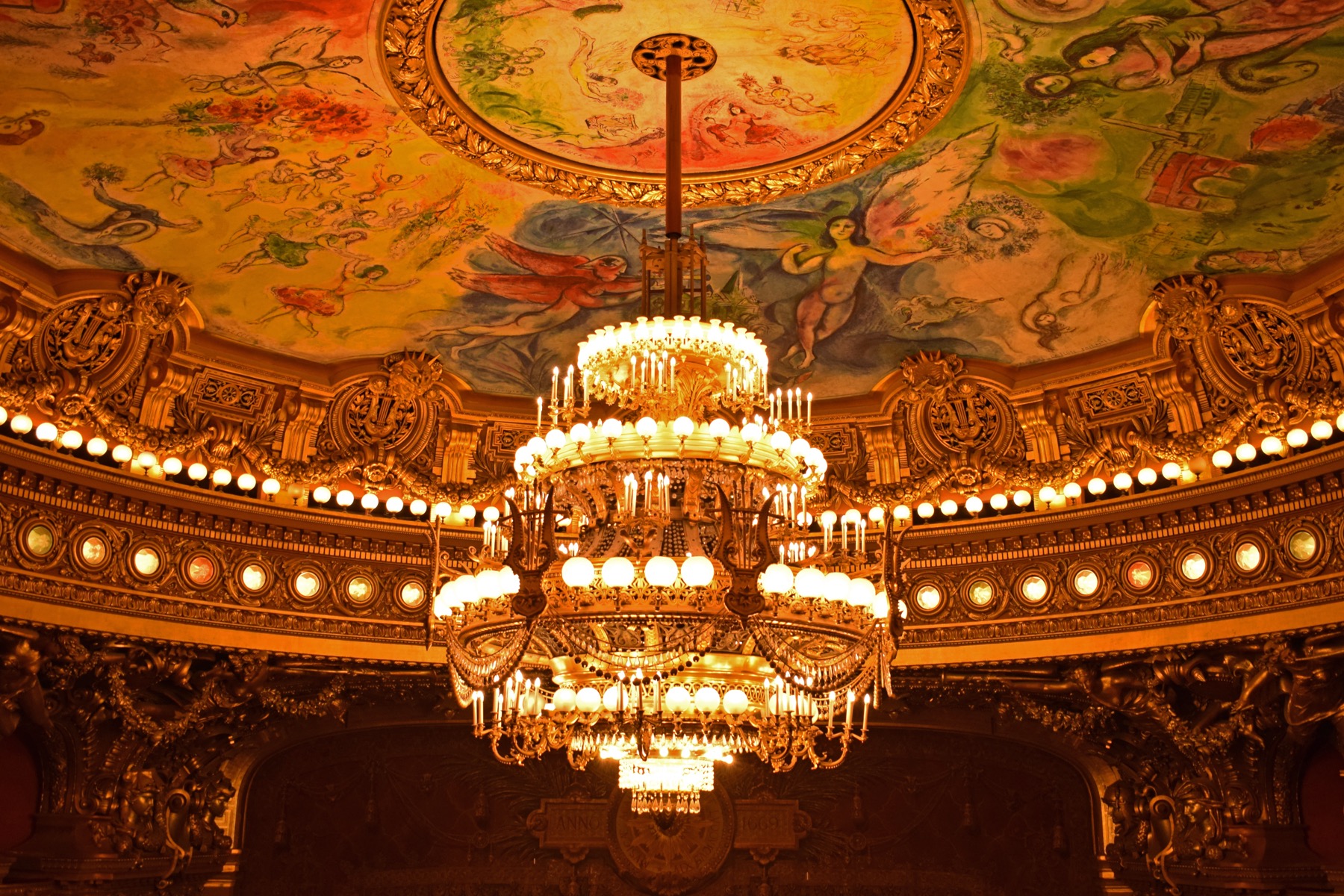
The Palais Garnier, Paris. 1,979 seats. 85% capacity year after year. 3x more new productions per season than the Met. Photo: Aymeric-pinel.1985 via Wikimedia Commons (CC BY-SA 4.0).The Met dominates Lincoln Center plaza. It is the largest opera house in the world — 3,800 seats. Photo: Chris06 via Wikimedia Commons (CC BY-SA 4.0).
The Metropolitan Opera is the largest opera house in the world — 3,800 seats. It should be the greatest. Under Peter Gelb, it is not even close.
Opera House
Productions
Performances
Capacity
Funding
Vienna Staatsoper
50-60
350+
~99%
50%+ state
Hungarian State Opera
56
300+
High
State-funded
Royal Opera House (London)
~20
~150
~90%
~30% state
La Scala (Milan)
~15
~200
High
41% state
Mariinsky Theatre
181
269
High
State-funded
Metropolitan Opera (Gelb)
17
~200
72%
0% state
The Vienna Staatsoper produces 50-60 operas in over 350 performances per year — at near-full capacity. The Hungarian State Opera will produce 56 operas next season. The Mariinsky under Gergiev presented 181 productions with 269 performances in a single season.
The Metropolitan Opera under Peter Gelb: 17 productions. The lowest in 60 years. At the largest opera house in the world.
Yes, the American model lacks state funding. Yes, the Met depends on private donations and ticket sales. But the Met's budget is $327 million — more than the Vienna Staatsoper, which produces three times as many operas. The money is there. The management is not.
Vienna: 50-60 operas, 350+ performances, near-full capacity. The Met under Gelb: 17 productions, 72% capacity, junk credit. The Met has more money. Vienna has better management.
Gelb "waived" his $1.45M salary. 990 timing questions remain.
•
The Met saved $41 million in wages in four months.
•
One-third of the orchestra left New York City.
•
Ten musicians retired (vs 2-3 in a normal year).
•
December 2020: Gelb locked out IATSE stagehands.
•
Gelb threatened to hire non-union labor from "around the world."
•
Gelb demanded 30% permanent pay cuts from musicians.
•
Musicians accused him of "using the pandemic opportunistically."
•
Workers rallied at Lincoln Center chanting "We are the Met."
•
Jonas Kaufmann left because of how Gelb treated the musicians.
The Silencing
In 2012, Opera News — the industry's leading publication, published by the Met Opera Guild since 1936 — ran a harsh review of the Met's Götterdämmerung and a damning column about Gelb's tenure.
Gelb's response: he banned Opera News from reviewing Met productions.
The outcry was immediate. By the end of the same day, Gelb reversed course: “I think I made a mistake.”
But the instinct was revealed. When criticized, Gelb's first impulse was to silence the critic.
He also personally pressured WQXR — New York's classical radio station — to delete a blog post by critic Olivia Giovetti that criticized the Lepage Ring cycle. WQXR, which receives Met sponsorship and broadcasts Saturday matinees, complied. The post was deleted.
In 2023, Gelb abolished both Opera News and the Metropolitan Opera Guild entirely. An 87-year-old publication — the bible of the opera world — killed.
He banned the critics. He pressured the radio station. He deleted the blog post. And when that wasn't enough, he killed the entire 87-year-old publication. Opera News is dead because it wrote something Peter Gelb didn't like.
The critics he could not kill still write. A sample of the journalists and outlets that have documented and criticized Gelb's tenure in the public record:
Anthony Tommasini
The New York Times (former chief classical critic)
Repeatedly critical of the Lepage Ring and Gelb's new-commissions strategy across two decades of reviews.
James Jorden
Parterre Box / The Observer
Has covered Gelb critically for more than 15 years. One of the most influential opera voices online.
Justin Davidson
New York Magazine / Vulture
Extensive coverage of Gelb-era programming and the Met's financial trajectory.
Heidi Waleson
The Wall Street Journal
The Met's productions and labor disputes covered throughout the Gelb era.
Zachary Woolfe
The New York Times (current classical music editor)
Has reviewed the Gelb-era Met continuously, including critical coverage of season decisions.
Joshua Barone
The New York Times
Labor disputes, the Netrebko arbitration, the Saudi deal — all covered.
Norman Lebrecht
Slippedisc
Breaking-news coverage of virtually every Gelb controversy since 2008.
Editorial Board
The Boston Globe
Published the Sept. 16, 2019 editorial calling for Gelb and the entire Met board to resign.
Moody's Ratings
Credit opinion and downgrade reports
Caa1 rating with negative outlook. Published language: "pronounced structural deficit," "unsustainable endowment draws."
He killed one publication. The critical record against him is distributed across a generation of journalists at America's most respected outlets. You cannot silence that.
The Saudi Gamble
In September 2025, Gelb announced a deal that was supposed to save the Met: $200 million over 8 years from the Kingdom of Saudi Arabia, in exchange for an annual winter residency at the Royal Diriyah Opera House in Riyadh.
The deal is now “in limbo.” Saudi Arabia is scaling back arts spending. The $200 million that Gelb built his financial plans around has not materialized.
The consequences were immediate: layoffs of 22 employees, salary cuts for top executives, postponement of a new production, and the consideration of selling the Chagall murals and naming rights.
Gelb bet the Met's financial future on a single deal with a foreign government. When the deal stalled, the Met had no backup plan. Because there was no backup plan. There was only Peter Gelb's next big idea.
The Fake Millionaire
In March 2025, Gelb proudly announced a $15 million gift from Matthew Christopher Pietras.
In May 2025, when the Met attempted to transfer $10 million, the bank flagged it as fraudulent.
Pietras was a con artist. The gift was fake. The Met had already dipped into its endowment based on the expected donation.
The General Manager of the most important opera house in America — a man paid $2.2 million per year to manage the institution — was deceived by a fake millionaire. The due diligence that should have preceded a $15 million announcement either did not happen or failed catastrophically.
Selling the Walls
Marc Chagall painted two monumental murals for the Metropolitan Opera in 1966: The Triumph of Music and The Sources of Music. They are among the most recognizable works of public art in New York City. Sotheby's has appraised them at $55 million.
Peter Gelb is considering selling them. The buyer would have to leave them in place. They would receive a plaque.
He is also considering selling the naming rights to the Metropolitan Opera House itself. The most iconic opera house in the Western hemisphere — a name that has meant something for 141 years — could become the “[Sponsor] Metropolitan Opera House.”
This is what 20 years of Peter Gelb looks like: selling the paintings off the walls and the name off the building.
He is selling the Chagall murals. He is selling the name of the building. After 20 years and $120 million in endowment raids, there is nothing left to cut. So he is selling the Met itself — piece by piece.
The Endowment Raid & the Junk Rating
The Met's endowment was approximately $340 million. Gelb withdrew $70 million in 2023-2024 and another $50 million in 2025. Total: $120 million — more than a third of the entire fund.
An endowment exists to sustain an institution in perpetuity. It is the financial bedrock — the guarantee that the Met will exist for the next generation. Gelb has spent a third of it to cover operating losses during his tenure.
In March 2026, Moody's cut the Met's credit rating to Caa1 — deep junk territory, one step above near-default.
Moody's Ratings · March 18, 2026
“Pronounced structural deficit.”
“Persistent and increasing deterioration in operating performance with large structural imbalances expected to endure over the next several years.”
“Likely to confront a substantial budgetary shortfall in fiscal 2026, potentially requiring further unsustainable endowment draws.”
Rating
B3 → Caa1
Outlook
Negative
Distance from investment grade
7 notches below
Total outstanding debt: $183 million. Endowment after raids: approximately $220 million. The Met owes nearly as much as it has saved. A single bad year could push it to the edge.
For context: Caa1 is the rating given to organizations in danger of default. It is the kind of rating associated with distressed companies, not with the most iconic cultural institution in America.
Met Opera Endowment
Before
$340M
→
After raids
~$220M
$120 million withdrawn to cover operating losses. 35% of the fund.
What $2.2 Million a Year Buys
Peter Gelb's total compensation in FY2024 was $2,237,377. Here is what that money could alternatively fund at the Metropolitan Opera:
→
22 section musicians at $100,000 each
A full wind section. Or half a string section.
→
11 young artists in the Lindemann program
The program Levine founded. The future of opera.
→
44 performances at $50,000 production cost each
Nearly three full additional productions per season.
→
2,237 discounted tickets at $1,000 subsidy each
Filling empty seats with audiences who can't afford $200 tickets.
→
37 annual scholarships at $60,000 each
Training the next generation of opera singers.
→
The entire salary of the Vienna Staatsoper intendant
Who manages 50-60 productions and 350+ performances at near-full capacity.
Over his 20-year tenure, Gelb has been paid approximately $35-40 million in total compensation. That is more than the $30 million Ann Ziff donated. It is a third of the endowment he raided. It is the cost of the Chagall murals he is considering selling.
He has been paid the price of the murals to preside over their sale.
For context — what Gelb's $2.2M salary looks like against his peers at comparable American performing arts institutions, all figures from IRS Form 990 filings (FY2024):
Peter Gelb earns 30% more than the next-highest-paid peer (the NY Phil's Deborah Borda), and runs the only institution on the list rated junk by Moody's. He earns nearly 3x what the CEO of the Cleveland Orchestra — a financially healthy institution with an intact endowment — takes home. Every other leader on this list runs an institution with investment-grade credit, a stable or growing endowment, and artists who are not currently suing them.
Of the seven major performing-arts CEOs on this list, Peter Gelb is the highest-paid, the only one running a deficit, the only one with junk-rated debt, the only one raiding the endowment, and the only one with a federal discrimination case against him going to trial.
Why He Survives
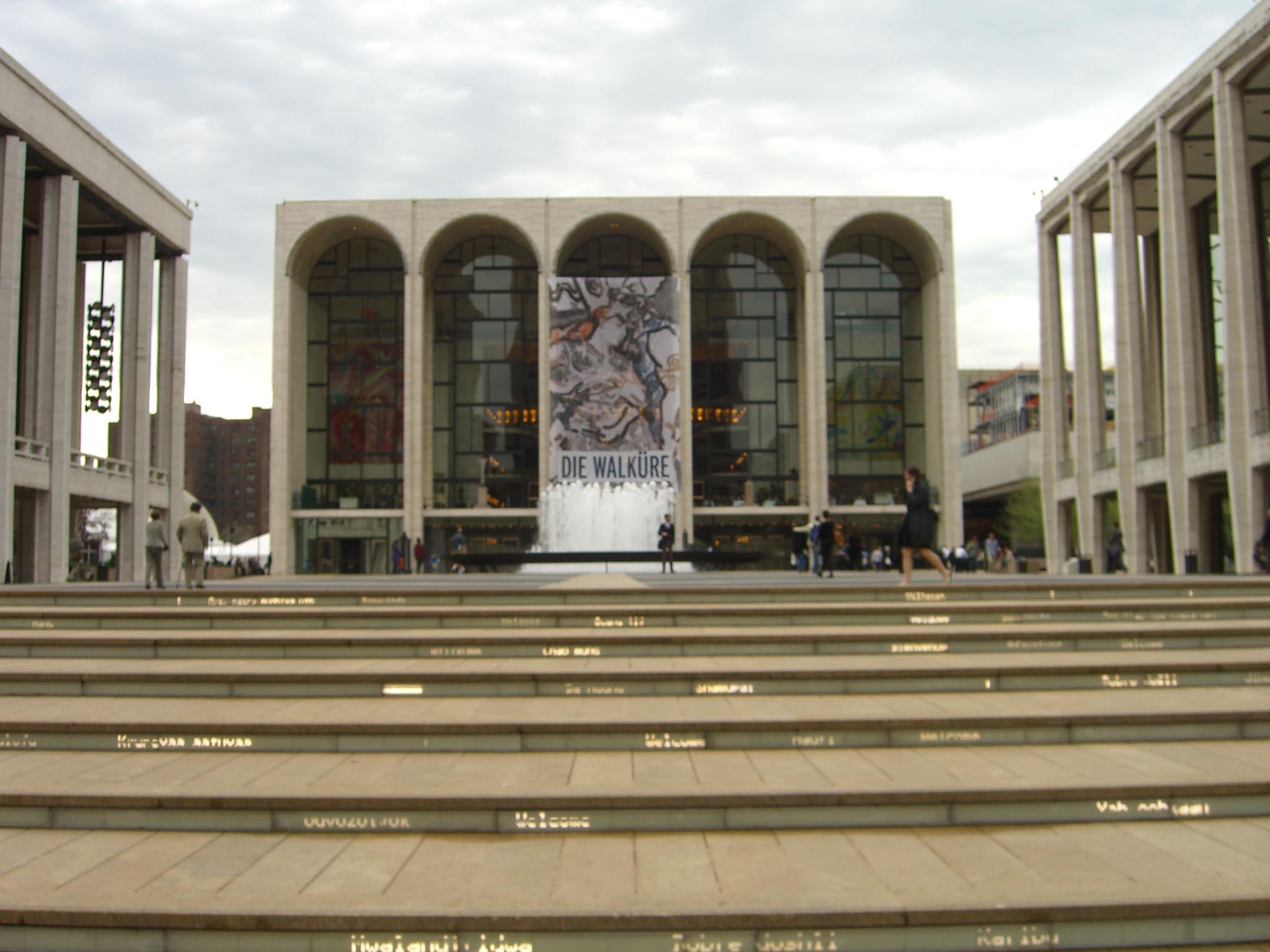
The Met's five arched windows face Lincoln Center plaza. Behind them: a board of trustees that has kept Peter Gelb in place through every deficit. Photo: Luigi Novi via Wikimedia Commons (CC BY 3.0).
On September 16, 2019, The Boston Globe published an editorial. Its headline:
The Boston Globe · Editorial · Sept. 16, 2019
“Peter Gelb, step down!”
“Why the Met Opera's general manager is unfit to lead.”
The editorial called for Gelb to resign. It called for board chair Ann Ziff to resign. It called for the entire board of trustees to resign.
That was seven years ago. He is still there. So is she. So are they.
The answer is Ann Ziff. The chairman of the Met's board has personally donated over $30 million to the institution. She has kept Gelb in place through every crisis, every deficit, every failure. The board's structure has been described as “sclerotic — unable to reach agreement on anything.”
Gelb's survival has been attributed not to his success but to “his own jungle skills and mostly his board's structure.” He survives because the board cannot fire him — not because the Met is thriving.
He has announced he will retire when his contract ends in 2030. Four more years. After 24 years total.
The Boston Globe called for his resignation in 2019. Moody's downgraded the Met to junk. The cinema audience halved. The endowment lost a third. The biggest soprano was fired. The biggest tenor walked away. An 87-year publication was killed. And he is still there — because the board cannot agree on how to remove him.
The Man He Replaced
Joseph Volpe ran the Metropolitan Opera from 1990 to 2006. He spent 42 years at the institution — starting from the bottom and rising through the ranks. He was the first head of the Met to advance from within.
Joseph Volpe (1990-2006)
New works: 22 Met premieres — more than any GM since 1935
Labor relations: No significant disputes for 20+ years — longest peace in Met history
Financial: Sound stewardship. Endowment intact.
Background: Rose from within the company over 42 years
Legacy: “Remarkable artistic success and exemplary labor relations”
Peter Gelb (2006-present)
New works: Multiple commissions — most underperformed at box office
Background: Record executive. No opera management experience.
Legacy: Selling the murals and the name of the building
Volpe kept labor peace for two decades. Gelb locked out the stagehands and left the musicians unpaid for 17 months. Volpe left the endowment intact. Gelb raided a third of it. Volpe premiered 22 new works and maintained the standard repertoire. Gelb commissioned new works that sold 50-62% of seats while cutting Puccini and Verdi.
Volpe came from within the Met. He understood it. Gelb came from the record industry. He understood marketing. The difference is visible in every number.
The Pricing Trap
Peter Gelb's answer to declining revenue was to raise prices. Ticket prices at the Met soared to $300, $400, $500 and more for decent seats. Premium orchestra seats reached as high as $2,317. The Met became a luxury product in a city where the median household income is $75,000.
The result was predictable. Long-time subscribers balked and refused to buy as many tickets. Working-class opera patrons — the people who had filled the cheap seats for generations — saw their ticket prices double or triple. They stopped coming.
Gelb's response to the empty seats: desperate discounting. Rush tickets at $25 including taxes and fees. The 2023-24 season realized only 64% of its full-price box office potential. The following season: 60%.
$2,317
Premium seat price
$25
Desperate rush ticket price
60%
Of box office potential realized
He priced out the middle class, then discounted to fill the seats they left behind. The revenue from a $25 rush ticket is a fraction of what the same seat would have generated from a subscriber paying face value. He traded loyal $150 subscribers for desperate $25 walk-ups — and still couldn't fill the house.
The pricing strategy tells the entire story of Gelb's Met in miniature: a bold idea ($500 premium seats for the wealthy), followed by the predictable consequence (the middle class leaves), followed by a panicked correction ($25 rush tickets), followed by the realization that none of it works (60% of potential revenue, 72% capacity, junk credit).
$2,317 for a premium seat. $25 for a rush ticket. 60% of box office potential realized. He priced out the audience that loved opera and tried to buy a replacement. The seats remained empty at any price.
The Subscriber Collapse
Met Opera subscription sales
2000
45%
→
2025
15%
Average subscriber age: 70 years old
Subscriptions are the bedrock of any performing arts organization. They represent committed, loyal audience members who buy in advance, provide predictable revenue, and return year after year. They are the foundation.
Under Gelb, the Met's subscription base collapsed from 45% of ticket sales to 15%. The average subscriber is now 70 years old. The loyal audience that sustained the Met for generations is dying — literally — and Gelb has not built a replacement.
His strategy was to attract younger, more diverse audiences with contemporary programming. The data shows it failed: Grounded at 50%, El Niño at 58%, the “anti-racist” initiative that alienated cultural traditionalists without attracting new audiences in sufficient numbers to fill the gap.
He lost the old audience. He did not win a new one. And the seats sit empty.
Subscriptions: 45% to 15%. Average age: 70. He alienated the loyal audience that sustained the Met for generations and failed to replace them. The seats are the evidence.
The Day of the Long Knives
In September 2017, Slippedisc reported that approximately 50 Met Opera staff members were fired in a single day. Most were non-union employees. Many had not received a pay raise in eight years.
The cuts were attributed to $20 million in savings needed after a fundraising shortfall. The staff learned their fate the same way most Gelb decisions arrive — suddenly, without consultation, and without alternatives.
Gelb himself acknowledged in 2016 that Met staff were “not realistically compensated.” He said this while earning approximately $2 million per year.
The pattern is consistent. When the Met faces a financial problem — and under Gelb, it always faces a financial problem — the solution is never to reduce his compensation, rethink his programming strategy, or question the productions that don't sell. The solution is to fire staff, cut musicians, raid the endowment, and sell the art.
“How I Saved the Met”
In November 2024, Peter Gelb published an editorial in The New York Times about his vision for making opera new again. Slippedisc's headline: “Peter Gelb: How I, I, I saved the Met.”
The editorial made no mention of the $47 million deficit. No mention of the junk credit rating. No mention of the endowment raids. No mention of the halved cinema audience. No mention of the 60-year season low. No mention of the artists who left or were fired. No mention of the fake millionaire. No mention of the Chagall murals being put up for sale.
Peter Gelb wrote about saving the Met while the Met was being sold for parts.
The Record Executive
Before the Met, Peter Gelb was president of Sony Classical Records. He was good at it. He expanded the label into film soundtracks — Crouching Tiger, Hidden Dragon, Titanic, The Red Violin — all Academy Award winners. He maintained Broadway cast recordings and a classical catalogue. He commissioned new music from a record label — something no other label had attempted.
Before Sony, he managed Vladimir Horowitz's comeback, including his historic return to Russia in 1986. He ran the BSO's 1979 China tour at age 26. He produced “The Metropolitan Opera Presents” telecasts for six years.
His background is impressive. It is also entirely in media, marketing, and recording — not in running a performing arts institution. He had never managed an opera house. He had never negotiated a union contract. He had never programmed a season. He had never run a building with 3,800 seats, a chorus, an orchestra, a ballet, and a backstage crew of hundreds.
Joseph Volpe spent 42 years inside the Met before becoming GM. He knew every hallway, every union steward, every stage door. Gelb arrived from the record industry with a vision for media innovation — HD broadcasts, digital distribution, cinematic marketing. The vision was brilliant. The execution of everything else was not.
He was a great record executive. He was hired to run the most complex performing arts institution in America. These are not the same job. Twenty years later, the record executive is still trying to market his way out of problems that require management.
The Cost of the Ban
Anna Netrebko once sold 114% of capacity for a Met recital. She was among the only opera singers on earth who could, by herself, fill the house and then some.
Gelb banned her. The Met now sells 72% of capacity and is considering selling the Chagall murals.
The financial cost of the Netrebko ban has never been calculated publicly, but the circumstantial evidence is obvious. The Met lost its single biggest box office draw at the exact moment it could least afford to lose anyone. The seasons since her departure have seen attendance decline, deficits grow, and the endowment collapse.
Netrebko and her management have stated publicly that she will return to the Metropolitan Opera only after the departure of Peter Gelb.
She sold 114% of capacity. He banned her. The house is now one-third empty. She will return when he leaves. The audience is waiting. He is not listening.
Twenty Years: A Timeline
2006
Gelb becomes GM. Launches HD Live. 88 sold-out performances. The future looks bright.
2007
HD Live expands globally. Cinema audience grows toward 400,000+ per broadcast.
2010
Lepage Ring cycle debuts. The 45-ton Machine costs $16-20M. It breaks. Critics are brutal.
2012
Bans Opera News from reviewing Met productions after negative coverage. Reverses same day: "I think I made a mistake." Pressures WQXR to delete critical blog post.
2013
Admits HD broadcasts may be "cannibalizing" live attendance. The innovation eats its creator.
2014
Attendance drops to 66% capacity. Labor tensions rise. Gelb demands concessions from unions.
2017
50 staff fired in a single day. Many had no raise in 8 years. Gelb earns ~$2M.
2018
Fires James Levine. Levine sues. Wins $3.5M settlement.
2019
Boston Globe editorial: "Peter Gelb, step down!" Contract extended anyway through 2027.
2020
COVID: all musicians furloughed at $0. Gelb "waives" salary. Saves $41M in wages. Locks out stagehands. Demands 30% permanent cuts.
Abolishes Opera News and the Met Opera Guild. An 87-year publication killed. Endowment raids begin: $70M withdrawn.
2024
Gelb compensation: $2,237,377. Met deficit: $47M. Grounded sells 50% of seats. Blames critics.
2025
Saudi deal announced ($200M). Fake millionaire exposed. Another $50M from endowment. Jonas Kaufmann announces he won't return.
2026
Moody's cuts to Caa1 (near-default). 17 productions — 60-year low. Layoffs. Chagall murals appraised at $55M. Naming rights being shopped. Announces retirement for 2030.
Read it from top to bottom. A career that started with 88 sold-out performances and ended with Moody's near-default ratings and paintings being sold off the walls. Every year, something failed. Every year, Gelb survived. Every year, the Met got smaller.
What Comes After
Peter Gelb will retire in 2030. No succession plan has been announced. No search committee has been formed. No candidates have been publicly discussed.
The next general manager will inherit:
•
An endowment depleted by $120M+ (and likely more by 2030)
•
A Caa1 credit rating — one step above default
•
$183M in outstanding debt
•
A subscriber base that has collapsed from 45% to 15%, with an average age of 70
•
A cinema audience that is half of what it was
•
A 3,800-seat house that routinely sits one-third empty
•
The smallest season in 60 years
•
An artist roster missing Netrebko, Kaufmann, Domingo, and Gergiev
•
An abolished Opera Guild and no industry publication
•
Chagall murals that may or may not still belong to the Met
•
Naming rights that may or may not have been sold
•
A Saudi deal that may or may not materialize
•
A workforce that was traumatized by 17 months of $0 pay and has not forgotten
That is the Met Opera in 2030. That is what Peter Gelb will hand over after 24 years and an estimated $40+ million in personal compensation.
The next general manager will not inherit an opera company. They will inherit a rescue operation.
He arrived to 88 sold-out performances. He will leave behind a junk-rated institution selling its murals, its name, and its future. The next general manager will not be hired to lead the Met. They will be hired to save what is left of it.
The Question
Why does everyone hate Peter Gelb?
Because the data is public. Because the 990s are searchable. Because the endowment withdrawals are documented. Because the Moody's downgrade is a matter of record. Because the arbitrator ruled against him. Because the gender discrimination case is proceeding to trial. Because Opera News is dead. Because Jonas Kaufmann told the world why he left. Because the Chagall murals are being appraised. Because the naming rights are being shopped. Because the Saudi deal is in limbo. Because a fake millionaire fooled the general manager of the Metropolitan Opera.
And because after all of it — after $120 million in endowment raids and a junk credit rating and a 60-year season low and the biggest soprano fired and the biggest tenor walking away and an 87-year publication killed — he published a New York Times editorial about how he saved the Met.
They don't hate him because he failed. They hate him because he failed for 20 years, was paid $2.2 million a year to do it, and then wrote an editorial about his own greatness.
Peter Gelb will retire in 2030. The question is not whether he should go. The question is whether there will be a Metropolitan Opera left to hand over.
The endowment has lost a third. The credit is junk. The season is at a 60-year low. The murals are for sale. The name is for sale. The biggest artists are gone. The cinema audience is halved. The Saudi deal is stalled. The fake millionaire got in the door.
Four more years. $2.2 million a year. And the clock is ticking on what is left.
The Verdict
Peter Gelb should be fired in disgrace.
Not because we say so. Because he does.
Every piece of evidence against Peter Gelb comes from his own hand — his own signature, his own camera-ready quotes, his own 990 filings, his own op-eds, his own ban lists, his own fraudulent donor, his own 45-ton Machine that broke during Götterdämmerung, his own Saudi partnership that did not arrive, his own 17 months of $0 pay for the musicians who built the only thing anyone still loves about the Met.
The case against him does not need to be made. He has been making it for twenty years.
He fought:
The arbitration to avoid paying Anna Netrebko — through every stage, to the end.
He lost. Arbitrator Howard Edelman ordered the Met to pay Netrebko $209,103. A federal gender-discrimination case is now proceeding to trial in the Southern District of New York.
He wrote:
A New York Times editorial titled, in effect, “How I Saved the Met.”
Moody’s downgraded the Met’s debt to Caa1 — seven notches below investment grade. The endowment has lost a third. The cinema audience has halved. The 2026–27 season has collapsed to 17 productions, the smallest in 60 years.
He defended the Saudi deal:
“All the democratic governments that I know of are engaged in business with Saudi Arabia.”
The Saudi money has not arrived. The Met cut the 2026–27 season as a direct result. The moral framework, apparently, depends on which autocracy is writing the check.
He announced:
A $15 million gift from a donor he had personally elevated to a Managing Director seat on the Met’s board over seven years.
The donor, Matthew Christopher Pietras, turned out to be a fraud. The gift was never real. Pietras was found dead of suicide in May 2025. The Met has still not publicly explained its due diligence failure.
He decided:
To kill Opera News — an 87-year-old publication — because it wrote something he did not like.
It is dead. He is still there.
He fired:
James Levine, the Music Director of 40 years, in March 2018.
The Met paid Levine $3.5 million to settle the lawsuit and walk away. It paid Anna Netrebko $0 until an arbitrator forced its hand. It paid the Met Orchestra $0 for 17 months during COVID. His settlements are not about justice. They are about who can sue him and win.
He commissioned:
The Lepage Ring Cycle — a 45-ton mechanical set that broke during performances in front of paying audiences.
The most expensive failure in Met history: $16 to $20 million. He has never apologized. He blamed the critics.
He banned:
Anna Netrebko in days. Hibla Gerzmava — who had been photographed celebrating Putin’s birthday and endorsed Putin’s invasion of Crimea — in two months.
A federal gender-discrimination case argues the Met treated male artists with deeper Putin ties more favorably than it treated Netrebko. A judge has allowed the claim to proceed to trial.
He furloughed:
The Met Orchestra, chorus, and stagehands with $0 pay for 17 consecutive months during COVID.
Jonas Kaufmann — the greatest tenor alive — watched it happen and decided he would not return. He said so publicly: “They didn’t get paid at all. Musicians had to move out of New York or move in with their parents.”
He earned:
$2,237,377 in the fiscal year ending July 2024.
In the same period, the Met ran a $47 million operating deficit, drew another $5 million from its shrinking endowment, and announced the smallest season of his 20-year tenure.
James Levine spent 40 years building the Metropolitan Opera's artistic reputation. Peter Gelb has spent 20 years doing the opposite. The Met inherited the greatest opera orchestra in the world, an endowment intact, a subscriber base at 45%, a 400,000-strong HD cinema audience, and an 87-year publication. Gelb leaves — or will leave, in 2030 — a junk-rated institution selling its murals, shopping its naming rights, missing its biggest stars, operating the smallest season in 60 years, with one-third of its seats empty.
Anyone can see this. Everyone can. The board cannot.
That is the final indictment. Not that Peter Gelb failed — institutions fail. But that the institution he runs cannot recognize failure when failure stares back at it from a Moody's report, a 990 filing, a half-empty auditorium, an arbitrator's ruling, and an 87-year publication he killed.
He should be fired. In disgrace. For what he did. What he said. What he signed. What he wrote. What he cancelled. What he raided. What he broke. What he bought. What he hid. What he sold.
The evidence does not require us. It is in his own hand.
James Levine was credited with saving the Met. Peter Gelb has spent two decades doing the opposite — and documented every step of it himself.
The Record
Peter Gelb's salary (FY2024)
$2,237,377
Met Opera operating deficit
−$47M
Endowment raided
$120M
35% of the fund. Gone.
Sources: IRS Form 990 (EIN 13-1624087), Moody's Investors Service, OperaWire, Slippedisc, City Journal, VAN Magazine, The Boston Globe, The Art Newspaper, Artnet News
cadenza.work
Disclosure: All compensation figures from IRS Form 990 filings via ProPublica Nonprofit Explorer (Metropolitan Opera EIN 13-1624087). Financial data from Moody's Investors Service, OperaWire, and published reporting. Attendance and box office data from OperaWire, Slippedisc, and City Journal. The Netrebko arbitration ruling is public record. The gender discrimination case is documented in federal court filings (SDNY). The Boston Globe editorial is publicly available. The Saudi Arabia deal details are from published reporting by the New York Times, Artnet News, and OperaWire. Peter Gelb has served as General Manager of the Metropolitan Opera since 2006 and has announced his retirement for 2030. This article documents the public record of his tenure.
Comments
Sign in to join the discussion.