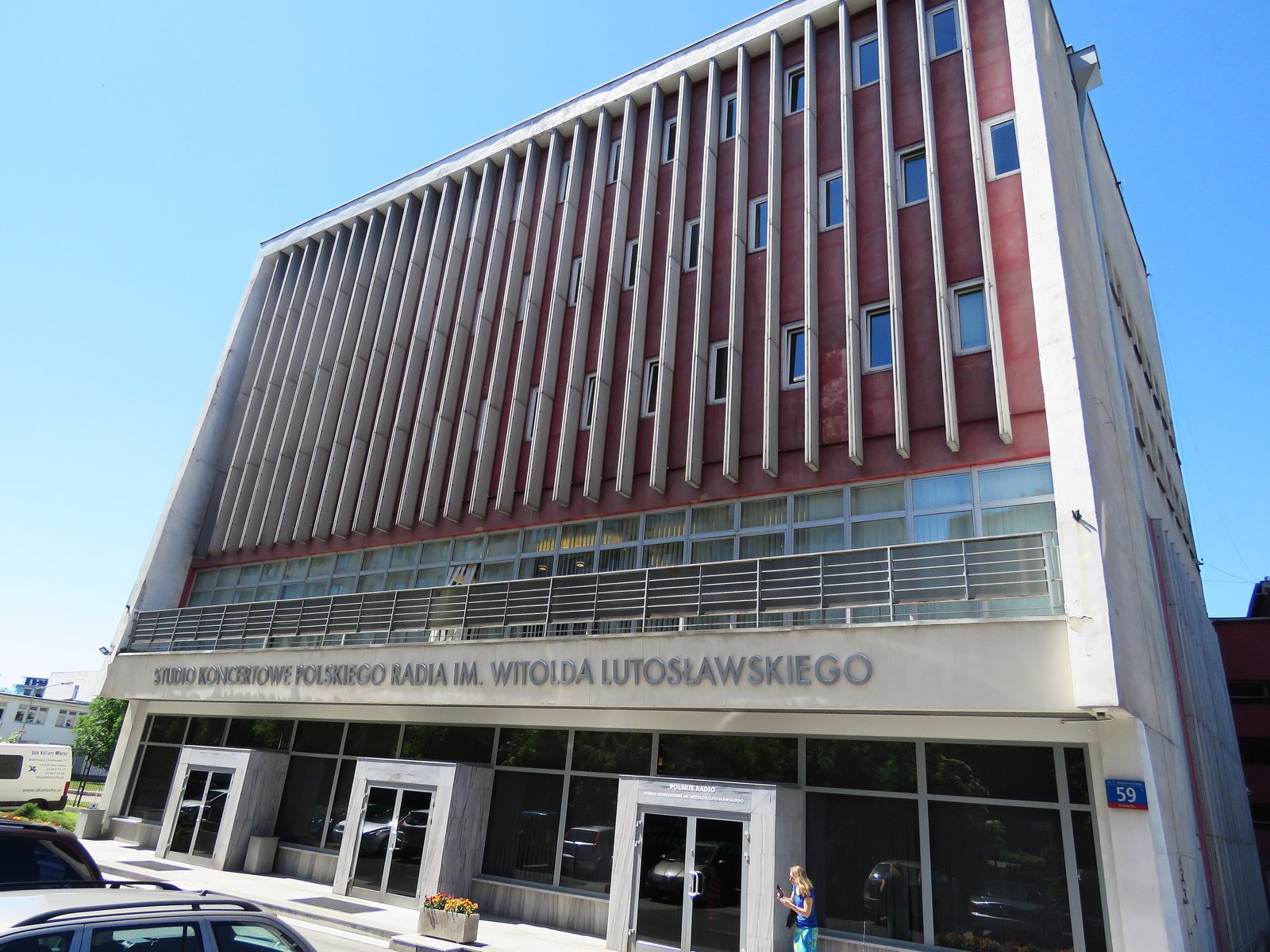
On Saturday evening, in the Witold Lutosławski Concert Studio in Warsaw, a conductor who arrived in Poland from Beirut in 2003 to study choral conducting opened his first season in charge of the country's radio orchestra. The programme was called Weź głęboki oddech, take a deep breath. It ran from Agata Zubel to the Dvořák Cello Concerto to Sibelius's Seventh, and Polish Radio broadcast it on Programme 2.
The concert is not the story. The story is one sentence in one Warsaw magazine, and it is a sentence Cadenza has not found in any other appointment announcement this season.
The Warsaw magazine Orfeo, reporting the appointment on 3 September, wrote: "Roczny okres przejściowy zakończyła nominacja polsko-libańskiego artysty, którego kandydaturę poparli wszyscy muzycy zespołu." A one-year transitional period was ended by the nomination of the Polish-Lebanese artist, whose candidacy was backed by all the musicians of the ensemble.
Every player. That is worth reading twice, because when Cadenza went back through the appointments it has recorded this season, it could not find another one that said it. It is also worth saying plainly what this rests on: one sentence, in one magazine. Polish Radio's own announcement of the season does not mention how the decision was made, and no other Polish outlet has repeated Orfeo's line. Nothing contradicts it; nothing yet corroborates it.
The document
What the orchestra and the Polish press have published about the appointment:
| Post | Artistic director of the Polish Radio Orchestra in Warsaw; The Violin Channel's report gives the title as Artistic Director and Principal Conductor |
| In post from | 1 September 2026 |
| Predecessor | Michał Klauza, who led the orchestra from 2015 to 2025 and has been artistic director of the Kraków Philharmonic since September 2025 |
| Interregnum | A one-year transitional period, ended by this nomination |
| How it was decided | "kandydaturę poparli wszyscy muzycy zespołu", his candidacy was backed by all the musicians of the ensemble (Orfeo, 3 September 2026) |
| First concert | Saturday 5 September 2026, 7 p.m., Witold Lutosławski Concert Studio |
| Programme | Agata Zubel, In the Shade of an Unshed Tear; Dvořák, Cello Concerto in B minor, op. 104; Sibelius, Symphony No. 7 in C major, op. 105 |
| Soloist | Ivan Karizna, cello |
| Broadcast | Polish Radio Programme 2 |
| Next | Works by Zygmunt Krauze and Elżbieta Sikora, and recording sessions; Akiki says he will write new music for the orchestra |
The orchestra he takes over has a long institutional history. Polish Radio dates it to 1934, when Grzegorz Fitelberg built a band to fill the broadcast day with music, on the model of other European stations. Stefan Rachoń reactivated it in 1945 and ran it for three decades. It moved into the Lutosławski studio in 1990, spent close to three decades under the name Polska Orkiestra Radiowa, adopted in 1990, and on 29 May 2019 took its historic name back. It is currently, in the broadcaster's own words, "jedynym zespołem artystycznym w strukturze narodowego nadawcy radiowego", the only artistic ensemble inside the structure of the national radio broadcaster. That structure is itself being wound up: Polskie Radio S.A. now appends "w likwidacji", in liquidation, to its own name. Polish Radio's own history of the orchestra names eight who have led it since the war: Rachoń, Kamirski, Pruszak, Nowakowski, Strugała, Rajski, Borowicz, Klauza. Counting from the 1945 reactivation rather than from Fitelberg's pre-war orchestra, Akiki is the ninth.
Who he is
Akiki is 43, by Slipped Disc's count. He began at the Lebanese National Higher Conservatory of Music in Beirut, came to Poland in 2003, and studied choral conducting at the academy in Kraków and symphonic and operatic conducting at the academy in Wrocław. He made his conducting debut at 24 with La traviata at Opera Wrocławska and stayed there as resident conductor until 2013. He was artistic director of the Silesian Opera in Bytom from 2018 to 2019 and music director of Opera Wrocławska from 2020 to 2022. He teaches symphonic and operatic conducting at the Karol Lipiński Academy in Wrocław, and his doctorate, taken at the Chopin University in Warsaw, was on Péter Eötvös's Angels in America.
The international part of the biography is contemporary opera. He conducted the world premiere of Alexander Raskatov's Animal Farm at Dutch National Opera in 2023, a production that took the OPER! Award for world premiere of the year, and he works regularly at La Monnaie in Brussels, where his premieres include Mark Grey's Frankenstein and Philippe Boesmans's last opera, On purge bébé. In October he prepares Shostakovich's Moscow, Cheryomushki in Amsterdam. In June he had already conducted this orchestra, with Lang Lang, at the Centralny Plac Muzyki festival.
On why he opened with the Dvořák, he told The Violin Channel: "I heard the Dvořák Cello Concerto at a young age in Lebanon and it was then that it dawned on me that I would love to become a conductor. Now, in Warsaw, at the helm of one of Poland's leading orchestras, I wanted to go back to my roots, as it were, and present to the audience a piece that was a part of my musical path."
On Poland, he told Slipped Disc: "In Poland, I was 'born' as a conductor, receiving my musical education here. I have lived here longer than I did in Lebanon, I am a Polish citizen, and I am at home."
The second half is ours
Cadenza's two September ledgers record who took which podium this season, the first and the second. Eleven conductors across six countries, chief conductorships and residencies and general directorships. Read those announcements again and a pattern shows up that none of them draws attention to: most of them do not say who decided.
Here is what the announcements do say, in the four ledger cases that say anything at all, set beside Warsaw.
| Post | Who | What the announcement says about the decision |
|---|---|---|
| Polish Radio Orchestra, Warsaw | Bassem Akiki, from 1 September 2026 | His candidacy was backed by all the orchestra's musicians (Orfeo) |
| Calgary Philharmonic, resident conductor | Ilan Kumaranayake Mendel, from 2026/27 | Selected after "a rigorous audition and interview process with applicants from across Canada" |
| Manitoba Opera, artistic director | Gordon Gerrard, five years from 1 September 2026 | A year-long search run for the board by a Winnipeg executive-search firm |
| Finnish National Opera, principal conductor | Dima Slobodeniouk, from 1 August 2026 | Appointed by the company's board |
| Bayerische Staatsoper, Generalmusikdirektor | Petr Popelka, from 2029/30 | Announced by Bavaria's arts minister, Markus Blume, at a press conference in Munich |
Four boards, ministries and search firms. One orchestra whose players said yes.
That is not a scandal. Boards hire chief conductors nearly everywhere, they are legally responsible for the money, and a search firm exists because most boards have never done this before and will not do it again for a decade. But it is worth naming the exception, because two of the most famous orchestras in Europe are exceptions, and they are not shy about it.
The Berlin Philharmonic elects its own chief conductor. Its members vote by secret ballot and, as AFP reported when they met in 2015, the exact number of votes cast for each candidate is kept secret. In May 2015 a first secret election broke up after more than eleven hours without a result; on 22 June the orchestra announced that its musicians had elected Kirill Petrenko.
The Vienna Philharmonic has no chief conductor at all. Its own history dates that to 1933, when it discontinued the resident conductor system, and says the orchestra has since continued "the policy it began in 1933 of working with every conductor of repute". Its foremost ruling body is the general assembly of its members, where, as the orchestra puts it, "any and every issue may be brought up and voted upon", and where all decisions but a change to the statutes need only a simple majority, though the orchestra adds that numerous decisions are delegated to a twelve-member elected committee. Of the form its founders chose in 1842, it says flatly: "The organizational form chosen for this new enterprise was democracy."
Warsaw has not published a ballot and Cadenza is not going to invent one. What Orfeo reports is backing, not a constitutional vote, and the distinction matters. But the direction is the same, and it is the direction the loudest labour dispute of the American season has just moved in.
What it cost Boston to get the same sentence
On 25 August the Boston Symphony Orchestra and its musicians ratified a three-year contract, three days after the players had voted unanimously to authorise the first strike in the orchestra's 145-year history. Cadenza has followed that dispute all year, from the board's decision on Andris Nelsons to the finances underneath it.
Read what the players got. Todd Seeber, chair of the BSO Players Committee, said the agreement "guarantees the musicians a critically enhanced role in the engagement of titled conductors, including the music director". The orchestra's chief executive, Chad Smith, said the deal "deepens our collaboration with the musicians and strengthens their role in the artistic planning process". David Rufino, president of the Boston Musicians' Association, said the agreement "guarantees the musicians a meaningful role engaging collaborators and planning repertoire that ensures artistic excellence".
Boston's musicians spent five months, a public fight and a unanimous strike authorisation to win a written role in choosing the conductors who will stand in front of them. It is a real gain, and the joint statement says it establishes "a truly collaborative process in the search for our next music director". It is also, in substance, the thing a Warsaw orchestra appears to have exercised without a contract clause, and the thing Berlin's players do by secret ballot.
The arithmetic is simple enough to state in a line. Of the eleven conductors named in those two ledgers, four came with any public account of how the decision was reached, a board, a state ministry, a search firm, an audition panel, and not one of those four accounts mentions the people who will have to play under the person appointed. Warsaw, which is not in either ledger, is the only appointment Cadenza has seen this season that does.
What to listen to
The season opened on 5 September and Polish Radio broadcast it on Programme 2; the orchestra's concerts are carried by the national broadcaster, which is the point of having an orchestra inside a radio station. The programmes to watch for are the Krauze and the Sikora, and the recording sessions, because a radio orchestra's lasting output is the archive it leaves behind. Akiki has said he intends to write for the ensemble himself.
Every one of the appointments above began as a search, and every chair in those orchestras began as a notice. Cadenza carries the current orchestral vacancies and auditions, free to musicians, on its jobs board.
Klauza got ten years in Warsaw. Rachoń got thirty. The question the orchestra has set for everyone else is narrower than tenure and harder to dodge: if the musicians of a national radio orchestra can back a candidate to a man, and an outlet can report it as the reason the job was filled, what exactly is the argument for not asking the players anywhere else?
Sources: Orfeo, 3 September 2026; The Violin Channel, 4 September 2026; Slipped Disc, 3 September 2026; Polskie Radio, 1 September 2026; Polskie Radio, the orchestra's history; Wirtualna Polska, 2 September 2026; Polskie Radio, the 2019 return to the historic name, 29 May 2019; GBH, 25 August 2026; WBUR, 25 August 2026; Vienna Philharmonic, Tradition and The Early 20th Century; The Local, 12 May 2015, on the Berlin ballot; Calgary Philharmonic, resident conductor announcement; Bavarian state portal, on the Munich appointment.
Cover photograph: The Witold Lutosławski Concert Studio of Polish Radio in Warsaw, the orchestra's home since 1990. Andrzej Błaszczak, CC BY-SA 4.0, via Wikimedia Commons.
Comments
Sign in to join the discussion.