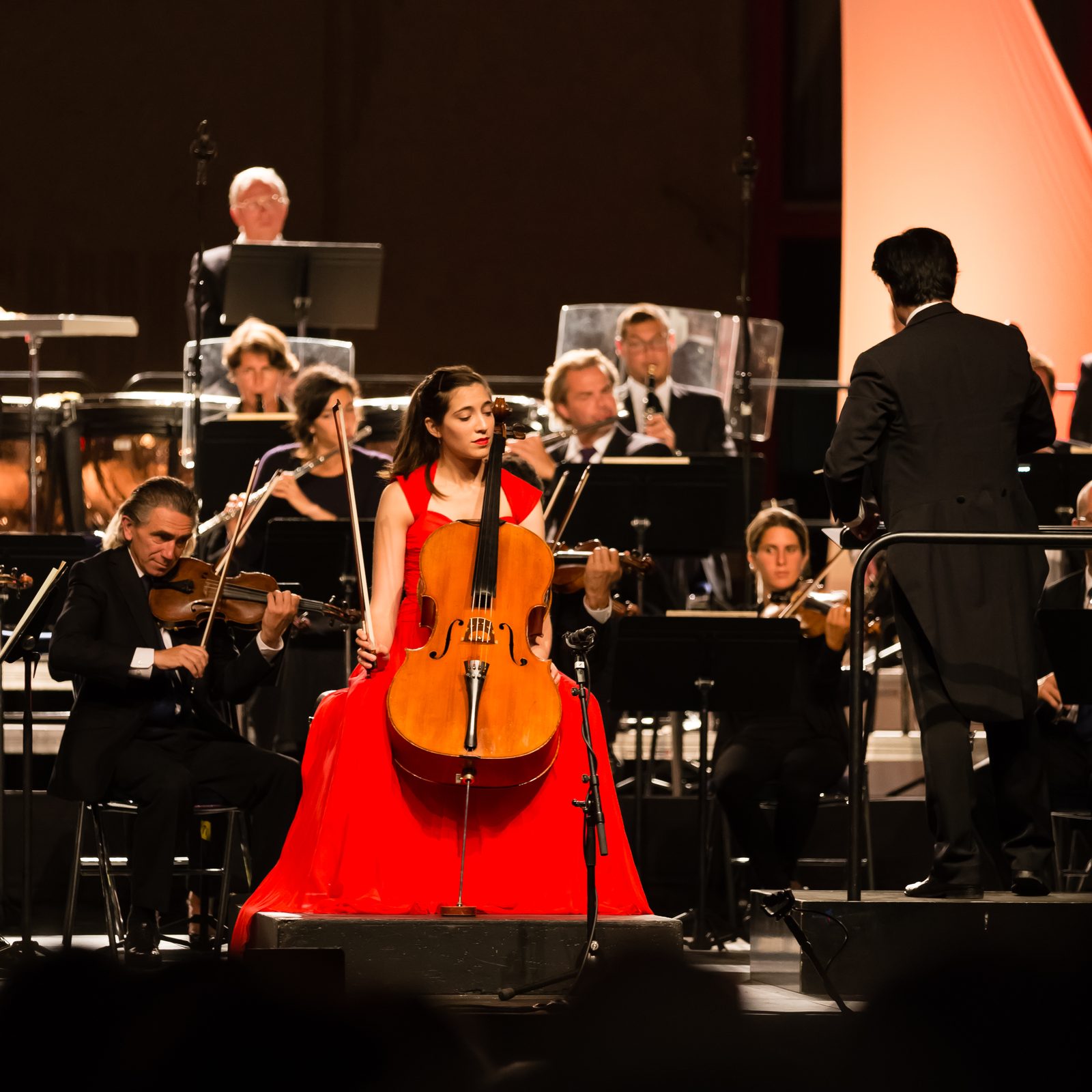
The Franco-Belgian cellist Camille Thomas released her new album for Deutsche Grammophon, Philip Glass: For Cello, on Friday 18 September. She recorded it with the Brussels Philharmonic under Oscar Jockel. It runs to 21 tracks and 1 hour 42 minutes, on two CDs, a single LP, download and streaming, with a Dolby Atmos version as well.
The label's own description says the album "was born out of a personal invitation from the composer himself." Thomas tells the story more precisely than that, and the precise version is better.
A message on Twitter
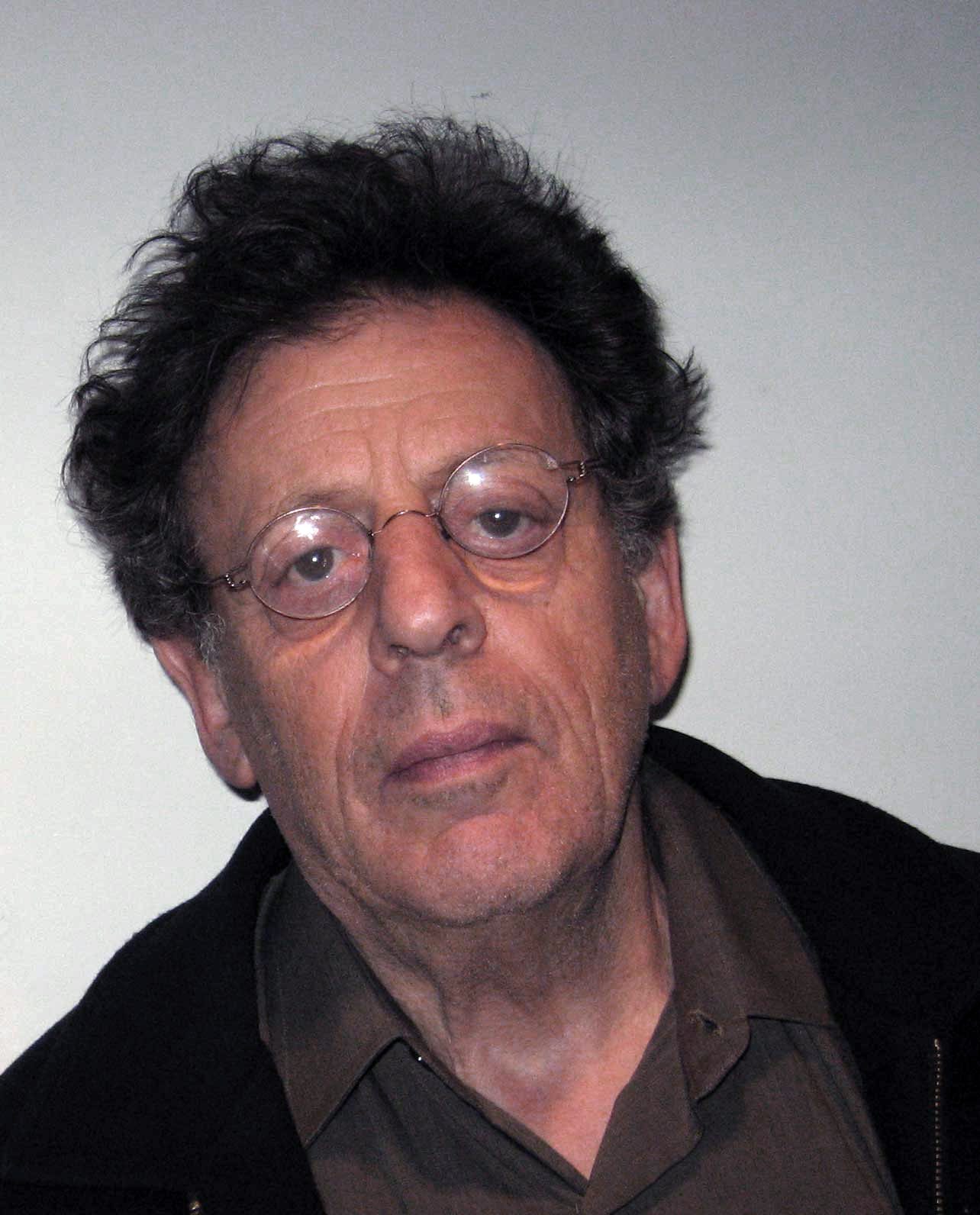
"I woke up to a message on Twitter from Glass himself, saying he really liked listening to the pieces and asking if I knew about his cello concertos," Thomas told Paul Sullivan of grains in July. "I couldn't quite believe it! I honestly thought at first that it might be fake."
It was not. On release day she told the Belgian public broadcaster RTBF that she woke one morning to a notification reading "Philip Glass, vous avez un nouveau message": Philip Glass, you have a new message. In the label's press release she sets out what he said. "He told me that he had listened to my recordings of his works, especially Tissues, that he had greatly enjoyed them, and suggested sending me the scores of his two cello concertos."
That is the invitation. He offered her the scores. In none of her accounts does he ask for an album. The album, she says in the same release, was her own idea: "it was upon discovering them that the desire for this album was born."
She did not know the concertos. "Je ne les connaissais pas," she told RTBF. She listened straight away and felt "une espèce d'urgence de les enregistrer, de les faire connaître, parce que même des violoncellistes ils sont inconnus": a kind of urgency to record them and make them known, because even among cellists they are unknown. She met Glass's manager a little later, in Boston, she told grains.
She gives no date for the message, only "a year or so" after her 2020 album Voice of Hope. She remembers adding two pieces from Glass's Naqoyqatsi to that album at the last minute. In the catalogue they appear as two short DG singles with the pianist Julien Brocal: Tissue No. 7, released on 16 April 2021, and Tissue No. 6, on 24 September 2021. From the first of those singles to this album is 1,981 days, about five years and five months.
By the label's count this is her fifth album for DG since she signed in 2017, when, the label says, she became the first female cellist in its history to be given an exclusive recording contract.
What is on it
| Work | Arrangement, as credited | Length |
|---|---|---|
| The Poet Acts, from The Hours | 4:18 | |
| Étude No. 16 | cello and eight cellos, by Jockel | 4:51 |
| Naqoyqatsi, eleven cues | 41:02 | |
| Truman Sleeps, from The Truman Show | cello and piano, by Jockel, who plays the piano | 2:14 |
| Étude No. 6 | cello and orchestra, by Jockel | 3:02 |
| Étude No. 5 | seven cellos, by Thomas and Lumai Francisco | 3:52 |
| Étude No. 2 | cello and eight cellos, by Jockel | 5:57 |
| Symphony for Eight | 9:01 | |
| Cello Concerto No. 1, three movements | 28:34 | |
| Total | 1:42:55 |
Lengths are as the album lists them, cut to the whole second; totals are summed from the exact durations, so a column can add up a few seconds short.
The two concerto bodies of music, the First Concerto and the eleven Naqoyqatsi cues, take 69 minutes 36 seconds of the 102 minutes 55 seconds, about two-thirds of the set. "I wanted to pay them a big tribute because they are not so well known, not even by myself as a professional cellist," Thomas told grains.
It is not every note Glass wrote for the cello. His publisher lists Songs and Poems for Solo Cello, seven movements and 27 minutes, dedicated to the cellist Wendy Sutter and first heard in New York in 2007, and there is a Double Concerto for Violin and Cello. Neither is here. This is a portrait built around the two concertos, not a complete edition.
The First Concerto, twenty-five years on
Cello Concerto No. 1 was commissioned by William and Rebecca Krueger for Julian Lloyd Webber's fiftieth birthday. Lloyd Webber gave the premiere on 21 October 2001 at the Beijing Music Festival, with the China Philharmonic under Yu Long. Glass's publisher lists it at 30 minutes; Thomas takes 28 minutes 34 seconds.
From the Beijing premiere to this release is 9,098 days, a month short of twenty-five years. In the label's release Thomas describes the solo part as a cello that "appears like a lion's roar" before "transforming into a song of absolute lyricism."
The Second, taken apart and put back together
Naqoyqatsi is the third of Godfrey Reggio's films with Glass, after Koyaanisqatsi and Powaqqatsi, and was released in 2002. The American public-radio service YourClassical glosses the Hopi title as "life as war". Thomas told RTBF that the films describe human violence against the earth and against humanity, "et surtout l'impact grandissant de la technologie": and above all the growing impact of technology.
The soundtrack album on Sony, with Yo-Yo Ma and the Philip Glass Ensemble, has eleven tracks and runs 77 minutes. Glass's publisher lists the film score at 1 hour 18 minutes and marks it unavailable for performance.
A decade after the film, the Cincinnati Symphony commissioned a concert work from it. Cello Concerto No. 2, Naqoyqatsi, had its premiere on 30 March 2012, with Matt Haimovitz as soloist and Dennis Russell Davies conducting. The Orange Mountain Music recording, made at Cincinnati Music Hall on 30 and 31 March 2012, has seven sections. Four of the film's eleven cues were left out: Primacy of Number, Religion, Media Weather and Definition.
Thomas wanted them back. "I asked Glass and his management if I could play all 11; they showed a great deal of trust by saying yes," she told grains. To RTBF she described asking him whether she could make another version that kept all the movements, "toute cette variété, toute cette force", all that variety, all that force. Then, RTBF reports, she shortened the movements "pour qu'ils puissent ressembler à un concerto pour violoncelle", so that they could resemble a cello concerto. "C'est concerto n°2 version Camille." Concerto No. 2, Camille's version.
DG's store copy calls it "a newly reimagined version of Naqoyqatsi". In the label's release she calls it "a personal interpretation, a '2.0' version, intended to reveal its full richness." It is her version, not the seven-section score that Haimovitz premiered.
Here are the three recordings side by side, in Thomas's order.
| Cue | Soundtrack, 2002 | Concerto, Haimovitz | Thomas |
|---|---|---|---|
| Naqoyqatsi | 7:55 | 4:53 | 4:27 |
| Massman | 9:48 | 6:52 | 4:11 |
| Primacy of Number | 6:52 | not included | 4:07 |
| New World | 3:04 | 3:48 | 3:29 |
| Religion | 9:01 | not included | 4:08 |
| Media Weather | 7:54 | not included | 3:53 |
| Intensive Time | 8:08 | 5:36 | 4:03 |
| Old World | 3:08 | 3:36 | 2:44 |
| Point Blank | 11:17 | 7:12 | 4:00 |
| The Vivid Unknown | 7:08 | 7:33 | 3:25 |
| Definition | 2:49 | not included | 2:31 |
| Total | 77:10 | 39:33 | 41:02 |
As above, each length is cut to the second and each total is summed from the exact durations.
Set out like that, the arithmetic is striking. Thomas plays all eleven cues in 41 minutes 2 seconds, 89 seconds longer than Haimovitz takes over seven. The four cues she restores run 14 minutes 40 seconds between them, and she found the room by cutting everywhere else: every one of the seven sections the concerto keeps is shorter in her version. Point Blank, 11 minutes 17 seconds on the soundtrack and 7 minutes 12 seconds in the concerto, lasts four minutes here.
Her average cue is 3 minutes 44 seconds, against 5 minutes 39 seconds per section in the concerto and 7 minutes 1 second per track on the soundtrack. She has fitted the whole film score into the length of the concerto, at about 53 per cent of the soundtrack's running time.
Her sequence is not quite the soundtrack's. Massman comes before Primacy of Number, and Intensive Time comes before Old World, as it does in Glass's concerto.
"Yes, always yes"
Around the concertos Thomas put four of Glass's piano Études, arranged for cello ensemble, or for solo cello with cellos or orchestra. She told ClassiqueNews that whenever she asked Glass whether she could transcribe a piece for the cello, his answer was "Yes, always yes", and that he looked at each transcription and approved it.
Getting them recorded was harder. She told the same interviewer there were three sessions in all, and that there was not enough time to record the Études with the Brussels players after the concertos. So she asked her professor at Weimar, Wolfgang Emanuel Schmidt, for help, and recorded the ensemble Études in two days in Berlin with him and students from his cello class. For Étude No. 2 she credits Jockel with the idea of dividing the piano's notes among the cellos, each holding its note, so that they layer up the way the piano's sustaining pedal does.
The last day of the sessions was in Berlin, in April. Glass's agent told her Glass would be in Paris that evening for his opera Satyagraha at the Palais Garnier. "J'ai pris l'avion pour le rejoindre dans sa loge." She took a plane to join him in his box. The production, which brought Satyagraha into the Paris Opera's repertoire, ran at the Garnier from 10 April to 3 May 2026, conducted by Ingo Metzmacher and directed and choreographed by Bobbi Jene Smith and Or Schraiber.
Truman Sleeps comes from The Truman Show, in which, the label notes, Glass himself appears playing the score at the piano; here Jockel plays it. The cover is Jean-Michel Othoniel's La Vague, a wave sculpture made of glass bricks.
What the critics have said so far
Cadenza found one independent review by 22 September. Lucas Irom of ClassiqueNews gave the album the site's CLIC for autumn 2026 on release day. On Étude No. 2 for cello and eight cellos he wrote: "C'est certainement la pièce la plus enivrante du programme." It is certainly the most intoxicating piece on the programme. He ends his account of the first disc, just after Truman Sleeps, with one word: "Magistral." Masterly. He called the album already a fitting and timely celebration of the ninetieth birthday.
The grains interview also calls it "a masterly and important recording". Grains is operated by Universal Music GmbH, the Berlin company that also sells DG's records, and DG's website lists it among its own sites, so that is the label's house magazine talking, not a critic.
The birthday, and the calendar
Glass was born in 1937 and grew up in Baltimore. The press release of 27 May on his official site says he turns ninety on 31 January 2027. The album arrived 135 days early, when he was 89 years, 7 months and 18 days old.
His official ninetieth-birthday page carries a calendar headed "MORE TO BE ANNOUNCED". As Cadenza counted it on 22 September, it has 112 entries between May 2026 and November 2027, some of them runs of several nights.
| Work on Glass's 90th-birthday calendar | Listings |
|---|---|
| Violin Concerto No. 1 | 12 |
| Violin Concerto No. 2 | 4 |
| Double Concerto for Violin and Cello | 1 |
| Cello Concerto No. 1 | 0 |
| Cello Concerto No. 2 | 0 |
The single appearance of a cello in a Glass concerto is the Double Concerto with the Gewandhausorchester in Leipzig on 25 and 26 February 2027. The words "Cello Concerto" do not occur on the page, and neither does the album.
There is a symmetry here. Thomas told ClassiqueNews that her own way into Glass, about ten years ago, was the First Violin Concerto in Gidon Kremer's recording, and that it was a shock. That violin concerto is now the one the birthday calendar leans on most. On 31 January it is in the ninetieth-birthday concert at Carnegie Hall, with Symphony No. 15 and "Mechanical Ballet" from The Voyage, played by the Orchestra of St. Luke's under Dennis Russell Davies, who conducted the premiere of the Second Cello Concerto in 2012.
Symphony No. 15 is itself a story Cadenza has followed. In March we reported that its premiere had left Washington for the Boston Symphony. It took place on 5 July at Tanglewood, in Lenox, Massachusetts, with Karen Kamensek conducting and the baritone Zachary James.
Thomas is explicit about what she wants for the cello concertos. "Je rêve que les deux Concertos soient adoptés par tous les violoncellistes et joués en concert au même titre que les autres « piliers » du répertoire," she told ClassiqueNews. She dreams that every cellist will take them up and play them in concert on the same footing as the other pillars of the repertoire. To RTBF she put it more simply: she wants to bring them into the repertoire, "les faire entrer dans l'éternité parce que ce sont des œuvres sublimes", into eternity, because they are sublime works.
A year ago it was a concert-lecture
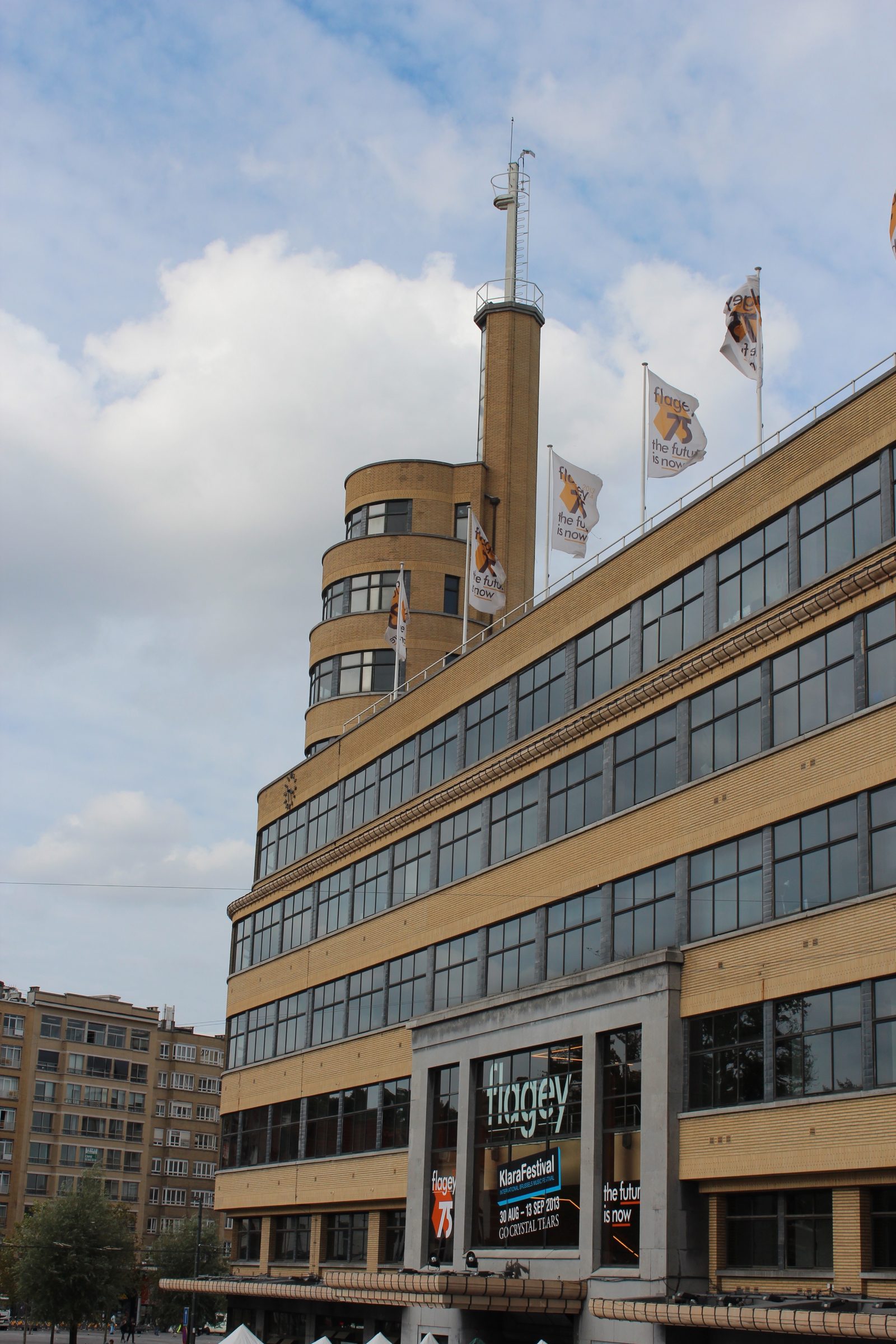
On Friday 5 September 2025, at two in the afternoon, the Brussels Philharmonic listed "Philip Glass: a concert-lecture" in Studio 4 at Flagey, the former Belgian national radio building in Ixelles, a studio the orchestra describes as the heart of its workspace. Thomas was billed to guide the audience through her musical choices and personal arrangements, with Jockel conducting: sixty minutes, in English, tickets from €5.
The programme was The Poet Acts; a selection from Naqoyqatsi and the Second Concerto, arranged by Jockel; and the first movement of the First Concerto. The orchestra's listing opened with the line that Glass "turns 90 in 2027". It was the album, in miniature, 378 days before release.
Most of what ends up on a record like this starts as something smaller: a lecture-recital, a concerto competition, an audition for the orchestra that plays it. Cadenza lists orchestral posts and auditions on its jobs board and open calls on its competitions board, free to musicians. Two cello concertos now have a new champion and no performances on their composer's birthday calendar, which is an opening for any soloist who wants it.
If you go
The album is out now on DG: two CDs at €18.99 or one LP at €29.99 on the label's European store, and on streaming and download, including in Dolby Atmos.
In Brussels, Thomas plays Flagey Studio 4 on Saturday 31 October, a recital with Julien Brocal, and on Sunday 1 November, listed on her website as a closing gala concert. RTBF confirms both dates. Neither programme has been announced, so do not go expecting Glass, and her published schedule through 22 November lists no performance of either concerto. The recital is 39 days away.
For the birthday itself, on 31 January 2027 Glass's calendar lists the concert at Carnegie Hall in New York, a festival at the Southbank Centre in London, the Kronos Quartet at CAP UCLA in Los Angeles and an event at the Phillips Collection in Washington.
Glass's calendar says more is to be announced, and there are four months left before he turns ninety. Will any orchestra add one of his cello concertos to it, and ask the cellist who rebuilt the second one to play it?
Sources: Deutsche Grammophon's store page for the album, read in full, for the release date, the Brussels Philharmonic and Oscar Jockel, the phrase "personal invitation", "a newly reimagined version of Naqoyqatsi", the tracklist and the 2CD and LP prices; DG's catalogue page for the release date, formats and Dolby Atmos; the track lengths and arranger credits as listed on Apple Music; and the label's press release of 26 June 2026, published by Universal Music Canada, for Thomas's account of what Glass told her, the fifth-album count, the 2017 contract claim (which is the label's), the lion's-roar and "2.0" quotations, Glass appearing in The Truman Show, and the Othoniel cover.
Thomas's own accounts: the grains interview by Paul Sullivan of 9 July 2026, on a site operated by Universal Music GmbH, for the Twitter message, the manager in Boston, the request to play all eleven cues and Jockel's idea for Étude No. 2; RTBF's interview of 18 September 2026 for the notification, her not knowing the concertos, "Camille's version", the shortening of the movements and the Flagey dates; and ClassiqueNews's interview by Alexandre Pham, published on 16 September 2026, for "Yes, always yes", the three sessions, the Berlin Études with Wolfgang Emanuel Schmidt's class, the flight to Satyagraha, Kremer's recording and her hope for the concertos. The French is translated by Cadenza. The Twitter message itself has not been published; its existence and content rest on Thomas's accounts. Her Tissue singles are dated from DG's Musical Moments page and Apple Music's catalogue, which lists neither on any edition of Voice of Hope.
The review is Lucas Irom's in ClassiqueNews, 18 September 2026, read in full.
On the works: Wise Music Classical, Glass's publisher, for the commission and 30-minute duration of Cello Concerto No. 1, the Naqoyqatsi film score and Songs and Poems for Solo Cello; IRCAM's Brahms database for the Beijing premiere; YourClassical for the Cincinnati premiere of the Second Concerto, Yo-Yo Ma's part in the film score and the meaning of the title; the Discogs record of Orange Mountain Music OMM 0087 for the commission, recording dates, venue and seven sections; and Apple Music's listings of the Haimovitz recording and the 2002 soundtrack for the track orders and lengths. Every total, average, share and day count in this piece is Cadenza's arithmetic from those listings and dates.
On Glass: his official biography for 1937 and Baltimore; his 90th-birthday page, including the press release of 27 May 2026, for the birthday, the calendar and the Carnegie Hall, Southbank, CAP UCLA and Phillips Collection dates, counted by Cadenza on 22 September 2026, with more performances still to be announced; NPR for the Tanglewood premiere of Symphony No. 15; and the Paris Opera for Satyagraha at the Palais Garnier. The Brussels Philharmonic's listing for the concert-lecture of 5 September 2025 supplies the time, venue, prices, length, language and programme; Thomas's concert schedule supplies the Flagey dates and the rest of her autumn.
Photographs: Camille Thomas in Rennes, 29 August 2014, by Édouard Hue, CC BY-SA 4.0. Philip Glass in the WNYC studios, 12 December 2007, by WNYC New York Public Radio, CC BY-SA 2.0. The Flagey building, built in 1938 to designs by Joseph Diongre for Belgian national radio, photographed on 15 September 2013 by Zinneke, CC BY-SA 3.0. All via Wikimedia Commons.
Cover photograph: Camille Thomas playing Schumann's Cello Concerto with the Orchestre symphonique de Bretagne under Darell Ang at Grand Air in Rennes on 29 August 2014, not a photograph from the new recording. Édouard Hue, CC BY-SA 4.0, via Wikimedia Commons.
Comments
Sign in to join the discussion.