Late on 30 May 2026, in the Salle Henry Le Boeuf in Brussels, a 23-year-old cellist from Italy who had played Prokofiev's Sinfonia concertante with the Belgian National Orchestra three nights earlier was named first-prize laureate of the Queen Elisabeth Competition. Ettore Pagano's prize was €25,000. The thing he will remember it for is the instrument he was handed with it: a four-year loan, from the Pau Casals Foundation, of the 1733 Matteo Gofriller cello that belonged to Pablo Casals.
That is how the 2026 competition season began for the cello, and it has not let up. A 24-year-old German student won in Yerevan in June. A Greek cellist won in New York. And this week the ARD International Music Competition, the largest classical competition in Germany, opens its finals in Munich in what it calls its 75th-anniversary season, with the organ back on the roster for the first time in fifteen years.
Here is the year so far, the prizes in full, and the part of the story that matters more than the cheques: what a prize is actually made of.
Brussels, May: Ettore Pagano and the Casals cello
The Queen Elisabeth Competition's 2026 cello edition opened on 4 May and reached its final round on 25 to 30 May, with twelve finalists, an imposed new work, Fang Man's Four Odes to the Tidings of Flowers, and a jury chaired by Gilles Ledure. The Strad reported the full results:
| Prize | Laureate | Age | Country | Award |
|---|---|---|---|---|
| First, the Queen Mathilde Prize | Ettore Pagano | 23 | Italy | €25,000 and the four-year loan of the 1733 "Casals" Gofriller |
| Second, the Belspo Prize | Tae-Yeon Kim | 20 | South Korea | €20,000 |
| Third, the Count de Launoit Prize | Leland Ko | 28 | United States and Canada | €17,000 |
| Fourth | Álvaro Lozano Cames | 20 | Spain | €12,500 |
| Fifth | Yo Kitamura | 22 | Japan | €10,000 |
| Sixth | Maria Zaitseva | 24 | Russia | €8,000 |
Six further laureates, Lionel Martin, Ivan Sendetsky, Clara Dietlin, Dilshod Narzillaev, Krzysztof Michalski and Andrew Ilhoon Byun, each received €4,000. Pagano's final, on 27 May, was the Prokofiev with Antony Hermus conducting. Kim, a student at the Curtis Institute of Music, played the Lutosławski concerto; her school recorded the result with the prize at €20,000, about $23,300.
The Casals cello is the reason this result will be remembered beyond the profession. The competition had announced in advance that the winner would receive it, which turned the final into something closer to an audition for the instrument than a contest for the money. A 23-year-old will now spend four years on the cello that recorded the Bach suites. Whatever else €25,000 buys, it does not buy that.
Read the ages across the table: 23, 20, 28, 20, 22, 24. Five of the six ranked laureates are under 25, and the second-prize winner is a 20-year-old Curtis student. The cello's next generation arrived in Brussels in one week.
Yerevan, June: Cosima Regina Federle
The Khachaturian International Competition ran its 2026 cello edition in Yerevan from 6 to 13 June, and The Strad reported the results.
First prize, $10,000 and a performance engagement, went to Cosima Regina Federle, a 24-year-old German cellist who studies at the Berlin University of the Arts with Jens-Peter Maintz and earlier studied with Peter Bruns at the Leipzig Hochschule and with Wolfgang Nüsslein and Hanno Simons. She also took the special prize for the best sonata interpretation in the second round.
Her reaction, as quoted by The Strad: "I am overwhelmed, I cannot put it into words – this was a very intense week, I'm also a bit exhausted I have to say, but I'm just extremely happy."
The rest of the podium: second prize and $5,000 to Bogdan Efremov, 21, from Russia, who also took the special prizes for the Popper étude and for Khachaturian's Sonata-Fantasy; third prize and $3,000 to Artyom Ioanisyan, 23, from Armenia, who also won the audience award and a concert engagement with the Armenian State Symphony Orchestra; and fourth prize to Miriam K. Smith, 19, from the United States, with the special prize for Bach. The jury was chaired by Levon Mouradian and included Victor Julien-Laferrière, Josephine Knight, Martti Rousi, Meehae Ryo, Gregorio Nieto and Denis Severin.
A podium of 24, 21, 23 and 19, and a winner who is still a student. That is what a competition at this level is for.
New York, May: Maria Elli Petridou
The World's Biggest Stage Competition is a smaller event with an unusual format. Its eleventh edition, for cello, held its final on 26 May at Merkin Hall at the Kaufman Music Center; the finalists premiered movements of a new cello sonata by the composer Julian Gargiulo, who accompanied them at the piano, and the result was decided half by the jury and half by the audience. The Strad reported the result on 5 August.
The Greek cellist Maria Elli Petridou won. The prize is worth setting out because it is built differently from either Brussels or Yerevan: $5,000 in cash, a concert engagement at the Museum of Russian Art in Minneapolis worth a further $5,000, and an engagement with the Water Island Music Festival. The other finalists, Cheyoon Lee of South Korea, Francesco Stefanelli of San Marino and Juliet Wolff of Germany, each received $1,500.
Munich, this week
The ARD Competition's 2026 edition runs from 30 August to 18 September in four disciplines, with the finals falling inside one week:
| Discipline | Final |
|---|---|
| Organ | Wednesday 9 September, Herkulessaal der Residenz |
| Bassoon | Friday 11 September |
| String quartet | Saturday 12 September |
| Percussion | Sunday 13 September |
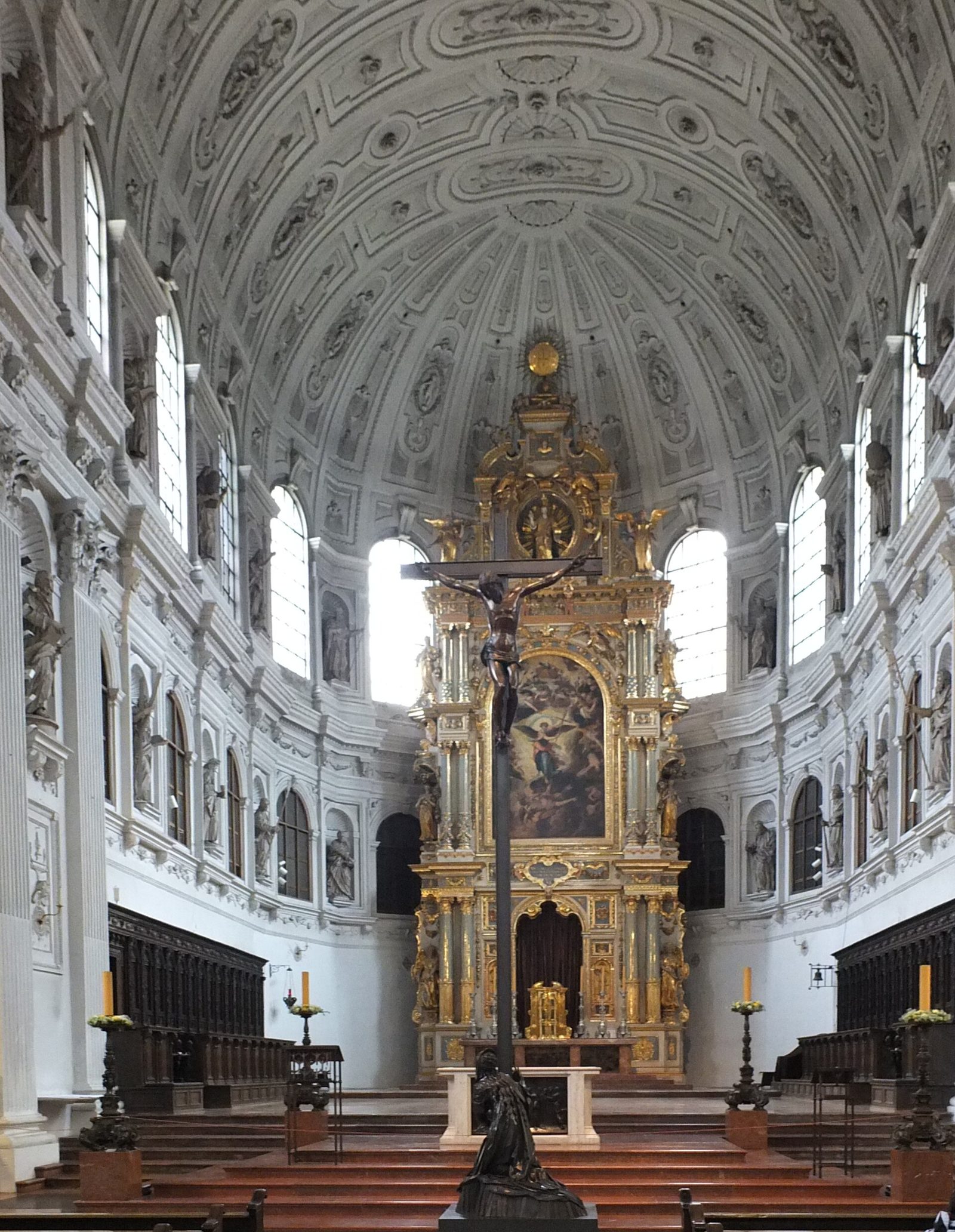
The organ's return is the headline. It has not been an ARD discipline since 2011, and this year one round leaves the concert halls for St. Michael's, one of the largest Renaissance churches north of the Alps, for a semi-final where the instrument, not the hall, sets the terms; the final returns to the Herkulessaal with the Bavarian Radio Symphony Orchestra. The string quartet's opening rounds are at the Amerikahaus on Karolinenplatz, new to the competition.
The jury reads like the faculty of a very good conservatory: the percussionist Martin Grubinger, the bassoonists Gustavo Núñez and Sophie Dervaux, the organist and composer Thierry Escaich, and for the quartets Vineta Sareika, Pierre Colombet and Veronika Hagen, a former first concertmaster of the Berlin Philharmonic, the first violinist of the Quatuor Ébène and the violist of the Hagen Quartet.
A note on the number. The competition counts 2026 as its 75th edition, and its 75th anniversary, from a founding in 1952 recorded on its history page; 2024 was the 73rd.
Seventy-five years of laureates
The ARD is organised by Bayerischer Rundfunk under the umbrella of Germany's public broadcasters and has run annually since 1952, with a single pandemic gap in 2020, rotating its disciplines so that a given instrument returns every few years. Its precursor, held in Frankfurt from 1947 to 1950, is remembered for discovering the singers Christa Ludwig and Erika Köth. The competition's own history lists its laureates the way a conservatory lists its faculty: Jessye Norman; Thomas Quasthoff, first prize in singing in 1988; Christoph Eschenbach; Maurice André; Heinz Holliger; Yuri Bashmet; Christian Tetzlaff; Sharon Kam; and among the cellists, Sol Gabetta, Julian Steckel and Maximilian Hornung.
That last group is the one this year's cellists will read. Gabetta, Steckel and Hornung came through Munich as students and are now the soloists and professors who sit on juries like the ones above. A laureate list is, in practice, a list of the people who will decide the next competition, which is one reason a Munich final is worth more than its prize money.
What a prize is actually made of
Put the four prizes side by side and a pattern appears that every competitor should understand before paying an entry fee.
| Competition | First prize, cash | What came with it |
|---|---|---|
| Queen Elisabeth, Brussels | €25,000 | Four-year loan of the Casals Gofriller; a final broadcast across Europe |
| Khachaturian, Yerevan | $10,000 | A performance engagement; a jury of hiring professors |
| World's Biggest Stage, New York | $5,000 | A $5,000 engagement in Minneapolis and a festival date |
| ARD, Munich | €15,000 solo first prize, €30,000 for a quartet | Laureate concerts with the Munich Chamber Orchestra and the Bavarian Radio Symphony; the laureate list above |
The cash is similar across three of the four. The difference is how much of the prize is a stage, an instrument or a name. Ioanisyan's third prize in Yerevan came with a concerto date with the Armenian State Symphony, which for a 23-year-old is worth more than the $3,000 attached to it. Petridou's cash prize is half her total; the other half is two engagements. Pagano's cash is the smallest part of what he won.
Competitions have become explicit about this because the market has. A cheque is spent; a concerto engagement is a line on a biography that produces the next engagement; an instrument loan is four years of a different sound. For a competitor choosing where to apply, the questions are therefore not only "how much" but "who is in the hall, who is on the jury, and what do they book afterwards." The Khachaturian's jury this year included the professors who audition and hire; the ARD's includes a former Berlin Philharmonic concertmaster and the leaders of two of Europe's working quartets. A final in front of either panel is an audition whether or not it produces a prize.
The calendar from here
The ARD finals run 9 to 13 September; Cadenza will report the results when they are announced. Beyond Munich, the autumn calendar is on Cadenza's competitions board, 73 listings as of 6 September, each linked to the official notice.
The autumn's dates, from the competitions' own sites: the Henryk Wieniawski International Violin Competition plays in Poznań from 8 to 25 October, its field closed in January; the Leeds International Piano Competition takes applications for its September 2027 edition until 31 October 2026; the Cleveland International Piano Competition's window for July 2027 closes on 4 December 2026; and the Mirjam Helin International Singing Competition, moving to Turku in June 2027, opens applications from 2 to 30 November. The Fritz Kreisler competition in Vienna, scheduled for this month, has been postponed by its organisers to 2028. The International Violin Competition of Indianapolis, which runs from 17 September to 4 October this year, has already named its participants.
For the cellists of 2026, the record is written before the autumn begins: three first prizes in three cities, four of Brussels' six laureates under twenty-five, a Casals cello on loan to a 23-year-old, and a Munich final still to come.
Sources: The Strad, results of the 2026 Queen Elisabeth Cello Competition; The Strad, the Casals Gofriller loan; Curtis Institute of Music, Tae-Yeon Kim; The Strad, 2026 Khachaturian International Competition; The Strad, 5 August 2026, World's Biggest Stage Competition; ARD International Music Competition, Competition 2026 and About the competition; International Violin Competition of Indianapolis, 2026; Cadenza competitions board, as listed on 6 September 2026.
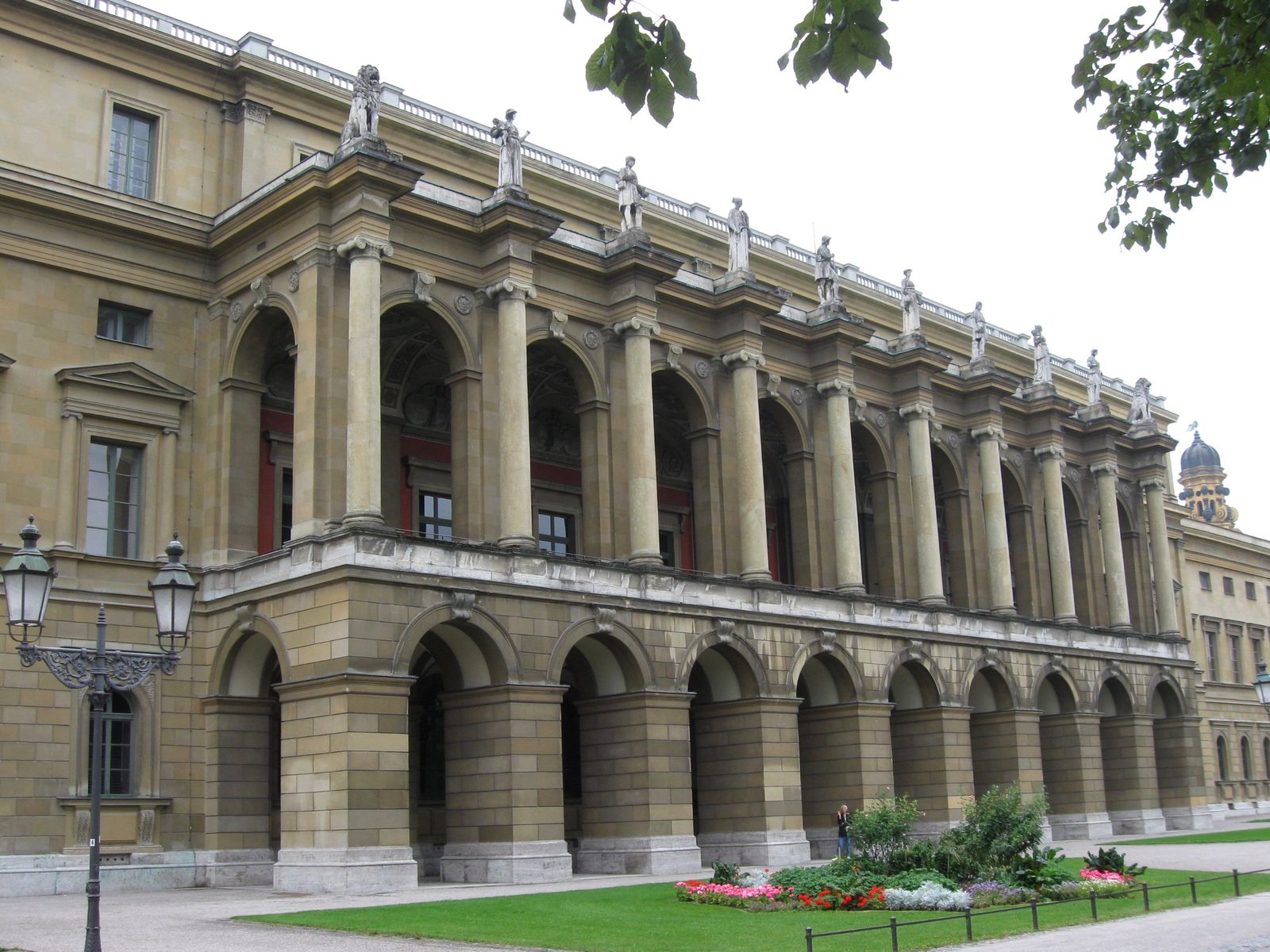
Cover photograph: The entrance to the Herkulessaal in the Munich Residenz, one of the ARD Competition's halls. Rufus46, CC BY-SA 3.0, via Wikimedia Commons.
Comments
Sign in to join the discussion.