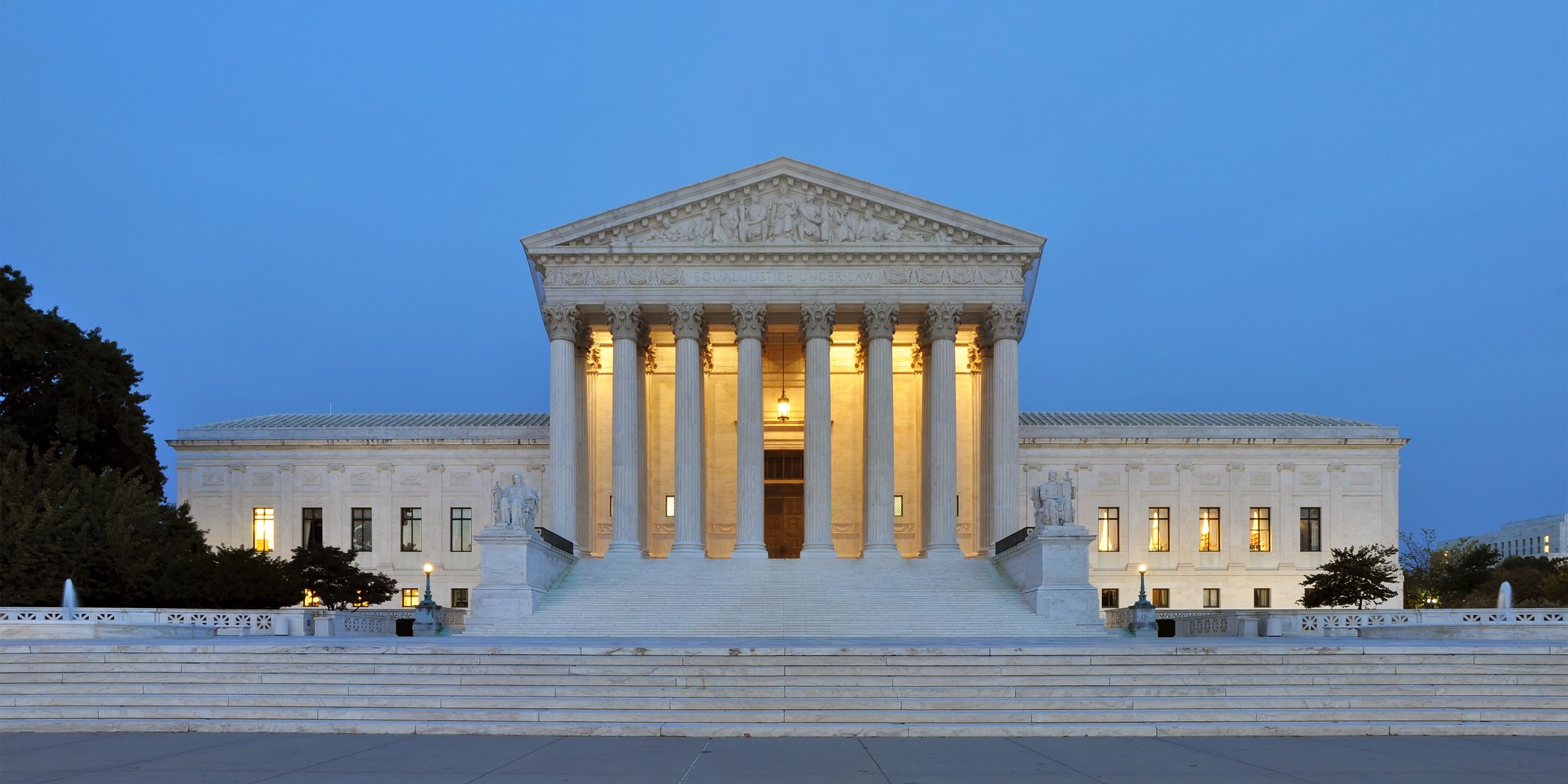
For roughly two years, a detection company sent Cox Communications 163,148 notices identifying subscribers whose connections were being used to share music without permission. Cox kept many of them connected. A Virginia jury called that willful infringement and awarded a billion dollars. On 25 March 2026, a unanimous Supreme Court held that continuing to serve a known infringer is not, by itself, the intent copyright law requires — and reversed.
01
The notices
The record in this case is a paper trail. MarkMonitor, a detection firm working for the record companies, scanned peer-to-peer networks for the plaintiffs' recordings, identified the internet protocol addresses sharing them, and traced those addresses to the internet service provider. Over roughly two years, it sent Cox 163,148 such notices.
Cox did not ignore them. It ran a graduated response: a warning to the subscriber after the second notice, then suspension of the address until the subscriber acknowledged the warning, then suspension until the subscriber called and was warned by telephone. After thirteen notices, a subscriber became subject to termination of all internet service. Cox's contracts also forbade subscribers from using the connection to transmit material infringing the rights of others.
What the plaintiffs proved was that the ladder often stopped short of its last rung. Cox continued serving accounts that had accumulated notices, and internal messages showed employees frustrated with the volume of complaints. That gap — between what Cox knew and what Cox did — was the whole case.
02
What the jury decided
The jury found Cox liable for willful contributory and vicarious infringement of all 10,017 works the plaintiffs asserted, and awarded $1 billion in statutory damages. It remains one of the largest copyright awards ever returned against an intermediary rather than against the people doing the copying.
The theory was indirect throughout. Nobody argued that Cox uploaded or downloaded anything. The claim was that Cox was answerable for its subscribers' conduct because it had been told, repeatedly and specifically, and had carried on regardless.
03
What the Fourth Circuit kept and threw out
On appeal the Fourth Circuit split the two theories. It reversed on vicarious liability: Cox's subscribers paid flat monthly fees whether or not they infringed, so the company drew no direct financial benefit from the infringement, which that doctrine requires.
But it sustained contributory liability, reasoning that Cox knowingly continued to provide service to subscribers substantially certain to keep infringing. That holding is what the Supreme Court agreed to review, and what it has now rejected.
04
The rule the Court announced
The holding is narrow, and it is a rule about intent. A service provider is contributorily liable for a user's infringement only if it intended the service to be used for infringement — and that intent can be shown only two ways: the provider induced the infringement, or the service is tailored to that infringement.
The reasoning starts from a sentence the Court has repeated since the Betamax case: the Copyright Act does not expressly render anyone liable for infringement committed by another. Where Congress means to impose secondary liability, it ordinarily says so. The Court recognises the forms of secondary liability that predate the Act, but describes itself as reluctant to expand them beyond those precedents.
Ordinary internet access is the paradigm of a service with substantial lawful uses. It is not tailored to infringement, and selling it to the public induces nothing. Knowledge that some customers misuse it does not convert the sale into an intent that they should.
05
The DMCA argument the Court refused
The record companies had a structural argument in reserve. The DMCA's safe harbour protects providers that terminate repeat infringers “in appropriate circumstances”; Congress, they said, must have legislated on the assumption that providers who fail to terminate can be held liable. Otherwise the safe harbour protects against nothing.
The Court called this an overreading. The DMCA does not expressly impose liability on providers who serve known infringers; it creates new defences for them. And the statute says in terms that failure to comply with the safe-harbour rules shall not bear adversely upon a provider's separate defence that its conduct is not infringing at all.
The practical effect is to prise two questions apart that had been argued as one. A provider can fall outside the safe harbour and still not be liable, because losing a defence is not the same as satisfying the elements of a claim.
06
What the ruling does not do
It does not bless Cox's repeat-infringer practices, which the opinion nowhere praises. It does not touch the liability of the people who actually shared the files. It does not protect a service built for infringement, or one whose operator encourages it — inducement remains a live route, and Grokster remains the counter-example.
Nor does it end this litigation. The judgment was reversed and the case remanded, leaving what remains to the lower courts.
07
What changes for rightsholders
The notice-and-damages pipeline just got much steeper. Sending an intermediary a large volume of infringement notices and pointing to inaction no longer sets up a damages claim against a general-purpose network. Evidence has to go to design and encouragement: what the service was built to do, and what its operators told users to do with it.
For working musicians the consequence is indirect but real. Enforcement against the infrastructure that carries infringing traffic has become harder, which pushes the industry's practical remedies back toward the platforms that host and monetise music — and toward licensing — rather than the pipes that carry it.
Comments
Sign in to join the discussion.