The Lucerne Festival published its closing figures on Friday, 11 September. Later the same morning the trade press decided what they meant. "Lucerne dips," ran the headline on Slipped Disc. "The outcome was a disappointing 89 percent."
The festival's own headline, on the same set of numbers, was "Lucerne Festival Reports Strong Results for the Summer Concert Season, with a High Overall Attendance Rate of 89 Percent."
One of those readings can be tested, because the Lucerne Festival has published a closing media release every September for years and leaves them all online. Cadenza read the last four. They do not support the word dip. They also contain something more interesting than the percentage anybody argued about, and one thing they do not contain at all, which is worth saying out loud.
The document
| 2023 | 2024 | 2025 | 2026 | |
|---|---|---|---|---|
| Theme | "Paradise" | "Curiosity" | "Open End" | "American Dreams" |
| Days | 34 | 34 | 34 | 32 |
| Overall attendance rate | 84% | 84% | 89% | 89% |
| Large symphonic concerts | 86% (29 concerts) | 90% (26 concerts) | not stated | 93% (25 concerts) |
| Sold out | 11 of 68 paid events | 13 of 65 paid events | not stated | 15 of the 25 symphonic |
| Paid events | 68 | 65 | 64 | 53 |
| Free-admission events | 44 | 71 | 99 | not stated |
| Total visitors | 84,000 | 81,000 | 84,000 | 81,000 |
| Paid attendance | not stated | not stated | about 60,000 | 54,000 |
| Free attendance | 15,300 | 18,600 | 24,000 | 27,000 |
Read the attendance row and the word dip has nowhere to stand. Eighty-nine percent is the joint highest overall rate Lucerne has reported in four years, level with 2025 and five points above 2023 and 2024. If 89 percent is a disappointment, so was 2025, which recorded exactly the same figure and was the final edition under the festival's previous Executive and Artistic Director, Michael Haefliger.

There is a version of the complaint that survives. Lucerne has not reached 90 percent on its overall rate in any of the last four summers, and that is worth knowing. It is also not what dips means, and it should be read beside the other row in the table, because the festival's large symphonic concerts did reach 90 percent in 2024 and 93 this year.
One thing should be said for the post rather than against it. It offers no baseline at all. Its only explicit comparison of the overall rate is to Salzburg, so it never actually claims a year-on-year fall. What it does is use a verb that means one.
Fifteen fewer things on sale
The number the coverage passed over is in the release's first paragraph: "53 ticketed events compared with 64."
Put that in the four-year series and it is not a blip. Lucerne's paid programme has shrunk every year, from 68 events in 2023 to 65, then 64, then 53. That is fifteen events gone, a cut of 22 percent, and this year the festival also shortened itself from 34 days to 32. Over the same four summers its overall attendance rate rose by five points and never fell.

That is the finding. A festival cut roughly a fifth of the things it sells, cut two days off its calendar, and did not lose the room.
The series Cadenza could not build
The obvious next step is to divide. The 2025 release states that around 60,000 people attended its 64 ticketed events, and the 2026 release that 54,000 attended 53. That gives an average paid house of 938 last year and 1,019 this year, a rise of about nine percent, and those four figures are all stated by the festival rather than derived by Cadenza. As a two-year comparison it stands, with the caveat that "around 60,000" is a rounded number and two years is not a trend.
Extend it to four years and it collapses, because the festival's own categories move. The clearest proof is in its event totals, which decompose exactly.
In 2023 the release reports 68 paid-admission events and 44 free ones, and gives "a total of 112 events". Sixty-eight plus forty-four is 112, so the 19 events it says it "also offered... exclusively for schools" are outside the total. In 2024 it reports 65 paid and 71 free and gives "the total of 158 events". Sixty-five plus seventy-one is 136, and the 22 school events it lists separately make up the difference, so schools are a third category inside the total. In 2025 it reports 64 ticketed and 99 free and gives 163 events. Sixty-four plus ninety-nine is 163 exactly, with no room for a third category, and the release confirms it: 24,000 visitors attended "the Festival's 99 free events, including the 40min series, the 40min Open Air, school concerts, the world music festival 'In the Streets,' and Lakeside Symphony." Three consecutive years, three different treatments, provable by addition.
There is a second problem in 2023, independent of schools. That release does not add its free audience to its paid one; it cross-tabulates, recording "a grand total of 84,000 visitors, among whom 15,300 also attended the Festival's 44 free admission events". The 2026 release is explicitly additive: 54,000 attended ticketed events "while a further 27,000 took advantage of the free offerings". One counts overlap, the other does not.
So paid attendance for 2023 and 2024 cannot be reached by subtracting free from total, and any four-year series built that way is unsound. Depending on which assumption you make about where several thousand schoolchildren sit, 2026's average paid house is either about one percent or about eleven percent above 2023's, and the free share of the audience either rose in every one of the four summers or did not. The eleven-percent reading assumes the roughly 6,300 school students of 2023 are inside the 84,000 but outside the 15,300, which that release never says. A four-year comparison of average house size or free share cannot be made from these documents, and Cadenza is not going to print one and hope.
Even the two-year figure carries one residual unknown: the 2026 release says 4,200 school-age children were reached but does not say whether they sit inside its 54,000 ticketed or its 27,000 free.
What can be said without qualification is what the 2026 release states directly. Eighty-one thousand people attended. Fifty-four thousand attended ticketed events. Twenty-seven thousand took the free offerings. That is one visitor in three getting in for nothing, this year, on the festival's own count.
A third of the audience, and where the festival says it went
The release describes formats through which, in its words, "Sebastian Nordmann opened the Festival to new audiences": 4,500 people at "Classical Music for All: Open Air" on the Europaplatz on 13 August, 6,100 at a newly reimagined "In the Streets: City Stage" which brought seven projects into central Lucerne with three of them curated by guerillaclassics, 1,830 at "Overture", a new pre-opening in the KKL Luzern Concert Hall, and 1,250 at "Lakeside Symphony" at Inseli Park.
Two of those are genuinely new, the Europaplatz open air and the Overture. "In the Streets" and "Lakeside Symphony" have run in previous summers. And the release does not say which of the four were free, so Cadenza is not going to assume it: "Overture" took place in the festival's main ticketed room, and unlike the 2025 release this one does not say which of its offerings were free.
Two smaller items matter more to a working musician than the percentage everyone argued about. The first is an offer the festival calls "Luege, Lose, Erläbe" in Swiss German and "Look, Listen, Enjoy" in English, which lets a concertgoer bring a child or a teenager to a concert for ten francs; the festival says it was very well received. The second is that 4,200 school-age children were reached, through school concerts with the Berliner Philharmoniker and the Munich Philharmonic, a format called "Klassikzimmer", a sustainability project called "Traumoase", and a scheme called "Debuts at School". A new subscription called "Fan Zone", covering four Lucerne Festival Orchestra concerts, sold out almost immediately.
Why the Salzburg comparison does not settle anything
Slipped Disc's supporting argument was a comparison: "Salzburg, by comparison, exceeded 99 percent."
The Salzburg figure is real. Its directorate announced on Friday 28 August that an attendance rate of more than 99 percent was expected across 172 main-programme performances and 37 performances of the youth programme "jung & jede*r", 209 in all at 19 venues, with more than 261,300 guests from 84 countries and net ticket revenue of 31.45 million euros. Three things about the comparison are worth stating.
First, neither number was published after the event. Salzburg's release is dated Friday 28 August, two days before its Sunday close on 30 August, and says the rate is expected and the headcount extrapolated to that date. Lucerne's release is dated Friday 11 September, two days before its Sunday close on 13 September, and carries a section headed "A Grand Finale This Weekend" describing concerts still to come, including the sold-out Porgy and Bess that ends the festival. The timing is identical. Salzburg labels its figure as a projection and Lucerne does not, which if anything makes the Austrian disclosure the more careful of the two. And this is not a quirk of 2026: all four Lucerne closing releases were issued on the Friday before a Sunday finish, so the four-year table above is at least internally consistent.
Second, the two headcounts are built differently. Salzburg's 261,301 is itemised in its own report as 222,935 at regular performances, 4,749 at four sold dress rehearsals, 16,509 admissions to sixty free special events and 17,108 at twenty entry and dress rehearsals. Cadenza reported the 16,509 on 6 September. Lucerne's 81,000 separates 54,000 paid from 27,000 free and mentions no rehearsals. And the free audiences fall on opposite sides of the line: Lucerne puts all 27,000 of its free visitors inside its headline total, while Salzburg puts 16,509 inside and, in its own words, counts "over 60,000" more at the Siemens Festival Nights and the open-air events of its opening celebration entirely outside it.

Third, the two percentages describe different programmes. Salzburg's 209 performances are largely opera, drama and large-scale concerts, and its own report sets classical repertoire beside modern works and premieres, including new plays by Peter Handke and Elfriede Jelinek. Lucerne's 53 paid events sit alongside a substantial contemporary strand: the Lucerne Festival Contemporary Orchestra gave six concerts, twelve world premieres were performed in the Contemporary programme, and a composer seminar for orchestral works was led by Dieter Ammann and Unsuk Chin.
Cadenza reads Lucerne's 89 percent as a capacity rate across its ticketed programme, because the release reports the 53 paid events and the free offerings as two separate headcounts and a capacity rate needs a denominator. The release does not say so explicitly, and no comparison should be built as though it did. What can be compared is like with like, and Lucerne's own flagship number is in the same release: its twenty-five large-scale symphonic concerts ran at 93 percent, with fifteen sold out.
Two claims with no source
The Slipped Disc item carried two further assertions. "The Lucerne dip is ascribed to an excess of American themes, rather than to ever-higher seat prices." And: "Visiting orchestras achieved consistely higher attendance than the Lucerne Festival Orchestra."
Neither appears in the festival's release, in either language. The first is written in the passive voice with nobody doing the ascribing. The second cannot be checked against the primary document at all, because the release publishes no attendance split between the Lucerne Festival Orchestra and visiting orchestras. The only attendance rates in it are the 93 percent and the 89 percent.
What the release does say about the American theme is that more than fifty works by American composers were performed, from chamber music by Amy Beach and Steve Reich to orchestral works by Samuel Barber and Charles Ives, and Frank Zappa's The Yellow Shark; that more than eighty-five works were played at Lucerne for the first time; and that Joyce DiDonato, Hilary Hahn, Doreen Ketchens and Mark and Maggie O'Connor all made their festival debuts, while Yo-Yo Ma returned after eleven years. The sold-out nights included the West-Eastern Divan Orchestra with Daniel Barenboim, the Lucerne Festival Orchestra with Anne-Sophie Mutter, and both Berliner Philharmoniker concerts. None of those sold-out programmes was itself an American one on the release's description, so they are evidence of drawing power rather than of the theme's reception.
What the summer actually was
This was the first summer under Sebastian Nordmann as Executive and Artistic Director, and the first under Jörg Widmann as the Academy's Artistic Director. Nordmann's own account, in the release, puts the new formats first: he says he was thrilled by how strongly the festival atmosphere could be felt throughout Lucerne, "whether at the new 'Classical Music for All: Open Air' on Europaplatz, at 'In the Streets: City Stage,' or in the acoustically superb KKL Luzern Concert Hall." He names Widmann's debut conducting Wolfgang Rihm's Tutuguri as an unforgettable highlight, alongside Anne-Sophie Mutter's appearances marking the fiftieth anniversary of her stage debut.
Twenty symphony orchestras played, among them the Berliner Philharmoniker with Kirill Petrenko, the Vienna Philharmonic with Tugan Sokhiev, the Royal Concertgebouw with Santtu-Matias Rouvali, the Met Orchestra with Yannick Nézet-Séguin and the Pittsburgh Symphony with Manfred Honeck. Riccardo Chailly opened the festival with two days of concerts; his Lucerne Festival Orchestra gave six concerts in all plus two editions of "Classical Music for All: 40min", appearing with Chailly, Klaus Mäkelä, Mutter and Jakub Hrůša. Mark Andre was composer-in-residence, Liza Lim's Tongue of the Land had its world premiere as this year's Roche Commissions work under Peter Rundel, and Bushra El-Turk's opera Medeas Monolog had its world premiere with the Luzerner Theater. The festival closes on Sunday 13 September with Gershwin's Porgy and Bess, performed by the Chineke! Orchestra and Cape Town Opera under Enrique Mazzola, and that is sold out too.
The point for a musician reading this
Strip out the argument about one percentage and two things are left. Lucerne has cut its paid programme by a fifth over four summers, shortened its calendar, and held its overall attendance rate at the top of its own recent range while doing it. And in 2026, one visitor in three attended without paying.
The third thing is the one no press release will tell you: the festival's own categories move from year to year, so the trend everybody would most like to quote cannot honestly be quoted at all. That is worth knowing before the next set of festival figures lands, because the same problem will be in them.
Cadenza carries the current orchestral vacancies, free to musicians, on its jobs board, and the competitions with open deadlines on its competitions board.
Sources: Lucerne Festival, closing media release, 11 September 2026 and the full release in English and German; Lucerne Festival closing release, 12 September 2025; Lucerne Festival closing release, 13 September 2024; Lucerne Festival closing release, 8 September 2023; Slipped Disc, "Lucerne dips", 11 September 2026, quoted as the post read on 11 September and revised later that day; Salzburg Festival closing report, 28 August 2026; ORF Salzburg, 28 August 2026; Leadersnet, 30 August 2026; and Cadenza's own summer festival attendance ledger, 6 September 2026.
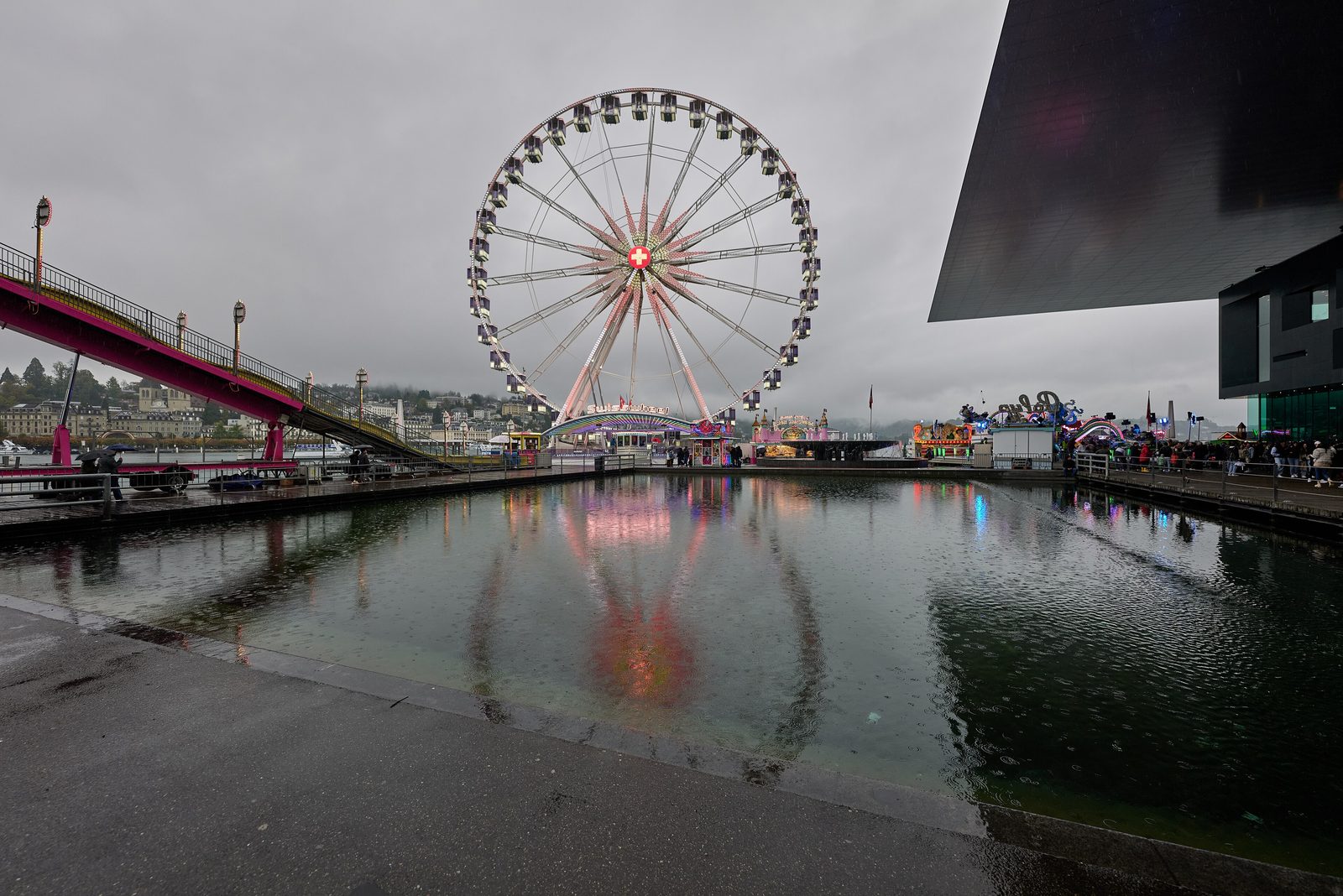
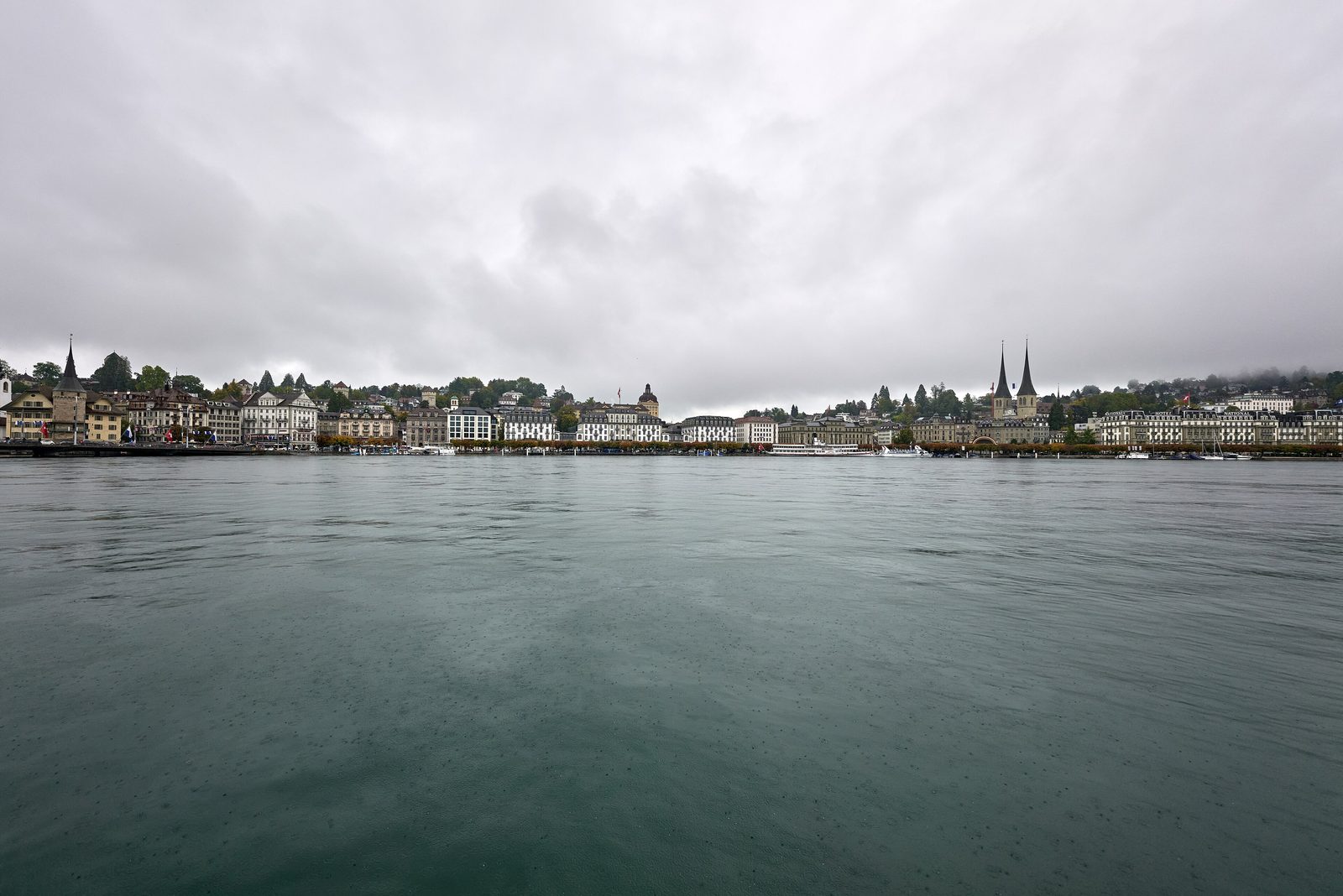
Cover photograph: The Europaplatz in Lucerne, October 2022. Leonhard Lenz, CC0, via Wikimedia Commons. In-body photograph: Lake Lucerne seen from the Europaplatz, October 2022. Leonhard Lenz, CC0, via Wikimedia Commons. Charts by Cadenza from the festivals' own published figures.
Cover photograph: The Europaplatz in Lucerne, photographed in October 2022. On 13 August 2026 the square held the festival's new open-air format "Classical Music for All: Open Air", which drew 4,500 people. Leonhard Lenz, CC0, via Wikimedia Commons.
Comments
Sign in to join the discussion.