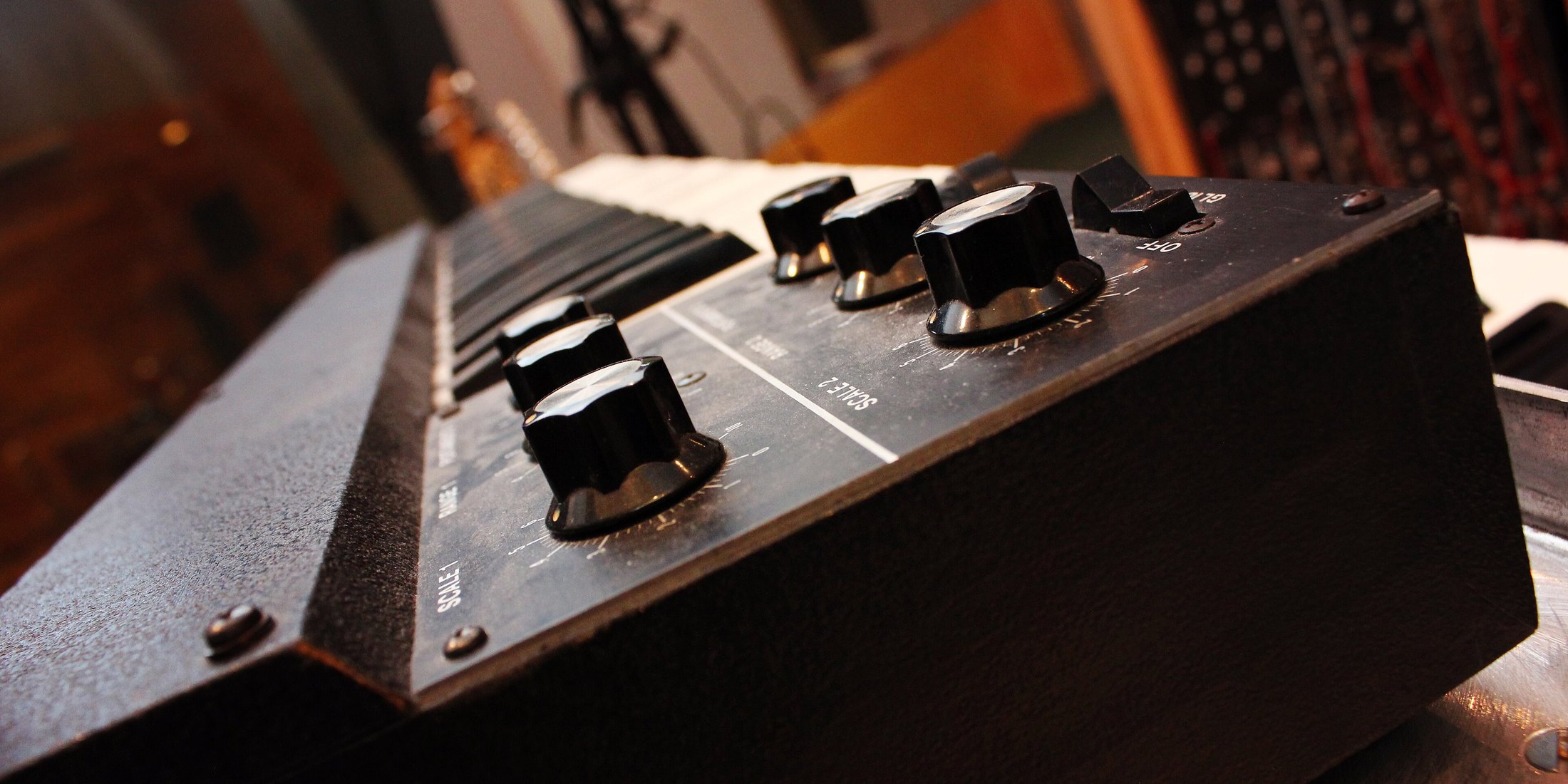
Film scoring has been arguing about machines for longer than the current argument about machines. The AFM Basic Theatrical Motion Picture Agreement contains a clause, headed Electronic Instrument Devices, that settles one question cleanly and leaves another deliberately open. It says that a person using a synthesizer with musical skill is a musician. It says electronic instruments may not be used to displace sections of traditional instruments. And on the question of what the programming work is worth, it says a committee will consider it.
01
The sentence that defines a musician
The clause opens by settling status rather than technology: a person who, in exercising musical skills, utilizes a synthesizer or other electronic device to produce music is a musician within the meaning of the agreement.
Note where the weight falls. Not on the instrument, which could be anything, and not on the sound, which could be indistinguishable from a sample. It falls on the exercise of musical skill by a person. The agreement declines to treat electronic sound as automatically automated, which is a more sophisticated position than the debate around it usually manages.
02
The work that happens before anyone presses record
The second recognition is the more unusual one. The agreement states that complex sequencing required by the producer prior to a scoring session, in order to prepare for the performance, constitutes musical services rendered by the musician who performs those services using musical skills.
This reaches backwards out of the session and into the days before it. Programming that a producer demands in advance is not treated as setup or as a technical convenience; it is performance labour, done earlier. In an era when a great deal of scoring work happens in a room alone with a screen, that is the clause with the longest reach.
03
The terms nobody wrote
Then the clause does something honest and slightly deflating. Having recognised pre-session sequencing as musical services, it does not price them. Instead it provides that the Joint Industry-Federation Cooperative Committee established under Article 19 shall consider, among other subjects, the possibility of establishing terms and conditions applicable to such services.
So the principle is contractual and the rate is deferred. Recognition without a scale means the classification exists to be argued from rather than invoiced against — useful in a dispute, weak as a floor. Anyone doing this work should read the sentence as an argument they are entitled to make, not a number they are entitled to collect.
04
The displacement line
The limit is stated plainly: electronic instruments may not be used for the purpose of displacing sections of traditional musical instruments.
The permissions that follow define its shape. Electronic instruments may be used creatively for the unusual sound those instruments are capable of producing, and they may be used by musicians in connection with an established performance. Synthesis as colour is fine. Synthesis alongside players is fine. Synthesis instead of the string section is the prohibited case.
It is worth being exact about what kind of rule this is. It is a labour rule about employment structure, not an aesthetic judgment that synthesised sound is lesser music. The agreement has just finished saying the person operating the synthesizer is a musician. What it will not permit is using that person to make a dozen other musicians unnecessary.
05
Why classification decides the money
The same keyboard, touched by the same hands, can be four different things in contractual terms: a performance at a session, pre-session sequencing, music preparation, or work falling under some other agreement entirely.
Which label applies determines the wage, the pension and health contributions, the reporting, and the credit. The theatrical agreement covers pictures initially released in theatrical exhibition; television, sound recordings, commercials, video games and non-theatrical productions sit under different contracts with different scales and different reuse structures. Getting the classification wrong is not a paperwork error — it moves money.
06
What it offers against generative scoring
The clause was not written with generative models in mind, and it should not be oversold as though it were. It does not mention training data, and it grants no rights over a model's output.
What it does provide is a baseline drafted for exactly this shape of problem: technology entering a scoring workflow does not by itself remove a human performing service, and a technology may not be deployed for the purpose of displacing sections of players. Those two propositions were bargained for when the machine in question was a synthesizer. They are the nearest thing film musicians already have in writing when the machine is a model.
Whether they hold depends on facts nobody has litigated yet — chiefly whether a producer using generated stems is displacing a section within the meaning of a clause drafted before that was possible.
Comments
Sign in to join the discussion.