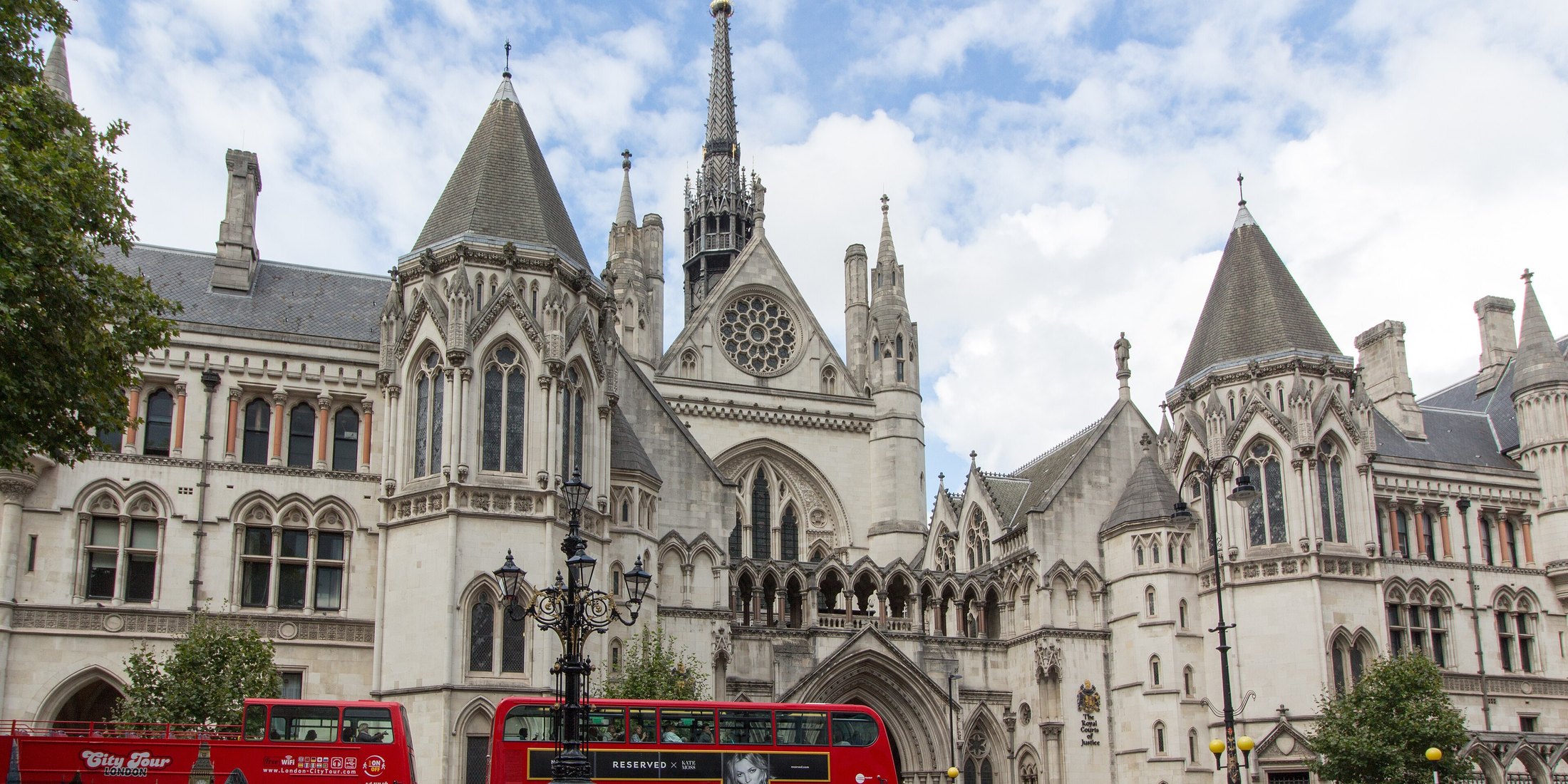
Every year collecting societies receive money they cannot pay to the right person, because the data arriving with a performance does not identify the work or its writer. Dave Rowntree argued that the way PRS shares out those unmatched sums quietly favours publishers over writers, and tried to bring the complaint on behalf of a class in excess of 160,000 people. On 29 June 2026 the Court of Appeal dismissed his appeal, and the proceedings ended with it.
01
What black box royalties are
When PRS receives money for a performance but the accompanying data is inaccurate or insufficient, it cannot match that money to the correct writer or publisher. The industry calls the resulting pool black box royalties, and Rowntree's pleading used that phrase.
PRS prefers the flatter term "unidentified royalties", and its reason is worth recording: the society says the problem is not a failure of transparency but the absence of the information that would allow the sums to be matched at all. Nobody is withholding the answer. The answer was never supplied.
02
The rule under challenge
Under the PRS's existing rules, unmatched royalties are distributed to writer and publisher members in the same proportions as royalties that did match — pro rata distribution.
The complaint was that this is unfair to writers, because a greater proportion of the money sitting in the unmatched pool is, in aggregate, likely to be attributable to writers than to publishers. If that is right, sharing the pool according to the pattern of matched earnings systematically routes writers' money to publishers. Rowntree said that amounted to an abuse of a dominant position under the Chapter II prohibition in section 18 of the Competition Act 1998.
03
The number everyone reported, and what it actually was
Coverage of this case has generally described it as a £200m claim. The judgment shows that figure doing rather different work.
PRS estimated the unidentified royalties paid to publisher members over the relevant period at about £55m. Rowntree's side contended that up to £150m more could have reached publishers through arrangements the first figure excluded. The Tribunal could not resolve the dispute and proceeded on the basis that around £200m had potentially been paid to publishers.
The claim was never that £200m was owed. It was for some proportion of that sum — and the Tribunal recorded that Rowntree was unable to produce an estimate of what that proportion should be. That gap is the case.
04
Why certification failed
A collective claim has to clear certification before its merits are ever examined. That gateway asks whether the case is suitable to be run on behalf of a class, not whether the alleged abuse happened.
To award aggregate damages the Tribunal would have to construct a counterfactual: what writers would have received under a fairer rule. And here the Tribunal identified the trap at the centre of the claim. Where the data does not let PRS identify the work, it is prima facie unknowable what proportions of those royalties are owed to publishers and to writers. The expert report did not explain how auditing the data could establish that unmatched money was falling more heavily on writers, nor how the expected distribution was to be ascertained.
Allowing for the broad axe appropriate at certification, the Tribunal still concluded that no plausible approach to estimating the counterfactual sums had been identified, even in general terms — and therefore no sufficiently credible method of assessing damages.
05
The economics the Tribunal weighed
The costs side was recorded too. Rowntree's own costs of the proceedings were estimated at £13m, and a litigation funding agreement would have entitled the funders to a substantial fee scaling with how long the case ran.
Set against a claim whose size nobody could state, the Tribunal doubted the cost-benefit favoured certification at all, observing that a successful class might in effect find itself contributing to the costs and the funders' fee out of its own recovery.
06
The Court of Appeal's answer
Lord Justice Miles, with Zacaroli and Nugee LJJ agreeing, dismissed both grounds of appeal. The disposal is unambiguous: the proceedings must therefore be dismissed.
The reasoning turns on an absence rather than a defence. A distribution rule cannot be shown to be unfair unless there is a plausible alternative rule to measure it against, and no such rule was offered. The "true" distribution of unmatched money is unknowable precisely because the information that would establish it is missing — had it existed, the royalties would have been matched and paid in the first place.
07
What is left standing
The judgment closes this route. It does not find that the pool is fairly distributed, because the merits were never tried. The scale, age and allocation of unmatched royalties remain largely invisible to the writers whose performances generate them.
The practical lesson for anyone contemplating the next attempt is specific rather than rhetorical. Proving that a collecting society's allocation is unfair requires arriving with a workable rule a tribunal could apply instead — a counterfactual built from data that exists. Absent that, the circularity holds: the money cannot be traced, so the unfairness cannot be measured, so the claim cannot be certified.
Comments
Sign in to join the discussion.