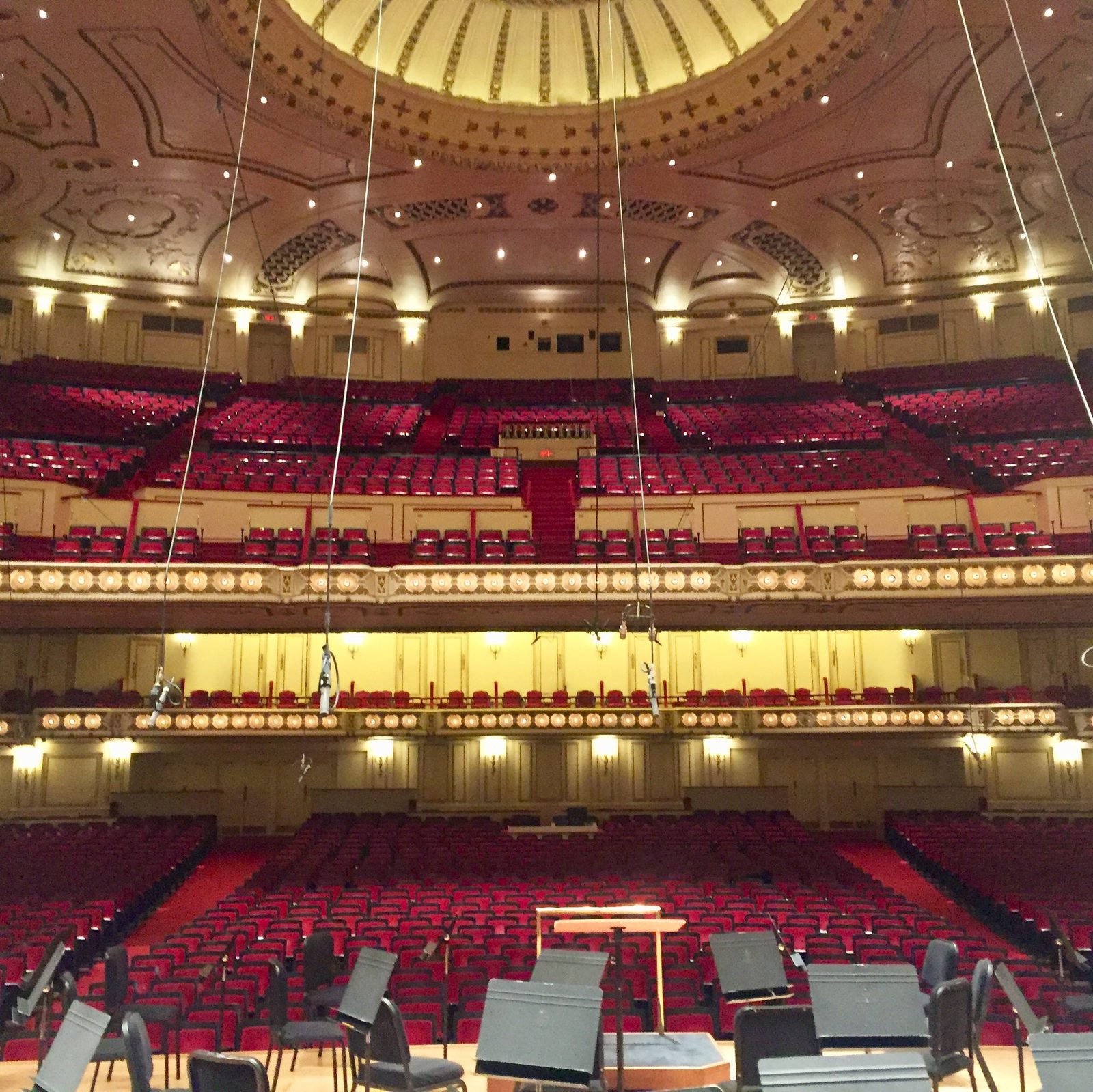
The St. Louis Symphony Orchestra closed Powell Hall in May 2023 and spent two years and $140 million rebuilding it. When it reopened in September 2025, as the heart of the new Jack C. Taylor Music Center, the question every capital campaign leaves behind was waiting: would the people come back?
They did, and then some. The orchestra's 17 August 2026 release reports that the inaugural season in the new building "welcomed more than 180,000 people to experience live music in person, an 18 percent increase from the most recent season in Powell Hall," the 2022–23 season before the closure. The orchestra's own accounting a year earlier, covering the two seasons it spent playing away from Powell Hall, put roughly 40 per cent of ticket buyers as new to the SLSO.
On 16 September the orchestra opens its 147th season the way it has opened seasons for decades: free, outdoors, on Art Hill in Forest Park, under Music Director Stéphane Denève, in front of a crowd that has historically run to tens of thousands. Here is what was built, what it cost, who paid, and what the first year says about the bet.
What was built
The Jack C. Taylor Music Center is the renovated and expanded Powell Hall, the orchestra's home since 1968 and a former movie palace that turned one hundred in 2025. The project added a new entrance and public spaces, expanded the lobby, restored the auditorium, and built the Steward Family Education and Learning Center, a dedicated in-house rehearsal and education space for the choruses and Youth Orchestra, according to reporting by St. Louis Public Radio, the orchestra's ribbon-cutting release and the St. Louis American at the opening.
The construction cost was $140 million. That figure matters because of what sits beside it.
A hall that turned one hundred while it was closed
Powell Hall opened in 1925 as the St. Louis Theatre, a movie palace, and the orchestra made it its home in 1968. The building's centennial fell in 2025, during the renovation, so the SLSO celebrated a hundredth birthday by reopening the doors.
The renovated hall seats 2,150, with more legroom and additional accessible positions, according to the orchestra's Powell Hall page. The project upgraded acoustics and lighting, added a multi-storey lobby, an outdoor plaza, a coat check and expanded restrooms, elevators and concessions, and built in multiple accessible entrances and a sensory-sensitive viewing room. Those are unglamorous words for a concert hall, and they are the ones that matter to a first-time visitor: a first visit is decided by whether the building is easy, not by whether it is beautiful. This one is now both.
Who paid
The orchestra's campaign for the project launched in 2022 with a $100 million goal and raised it to $155 million as the scope grew. It raised $173 million, according to the reporting cited above, exceeding the goal by $18 million and covering the construction cost in full with money left over. The orchestra's 2025 State of the Orchestra report had already described the campaign as more than 98 per cent funded before opening, with $140 million allocated to the building and $15 million to the endowment.
A hall paid for before it opens is rarer than it should be. Concert-hall projects are notorious for opening with debt that then competes with the orchestra's operating budget for the next two decades. St. Louis opened its hall with a surplus and an endowment contribution. Whatever else the first season shows, it shows a board and a donor base that did the arithmetic before the ribbon.
Marie-Hélène Bernard, the orchestra's president and chief executive, in the state-of-the-orchestra report: "Your dedication fuels our mission and inspires our commitment to the vibrant St. Louis region."
The first season
The numbers the orchestra has published, from the August 2026 release and the January 2025 report that preceded the reopening:
| Measure | Figure | Period |
|---|---|---|
| Attendance, all in-person programmes | 180,000+ | 2025–26, first season in the new hall |
| Change from the 2022–23 season in the old hall | +18% | 2025–26 |
| Ticket buyers new to the SLSO | about 40% | 2023–24 and 2024–25, on the road |
| Students and teachers served | 500,000+ | 2023–24 and 2024–25 |
| Artists performing under the SLSO banner | 400+ | January 2025 report |
Two of those lines deserve a second look.
An 18 per cent attendance increase after a two-year closure is not a rebound; it is growth on top of a full recovery. Audiences that leave during a closure do not always come back, and orchestras that reopen renovated halls often report a first-season bump followed by regression. St. Louis will be measured on the second season, and the orchestra knows it. And 180,000 was reached with a season that also included world premieres by Kevin Puts, with Joyce DiDonato, James Lee III and Nathalie Joachim, a Carlos Simon double concerto with Hilary Hahn and Seth Parker Woods, and Strauss's Ein Heldenleben on the opening weekend, which is the kind of range that fills a hall in St. Louis specifically.
The 40 per cent figure is the one that will decide the next decade, and it is worth being precise about when it was earned: during the two seasons the orchestra spent at the Stifel Theatre and the Touhill, with no hall of its own. Four in ten ticket buyers new to the orchestra, found while homeless, means the reopened building inherited an audience that had already been widened. Whether those people return to Powell Hall is the orchestra's job from here, and its education numbers, half a million students and teachers over the same two seasons, suggest it has been working on that pipeline for longer than the construction took.
Sixteen September, Art Hill, free
The season-opening concert in Forest Park is the SLSO's oldest tradition of access. On Wednesday 16 September at 7 p.m., Denève leads Beethoven, Copland and Respighi alongside John Williams film scores, Sousa, an Armed Forces tribute and both resident choruses, with a family zone and food trucks on the hill in front of the Saint Louis Art Museum, and fireworks over the Grand Basin to finish. It is free.
The hall's own opening weekend follows on 26 and 27 September, with Denève and the pianist Yefim Bronfman in an Italian-themed programme of Berlioz, Liszt, Andrea Tarrodi and Respighi. In between, on 18 to 20 September, the orchestra plays John Williams' score to Harry Potter and the Chamber of Secrets live to the film under Justin Freer, which is the kind of programme that brings first-time ticket buyers through a door.
The sequence is deliberate: a free night for the city, a film night for families, then the subscription season. Each is a door, and they open in order of how far a newcomer has to walk.
If you go
- Wednesday 16 September, 7 p.m., Art Hill, Forest Park. Free. Denève conducts Beethoven, Copland, Respighi, John Williams; family zone and food trucks.
- 18 to 20 September, Powell Hall. Harry Potter and the Chamber of Secrets in concert, Justin Freer conducting.
- 26 and 27 September, Powell Hall. Opening weekend: Denève and Yefim Bronfman in Berlioz, Liszt, Tarrodi and Respighi.
Details as announced by the orchestra on 17 August; tickets and updates at slso.org.
Why a renovated hall is not just a renovated hall
There is a version of the concert-hall story that is about acoustics and gilt, and St. Louis has both. The more useful version is about what a building lets an orchestra do that it could not do before.
Powell Hall opened in 1925 as a movie theatre; it was never designed for an orchestra's rehearsals, education programmes or the crowds a modern season brings. The project, as the orchestra and local reporting described it at the opening, expanded the building's public and working spaces around the restored auditorium, which is what let 180,000 people move through the building in a season, and what gives the programmes that reached 500,000 students and teachers during the closure a permanent room of their own. A hall is a machine for admitting people, and this one admits more.
The orchestra also kept its chamber series at the Pulitzer Arts Foundation, now in its 23rd season, and its community programming across the region. The centre is the hub, not the whole.
The test of the second season
Every orchestra that reopens a hall gets a first-year bump, and the honest measure is what happens after the novelty. St. Louis has three things going for it in year two that most reopened halls do not.
The first is Stéphane Denève, music director since 2019, whose programming across the first season ran from three world premieres to a Simon double concerto with Hilary Hahn to Ein Heldenleben, and who opens year two with Bronfman. A hall fills on its first season because it is new; it fills on its second because of what is on the stand.
The second is the Live at the Pulitzer chamber series, now in its 23rd season, which keeps the orchestra's musicians in front of a different audience in a different building across town. Institutions that concentrate everything in one hall are hostage to that hall. St. Louis kept its second front door open through the closure and after it.
The third is the education number. Half a million students and teachers over two seasons is not an outreach statistic; it is the next decade's subscribers being introduced to the orchestra before they can drive. The renovated centre gives those programmes a dedicated home in the building, the Steward Family Education and Learning Center, which is the least visible and probably the most consequential change the $140 million bought.
The comparison the field will make
Cadenza has spent much of this year reporting on American orchestras that are cutting seasons, fighting their musicians, or closing. St. Louis is worth reporting for the opposite reason, and the reasons it worked are not mysterious: a campaign that overshot its goal, a building designed around access rather than prestige, a season programmed for the city it is in, and a free concert on a hill every September that has told St. Louis for decades that this orchestra belongs to it.
The SLSO currently lists two open positions on Cadenza, a Section Violin I audition and a Director of Production post, both published listings. Its profile is on the organisations index, and every open orchestral position in the country is on the jobs board, free to musicians.
Sources: St. Louis Symphony Orchestra, 17 August 2026: September concerts; SLSO, 2025 State of the Orchestra; St. Louis Public Radio, 19 September 2025; SLSO, ribbon-cutting release, 19 September 2025; St. Louis American, 146th season; SLSO, 2025–26 season announcement; SLSO, Forest Park concert.
Cover photograph: Powell Hall, St. Louis, photographed in 2019 before the renovation. Timseid1, CC0, via Wikimedia Commons.
Comments
Sign in to join the discussion.