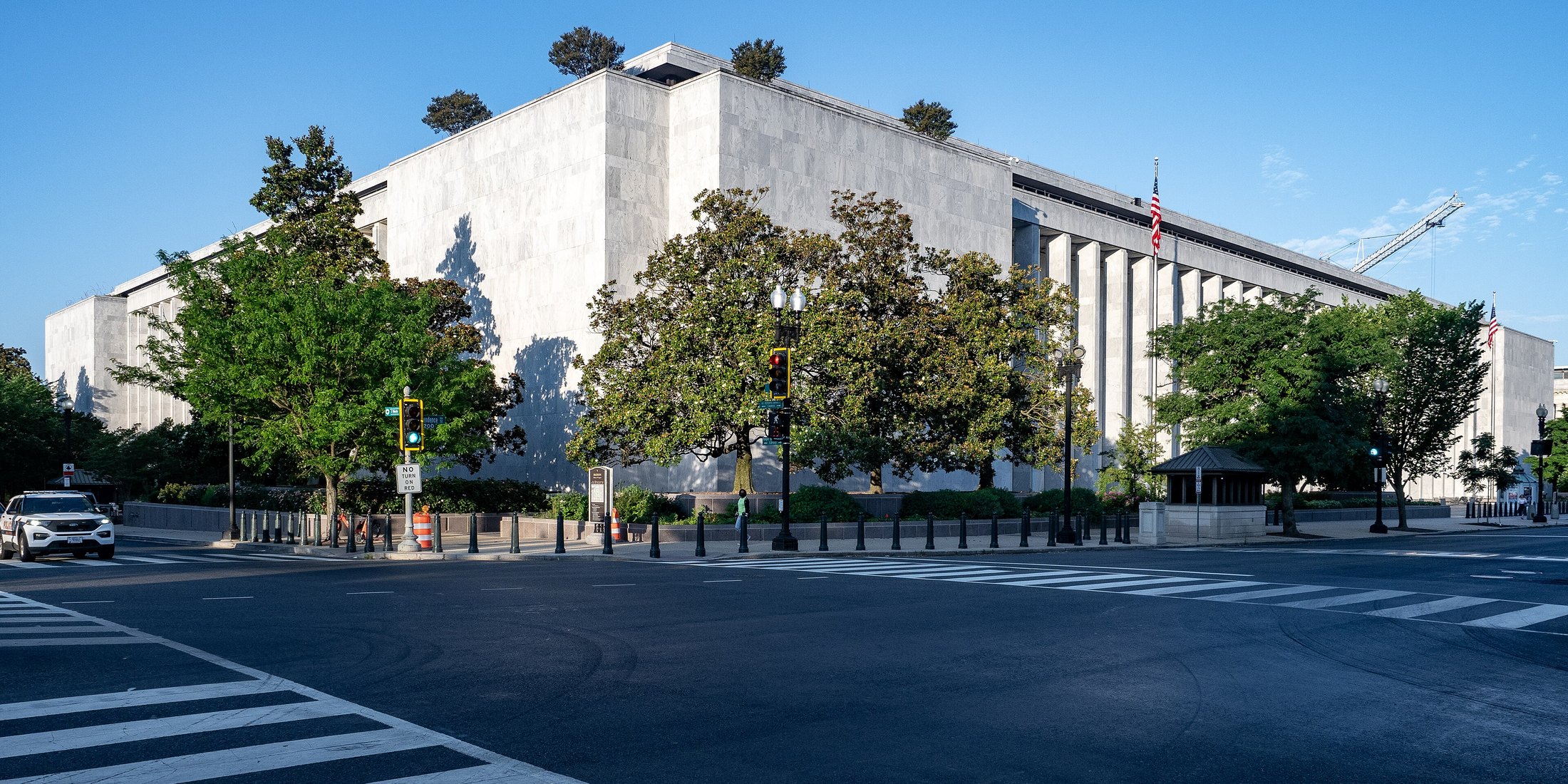
Stephen Thaler spent eight years trying to register a copyright in a work he insisted no person had authored. He named his own system, the Creativity Machine, as the sole author and never claimed any human contribution at all. On 2 March 2026 the Supreme Court denied certiorari, leaving standing the D.C. Circuit's holding that an author under the Copyright Act must be a human being.
01
The registration that was designed to fail
Thaler's application was not an ordinary one that ran into trouble. It was constructed to test a proposition. He listed an artificial system as the sole author and himself as owner by virtue of ownership of the machine, and at no point claimed the image contained human authorship.
The Copyright Office refused, on the ground that the identified creator was not human. Thaler challenged that refusal through the federal courts, and the case became the cleanest possible vehicle for the question: not whether AI-assisted work can be registered, but whether a machine can be an author at all.
02
What the D.C. Circuit held
The court of appeals held that the Copyright Act's text, structure and history require human authorship — that the statute is built throughout on assumptions only a person can satisfy, from the measurement of a term by a life to the capacity to hold and transfer rights.
Critically, the holding addressed a work presented as autonomously generated. It did not purport to resolve the copyrightability of works made with AI assistance, where a human selects, arranges, edits or adds expression. That question was expressly left open, and the Copyright Office has since been working through it in its own reports on copyrightability.
03
What a denial of certiorari means
This is the point most coverage overstates. A denial is not an opinion. The Supreme Court has not endorsed the D.C. Circuit's reasoning, has not adopted its analysis, and has set out no reasoning of its own. It has declined to review the case.
The consequence is practical rather than doctrinal: the appellate judgment stands and binds within its circuit, and carries persuasive weight elsewhere. The federal government had urged the Court to deny review, and the Court did.
What it does establish, in effect, is that the human-authorship rule will not be changed by litigation of this kind. Any change now has to come from Congress.
04
Why this matters to musicians more than it seems to
A picture generated by a machine looks distant from a working musician's concerns. It is not, because the rule it confirms cuts in two directions at once.
It means a fully generated track has no author and therefore no copyright — nobody can assert exclusive rights over it, and a platform flooding a catalogue with synthetic music is flooding it with unprotectable material. It also means that a musician who leans heavily on generative tools may find the resulting work protected only in the parts they can point to as their own.
The registration consequence is concrete: applicants have to identify the human-authored expression and disclaim unprotectable generated material where required. That is a documentation habit worth acquiring before it is enforced against a release you care about.
05
The boundary that is left
The easy case is now closed. A machine named as sole author cannot be registered, and the Supreme Court has declined to reopen it.
The hard cases are all still open, and they are the ones that will actually be litigated: how much human selection, revision and arrangement converts a tool-assisted output into human authorship; how a court should treat prompt engineering; and where the line falls in a production where a person shaped an output they could not have produced unaided.
Thaler settled the question nobody in practice needs answered. The questions everyone needs answered were carefully kept out of it.
Comments
Sign in to join the discussion.