Institution Profile · April 2026
A New Model for
Music Education
72 international faculty. 55 certificate programs. 6 competitions. 20 fellowships. Opera, ballet, conducting, world music. A record label. A career launch hub. One platform. Open to the world.
72+
International Faculty
From 20+ countries
55+
Certificate Programs
Accredited credentials
43
Programs & Divisions
Every discipline covered
20+
Fellowships
Conducting to film scoring
6
Competitions
Concerto, piano, composition
5
Pedagogy Methods
Suzuki, Orff, Kodály, Dalcroze, Gordon
6
World Music Regions
Indian, African, Latin, ME, Asian, Celtic
∞
Global Access
No visa. No relocation. No barriers.
Last week, the Cadenza team received an inquiry from an organization we had not encountered before: The Global Conservatory. They asked about listing their programs on the platform and introducing themselves to the Cadenza community.
We looked at their website. Then we looked again. Then we spent an hour going through every page, every faculty profile, every program listing, every competition, every certificate track. What we found was not a Zoom lesson marketplace or a glorified tutoring app. It was something considerably more ambitious.
This is our profile of The Global Conservatory — what it is, what it offers, and why it caught our attention.
What It Is
The Global Conservatory (TGC) describes itself as “the world's first global music academy.” Founded in 2024 and headquartered in Hong Kong, it operates as a fully online conservatory offering private lessons, group classes, certificate programs, competitions, masterclasses, summer intensives, and career development — all delivered by an international faculty.
That description undersells it. Most online music platforms offer one or two of those things. TGC offers all of them — and integrates them into a single ecosystem that looks more like a traditional conservatory translated into a digital-first format than anything else currently available.
72+
International Faculty
55+
Certificate Programs
20+
Instrument Families + Voice
6
International Competitions
20+
Fellowships & Residencies
Worldwide
No Visa Required
“Study with world-class musicians from the safety of your home — anywhere on earth.”
The Global Conservatory
The Faculty
The first thing that stands out is the faculty roster. TGC has assembled over 72 international teachers across every major instrument family, voice, composition, music technology, and music business. These are not anonymous tutors — they are performing professionals, conservatory faculty, and competition winners from around the world.
Students can browse faculty profiles, watch introduction videos, read credentials, and book trial lessons before committing. The model is closer to how a conservatory operates — you choose your teacher based on their background and specialization — than how most online lesson platforms work.
The geographic spread is notable. Faculty based in the US, Europe, Asia, and Latin America. A student in Lagos can study with a professor in Vienna. A student in Jakarta can prepare for a US conservatory audition with a teacher who has sat on admissions committees. This is what “global” actually looks like when it's not just a marketing word.
The Programs
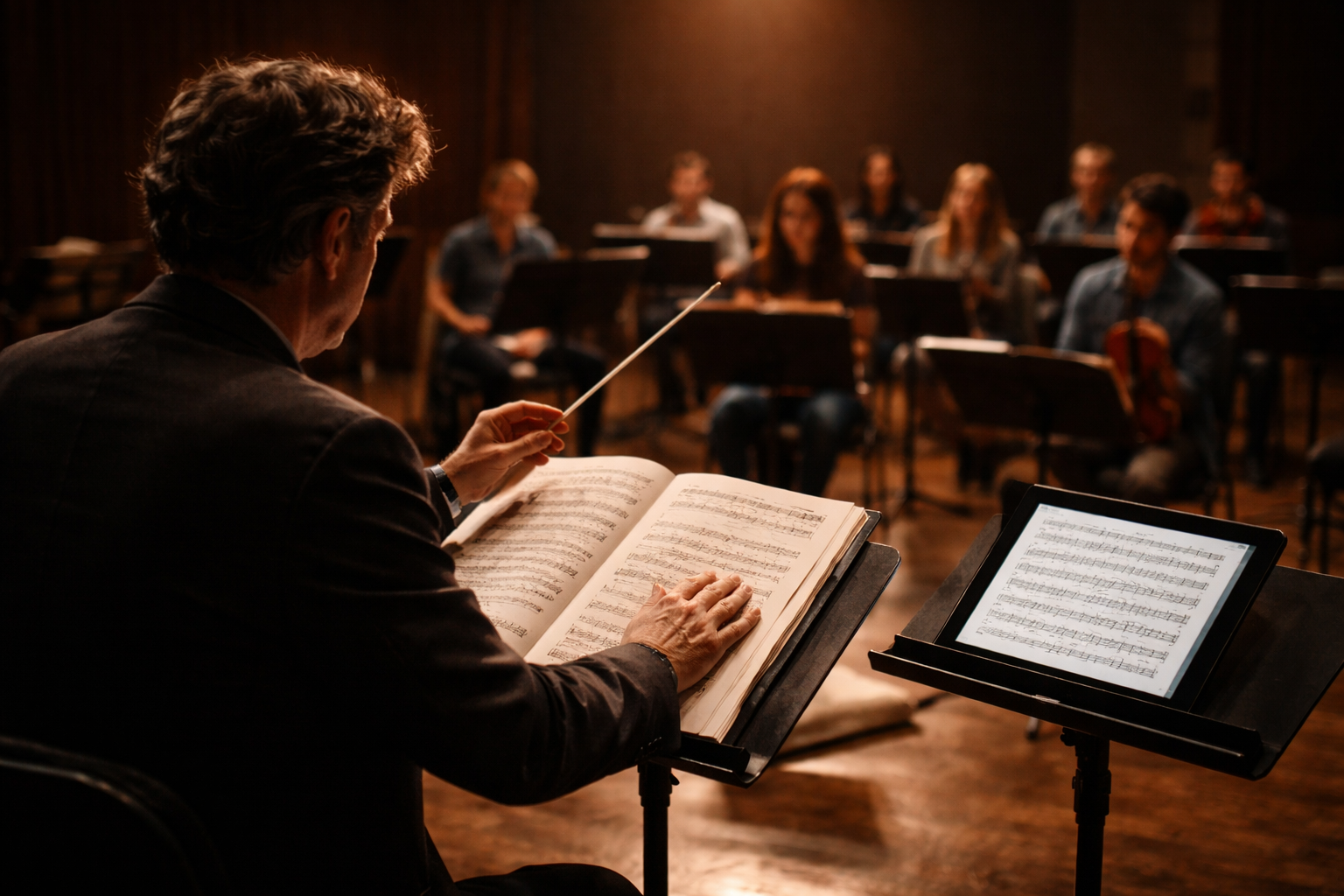
TGC offers three tiers of instruction: private lessons, group classes, and certificate programs. The certificates are where it gets interesting.
Performance
- •Private lessons across 25+ instruments
- •Suzuki method (all levels)
- •Early childhood (ages 4-8)
- •Pre-college tracks
- •Audition preparation
Academic
- •Music theory (beginner to advanced)
- •Composition and orchestration
- •Music history and analysis
- •Jazz studies and improvisation
- •Conducting
Technology & Production
- •Audio engineering
- •Music production (DAW-based)
- •Electronic music and DJ
- •Game audio and scoring
- •AI and music (emerging field)
Business & Career
- •Music entrepreneurship
- •Marketing for musicians
- •Rights, licensing, and publishing
- •Artist management
- •Career launch hub and job placement
Pedagogy
- •Suzuki teacher certification
- •Orff Schulwerk certification
- •Music education methodology
- •Teaching practicum
- •Curriculum design
World Music
- •Indian classical (sitar, tabla, voice)
- •Latin American traditions
- •African drumming and voice
- •Middle Eastern instruments
- •East Asian and Celtic traditions
The breadth is remarkable. We have not seen another online platform that covers Suzuki teacher certification, AI and music, Orff Schulwerk, game audio, Indian classical sitar, and audition prep for Western conservatories — all under one roof. Most institutions specialize. TGC has decided to be comprehensive.
And then there are the programs that no other online platform — and frankly, few traditional conservatories — offer at all:
Instrument repair. Grant writing. Teaching neurodiverse students. Music for social impact. Accessible music-making. These are not afterthoughts — they are dedicated programs with their own curriculum. This is an institution that has thought about every corner of a musician's life and career.
55 certificate programs. 20+ fellowships. 6 international competitions. Opera, ballet, musical theater, marching arts, conducting, composition, production, business, pedagogy, world music, wellness, and social impact. Under one roof. Online. Global.
The Global Stage
Where TGC separates itself from every online lesson platform is what happens after the lesson. Most platforms end at instruction. TGC has built an entire performance and competition infrastructure.
Live Performance Recitals
Regular online performance opportunities for students at all levels. Archived for portfolios.
International Competitions
Concerto, composition, piano, chamber music, and young artist divisions. Multiple age categories.
Masterclass Series
Guest artists and faculty lead public masterclasses. Students perform and receive live coaching.
Performance Fellowships
Advanced students selected for featured performance opportunities and mentorship tracks.
Orchestra Academy
Ensemble training with conducting instruction and orchestral repertoire preparation.
The Global Stage Archive
Recorded performances available for review, sharing, and building a performance portfolio.
This is significant. One of the primary criticisms of online music education is that it isolates students — you learn in a room, alone, with a screen. TGC has built a layer of community, performance, and competition on top of the instruction. Students have somewhere to play, not just practice.
For young musicians building audition portfolios, competition résumés, and performance experience, this infrastructure is not a feature — it is a necessity. Traditional conservatories provide it through recitals, juries, and ensemble programs. TGC provides it digitally.
The Career Pipeline
The final layer — and arguably the most unusual — is career support. TGC operates:
Career Launch Hub
Job placement resources, portfolio tools, and career pathway guidance for graduates.
Launch Fund
Career grants for students transitioning from study to professional work.
Alumni Mentorship Network
Graduates connected with working professionals for ongoing career advice.
Center for Music Entrepreneurship
Dedicated business training: marketing, rights management, self-production, freelancing.
Record Label & Publishing
TGC operates its own label and publishing division. Students can release recordings.
Scholarships & Financial Aid
Need-based and merit-based financial support for students who cannot afford full tuition.
A record label. A publishing division. A career grant fund. A mentorship network. This is not typical of an online lesson platform. This is the infrastructure of a full institution that has thought about what happens after a student finishes a certificate — not just during.
The music industry's pipeline problem is well-documented. Conservatories train performers. The market needs entrepreneurs, producers, educators, and technologists. TGC has built programs for all of them — and created the career infrastructure to bridge the gap between credential and employment.
The Comparison: What $86,000 Gets You vs. What Free Gets You
Let's put this in context. Here is what the traditional conservatory model costs — and what it provides.
| Institution | Annual Cost | Online Programs | Access |
|---|---|---|---|
Juilliard | $86,582/yr Tuition + room & board | Limited. No full online degrees. | Acceptance rate ~6%. Relocation to NYC required. |
Curtis Institute | Full tuition scholarship Room & board not covered | None. On-campus only. | Acceptance rate ~4%. Philadelphia residency required. |
Manhattan School of Music | ~$72,000/yr Tuition + fees + housing | Very limited. | On-campus. NYC relocation required. |
New England Conservatory | ~$74,000/yr Tuition + fees + housing | Some continuing ed courses. | On-campus. Boston relocation required. |
Berklee Online | $59,160 total Full bachelor's degree (120 credits) | Full degrees and 200+ courses online. | Open enrollment for certificates. Global. |
The Global Conservatory | Varies by program Trial lessons available. Scholarships offered. | 100% online. 55+ certificates. Full ecosystem. | Open worldwide. No relocation. No visa required. |
Juilliard costs $86,582 per year. That is $346,328 for a four-year undergraduate degree. The school provides extraordinary instruction, world-class facilities, and a network that opens doors. It also requires you to live in New York City, pass a 6% acceptance rate, and — for most students — take on significant debt.
Curtis provides full tuition scholarships — but accepts roughly 4% of applicants. You must relocate to Philadelphia. You must audition in person. If you live in Lagos, São Paulo, or Jakarta, the travel costs alone may be prohibitive — even if you are the most talented applicant in the pool.
Berklee Online is the closest existing comparison to TGC. It offers full online degrees, 200+ courses, and certificate programs. It is excellent. It is also primarily focused on contemporary and popular music — jazz, rock, electronic, production. If you are a classical violinist preparing for an orchestral career, Berklee Online is not built for you.
The question is not whether The Global Conservatory is better than Juilliard. The question is whether a student in Nairobi, Bogotá, or rural India — who will never set foot in Lincoln Center — deserves access to world-class instruction. TGC says yes.
Feature by Feature
| Feature | Juilliard | Curtis | Berklee Online | TGC |
|---|---|---|---|---|
| Private lessons with faculty | ✓ | ✓ | ✓ | ✓ |
| Certificate programs | ✗ | ✗ | ✓ | ✓ |
| 100% online access | ✗ | ✗ | ✓ | ✓ |
| International competitions | ✗ | ✗ | ✗ | ✓ |
| Live online recitals | ✗ | ✗ | ✗ | ✓ |
| Performance archive/portfolio | ✗ | ✗ | ✗ | ✓ |
| Record label | ✗ | ✗ | ✓ | ✓ |
| Career launch hub | ✓ | ✓ | ✓ | ✓ |
| Music business training | ✗ | ✗ | ✓ | ✓ |
| Suzuki teacher certification | ✗ | ✗ | ✗ | ✓ |
| Orff Schulwerk certification | ✗ | ✗ | ✗ | ✓ |
| World music (sitar, tabla, etc.) | ✗ | ✗ | ✗ | ✓ |
| AI & music programs | ✗ | ✗ | ✓ | ✓ |
| Game audio / scoring | ✗ | ✗ | ✓ | ✓ |
| Orchestra academy | ✓ | ✓ | ✗ | ✓ |
| Scholarships available | ✓ | ✓ | ✓ | ✓ |
| No relocation required | ✗ | ✗ | ✓ | ✓ |
| No visa required | ✗ | ✗ | ✓ | ✓ |
| Trial lessons | ✗ | ✗ | ✗ | ✓ |
TGC checks every box. That does not mean it replaces Juilliard or Curtis — the prestige, the in-person mentorship, the physical ensemble experience, and the alumni network of a top-tier conservatory are irreplaceable. But for the 99% of aspiring musicians who will never attend those institutions, TGC offers something that did not previously exist: a comprehensive, credentialed, globally accessible alternative.
Beyond Music: The Full Performing Arts
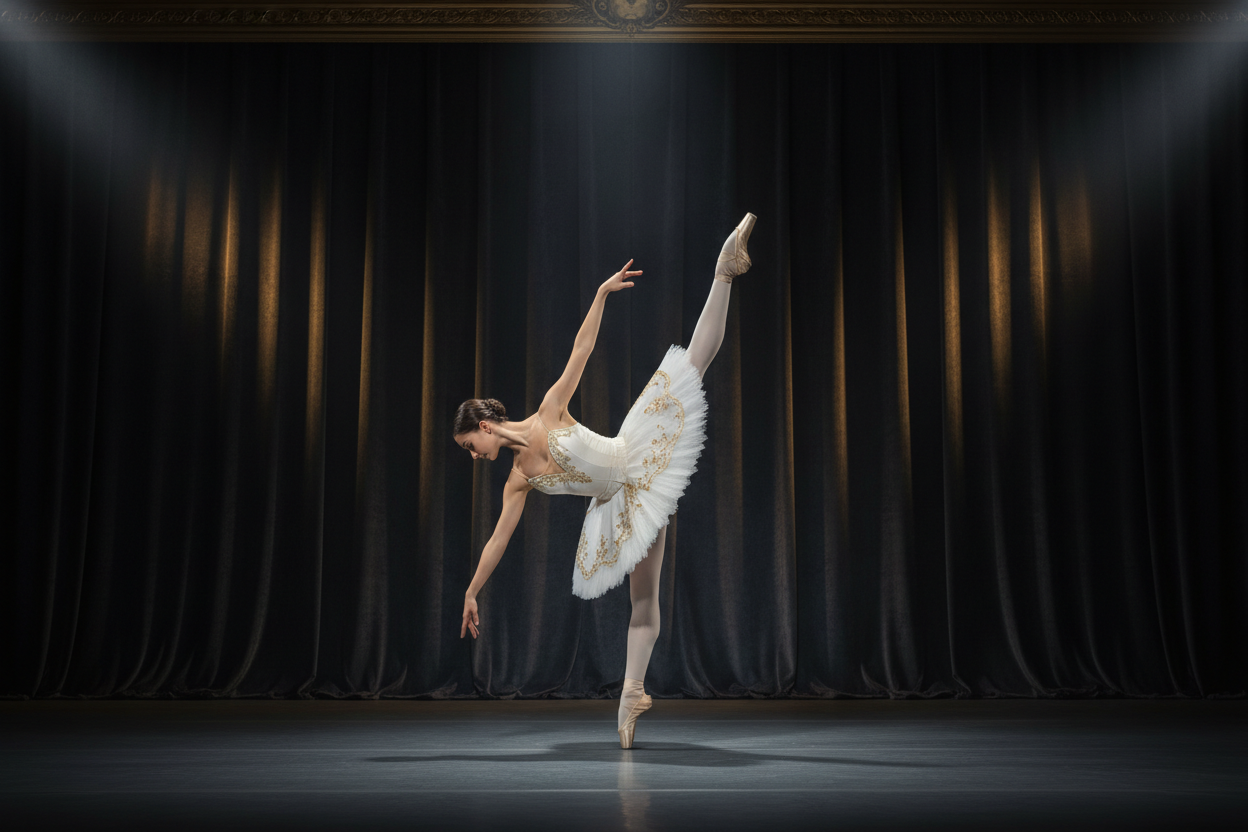
Here is where TGC leaves every other online platform behind entirely. This is not just a music school. It is a performing arts institution.
Opera Studio
Full opera training: vocal coaching, staging, role preparation, diction in Italian, German, French, and Russian.
Musical Theater Program
Triple-threat training: voice, acting, and dance for musical theater careers.
Dance & Choreography
Ballet, contemporary, and choreography instruction with professional dancers.
Choral Arts & Youth Choir
Choral conducting, ensemble singing, and youth choir training.
Conducting Fundamentals
Baton technique, score study, rehearsal management. Certificate program available.
Marching Arts
Drum corps, marching band, color guard instruction — a rarity in any online platform.
Orchestra Academy
Orchestral repertoire, audition preparation, sectional coaching, mock auditions.
Elite Ensembles
Chamber music, wind ensemble, brass band, big band, youth orchestra — all online.
Gap Year & Postgraduate
Structured programs for students between institutions or after graduation.
Name one other online platform that offers opera studio training, ballet, musical theater, marching arts, conducting, AND a full orchestra academy. The answer is there is not one. Juilliard has these divisions — but requires you to live in Manhattan and pay $86,000 a year. Berklee Online has nothing for classical, nothing for ballet, nothing for opera. TGC has built the same breadth as the world's top conservatories — digitally.
Ballet. Opera. Musical theater. Dance. Conducting. Marching arts. Choral arts. No other online platform on earth covers the full performing arts. TGC does.
The Dance & Choreography program is particularly significant. There are millions of dance students worldwide — ballet, contemporary, jazz — who train with local teachers of varying quality. Access to professional choreographers and ballet instructors from international companies has always required travel, auditions, and tuition at physical academies. TGC makes it possible for a ballet student in Manila, a contemporary dancer in Nairobi, or a musical theater performer in São Paulo to study with professionals they would never otherwise meet.
The Opera Studio integrates vocal coaching, staging, diction in Italian, German, French, and Russian, and role preparation — the same components that define opera programs at places like the Met's Lindemann Young Artist Development Program or the Merola Opera Program in San Francisco. Those programs accept a handful of singers per year. TGC accepts anyone who is serious.
The Musical Theater Program offers triple-threat training: voice, acting, and dance. Broadway-bound students no longer need to move to New York or London at 18 to begin serious training. They can start from wherever they are, build their skills, and arrive prepared.
The marching arts program is a rarity even among physical institutions. There are tens of thousands of students in drum corps and marching band programs across America — a uniquely American tradition — who have never had access to private coaching from top-tier instructors. TGC offers it. Nobody else does.
Good for the World
There is a larger argument to be made about what an institution like TGC means — not just for individual students, but for global culture.
Classical music, opera, ballet, and the performing arts have been concentrated in a handful of cities for centuries. Vienna, London, New York, Paris, Berlin, Moscow. If you were born outside these centers, your path to professional training required leaving your country, your family, and your community. Most people could not do this. Most talent was therefore lost.
TGC does not solve every problem. It cannot replace the experience of playing in a physical ensemble, walking into a 2,000-seat hall, or learning from a teacher in the same room. But it can do something that no physical institution can: reach everyone.
Sub-Saharan Africa
Fewer than 10 conservatories for 1.2 billion people. Almost no classical music infrastructure outside South Africa.
South & Southeast Asia
3 billion people. A handful of conservatories in India, Singapore, and the Philippines. Massive demand, minimal access.
Latin America
Strong musical tradition. Limited institutional infrastructure outside Brazil, Argentina, and Mexico. El Sistema reached 700,000 — but only in Venezuela.
Rural areas everywhere
Even in the US, UK, and Europe — students in rural communities have no access to conservatory-level instruction. The nearest qualified teacher may be hundreds of miles away.
A single institution that offers 72+ faculty across every discipline, accessible from anywhere with an internet connection, with scholarships and financial aid, competitions and performance opportunities, and career support — this is not a business. This is infrastructure. It is cultural infrastructure for the entire world.
The Global Conservatory did not just build a platform for students who want cheaper lessons. It built a platform for students who had no platform at all. The dancer in Kinshasa. The singer in Dhaka. The composer in La Paz. The pianist in rural Kentucky. The opera student in Cairo. For all of them, TGC is not an alternative to Juilliard — it is the only option.
For billions of people on earth, the choice is not between Juilliard and The Global Conservatory. The choice is between The Global Conservatory and nothing.

What This Actually Looks Like
Let's make this concrete. Imagine four students.
A 16-year-old violinist in Hong Kong
She wants to audition for a US conservatory. Her local teacher is good but has never sat on an American admissions committee. Through TGC, she takes private lessons with a faculty member who plays in the LA Philharmonic — from her living room. She enters TGC's Young Artist Competition for portfolio experience. She takes audition prep intensives and theory courses to strengthen her application. She has access to the same level of mentorship as a student at a US pre-college program — without leaving Hong Kong.
A 28-year-old freelance musician in Nashville
She can play anything. She cannot market herself, negotiate contracts, or manage her publishing rights. She enrolls in TGC's Music Entrepreneurship certificate. She takes courses in rights and licensing, marketing for musicians, and artist management. She graduates with a credential and a business plan. No conservatory she attended taught her any of this.
A 40-year-old piano teacher in rural Brazil
She has been teaching for 15 years using methods she learned as a student. She wants Suzuki certification but the nearest training program is in São Paulo — a 12-hour bus ride. Through TGC, she completes the full Suzuki teacher certification online, with mentorship from certified trainers, and practical teaching assignments with her own students. Her teaching transforms. Her students improve. She never left her town.
A 22-year-old in Lagos who wants to study composition
His country has no conservatory with a composition program. A visa to study in Europe or America is unlikely. Through TGC, he enrolls in the composition certificate program, studies orchestration with a professor who has scored Hollywood films, enters the International Composition Competition, and has his winning work recorded and released on TGC's own record label. His music reaches the world. He never left Lagos.
None of these scenarios are hypothetical in the sense that they are impossible. They are exactly what TGC was built for. The infrastructure exists. The faculty is there. The competitions, the certificates, the label, the career hub — all of it is live.
Whether the experience matches the promise is a question only students can answer over time. But the structure for all four of these stories exists today on theglobalconservatory.com.
A student in Hong Kong taking lessons with a member of the LA Philharmonic. A composer in Lagos releasing music on a global label. A teacher in rural Brazil earning a Suzuki certification. This is not the future. This is what TGC offers now.
20+ Fellowships and Residencies
This is the part that made us stop scrolling. TGC doesn't just teach. It has built a fellowship and residency infrastructure that rivals mid-tier conservatories:
The Global Conducting Fellowship
The Global Composer-in-Residence Fellowship
Solo Performance Fellowship
Chamber Music Fellowship
Vocal Arts Fellowship
Musical Theater Fellows Program
Jazz Composition & Arranging Fellowship
Film Scoring Fellowship
Teaching Artist Fellowship
Young Composer Prize
The Global Youth Orchestra
The Global Youth Choir
The Global Wind Ensemble
The Global Brass Band
The Global Big Band
The Global Marching Band
Collaborative Touring Units
Orchestra Academy
Elite Ensembles
Honorary Diplomas & Artist Recognition
A Global Youth Orchestra. A Global Youth Choir. A conducting fellowship. A composer-in-residence program. Film scoring fellowships. Collaborative touring units. This is not a lesson platform with pretensions. This is an institution with infrastructure.
For comparison: Juilliard has approximately 15 fellowship and residency programs. Curtis has fewer than 10. TGC has over 20 — and every one of them is accessible from anywhere in the world.
The Pedagogy Institute
TGC operates a dedicated Pedagogy Institute offering certification in five major teaching methodologies:
Suzuki
Mother-tongue approach. Ear-first. Ages 3+.
Orff Schulwerk
Movement, singing, improvisation. Elemental music.
Kodály
Voice-based. Solfège. Folk music foundations.
Dalcroze
Eurhythmics. Body movement as musical understanding.
Gordon MLT
Music Learning Theory. Audiation-based instruction.
We are not aware of any other online platform that offers certification in all five methods. Most teachers travel to in-person workshops — often at significant expense — to earn these credentials. TGC puts all of them online. For the 93% of music educators who are white (see our diversity investigation), making pedagogy training globally accessible is one concrete step toward changing who teaches music.
The Degree Question
The obvious question: can TGC grant degrees?
Not yet. TGC currently offers certificate programs and professional credentials — not accredited bachelor's or master's degrees. The platform references 7 degree pathways and mentions university credit and accreditation as part of its structure, which suggests degree programs are in development or being pursued through institutional partnerships.
This is worth watching. If TGC achieves accreditation — either through a university partnership or independent accreditation — it would become the first fully online, globally accessible conservatory offering accredited music degrees. That would change the landscape permanently.
For now, the certificates serve a different purpose: they are professional credentials, not academic degrees. A Suzuki teacher certification from TGC has value because it represents training, not because it carries university credit. A Music Production certificate matters to an employer because of what the student learned, not where the diploma was issued.
In an industry where the median orchestral musician earns less than many administrators and where the connection between a degree's cost and a graduate's income is increasingly tenuous, the question of whether a certificate from TGC is “worth less” than a $346,000 Juilliard degree is not as simple as it once was.
The 2030 Vision: Physical Campuses
Here is the part that transforms TGC from a platform into an institution.
The Global Conservatory has announced plans to open physical campus locations by 2030 — bringing the digital conservatory into the real world. The vision: satellite campuses in multiple cities across multiple continents, where online students can come for intensive residencies, ensemble work, recitals, and the in-person experiences that digital education alone cannot fully replicate.
This is the model that the world's most ambitious institutions are already pursuing:
Juilliard → Tianjin, China (2020)
A 350,000 sq ft campus — designed by Diller Scofidio + Renfro, the same firm behind Juilliard's NYC expansion. A 690-seat concert hall, 299-seat recital hall, 225-seat black-box theater. Funded by Chinese government partners: the Tianjin Economic-Technological Development Area and the Tianjin Innovative Finance Investment Company (TIFI, with 60.4 billion RMB in total assets). US-accredited Master of Music. First class: 39 students from 11 countries. A project that took 8 years from agreement (2012) to opening (2020) and required a partnership between Juilliard, the Tianjin Conservatory, and Chinese state investment entities with billions in assets. That is what it takes to open one campus in one city.
Berklee → Valencia, Spain (2012)
A 3,600 sq meter campus inside Valencia's iconic City of Arts and Sciences. Expanded in 2026 to accommodate 500 students per semester. Over 1,500 students from 71 countries have attended. Master's programs, study abroad, career center, Mediterranean Music Institute. 14 years from opening to expansion — and it still serves only one additional city.
The Global Conservatory → Multiple cities (by 2030)
Planned physical campuses for intensive residencies, ensemble programs, recitals, and examinations. Locations to be announced. The digital infrastructure already serves every country. Physical campuses will enhance — not replace — the global platform.
The difference is the direction — and the cost. The Tianjin Juilliard campus required a partnership with Chinese state investment entities holding 60.4 billion RMB (~$8.3 billion) in total assets. It required Diller Scofidio + Renfro. It required 8 years from agreement to opening. It required navigating two governments, a pandemic, and construction delays. The result: one building, in one city, serving 39 students in its first class.
Berklee Valencia took over a decade to expand from 300 to 500 students. One campus. One city. 71 countries represented — but everyone still has to fly to Spain.
This is the old model. Billions of yuan. Years of construction. Government partnerships. Architecture firms. And the result is always the same: one more building, in one more city, for a few hundred more students.
TGC is doing it in reverse. It started digital-first — reaching students in every country from day one — and will add physical locations to complement what already works online. The digital infrastructure is the foundation. The campuses are the capstone.
This is a fundamentally different strategy. Juilliard Tianjin serves one city. TGC online serves the world. When TGC opens physical locations, they will not replace the online program — they will enhance it. Students who have been studying online for years will come for a two-week intensive, perform in a real hall, play in a real ensemble, and return home to continue their studies. The best of both worlds.
Juilliard built a campus in China. Berklee built a campus in Spain. TGC built a campus everywhere — and is now adding walls to it.
The Access Argument
Here are the numbers that matter:
Juilliard acceptance rate. 94 out of 100 applicants are turned away.
Curtis acceptance rate. 96 out of 100. The most selective conservatory in America.
Total cost of a 4-year Juilliard degree (before financial aid).
New England Conservatory annual cost. $296K for four years.
American children with zero access to school music programs. (See: our diversity investigation.)
Children worldwide with musical talent and no path to a conservatory — because of geography, cost, or visa barriers.
The traditional conservatory model was designed for a world in which the only way to study with a great teacher was to move to their city, enroll in their institution, and pay their tuition. That model worked for a century. It produced extraordinary musicians. It also excluded everyone who could not afford it, could not relocate, or could not get a visa.
The internet changed every other form of education — from university courses (Coursera, edX) to professional certifications (Google, AWS) to creative skills (MasterClass, Skillshare). Music education was the last holdout, partly because of the technical demands of teaching an instrument over video, and partly because the institutions that dominate the field had no incentive to change.
TGC is the first platform we have encountered that treats online music education not as a consolation prize — “you couldn't get into a real conservatory, so here's a video lesson” — but as a legitimate path with its own credentials, its own performance ecosystem, its own career infrastructure, and its own record label.
Juilliard accepts 6%. Curtis accepts 4%. The Global Conservatory accepts anyone with talent and an internet connection. That is not a lesser model. It is a different model — and it may reach more musicians than every traditional conservatory combined.
A Student's Journey at TGC
Browse 72+ faculty. Filter by instrument, style, and level. Book a trial lesson with a teacher who matches your goals. No commitment.
Weekly lessons with your chosen faculty member. Set your own schedule. Learn from wherever you are — your bedroom, your studio, a hotel room on tour.
Choose from 55+ certificate programs — performance, composition, production, business, pedagogy. Structured curriculum with milestones.
Apply for a live online recital. Perform for a real audience. Build your portfolio with recorded performances in the archive.
Submit to one of 6 international competitions — concerto, piano, composition, chamber music, young artist, songwriting. Compete globally.
Audition for the Global Youth Orchestra, Chamber Music Fellowship, or Conducting Fellowship. Collaborate with musicians worldwide.
Complete your program. Receive a credential from The Global Conservatory. Add it to your CV, your audition package, your teaching resume.
Access the Career Launch Hub. Apply for the Launch Fund (career grants). Connect with the Alumni Mentorship Network. Record on the TGC label. Teach on the platform.
Travel to a TGC campus for an intensive residency. Play in a real hall. Meet your teacher in person. Perform with your ensemble. Then go home and keep learning online.
From trial lesson to career launch — a complete path, entirely online, available to any musician anywhere. No other platform offers this journey. Most offer the first step. TGC offers all of them.
Who It's For
Pre-college students
Audition prep, Suzuki method, early childhood programs, youth competitions. A pathway to conservatory admissions.
Conservatory students
Supplemental instruction with international faculty. Theory, ear training, and repertoire coaching beyond what their institution provides.
Working musicians
Business skills, marketing, rights and licensing. The practical knowledge conservatories don't teach.
Career changers
Music production, audio engineering, music technology certificates. Entry points for people moving into the industry.
Music educators
Suzuki, Orff, and music education certifications. Professional development for teachers at every level.
Students in underserved regions
World-class faculty accessible from anywhere. No relocation required. Scholarships available.
The demographic that stands out: students who cannot access traditional conservatories. Geographic distance, financial constraints, visa requirements, and limited local faculty are real barriers for millions of talented musicians worldwide. TGC removes all of them. A student in rural Brazil has access to the same faculty and programs as a student in Manhattan.
This directly addresses the pipeline problem that our recent investigation into orchestra diversity documented: 1.3 million children in the US alone lack access to music education. Programs like TGC — affordable, global, digital-first — are one answer to that problem.
Why Now
The Global Conservatory did not arrive in a vacuum. It arrived at the exact moment when every force in music education is pushing in its direction.
The funding collapse
The NEA has been zeroed out. State arts funding is being vetoed. 5,000+ music teachers laid off since 2020. 32 states report critical music teacher shortages.
The access crisis
3.6 million students without music education. 1.3 million elementary students with zero access. Concentrated in Black, Hispanic, and low-income communities.
The cost crisis
Juilliard: $86,582/year. NEC: $74,000/year. Student debt for music graduates averages $50,000-100,000 for careers that pay $40,000-60,000.
The audience collapse
Orchestra attendance down 25-40% post-COVID. Met Opera at 2/3 capacity. Orchestras closing: San Antonio, Southwest Florida, American Youth Symphony, Boston Philharmonic.
The market explosion
Online music education market: $3.9 billion in 2025, projected $4.6 billion in 2026. Growing 17% annually. Asia-Pacific growing fastest.
The technology shift
AI-powered feedback now 91.9% accurate on pitch and rhythm. 78% of learners prefer digital platforms. High-quality video instruction is now technically indistinguishable from in-room teaching for many instruments.
Every one of these forces says the same thing: the traditional model is breaking, the demand is exploding, the technology is ready, and the people who need it most are the ones the traditional model was never built to serve.
El Sistema in Venezuela proved that music education can transform communities — it reached 700,000 young musicians and inspired programs in 60 countries. But El Sistema required physical presence, government funding, and local infrastructure. TGC requires an internet connection.
The question is not whether online music education will replace traditional conservatories. It will not. The question is whether online music education will reach the billions of people that traditional conservatories never could. The answer is already yes.
The Complete Program — Everything Under One Roof
Every program, division, and initiative currently offered by The Global Conservatory.
— Strings (violin, viola, cello, bass, harp, guitar)
— Woodwinds (flute, oboe, clarinet, bassoon, saxophone)
— Brass (trumpet, horn, trombone, tuba)
— Percussion (orchestral, drum set, world)
— Keyboards & Piano
— Voice (classical, jazz, pop, musical theater)
— World Instruments (sitar, tabla, oud, erhu, djembe)
— Modern & Electronic / DJ & Live Set
— Suzuki Program (all instruments, all levels)
— Chamber Music Coaching
— Rock / Pop / Folk Ensembles
— Musical Theater Program
— Opera Studio
— Dance & Choreography
— Choral Arts & Youth Choir
— Marching Arts
— Early Childhood Music (Ages 4-8)
— Pre-College & Young Artist Track
— Music Theory & Ear Training
— Composition & Songwriting
— Music History & Appreciation
— Jazz Studies & Improvisation
— Music Technology & Production
— Film & Game Scoring
— Audio Engineering & Producer Track
— Conducting Fundamentals
— Music Business & Entrepreneurship
— Arts Management & Leadership
— Music Law & Intellectual Property
— Performance Psychology
— Alexander Technique & Feldenkrais
— Yoga & Mindfulness for Musicians
— Music & Mental Health Program
— Instrument Repair & Craftsmanship
— Music for Social Impact (NGO/Outreach)
— Accessible Music-Making Program
— Interdisciplinary Arts Lab
— Lifelong Learners Program
— Gap Year & Postgraduate Program
— Artist Diploma Track
— Global Cultural Diplomacy Initiative
— Record Label & Publishing Division
— Free Learning Hub
Forty-three divisions and programs. From a four-year-old in Suzuki lessons to a professional seeking Alexander Technique certification. From a teenager in Lagos learning composition to a retired teacher in rural Japan earning a Kodály credential. From a DJ in Berlin learning music theory to a cellist in Mumbai preparing for a London audition.
All of it online. All of it global. All of it under one institution.
Open Worldwide
A student in Hong Kong. A teacher in Vienna. A lesson at midnight. A career that starts today.
No visa. No relocation. No audition to start learning. Just talent, an internet connection, and the best faculty on earth.
The Next Thousand Years
The conservatory as we know it was invented in 16th-century Italy. The word itself — conservatorio — originally referred to orphanages in Naples and Venice where abandoned children were taught music. For five hundred years, the model barely changed: a building, a faculty, students who relocate, tuition that climbs.
The internet is 30 years old. High-quality video calling is 15 years old. The infrastructure for global, real-time, one-on-one instruction has existed for barely a decade. We are at the very beginning of what online music education can become.
Consider what happened to other fields:
Music education is the last major discipline that has not been transformed by the internet. The institutions that teach it are among the oldest in the world — and among the slowest to change. Juilliard was founded in 1905. Curtis in 1924. The Royal Academy of Music in 1822. They are extraordinary institutions. They were also designed for a world where the only way to learn was to be in the room.
That world is ending. Not because the institutions are failing — many are thriving. But because the model excludes, by design, the vast majority of the world's musical talent. A child born in Addis Ababa with the ears of Mozart will never see the inside of Curtis. A teenager in rural China with the hands of Horowitz will never afford Juilliard. A singer in Bogotá with the voice of Netrebko will never get a visa to study in Vienna.
For five hundred years, those children were invisible. They were talented and unreachable. They were born in the wrong place at the wrong time and the system was not designed for them.
The Global Conservatory is designed for them. That is why it matters. Not because it is better than Juilliard — but because it exists for the people Juilliard will never reach. And there are billions of them.
In a thousand years, historians will not remember which conductor led the Met or how much Juilliard charged for tuition. They will remember the moment when music education became globally accessible — when the ancient, beautiful, exclusive tradition of passing knowledge from master to student was finally freed from the constraints of geography, wealth, and institutional gatekeeping.
We do not know if The Global Conservatory will be that moment. It is too early to tell. But the model it represents — comprehensive, digital, global, accessible — is the inevitable future of music education. Someone was going to build it. TGC is building it now.
The Conducting Program
Conducting is perhaps the most difficult discipline to study. There are vanishingly few programs worldwide, and the ones that exist accept a handful of students per year. Most aspiring conductors learn by assisting, by observation, by luck — not by structured curriculum.
TGC has built a multi-level conducting track:
Conducting Fundamentals Certificate
Baton technique, score study, rehearsal management, transposition, cueing. A structured curriculum for beginners and intermediate conductors.
The Global Conducting Fellowship
An advanced fellowship for emerging conductors. Mentorship with professional conductors, podium time, repertoire coaching, and career development.
The Global Conductors Circle
A network and community for conductors at all levels — from community orchestra leaders to emerging professionals. Peer learning, masterclasses, and industry connections.
Conducting for Educators & Community Leaders
Specifically designed for music teachers, church music directors, and community ensemble leaders who conduct but never received formal training. Practical, applicable, immediate.
Orchestra Academy
Orchestral repertoire preparation with conducting instruction — the intersection of playing and leading.
The “Conducting for Educators” track alone fills a massive gap. There are hundreds of thousands of music teachers worldwide who stand in front of ensembles every day — school bands, youth orchestras, church choirs, community groups — who never studied conducting formally. They teach from instinct and experience. TGC gives them technique, score analysis, and rehearsal strategy. This is not glamorous. It is profoundly useful.
And the fellowship track matters for a different reason. Conducting is the most gatekept position in classical music. The path to a music directorship runs through a tiny number of mentors, competitions, and assistant positions. TGC's Conducting Fellowship does not replace those pathways — but it opens a door for conductors who never had access to them. A talented conductor in the Philippines or Nigeria or Peru now has a structured program, mentorship, and a credential. That did not exist before.
Why This Is Built for Teachers Too
Every article about online music education focuses on students. Nobody talks about what it means for teachers. TGC changes the economics of teaching music.
Set Your Own Schedule
You decide when you teach. Morning, evening, weekends. You are not locked into a conservatory calendar or a university's semester schedule. Your time is yours.
Teach from Anywhere
Your living room. Your studio. A café in Lisbon. A cabin in Vermont. You do not commute. You do not relocate. You teach from wherever you are.
Global Reach, Not Local
A violin teacher in Chicago currently reaches students within driving distance. On TGC, that same teacher reaches students in Seoul, Mumbai, Lagos, and São Paulo. Your pool of potential students goes from a city to the planet.
Supplemental Income
Orchestra musicians, freelancers, and adjunct faculty — all underpaid. TGC offers a revenue stream that does not require a second commute or a third gig. Teach between rehearsals. Teach on tour. Teach on your terms.
No Institutional Politics
No department meetings. No tenure committees. No curriculum battles. You teach what you know, to students who chose you, on a schedule you control.
Build a Reputation Beyond Your City
A great teacher in Portland is known in Portland. A great teacher on TGC is known everywhere. Students find you by instrument, by specialty, by reviews. Your reputation becomes global.
Consider the math. A private teacher in a mid-size American city charges $60-100/hour and sees 15-25 students per week — almost all of them within a 30-minute drive. That is a ceiling determined by geography. On TGC, that ceiling disappears. The same teacher can reach students in 50 countries. The demand for qualified instruction vastly exceeds the supply — especially outside North America and Western Europe.
For orchestral musicians earning base salaries that haven't kept up with cost of living, TGC offers something rare: meaningful supplemental income that leverages their expertise, on their schedule, without leaving home.
For retired performers — concertmasters, principal players, soloists who have spent decades at the highest level — TGC is a way to keep teaching, keep giving, and keep earning after they step off the stage. Their knowledge does not have to retire with them.
A great teacher in one city can only reach students in that city. A great teacher on TGC can reach every student on earth. That is not a feature. That is a revolution in how musical knowledge is transmitted.
Now Accepting Applications
TGC Is Building Its Faculty — and They Want the Best
The Global Conservatory is actively recruiting faculty across all instruments, voice, composition, music technology, pedagogy, and performing arts. They are looking for conservatory-trained professionals, orchestral musicians, soloists, and educators with professional performance or teaching credentials.
If you are a working musician or educator and you want to teach students around the world from wherever you are — this is the application.
apply.theglobalconservatory.com
What This Means for the Industry
Cadenza has spent the past month documenting the crisis in classical music. The numbers are clear:
Orchestra pay gaps are widening
CEOs earn 14x what musicians earn. $47M deficits while executives make $2M+.
Arts funding is being eliminated
The NEA zeroed out. State funding vetoed. 5,000+ music teachers laid off.
Orchestras are closing
San Antonio, Southwest Florida, American Youth Symphony, Boston Philharmonic. Gone.
Diversity is stalled
2.1% Black musicians after $8M in DEI spending. 1.3M children with no music education.
The pipeline is broken
7,000 schools with no music program. 93% of music educators are white. Lessons cost $60-150/hr.
Every one of these problems shares a common root: access. Access to training. Access to stages. Access to careers. Access to audiences. The traditional model concentrates all of it in a handful of cities, behind tuition walls and acceptance rates that exclude 99% of the world's musical talent.
The Global Conservatory does not solve all of these problems. No single institution can. But it addresses the foundational one: it gives anyone, anywhere, the chance to start. The chance to learn from a great teacher. The chance to earn a credential. The chance to perform. The chance to compete. The chance to build a career.
In a world where the institutions of classical music are shrinking, closing, and cutting — an institution that is expanding, building, and opening is not just noteworthy. It is necessary.
What No One Else on Earth Offers
We went through every major online music education platform — Berklee Online, Lessonface, TakeLessons, Faber, Pianote, Simply Piano, Yousician, MasterClass, Skillshare — and compared their scope to TGC. Here is what only The Global Conservatory offers:
An Opera Studio with diction coaching in four languages
A Dance & Choreography program alongside music
A Musical Theater triple-threat program (voice, acting, dance)
Marching arts instruction (drum corps, color guard)
A multi-level conducting program with a dedicated fellowship
Certification in all five major pedagogy methods (Suzuki, Orff, Kodály, Dalcroze, Gordon)
A World Music Division covering six cultural regions
A Global Youth Orchestra, Youth Choir, Wind Ensemble, Brass Band, Big Band, and Marching Band
A Composer-in-Residence fellowship
A Film Scoring fellowship
A record label and publishing division for student recordings
A Career Launch Hub with job placement and career grants
An Instrument Repair & Craftsmanship course
Music for Social Impact (NGO/outreach training)
An Accessible Music-Making program for musicians with disabilities
A Cultural Diplomacy Initiative
A free learning hub for public access content
Alexander Technique, Feldenkrais, Yoga for Musicians, and Performance Psychology
Music Law & Intellectual Property certification
A Gap Year & Postgraduate program
Twenty programs that exist nowhere else online. Not at Berklee. Not at Coursera. Not at any platform we could find. Each one fills a real gap in music education — from the opera singer who needs Italian diction coaching to the drum corps student who needs private visual coaching to the disabled musician who needs an accessible pathway.
This is not a platform that does one thing well. This is a platform that does everything — and does things that nobody else has even attempted.
The Bottom Line
We have profiled dozens of institutions on Cadenza. Orchestras. Conservatories. Festivals. Opera companies. We have investigated their finances, their leadership, their treatment of musicians. We have been critical when the data demanded it.
The Global Conservatory is something different. It is not a legacy institution defending its budget. It is not an organization with a $47 million deficit paying its executives millions. It is not a conservatory that charges $86,000 a year and accepts 6% of applicants.
It is a new institution — built from scratch, built online, built for the world — that has assembled more programs, more disciplines, more pathways, and more performance opportunities under one digital roof than any platform we have encountered. It is not perfect. It is young. Some pages are still being built. Some programs are still being staffed. The long-term quality will be proven by its graduates, not by its menu.
But the ambition is undeniable. The scope is unmatched. And the question it asks — can world-class music education be made available to anyone, anywhere, at any time — is the most important question in music education today.
In an era when orchestral economics are failing, when arts funding is being eliminated, when 1.3 million children have no music education, and when the greatest conductor on earth runs his empire from a train between Moscow and St Petersburg — an institution that says “we will teach anyone who wants to learn” is not just a business. It is a statement about what music education should be.
The Global Conservatory is not the future of music education. It is the present — built by people who decided not to wait for the institutions of the past to catch up.
Explore
The Global Conservatory
72+ faculty. 55+ certificates. Competitions, masterclasses, and a career launch hub. Open to students worldwide.
Note: This profile was produced by the Cadenza editorial team based on publicly available information from theglobalconservatory.com. The Global Conservatory contacted Cadenza requesting to be introduced to the community. This article is an editorial profile, not a paid advertisement. Program details, faculty counts, and features are as listed on the TGC website at the time of publication and may change.
Comments
Sign in to join the discussion.