
We'll say it plainly, because Boston shouldn't have to wait for polite. In Cadenza's judgment, the leadership now running the Boston Symphony Orchestra should go — and the musicians, donors, and trustees who love this orchestra should use every legitimate lever they have to make that happen. A CEO the players say they no longer trust, and a board that forced out their music director with no public explanation beyond a five-word slogan and still won't show the plan it claims to be following, are not stewarding this institution; they are damaging it. What we cannot understand is the patience. When the people who make the music have lost faith in the people who manage them, the remedy is not another listening session — it is new leadership. Boston has the tools: withhold confidence, withhold new unrestricted money until the strategy is public — pressure aimed at the boardroom, not the players — and demand trustees who will replace the executives who broke the orchestra's trust rather than let them "repair" the damage they caused. An orchestra is its players, not its brand. This is opinion, argued from the sourced record below, and it alleges no crime — but it is not a close call, and it is past time someone said so.
EDITORIAL NOTE. This is an evidence-based editorial — Investigation & Opinion. It does not allege that Smith, board chair Barbara Hostetter, or any trustee committed a crime; the public record establishes no criminal conduct. The statement at the center of this piece was posted publicly, under his own name, on the Facebook account of BSO principal librarian D. Wilson Ochoa — an account whose public work history matches his tenured position; allegations sourced only to Ochoa are labeled as his throughout and are not asserted as fact. Cadenza invites Chad Smith, the Boston Symphony Orchestra, and Mr. Ochoa to respond to anything stated here, and will publish their responses in full.
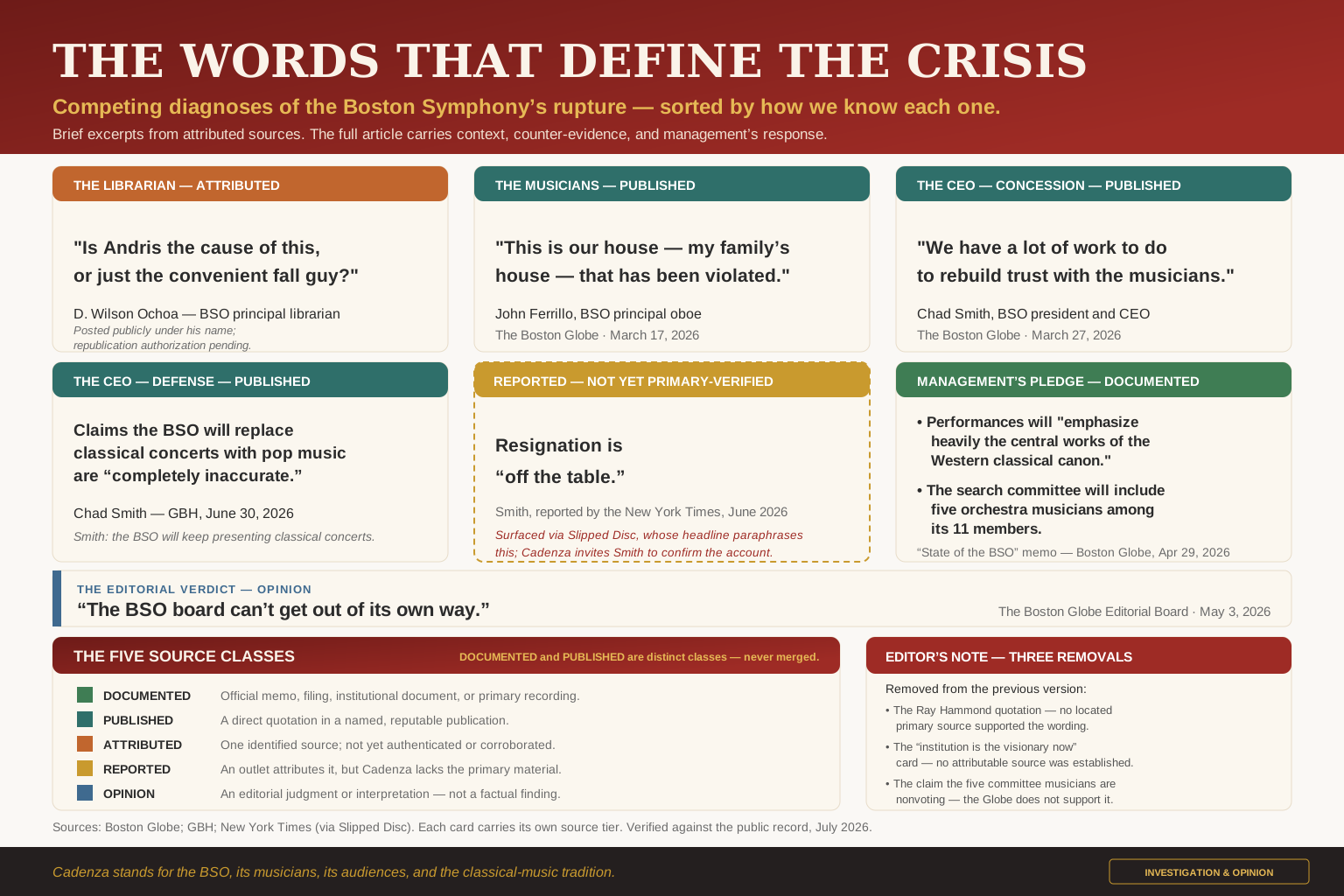
The most consequential document in the Boston Symphony Orchestra's crisis is not a tax filing, a board memo, or a consultant's slide deck. It is a statement attributed to the BSO's principal librarian — the person entrusted with the very music the orchestra plays.
D. Wilson Ochoa has been principal librarian of the Boston Symphony and Boston Pops since 2014 — a tenured musician's position, and only the fourth person to hold it since 1917. The orchestra's librarians prepare roughly 900 works a year, reconcile editions, preserve generations of performance markings, and stand backstage against the last-minute disaster. As Ochoa told the Boston Globe in 2024: "If nothing goes wrong, we've done everything right."
That is what makes his warning so hard to dismiss. A librarian's whole vocation is continuity — the unbroken thread from one performance, one generation, one music director to the next. When the person whose job is to guard that thread asks, in public, whether it is being cut on purpose, that is not noise for management to handle. It is a warning from the institution's own memory.
The statement did not go to a reporter as a whisper. Ochoa posted it openly, on his own Facebook account, saying his questions were supposed to have been heard at a meeting between the board and the musicians "a week ago, but I was not given the opportunity." Cadenza has confirmed the post is public and on Ochoa's own account, but has not yet obtained his permission to republish it or a direct confirmation from him; until it does, this piece attributes the statement to him rather than treating it as verified testimony.
His central question is precise:
"Is Andris Nelsons really the cause of this, or just the convenient fall guy for the plan all along? … It all seems part of the long game."
Read closely, Ochoa is careful in a way the moment's heat has obscured. He asks — "Was that really the reason?", "Could this be part of the long-term plan?" — more often than he asserts. He calls the post "my questions and concerns." That restraint is not a weakness in his case. It is the case: a senior musician looking at a logo, a moved portrait, a database, an office renovation, and a conductor's removal, and finding it reasonable to read them as one story.
Cadenza tested that story against the public record.
The result is not a clean confirmation. Several of Ochoa's specific allegations cannot be corroborated by anyone but Ochoa, and one of his factual claims is contradicted by the record. Nothing in the record establishes the coordinated design he suspects, and no responsible account should imply one.
But the larger transformation he describes is not imaginary. It is documented — much of it in the institution's own words.
The BSO's own materials say it intends to "reshape what an orchestra is and can be." The branding firm that built its new identity calls the project a "cultural reset" and gave Symphony Hall a brand of its own. Management replaced the software platform that had run the institution for years. And in early 2026, a board of trustees that had extended Nelsons indefinitely two years earlier voted unanimously to end his tenure — a decision it made public that March, explaining itself in five words: not aligned on future vision.
The board may sincerely believe this new model is necessary. It may even be right that the BSO must change. What it has not shown is why that change required blindsiding the musicians, forcing out a conductor it had just re-committed to, hiding the decisive disagreement behind a slogan, casting its critics as adversaries, and invoking a financial emergency that its own board vice chair, John Loder, has publicly said is not a crisis — even as he flagged long-term trends that worry him.
That is the case this editorial makes. Not that innovation is wrong. Not that Nelsons is beyond criticism. Not that every suspicion inside Symphony Hall is fact. The case is narrower and harder to escape: the leadership handled a defensible decision in a way that destroyed its authority to carry it out — and Chad Smith, who has publicly conceded the trust breach and, by his own reported account, will not leave, has become the obstacle to the institution's own repair.
What the public record establishes
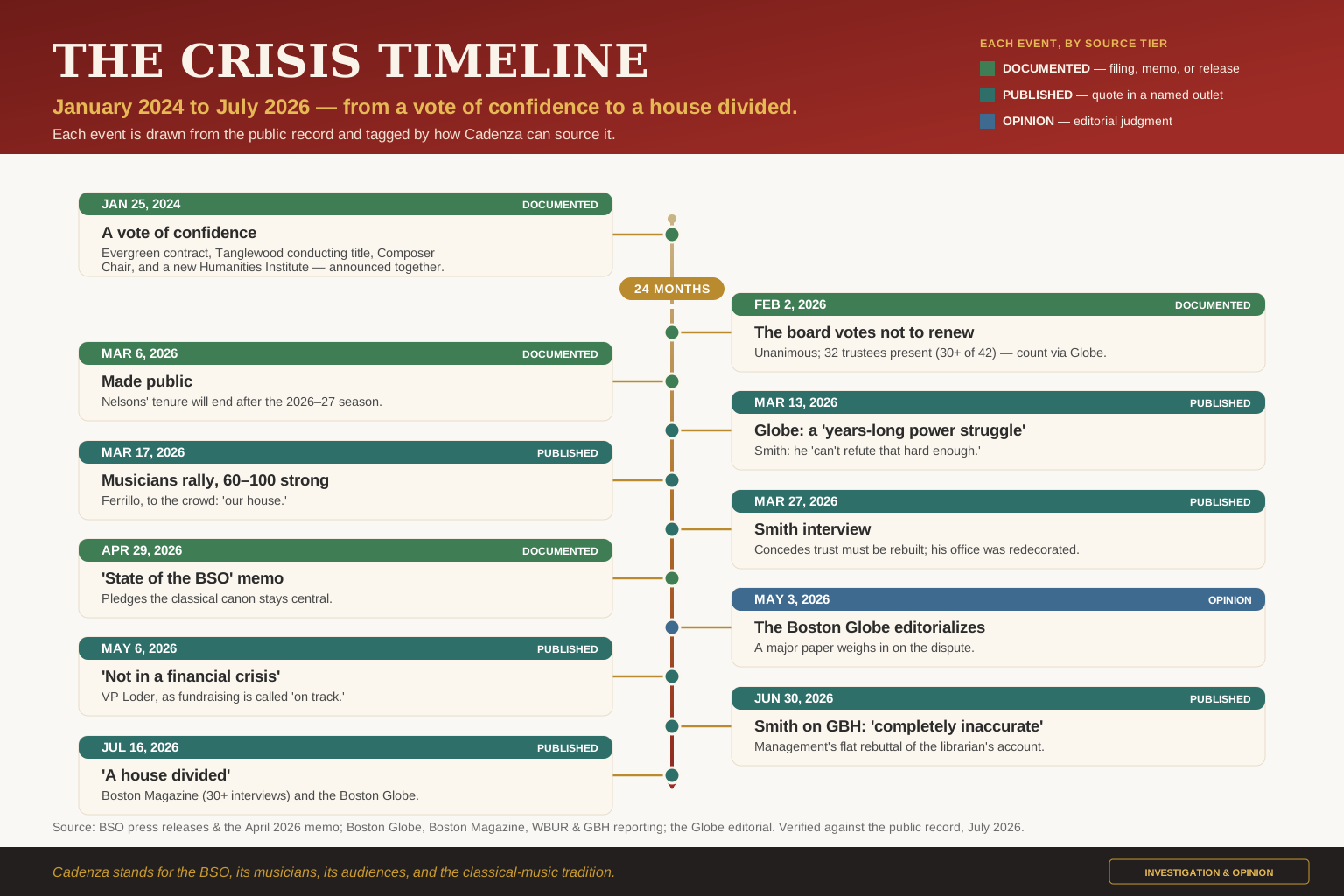
Before the argument, the facts — each corroborated by primary documents or by two or more independent outlets.
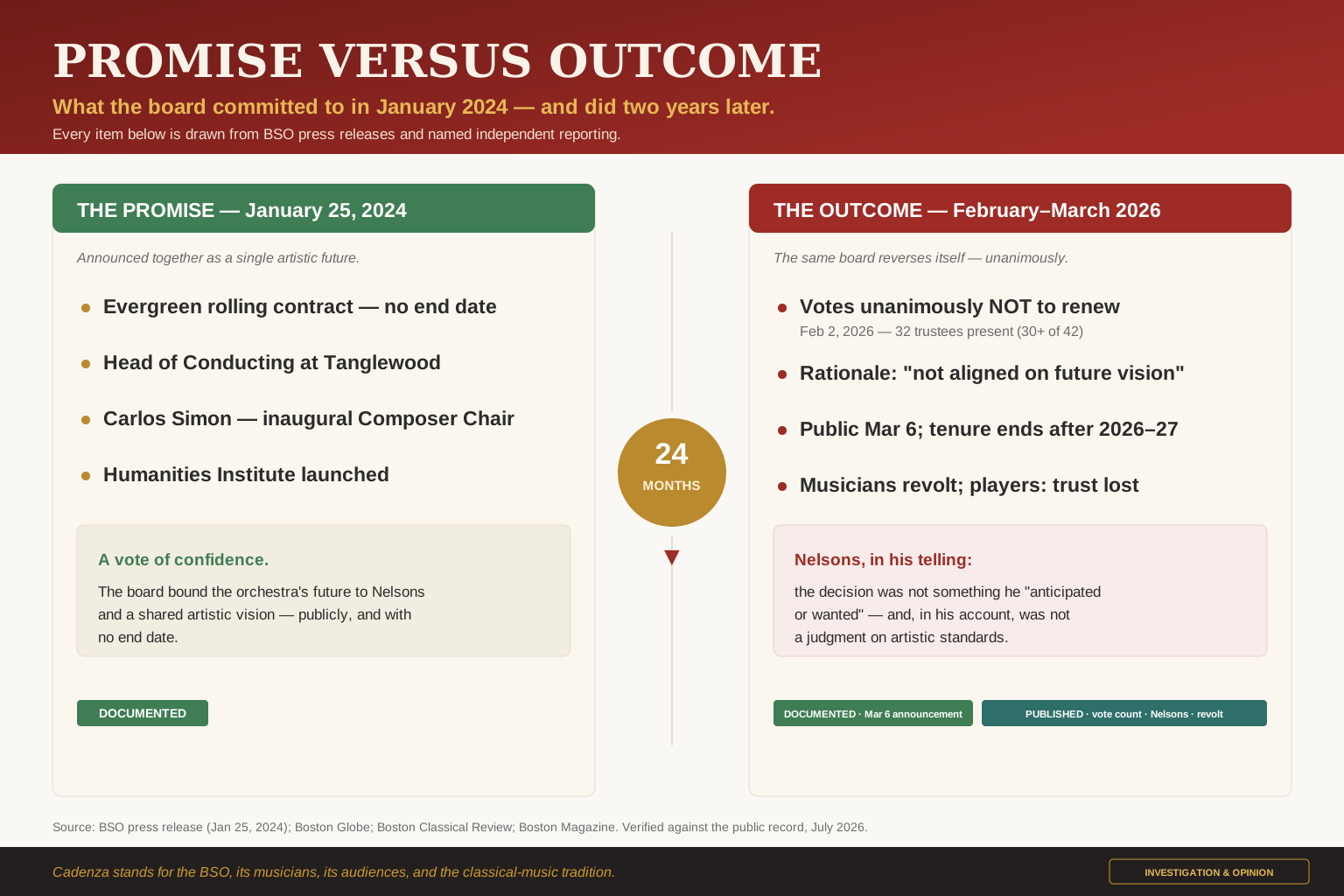
The 2024 vote of confidence. On January 25, 2024, the BSO moved Nelsons to an evergreen, rolling contract, named him Head of Conducting at Tanglewood, appointed Carlos Simon as inaugural Composer Chair, and launched a Humanities Institute — all announced together as a single artistic future.
The 2026 reversal. On February 2, 2026, the board voted unanimously not to renew Nelsons. Boston Magazine reports 32 trustees present; the Globe frames it as more than 30 of the BSO's 42 trustees. The public rationale was that the parties were "not aligned on future vision." Nelsons said the decision was not something he "anticipated or wanted" and, in his telling, was not a judgment on artistic standards.
The announcement and the revolt. The decision was made public on March 6; Nelsons's tenure ends after the 2026-27 season, closing a run that began in 2014. (Outlets differ on whether to call it twelve or thirteen seasons.) On March 17, between 60 and 100 people gathered on the Symphony Hall steps to greet him. Principal oboist John Ferrillo, in a statement to the musicians, said their house "has been violated."
The trust breach — conceded. The musicians said leadership "no longer has the trust or buy-in of the musicians." Smith, interviewed in his redecorated office and quoted March 27, conceded: "We have a lot of work to do to rebuild trust with the musicians."
The "long game" is reporting, not rumor. The Globe's March 13 investigation — published before Ochoa's statement — framed the ouster as "the endgame of a years-long power struggle" pitting Nelsons and the musicians against chair Barbara Hostetter and president Smith. Retired BSO violinist Jennie Shames told the paper: "The goal of the new management and the new board, since Barbara Hostetter took over, has been to change the entire Boston symphony." Smith rejected the idea that the removal was long-planned: "I can't refute that hard enough."
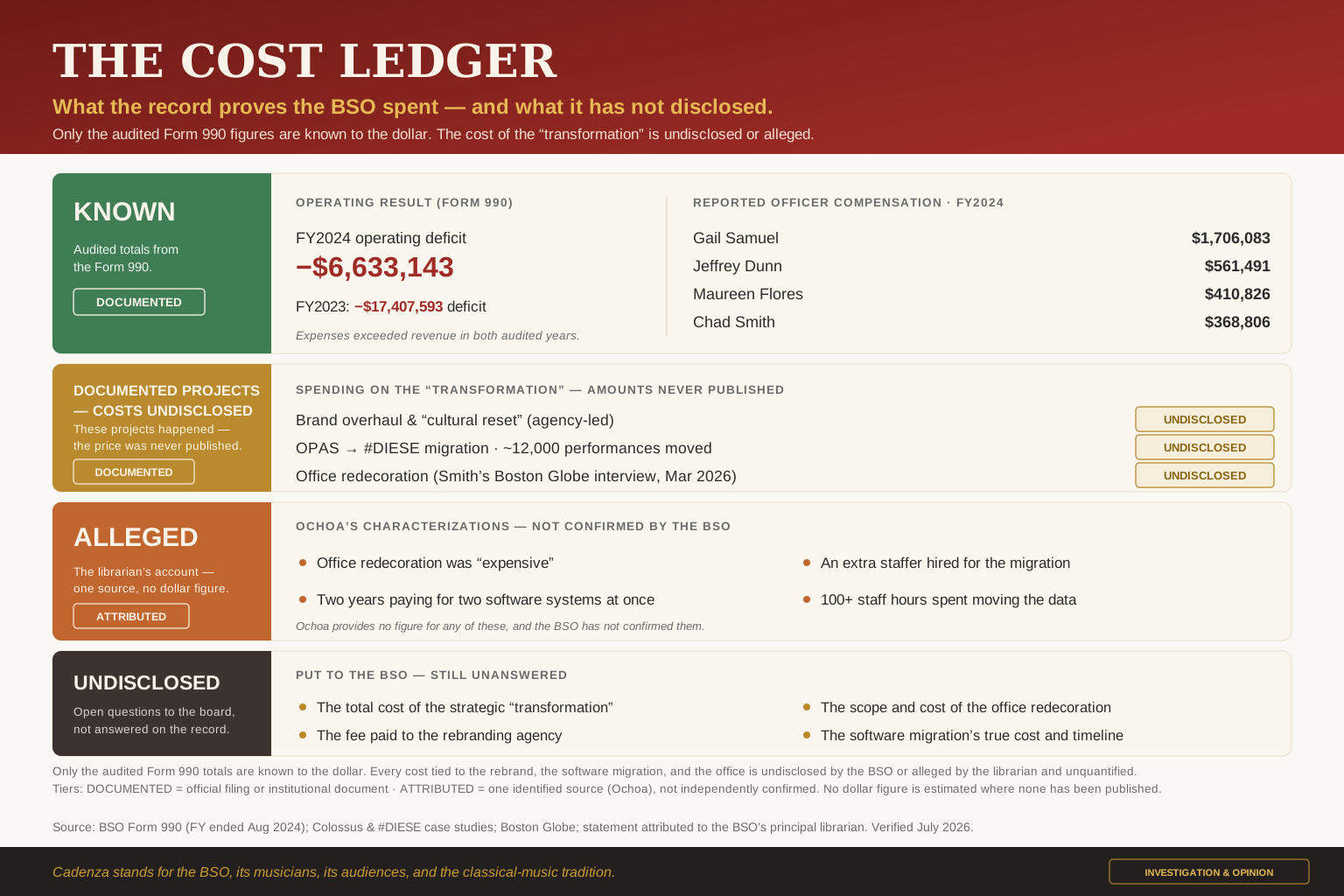
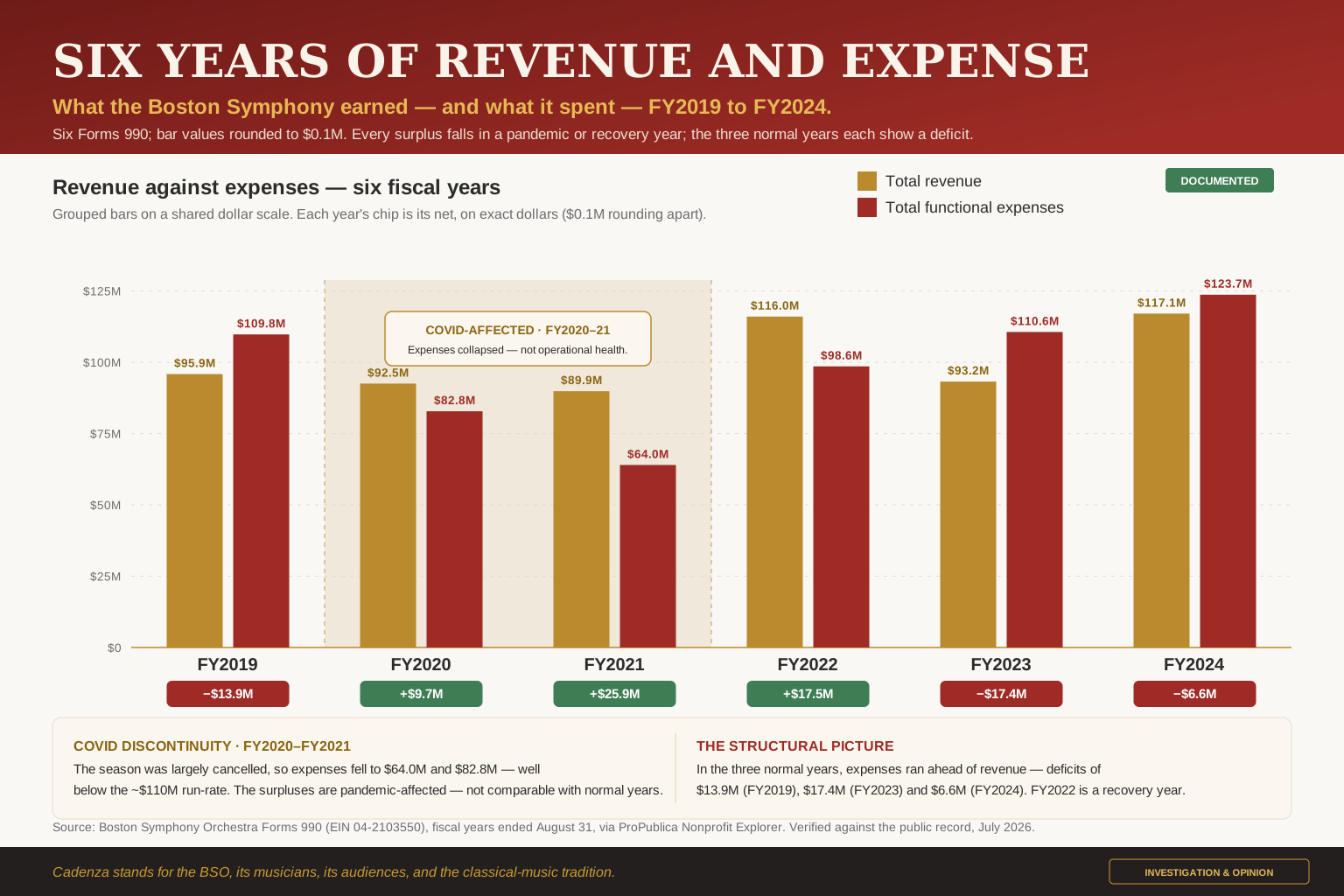
The finances — real, and volatile. For the fiscal year ending August 2024 (EIN 04-2103550), confirmed against the Form 990: revenue $117,090,967, expenses $123,724,110, an all-in deficit of $6,633,143; the prior year's deficit was $17,407,593. Total assets were $680.3 million and net assets $618.4 million — figures that include the endowment and cannot be spent at will. The board cites attendance down roughly 23% since the pandemic and 40% over two decades, and about $100 million in extraordinary endowment draws over 20 years.
The rebrand — real, and the firm's own words. The agency Colossus built a four-part identity — Boston Symphony, Pops, Tanglewood, and Symphony Hall as a standalone brand — and, in its own case study, describes the work as a "cultural reset."
The software migration — real. The orchestra moved off OPAS to a new platform. According to the vendor's own case study, the migration covered more than 12,000 performances dating to the 1850s, with integrations spanning planning, the works library, Tanglewood, and tours — the vendor's account of the project, not an independent audit of it.
The contradiction the board never explained
Every version of the BSO's case runs into the same wall: it wrote Nelsons an evergreen contract — one deliberately built to run with no end date — in January 2024, then voted unanimously to end it twenty-five months later. The board and its allies have offered criticisms — Nelsons's divided engagement, his Leipzig residency, questions of preparation, fundraising, and institutional participation — but not the specific disagreement grave enough to make termination necessary. What crossed that line, it has not said.

Andris Nelsons — re-committed to without limit in January 2024, removed twenty-five months later. Photo: Alexander Böhm, CC BY-SA 4.0, via Wikimedia Commons.
The board has not alleged that Nelsons breached his contract, committed misconduct, or let artistic standards slip — and it has not contradicted his account that the decision was not one he "anticipated or wanted." This was not, then, a conductor caught failing. It was a conductor re-committed to without limit, then removed without ever being told a cause specific enough to answer. The BSO's own website still praises the indefinite extension — the institution inviting readers to admire the very partnership its board decided, two years later, was incompatible with the future.
Institutions are allowed to change their minds. Relationships deteriorate; new financial facts alter strategy; a working partnership between a CEO and a conductor can simply fail. The board's defenders make real points: Nelsons divides his time between Boston and Leipzig; he never built the civic presence of a Seiji Ozawa; critics have found his work uneven. In the New York Times, David Allen argued the BSO was right to move on ("A Maestro's Fall From Grace Is a Cautionary Tale Worth Heeding"), faulting Nelsons as spread too thin. Those arguments deserve weight, and here is ours: they are reasons a board might openly renegotiate a music director's commitments — even, candidly, end them. They are not reasons to blindside the orchestra, withhold the cause, and refuse to show the plan.
But the more dramatic the reversal, the greater the duty to explain it. Instead of an explanation, leadership offered a phrase. "Future vision" concealed more than it revealed — it let every rationale circulate at once, none tested in public. It also inverted the ordinary burden of proof: the board made alignment with a "future vision" the stated reason its music director had to go — then refused to publish the vision. It asks the public to accept that a disagreement grave enough to end the partnership can be invoked but never described. The slogan did not spare the institution a controversy. It guaranteed one, by forcing every musician, donor, and subscriber to supply the missing reason themselves.
The musicians were treated as an audience to the decision
On March 17, the musicians gave their answer the way an orchestra does — in unison. Musicians and their supporters, sixty to a hundred people in all, filled the Symphony Hall steps to greet the conductor the board had discarded, and principal oboist John Ferrillo named the wound directly, in a statement to the musicians: "This is OUR house, my family's house, that has been violated." That is the sound of the people who actually make the music refusing to be treated as spectators to a decision about their own art.

Symphony Hall on Huntington Avenue, Boston. Photo: Lkayitare, CC BY-SA 4.0, via Wikimedia Commons.
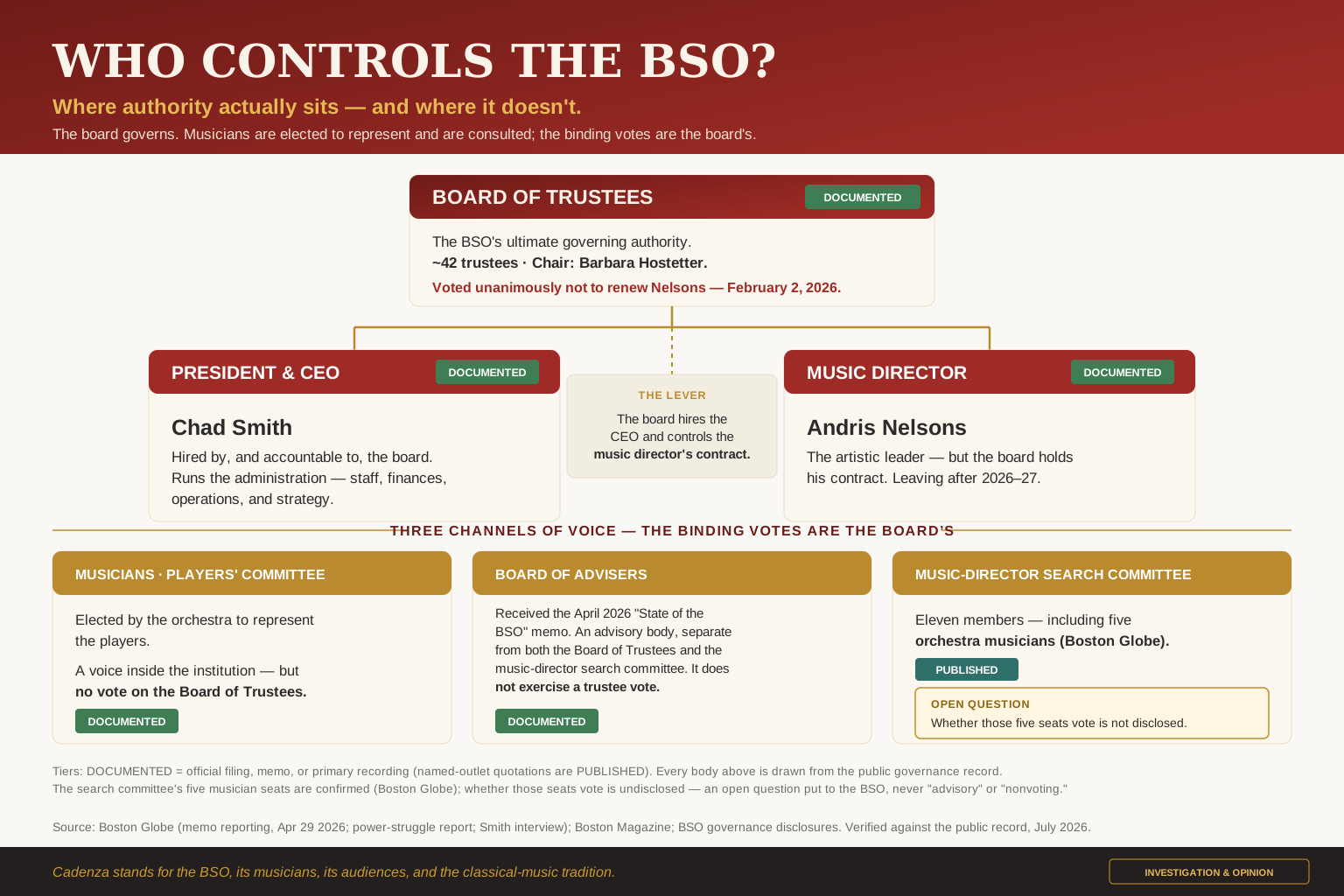
According to Boston Magazine, Players' Committee members were summoned on short notice; Smith appeared with two attorneys and told them the board had voted; by the time the musicians returned to their office, the announcement was already circulating. The board could have consulted its elected musician representatives before the vote, shared the disagreement in confidence, or built a transition that treated the players as the permanent artistic body of the BSO. It did not.
Management long behaved as though the rollout could not have happened any other way. It could have. And leadership has since half-conceded it: asked what she would change, board chair Barbara Hostetter told the Globe it would be "the announcement to the orchestra." But the concession reaches only the messaging. It does not touch what the record actually condemns: a decision reached, and a conductor removed, with the orchestra's elected representatives shut out until it was done. Leadership admits it mishandled the telling. It has not admitted it was wrong to exclude the musicians from the deciding.
A board can hold legal authority and still make an illegitimate decision if it excludes the people whose trust is required to carry it out. A CEO can possess contractual power and still lose the capacity to lead. The American Federation of Musicians said the decision was made without consulting the musicians. Trust of that kind is not repaired by listening sessions convened after the defining act. It is repaired by conceding that the structure of the decision was wrong — and then changing it.
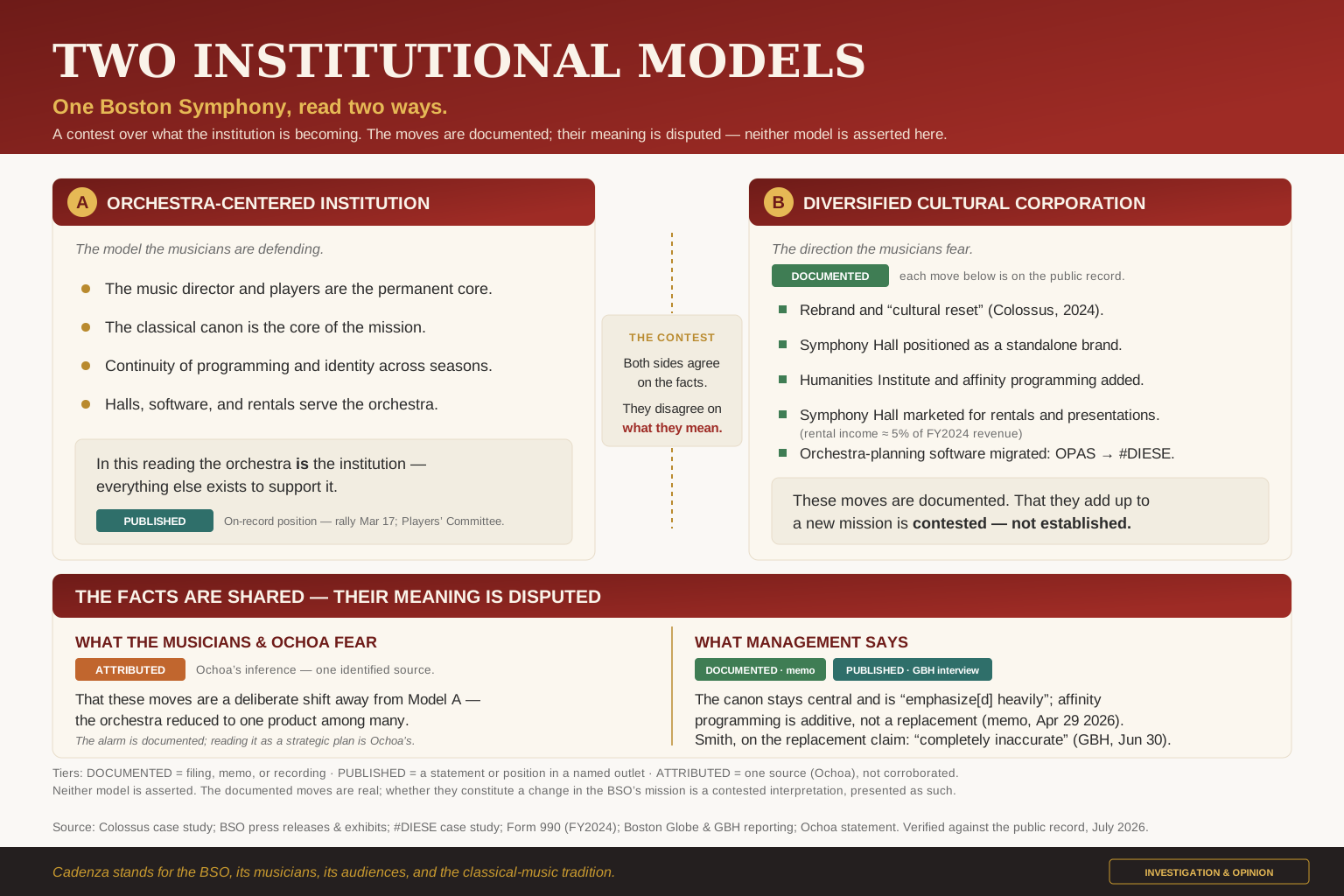
The real dispute: what is the Boston Symphony?
Beneath the personalities is a genuine argument about the subject of a sentence.
Is the Boston Symphony Orchestra principally an orchestra — with a hall, an administration, fundraising, education, and rentals organized around its permanent artistic body? Or is it principally a nonprofit cultural corporation that operates several coordinated assets, of which the orchestra is one?

Symphony Hall, opened in 1900. The rebrand gave the hall an identity of its own. Photo: Beyond My Ken, CC BY-SA 4.0, via Wikimedia Commons.
Those descriptions coexist while money is plentiful. They diverge when dates, authority, and budgets are scarce — and the BSO's own language leans toward the second. Its annual report speaks of reshaping "what an orchestra is and can be." Colossus calls its work a "cultural reset" and gave the Hall its own brand. Smith has described festivals, artist residencies, a major education initiative, technology partnerships, and possible expansion of Symphony Hall.
None of that is inherently anti-orchestra. The Los Angeles Philharmonic — where Smith built his reputation — proved that adventurous programming and orchestral excellence can reinforce each other, and the BSO's own history of touring, broadcasting, the Pops, and Tanglewood is a history of expansion. But a portfolio model redistributes power even when it adds good programs: the music director becomes one artistic voice among executives, curators, and presenters; the permanent orchestra competes for dates with programming that management may find more flexible or fundable; the hall becomes a destination in its own right.
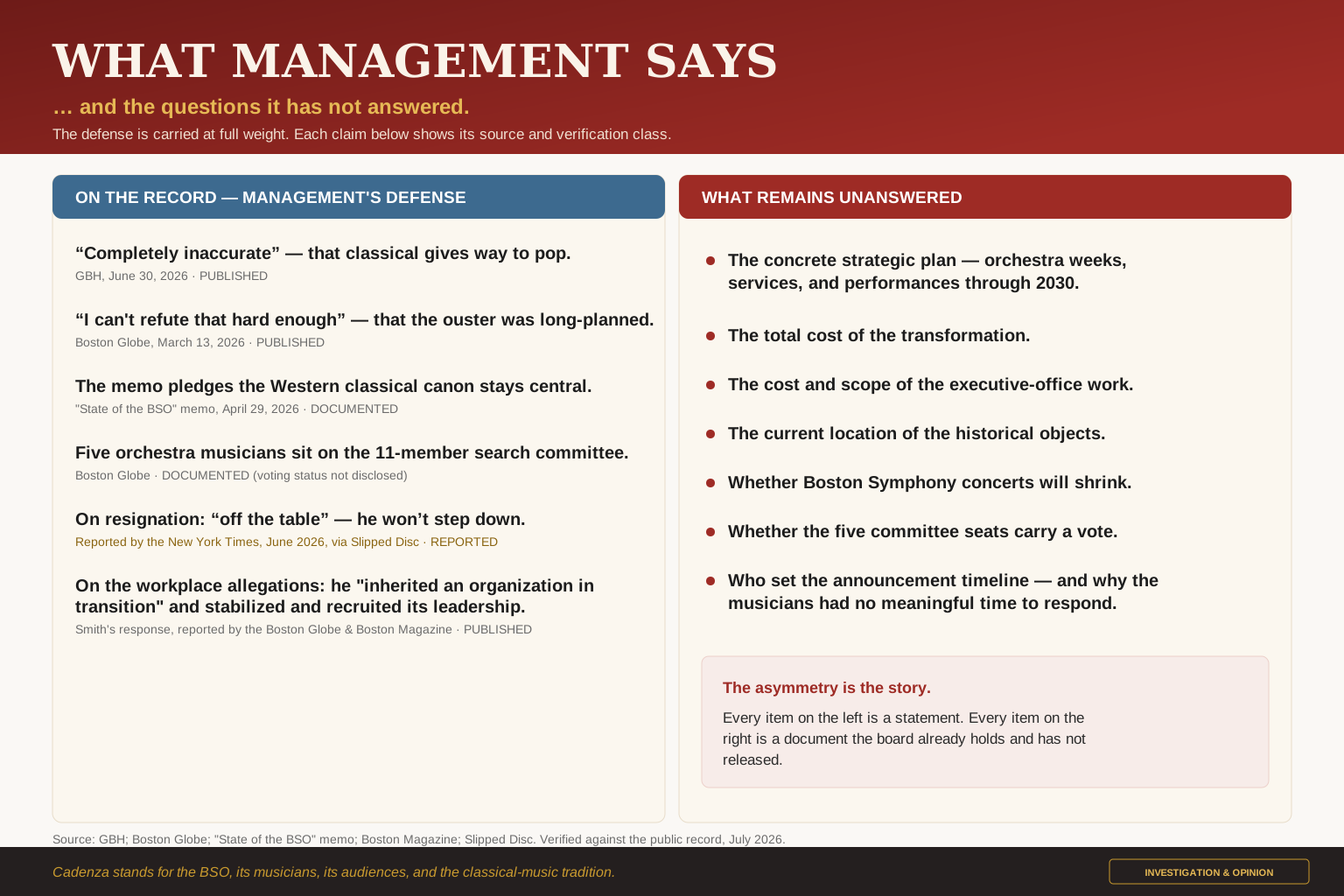
Here management's strongest answer must be heard in full. In a June 30 GBH interview, Smith called the charge that the BSO would replace classical concerts with popular programming "completely inaccurate," and said the goal is to rebuild classical activity toward where it stood 25 years ago — on the order of 90 classical concerts. The board's internal "State of the BSO" memo pledges to "emphasize heavily the central works of the Western classical canon" and frames affinity programming as additive — "neither radical nor even especially novel." Bassist and Players' Committee chair Todd Seeber answered, on the same GBH program, that the musicians had seen no evidence they or Nelsons were meaningfully included in the strategy.
That exchange narrows the dispute without settling it. Management says the goal is not less classical music. The musicians say the calendar, the authority structure, and the evidence behind that promise remain hidden. The announced 2026-27 season is, in fact, heavily orchestral — 25 subscription programs, 15 conducted by Nelsons — which is real counterevidence to any claim that classical music has already been cut. But a final Nelsons season does not settle what follows it. The board could materially narrow this argument by publishing the thing it has not published: the year-by-year plan for orchestra weeks, services, rentals, and outside presentations through 2030. A calendar answers what a slogan cannot.
The librarian's specific allegations — his testimony, not our findings
To the people who keep the orchestra running, the argument over what the BSO "is" has never been an abstraction. It reaches them as specific episodes — a logo, a moved portrait, a database, an office — and it is those episodes that the principal librarian set down, in order, as his case. Cadenza could not independently corroborate the operational specifics; they trace to Ochoa alone. They are presented here as his account, and each is testable against records the BSO holds.
On the rebrand, Ochoa asks why an institution worried about money spent heavily to "update" its image, and "why was there a need to create a logo specifically for Symphony Hall itself, separate from the orchestra." The separate Hall brand is confirmed; his inference — that its "real reason" was to strip the music director's name from the identity and elevate "BSO Inc." as a venue business — is inference, and no branding document establishes it. What is fairly said is the institutional effect: once the Hall is a brand, it can be marketed, rented, and measured apart from the orchestra. The board should publish the brief, the budget, and the approvals; if the rebrand was disciplined, disclosure vindicates it.
On the hall "refresh," Ochoa says a bust of Arthur Fiedler "was gone," portraits of former music directors "disappeared," Henry Higginson's portrait "was moved out of the main lobby," and history-and-repertoire displays were removed — "much to the disbelief of both our archive department and our volunteer tour guides." Cadenza cannot confirm the fate of any individual object from public records. What is on the record is a change in how history is shown: the BSO's own site says exhibit cases are "now located" in the Cabot-Cahners Room, with a 2025-26 exhibition on the Hall's 125-year, 18,000-concert history and its many non-orchestral events. Consolidation and reframing are documented; a purge is not. The board can settle it completely with a before-and-after inventory and the current location of every named object.
On the software, Ochoa says the orchestra-specific OPAS was replaced — without consulting the artistic staff or library — by a platform "designed specifically for VENUE MANAGEMENT (currently being used by Carnegie Hall, which does not manage or run an orchestra)," that a six-month switch stretched past two years of paying for both systems, that an extra staffer was hired, and that library staff spent 100-plus hours making it work. One part of this is contradicted by the record and must be set aside: the platform is not merely venue software. Its maker markets it as "the leading planning software for orchestra," documents core orchestral-planning functions, and it is used by orchestras beyond Boston. Ochoa's separate complaint — that it has been a poor day-to-day fit for the BSO's library and personnel operations, and that the migration ran long and proved expensive — is his experience to assert, and is answerable with the contracts, schedules, invoices, and the dual-licensing period. The procurement question is legitimate: who was consulted, and who bore the cost of the fit.
On the CEO's office, the fact of a redecoration is confirmed — the Globe interviewed Smith in the redecorated office. The cost, the "expensive" framing, and Ochoa's speculation about why two adjacent workspaces were removed are his, not the record's. The board can release the invoice.
On inclusion, Ochoa says he campaigned for years to release recordings of the orchestra's existing performances of works by women and Black composers, and for a Juneteenth concert in a restored sixth Pops week, and that the CEO's only response to the recordings was a dismissive "will it make money?" while the Juneteenth idea "was met with silence." These are private exchanges; Ochoa is the sole source, and the "will it make money?" quote must not be attributed to Smith as established fact without corroboration and his response. The broader context, though, cuts against the notion that inclusion was a sudden discovery: before the crisis the BSO had already appointed Carlos Simon, commissioned new work, and programmed historically underrepresented composers. That record sharpens Ochoa's real point into a fair question: is the coming expansion within an orchestra-centered mission, or a substitution of orchestra dates for other activity? Only a published calendar answers it.


The finances are real — and the severity is contested on both sides
The board is right that the institution faces genuine pressure: two recent deficits, softening attendance, and, by its own account, deferred maintenance approaching $100 million and only about $60 million of a large endowment unrestricted. Those claims deserve a full hearing.

The Boston Symphony performs at Tanglewood, 2023. Photo: Yinglong999, CC BY-SA 4.0, via Wikimedia Commons.
They also deserve scrutiny, and the record supplies it from an unexpected direction. In May 2026 the BSO said its fundraising was broadly on track, and board vice chair John Loder said plainly that the orchestra "is not in a financial crisis," even as some major gifts were held back and long-term trends worried him. A Berkshire Eagle columnist, reviewing the same filings, argued that management "may be crying wolf" given one of the largest orchestral endowments in the country. That does not prove the problem is fiction. It means the severity is contested — which cuts against the board's austerity framing and against any account that treats the finances as simple recklessness.
The six-year filing history is volatile, with pandemic-era surpluses inflated by extraordinary contributions and asset sales, so a single deficit figure proves little about the underlying operating result — and nothing about causation. The board has cited attendance and reserve-draw data but has not published the datasets behind them. Until it does, its numbers may be accurate yet impossible to independently interpret.
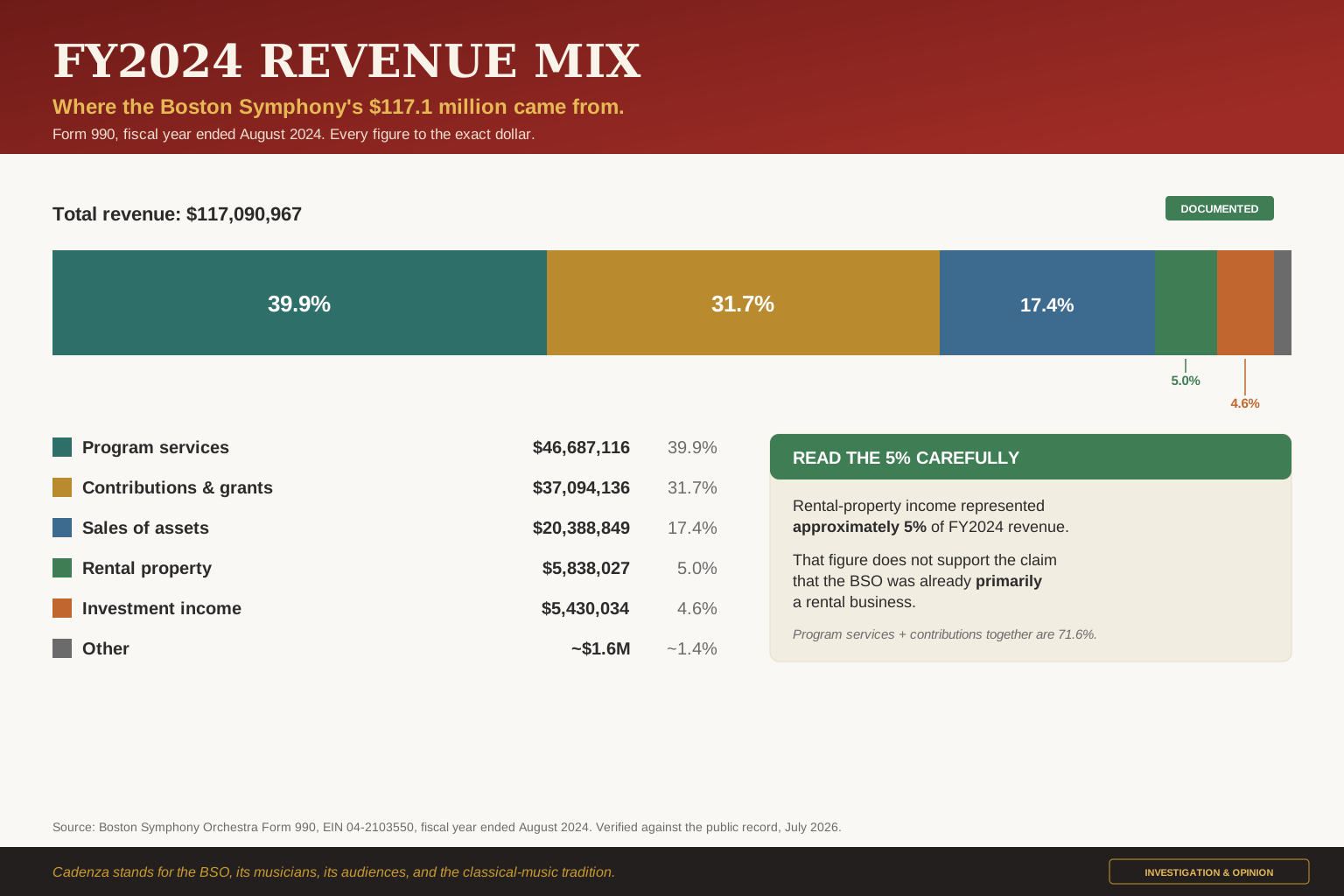
Two things the record will not support: that the BSO is already a rental business — rental income was about 5% of 2024 revenue, on the order of $5.8 million — or that Andris Nelsons caused the deficits. He did not authorize the branding contract, the software contract, the executive severances, the pricing, or the reserve draws. A deficit is a problem. Firing a conductor is not a financial plan — and neither is preaching an austerity the executive suite has not been shown to share. The same Form 990 that records the $6.6 million deficit also shows about $2.4 million in executive compensation that fiscal year: its highest-paid officer received $1,706,083, and Smith himself $368,806. Executives are paid; that is not the charge. The filing does not provide enough detail to determine whether executive compensation or administrative spending was materially reduced in response to the deficits — compensation timing, severance, predecessor pay, and partial-year employment can distort a single year's figures. What the board can still answer is the question of priority: whether the austerity it urged on the orchestra and its donors was also asked of the executive suite.
And the board's own method imposed a cost. It says it needs institutional alignment to raise the philanthropy the future requires — and then it shattered that alignment before asking donors to fund it. The Globe's editorial board reduced the governance failure to a headline management should not be able to ignore: "BSO board can't get out of its own way."

Management's case, stated at full strength
An editorial that calls for accountability owes its target the strongest version of his defense. Here it is, without hedging.
Smith denies the core charge. He calls the claim that the BSO will trade classical music for pop "completely inaccurate" and says he wants more classical activity, not less. He denies any long-planned ouster — "I can't refute that hard enough." The board's memo commits, in writing, to keeping the Western canon central. Musicians hold five of eleven seats on the music-director search committee. (Whether those seats carry a vote, the board has not said — Cadenza has asked.) An independent critic, Joseph Horowitz, has argued the humanities-and-affinity blueprint is "plausible and timely" on the merits, even as he faults the handling. The board concedes the rollout was mishandled while defending the decision. And the vote itself belongs in his defense: more than thirty trustees — a supermajority of the full board, not a captured clique — reached the same conclusion. Hostetter, for her part, sat for the Globe's hardest questions, defended the decision on its merits, and volunteered the concession about the announcement herself. Those are not trivial answers: if the calendars and budgets management publishes bear them out, much of the darkest reading of its intentions collapses.
Fairness also requires the reverse — stating what has been reported against him, at no more than its sourced strength. The Boston Globe reported employee accounts that he "belittled and berated" colleagues, and that a former vice president complained to human resources about his treatment of artistic-planning executive Anthony Fogg. Boston Magazine, drawing on more than thirty interviews, published descriptions of Smith as aloof, autocratic, defensive, intimidating, and prone to belittling staff in public. These are reported allegations, not established findings. Smith has responded, though not to each specific claim: according to that reporting, when asked he grew agitated, said he had been hired to shake up the status quo at Symphony Hall and that not everyone welcomed it, and pointed to the staff turnover he inherited Cadenza will put the allegations to him and publish his response in full.
And, most directly: Smith has signaled he will not go. Asked about resignation, he called it "off the table" and said he had no intention of stepping down, while conceding he had "probably kept my head down too long in trying to deal with this internally" — remarks reported by the New York Times (June 11, 2026) and surfaced by Slipped Disc; Cadenza invites him to confirm the account. This editorial argues for something its subject has, by that account, rejected, and it says so plainly rather than pretending the demand is uncontested.
What the evidence does and does not establish
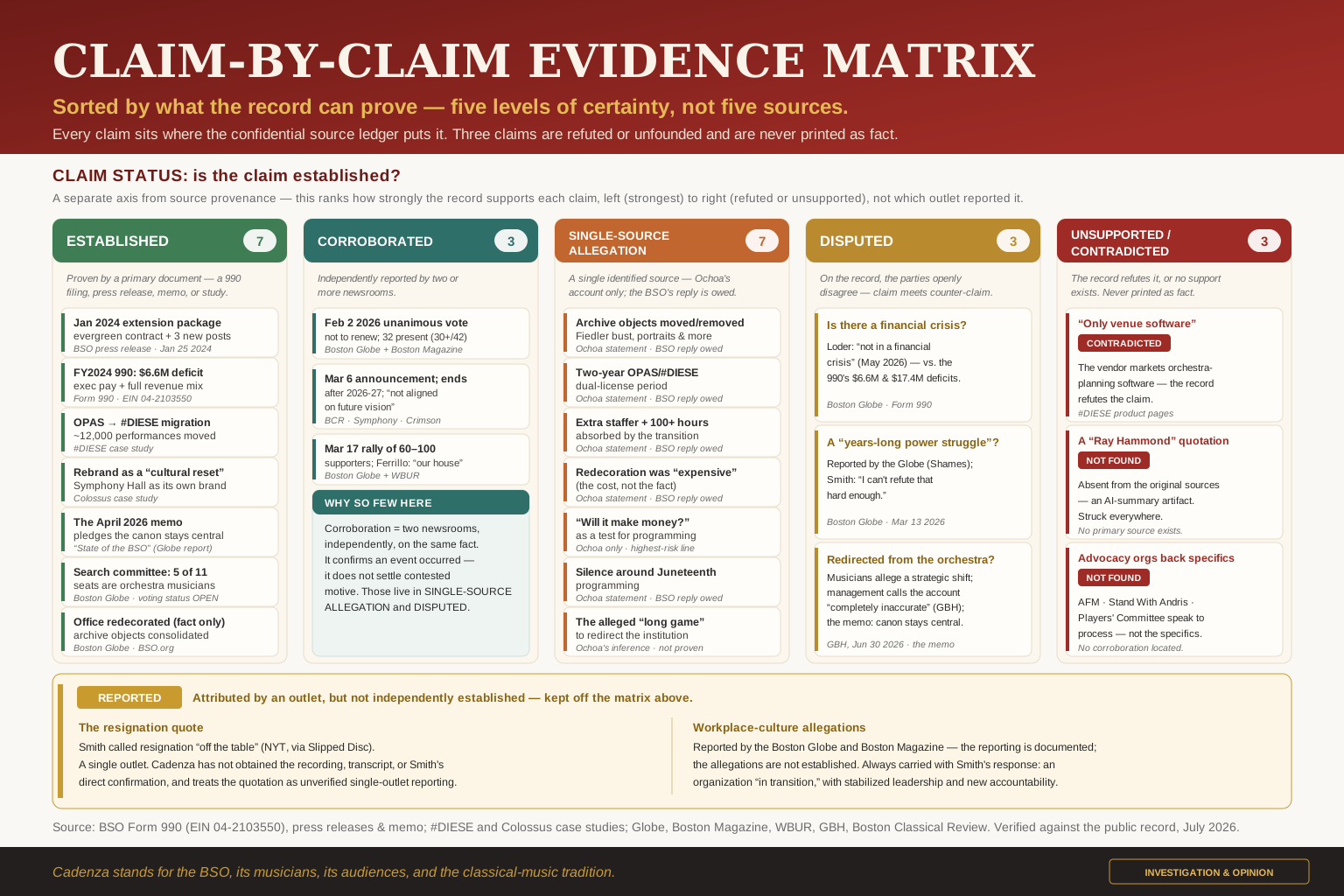
A hard argument is more credible when it marks the edge of its evidence. The public record does not establish:
- that the rebrand was secretly designed to remove Nelsons;
- that every reference to the orchestra was purged from Symphony Hall;
- that the new software is "only" venue software (it is not — see above) or that historical data is being deliberately destroyed;
- that Smith's office work was extravagant, or that adjacent staff were moved for an improper reason;
- that Smith made the exact remark Ochoa attributes to him, or that a Juneteenth proposal was rejected for ideological reasons;
- that the board has adopted a quantified plan to cut classical concerts;
- that Smith, Hostetter, or any trustee committed a crime;
- or that every criticism of Nelsons is false.
Those limits do not rescue the board. They define the indictment accurately. This is not a story about a proven plot. It is a story about governance, disclosure, and the collapse of legitimacy — in which leadership created exactly the conditions under which a senior musician can look at a logo, a portrait he says was moved, a database, an office, and a firing, and reasonably read them as one campaign. That is an emergency even if the coordination is unproven.
The editorial view
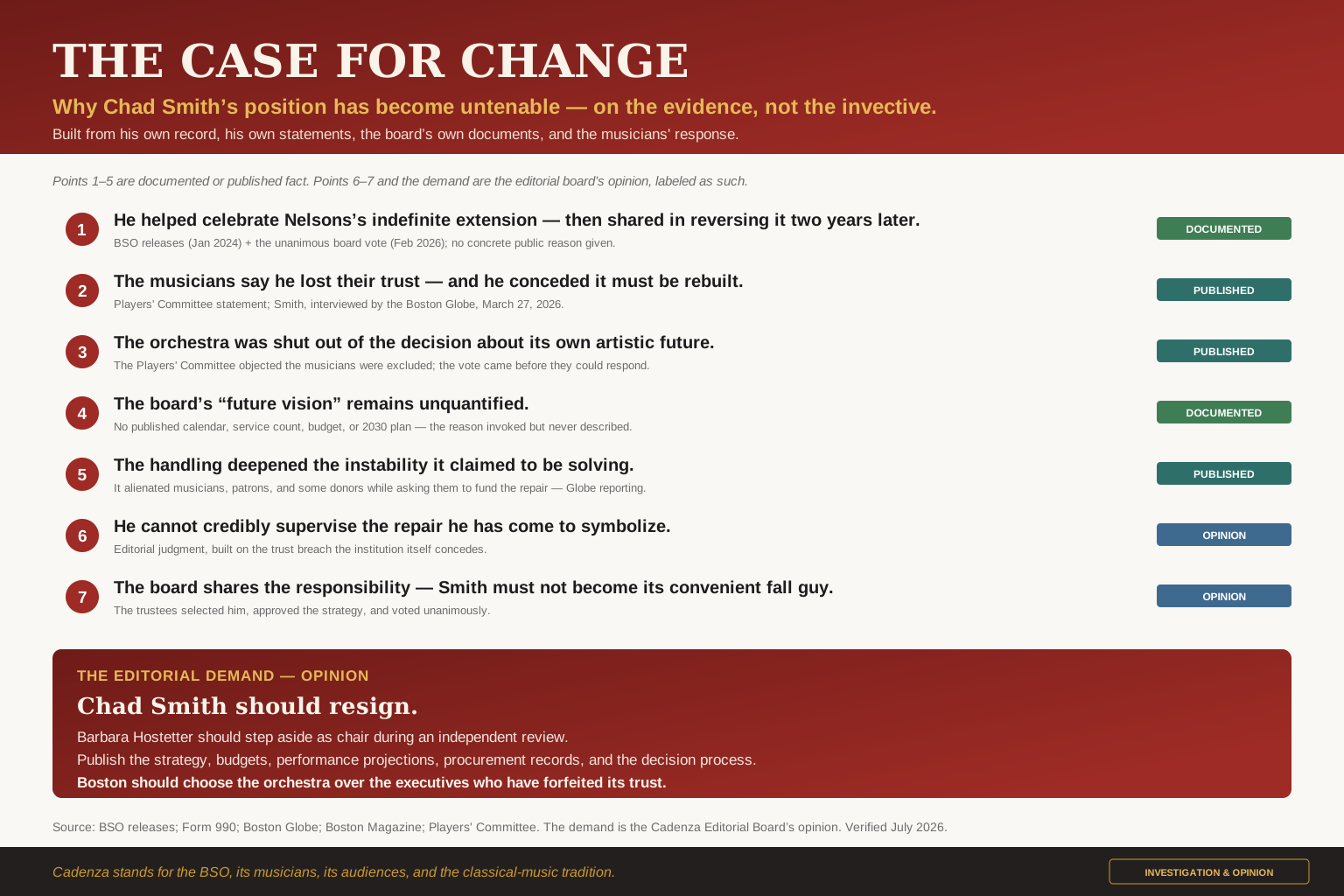
Strip away every disputed motive and what remains is largely conceded by the institution itself: leadership owns both the 2024 promise to Nelsons and the 2026 reversal; the Players' Committee says leadership has lost the musicians' trust, and management agrees that trust must be rebuilt; the board chair has acknowledged that the announcement to the orchestra should have been handled differently; and it has documented real challenges without showing that removing Nelsons solves any of them. That is not a case for a purge. It is a case for disclosure.
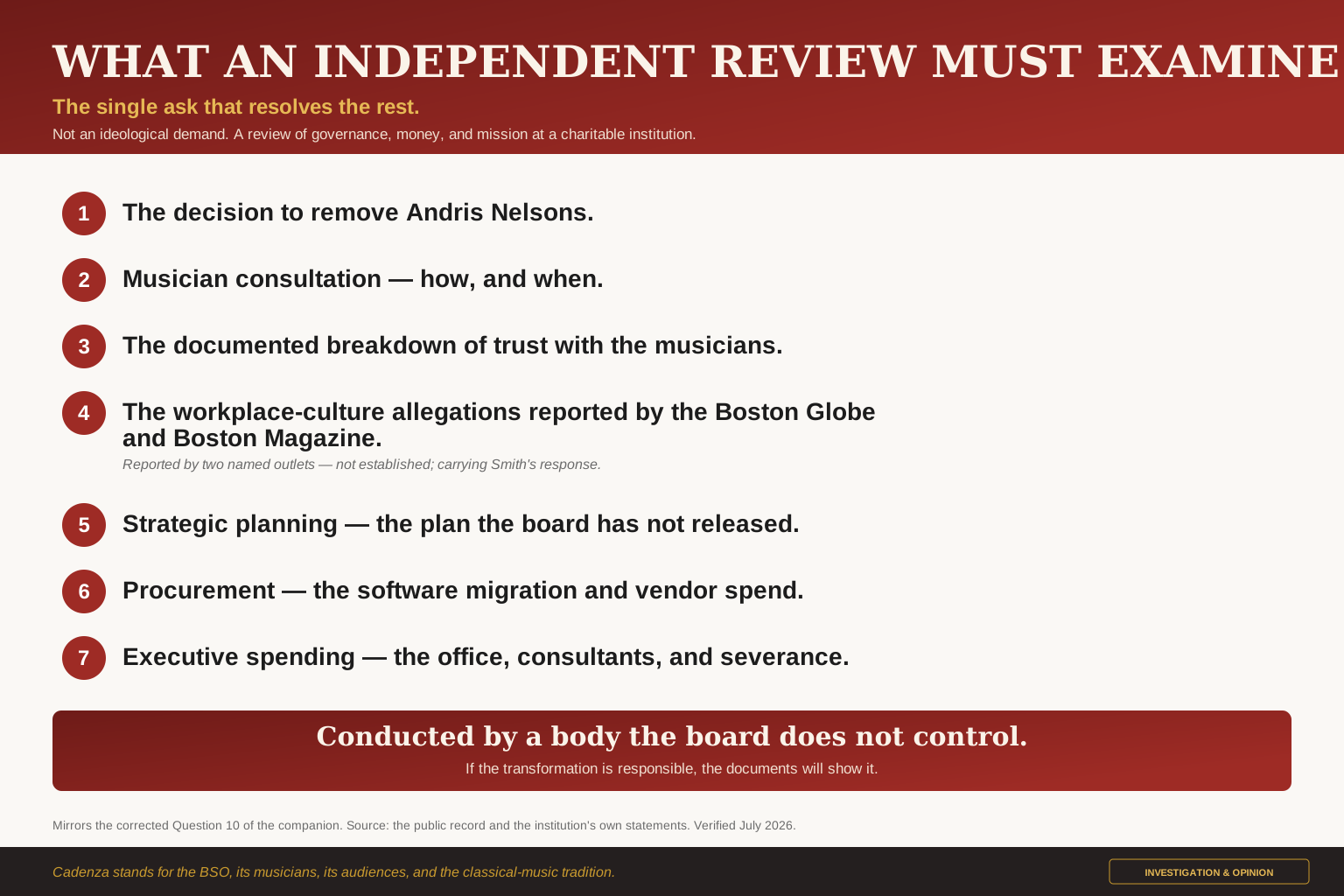
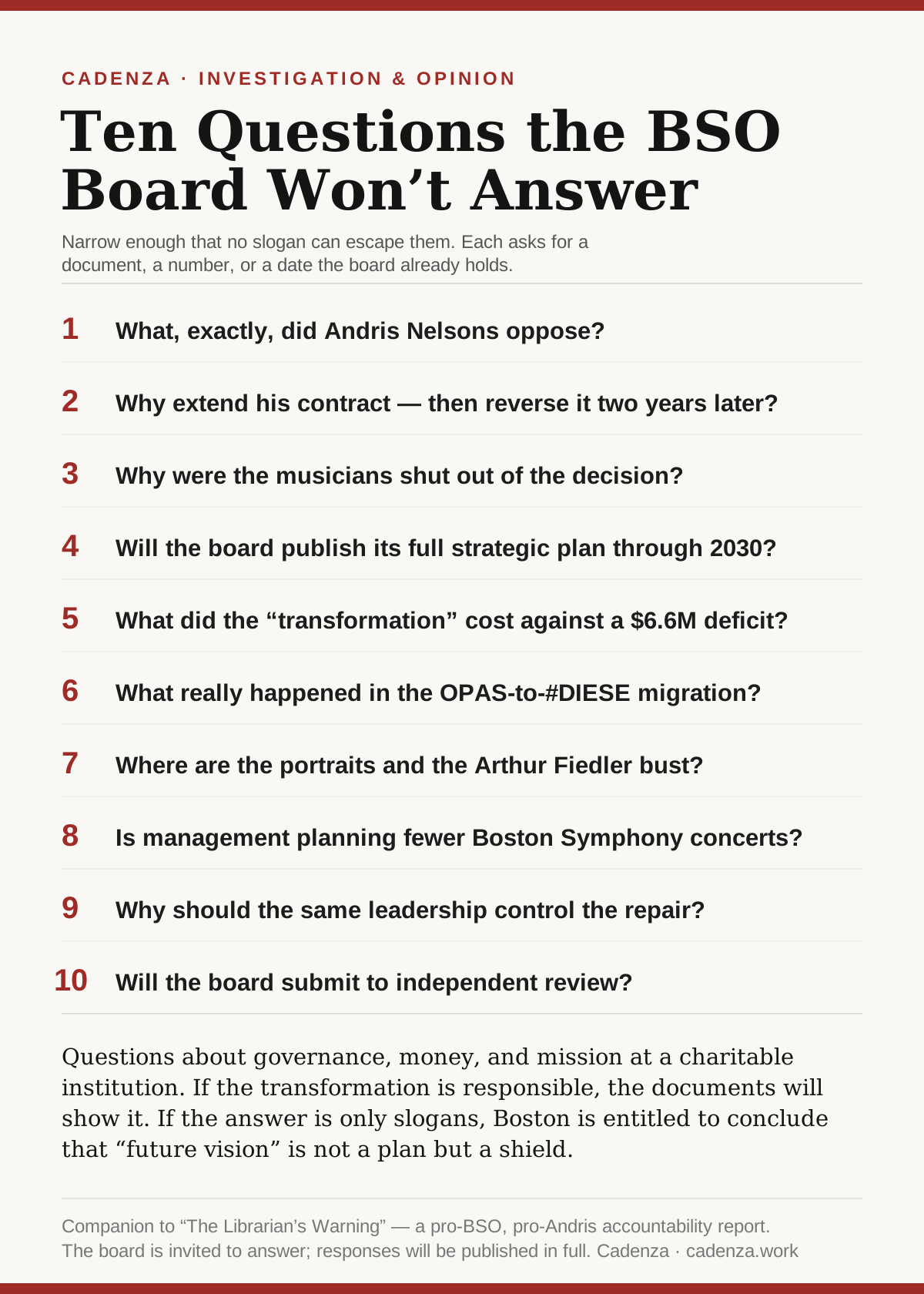
We opened by saying this leadership should go, and we hold to that. But the load-bearing demand — the one the board could satisfy tomorrow, and the one every other remedy runs through — is disclosure and shared governance: the things that would let anyone outside the boardroom judge what is actually being built. The board could materially narrow this argument:
- Publish the strategy in operational terms: orchestra weeks and services, Pops and Tanglewood activity, rentals and outside presentations, and the direct economics of each — through 2030.
- Release the financial evidence: the attendance methodology, the reserve-draw history, the restriction schedules, and the deferred-maintenance assessment.
- Commission independent reviews of the procurement, the facilities spending, and the workplace culture — none of them supervised by the people whose conduct is in question.
- Give elected musicians a formal, voting role in artistic succession and in any change to the number of orchestra weeks.
- Answer the librarian's allegations one by one, on the record, rather than with a general denial.
Here this editorial board restates the judgment it opened with, as opinion built on the record laid out above and not as a proven finding: Chad Smith's position has become untenable. This is not a claim that Smith set out to harm the orchestra, or that he is incapable of running one; his record before Boston says otherwise. It is a narrower and, for the institution, more painful thing: he has become the man the musicians no longer trust — and an orchestra cannot be rebuilt over the objection of the people who are the orchestra. Ability does not cure that; only trust does. The obvious rejoinder is that leaders rebuild broken trust in place all the time. But that repair depends on the leader retaining enough standing to attempt it — and the players' committee, the rally on the hall's steps, and management's own concession all mark that standing as gone. Nor did it fade with spring: as late as June 30, Players' Committee chair Todd Seeber said on GBH that the musicians had seen no evidence they or Nelsons were meaningfully included in the strategy. A leader who has become the central symbol of a legitimacy crisis cannot credibly supervise the institution's repair. By his own reported account, Smith has rejected resignation.
But Smith did not act alone, and his departure alone would not be enough. The trustees selected him, approved the strategy, and voted unanimously; if they accept one resignation and declare the matter closed, they will have done the very thing the librarian warns against — concentrating a systemic failure in a single convenient man.
And in Cadenza's view, Barbara Hostetter should also step aside as chair for the duration of an independent review she does not control.
The Boston Symphony is not a logo, a software platform, an executive suite, or a phrase like "programming, partnerships, and place." It is an orchestra, and the corporation is valuable because of the orchestra, not the other way around. Change is no enemy: the BSO should commission living composers, record neglected work, widen its audiences, and restore its hall. But expansion must strengthen the artistic center, not force it to audition for the right to exist. The librarian's warning does not need every allegation to be true to matter. It matters because the person responsible for the continuity of the music now reads his institution's decisions as a campaign against continuity — and because leadership's secrecy made that reading reasonable. The coordinated plan is unproven. The transfer of power, and the collapse of trust required to carry it out, are not.
The musicians have already told Boston where they stand — on the steps of their own hall, around the conductor their board discarded, calling it their house. The keeper of the institution's memory, in the statement attributed to him, has said the same thing in writing. Boston should choose the orchestra — the living body of players, not the logo around them — before the corporation forgets what made the corporation worth saving.
SOURCES
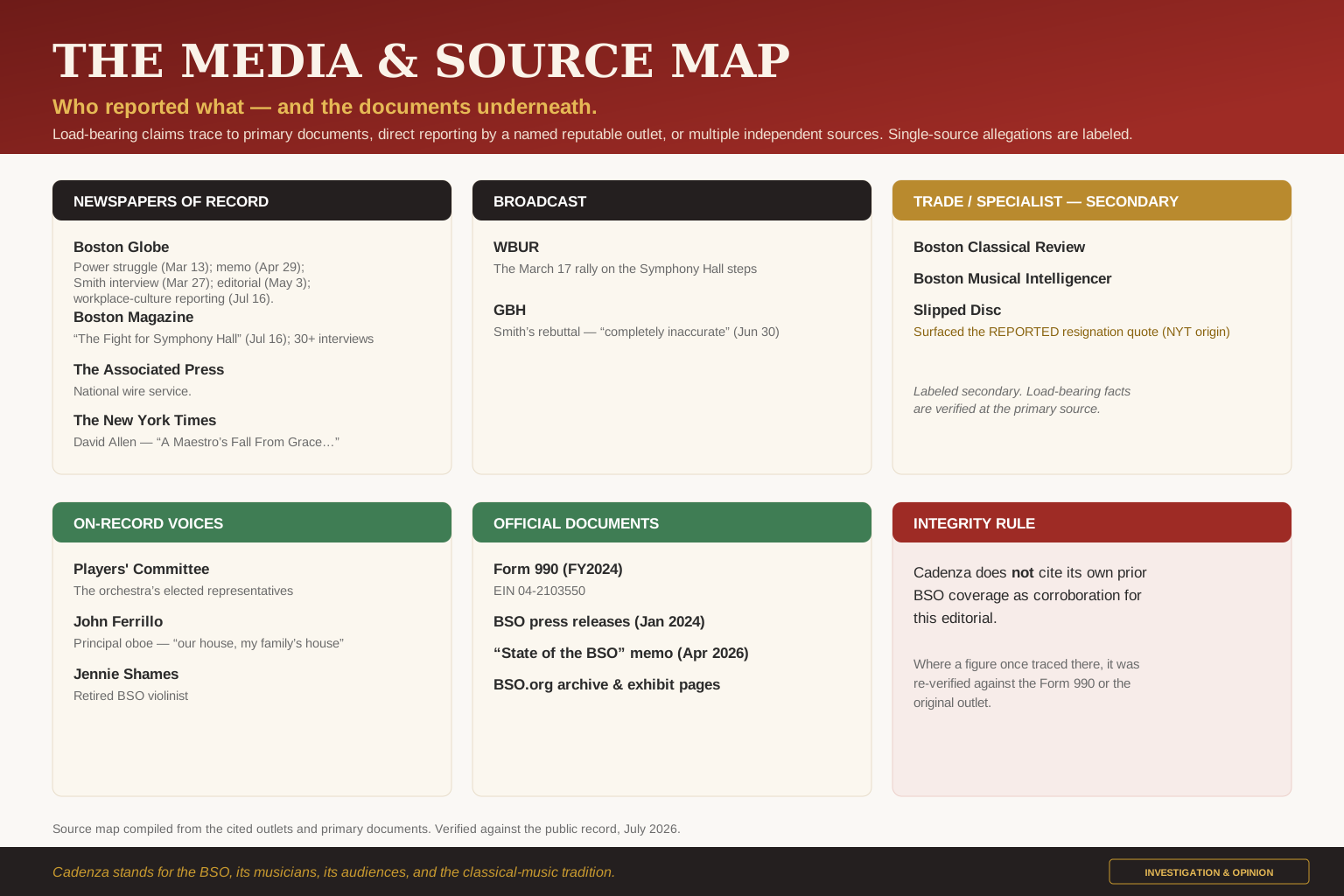
[Ochoa statement] D. Wilson Ochoa, public statement posted to his personal Facebook account — facebook.com/dwochoa — July 20, 2026, public audience; full text captured July 21, 2026 (archive on file with Cadenza). The account's public work history ("Boston Symphony Orchestra, Principal Librarian, Jun 2014–Present") matches the tenured position, supporting authorship; permission to republish and a direct confirmation from Ochoa remain outstanding. Also surfaced via the Boston Musical Intelligencer [bmint] and slippedisc.com/2026/07/boston-symphony-the-librarian-rejects-chads-version/. [bso-jan2024] BSO press release, Nelsons extension / Simon composer chair / Humanities Institute, Jan 25, 2024 — bso.org/press/bso-announces-andris-nelsons-contract-extension-carlos-simon-as-composer-chair-and-establishment-of-humanities-institute [globe-2024] Boston Globe, Jan 25, 2024 — bostonglobe.com/2024/01/25/arts/chad-smith-andris-nelsons-carlos-simon-bso-boston-tanglewood/ [symphony-2024] League of American Orchestras, Symphony — symphony.org/at-boston-symphony-ongoing-contract-and-expanded-scope-for-music-director-andris-nelsons-carlos-simon-named-composer-chair/ [bso-smith-bio] BSO, "Chad Smith" biography — bso.org/profiles/chad-smith [bso-annual-report] BSO 2023-24 Annual Report — production.bso.org/2023-2024-annual-report [bcr] Boston Classical Review, Mar 6, 2026 — bostonclassicalreview.com/2026/03/nelsons-contract-renewal-declined-by-bso-conductors-12-year-tenure-to-end-this-summer/ [symphony-2026] League of American Orchestras, Symphony — symphony.org/boston-symphony-orchestra-board-cites-financial-concerns-new-directions-in-not-renewing-andris-nelsons-contract/ [crimson] Harvard Crimson, Apr 27, 2026 — thecrimson.com/article/2026/4/27/public-scandal-at-the-boston-symphony-orchestra/ [globe-mar13] Boston Globe, "Inside the BSO power struggle…," Mar 13, 2026 — bostonglobe.com/2026/03/13/arts/andris-nelsons-bso-ouster-power-struggle/ [globe-rally] Boston Globe, musicians rally, Mar 17, 2026 — bostonglobe.com/2026/03/17/arts/bso-andris-nelsons-musicians-rally-symphony-hall/ [wbur-rally] WBUR, Mar 17, 2026 — wbur.org/news/2026/03/17/bso-andris-nelsons-musicians-support [globe-mar27] Boston Globe, Smith interview, Mar 27, 2026 — bostonglobe.com/2026/03/27/arts/bso-chad-smith-trust-backlash-interview/ [bso-season-2627] BSO 2026-27 season announcement, Mar 2026 — bso.org/press; program counts (25 subscription programs, 15 conducted by Nelsons) per League of American Orchestras — symphony.org/boston-symphony-orchestra-announces-2026-27-season/ [propublica] ProPublica Nonprofit Explorer, BSO Inc, EIN 04-2103550 — projects.propublica.org/nonprofits/organizations/42103550 [globe-memo] Boston Globe, internal memo, Apr 29, 2026 — bostonglobe.com/2026/04/29/arts/internal-bso-memo-business-usual-will-no-longer-suffice/ [dinsmore-memo] Thomas Dinsmore, "The Memo" (secondary analysis) — thomaswdinsmore.substack.com/p/the-memo [dinsmore-search] Consulted, not cited above: Thomas Dinsmore, "The Search" — thomaswdinsmore.substack.com/p/the-search (its advisory-vs-voting claim is NOT relied upon) [globe-may6] Boston Globe, fundraising "on track," May 6, 2026 — bostonglobe.com/2026/05/06/arts/bso-fundraising-on-track-despite-turmoil/ [berkshire] Berkshire Eagle, "When it comes to finances, the BSO management may be crying wolf" — berkshireeagle.com/opinion/columnists/why-is-music-director-andris-nelsons-blamed-for-bso-challenges/article_18dedb7b-ef90-4e38-94fb-501d237030c8.html [globe-jul16] Boston Globe, "An ousted maestro, an angry orchestra, an uncertain financial future. The BSO faces the music," Jul 16, 2026 — bostonglobe.com/2026/07/16/arts/bso-symphony-hall-crisis/ (incl. former VP Lynn Larsen's HR complaint re: Smith's treatment of Anthony Fogg) [bostonmag] Boston Magazine, "The Fight for Symphony Hall and the Boston Symphony Orchestra," Jul 16, 2026 — bostonmagazine.com/arts-entertainment/2026/07/16/bso-symphony-hall-crisis-hostetter-chad-smith-nelsons/ (incl. staff descriptions of Smith's management) [globe-ed] Boston Globe Editorial Board, "BSO board can't get out of its own way even as fund-raising falls," May 3, 2026 — bostonglobe.com/2026/05/03/opinion/bso-internal-memo-nelsons/ [gbh] GBH, Smith defends decision, Jun 30, 2026 — wgbh.org/news/local/2026-06-30/bso-president-chad-smith-defends-decision-to-oust-andris-nelsons [colossus] Colossus BSO identity case study ("cultural reset") — wearecolossus.com/bso [broadsheet] Brand New / UnderConsideration, Colossus rebrand analysis — underconsideration.com/brandnew/archives/new_logos_and_identity_for_boston_symphony_orchestra_by_colossus.php [bso-exhibits] BSO Symphony Hall online exhibits / archives — bso.org/about/history/online-exhibits [diese] #DIESE BSO case study — diesesoftware.com/boston-symphony-orchestra-pilotage-orchestre/ [bmint] Boston Musical Intelligencer, "The Turmoil," May 19, 2026 — classical-scene.com/2026/05/19/the-turmoil/ (background reading; not relied on as corroboration) [globe-librarians] Boston Globe, "Behind the scenes with the BSO librarians," Oct 31, 2024 — bostonglobe.com/2024/10/31/arts/boston-symphony-orchestra-librarians/ [nyt] David Allen, New York Times, "A Maestro's Fall From Grace Is a Cautionary Tale Worth Heeding," 2026 — cited by title and author; the article is paywalled, so it is cited by reference rather than link. [afm] American Federation of Musicians, "Support for BSO Musicians," Apr 2026 — afm.org/2026/04/support-for-bso-musicians/ [horowitz] Joseph Horowitz, The Arts Fuse — artsfuse.org/328399/arts-commentary-the-boston-symphonys-new-humanities-blueprint-makes-sense/ [slippedisc-smith] Chad Smith remarks (resignation "off the table"; "kept my head down too long") as reported by the New York Times, June 11, 2026, and surfaced by Slippedisc, "Chad Smith: I got it wrong but I won't resign," Jun 2026 — slippedisc.com/2026/06/chad-smith-i-got-it-wrong-but-i-wont-resign/. NOTE: "I got it wrong … but I won't resign" is Slipped Disc's headline paraphrase, NOT a verbatim Smith quote (per Cadenza's verification log).
Comments
Sign in to join the discussion.