The cost of a music degree in the United States has crossed $60,000 a year at several conservatories, and Cadenza has reported on what that buys. This is the other half of that story, and it is a better one: a meaningful number of the world's best music schools charge no tuition at all, and a much larger number charge so little that the difference from free is a plane ticket.
What follows is a guide, built from the schools' own admissions pages and from Cadenza's tuition guide, which tracks 973 conservatories and university music programmes in more than eighty countries. The rule throughout: a figure appears here only if the school publishes it or the guide lists it.
The American three
Three American conservatories make the promise in the plainest terms.
Curtis Institute of Music, Philadelphia. From the admissions page: "Tuition is free for all students—always. All Curtis students receive full-tuition scholarships, regardless of financial circumstances." The student body is "deliberately small," around 160. Need-based aid is also available toward living costs, which students otherwise bear. Cadenza's guide lists Curtis's acceptance rate at 4 per cent, the lowest of any school with a published figure.
The Colburn School, Los Angeles. Colburn's Conservatory of Music is tuition-free for admitted students, and the school covers housing and meals as well, a package it values at more than $60,000 a year; its guide entry carries a full-tuition scholarship flag and a 6 per cent acceptance rate. Its Zipper Hall, below, is where those students give the recitals that the scholarship exists to make possible.

Yale School of Music, New Haven. From the admissions page: "A full-tuition award and fellowship are given to all admitted students, with the exception of those receiving awards from other agencies." Yale is a graduate school; its guide entry lists a 6 per cent acceptance rate and a full-tuition scholarship.
A fourth name is often mentioned alongside them, with a caveat. Rice University's Shepherd School of Music carries a full-tuition flag in Cadenza's guide, but the school's own pages describe merit awards set case by case, and put its acceptance rate at around 15 per cent for undergraduates; substantial aid is common there, a blanket promise is not.
What the three have in common is the arithmetic of exclusivity. Free tuition at a school that accepts one applicant in sixteen, or one in twenty-five, is a prize rather than a policy. It is real, it is life-changing for the people who win it, and it is not a plan for most applicants. The plan for most applicants is on the other side of the Atlantic.
Where free is the policy, not the prize
Cadenza's guide lists 104 music schools whose undergraduate tuition is $0. Nine countries account for most of them:
| Country | Tuition-free music schools listed |
|---|---|
| Finland | 17 |
| Czechia | 12 |
| Greece | 11 |
| Argentina | 11 |
| Poland | 9 |
| Brazil | 10 |
| Sweden | 8 |
| Denmark | 6 |
| Norway | 7 |
These are not prizes. They are public conservatories in countries where higher education is free or nearly so, and where the audition, not the bank balance, is the gate. The Sibelius Academy in Helsinki, which the guide lists tuition-free with an 8 per cent acceptance rate, is one of the most competitive music schools in Europe; the Norwegian Academy of Music in Oslo lists free tuition and a 12 per cent rate. Madrid's Reina Sofía School of Music charges no tuition beyond a reservation fee and publishes an average admission rate of 6 per cent.
Two caveats that any honest guide must carry. First, "free" in Scandinavia and much of the EU applies to EU and EEA citizens, and non-EU applicants often pay fees; each school's page states the rule. Second, tuition-free is not cost-free: Helsinki, Oslo and Copenhagen are expensive cities, and a student without a stipend needs to plan for rent. The guide's per-school entries carry the scholarship and aid flags where the school publishes them.
Germany, from $300
Germany deserves its own line because it is the largest network of near-free music schools in Europe, and because the number is so small that it reads like a misprint. Cadenza's guide lists 41 German institutions with tuition figures, Hochschulen für Musik and university music departments among them, and the lowest of them, Nürnberg, Rostock, Weimar, Würzburg, Cologne, Leipzig, Detmold and the Robert Schumann Hochschule in Düsseldorf among them, list $300, which corresponds to one semester's contribution, the Semesterbeitrag that covers administration and, in most cities, a public-transport pass; there are two semesters a year, so budget roughly double the guide's figure.

The German Hochschulen teach in German, audition in person, and admit on the strength of the playing. The Hochschule für Musik und Theater Leipzig is the oldest music school in Germany; the Weimar Hochschule carries Liszt's name. A student who can pass an Eignungsprüfung and reach B2 German can study with principal players of the German orchestras for the price of a transport pass and a few hundred dollars of fees a year. It is the best-kept open secret in music education, and it has been open for decades.
The arithmetic, worked
Take the guide's own figures and run the four-year comparison an applicant actually faces.
| Path | Tuition, four years | What is left to fund |
|---|---|---|
| Juilliard, at the guide's listed $52,000 a year (the school's 2025–26 figure is $55,500) | $208,000 to $222,000 | Living costs in New York, minus any aid awarded |
| Curtis, Colburn or Yale, full scholarship | $0 | Living costs; need-based aid available at Curtis |
| A German Hochschule, at the listed $300 a semester | About $2,400 | Living costs in a German city; language study |
| Sibelius Academy or Norwegian Academy, EU/EEA rules | $0 | Living costs in Helsinki or Oslo |
The first row is the one most American applicants plan around, and it is the most expensive thing on the table by two orders of magnitude. The second row is the lottery. The third and fourth rows are the plan, and their real cost is not money but preparation: a language, an audition abroad, and a willingness to live somewhere new for four years, which, for a musician, is the job description anyway.
None of this makes the expensive schools wrong. Juilliard's aid can be substantial, and a full-aid offer from an American conservatory is a free degree in a city with the most auditions in the world. The point is that the free options are real, numerous and competitive, and that an applicant who does not audition for them has chosen the debt without knowing it.
A free summer, this year
Not every free opportunity is a degree. On 2 December 2025 New England Conservatory announced a tuition-free Summer Chamber Music Young Artist Program for string players and pianists aged 13 to 19, held on its Boston campus from 8 to 16 August 2026, with room and board included and up to 25 places.
The faculty list is the reason it is worth recording here: Ara Gregorian as artistic director, with Miriam Fried, Paul Biss, Nicholas Kitchen, Yeesun Kim, Kim Kashkashian, and Vivian and Donald Weilerstein. That is a chamber-music faculty most conservatories would advertise for a full degree. NEC's president Andrea Kalyn called it "an unprecedented opportunity for the next generation of performers." NEC announced this one on 2 December 2025 for the following August; applicants for 2027 should watch NEC's site from the autumn.
What the acceptance rates say
Cadenza's guide holds a published acceptance rate for 28 schools. The tuition-free ones cluster at the top of the difficulty table; a selection, with the Paris and Beijing conservatoires, both at 8 per cent, omitted for space:
| School | Acceptance rate | Undergraduate tuition |
|---|---|---|
| Curtis Institute of Music | 4% | $0, full scholarship |
| Reina Sofía School of Music | 6%, by the school's figure | $0, full scholarship |
| The Juilliard School | 6% | $52,000 |
| Yale School of Music | 6% | $0, full scholarship |
| The Colburn School | 6% | $0, full scholarship |
| Sibelius Academy | 8% | $0 |
| Rice, Shepherd School of Music | 9% in the guide; about 15% by the school's figure | Merit awards, case by case |
| Norwegian Academy of Music | 12% | $0 |
Juilliard is in the table for contrast. On the guide's rounded figures it is as selective as Yale and Colburn, and it charges $55,500 a year. That is not a criticism of Juilliard, whose aid is substantial; it is a description of the choice an admitted student faces, and of why the tuition-free schools are worth the extra application.
The German audition, briefly
Because Germany is the largest free system and the least understood by applicants from outside Europe, a note on how entry works. Admission to a Hochschule für Musik is by an entrance examination, the Eignungsprüfung, held at the school, in person, usually between spring and early summer for the autumn intake, with applications due in the first months of the year. It is a performance audition first, with theory and aural components that vary by school, and language requirements that also vary: many programmes ask for German at B2 or above for undergraduate study, and some graduate programmes teach in English. Each school publishes the rules on its own site, which the Cadenza directory links from every entry.
The practical implication is that a German application is a year's project: language study from the autumn before, a repertoire prepared to the school's list, and a trip to Germany in the spring. That is a real cost. It is also, for most applicants, a cheaper cost than the first row of the table above.
How to use this
Three practical rules from the data.
Apply to the free American three as you would to any lottery: seriously, and without depending on them. The odds are one in sixteen to one in twenty-five. A full application to Curtis, Colburn or Yale costs a recording and a trip, and the payoff is a debt-free degree.
Treat Europe as the plan, not the backup. Finland, Germany, Norway, Sweden, Denmark and Czechia between them list some sixty tuition-free or near-free music schools. The barrier is language and distance, not money, and both are cheaper to overcome than $200,000 of tuition.
Check the school page, then the guide, then the school page again. Fee rules change, EU and non-EU rules differ, and a scholarship flag in a database is a prompt to read the policy, not a promise. Cadenza's schools directory links every entry to the school's own site, and the tuition comparison puts the numbers side by side.
Every school in this piece also posts its faculty vacancies and its audition dates. Those are on the Cadenza board, free, and they are the other way in.
Sources: Curtis Institute of Music, admissions; Yale School of Music, admissions; New England Conservatory, 2 December 2025; Cadenza schools directory and tuition guide, 973 schools, figures as listed on 6 September 2026. Acceptance rates and tuition are as published by the schools or as listed in the guide; the guide's undergraduate tuition figures are in US dollars and should be confirmed on each school's page before applying.
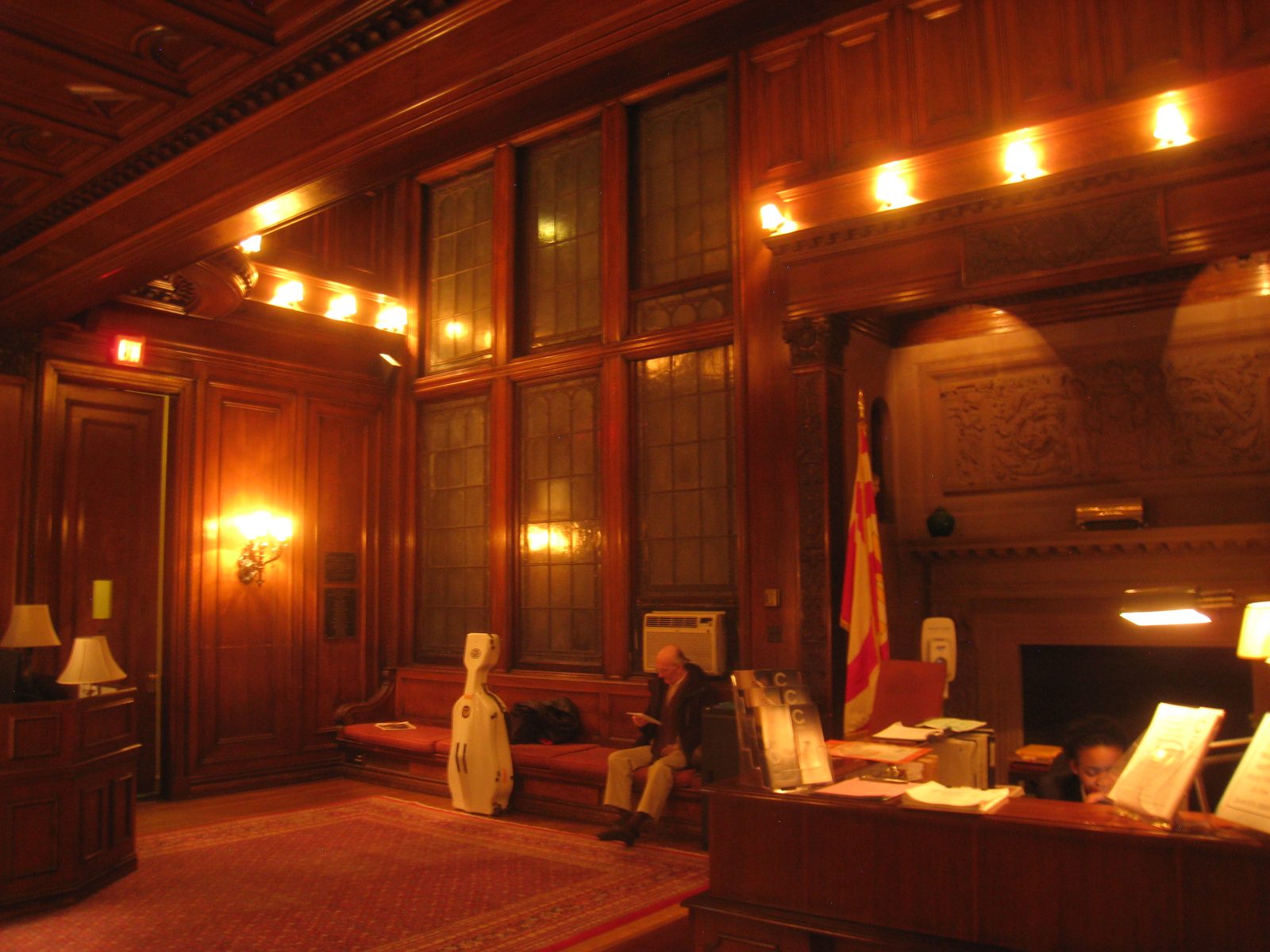
Cover photograph: The Curtis Institute of Music, Rittenhouse Square, Philadelphia. Daderot, CC0, via Wikimedia Commons.
Comments
Sign in to join the discussion.