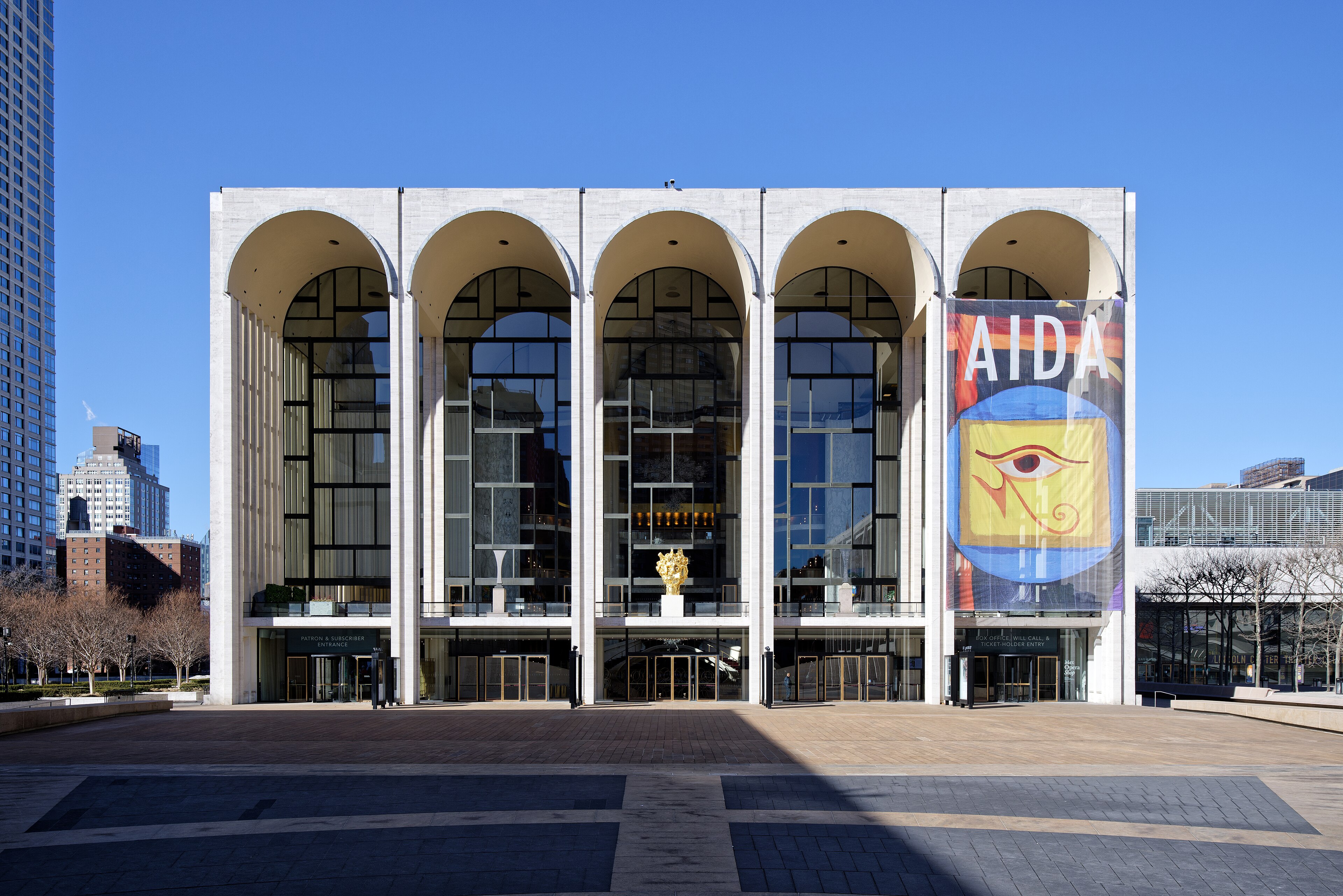
Weston Sprott joined the Metropolitan Opera Orchestra in 2005. He has been in that pit for twenty-one seasons, playing trombone, which is not a job that makes anybody famous.
On 21 September he becomes Executive Director of Jazz at Lincoln Center.
Almost nothing about that sentence is ordinary. Major arts institutions are usually run by people who came up through management, development or consulting. Sprott arrives as a working orchestral section player and a working educator, and he arrives at the precise moment that Jazz at Lincoln Center is rebuilding its entire leadership around a founder stepping back after nearly forty years.
What he actually built at Juilliard
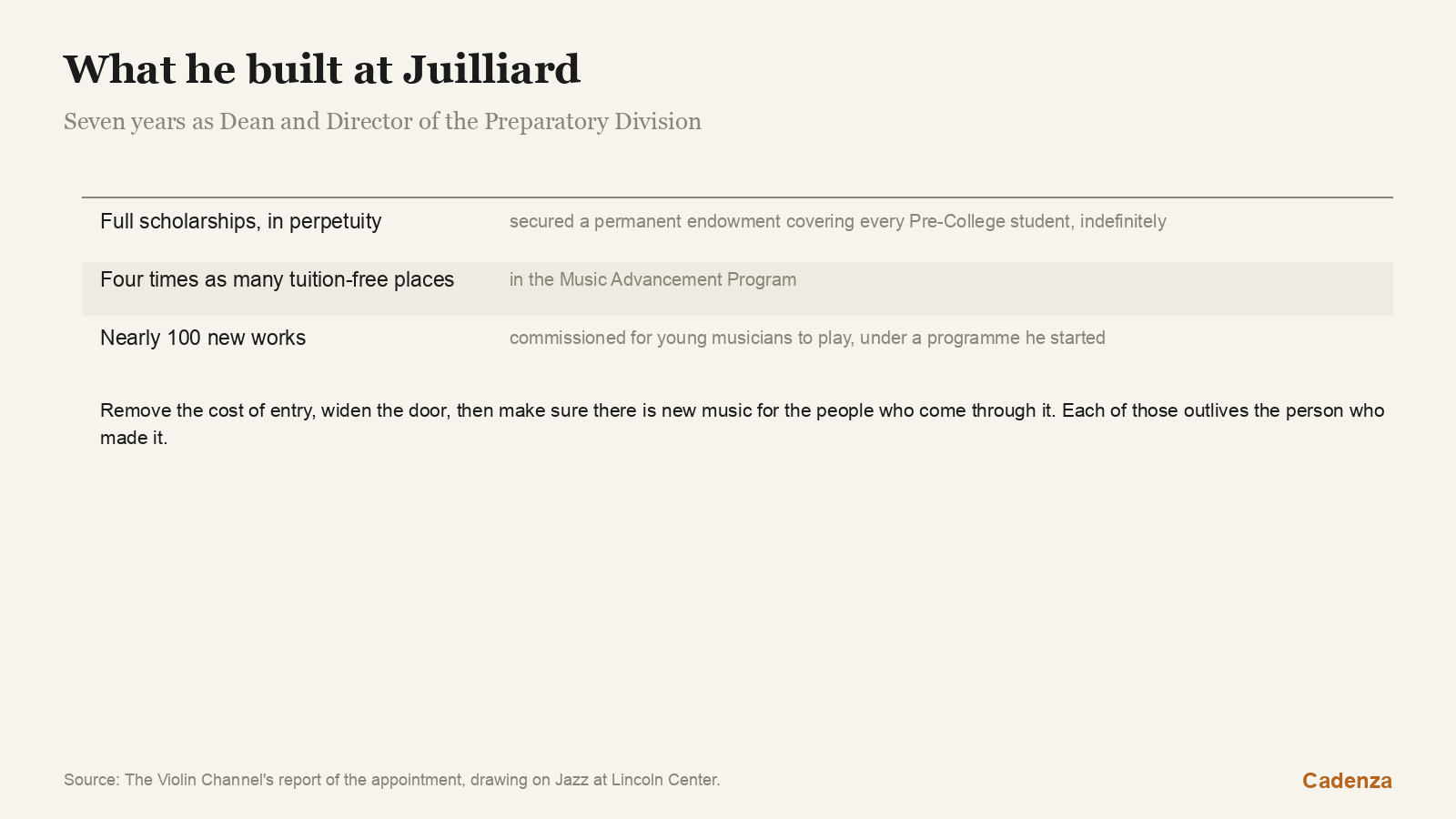
For seven years Sprott was Dean and Director of the Preparatory Division of the Juilliard School, running its Pre-College programme and its Music Advancement Program.
Three things happened in that time, and they are the reason this appointment reads as it does.
He secured a permanent endowment that allows Pre-College to provide full scholarships for all of its students in perpetuity. Not a scholarship fund that pays out while a donor is alive, and not a bursary scheme reviewed every budget cycle. A permanent endowment, covering every student, indefinitely.
He expanded the Music Advancement Program so that four times as many students as before now receive a tuition-free education.
And he started a commissioning programme under which nearly one hundred new works have been written for young musicians to play.
Take those three together and you have a specific philosophy rather than a list of achievements. Remove the cost of entry, widen the door, and then make sure there is new music for the people who come through it. Every one of those is a structural change that outlives the person who made it, which is the hardest kind to get through an institution.
Twenty-one years in a pit
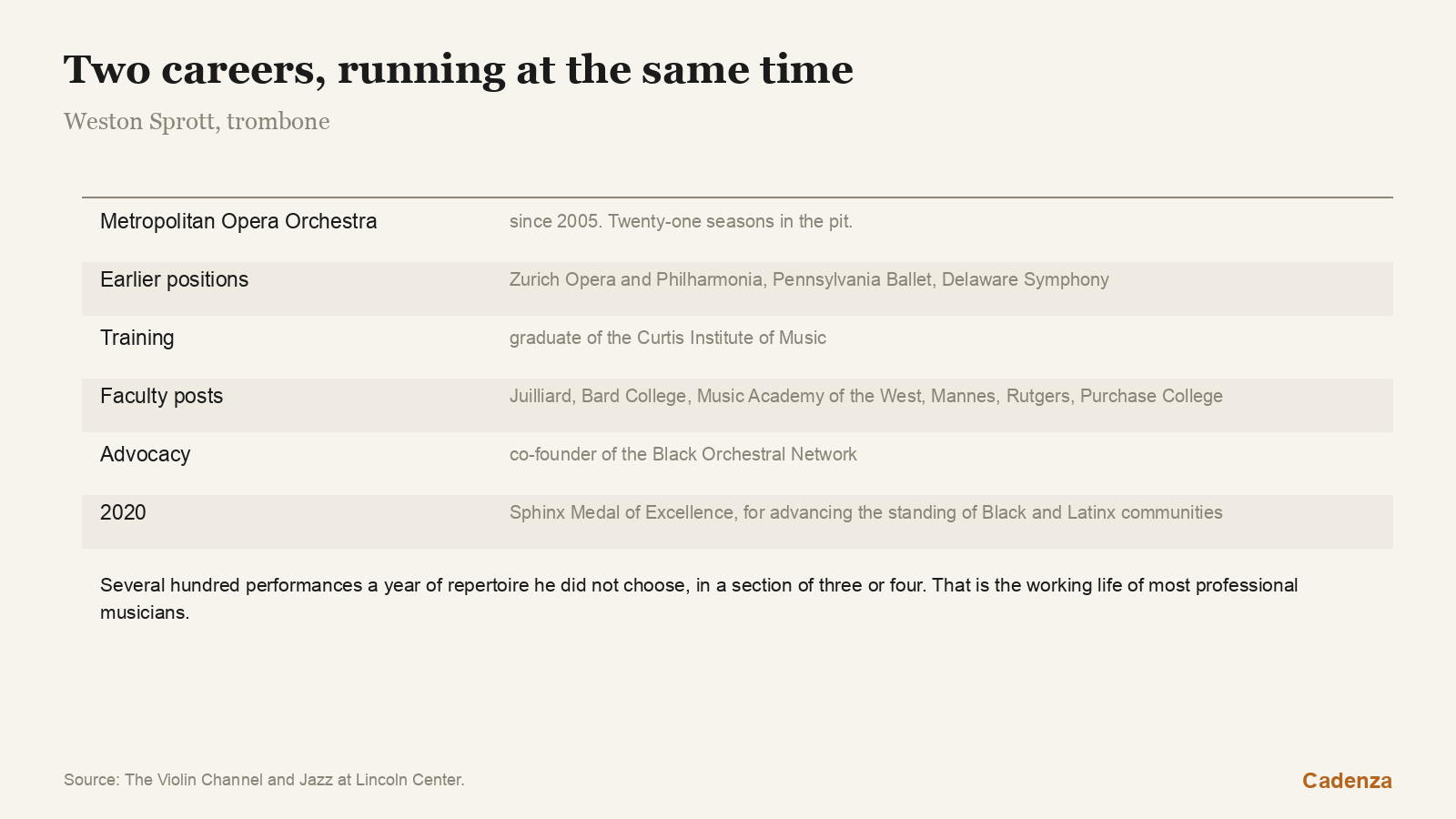
The playing career is the part that will mean the most to Cadenza's readers, because it is the one almost nobody in an executive chair has.
Sprott is a graduate of the Curtis Institute of Music. Before the Met he held positions with the Zurich Opera and Philharmonia, Pennsylvania Ballet and the Delaware Symphony. He has taught at Juilliard, Bard College, the Music Academy of the West, Mannes, Rutgers and Purchase College.
Twenty-one seasons in the Metropolitan Opera Orchestra means several hundred performances a year of repertoire he did not choose, under conductors he did not hire, in a section of three or four people. That is the working life of the vast majority of professional musicians, and it is a life that the people who run arts institutions have very often never lived.
He is also a co-founder of the Black Orchestral Network, which amplifies the voices of Black orchestral musicians and advocates for equity in the profession, and in 2020 he received the Sphinx Medal of Excellence for advancing the standing of Black and Latinx communities.
The chair he is walking into did not exist a year ago
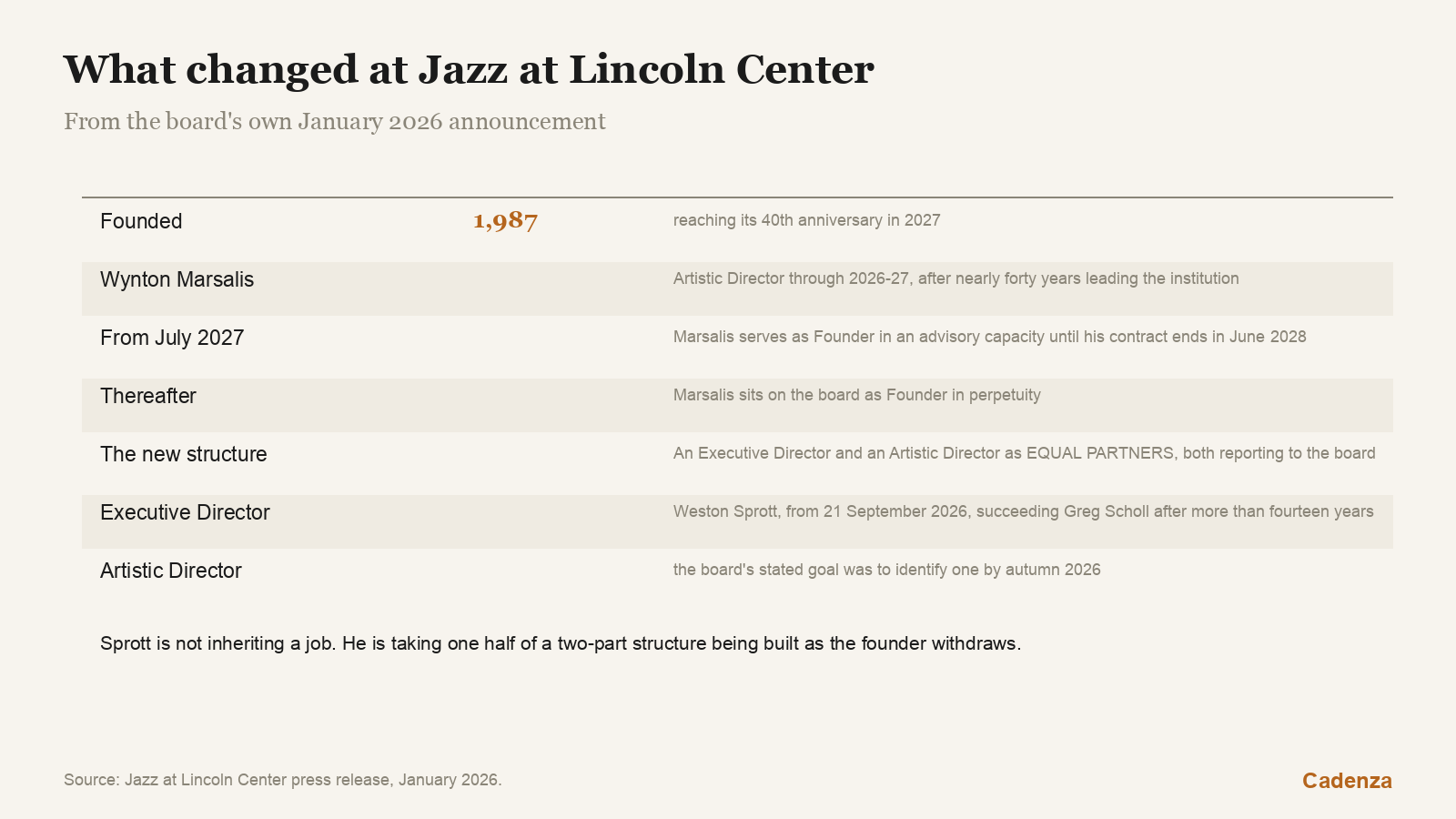
This is the part of the story that the appointment announcement does not spell out, and it is why the job is bigger than the title.
In January, Jazz at Lincoln Center's board announced that Wynton Marsalis would transition out of his role as artistic and administrative leader over two and a half years, after nearly forty years. Marsalis continues as Artistic Director through the 2026-27 season. From July 2027 he serves as Founder in an advisory capacity until his contract ends in June 2028, and thereafter he sits on the board as Founder in perpetuity.
The board also set out a new structure. An Executive Director and an Artistic Director will serve as equal partners, both reporting to the board. That is a different arrangement from the one Marsalis held, where artistic and administrative leadership sat with one person.
So Sprott is not inheriting a job. He is taking one half of a two-part structure being built as the founder withdraws, at an institution established in 1987 that reaches its fortieth anniversary next year. He succeeds Greg Scholl, who was Executive Director for more than fourteen years.
Marsalis's own comment on the appointment was direct. He said he has known Sprott for many years, called him an extraordinary leader, educator and musician, and said Sprott unequivocally embraces the responsibility to champion the music, nurture the next generation of artists and continue building an institution that will endure.
A classical musician running a jazz institution
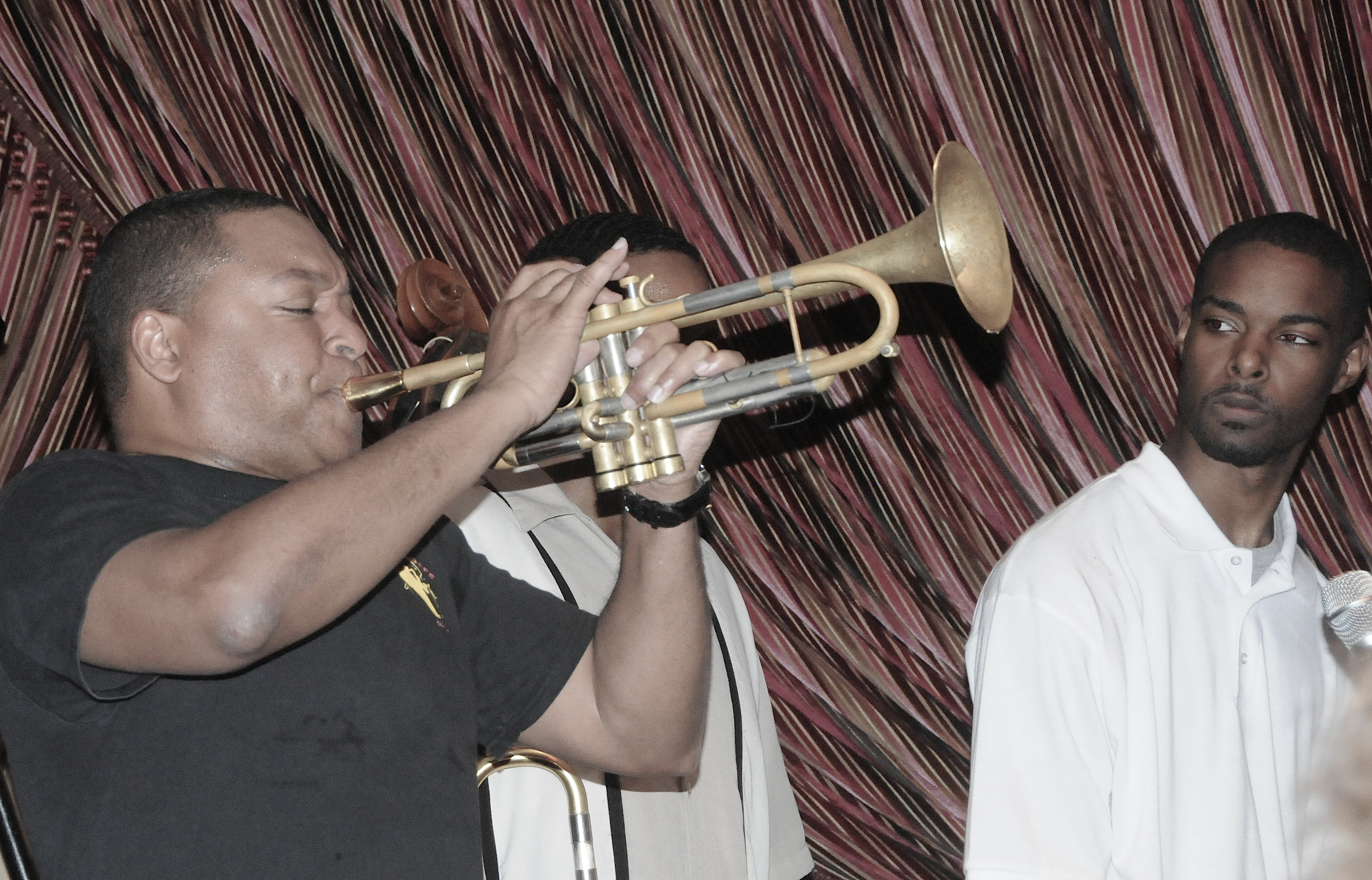
The obvious question is whether an opera trombonist should be running America's flagship jazz organisation, and it deserves a straight answer rather than a defensive one.
The Executive Director role is not the artistic one. Under the new structure an Artistic Director is an equal partner, and the board's stated goal in January was to identify that person by autumn 2026. Programming, repertoire and the Jazz at Lincoln Center Orchestra sit on that side of the partnership.
What the Executive Director side needs is exactly what Sprott's record shows: raising permanent money, widening access, growing education programmes, and commissioning new work. Those are the things Jazz at Lincoln Center already does at scale, through its high school band competition, its Let Freedom Swing programme, the annual Jazz Congress conference and Blue Engine Records, which releases material from a fully digitised archive of thousands of performances.
There is also a reasonable case that the classical and jazz institutions of this city have more in common than either likes to admit. Both run orchestras with fixed personnel. Both depend on education pipelines and endowed money. Both are trying to widen an audience that skews older and wealthier than they would like. A person who has spent twenty-one years inside one of them, and seven years fixing the cost of entry to another, is not an outsider to the problem.
Why this one matters to players

Cadenza has spent this week counting prize money, applicant ratios and instrument loans, and the through-line has been that the things which change a young musician's life are structural: a loaned cello, a recording contract, a funded fellowship, a seat that somebody endowed.
This appointment belongs to the same category, from the other end. Someone who spent two decades on the receiving end of those structures, as a section player and then as a dean removing tuition from the people behind him, now has a budget and a board.
For every working musician who has been told that the route to influence runs away from the instrument, here is the opposite. He is still, as of this month, a member of the Metropolitan Opera Orchestra.
A year ago it was an audition, and then a job advertisement
Sprott's Met seat began as an audition, his Curtis place as an application, and the Juilliard deanship and this executive role as posted searches. The board's Executive Director search committee began work in January.
Cadenza carries current orchestral and institutional vacancies, free to musicians, on its jobs board, and competitions with open deadlines on its competitions board.
If you are watching this. The date to note is 21 September, when Sprott starts. The next one is autumn 2026, the board's stated target for naming an Artistic Director to sit alongside him, which will tell you far more about the institution's direction than any appointment announcement can. And Jazz at Lincoln Center's fortieth anniversary falls in 2027, the same year Marsalis moves to an advisory role.
The question Jazz at Lincoln Center will be asked next is the one its own January announcement created. It has replaced a single artistic and administrative leader with two equal partners, and it has now filled one of those two chairs. Who sits in the other, and who decides when they disagree?
Sources: Jazz at Lincoln Center's own press release of January 2026 announcing the leadership transition, which carries Marsalis's nearly forty years, the phased timetable through June 2028, his continuing role as Founder on the board, Greg Scholl's resignation effective June 2026, the two search committees, the target of naming an Artistic Director by autumn 2026, the new structure of an Executive Director and Artistic Director as equal partners reporting to the board, the 1987 founding, and the institution's education and archive programmes; and The Violin Channel's report of Sprott's appointment, which carries his seven years as Dean and Director of Juilliard's Preparatory Division, the permanent endowment funding full scholarships for all Pre-College students in perpetuity, the fourfold expansion of tuition-free places in the Music Advancement Program, the nearly one hundred commissions, his Curtis Institute degree, his faculty posts, his membership of the Metropolitan Opera Orchestra since 2005, his previous positions at Zurich Opera and Philharmonia, Pennsylvania Ballet and the Delaware Symphony, his co-founding of the Black Orchestral Network, his 2020 Sphinx Medal of Excellence, and Marsalis's quoted remarks. Cadenza separately confirmed from Jazz at Lincoln Center's own roster that its three trombone chairs are unchanged, since this is an executive appointment and not a playing one. The twenty-one seasons and the anniversary dates are Cadenza's arithmetic.
Cover photograph: the Metropolitan Opera House, Lincoln Center, January 2025. D. Benjamin Miller, CC0. In-body photographs: Wynton Marsalis at the Royal Sonesta Hotel in the French Quarter, New Orleans, Larry Johnson, CC BY 2.0; and arriving at Lincoln Center, Ralph Daily, CC BY 2.0. All via Wikimedia Commons. Charts by Cadenza.
Cover photograph: The Metropolitan Opera House at Lincoln Center, where Weston Sprott has played in the orchestra since 2005, photographed in January 2025. D. Benjamin Miller, CC0, via Wikimedia Commons.
Comments
Sign in to join the discussion.