Boston Ballet announced on Tuesday 1 September that an anonymous patron has given it $10 million, the largest endowment gift in the company's 63-year history and, by WBUR's account, the largest donation of any kind. The money endows the artistic director's position in perpetuity, in honour of Mikko Nissinen, who was appointed to the job in September 2001 and whose 25 seasons the company is celebrating this year. It also comes ahead of a campaign to build the company's endowment to $100 million by 2032, whose public phase launches in April and which the company says would quadruple its annual draw.
The Boston Globe, WBUR and Slipped Disc have all carried the number and the honouree; the Globe and WBUR the target. None has put the gift beside the company's audited accounts, which Boston Ballet publishes on its own website, or beside the two institutions WBUR and Norman Lebrecht each invoked in passing, the New York City Ballet and the Boston Symphony Orchestra. That is the second half of this piece. The first half is the record.
What was said, in the order it was said
Malcolm Gay reported the gift in the Boston Globe on 1 September. The donor is described only as an "anonymous patron". Nissinen called the gift a "testament to the strength and impact of our beloved organization", and said that sustaining the company's standard "depends on the philanthropic support of our community". He then said the thing that is the actual subject of this article: "As performing arts organizations face increasingly challenging circumstances, a larger endowment gives Boston Ballet more breathing room and relieves pressure on the annual operating budget. The arts live on a knife's edge, and we are committed to evolving our business model to safeguard this deeply human art form." The Globe also carried the company's line that ticket sales fund only one third of operations, and its plan to expand the endowment to $100 million by 2032.
On 3 September, Artemisia Luk at WBUR spoke to Nissinen. "It was a total surprise," he said. "I felt it was such an acknowledgement of the hard work that we do every day at Boston Ballet to create the ballet company of the future." He was candid about the comparison: "Our endowment, throughout my tenure when I came here and still is, not as large as some of our peers." WBUR put New York City Ballet's endowment at $259 million. Nissinen also gave what reads as the company's creed: "We are not a museum, we are not a place of worship, but a living theater for today's people." WBUR reported that the public-facing $100 million campaign will launch formally in April, alongside the celebration of his 25 seasons.
On 4 September, Norman Lebrecht ran the news on Slipped Disc under the headline "Boston gets $10m gift (not for the orchestra)", noting that it was made "in honour of its Finnish Artistic Director Mikko Nissinen (pictured) in his 25th season", and that "Boston Ballet, astonished, has never seen that kind of money before." The previous day he had posted on the Boston Symphony's expected fiscal 2026 numbers.
The document
Boston Ballet posts its audited financial statements on its website. The most recent set, for the year ended 30 June 2025, carries an auditors' report from CBIZ dated 29 October 2025.
| Line, year ended 30 June | FY2025 | FY2024 |
|---|---|---|
| Ticket sales | $19,504,043 | $16,410,563 |
| School income, tuition and fees (net) | $8,869,918 | $8,204,497 |
| Total earned revenue | $29,437,981 | $25,300,532 |
| Total expenses before support | $42,548,546 | $39,677,962 |
| Loss from operations before support | ($13,110,565) | ($14,377,430) |
| Gifts, grants and sponsorships (gross) | $17,661,120 | $14,011,511 |
| Endowment spending allocation | $1,681,885 | $1,361,134 |
| Total functional expenses (incl. fundraising, depreciation) | $45,762,836 | $42,692,493 |
| Endowment assets, end of year | $46,791,870 | $40,898,786 |
| Total net assets | $57,143,047 | $51,181,747 |
| Change in net assets | $5,961,300 | $105,266 |
Three things in that table matter. First, the endowment stood at $46.8 million on 30 June 2025, with a further $4.6 million in endowment pledges outstanding. Second, the endowment's actual contribution to the year's operations was $1.68 million, and the allocation already set for the current year is $1,951,228. Third, the spending rule is printed in Note 12: 70 per cent weight to 4.5 per cent of the prior year-end market value, 30 per cent weight to last year's allocation adjusted for inflation.
The "one third from tickets" line is the company's framing; the audit is more precise. Ticket sales of $19.5 million were 43 per cent of total functional expenses in FY2025, and the school brought in another $8.9 million. Earned revenue covered $29.4 million of a $42.5 million operating cost base, leaving a $13.1 million hole before a dollar of philanthropy. Gifts, grants and sponsorship filled $17.7 million gross. The endowment filled $1.7 million. That last number is the one the campaign is meant to change.
The second half is ours
Start with the target. A $100 million endowment yields $4.0 million a year at 4 per cent, $4.5 million at the company's own 4.5 per cent, $5.0 million at 5 per cent. Against FY2025 functional expenses of $45.8 million, the middle case covers roughly one dollar in ten of the company's costs, against the one in 27 the endowment covered last year.
Now the word "quadruple", which appears in both the Globe and WBUR as the company's description of what $100 million would do. Four times the FY2025 allocation of $1.68 million is $6.7 million. Four times the FY2024 allocation of $1.36 million is $5.4 million. To produce either of those from $100 million, the draw rate would need to be between 5.4 and 6.7 per cent, well above the 4.5 per cent in the company's own spending formula. The company has not published the baseline it is quadrupling from. It may be counting from an earlier year, or from a different definition of "draw" than the audited allocation line. Four times the $1.95 million already allocated for this year would be $7.8 million, a 7.8 per cent draw. Either way, the arithmetic on the published rule says $100 million multiplies last year's contribution by about 2.7, not four, and that is the steady-state figure; because the rule blends 70 per cent of a 4.5 per cent draw with 30 per cent of the previous year's allocation, the first year's draw on $100 million would be nearer $3.8 million. That would still be a transformative number for a company that lost $13.1 million before support last year. It is just not the number the company has used.
Next, the gift itself. $10 million is one tenth of the $100 million target. Added to the 30 June 2025 balance it would take the endowment to about $56.8 million, if it arrives as cash rather than as a pledge paid over years; neither the statements nor the reports say. At 4.5 per cent, $10 million produces $450,000 a year. The company's FY2025 Form 990, as summarised by ProPublica's Nonprofit Explorer, reports Nissinen's total compensation at $816,563 ($807,859 plus $8,704 in other benefits). So the endowed position, on the company's own spending rule, will pay a little over half of what the artistic director's job currently costs, in perpetuity, whoever holds it.
Then the comparison Nissinen invited and WBUR made for him. New York City Ballet's audited statements for the year ended 30 June 2025, on its own website, show endowment net assets of $259,672,000, a spending policy of 5.0 per cent on a 20-quarter average, and an appropriation of $11,579,000 for the year. Ticket sales and tour fees were $48,149,000 against total operating expenses of $114,282,000: 42 per cent from the box office, almost exactly Boston's 43 per cent. The two companies earn roughly the same share of their keep from the box office (New York's line includes tour fees; Boston's is tickets alone). The difference is that New York draws $11.6 million a year from an endowment five and a half times the size of Boston's, and Boston draws $1.7 million. Reach $100 million and Boston's draw would still be less than half of New York's today.
And then the comparison Lebrecht made. Just over three weeks ago Cadenza published a long investigation into the governance of Boston's orchestras, following an earlier piece on the Boston Symphony board's decision on Andris Nelsons and a financial anatomy of the BSO built from its Form 990s: $117.1 million in revenue, $123.7 million in expenses and $618.4 million in net assets for fiscal 2024. The fiscal 2025 return has since been filed. Thomas W. Dinsmore, whose Substack analysis Slipped Disc has been citing, reported in July that it shows revenue of $155 million, a $27 million surplus, and an endowment of $603 million, of which about $66 million is unrestricted. On 3 September, Slipped Disc carried his fiscal 2026 projections: box office of around $55 million if the season went to plan, "another $60 million fundraising year" as the benchmark to watch, and investment returns he puts at $80 to $90 million.
Set those against the ballet. The BSO's endowment is nearly 13 times Boston Ballet's. Its unrestricted endowment alone, at $66 million, is larger than the ballet's entire endowment. Its projected one-year investment return for fiscal 2026 is, at the top of the range, almost the ballet's whole six-year campaign target. Lebrecht's headline reads "not for the orchestra", and on these numbers, the orchestra is not the institution that looks to need it.
The year-ago view is the quietest good news in the audit. In FY2024 Boston Ballet's net assets grew by $105,266, which is to say they did not move. In FY2025 they grew by $5.96 million. Ticket sales rose 19 per cent, gifts rose from $14.0 million to $17.7 million, and the endowment gained $5.9 million after the draw. The $10 million arrived on top of a year in which a flat balance sheet had already started to grow.
The orchestra in the pit
Lebrecht's parenthesis deserves a correction of emphasis. There is an orchestra in this story. Boston Ballet has its own, and the company's website describes it as "the second largest orchestra in New England", offering on average one hundred services a season at the Citizens Opera House. Its music director is Mischa Santora, who joined the company in 2018 and holds the Beatrice H. Barrett Music Director's Chair; he trained in conducting with Otto-Werner Mueller at Curtis and came to Boston from posts with the Cincinnati Chamber Orchestra, the New York Youth Symphony and the Minnesota Orchestra.
The published roster lists 47 chairs, 44 of them filled: 12 violins under concertmaster Christine Vitale, four violas, four cellos, two basses, pairs of winds, four horns, full brass and percussion. Three positions are marked vacant: a horn, principal trumpet and principal timpani. Four chairs are marked as endowed in perpetuity, the Edward Avedisian, Donald M. Bravo, Donald J. Sanders and Cynthia Price-Glynn chairs, and the principal solo pianist holds the Mara Dole chair. The artistic director's post already carries a name of its own: the company's website lists Nissinen as holder of the Hart Artistic Director's Chair. Neither the company nor the reports say how the new gift relates to it.
On the day of writing, the company's auditions page said of the orchestra: "There are no openings at this time", despite the two principal vacancies on the roster, and the form for 2027-28 company dancer applications opens on 1 November. There was no Boston Ballet listing on Cadenza's board. The orchestra opens the Fall Experience programme with selections from Stravinsky's Firebird Suite, plays live for Alexander Ekman's Cacti alongside the Anduin String Quartet, and plays the Nutcracker run under Santora and assistant conductor Tianyi Ren, with 83 students from Boston Ballet School on stage.
If you go
- Fall Experience, Citizens Opera House, 539 Washington Street, Boston, 10 to 20 September 2026. Akram Khan's Vertical Road (Reimagined) 2023 and Alexander Ekman's Cacti, opened by the Boston Ballet Orchestra in Stravinsky. One hour 35 minutes with a 20-minute interval. On 6 September the company's ticketing site was down for maintenance and showed no prices.
- Paris, Théâtre des Champs-Élysées, 8 to 11 October 2026, five performances of the same two works, the company's third Paris visit after 2019 and 2024. Prices from €15 to €110.
- The Nutcracker, Citizens Opera House, 27 November to 31 December 2026, Boston Ballet Orchestra conducted by Mischa Santora and Tianyi Ren.
Musicians looking for orchestra and ballet-company work can browse the jobs board, which is free to musicians and carried 735 live listings on 6 September.
The question
Boston Ballet is between leaders. Jack Meyer stepped down as board chair at the end of June after 17 years; his vice chair, Laura Sen, is to be voted in as chair at the annual meeting this month. Executive director Ming Min Hui announced in June that she leaves in November, with the search for her successor under way. None of them was quoted in the reports. The donor has funded something more durable than a season: an artistic director's pay packet, roughly half-funded forever, at a company whose current director was 39 when he was appointed and has held the job since 2001. The gift honours him, and the campaign launch is timed to the celebration of his 25 seasons. But what it endows is a position, not a person. The question Boston will be asked next is who the next artistic director will be, and whether a chair funded in perpetuity now outlives the man it was named for.
Sources: Boston Globe, 1 September 2026; WBUR, 3 September 2026; Slipped Disc, 4 September 2026; Slipped Disc, 3 September 2026; Boston Ballet, audited financial statements FY2025 via Boston Ballet Financials; Boston Ballet Orchestra; Mischa Santora, Boston Ballet; Mikko Nissinen, Boston Ballet; Boston Ballet history, the 2000s; Boston Ballet auditions; Boston Ballet board; Boston Ballet on tour; Fall Experience; The Nutcracker; Théâtre des Champs-Élysées; BroadwayWorld, 24 March 2026; ProPublica Nonprofit Explorer, Boston Ballet Inc; New York City Ballet, audited financial statements FY2025; Thomas W. Dinsmore, Chad's Big Haul, 16 July 2026; Wikipedia, Mikko Nissinen; Cadenza listings API, 6 September 2026; Boston Ballet, board of trustees press release, 26 March 2026; Boston Globe, 1 June 2026.
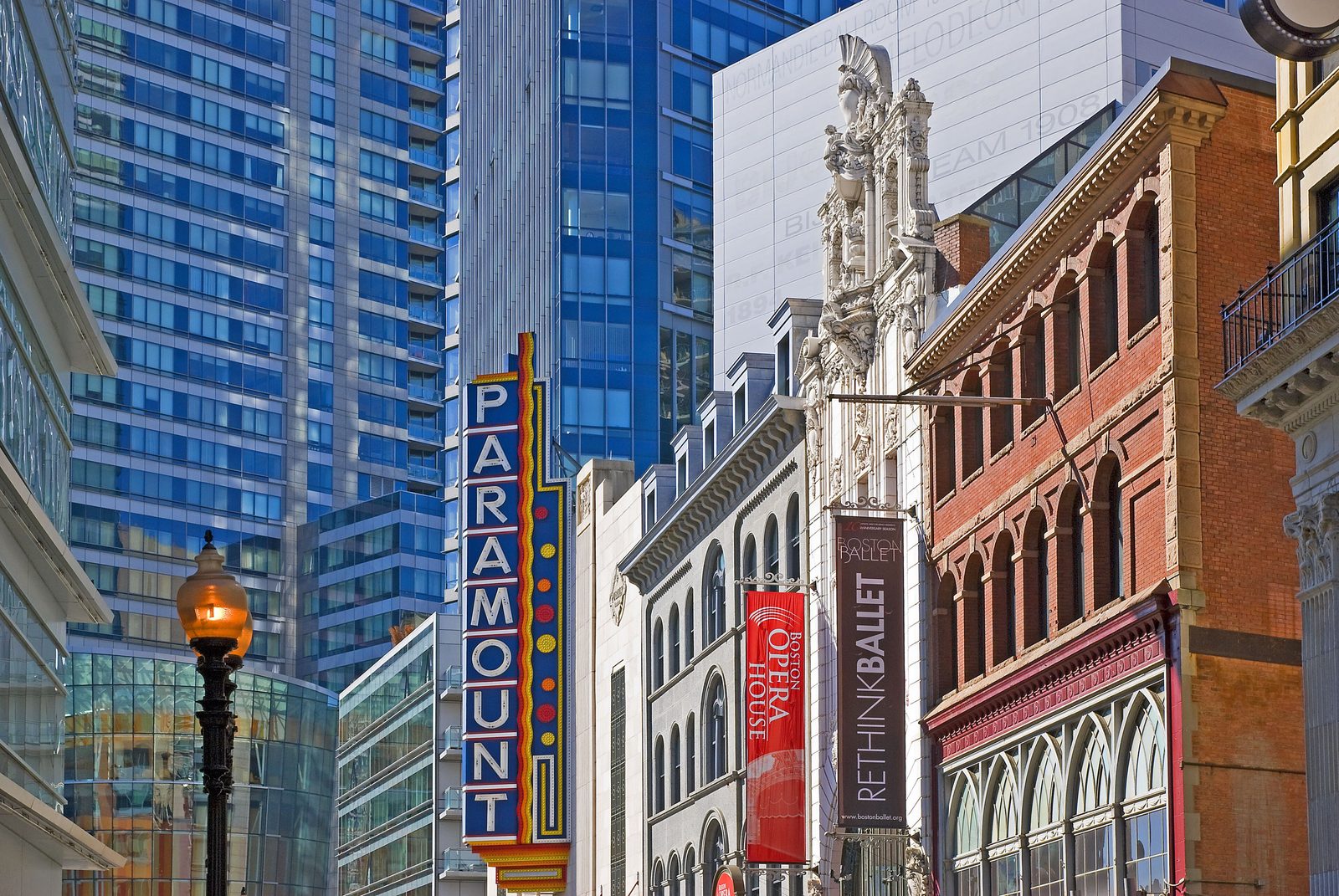
Cover photograph: The Paramount and the Boston Opera House on Washington Street, Boston, in 2011. Ron Cogswell, CC BY 2.0, via Wikimedia Commons.
Comments
Sign in to join the discussion.