Wednesday 30 September is the deadline for musicians in twelve countries who want a seat in the 2027 European Union Youth Orchestra. Belgium, Bulgaria, Cyprus, Germany, Greece, Ireland, Italy, Malta, Portugal, Romania, Slovenia and Spain all stop taking applications for the 2027 orchestra on Wednesday 30 September.
The orchestra's audition page, re-read by Cadenza on 25 September 2026, says it without ceremony: "Applications for the 2027 orchestra are now open!" Auditions are free. They are held in all 27 member states, run with local organisers in each, and the main audition period runs from September to December, on dates that differ from one country to the next.
About 120 places are on offer, and they are worth having. Members pay no membership fee and receive free tuition, travel, accommodation and food, and they join the orchestra's spring and summer tours plus other projects through the year. Its music director is Iván Fischer. One of the programmes already announced for 2027 has Daniil Trifonov playing Rachmaninoff's Third Piano Concerto.
Every deadline, audition date and rule below comes from the orchestra's own pages, read on 22 September 2026 and re-read on 25 September 2026, and from its national partners where they publish separately.
The deadlines, country by country
| Apply by | Countries | Days left from 24 September |
|---|---|---|
| Passed | Austria, France (first rounds already held) | closed |
| 20 September | Denmark; Netherlands (through NJO) | closed |
| 30 September | Belgium, Bulgaria, Cyprus, Germany, Greece, Ireland, Italy, Malta, Portugal, Romania, Slovenia, Spain | 6 |
| 10 October | Hungary | 16 |
| 30 October | Latvia, Luxembourg, Poland, Slovakia, Sweden | 36 |
| 2 November | Estonia | 39 |
| 4 November | Finland | 41 |
| 10 November | Croatia, Czech Republic, Lithuania | 47 |
That is all 27. Of the 23 that were open when Cadenza checked on 25 September 2026, twelve close on Wednesday 30 September, which is 52 per cent of them on a single day.
The 30 September group is not one kind of audition. In Belgium, Italy and Spain the first round is a video, and the video has to be in by 30 September as well, not just the form. Italy's is judged by Italian jurors, and its live final is on 30 November and 1 and 2 December at Via Asiago 10 in Rome. Spain's is judged by EUYO jurors, with the live final on 9 to 11 November in the Sala de Cámara of the Auditorio Nacional de Música in Madrid. Belgium's final is on 21 November, with 22 November held in reserve, at IMEP in Namur.
Portugal lets candidates choose: a video by 30 September, or a live first round in Espinho on 24 and 25 October or in Lisbon on 31 October and 1 November, all judged by Portuguese jurors, with the final in Lisbon on 7 and 8 November.
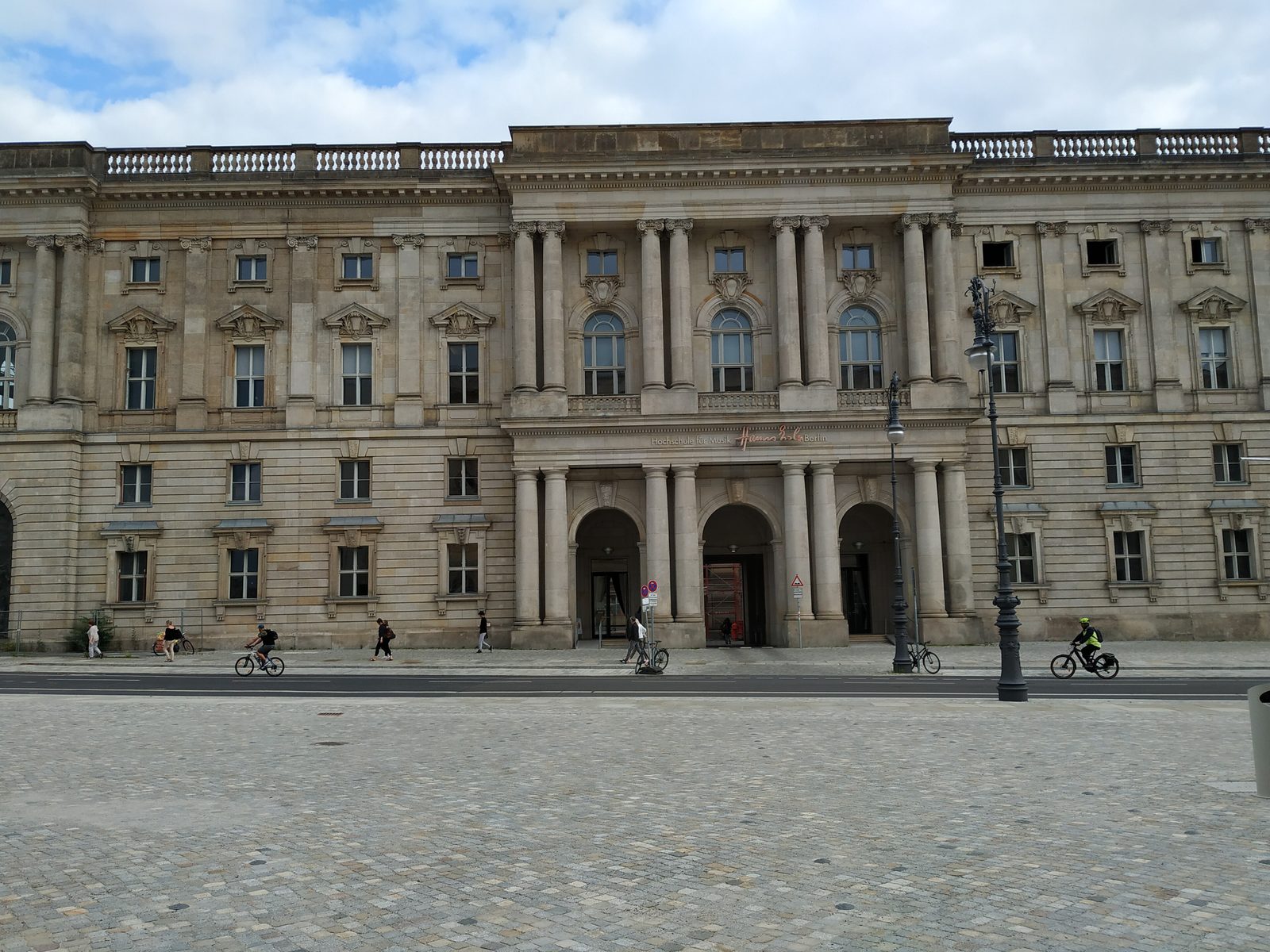
Germany holds two live rounds on 6, 7 and 8 November at the Hochschule für Musik Hanns Eisler in the Neuer Marstall, Schlossplatz 7, Berlin.
The other seven hold a single live round. Ireland auditions on 19 and 20 October at the Royal Irish Academy of Music in Dublin, and the Irish Association of Youth Orchestras confirms the 30 September deadline. Romania auditions at the Romanian Athenaeum in Bucharest on 24 October and at the Gheorghe Dima National Music Academy in Cluj-Napoca on 25 October. Greece is at the Thessaloniki Concert Hall on 20 October, with the 21st if required; Cyprus at the music department of the Pancyprian Gymnasium in Nicosia on 19 October; Malta at the Robert Samut Hall in Floriana on 17 October; Bulgaria in Sofia on 14 October; and Slovenia at the University of Ljubljana's Academy of Music on 12 and 13 October, if required.
The eleven later countries look like this:
| Country | Apply by | Audition | Where |
|---|---|---|---|
| Hungary | 10 October | 7 and 8 November | Liszt Academy, Liszt Ferenc tér 8, Budapest |
| Latvia | 30 October | 17 November | Jāzeps Vītols Latvian Academy of Music, Riga |
| Luxembourg | 30 October | 20 November | Conservatoire de Musique du Nord, Ettelbruck |
| Poland | 30 October | 21 and 22 November | Fryderyk Chopin University of Music, Warsaw |
| Slovakia | 30 October | 16 November | Bratislava |
| Sweden | 30 October | 21 and 22 November | Academy of Music and Drama, Gothenburg |
| Estonia | 2 November | 16 November | Estonian Academy of Music and Theatre, Tallinn |
| Finland | 4 November | 14 and 15 November | Sibelius Academy, Helsinki |
| Croatia | 10 November | 28 November | Academy of Music, University of Zagreb |
| Czech Republic | 10 November | 28 November | Prague |
| Lithuania | 10 November | 27 November | Gedimino av. 42, Vilnius |
Denmark and the Netherlands closed on Sunday 20 September; the Dutch national partner, the Nationaal Jeugdorkest, confirms its date, and its second round runs from 26 to 28 November. Austria and France are marked "Passed", with their first rounds already held and their finals in Vienna on 14 and 15 November and in Paris on 12, 13 and 14 October.
Of the audition dates EUYO listed on 25 September 2026 for rounds not yet held, the first is Denmark's on 10 October in Frederiksberg and the last is Italy's on 2 December in Rome. That is 53 days. EUYO aims to publish results in January.
Who can apply
The age rule is short: you must be 16 to 26 on 31 December 2026. In birth years, that is anyone born from 2000 to 2010 inclusive, eleven years of musicians. It also means that a candidate born late in 2010 can audition at fifteen, and that those born in 2000 will turn 27 during the season they are auditioning for.
You need a valid passport from one of the 27 EU countries. The rules are blunt about the alternative: "Residence permits or visas from EU countries do NOT count." The FAQ is blunter still about one country in particular: "Regrettably, since the UK's departure from the EU, UK musicians can no longer apply to the EUYO." That is a sentence with some history behind it. On the orchestra's own site, Ambassador Martin Eichtinger, described there as a member of its board, recalls that its founders "put the visionary idea of a youth orchestra into practice in London in 1976".
You do not have to audition in the country on your passport. You may audition in any EU country where you were born, live, study or work. You do not need to be studying music, and professionals are welcome: "Absolutely! We welcome applications from members of professional orchestras," the FAQ says. You may audition on more than one instrument.
Nobody keeps a seat. All musicians audition every year, past members included. The rule for returning players, in EUYO's words: "EUYO members from the last two years, or applicants placed on the reserve list in the last two years, skip the first round and go directly to the final audition."
The 2027 audition selector lists 17 instrument categories: violin, viola, cello, double bass, flute and piccolo, oboe, clarinet, bassoon, high horn, low horn, trumpet, trombone, bass trombone, tuba, timpani and percussion, piano and harp. When Cadenza checked on 25 September 2026, the FAQ still carried the list for the 2026 season, which does not include piano or harp, so the selector is the page to trust.
Eight minutes
A live audition is one prepared solo piece, played with piano except by harpists and pianists, plus orchestral excerpts. You may bring longer repertoire, but you will be asked for about four minutes of it. Percussionists play excerpts only.
A video audition is one unedited video: the solo piece, about four minutes, with no piano accompaniment needed, plus the mandatory excerpts marked on the list. "The video cannot be from a performance or an older recording." The FAQ asks that a YouTube link be unlisted or public, not private.
The final round is where it is decided. One experienced EUYO panel member hears it live. Every audition is video-recorded so that an instrument-specific panel can review it, "comparing performances of candidates across Europe", and a moderation process follows. Each audition lasts around eight minutes, solo piece and excerpts together. With about four minutes of that given to the solo, roughly half of the time that decides a year of touring goes to excerpts.
The orchestra's tips page does not undersell them: "Orchestral excerpts are a sport and an art, and can make or break your audition." The excerpt lists arrive as PDFs once you apply and may be used only for EUYO auditions, and the page carrying them had last been edited on 18 September when Cadenza read it on 25 September 2026. In any final or single round, a candidate may be asked for any excerpt on the list, not just the mandatory ones.
There is no written feedback afterwards and EUYO does not release the videos. What it describes instead is feedback inside the room: you may be asked to play something again, with input from the panellist.
The odds, from the orchestra's own numbers
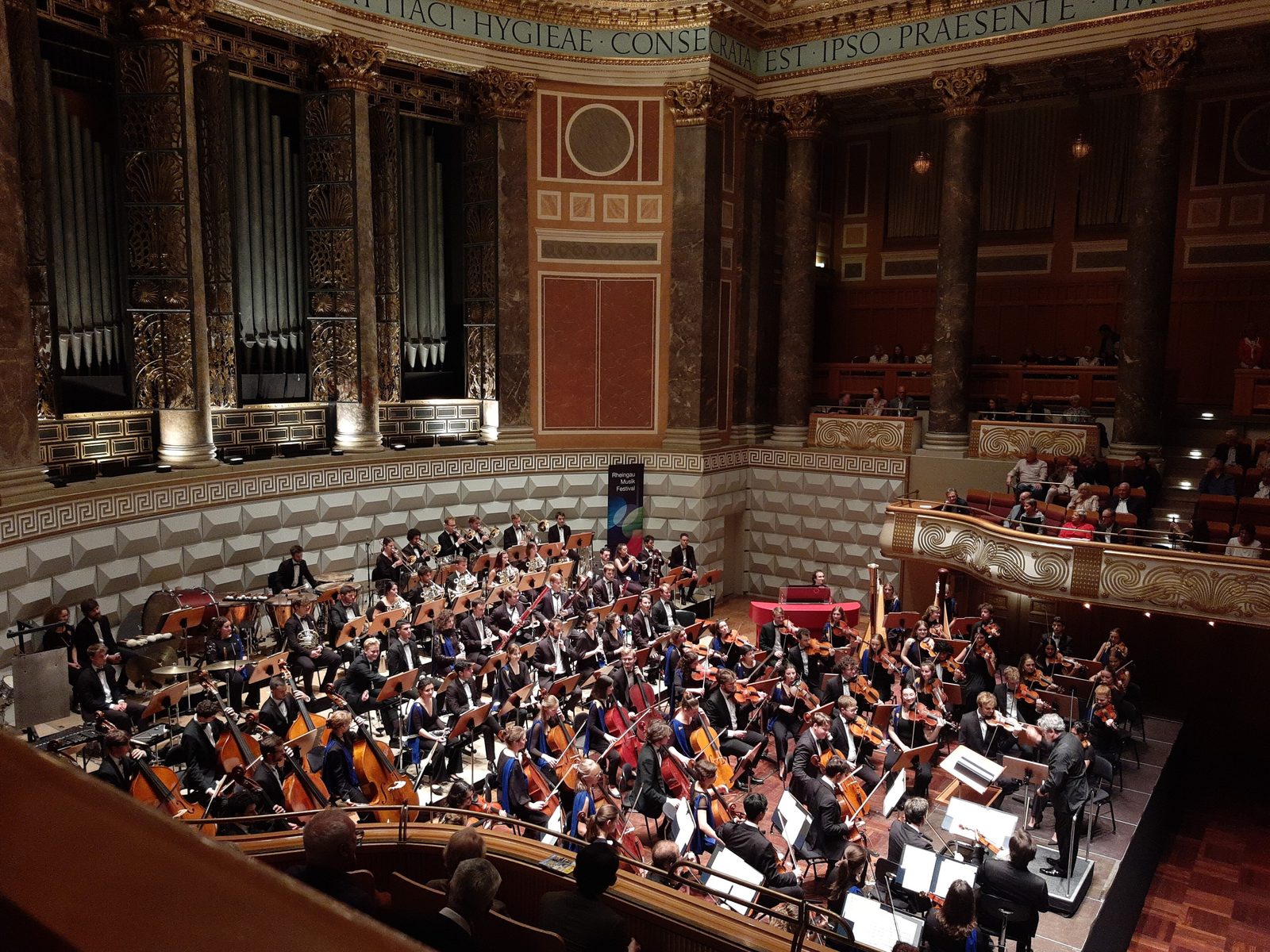
EUYO publishes two applicant figures, and they are not the same number. Its biography, dated March 2026, says around 3,000 applicants aged 16 to 26 audition each year for approximately 120 places; its call for the 2026 orchestra in July 2025 said the same. Its homepage says the 120 members are chosen "from more than 2500 candidates". It publishes no count by country or by instrument that Cadenza could find when it checked on 25 September 2026. So the honest version of the odds is a range.
| EUYO's figure | Cadenza's arithmetic | |
|---|---|---|
| Applicants (biography, March 2026) | around 3,000 | |
| Applicants (homepage) | more than 2,500 | |
| Places | around 120 | |
| Reserve list | around 200 | |
| Chance of a place, on 3,000 | 4.0 per cent, 1 in 25 | |
| Chance of a place, on 2,500 | at most 4.8 per cent, about 1 in 21 | |
| Place or reserve list | 10.7 to 12.8 per cent, about 1 in 9 to 1 in 8 |
Because the homepage says "more than" 2,500, the 4.8 per cent figure is a ceiling, not an estimate.
The reserve list is easy to overlook. At around 200, it is two thirds larger than the orchestra, its members "may join later", and a reserve place in either of the two previous years is a ticket straight to the final. On EUYO's own figures, about one applicant in eight or nine comes out of the process with one or the other.
It is tempting to divide by country. Three thousand applicants over 27 countries is 111 each, and 120 places over 27 is 4.4. Those averages describe nothing real. Cadenza found no national quota on EUYO's audition, rules, FAQ or home pages when it checked on 25 September 2026, and its FAQ says the panel compares candidates across Europe by instrument. On the process EUYO describes, a violinist auditioning in Malta and a violinist auditioning in Germany who both reach the final are reviewed by an instrument-specific panel that compares candidates across Europe.
The orchestra's own advice for the other 96 per cent is on the same page: "With thousands of candidates each year, competition is intense." And, from its tips on coping: "What is important is not to avoid failure, which is impossible anyway, but how you deal with it."
What the 2027 orchestra will play
The 2027 programmes are published, though, on EUYO's 2027 details page as read on 25 September 2026, no dates or venues are. Iván Fischer conducts Strauss's Also sprach Zarathustra and Rachmaninoff's Third Piano Concerto with Trifonov, and Beethoven's Ninth with the Brno Czech Philharmonic Choir. Leonidas Kavakos conducts the Coriolan overture and the Eroica. Colin Currie directs a Steve Reich Focus with the EUYO Percussion Ensemble.
The remaining programme, Beethoven & Beyond, goes to Mojca Lavrenčič, listed by EUYO as the winner of the La Maestra competition in 2026. The Schweizer Musikzeitung reported on 3 March 2026 that she had won in Paris. It says she is Slovenian, born in Vienna in 1993, studied conducting at the University of Ljubljana, and was then studying with Andrea Marcon at the Schola Cantorum Basiliensis. Her programme has Coriolan again, a Dvořák Slavonic Dance, Verdi's Nabucco overture arranged for brass ensemble, Zequinha de Abreu's Tico Tico arranged for brass and percussion, and Amparito Roca. Slovenia's candidates audition at the same university on 12 and 13 October, if required.
The audition lists and the programmes overlap more than you might expect. Cadenza counted the excerpt lists for all 17 instrument categories. Strauss is the most-listed composer, on 9 of the 17, through Don Juan, Ein Heldenleben, Don Quixote, Till Eulenspiegel and Salome. Beethoven's Ninth is the most-listed single work, on 6: violin, double bass, piccolo, low horn, bass trombone and timpani. For those six, the excerpt list includes a passage from a symphony the orchestra has announced for 2027.
EUYO had not said where the Reich Focus will be played when Cadenza checked its 2027 details page on 25 September 2026. Its home is Grafenegg in Lower Austria, and Grafenegg, as noe.ORF.at reported on 7 September and Cadenza noted in its account of Rudolf Buchbinder's last summer as Grafenegg's artistic director, has made Steve Reich its composer in residence for 2027 and plans to publish its programme on 4 November 2026. That is a coincidence of names until either side says otherwise.
In 2016 it nearly closed
This is the orchestra's fiftieth anniversary year: the European Parliament voted unanimously to found it on 8 March 1976. It was very nearly not here for it.
On 12 May 2016, The Strad reported that the orchestra would cease operations from September 2016 for lack of EU funding. It had been funded for 38 years as an EU cultural ambassador; in 2014 that backing was withdrawn under a change in policy that confined support to projects under the new Creative Europe programme, and in April 2016 the Creative Europe money stopped too. Marshall Marcus, the orchestra's chief executive, put it this way: "If the EU is not able to help fund its own youth orchestra, an orchestra which is the only organisation in the world that recruits and brings together young people every year from all 28 EU member states in support of the ideals of the Union, then the Orchestra will cease to exist. A sad day for the EU."
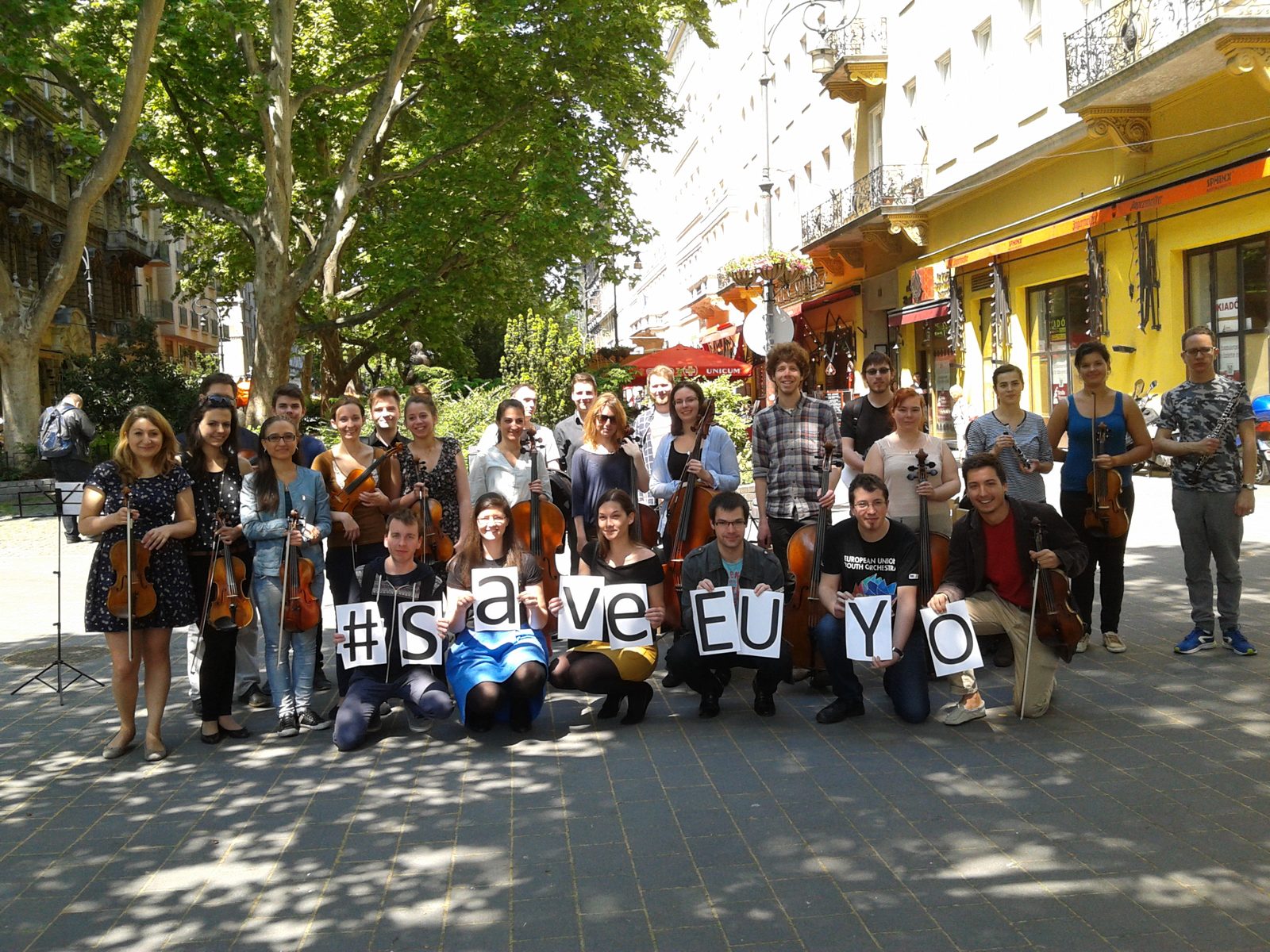
The campaign that followed was called #SaveEUYO. The photograph above is from it: musicians in Budapest on 20 May 2016, eight days after The Strad's report, holding up the hashtag on sheets of paper. Wikimedia Commons files it under Liszt Ferenc tér, the square on which the Liszt Academy, Hungary's audition venue on 7 and 8 November 2026, stands.
On 1 June, Jean-Claude Juncker, then President of the European Commission, announced a short-term subsidy of 600,000 euros for 2016 and said the Creative Europe provisions for the orchestra would be adjusted to give it longer-term support. "When I learned that the Orchestra had financial problems, I was very worried and I immediately asked my Commissioners to find a solution," he said. Bernard Haitink, its conductor laureate, had lent his voice to the campaign: "It is simply unthinkable that this beacon could be destroyed by lack of support and nurturing from the EU."
From The Strad's closure report to Juncker's announcement: 20 days.
Ten years on, Creative Europe heads the list of the orchestra's supporters, followed by Austria's federal culture ministry, Grafenegg, the Lower Austrian government, the Italian Ministry of Culture, the Comune di Bolzano and the 27 member states. It left its long-term UK base for five years in Ferrara, and Grafenegg has been its home and administrative seat since the start of 2023. The Strad's closure report noted that it would honour its summer dates that year all the same, Grafenegg among them.
Colin Window, the orchestra's tour manager for 25 of its first 50 years, was asked what he wished for the next fifty in an interview EUYO published on 31 March. His answer ended on money: "In these times of widespread cuts to culture funding, I do mean financial support. That's not very poetic, but I'm a tour manager so I'm all about what's actually going on."
In July 2025 it was an audition call
On 11 July 2025, EUYO announced that applications for the 2026 orchestra were open, with most countries auditioning between September and December. The notice gave the same figure as its March 2026 biography, "about 3000 candidates" for "approximately 120 places", and added a line worth repeating to anyone nervous about applying: "there is no such thing as a stupid question, and we want to reply to everyone about everything."
The orchestra that came out of that round had a fiftieth birthday to play. In Strasbourg, an EUYO octet played the European Hymn in the European Parliament's Hemicycle on 10 March to open the 2026/27 plenary year, the string ensemble played in the Parliament the next day, and on the evening of 10 March EUYO gave a free public concert at the Pavillon Joséphine. In the summer it toured Grafenegg, Berlin's Young Euro Classic, Ludwigsburg, Bolzano and Varna, with Elim Chan and Gustavo Gimeno conducting and María Dueñas and Julia Hagen as soloists. Gimeno is an EUYO alumnus, one of what the orchestra counts as 4,000.
Every one of those seats started as a line on an application form. Cadenza keeps the EUYO auditions on its free programs board, alongside the rest of the programs, competitions and jobs with open deadlines, free to musicians.
If you apply
Where. Start at euyo.eu/auditions, choose your country and instrument, and the selector leads to EUYO's single application form. The excerpt PDFs arrive after you apply. The Netherlands was the exception, applying through the NJO, and it has closed.
Which country. You may audition where you were born, live, study or work. A candidate with a real tie to a second country whose deadline is later has until that country's date in the table above.
Video. Belgium, Italy and Spain need the video itself by 30 September; Portugal offers video as an option. One unedited take, made for the audition.
What to bring. Your instrument, your music and your national ID or passport. An accompanist is provided at live auditions unless you bring your own, except in Bulgaria and Latvia, where EUYO says none will be provided.
What it costs. The audition is free. EUYO does not pay travel to auditions. Members pay no fee but insure their own instruments, unless the orchestra provides the instrument.
If you cannot go. Tell EUYO beforehand. A no-show without notice or a valid medical reason means you cannot audition the following year.
When you hear. EUYO aims to tell first-round candidates about three weeks after their deadline, though it warns this can take longer. EUYO aims to publish final results in January. Questions go to the auditions team at auditions@euyo.eu.
The orchestra will be asked this in January, when it aims to publish the results. It has published two different applicant totals and, that Cadenza could find by 25 September 2026, none by country or instrument, so every candidate is working out their chances from a range. When the 2027 results are announced, will EUYO say how many people actually applied, and for which chairs?
Sources: the European Union Youth Orchestra's audition page, read through the site's own content API on 22 September 2026, when it had last been edited on 20 September, and re-read on 25 September 2026, when it had last been edited on 23 September, for the statement that applications are open, the September to December audition period, the work with local organisers in all 27 countries, every national deadline, audition format, date, venue and address in this piece, the video requirement in Belgium, Italy and Spain, the Portuguese option, the absence of an accompanist in Bulgaria and Latvia, the 17 instrument categories in the audition selector and every excerpt list counted here; EUYO's rules and regulations for the age limit, the passport rule and the wording on residence permits, the rule on where a candidate may audition, annual re-auditioning and the two-year exemption from the first round, free auditions and the no-show rule, the live and video audition requirements, and the figures of around 120 places and around 200 reserves, with members' free tuition, travel, accommodation and food; EUYO's tips and FAQ page for the UK exclusion, the welcome to professionals and non-students, the 2026 instrument list, the single application form, the YouTube guidance, the final-round panel and moderation, the eight-minute audition, the three-week and January timings, what to bring, the accompanist rule, the travel and insurance position, the absence of written feedback, and the quotations on excerpts, competition and failure; and EUYO's orchestral excerpts page, which had last been edited on 18 September when Cadenza read it on 25 September 2026, for the PDF delivery, the restriction on use and the rule that any excerpt may be asked for.
The applicant figures are from EUYO's biography (as of March 2026), which is also the source for the 4,000 alumni, the 8 March 1976 founding vote, Iván Fischer as music director and the list of funders, and from its homepage; the Irish Association of Youth Orchestras' 2027 notice repeats the 2,500 figure and confirms Ireland's dates and 30 September deadline. The Dutch deadline of Sunday 20 September and the second-round dates are confirmed by the Nationaal Jeugdorkest. The 2027 programmes and artists are from EUYO's 2027 details page, which gives no dates or venues; Mojca Lavrenčič's La Maestra win, birth year, birthplace and studies are from the Schweizer Musikzeitung. Steve Reich's Grafenegg residency and the planned 4 November programme date are from noe.ORF.at, 7 September 2026. Eunews reported on 27 August that applications would open on 1 September.
The 2016 closure, the funding history, the summer commitments and Marshall Marcus's statement are from The Strad's report of 12 May 2016; the 1 June announcement, the 600,000-euro subsidy, the Creative Europe adjustment and the Juncker and Haitink quotations are from The Strad's follow-up. The move from the UK to Ferrara and Grafenegg and Ambassador Eichtinger's remark on the London founding are from EUYO's Grafenegg page. Colin Window's words are from EUYO's interview Duty of Care, 31 March 2026. The 2026 audition call is EUYO's notice of 11 July 2025; the Strasbourg residency is from its Spring Residency 2026 page and the summer tour from its Summer Tour 2026 page.
The day counts, birth-year range, odds, reserve-list comparison, per-country averages, the 53-day calendar, the 20-day rescue and the excerpt tallies are Cadenza's arithmetic from those published figures. Cadenza found no applicant numbers by country or instrument and no national quota on the EUYO pages listed above, read on 22 and 25 September 2026, and the deadlines for Austria and France appear only as "Passed".
Photographs: the European Union Youth Orchestra under Antonio Pappano at the Kurhaus Wiesbaden during the Rheingau Musik Festival, 3 August 2023, by Gerda Arendt, CC BY-SA 4.0, via Wikimedia Commons; this is the 2023 orchestra, not the 2027 one. A SaveEUYO flashmob in Budapest, 20 May 2016, by SZERVÁC Attila, CC BY-SA 4.0, via Wikimedia Commons. The Neuer Marstall on Schlossplatz, Berlin, 19 July 2021, by Geoprofi Lars, CC BY-SA 4.0, via Wikimedia Commons.
Correction, 25 September 2026: Cadenza re-checked this article against EUYO's pages on 25 September 2026. The audition page, which this article described as last edited on 20 September, was edited again on 23 September; every deadline, date and venue printed here still matched it. Relative dates have been replaced with absolute ones, Grafenegg's 4 November programme date is now described as planned, Mojca Lavrenčič's studies are dated to the Schweizer Musikzeitung's report of 3 March 2026, statements about figures EUYO does not publish now say where Cadenza looked, Slovenia's audition dates now carry EUYO's qualifier "if required", sentences that could go out of date now say when Cadenza checked, the summary no longer claims that every venue and rule is listed, the advice for candidates who cannot attend now uses EUYO's own word, "beforehand", where this article had said "before the day", the video audition rule now says, as EUYO does, that no piano accompaniment is needed for the solo, where this article had said "without piano", and EUYO's notice of 11 July 2025 is now described as announcing that applications for the 2026 orchestra were open, not as the day they opened.
Cover photograph: The European Union Youth Orchestra under Antonio Pappano at the Kurhaus Wiesbaden, Rheingau Musik Festival, 3 August 2023. Gerda Arendt, CC BY-SA 4.0, via Wikimedia Commons.
Comments
Sign in to join the discussion.