On 17 September the Berliner Philharmoniker posted a short notice on its own news page. Sabine Devieilhe has withdrawn, for personal reasons, from three subscription concerts of Mahler's Second Symphony under Daniel Harding.
The orchestra's wording is spare: «Aus persönlichen Gründen muss Sabine Devieilhe leider ihre Mitwirkung bei Konzerten der Berliner Philharmoniker mit Mahlers Zweiter Symphonie unter der Leitung von Daniel Harding vom 24. bis 26. September absagen.» No further detail is given anywhere, and none is going to be speculated about here.
The Swedish soprano Johanna Wallroth sings instead, on 24, 25 and 26 September. It will be her first appearance with the Berliner Philharmoniker.
Seven years and three months
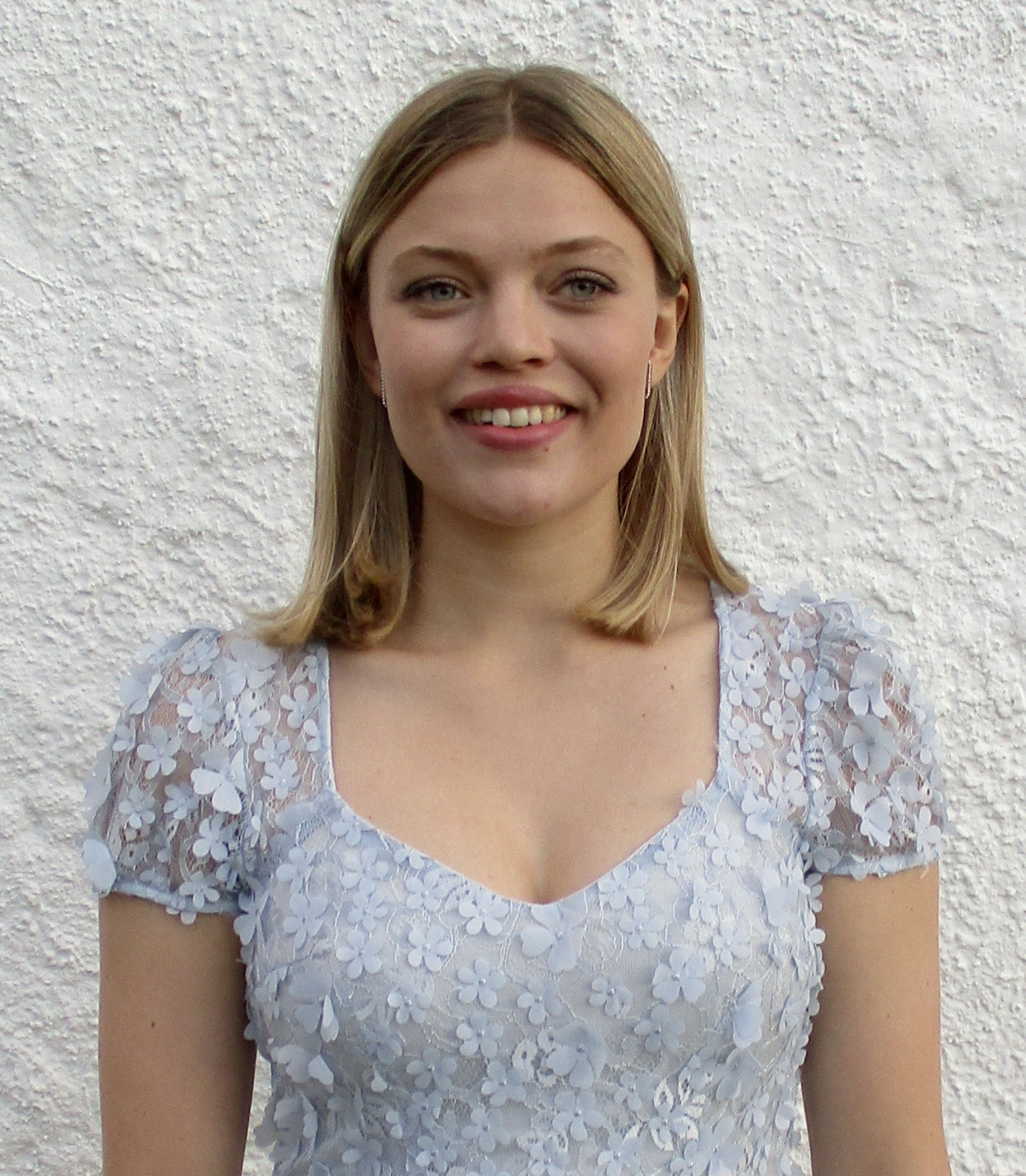
Wallroth, born in 1993, won the Mirjam Helin International Singing Competition in Helsinki. The final was on 29 May 2019.
| Mirjam Helin final, Helsinki | 29 May 2019 |
| Berliner Philharmoniker debut | 24 September 2026 |
| Elapsed | 2,675 days, seven years and three months |
That figure is the point of writing this up, and it is the number a singer in their twenties actually wants to know. Competition wins are reported as arrivals. They are not. They are the start of a runway, and this is one measurement of how long the runway is between a major European singing prize and a first night with the orchestra that sits at the top of the profession.
Seven years and three months, in this instance, with a great deal of work in between that nobody wrote about.
What she won in 2019, and what it was worth
The Mirjam Helin is one of the better-endowed singing competitions in Europe, and its own published figures give the scale of what Wallroth came through.
| Competitors | 46 |
| Nationalities | 22 |
| Total prize fund | €173,000 |
| Women's first prize | €30,000 |
Forty-six singers from twenty-two countries, and a total fund of €173,000, which is more than the entire prize pool of some instrumental competitions Cadenza has counted this month.
Reviewing that final for Bachtrack, Hugo Shirley wrote of "the sparkling Swedish soprano Johanna Wallroth, her voice appealing, light and slightly wiry," who "offered immediately engaging, intelligent and detailed takes on 'No Word from Tom' and Juliette's 'Je veux vivre'." His verdict on the women's competition was direct: "For polish, Wallroth won for the women: a singer of remarkable charm who one could imagine one day soon making an impressive Lulu."
Seven years later the imagining is somebody else's problem. She has the Philharmonie.
What a singing competition pays, against an instrumental one
Put the Mirjam Helin's figures beside the competition Cadenza counted in Bucharest this month and something jumps out that neither organisation has any reason to advertise.
| Mirjam Helin 2019 | Enescu 2026 | |
|---|---|---|
| Total prize fund | €173,000 | €139,500 |
| Competitors or entrants | 46 singers | 756 applicants across four sections |
| Prize money per person who entered | about €3,760 | about €185 |
The singing competition had a larger pot and a fortieth as many people chasing it. Divide the fund by the number of people who put themselves forward and the Mirjam Helin is worth roughly twenty times as much per entrant.
That is not a criticism of Bucharest, which runs four sections with live orchestral finals and is a different machine entirely. It is a statement about odds. A singer weighing the Mirjam Helin is entering a field of dozens. An instrumentalist weighing the Enescu is entering a field of hundreds, having paid €120 for the privilege.
Both numbers are published. Neither organisation puts them next to each other, and there is no reason they would.
What she is singing
Mahler's Second Symphony, the Resurrection, is an unusual debut vehicle, and it is worth being clear about why.
The soprano does not appear until the finale. She sings little, she sings it high and quiet, and the line has to float over a very large orchestra and a full chorus at the end of an eighty-minute work. There is no aria to carry, no entrance to make, and almost nothing to hide behind. It is one of the most exposed short assignments in the repertoire, and it is the whole job.
Daniel Harding conducts. The three performances are on Thursday 24 September at 20:00, Friday 25 September at 20:00 and Saturday 26 September at 19:00, in the Großer Saal of the Philharmonie.
Five Mahler Seconds in one fortnight
The coincidence is worth recording because it is genuine, it is checkable, and nobody planned it.
Cadenza has now logged five separate performances of Mahler's Second inside sixteen days, in five countries, by five orchestras that do not coordinate their programming with one another.
Mahler's Second is what Alexander Shelley opened his tenure with at the National Symphony Orchestra Ireland on 11 September. It is what Kazuki Yamada opened the City of Birmingham Symphony's season with on 17 September, and what Kent Nagano chose for his first season at the Orquesta Nacional de España on 18 September. It is what Thomas Guggeis is conducting in Florence on 26 September in Zubin Mehta's place. And it is what Wallroth is making her Berlin debut in on 24 September.
Cadenza counted Mahler across sixty-five season openings last week and found sixteen of them built on his symphonies. The Second is the one that keeps coming back, and it is not hard to see why: it needs a chorus, two vocal soloists and a very large orchestra, which makes it exactly the piece an institution reaches for when it wants to sound like itself at full stretch.
It also has a practical consequence that bears directly on this story. A work requiring two soloists, booked years ahead across dozens of houses in the same season, generates a great deal of cover. When a singer withdraws from one of them at a week's notice, somebody has to know the part, and the pool of sopranos who have the Mahler Second in their repertoire and a free diary in late September is not large. That is the mechanism by which a debut like Wallroth's actually happens.
What Cadenza could not find
Two absences are worth stating rather than papering over.
Johanna Wallroth has not, as far as this newsroom can establish, said anything publicly about this booking. There is no quote from her here because there is not one to quote, and inventing a sentiment for somebody about their own debut would be worse than leaving the space empty.
And the reason for Sabine Devieilhe's withdrawal is "personal reasons" and nothing more, in the only statement anybody has issued. That is where it stays.
A year ago it was a competition entry form
Wallroth's route to this week ran through an application to a Helsinki competition, a final in front of a jury, and then seven years of work that generated no headlines at all.
Cadenza carries competitions and auditions with open deadlines, free to musicians, on its competitions board and its jobs board. It has spent this month counting what these things pay and what they lead to, from an eleven-year-old's clean sweep in Bucharest to the German jazz prize that pays the people who lose.
If you go, or listen. Tickets for the three Philharmonie concerts run from €50 to €161 and are on the orchestra's own site. The performance on Saturday 26 September is carried live on the Digital Concert Hall, the orchestra's own streaming service, which can be watched anywhere.
The question is for the people who run competitions. A singer won one of Europe's richest singing prizes in 2019 and reached the Berliner Philharmoniker in 2026, and she got there in the end by being available when somebody else could not sing. How many of their laureates do competitions still know the whereabouts of seven years on, and how many could say what the prize actually led to?
Sources: the Berliner Philharmoniker's own news notice of 17 September 2026, which carries the quoted German wording of Devieilhe's withdrawal for personal reasons, names Johanna Wallroth as her replacement and gives the dates 24 to 26 September under Daniel Harding; and the orchestra's own concert page for the programme, times, venue and the ticket range of €50 to €161. The Mirjam Helin figures, 46 competitors from 22 nationalities, a total prize fund of €173,000 and a women's first prize of €30,000, are from the competition's own published material, and the date of the 2019 final is given both by the competition and by Bachtrack's review of it. Hugo Shirley's assessments are from his review of that final for Bachtrack, which is free to read and was read in full. The interval of 2,675 days is Cadenza's arithmetic from the two dated events.
No public statement by Johanna Wallroth about this engagement could be found, and none is reported. No explanation of Sabine Devieilhe's withdrawal beyond "personal reasons" has been given by anybody, and none is speculated about.
Cover photograph: Johanna Wallroth, CC BY-SA 4.0, via Wikimedia Commons.
Cover photograph: The Swedish soprano Johanna Wallroth, who makes her Berliner Philharmoniker debut on 24 September 2026. CC BY-SA 4.0, via Wikimedia Commons.
Comments
Sign in to join the discussion.