The violin section of the 20th George Enescu International Competition ended at the Romanian Athenaeum in Bucharest on Sunday 13 September. First Prize went to Jayden King of the United States, who is eleven, and who is the youngest winner in the competition's history.
He did not win one award that night. He won three.
Alongside the First Prize, King took the Audience Award and the prize for the best performance of the required work, Lembit Beecher's Still Life with Fallen Stone. Second Prize went to Francesco Papa of Italy, and Third Prize to Eun Che Kim of South Korea.
The result in full
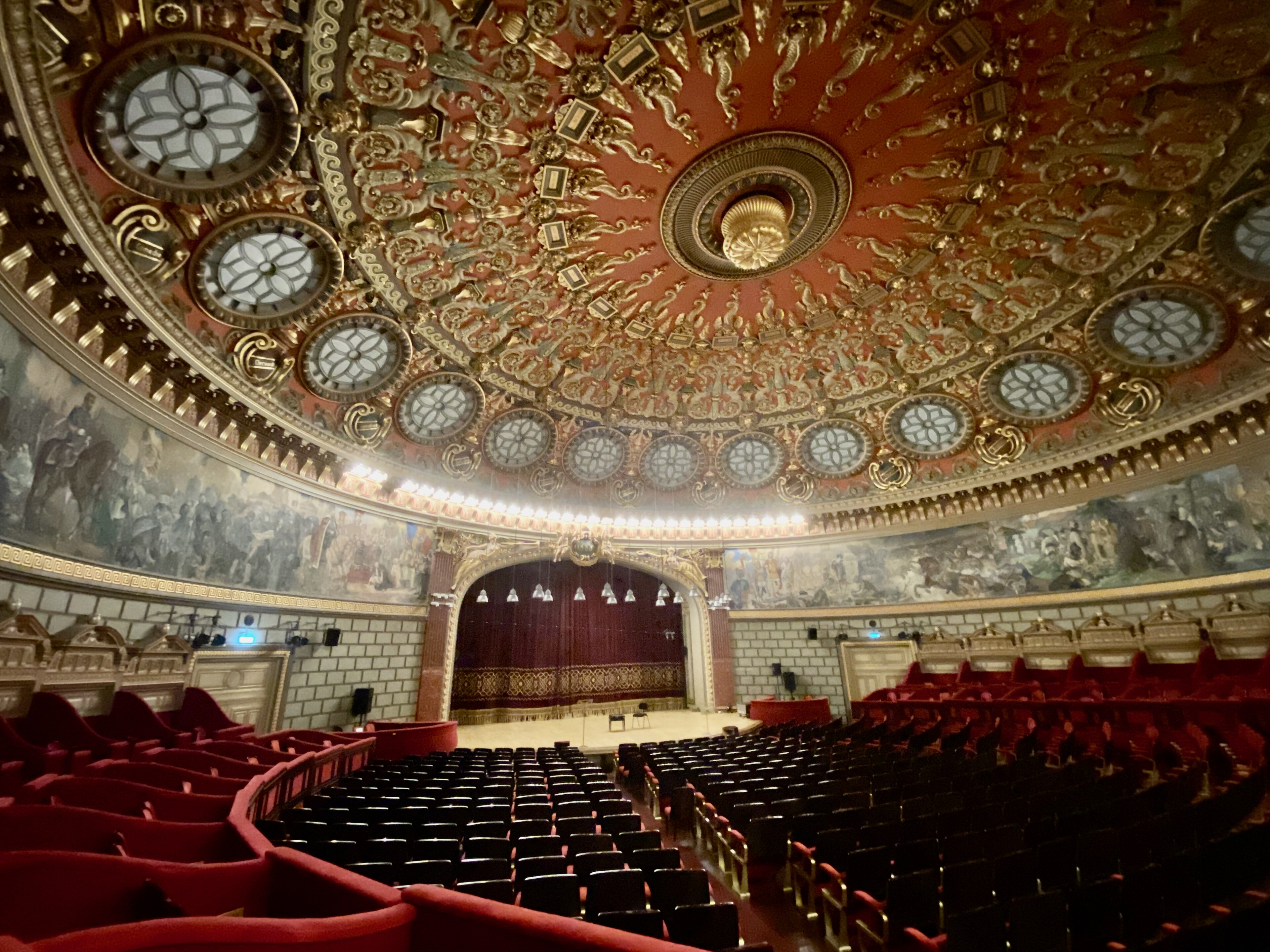
Three finalists reached the Athenaeum stage, each playing a concerto with the George Enescu Philharmonic Orchestra under the conductor Harry Ogg.
| Placing | Violinist | Country | Concerto played in the final |
|---|---|---|---|
| First Prize | Jayden King | United States | Tchaikovsky, Concerto in D major, op. 35 |
| Second Prize | Francesco Papa | Italy | Sibelius, Concerto in D minor, op. 47 |
| Third Prize | Eun Che Kim | South Korea | Sibelius, Concerto in D minor, op. 47 |
The competition's published prize structure for the section is €15,000 for First, €10,000 for Second and €5,000 for Third.
The jury was chaired by the violinist Mihaela Martin. Its other members were Liviu Prunaru, Vladimir Nemțanu, Bujor Prelipcean, Alissa Margulis, Kathleen Winkler, Ida Kavafian, Nemanja Radulović and Nora Pötter. That is a nine-person panel, and it is worth naming in full, because a result like this one belongs to the people who voted for it as much as to the player.
Two Sibelius and one Tchaikovsky
Here is the detail that nobody appears to have pulled out of the result, and it is the most interesting thing on the page.
Two of the three finalists chose the same concerto. Papa and Kim both played the Sibelius, a work whose reputation rests on control, cold colour and a kind of withheld power. King played the Tchaikovsky, which asks for the opposite: open lyricism, display, and a finale that has to be driven rather than managed.
Three players, two concertos, and the youngest of them took the piece that leaves a soloist with nowhere to hide.
Three awards from one performance
The arithmetic of the night is small and worth stating plainly.
The violin section carried three ranked prizes and at least two further named awards, the Audience Award and the prize for the commissioned work. King won the top ranked prize and both of the others that were announced. On the evidence of the competition's own announcement, he took every award the violin final had to give beyond the placings themselves.
Those two extra awards are decided by different constituencies, which is what makes the sweep unusual. The ranked prizes were settled by a nine-person professional jury. The Audience Award was settled by the room. The new-work prize rewards a specific piece of musicianship, the handling of a score none of the competitors had grown up with, written by Lembit Beecher for this competition. Three different tests, three different sets of judges, one result.
The same clean sweep the cellist made, three weeks earlier
Cadenza counted this competition's money in full when the cello section finished, and the structure it found makes the violin result legible.
Every ranking prize in every section of the Enescu competition is the same: €15,000 for First, €10,000 for Second and €5,000 for Third, net. So King's First Prize is the same figure Samuel Niederhauser collected for winning the cello section on 7 September, and Papa's and Kim's are the same as the cello runners-up took.
The specials are where the sections differ, and where the parallel becomes striking. In the cello section, Niederhauser won the ranked first prize, the audience prize and the prize for the best account of the imposed work, which were worth €1,000 and €2,000 on top. That is precisely the same three-category sweep King has now made in the violin section: the jury's vote, the room's vote, and the new score.
Two sections, two winners, three weeks apart, and both of them took everything on offer. The competition does not publish the value of the violin section's two specials in its result announcement, so Cadenza is not going to assume they match the cello figures. What can be said is that the shape of both wins is identical.
Who paid for the prize pool
One more figure from that count is worth repeating here, because it changes how a reader should think about a competition result.
The whole competition paid out €139,500 across its four sections. It received 645 instrumental applications at €120 each and 111 composition entries at €50, which means applicants themselves put €82,950 into the building. That is 46 per cent of everything the competition paid out.
Put another way, the losing entrants funded almost half the prize money. That is not a scandal and it is not unusual; it is how most competitions of this size work. But it is the context in which to read a first prize. Every one of the three violinists who reached the Athenaeum stage had paid to be considered, as had every violinist who did not.
What Cadenza is not going to do here
Jayden King is eleven years old.
Cadenza's rule on children is fixed and we are keeping to it. We report the award, we name the jury, we run the arithmetic, and we do not build a personality profile around a child. There is no interview here, no family detail, no account of how he practises, and no photograph of him. The hall is pictured instead.
This is not squeamishness about good news. It is that an eleven-year-old who has just won an international competition is about to be written about a great deal, and the part of it that will still matter in ten years is the result, the repertoire and the jury. That part is on the record, it is checkable, and it is above.
Congratulations, by name
Francesco Papa of Italy took Second Prize and Eun Che Kim of South Korea took Third, both after playing the Sibelius concerto in front of the same jury and the same orchestra on the same evening. Reaching the final of the Enescu violin section is itself the achievement that gets a player noticed, and both of them did it.
Cadenza has spent this month counting what competitions actually pay: the Queen Elisabeth paid all twelve of its cello laureates, the Premio Jaén gave its winner forty per cent of the pool, and York gave a recording contract rather than cash. Against those, a ranked violin prize of €15,000 with two further awards attached sits at the serious end of what an instrumental competition hands a player.
The rest of the competition
The Enescu competition runs four sections across roughly four weeks, and its own calendar sets them out: composition on 23 August, a masterclass from 24 to 28 August, cello from 29 August to 7 September, violin from 4 to 13 September, and piano from 10 to 19 September. The cello and violin sections therefore overlapped by four days, and the violin and piano sections by four more.
That overlap is the part a competitor feels. For most of the first fortnight of September there were two instrumental sections running at once inside the same festival, in the same city, in front of juries drawn from the same profession. Cadenza has the cello result and what it paid.
If you want to hear the end of it. The piano section of the same competition runs to 19 September, which is today, and concludes at the Romanian Athenaeum. The competition livestreams its sessions through its own site, and its laureates pages carry the full results of every section as they are announced.
The question the competition will be asked next is not about the winner. It is about the format. A jury of nine, an audience vote and a commissioned-work prize all pointed the same way this year, which is rare enough to be worth publishing. How often, across the twenty editions, have all three agreed?
Sources: the George Enescu International Competition's own announcement of the violin result, which names all three prizewinners and their countries, records that Jayden King is eleven and the youngest winner in the competition's history, lists the Audience Award and the award for the best performance of Lembit Beecher's required work, gives the date and venue of the final, names the George Enescu Philharmonic Orchestra and the conductor Harry Ogg, states which concerto each finalist played, and names the jury chair and all eight further jury members. The prize amounts of €15,000, €10,000 and €5,000 for the three ranked places are as reported by The Strad and Bachtrack. The section dates are from the competition's own calendar. The observation about the concerto choices, and the count of awards won, are Cadenza's own from the competition's published result.
Cover photograph: the auditorium of the Romanian Athenaeum, Bucharest. Josep Renalias, CC BY 4.0, via Wikimedia Commons.
Cover photograph: The auditorium of the Romanian Athenaeum in Bucharest, where the violin final of the 2026 George Enescu International Competition was played on 13 September. Josep Renalias, CC BY 4.0, via Wikimedia Commons.
Comments
Sign in to join the discussion.