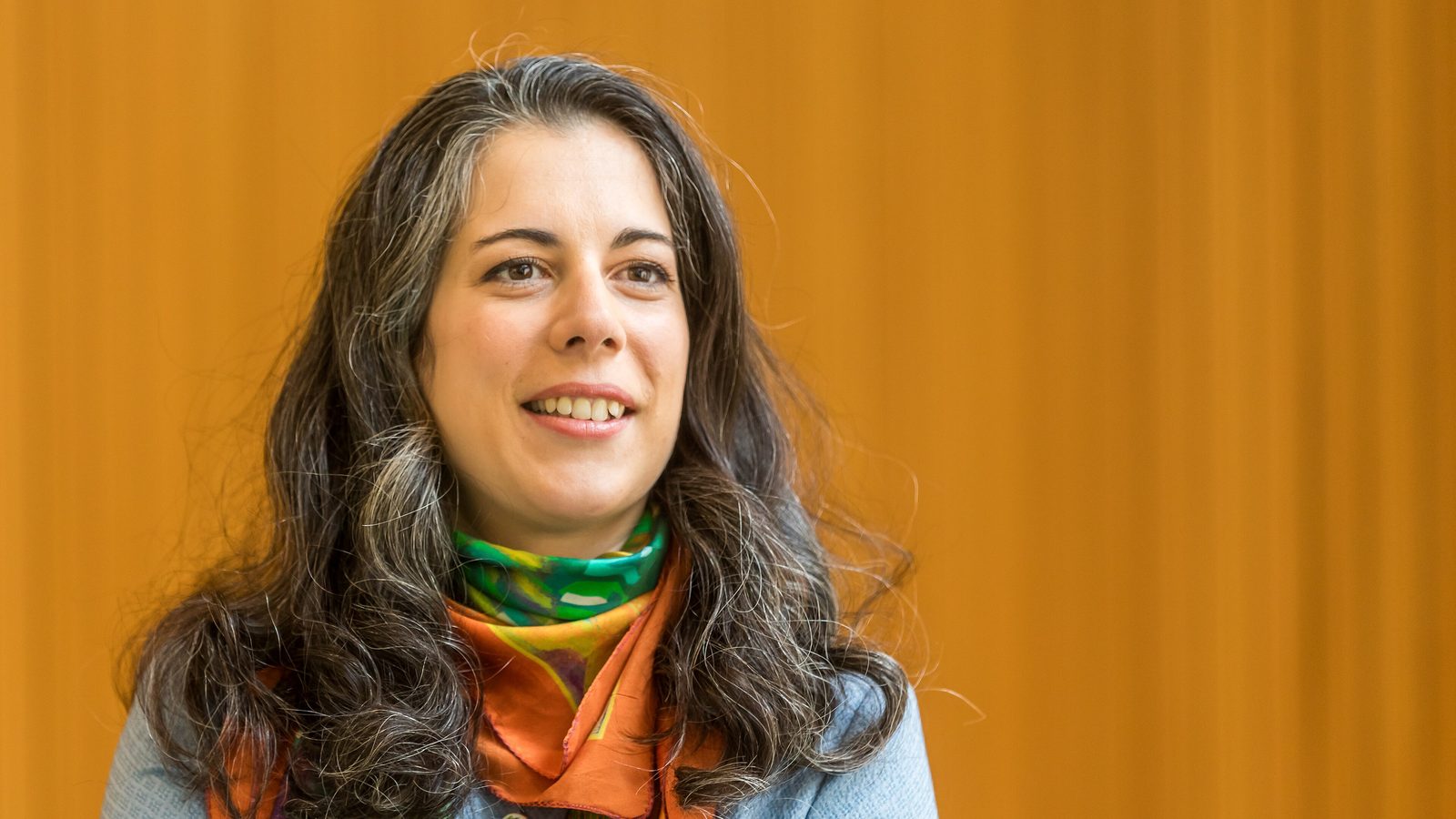
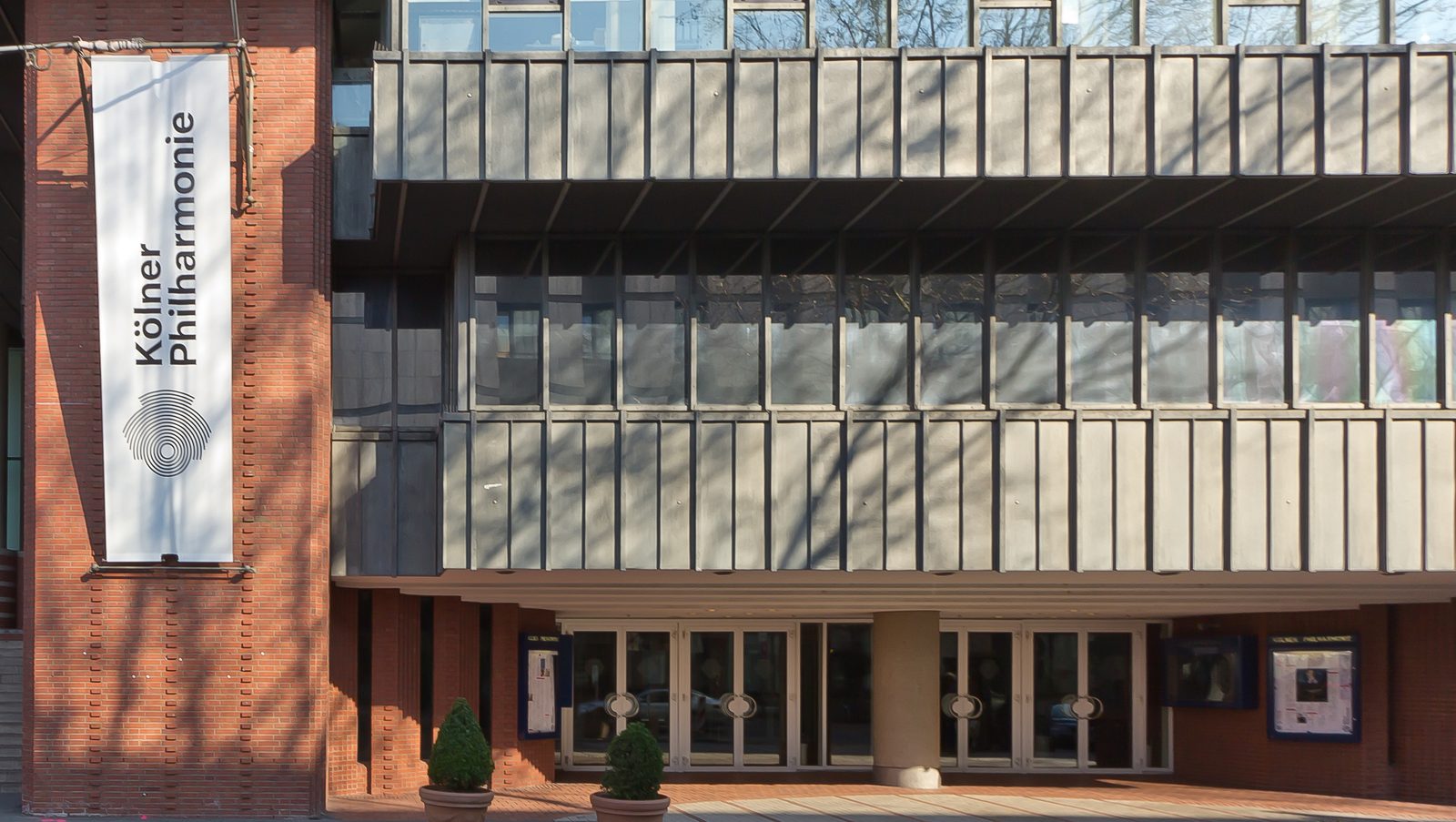
Marie Jacquot conducted her first concert as chief conductor of the WDR Sinfonieorchester on Friday 18 September, at 20:00 in the Kölner Philharmonie. The orchestra called the programme Aufbruch, which means a departure, or a setting out.
She is thirty-six, she is French, and she is on an initial four-year contract.
She is also the ninth person to hold the post, and the first who is not a man. The orchestra has not made that the headline, and this piece is not going to make it the whole story either, because what she actually programmed is more interesting than the fact of her appointment.
The lineage, as the orchestra publishes it
The orchestra was founded in 1947, as the Kölner Rundfunk-Sinfonie-Orchester, under the Allied occupation authorities. For its first seventeen years it had no principal conductor at all and worked with guests.
Then it started appointing.
| # | Chief conductor | |
|---|---|---|
| 1 | Christoph von Dohnányi | 1964–1969 |
| 2 | Zdeněk Mácal | 1970–1974 |
| 3 | Hiroshi Wakasugi | 1977–1983 |
| 4 | Gary Bertini | 1983–1991 |
| 5 | Hans Vonk | 1991–1997 |
| 6 | Semyon Bychkov | 1997–2010 |
| 7 | Jukka-Pekka Saraste | 2010–2019 |
| 8 | Cristian Măcelaru | 2019–2025 |
| 9 | Marie Jacquot | 2026– |
Sixty-two years from Dohnányi's first season to Jacquot's, and seventy-nine from the orchestra's founding. Eight appointments, then a ninth.
That is the number worth having, and it is worth having because it is unremarkable. Most orchestras of this standing have a list that looks exactly like this one. The WDR's is simply published, in order, on its own site, which makes it countable.
What she put in the middle of the programme
Four works, in this order: the Prelude to Act 1 of Lohengrin; Chopin's Second Piano Concerto, with Yulianna Avdeeva; Augusta Holmès's Andromède; and Scriabin's Le poème de l'extase.
Three of those are repertoire. The third is not.
Augusta Holmès was born in Paris on 16 December 1847 to Irish parents and died there on 28 January 1903. She was not admitted to the Paris Conservatoire and took lessons privately instead. She published early works under the name Hermann Zenta. She became a pupil of César Franck, whom she called her real master, and she led the group of his students who commissioned his tomb medallion from Rodin.
Camille Saint-Saëns proposed marriage to her and was refused. He later wrote of her, in Harmonie et Mélodie, that women like children have no conception of obstacles and that their will breaks every barrier, before concluding: "Mademoiselle Holmès is a woman, an extremist." It was meant as praise. It is also a complete account of what she was up against.
Seventeen years, and then a hundred and twenty-six
Here is the part that makes the programming choice a statement rather than a gesture.
Andromède was composed in 1883. It was not performed until 14 January 1900.
| Composed | 1883 |
| First performed | 14 January 1900 |
| Waited | about seventeen years |
| Then to Jacquot's first concert | 46,268 days, or 126 years and 8 months |
Seventeen years in a drawer, for a fully orchestrated symphonic poem by a composer who was, by the 1890s, prominent enough to be commissioned to write a work for the centenary of the French Revolution requiring around 1,200 performers.
When it finally reached a stage, under Édouard Colonne, it went well. Amédée Boutarel wrote in Le Ménestrel that the work deserved to rank with its elders and was a credit both to contemporary production and to Colonne's initiative.
So: a woman who could not get into the Conservatoire wrote a piece, waited seventeen years for anyone to play it, was praised when they finally did, and then went more or less unplayed for another century. The first woman to be made chief conductor of a major German radio orchestra put it in her opening programme, between Chopin and Scriabin, where nobody could treat it as a curtain-raiser.
The Wagner is not an accident either
Holmès heard Wagner first at thirteen and argued for years that Paris should programme him. The Palazzetto Bru Zane's analysis of Andromède is explicit about what that produced: in the episode where Perseus rides Pegasus to save Andromeda, the theme over creeping chromatic bass appears to have been inspired by the Ride of the Valkyries.
Jacquot opened the concert with Wagner.
She has said this is how she builds programmes. "Mich interessiert, wie Werke miteinander ins Gespräch treten," she told the orchestra's press office, which is to say she is interested in how pieces get into conversation with one another. Putting the Lohengrin prelude before a Wagner-haunted symphonic poem by a composer nobody plays is that principle doing actual work, rather than a sentence in a brochure.
One more detail, from Bru Zane: Holmès wrote the poem behind the piece herself, eleven quatrains of French alexandrines, and Andromède does not end in triumph. It ends pianissimo.
Who she is
Jacquot was born in Paris in 1990 and raised in Lucé, near Chartres. She played the piano, then the trombone. Before any of that she was a competitive tennis player and reached the French Open in the junior category. She changed to music at fifteen.
She studied in Vienna with Uroš Lajovic and in Weimar with Nicolás Pasquet, then did the unglamorous work: assistant to Kirill Petrenko at the Bavarian State Opera in 2016, first Kapellmeisterin and chorus master in Würzburg from 2016 to 2019, first Kapellmeisterin at the Deutsche Oper am Rhein from 2019 to 2022.
| First guest-conducted the WDR | December 2022 |
| Appointment announced | January 2024 |
| Presented at the WDR Funkhaus | 10 April 2026 |
| First concert as chief | 18 September 2026 |
Roughly three years and nine months from one guest week to the podium. She also holds the music directorship of the Royal Danish Orchestra, from the 2024-25 season on an initial five years, and became the Vienna Symphony's first female principal guest conductor in 2023-24. In February 2024 she was named Révélation cheffe d'orchestre at the Victoires de la Musique Classique.
What the orchestra said, and what Cadenza cannot yet tell you
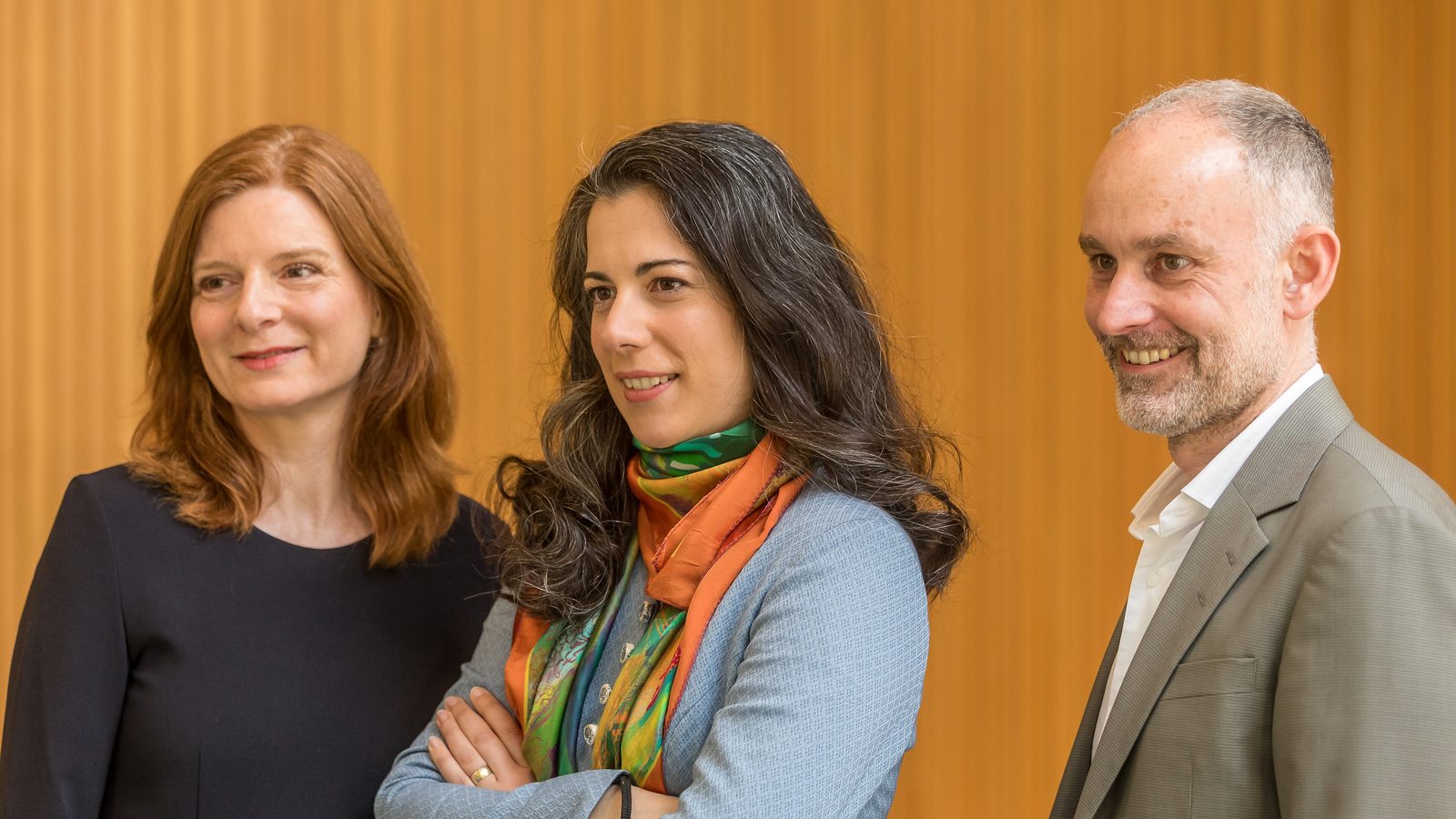
Katrin Vernau, the WDR's director-general, said Jacquot combines artistic excellence with curiosity, openness and a particular ability to excite people and open new ways into music. In April she had put it more bluntly, saying that what mattered to Jacquot and the orchestra together was bringing people into the same room.
Jacquot's own line on the orchestra, from April, is the one musicians will recognise: "Das WDR Sinfonieorchester vereint Qualität und Präzision mit Leidenschaft und einer ganz besonderen Freude am Risiko." Quality and precision, with passion and a very particular appetite for risk.
No critic's verdict on Friday night has appeared yet. Cadenza searched for one and found announcements only, which is normal three days after a German concert and is stated here rather than filled in with adjectives.
The rest of the season, which is stranger than you would guess
The orchestra plays 75 concerts in 2026-27. Two of them are The Lord of the Rings live to picture for the film's twenty-fifth anniversary, in the Lanxess Arena in Cologne on 19 December and the Arena Oberhausen on 20 December. It is also mounting its first Classical Pride, a concert for Cologne's CSD with queer classical musicians. Its children's series, the Konzert mit der Maus, leaves North Rhine-Westphalia for the first time, for Berlin and the Ludwigsburg Schlossfestspiele. There are guest dates in Austria, Belgium and the Netherlands.
A radio orchestra with a public remit, in other words, behaving like one.
A year ago it was a press conference
On 10 April 2026 the WDR put Jacquot in front of the press in its own Funkhaus and announced a season. Five months later she conducted it. The photograph at the top of this piece is from that day.
Cadenza carries conducting posts, auditions and schemes with open deadlines, free to musicians, on its jobs board and its competitions board. It has spent this month counting what these appointments actually contain, from a Finnish contract that states a floor of six performing weeks a year to a New York principal chair that stood empty for nearly nine years.
If you want to hear it. The inaugural concert was streamed on the ARD Klassik channel on YouTube and carried on WDR 3, and a great many of the orchestra's concerts stay available on demand in the ARD Mediathek, from anywhere, for nothing.
The question is for whoever programmes next season anywhere. Andromède sat unplayed for seventeen years after it was written and has been nearly unplayed for a century since, and when a conductor finally put it in a flagship opening concert it turned out to hold its own between Chopin and Scriabin. How many other scores are in that drawer, and who is going to open it?
Sources: the WDR's own press release of 14 September 2026 announcing the inaugural concert, published via Presseportal and read in full, which is the source for the date, time, venue, the title Aufbruch, the complete programme, Yulianna Avdeeva as soloist, the livestream arrangements, and the quotations from Katrin Vernau and Marie Jacquot; and the WDR's press release of 10 April 2026, also read in full, for Jacquot's birth year and birthplace, the initially four-year term, the 75 concerts of the 2026-27 season, the Konzert mit der Maus dates in Berlin and Ludwigsburg, the guest appearances in Austria, Belgium and the Netherlands, the Lord of the Rings dates of 19 and 20 December, the first Classical Pride, and her remark about quality, precision and an appetite for risk.
The chief-conductor lineage from Christoph von Dohnányi in 1964 to Cristian Măcelaru's departure in 2025, the orchestra's founding in 1947 under the Allied occupation authorities as the Kölner Rundfunk-Sinfonie-Orchester, the absence of any principal conductor before 1964, Jacquot's December 2022 first guest appearance and the January 2024 announcement of her appointment are from the orchestra's published record as collated on Wikipedia, which cites the WDR's own press releases for each. Jacquot's upbringing in Lucé, her tennis before music, her studies with Uroš Lajovic and Nicolás Pasquet, the Petrenko assistantship, the Würzburg and Deutsche Oper am Rhein posts, the Royal Danish Orchestra and Vienna Symphony appointments and the 2024 Victoires de la Musique Classique award are from the same record.
On Augusta Holmès: her dates, Irish parentage, exclusion from the Paris Conservatoire, the Hermann Zenta pseudonym, her studies with César Franck, the Rodin commission for Franck's tomb, the 1889 Ode triomphale and its scale, and the Saint-Saëns passage from Harmonie et Mélodie are from the standard reference record. The composition date of 1883, the premiere on 14 January 1900 under Colonne, Amédée Boutarel's assessment in Le Ménestrel, Holmès's own eleven-quatrain poem, the echo of the Ride of the Valkyries in the Perseus episode and the pianissimo ending are from the Palazzetto Bru Zane's Mediabase entry for Andromède, read in full. Neither the composer's own account nor the Conservatoire's records state a reason for her non-admission, so none is given here.
The interval of 46,268 days is Cadenza's arithmetic between the two dated performances. No review of the 18 September concert had been published anywhere Cadenza could find at the time of writing, and none is implied.
Photographs: Marie Jacquot, and Jacquot with Katrin Vernau, at the WDR Funkhaus on 10 April 2026, both by Raimond Spekking, CC BY-SA 4.0, via Wikimedia Commons. The Kölner Philharmonie main entrance, also by Raimond Spekking, CC BY-SA 4.0. The portrait of Augusta Holmès is a public-domain photograph held by the Bibliothèques spécialisées de la Ville de Paris, via Wikimedia Commons.
Cover photograph: Marie Jacquot, photographed at the WDR Funkhaus in Cologne on 10 April 2026, the day the orchestra presented her as its next chief conductor. Raimond Spekking, CC BY-SA 4.0, via Wikimedia Commons.
Comments
Sign in to join the discussion.