This is an opinion piece — an argument, built on public data: the League of American Orchestras / Institute for Composer Diversity 2022 and 2024 Orchestra Repertoire Reports, the League/TRG Arts audience benchmarks, the NEA's 2022 Survey of Public Participation in the Arts, New York budget documents, and the official season pages and annual reports of the Boston Symphony, New York Philharmonic, Chicago Symphony, LA Phil and Kennedy Center. Where we cite facts we number them to the source list; where we argue, we say so plainly. One viral claim — that a named-but-never-produced memo rations Mahler to once every eighteen months at a major orchestra — remains undocumented, and we do not rely on it. Our case is built on something better: the field's own published arithmetic. Every institution named is offered unedited space to respond.
If you read nothing else — the whole thing in one breath.
When listeners say the canon is being cancelled, the institutions have a ready answer. They point to the season page: Boston is playing Mahler 7, 3 and 1 this year, New York opens the Dudamel era with Mahler 5 — see? Nobody cancelled Mahler. It is the sector's favorite sentence, and it is an alibi.
Because cancellation, in institutions this sophisticated, was never going to arrive as a press release. It arrives as arithmetic. By the field's own repertoire reports, the share of American orchestral programming drawn from the broad canon fell from 95.5% of works in 2015–16 to 77.4% in 2023–24. Eighteen points of every season — roughly a fifth of the canon's presence on American stages — reallocated in eight years, no announcement, no vote, no memo anyone will produce. In the same window the institutions rewrote their missions around equity language, learned to measure programming in a works-count currency that overstates the change to activists and understates it to subscribers, and kept the handful of guaranteed-sellout Mahler nights running out front — the museum wing that lets the demolition proceed quietly behind it.
And the audience noticed before the analysts did. The devoted core — the people who could hear what was disappearing from the middle of the season — froze at 1.3 visits per year and started buying fewer seats per order, while the share of American adults hearing any live classical music fell to 4.6%. The institutions got the culture war they programmed for. They lost the audience they already had.
| Figure | What it represents |
|---|---|
| 95.5% → 77.4% | The broad canon's share of programmed works, 2015–16 → 2023–24 — the cancellation, measured |
| 4.5% → 22.6% | Identity-conscious programming share over the same seasons — what replaced it |
| 1.3 / season | Attendance frequency of the remaining audience — frozen |
| 8.6% → 4.6% | U.S. adults attending any live classical, 2017 → 2022 — the bill |
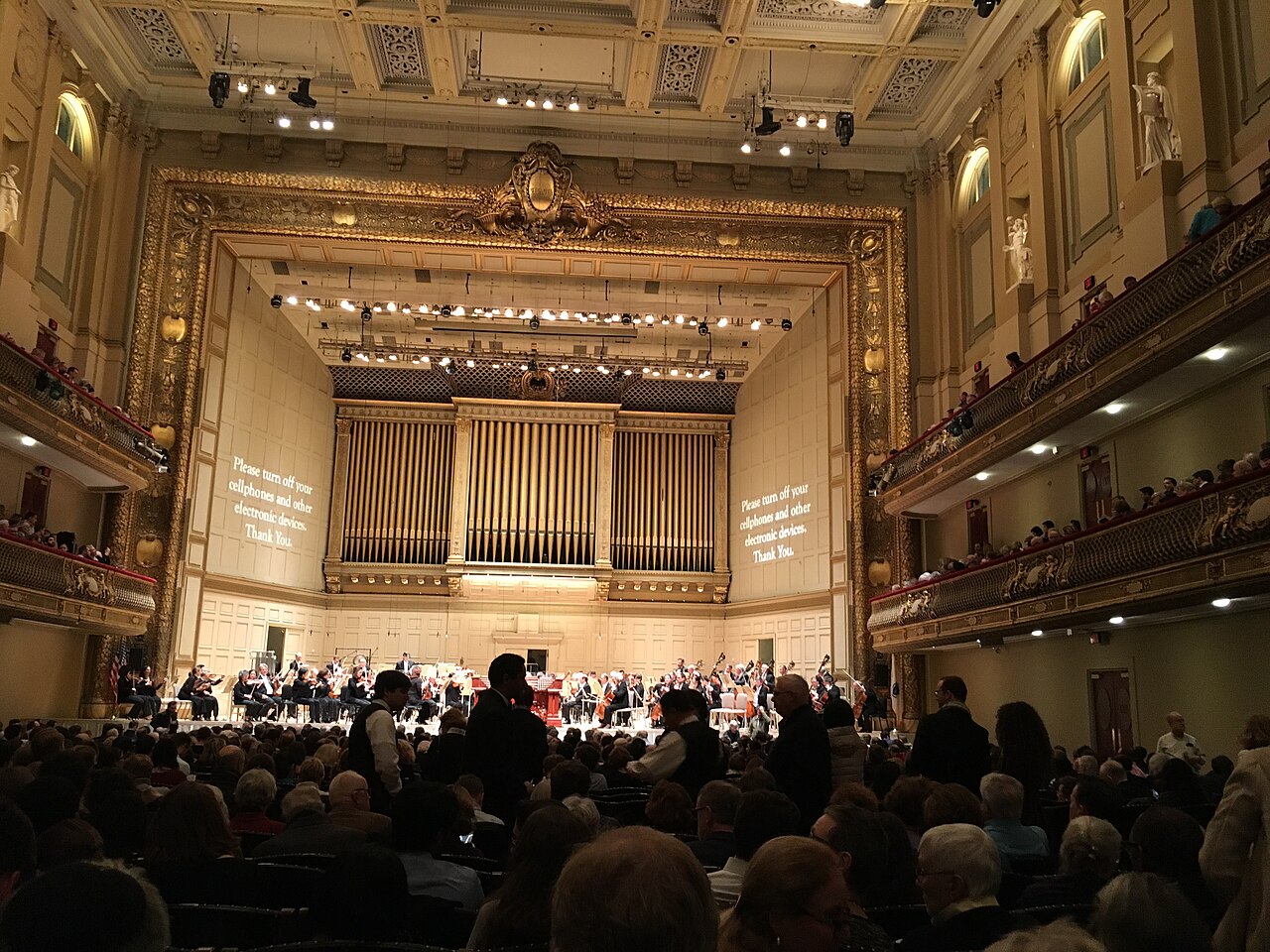 Symphony Hall, Boston. Three Mahler symphonies on this season's page — the exhibit the institutions hold up while a fifth of the canon's presence leaves the American stage. Photo: Arnold Reinhold, CC BY 3.0, via Wikimedia Commons.
The cancellation, measured
Start with the only number that matters, because the entire debate is designed to keep you from looking at it.
A season is a zero-sum object. There are only so many evenings, and every work programmed for a reason other than its greatness displaces one that had no other reason. So when the identity-conscious share of American programming went from one work in twenty-two to more than one in five — the League's own celebrated statistic — the mirror image followed with the force of subtraction: the canon's share fell from 95.5% to 77.4%. [1, 7]
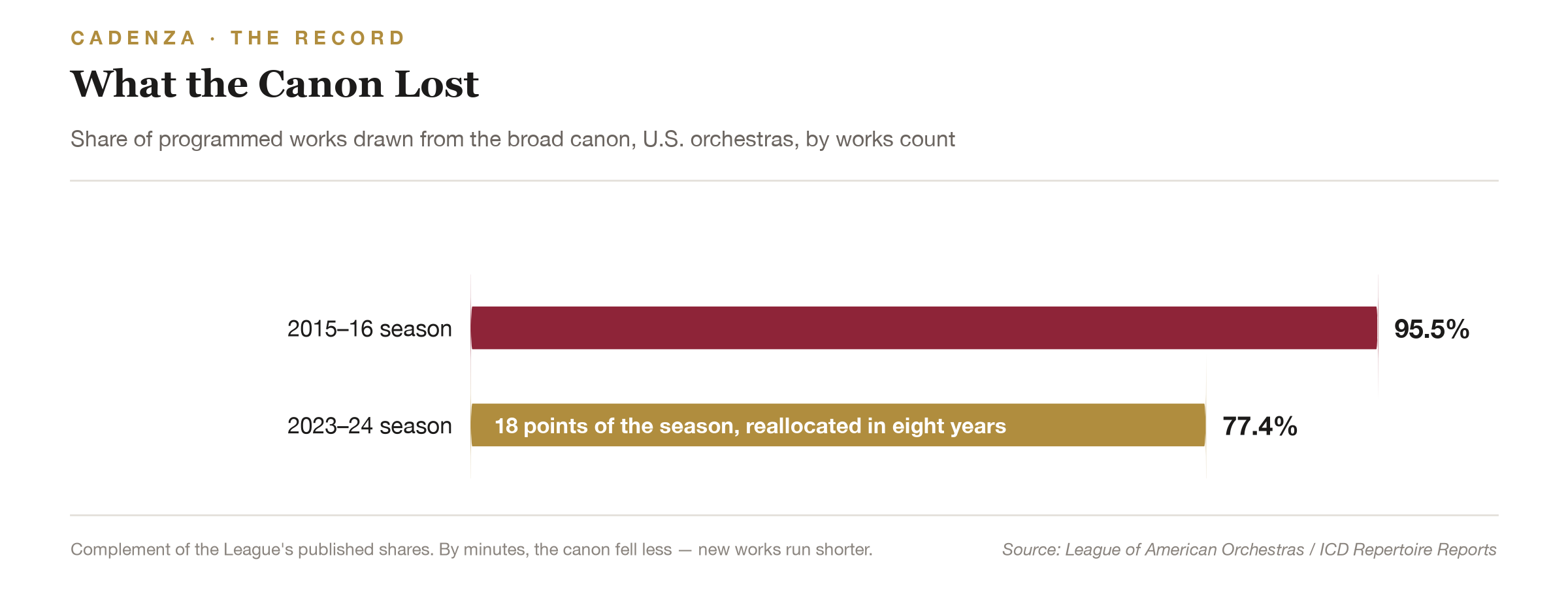 The cancellation in one picture, drawn from the cancellers' own reports: eighteen points of the American season, gone in eight years.
Call it what it is. If a fifth of the shelf space disappeared from any other cultural institution in eight years — a library, a museum, a publisher's backlist — nobody would quibble about whether "cancelled" was too strong a word. The only reason the word is contested here is that the removal was executed the way institutions always execute removals they don't want to defend: gradually, statistically, and with the most famous items left in the window.
The alibi exhibit
Now look at what the institutions show you instead of that chart. [10]
| Orchestra | The season-page evidence | What it actually proves |
|---|---|---|
| Boston Symphony | Mahler 7, 3 and 1 in Symphony Hall; 4 and 5 at Tanglewood | The marquee still sells [4] |
| New York Philharmonic | Dudamel's inaugural season opens with Mahler 5 | Star vehicles are protected [8] |
| Chicago Symphony | Mahler 9 in October, Mahler 1 in February | The guaranteed nights remain [6] |
| LA Phil | A dedicated "Mahler's Symphonies" highlight | Mahler works as marketing [9] |
Every row is true, and every row is the alibi. Of course the flagship Mahler nights survive: they are the most reliable sellouts in the business, and even a mission-drifted institution protects the evenings that pay for the rest. That is precisely how a slow cancellation works. You do not close the museum; you close the wings. The marquee canon — the five warhorse nights the subscription brochure is built around — plays on out front, photographed and press-released, while the squeeze lands where the cameras aren't: the middle of the repertoire, the second-tier masterpieces, the connective tissue that used to turn a subscriber's three visits into eight. The season page is not evidence against the cancellation. It is the cancellation's public relations. [1]
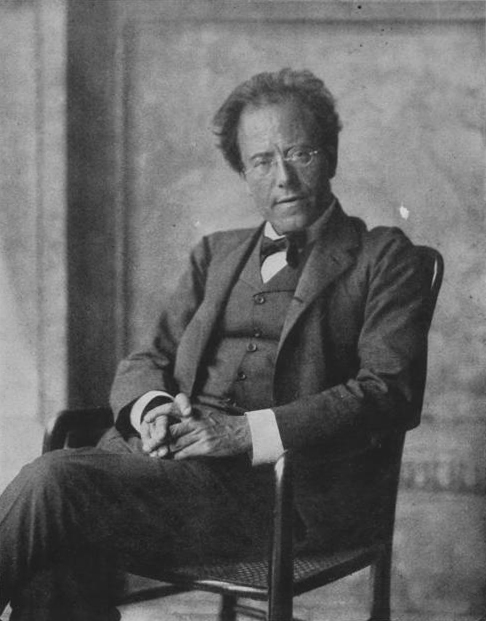 Gustav Mahler, photographed by Moritz Nähr. His name became the argument's shorthand precisely because the institutions kept his sellout nights as the shop window. Photo: Moritz Nähr, public domain.
About that memo
The most viral version of this argument claims a message from inside one major orchestra: Mahler symphonies, once every eighteen months. We have to be straight with you, because our credibility is what separates this page from the feeds: that document has never been produced, the orchestra has never been named, and no season-planning paper we can find states such a rule. We will not build on it, and we do not need to. [10]
But understand what that rumor's velocity actually tells you. It spread because tens of thousands of serious listeners found it instantly plausible — because they had already heard the direction of travel with their own ears. The audience did not need a memo to believe in a quota. By the field's own numbers, it has been sitting inside one for a decade — eighteen points of the season, removed without a single announcement. The memo, if it exists, would merely be the first honest sentence anyone in the sector wrote about a practice its own data has documented since 2016. If you have it, this newsroom will authenticate it, protect the source, and print what it actually says: hello@cadenza.work. [10]
The re-description that authorized it
None of this happened by accident, and the paper trail is not hidden — it is framed on the institutions' own websites. LA Phil's vision now lists a "commitment to cultural equity" as institutional identity. The New York Philharmonic pledges itself to "advancing equity, parity, and access." Boston's annual-report language recasts music as a "platform for social reflection," promises to "expand the repertoire," and celebrates one of the "most diverse and representative seasons to date." [17, 21]
Read those sentences as what they are: the authorization documents for the chart above. A generation of boards and executives redefined the institution's job from performing the greatest music at the highest level into a portfolio in which that mission is one line item — and then the programming followed the language, five-fold, exactly as the mission statements instructed. The eighteen-month memo is disputed. The mission statements are published. The removal they authorized is measured. At some point the argument about whether the canon is being cancelled has to reckon with the fact that the institutions wrote down their intention to rebalance it, did so, and now cite their five remaining Mahler nights as proof nothing happened. [18]
The works-count con
There is a reason the public knows the revolution's size but not the cancellation's: the sector chose a measuring stick that shows one and hides the other. The diversity statistics that anchored a decade of press releases count works. The League's own analysts concede that the new works are, on average, far shorter than the canonical works they displaced from the count. Swap one seventy-minute Bruckner symphony for two twelve-minute commissions and the works count says the program is majority-new — while the evening remains, by the clock, mostly canonical. [1, 6]
One statistic, two audiences, two opposite messages. To the activist constituency and the grant panel: look how much we've changed. To the wavering subscriber: relax, it's still mostly Brahms. The field has never published the minutes-share matrix that would let the public see the true size of the reallocation — and that opacity is not an oversight. Institutions publish the numbers that flatter them. This one has spent a decade publishing the count and burying the clock. By works count, the canon lost eighteen points; by minutes it lost less — and the fact that we cannot tell you exactly how much less is itself the scandal. [6]
The bill: the audience heard what the press releases hid
While the sector re-described itself, the people who actually fund it — the devoted, repeat, bundle-buying patrons — rendered their verdict in the only referendum that counts: the renewal form.
The League/TRG benchmark of 48 orchestras shows a recovery that looks glorious in a headline and rots on inspection: revenue up 23%, households up 14% — and attendance frequency frozen at 1.3 visits per season, tickets per order down 6%. TRG's own phrase is "breadth without depth." The marketing bought new first dates. The habit — the thing the canon's full presence used to build, evening by connected evening — did not come back. [3, 13, 14]
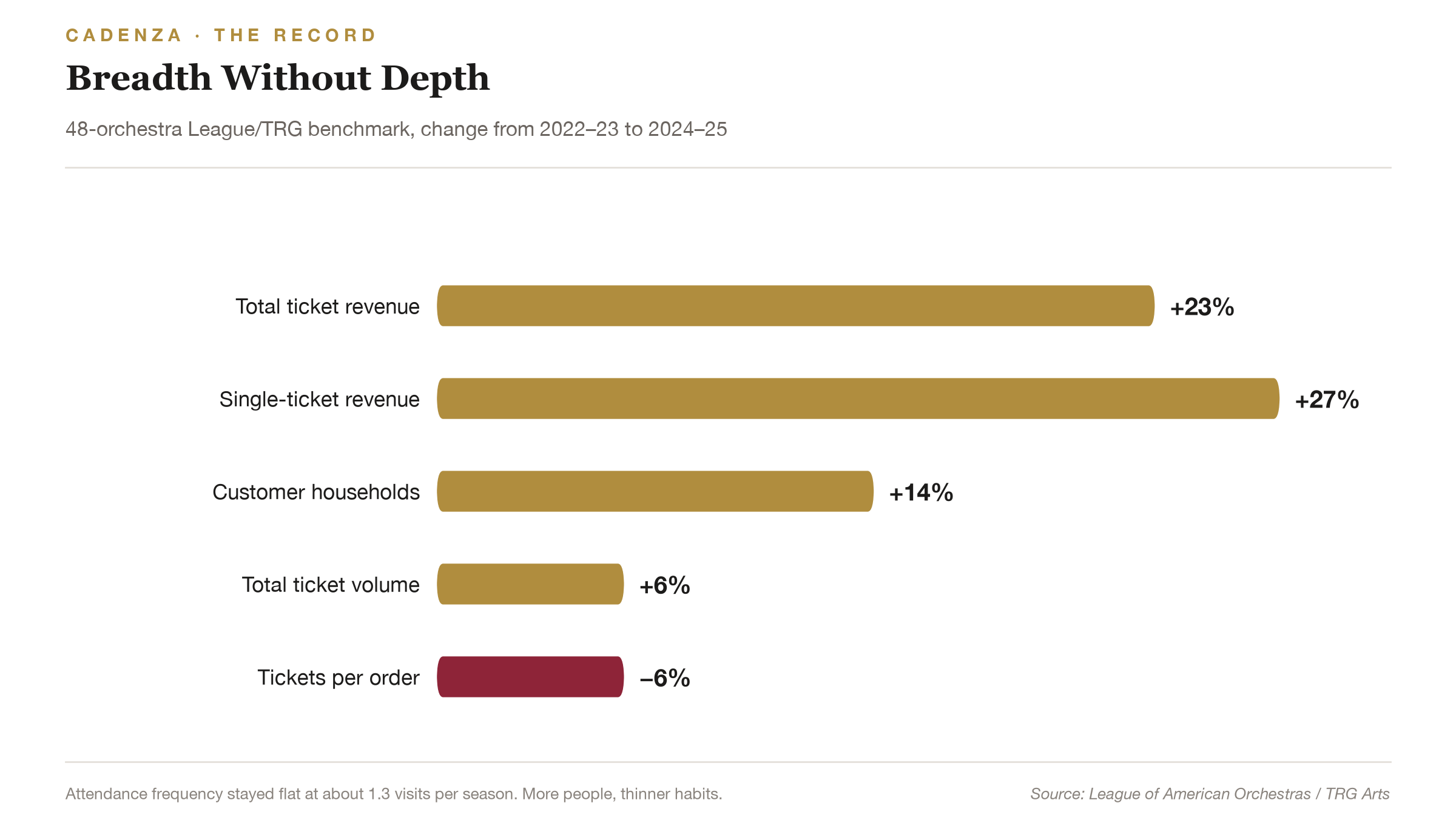 The recovery the sector celebrates: every reach metric up, both devotion metrics stalled or falling.
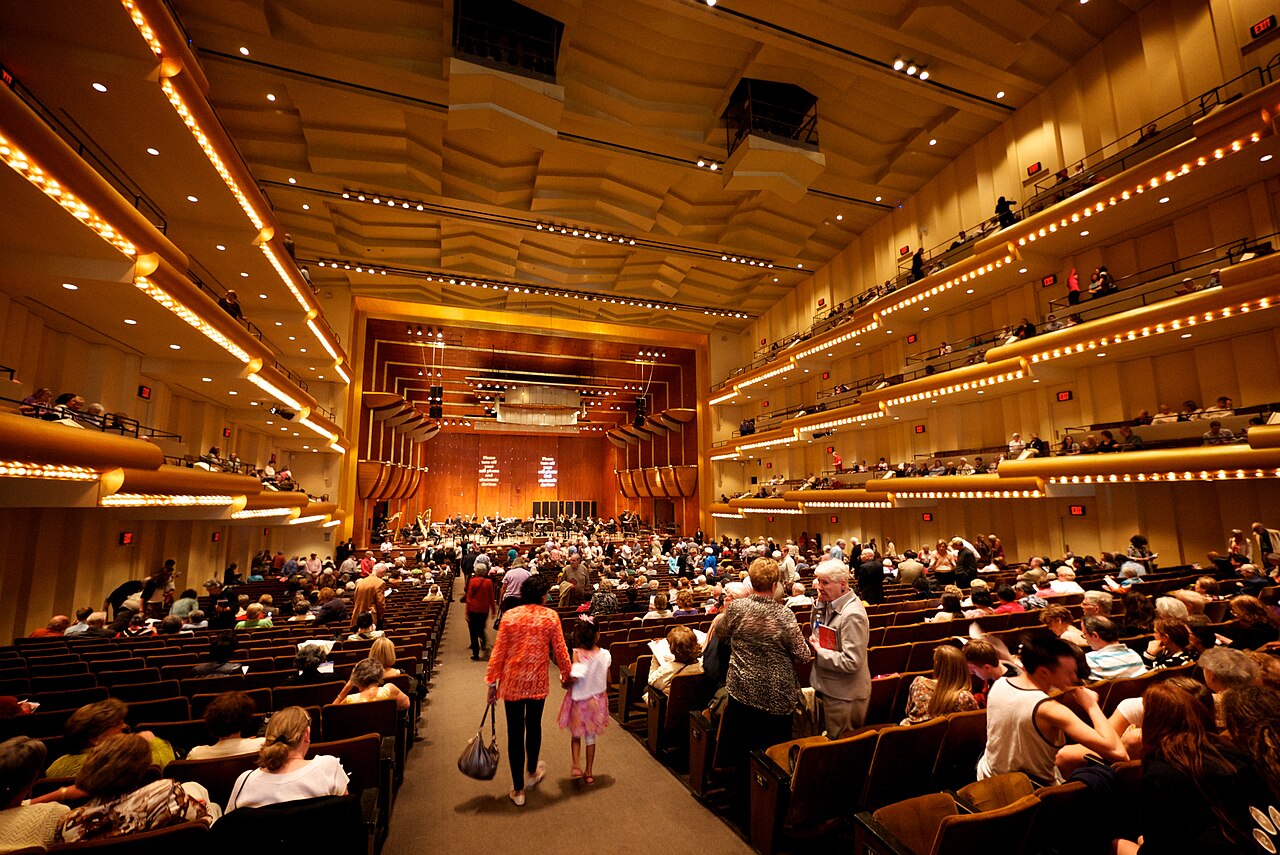 The New York Philharmonic before its audience — the art form's entire economic base, now attending 1.3 times a season. Photo: Jun Seita, CC BY 2.0, via Wikimedia Commons.
Yes, the long decline is older than the equity era — attendance has slid for twenty years, from roughly 11.6% of American adults in 2002 to 8.6% in 2017 to 4.6% in 2022 — and that timeline is the indictment, not the alibi. The institutions could read their own participation data by the early 2010s. They faced a generational emergency of devotion. And their answer was to spend the next decade removing a fifth of the repertoire their remaining devotees came for, while addressing their mission statements to people who were not in the hall. When you cut the canon's presence and your most loyal listeners' loyalty declines, you do not get to call the two lines a coincidence forever. That causal judgment is ours, clearly labeled. Both lines are theirs. [15, 3]
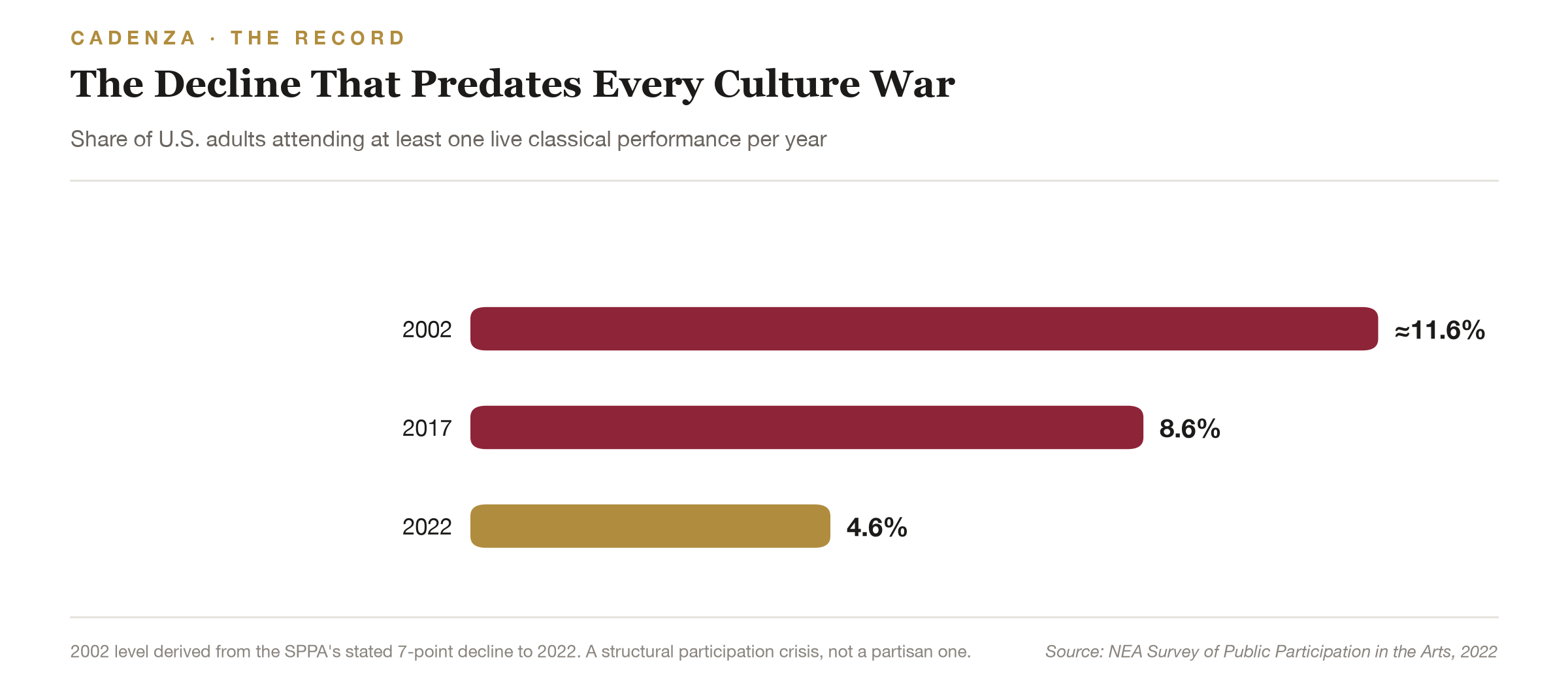 Twenty years of decline — answered with a rebranding and a smaller canon.
The retreat that concedes everything
And then there is the number that ends the debate about whether any of this was working: the surge stopped. The fieldwide identity-programming share has been flat since 2021–22 — and among Group 1 orchestras, the biggest and most-watched institutions in the country, it fell from 23.2% to 20.1% by 2023–24. [1]
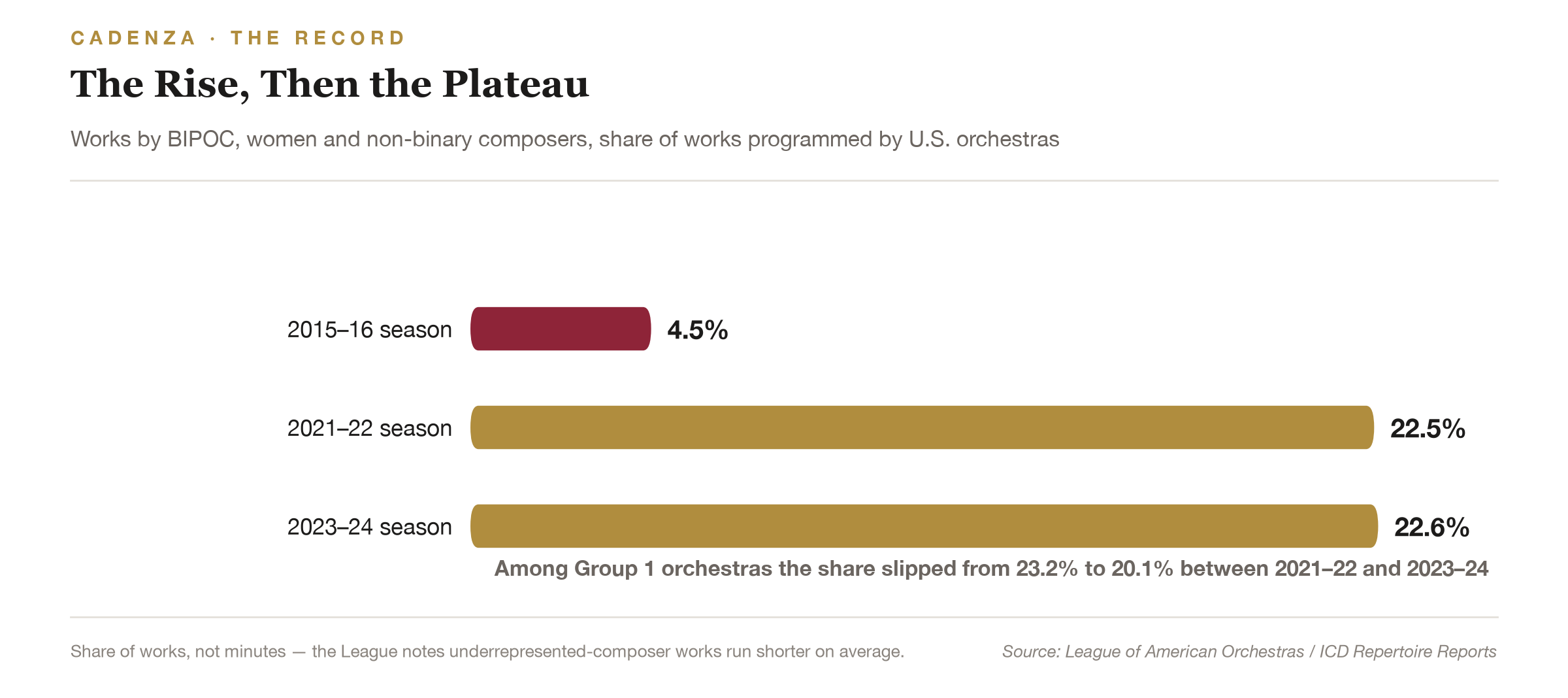 The experiment's own curve: a climb, a plateau — and at the flagships, a quiet, unannounced walk-back.
Institutions never announce that a strategy failed; they stop feeding it and let the numbers whisper it. The flagships are now trimming the very programming share the whole field spent a decade celebrating — without one press release acknowledging the reversal. Hold both of their facts in your hands at once: they insist the canon was never cancelled, and they are quietly restoring what they insist was never removed. Those two positions cannot both be true. The second one is the confession. [1]
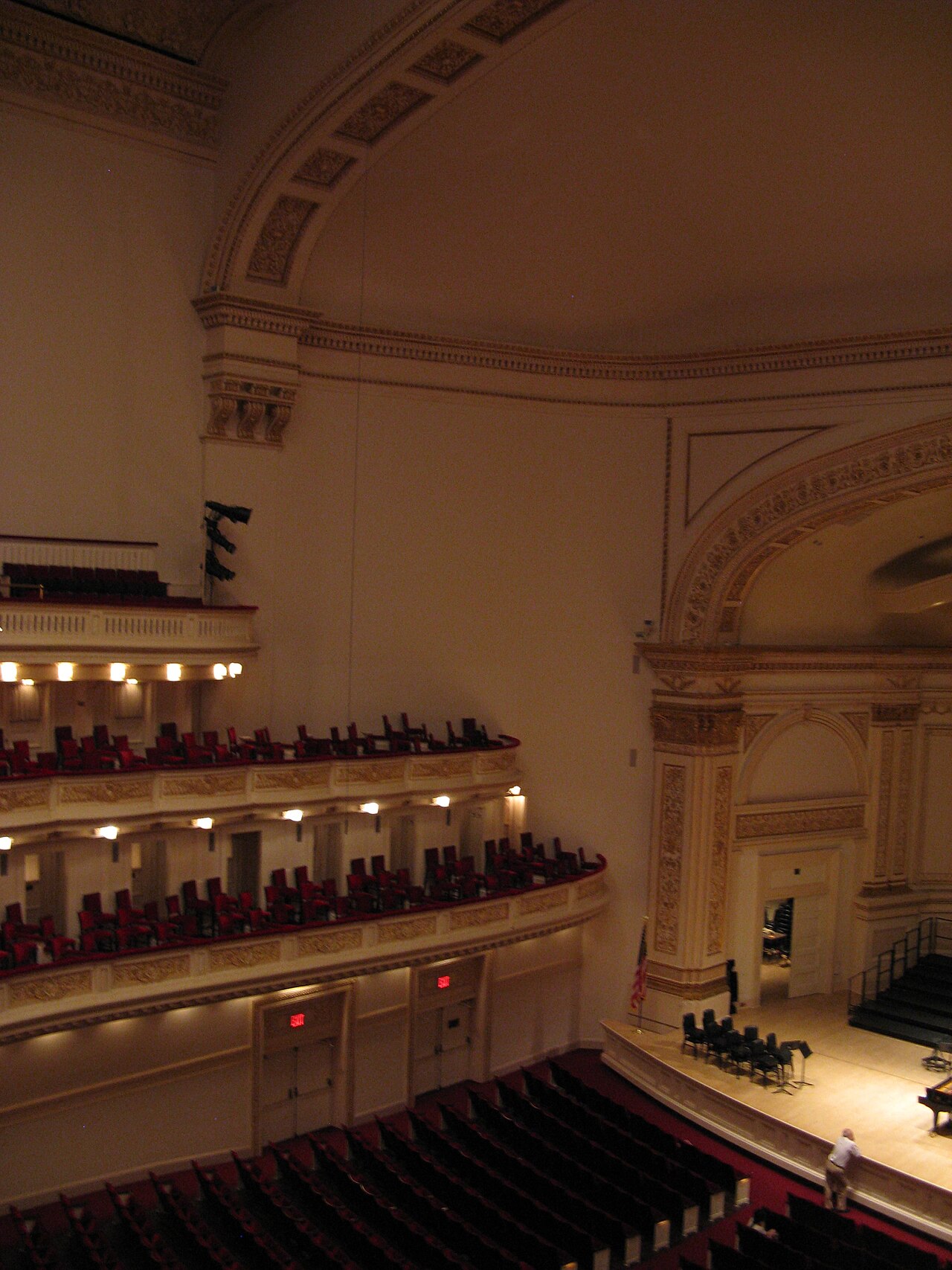 The Isaac Stern Auditorium, Carnegie Hall. A season is a zero-sum object: every evening spent on arithmetic is an evening taken from greatness. Photo: Yair Haklai, CC BY-SA 3.0, via Wikimedia Commons.
The control group nobody asked for
We argue this from the right of the sector's consensus, so fairness obliges us to print the chart that resists tribal comfort. In 2025 the Kennedy Center's governance was seized from the political right — and its audience answered like an audience: subscriptions down 36%, early-fall sales at roughly 57% against 93% the year before, artists withdrawing. [26]
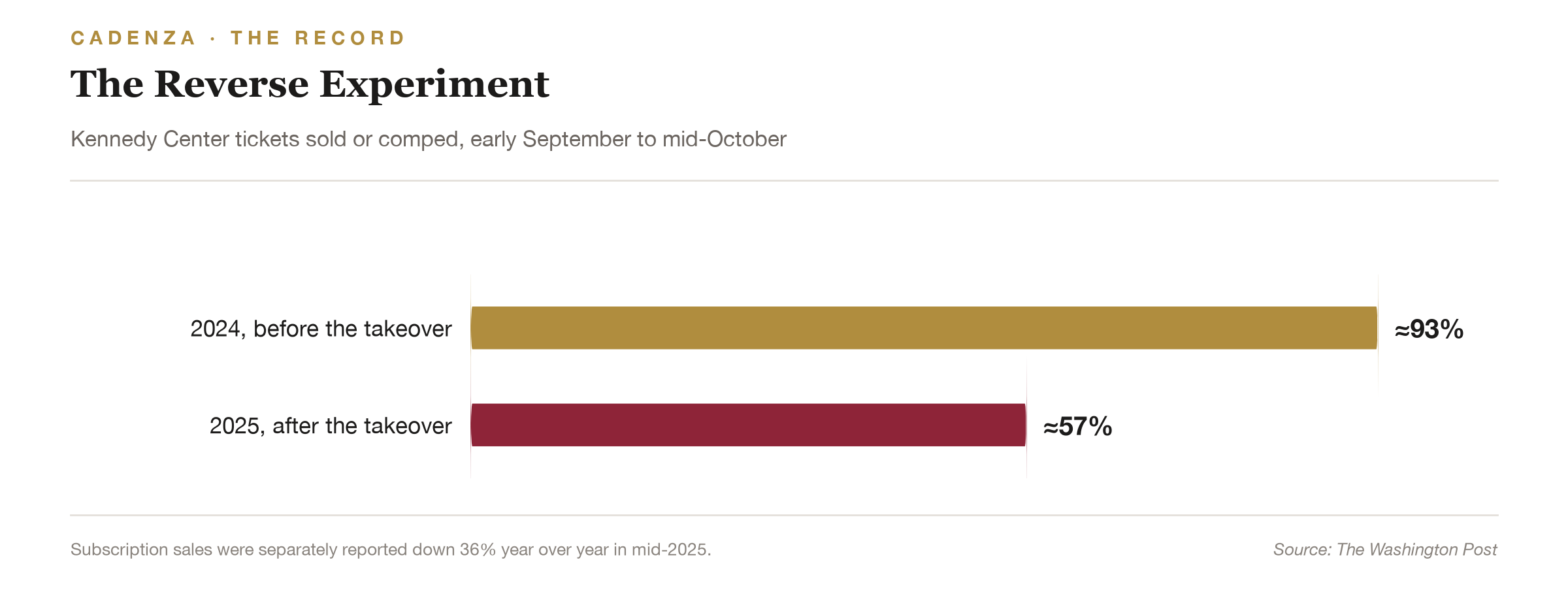 Politicization from the right, cratering an audience in one season. The principle does not change with the flag.
We print it because our objection has never been that the canon's cancellers are left. It is that they converted concert halls into instruments of somebody's politics — and audiences abandon conscripted stages no matter who holds the conscription papers. We made that argument about artists and loyalty tests last week; the Kennedy Center is the same law operating in the other direction. A newsroom that only opposed politicization by its enemies would be another combatant. We oppose the thing itself — which is exactly why we can see this one clearly.
And to close the last escape hatch: nobody defunded these institutions into this. Democratic-run New York still funds more than 1,000 cultural organizations and is raising its production tax-credit cap to $550 million; Broadway, one subway stop from Geffen Hall, just posted the highest-grossing season in its history. The money was there. The audience for live performance was there. The canon was removed on purpose, at full funding, by choice. [2, 16]
The verdict
So let us retire the sector's favorite sentence. "Nobody cancelled Mahler" is true only in the way it is true that nobody banned the books that quietly leave a library's shelves — the famous ones stay in the display case, and the collection thins behind them. By the field's own published numbers, the broad canon lost a fifth of its presence on American stages in eight years. The mission statements that authorized the removal are public. The measuring stick was chosen to hide it. The flagships are now walking it back without admitting it. And the most devoted audience in American art — the one that heard the middle of the season hollowing out long before any chart confirmed it — has answered with the only sentence institutions actually hear: 1.3 visits, and fewer seats each time.
The cancellation was never going to arrive as a memo. It arrived as arithmetic — a fifth of the canon, gone in eight years, while the marquee nights played on as the alibi.
The path back is not complicated, merely unfashionable. Restore the canon's evenings and say so out loud — the retreat is already happening; have the honesty to announce it. Program the new with conviction rather than quota. Publish the minutes, not the works count, and let the public see the true size of what was moved. And spend the next decade on the number that decides whether this art form exists in fifty years — the frequency of its most devoted listeners — the way the last decade was spent on optics. We have documented what these institutions' finances actually look like, what their governance wars cost, and what happens when stages become platforms. This piece adds the ledger they least want read: the canon did not lose its audience. The institutions took the canon from the audience — and the audience, politely, American-ly, has been cancelling its subscription ever since.
Methodology. Every statistic above comes from the public documents in the source list. The canon-share figures (95.5% → 77.4%) are the arithmetic complement of the League's published diverse-programming shares and inherit the same works-count basis — by minutes, the canon's decline is smaller, and we say so wherever the number appears; the field's failure to publish a minutes-share matrix is part of our argument. Three things this article deliberately does NOT claim: that any documented Mahler quota exists (the message is unproduced and the orchestra unnamed — we treat it as an unresolved lead and invite its production); the exact minutes-share reallocation (no record-level public export exists); or a proven causal chain from trustee political donations to artistic decisions. The causal argument connecting the canon's removal to the loyalty decline is editorial judgment and labeled as such where it is made; the programming shares, the plateau, the Group 1 walk-back, the loyalty metrics and the participation collapse are documented.
Right of reply. As with every Cadenza investigation, any institution named here — the League of American Orchestras, the Boston Symphony, the New York Philharmonic, the LA Phil, the Chicago Symphony and the Kennedy Center — is offered unedited space to respond, including to our editorial conclusions. Corrections are made promptly and visibly.
Images: cover — Walt Disney Concert Hall (Levi Clancy, CC0); Symphony Hall, Boston (Arnold Reinhold, CC BY 3.0); the Isaac Stern Auditorium, Carnegie Hall (Yair Haklai, CC BY-SA 3.0); the New York Philharmonic at Avery Fisher Hall (Jun Seita, CC BY 2.0); Gustav Mahler (Moritz Nähr, public domain) — via Wikimedia Commons. Charts: Cadenza, from the public datasets cited.
Related Cadenza coverage: The Concert Hall Is Not Your Protest Rally · the trillion-dollar measuring stick · the Boston governance war · Is the Orchestra Racist? · the fall of American orchestras.
Sources
- League of American Orchestras / Institute for Composer Diversity — 2024 Orchestra Repertoire Report
- New York City — FY2027 budget message and cultural funding documents
- League of American Orchestras — TRG Arts data partnership
- Boston Symphony Orchestra — 2026–27 season
- League/ICD 2024 report — Group 1 and plateau findings
- League/ICD repertoire reports — duration and works-count caveats
- League of American Orchestras / ICD — 2022 Orchestra Repertoire Report
- New York Philharmonic — annual report and Dudamel inaugural season
- LA Phil — mission, vision and values
- Reported claim thread — the unverified "Mahler every 18 months" message
- Boston Symphony Orchestra — 2026–27 season pages
- Boston Symphony Orchestra — season announcement
- League of American Orchestras / TRG Arts — 48-orchestra benchmark
- TRG Arts — orchestra benchmark update, September 2025
- National Endowment for the Arts — 2022 Survey of Public Participation in the Arts
- Broadway League — 2024–25 season wraps with 14.7 million admissions
- LA Phil mission page · New York Philharmonic — equity, parity and access commitments
- Boston Symphony Orchestra — formal mission
- Trustee/FEC donation-matching study — incomplete; no claim made
- New York City cultural funding — Cultural Development Fund documents
- Boston Symphony Orchestra — annual report and board messaging
- Boston Symphony Orchestra — 2026–27 season
- New York Philharmonic — 2023–24 annual report
- New York Philharmonic — annual report
- LA Phil — 2026–27 Mahler's Symphonies highlight
- The Washington Post — Kennedy Center subscription sales decline
- Boston Symphony Orchestra — Nelsons 2026–27 season announcement
Comments
Sign in to join the discussion.