Between finishing a conservatory and having a career there is a rung that is easy to miss. It is not a competition and it is not a job. It is a young-artist scheme: an organisation takes you on, manages you, books you, photographs you and introduces you to the people who hire, for three to five years, on the theory that what a good player lacks at twenty-six is not ability but a diary.
This piece is about two of them. The Young Classical Artists Trust in London and the Concert Artists Guild in New York are close enough that in 2026 they announced two shared artists — the violinist Joshua Brown and the cellist Willard Carter, who join both rosters — in what CAG calls the seventh year of the partnership. They are not the only schemes of this kind: Young Concert Artists, also in New York, runs the same audition-to-roster model, offers a minimum three-year management contract and debut recitals including Carnegie Hall, and holds its 2026 final round on 8 November.
Now the sentence that makes this worth writing. It is on YCAT's eligibility page:
"You cannot apply to both YCAT and the Concert Artists Guild (CAG) in the same year."
The catch is that only one of them says it. That rule appears nowhere on CAG's application pages — CAG's own FAQ says the opposite: "As long as you meet the eligibility requirements, you can apply as many times as you'd like! You are limited to one application per 6-month period." The bar is one-directional. Two organisations share a roster; one of them will not let you knock on the other's door in the same year.
The two doors
| YCAT, London | Concert Artists Guild, New York | |
|---|---|---|
| Status today | Closed. The 2026 round opened 6 January and closed 26 February | Open. Reviewed on a rolling basis, and from 1 July 2026 the portal stays open year-round — but one application per six-month period |
| Fee | £55 including VAT | $35 processing fee per application |
| Age limits | Instrumentalists 28 or under, singers 30 or under, ensembles average 30 or under, measured on the date of the final auditions | Solo instrumentalists 28, solo singers 30, conductors 35, ensembles average 30 with no member over 35 |
| Conductors | Not among the five categories | Eligible, to 35 |
| Where you play | Semi-finals at the Casals Forum in Kronberg and the Royal Academy of Music in London; public final auditions at Wigmore Hall | Screenings at CAG's discretion through the year, some regional ones arranged in advance |
| Ensembles | 2 to 6 members. Groups of singers and instrumentalists and piano duos on one piano are eligible; instrumental duos with piano and two-piano duos are not — they apply as individuals in the soloist category | Should have existed with the same membership for at least 2 years, with no personnel change planned. CAG's word is "should" |
The age limits are the striking part. Both stop instrumentalists at 28 and singers at 30, and both set ensembles at an average of 30. Young Concert Artists uses the same numbers again. Three organisations, two continents, one settled and unstated view about when a solo career has to have started.
CAG adds one category YCAT does not have at all: conductors, up to 35.
Two bars at YCAT that have no counterpart
Here is where the schemes genuinely part company.
The first is management, and it reaches backwards. YCAT: "If you are currently, or have previously been, signed and received representation from local or international commercial management you are not eligible to apply." Read previously. A player who signed with a small agency at twenty-two, was dropped at twenty-four and is now twenty-seven and unrepresented is, on the plain wording, ineligible — permanently, for a thing that did not work out. The sentence appears once, with no time limit, no definition of "commercial management" and no appeal route.
CAG draws the line at the present tense and by territory. Instrumentalists, ensembles and conductors with any form of commercial national or North American management "are not eligible to apply". But applicants under international management must supply a letter of recommendation from that manager — a route, not a wall. And singers with North American management are eligible, provided they submit a statement confirming their manager grants CAG management rights for concert engagements if they are signed.
So the same musician — a European instrumentalist with a European agent — is barred outright at YCAT, while at CAG they are eligible to apply if the agent supplies a letter. CAG's form asks directly whether you are under management and for the territories it covers. CAG does not define what it means by "national", so confirm your own case before paying. That is still not a small difference. It is the difference between having a door and not.
The second bar is a passport, and it is the widest exclusion on either website. YCAT requires the right to undertake regular paid performance work in the UK without individual work visas or permits. Its page is explicit: "You CANNOT apply if: You hold a passport from a visa-national country" — or if you are on a UK student visa extending beyond 31 July 2026 without moving to the Graduate Route or a Global Talent visa. That rules out applicants by nationality, before a note is played, and it excludes more people than every other rule on either site combined.
What you are actually applying for
YCAT publishes what the scheme provides, and it is worth quoting because "management" is doing a lot of work in that word: three to five years of developmental management, a strategic diary of engagements secured worldwide, regular marketing to more than 5,000 promoters and concert halls, professional photography and publicity materials, social-media and website support, and live recordings of recitals at Wigmore Hall.
The recordings are the part a student underrates. An early-career musician's problem is rarely that nobody has heard them play; it is that nobody can send someone else a recording of them playing well, in a hall with a name.
CAG's roster carries its own weight. Claire Chase, who won in 2008 and became a MacArthur Fellow in 2012, is the name the organisation puts at the top of its own eligibility page.
What this means if you are twenty-six now
It is tempting to conclude that the exclusivity rule costs you nothing between now and January, because only one of them is taking applications. Do not assume it.
YCAT does not define "year" anywhere on its site — calendar year, rolling twelve months, or audition cycle — and because CAG reviews on a rolling basis, an application sent this autumn may still be live when YCAT opens in the new year. If you intend to do both, ask YCAT first, which invites eligibility questions, and get the answer in writing before you pay CAG's $35.
If you are applying
- Now, to CAG: $35, rolling review, year-round from 1 July 2026 — and one application per six-month period, so an autumn application locks you out of CAG until spring. Solo instrumentalists to 28, singers to 30, conductors to 35, ensembles averaging 30 with nobody over 35.
- Check your management history before anything else. At YCAT, past commercial representation is a bar. At CAG the bar is current national or North American management, and international management is workable with a letter.
- Check your passport before that. YCAT's visa rule excludes visa-national passport holders outright.
- Singers, read your own paragraph. CAG takes singers with North American management, for recitals, chamber music and orchestral work — not opera.
- Watch YCAT from the first week of January. The 2026 round opened on 6 January and closed on 26 February — a seven-week window, £55. YCAT has not published 2027 dates and says it will announce them to its newsletter, so sign up rather than relying on the 2026 pattern.
- If you turn 29 next year and play an instrument, this is your last cycle. All three organisations stop instrumentalists at 28.
Every date, fee and age above is from the organisations' own eligibility pages, read on 7 September 2026. One of them is between cycles and has not published next year's dates, so check before you rely on any of it.
Cadenza lists competitions, academies and programmes for musicians on its jobs and programmes board, free to use. The conservatory deadlines for 2027 entry are here, and the summer festivals that pay you rather than charge you are here.
Three organisations agree that an instrumental soloist's career has to begin by twenty-eight. Two of them co-operate closely enough to share artists, shared management territories and a Wigmore Hall date. And one of them — YCAT — requires a twenty-seven-year-old to pick one and forgo the other for a year, at the precise moment when being told no by both would be the most useful information available. CAG asks for no such thing. Why does a partnership that runs to shared rosters stop at the application form?
Sources, read on 7 September 2026: Young Classical Artists Trust, audition information and apply to audition; Concert Artists Guild, application and guidelines and join our roster; Young Concert Artists, auditions.
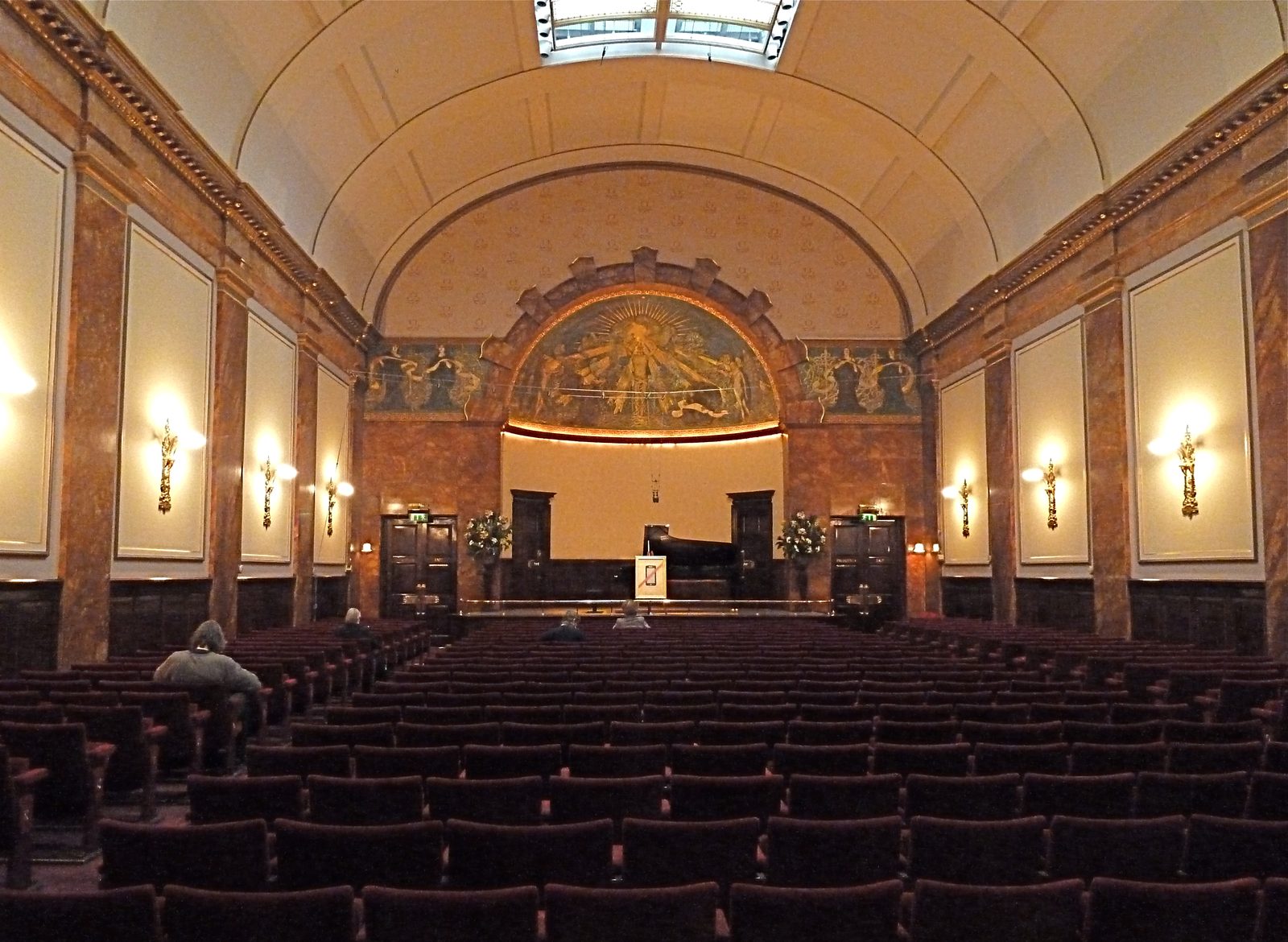
Cover photograph: The auditorium of Wigmore Hall, London, where YCAT holds its public final auditions. Anthony O'Neil, CC BY-SA 2.0, via Wikimedia Commons.
Comments
Sign in to join the discussion.