Ask anyone in American opera where singers come from and the Merola Opera Program is the first answer. It has run in San Francisco since the 1950s, it takes a few dozen people each summer, and its alumni list reads like a cast sheet for the last half-century.
That list is published, in full, on Merola's own website. It is organised alphabetically and again by year, and it gives each person's voice type and the summers they attended.
So we counted it, on 7 September 2026.
What the list contains
| Summers attended, counting each person once per year | 1,647 |
| Distinct people | 1,438 |
| Years covered | 1955 to 2025 |
| People who returned for a second or third summer | 208 |
| Singers | 1,239 (86%) |
| Coaches, pianists and stage directors | 199 (14%) |
The list begins oddly, with a single name in 1955 and two in 1956, before the first cohort in 1957 — which the list gives as 21 people, though Merola's own history describes that first year as a four-week programme with 14 singers. The 2026 artists are not in it; they are still listed separately as current.
We counted the page's by-year index separately as a check. The two halves agree entry for entry, once three pre-1957 names and one 2004 omission absent from that index are set aside.
One in seven never sang a note
Of the 1,438 people on the list, 199 are not singers. They are 147 apprentice coaches, 25 apprentice stage directors, 23 pianist-coaches, four stage directors and one director. One person, Robert Swedberg, appears as both — a bass-baritone in 1975 and an apprentice stage director in 1982.
Merola says as much itself. Its own description is of "the foremost opera training program for aspiring singers, coaches, accompanists, and stage directors", and its Wikipedia entry names the apprentice coach and stage director programmes too. But the coaches and directors rarely feature in how the programme gets described in practice, and the numbers give a sense of the scale nobody quotes.
Two labels cover the same job. "Apprentice coach" runs from 1957 to 2019 and "pianist/coach" from 2021 to 2025, with no overlap at all — the title changed after the programme's cancelled summer. Added together, Merola has taken 170 keyboard artists against 1,239 singers: roughly seven singers for every one.
That is a count of who got in, not of who applied, so it says nothing about anybody's odds. What it does say is that the coaching route is a real and much smaller part of a programme famous for its singers, and that it leads to a job which is salaried, in-house, and in permanent short supply at every opera company in the world.
Nearly five sopranos for every bass
| Voice | Number |
|---|---|
| Soprano | 402 |
| Tenor | 249 |
| Mezzo-soprano | 205 |
| Baritone | 200 |
| Bass-baritone | 89 |
| Bass | 85 |
| Countertenor | 6 |
| Contralto | 5 |
Two singers are listed under two voice types each, so the column totals 1,241 across 1,239 people.
There are 402 sopranos and 85 basses — very nearly five to one. In seventy years the list carries six countertenors and five contraltos.
The obvious inference from that table is wrong, though, and it is worth spelling out. Add the female voice types together — soprano, mezzo, contralto — and you get 612. Add the male ones — tenor, baritone, bass-baritone, bass, countertenor — and you get 629. Forty-nine per cent to fifty-one. Sopranos dominate the largest single column not because women dominate the programme but because the male voice is divided into four or five categories and the female voice into two and a half. A soprano is measured against 401 historical sopranos; a baritone against 199, plus, in practice, some of the 89 bass-baritones.
Almost nobody comes back
208 of the 1,438 returned for more than one summer, and exactly one person has done three: the bass-baritone Bojan Knezevic, in 1992, 1993 and 1994.
That is a harder door than the instrumental world's. The New World Symphony, whose placement record we counted, invites fellows back season by season for up to three seasons — at its sole discretion, but as a normal feature of the fellowship. Merola is a single summer for six people in seven.
And the intake is not growing. Participations per year since 2015 run 29, 29, 29, 29, 29, none, 27, 31, 28, 29, 26. The gap is 2020: Merola cancelled that summer for the pandemic, gave the selected artists a month of virtual enrichment and invited them all back for 2021. Merola's history page says so.
Roughly twenty-nine places a year. That is the programme, and it has been that size for a decade.
What this does not prove
The list is a record of admission, not of what happened next. It tells you 1,438 people went through the programme; it does not tell you how many are singing now. Merola separately runs career grants for alumni — up to $12,000 over five years, capped at $6,000 in any one year — which is a quiet admission that finishing is not the end of needing help.
Nor does it tell you anything about anyone's chances. Counting who was admitted says nothing about who applied, and we make no claim about odds anywhere above.
And this is one programme, the most famous of its kind in the United States, and not the only one.
The alumni page as we captured it, and the script that counted it, are in Cadenza's repository. The script's own notes list seven separate ways the obvious parse of that page goes wrong — including that one alumna is printed twice, and that a person can carry two voice types. Run it and attack it.
If you want in
- Merola's 2027 applications have closed. The deadline was 31 July 2026, for a programme running 4 June to 14 August 2027 for pianists and 7 June to 14 August for singers and directors. It is an annual cycle; watch it from the spring.
- Wolf Trap Opera's audition tour opens on 10 September, across eight cities: Los Angeles 10 September, Minneapolis 14 September, Chicago 18–20 September, Cincinnati 23–24 September, Philadelphia 6 October, New York 7–8 October for Studio Artists and Coaching Fellows and 9–10 October for Filene Artists and Coaching or Directing Fellows, Houston 12–14 October, and Vienna, Virginia 16–17 October. Its application deadlines have passed — 14 August for the first four cities, 31 August for the rest — but the tour tells you exactly what next year's calendar looks like.
- If you play the piano well enough, apply as a coach. Merola has taken roughly one keyboard artist for every seven singers.
- Note the shape of the opera year. Applications close in high summer, auditions run through September and October, and the programme itself is the following June. You are applying almost a year ahead. A singer who starts thinking about this in January has already missed it.
Every figure above is our own count of Merola's published list, read on 7 September 2026, except the programme dates and deadlines, which are from Merola's and Wolf Trap's own application pages.
Cadenza lists competitions, academies and programmes for musicians on its jobs and programmes board, free to use. The schemes that manage instrumental soloists are here.
Seventy years of names, 1,438 people, twenty-nine places a year, and one in seven of them a pianist or a director rather than a voice. The singers are the reason the programme is famous. The coaches are the reason the opera house can open on Monday, and they are the seventh of the list that nobody counts.
Sources, read on 7 September 2026: Merola Opera Program, alumni, program history, about, apply and career grants; Wolf Trap Opera, audition. The alumni count is Cadenza's own; the page and the script are in the repository.
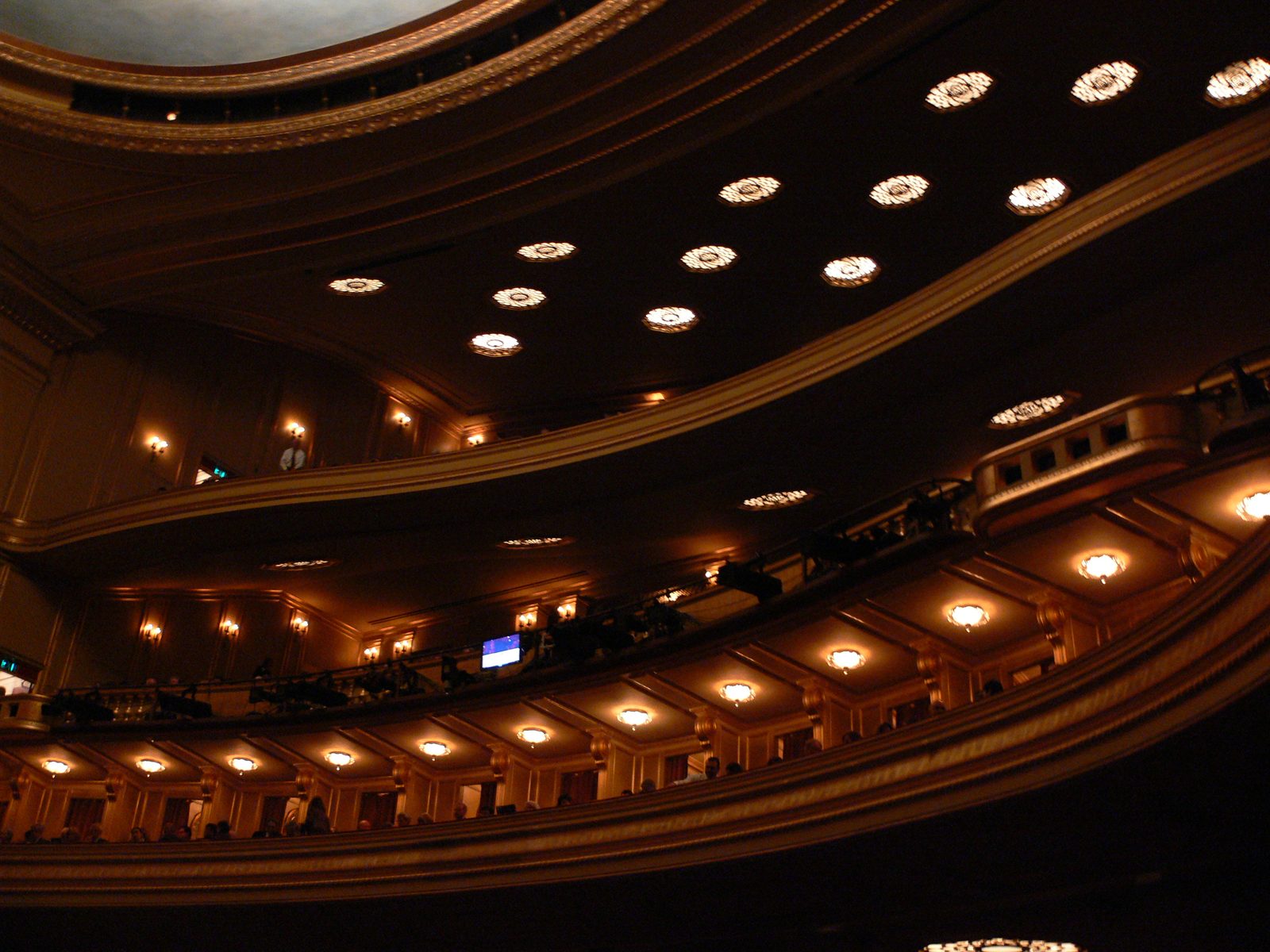
Cover photograph: The auditorium of the War Memorial Opera House, San Francisco, home of San Francisco Opera, in 2008. Andreas Praefcke, public domain, via Wikimedia Commons.
Comments
Sign in to join the discussion.