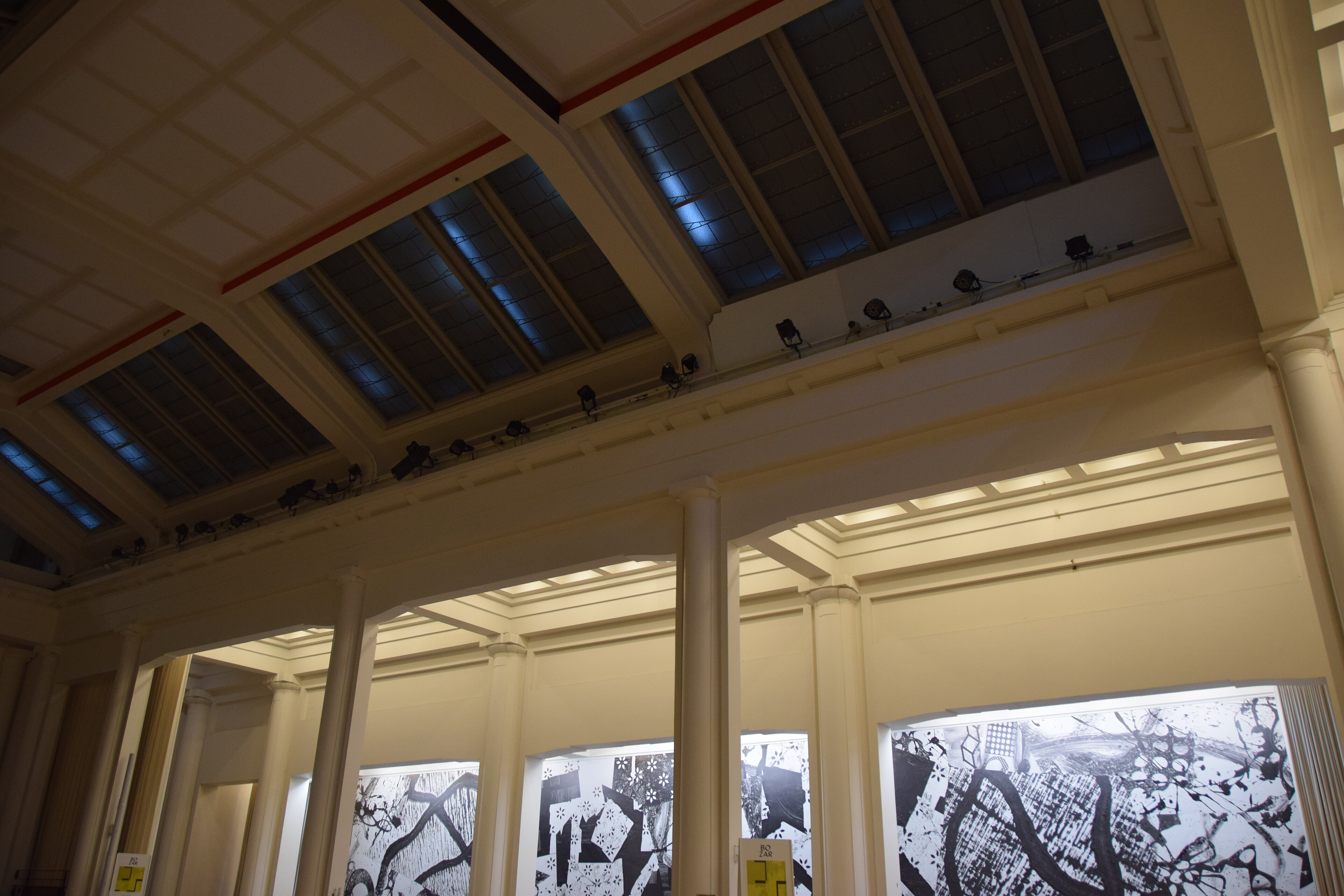
Twelve cellists reached the final of the 2026 Queen Elisabeth Competition, played in the Salle Henry Le Boeuf at Bozar in Brussels from 25 to 30 May. Each of them performed the competition's imposed work, by the composer Fang Man, alongside a concerto of their own choosing, with the Belgian National Orchestra under Antony Hermus.
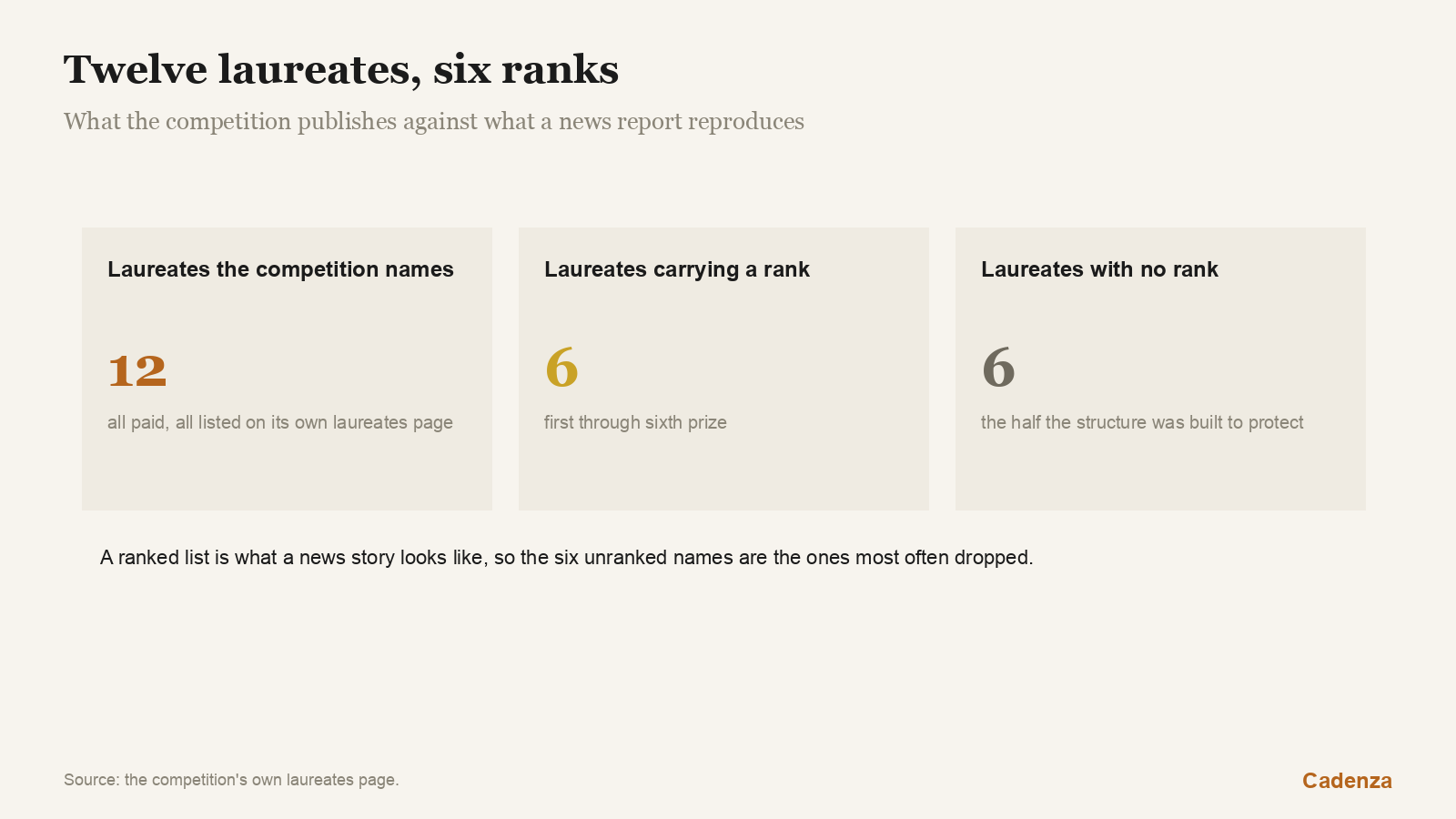
Six of the twelve were given a rank. Six were not.
The six without a rank are not runners-up who fell short of a placing. They are listed on the competition's own laureates page as laureates, with no number attached, and each of them received €4,000. That is a deliberate piece of design, and it is the most interesting thing about this competition's prize structure.
The full ledger
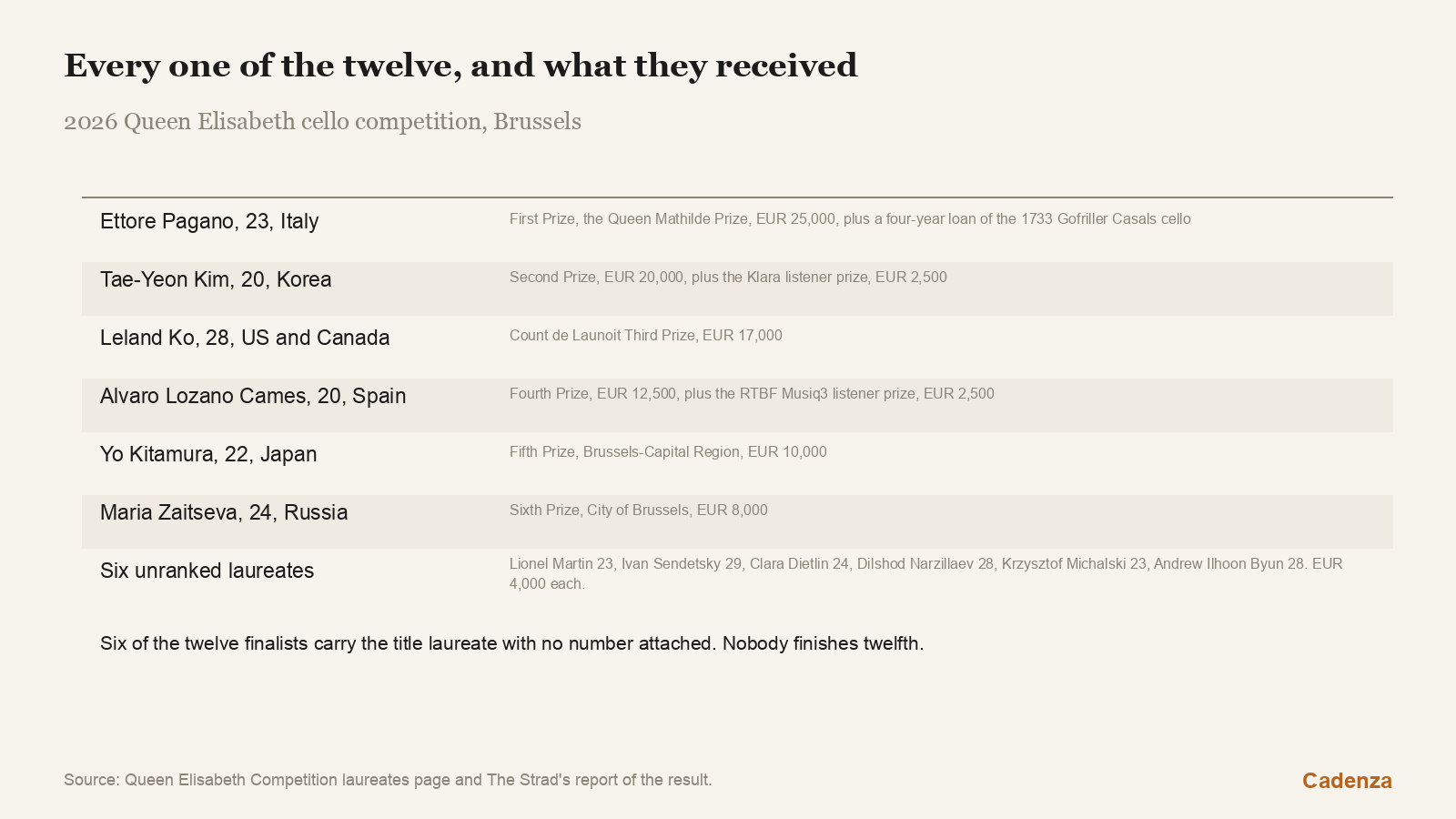
Ettore Pagano, 23, of Italy, took the First Prize, known as the Queen Mathilde Prize, worth €25,000. He played Prokofiev's Sinfonia concertante in his final round. He also receives a four-year loan of the 1733 Matteo Gofriller 'Casals' cello, courtesy of the Pau Casals Foundation, along with concert engagements in Belgium and abroad.
Tae-Yeon Kim, 20, of Korea, took Second Prize, awarded by the Belgian Science Policy office and worth €20,000, and also won the Klara Prize, decided by listener vote, worth €2,500. Leland Ko, 28, of the United States and Canada, took the Count de Launoit Third Prize of €17,000. Álvaro Lozano Cames, 20, of Spain, took Fourth Prize, this year awarded by the Government of the French Community, worth €12,500, plus the RTBF Musiq3 Prize, also a listener vote, worth €2,500. Yo Kitamura, 22, of Japan, took the Fifth Prize, the Brussels-Capital Region Prize, worth €10,000. Maria Zaitseva, 24, of Russia, took the Sixth Prize, the City of Brussels Prize, worth €8,000.
The six unranked laureates each received €4,000: Lionel Martin, 23, of Germany; Ivan Sendetsky, 29, of Russia; Clara Dietlin, 24, of France; Dilshod Narzillaev, 28, of Uzbekistan; Krzysztof Michalski, 23, of Poland; and Andrew Ilhoon Byun, 28, of Canada.
Why nobody comes twelfth
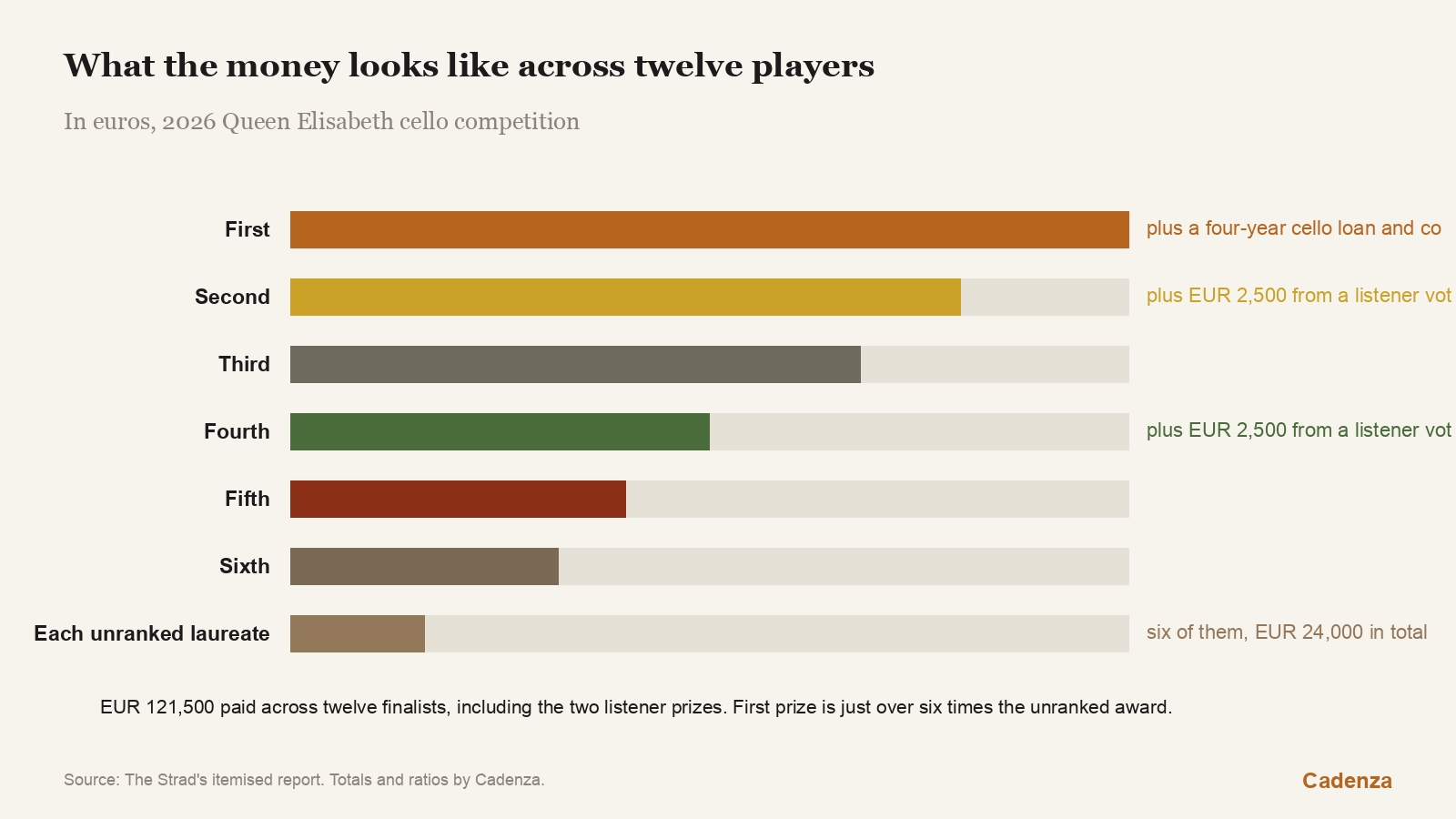
The ranked prizes total €92,500. The six unranked awards add €24,000. Including the two listener-voted prizes, the competition paid out €121,500 across twelve players.
First prize is six and a quarter times the unranked award. That is a steep curve, and it is how competitions work. But the floor is the point. Every single cellist who reached that final left with money, and the six at the bottom of the field left with a title that does not carry a number.
Compare that with the structures Cadenza has examined this week. The Enescu cello section ranked three players and paid three. Liechtenstein's conducting competition ranked one and paid one. Jaén named a first prize and a side prize and one pianist took both.
The Queen Elisabeth has chosen to make a twelfth-place finish impossible to report. A cellist who reached this final can say, accurately and for the rest of their career, that they were a laureate of the Queen Elisabeth. Nobody has to explain a number.
That matters more than it sounds. A competition result follows a musician around for decades, and the difference between "laureate" and "twelfth" is the difference between a credential and a footnote.
The coverage still names six
Here is where the design runs into the press.
The competition publishes twelve laureates. Most reporting of a competition result reproduces the ranked positions, because a ranked list is what a news story looks like. The six unranked names are frequently dropped, and they are the half of the final that the structure was specifically built to protect.
Cadenza nearly got this wrong in the other direction. An earlier pass of our own research flagged several of these unranked laureates as having no English-language coverage at all. A spot-check disproved it: Lionel Martin, for one, is covered in English by The Strad and The Violin Channel among others, and his own record includes a third prize at the Budapest International Cello Competition in 2025, a first prize at the Suggia competition in Porto in 2024 and an Anne-Sophie Mutter Foundation scholarship held since 2017. So the claim was wrong and is not being made here.
The accurate version is narrower and still worth saying. These six are documented, but they are documented less, and in a list format that puts them after the numbered names. An orchestra or promoter scanning a result sees the ranks first.
The imposed work, again
Every one of the twelve played a work by Fang Man, written for this competition, before playing their own concerto.
Cadenza wrote earlier this week about the ARD competition in Munich, where the prize for the best performance of the commissioned work went to three musicians whose achievement the competition's English pages then mislabelled. The structural point is the same in Brussels. A major competition commissions a new piece, requires every finalist to learn it to performance standard, and thereby generates a dozen first-rate performances of contemporary music in a single week.
That is one of the largest contributions competitions make to new music, and it is almost never reported as such. The composer's name appears, if at all, in a subordinate clause.
Who the winner is
Pagano studies at the Universität der Künste Berlin with Jens Peter Maintz, having taken a bachelor's degree at the Santa Cecilia Conservatoire in Rome.
His record before Brussels is substantial and it explains the result. In 2025 he took the Premio Abbiati, the ICMA Classeek Award and the 'Una vita nella Musica - Giovani' prize. At the 2024 Enescu competition, whose 2026 cello section Cadenza covered this week, he took second prize, the audience award and the prize for the best sonata. At the 2022 Khachaturian competition he took first prize, the prize for the best sonata and two further special prizes.
He is also, at 23, in the middle of the age range rather than at the young end. The twelve finalists ran from 20 to 29, with two twenty-year-olds and the oldest at 29. Pagano beat players six years his senior and finished ahead of two who were three years younger.
One small correction for the record. The Strad's report of the result gives the final rounds as running from 25 to 30 May 2027. The competition ran in May 2026. It is a single transposed digit in an otherwise scrupulous piece of reporting, and it is the kind of thing that makes a result hard to find later.
The two prizes an audience chose
Two of the awards in Brussels were not the jury's at all, and they are worth separating out.
The Klara Prize, worth EUR 2,500, was decided by the listeners of Klara and VRT Max. The RTBF Musiq3 Prize, also EUR 2,500, was decided by listeners of RTBF Musiq3, La Trois and Auvio. One went to the second-placed cellist and the other to the fourth.
Neither went to the winner. That is the interesting part. Two separate national broadcast audiences, voting independently, each preferred somebody the jury had placed below first, and they did not agree with each other either. It is a small reminder that a competition result is one panel's reading of one week, and that a room full of listeners hearing the same performances can reach a different answer.
Cadenza made the same point from the other direction in Munich, where the audience prize and the prize for the commissioned work went to different musicians, and the competition's English pages confused the two. A jury prize, an audience prize and a repertoire prize measure three different things, and conflating them is the commonest error in competition reporting.
A year ago it was an entry form
All twelve of these cellists applied, prepared a Fang Man premiere and a concerto, and travelled to Brussels for a week in May. The Queen Elisabeth publishes its full laureate list, its prize values and its imposed work, which is more disclosure than most competitions manage.
Cadenza carries competitions with open deadlines, free to musicians, on its competitions board, and orchestral vacancies on its jobs board.
If you are entering. Read the prize structure to the bottom, not just the top. A competition that pays every finalist, as this one does, changes the financial calculation of entering, because reaching the final guarantees a return rather than a ranking. Note also that the top prize here is an instrument loan as much as a cash sum: a four-year loan of a 1733 Gofriller is worth more to a career than the €25,000 beside it.
The question the trade press will be asked next is not one for Brussels. The competition went to the trouble of building a structure in which six finalists have no rank, precisely so that nobody finishes twelfth. Will the outlets reporting it print all twelve names?
Sources: the Queen Elisabeth Competition's own laureates page, fetched directly, which lists six ranked prizes and then six further laureates with no rank attached; and The Strad's report of the result, which supplies every laureate's age and nationality, the name and value of each individual prize and its donor, the €4,000 paid to each unranked laureate, Pagano's Prokofiev concerto choice, his teacher and prior competition record, the four-year loan of the 1733 Matteo Gofriller 'Casals' cello from the Pau Casals Foundation, the Fang Man imposed work, and the Belgian National Orchestra under Antony Hermus. Lionel Martin's English-language coverage and prior record were verified separately, which is how Cadenza established that an earlier internal claim about missing coverage was wrong. Prize totals, the first-to-unranked ratio and the age spread are Cadenza's arithmetic.
Cover photograph: the Palais des Beaux-Arts, Bozar, Brussels, October 2019. Jean Housen, CC BY-SA 4.0, via Wikimedia Commons. Charts by Cadenza.
Cover photograph: The Palais des Beaux-Arts, Bozar, in Brussels, whose Salle Henry Le Boeuf hosted the 2026 Queen Elisabeth cello final, photographed in October 2019. Jean Housen, CC BY-SA 4.0, via Wikimedia Commons.
Comments
Sign in to join the discussion.