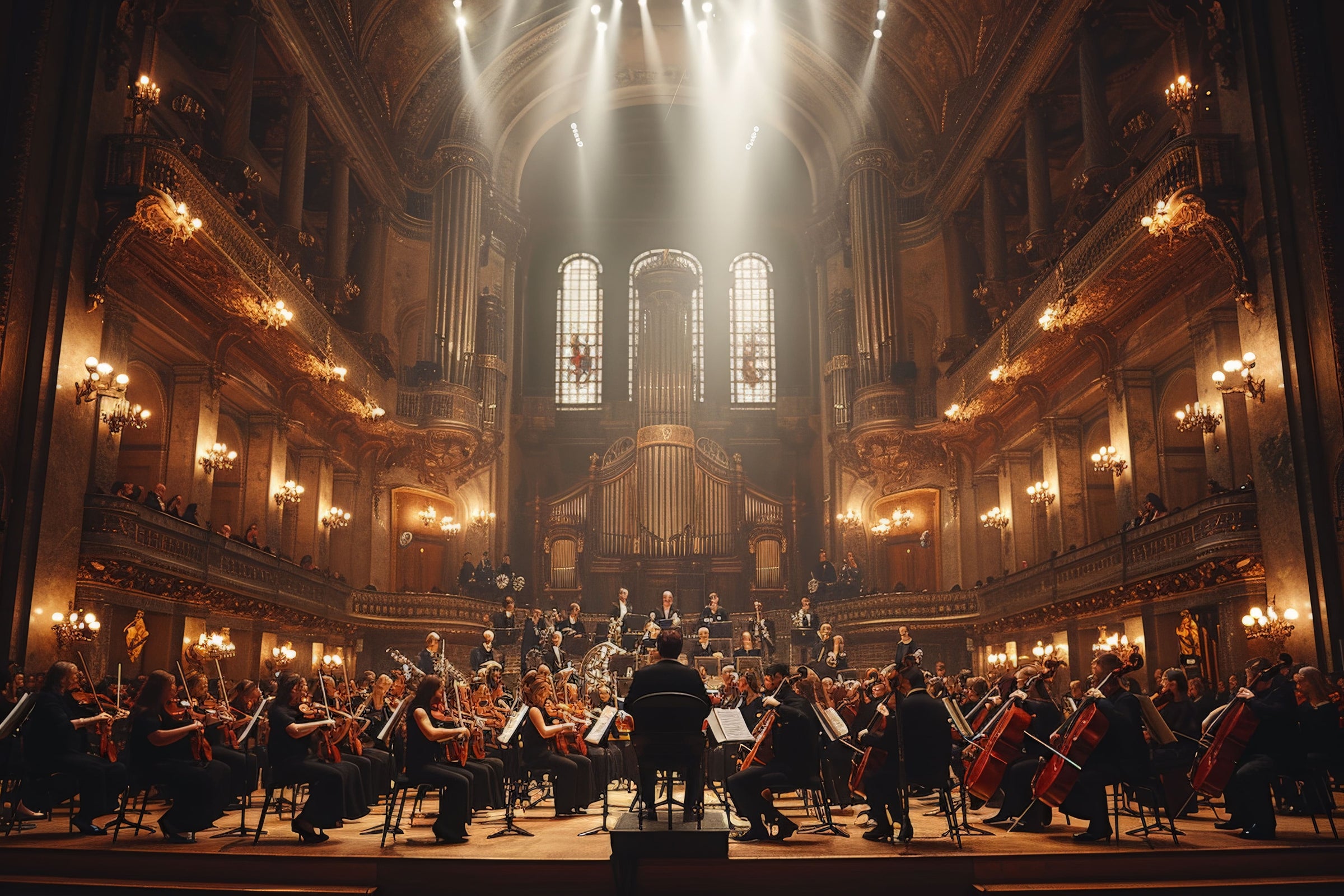
The Most Important
Music School in the World
Has No Building
75 faculty already teaching. 14 time zones. This week it opened 109 more teaching studios in a single day — and not one of them is a chair to compete for.
109
Studios opened
In a single day
No cap
On how many are hired
Ten great trumpeters? All ten.
16
Instruments & traditions
Sitar and kora to flamenco guitar
24 hrs
To an answer
Then a decision in 2–3 weeks
The whole idea, in one sentence
Anyone can study with anyone,
anywhere, at any time.
Every barrier in five hundred years of music education is one of those four words being false. This is the first institution for which all four are true at once.
Anyone
can teach
No slot to win. If ten outstanding trumpet teachers meet the standard, all ten get studios — an online studio has no chair to lose.
Anyone
can study
Age three to artist diploma, absolute beginner to pre-professional, and the adults the old system quietly abandoned.
Anywhere
on earth
No relocation, no visa, no dorm, no six-figure city. Faculty teach from where they perform; students learn from where they live.
Any time
that suits you
Faculty publish their own hours in their own time zone; every calendar renders in the student’s. Dawn ragas or Sunday nights.
There are years when the future arrives politely, and years when it kicks the door in. For music education, 2026 is the second kind — and almost nobody has noticed where the door actually broke.
It did not break in Boston, where the Symphony fired the best conductor in America and its musicians declared there was no path to rebuilding trust. Not in San Francisco — no music director, no money, a $200 million hole. Not at the Kennedy Center, closing for two years. Not in San Antonio, which simply ceased to exist. Those were the sounds of the old world failing — loud, and unsurprising to anyone who had read the balance sheets.
The door broke somewhere much quieter. This week, a conservatory with no building, no campus, and no city posted 109 faculty positions in a single day — the largest open hiring call any music school on earth has made this year. Every position remote. Every position live, one-on-one, human. Every application read by faculty — never an algorithm — acknowledged within twenty-four hours and decided in two to three weeks.
It is called The Global Conservatory. And here is the claim this article intends to earn, not assert: it is the most important school in the world right now — and the only one built for the next thousand years.
Disclosure, up front rather than buried: The Global Conservatory runs its hiring on Cadenza, and the two are sister companies. Read everything below with that in mind — and check it. Every figure here is sourced to the school's own published pages, its faculty contract, or this newsroom's earlier reporting, and all of it is linked at the foot of the piece. Where the school has not published a number, this article says so rather than estimating.
For five hundred years, the map of who got to become a musician
was mostly a map of who was born near a door.
The Campus Is the Faculty
Rotterdam. London. Mumbai. Hong Kong. Los Angeles. St Petersburg. Boston. The school's 75 faculty teach from the cities they perform in — principal players, opera coaches, conservatory professors, and tradition-bearers who never had to choose between the stage and the studio. A few of them:
Faculty trained at, and performing with
Manhattan School of Music
Berklee College of Music
Royal Concertgebouw Orchestra
Boston University
Sibelius Academy
Lucerne University of Music
The distinction that matters: at a physical conservatory, you study with whoever from this list happens to live in that city. Here, you study with the one whose pedagogy fits you — wherever they live.
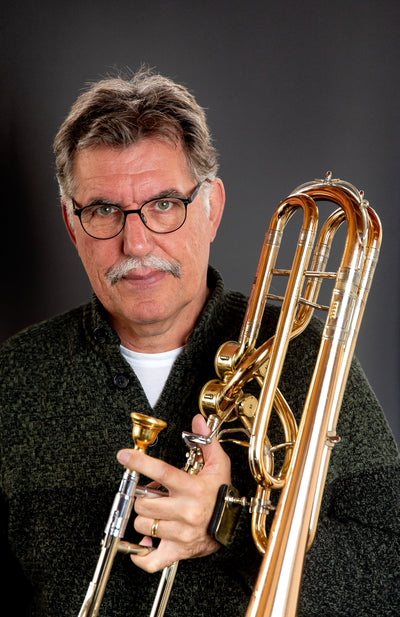
Ben van Dijk
Brass
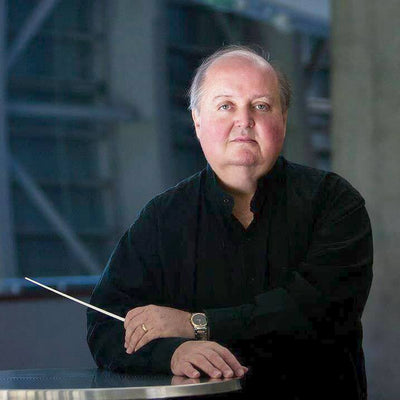
Edward Carroll
Trumpet · Rotterdam
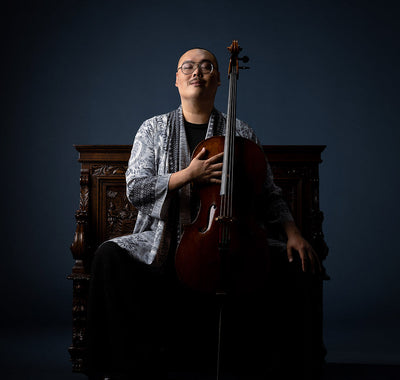
Daniel Hamin Go
Cello · London
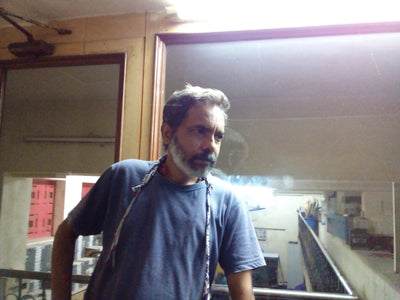
Dhrubajyoti Bhadury
Indian Classical · Mumbai
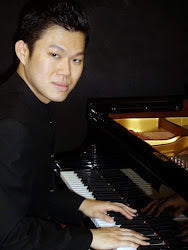
Shuenda Wong
Piano · Hong Kong
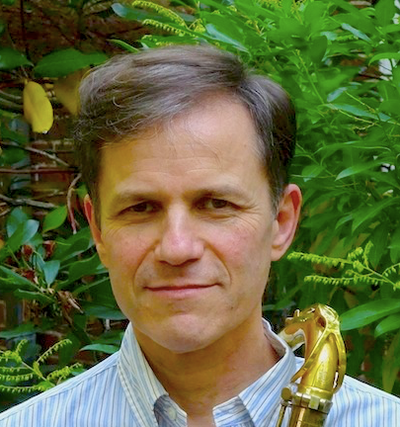
Jeff Harrington
Woodwinds · Los Angeles
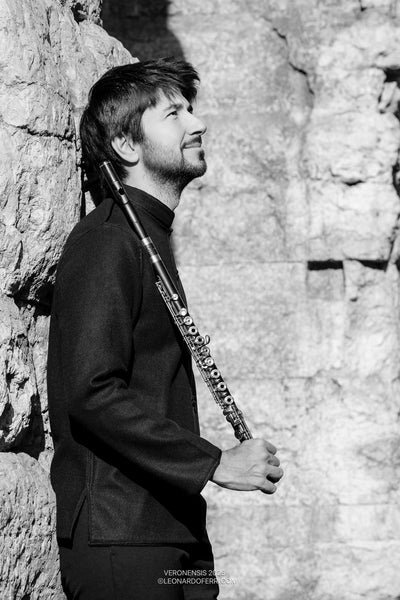
Tommaso Benciolini
Woodwinds · St Petersburg
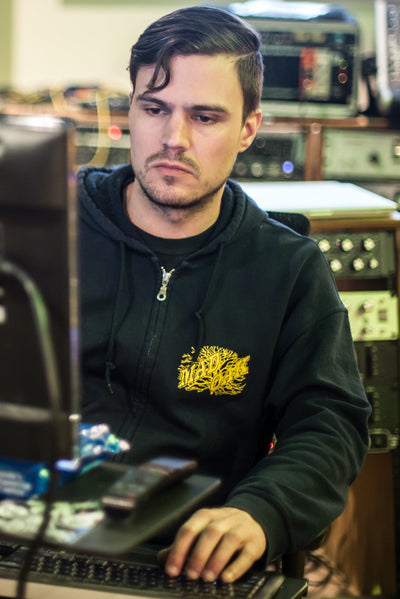
Benny Grotto
World Instruments · Boston

Aslıhan Sarıkoski
World Instruments
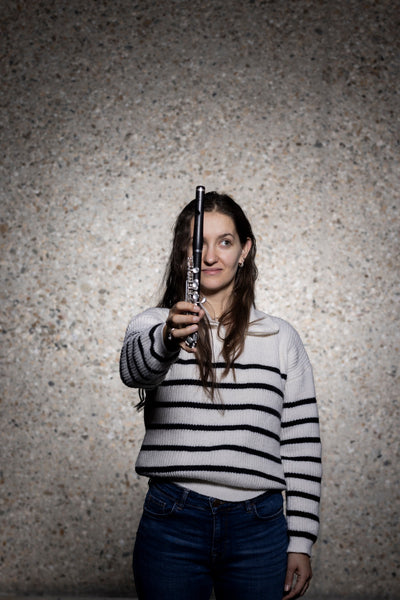
Beatriz da Silva Baião
Woodwinds
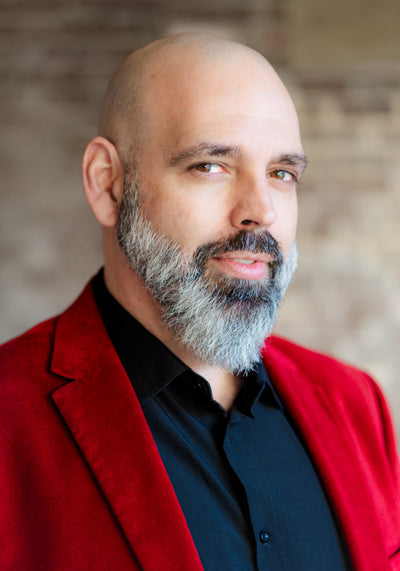
Dimitri Pittas
Voice
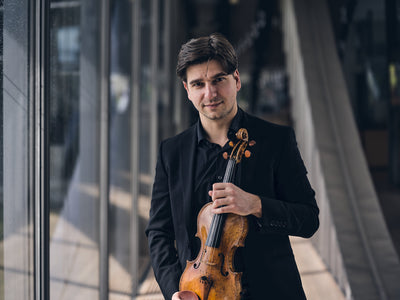
Vlad Stanculeasa
Violin
The Crisis Ledger
Before you can see why this school matters, look — really look — at the machine it replaces. Not with nostalgia. With arithmetic.
The student's ledger. A music degree at a top American conservatory now costs up to $355,000 over four years — this newsroom published the full table. To pay it, a student moves to one of perhaps ten cities and borrows against a future the industry can no longer promise. Acceptance rates under ten percent sound like selectivity — until you realize what is actually being selected: not the most talented ten percent, but the most talented among those who could afford to stand in front of the door. The audition filters talent. The geography filters everything else first.
The teacher's ledger. The finest teachers alive are mostly not professors — they are principal players, opera coaches, touring soloists, tradition-bearers. The old model offers them a brutal choice: abandon the career that made them great in order to teach, or don't teach at all. Most choose the stage. Every year, thousands of the best musicians on earth teach nobody — not for lack of desire, but because no institution was shaped to fit an actual musician's life.
The art form's ledger. The greatest violin teacher for some eleven-year-old in Ulaanbaatar has existed in every generation — and in every generation until this one, they never met. Multiply the misses by every instrument, every tradition, every century since Naples, and you are looking at the largest silent catastrophe in the history of the art: the unheard music of geography. Nobody mourns it, because nobody ever heard what was lost.
$355K
Juilliard, four years
Total cost of attendance, all-in
$14,067
Median earnings
One year after graduating (US Dept. of Education)
<10%
Acceptance rate
After geography has already filtered everyone else
1537
Naples opens
Geography becomes the filter — for 500 years
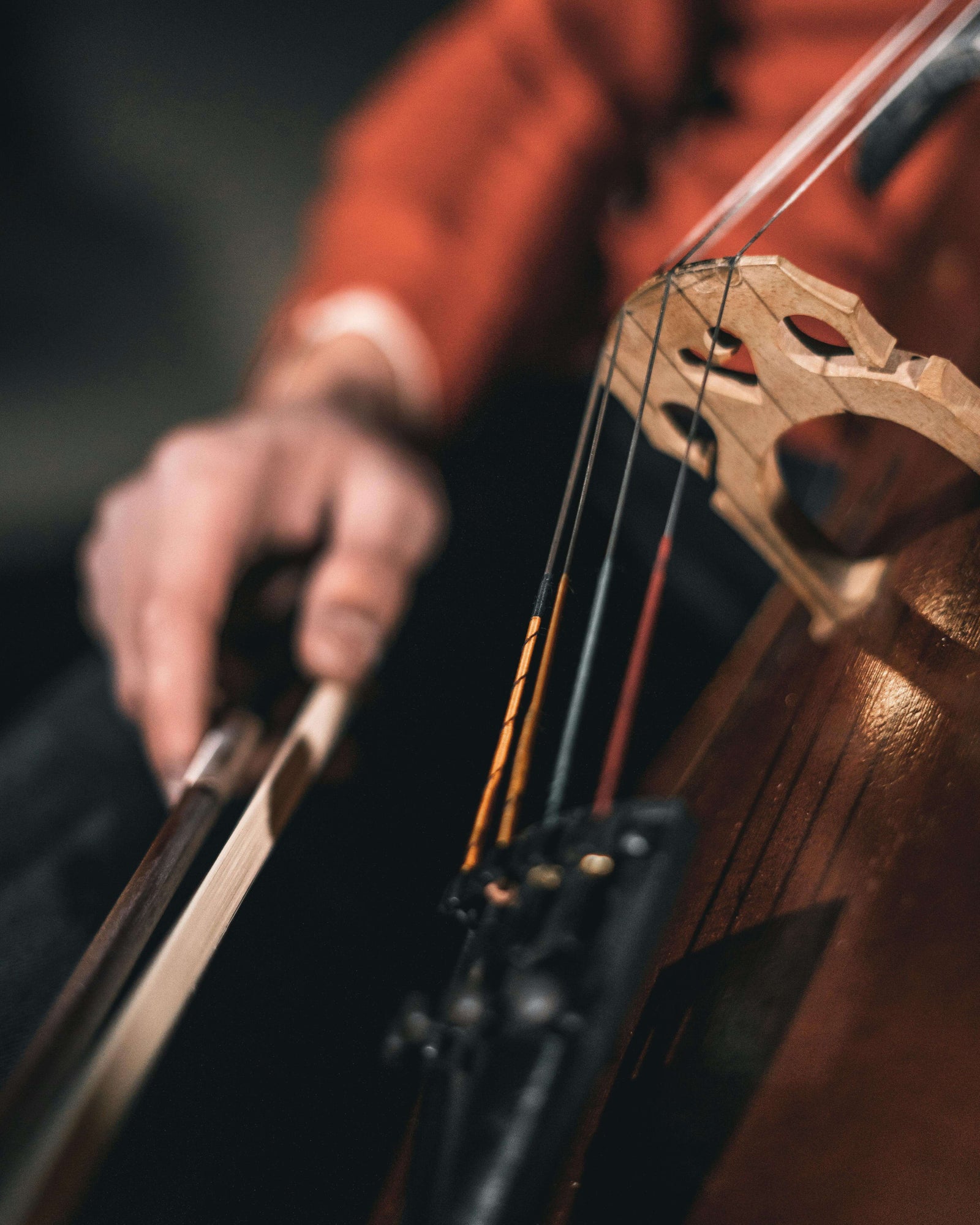
What cannot be recorded
This bow arm. This vowel. This breath.
Yours — watched, in real time, by someone who knows.
This Is Not One Job. It Is an Open Door.
Here is the part that breaks every assumption a professional musician has been trained to hold, and it needs stating plainly: 109 positions does not mean 109 people will be hired.
Every position is a studio, not a chair. If ten outstanding trumpet teachers apply, ten outstanding trumpet teachers can be accepted — because a student in Seoul booking a lesson does not consume the slot of a student in Lisbon. The constraint that governs every orchestra audition and every faculty search on earth — one opening, one winner, everyone else goes home — does not exist here. There is no chair to lose.
Think about what that means for the profession. An orchestral audition is a tournament: hundreds prepare for months, one is hired, and the other hundreds walk away with nothing but the preparation. A university faculty search runs six to twelve months, produces exactly one tenure line, and then closes for a decade. Both systems are built on scarcity that is physical — one podium, one office, one room.
An online studio has no such scarcity. The only ceiling is the number of teachers who meet the bar, and the school's stated aim is to find as many of them as exist. You are not competing against the other applicants. You are being measured against the standard.
Who actually gets in
Conservatory student acceptance rates from our degree investigation; TGC faculty admission is standards-based, not slot-limited.
Curtis Institute (students)
4.6%
Tuition-free — and the hardest door in music
Top US conservatories (students)
<10%
After geography has already filtered the applicant pool
Orchestral audition (one chair)
1 hired
Hundreds prepare for months; one is engaged
University faculty search
1 line
Six to twelve months, then closed for years
TGC faculty
No cap
Ten great trumpet teachers? All ten can teach here.
How long you wait for an answer
University faculty search
6–12 months
Committee cycles, campus visits, budget approvals
Orchestral audition cycle
3–9 months
Application, prescreen, rounds, decision
The Global Conservatory
2–3 weeks
Acknowledged in 24 hours. Read by the Artistic Director and Executive Board — no automated filtering.
Teach anyone, anywhere, at any time — here is what that means in practice
You keep your career
No relocation, no exclusivity, no resignation letter. Principal players, touring soloists, and opera coaches teach here around full seasons.
You set the price
Faculty publish their own rates — from ~$50 to $400+ per lesson. The school does not set your value; the market and your standing do.
You set the hours
Your calendar, your time zone, your days. Teach dawn ragas or Sunday evenings. Students book inside the windows you open — and only those.
You design your own classes
Not just private lessons: build your own group class, your own full-term studio cohort with its own curriculum and final recital, your own ticketed masterclass series. You decide what it is and what it costs.
Students come to you
Admissions matches by level, goals, language, and time zone — then guarantees the match. No marketing yourself, no chasing leads.
Four ways to earn
Private lessons, group classes, full-term studio cohorts, and ticketed masterclasses — each compensated separately. Run one or all four.
Nothing administrative
Scheduling, payments, lesson notes, calendar invites, recordings, safeguarding — handled. You teach; the platform does the rest.
You are not competing against the other applicants.
You are being measured against the standard.
And what the student gets from the same arrangement
The open door cuts both ways. Because studios are not slot-limited, a student is never told the teacher they want is “full this year” — the phrase that ends more musical educations than any audition ever has. And because the faculty pool is the whole earth rather than one city, the match can be made on pedagogy instead of proximity.
You pick the teacher
Not a rotating roster, not whoever is assigned. You browse profiles, watch sample teaching, and choose — then build a relationship with that one person.
Your city stops mattering
No move, no visa, no dorm. A student in Lagos and a student in Boston sit in the same faculty studio, at the standard of a major conservatory.
Your schedule, translated
Every calendar renders in your own time zone, daylight saving handled. A Tokyo teacher and a New York student see the same slot correctly.
Hand-matched in 24 hours
Admissions pairs you by level, goals, language, and time zone — under a stated first-match guarantee. You are never auto-assigned to whoever happens to be free.
No six-figure gamble
Pay per lesson. Study for a term or a decade. Nobody borrows $355,000 to find out whether the teacher was right for them.
Every level, every age
Age three through artist diploma, plus adults returning after decades away — the group the old system quietly abandoned entirely.
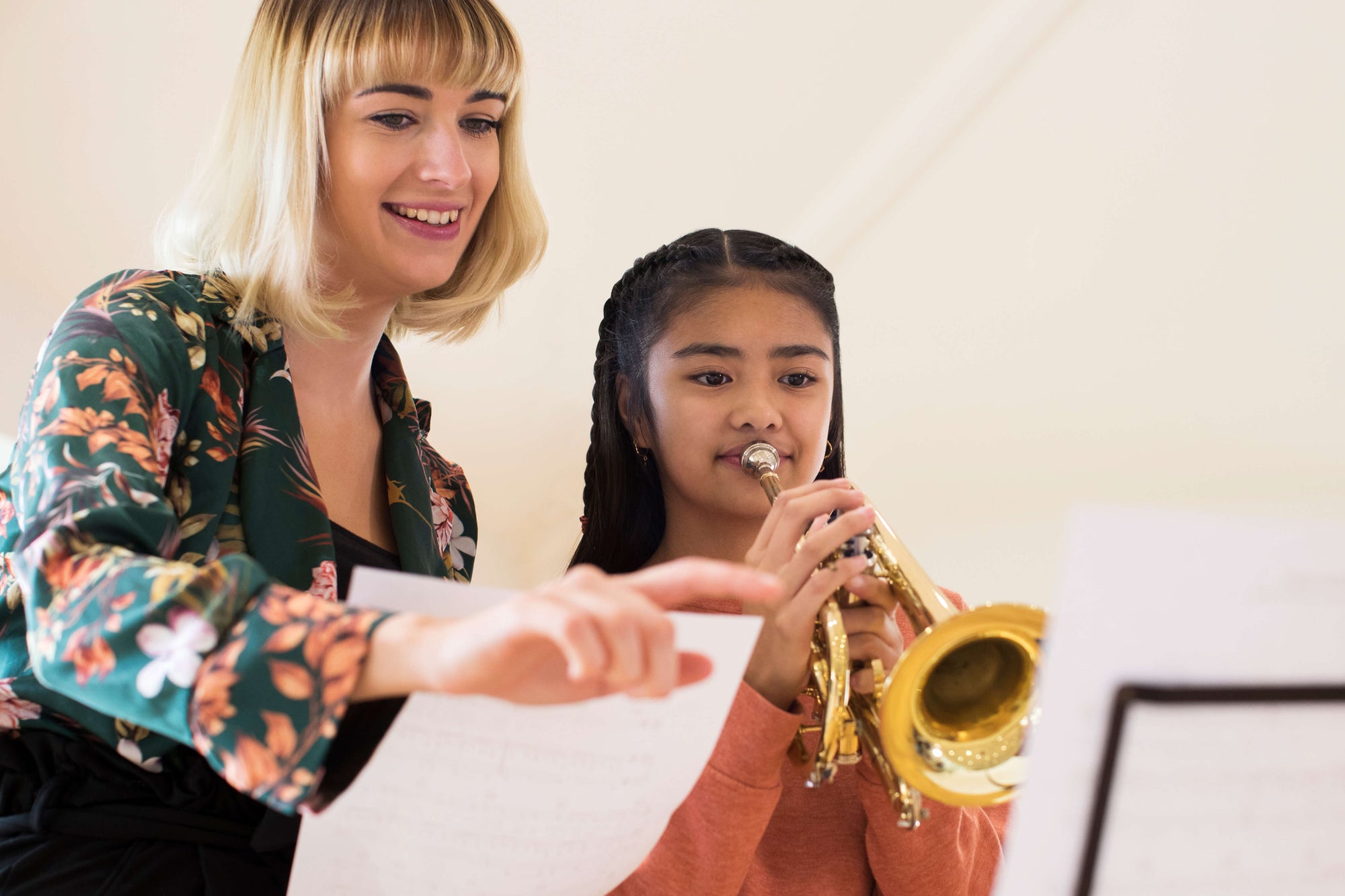
The entire product
One teacher. One student. One correction that lands.
Everything else in this article is logistics.
Your Rate. Your Hours. Your Studio.
At almost every institution a musician has ever taught for, someone else decided what an hour of their expertise was worth — a salary band, a contact-hour rate, a fee schedule written by people who do not play.
Here the faculty member sets the number. You publish your own rate, and you take home the full amount you set. The school's framing to its faculty is three possessives long: your rate, your schedule, your offerings. Teachers are never pooled into shared time slots, and students are never auto-assigned to whoever happens to be free — a student books the person they chose, in a window that person opened.
Payment lands after each completed lesson, in local currency, in more than 130 countries. The specifics — terms, timing, the agreement itself — are set out plainly when you apply, which is the appropriate place for them.
The four formats, with their real numbers
| Format | Length | What it is | Cohort |
|---|---|---|---|
| Private lesson | 30 / 60 / 90 / 120 min | Your repertoire, your student | One student, pay per lesson |
| Group class | 45–90 min | Open enrolment, your topic | 4 to 40+, drop-in weekly |
| Studio class | 1–2 hrs weekly, full term | Your curriculum, final recital | Fixed roster, Sep–Dec or Jan–May |
| Masterclass | 60–120 min | You coach; an audience learns | 3–6 perform, 20+ observe |
Run one format or all four. A principal player can teach six private students and one term-long studio class. A sync agent can run a monthly masterclass and nothing else. The school's own faculty-facing framing is three possessives long: your rate, your schedule, your offerings — and it is explicit that teachers are never pooled into shared slots and students are never auto-assigned to whoever happens to be free.
Nobody sets the value of your hour but you.
That has not been true in this profession for a century.
No Cap on How Many. A Bar Everyone Clears.
An obvious objection arrives here, and it is the right one to make: if there is no limit on how many faculty are accepted, what stops this becoming the very marketplace it criticizes — the search box full of strangers?
The answer is published, in the school's own words: “We do not auto-list teachers. Every faculty member earns their place by meeting a clear standard of artistry, pedagogy, and professional reliability.” Applications are read by the Artistic Director and the Executive Board. There is no automated filtering. Referrals are welcome and confer no advantage.
Artistic standing
A conservatory or institutional position, a principal-level orchestral seat, a recognised performance career — or equivalent standing in your industry.
Pedagogical evidence
Teaching samples, recorded or live. A written description of how you would approach representative students. References from current or former students.
Professional engagement
For the Music Business division: active industry practice. Across all divisions: reliability, communication, and the conduct a student is entitled to expect.
And unlike a tenure decision, admission is not the end of the assessment. The roster is maintained: annual reviews of introduction videos, lesson notes submitted after every session, student re-booking rates, anonymised feedback, and curriculum coherence for multi-lesson programmes. Faculty obligations are written into the contract — be on time and prepared, keep a working camera and microphone, keep your availability current, reply to students within 48 hours, and give every lesson a clear focus, actionable feedback, and next steps.
That combination is the actual innovation, and it is worth stating precisely: there is no cap on how many are admitted, and no lowering of what they must clear. The two have always been bundled together because a building can only hold so many people. Remove the building and they come apart — which means, for the first time, a standard can be absolute rather than comparative. You are not ranked against the other applicants. You either meet it or you do not.
Why Nothing Else Is This
The moment you say “online music school,” three categories of existing things claim the title. Each deserves to be dismantled by name.
The marketplaces
Lessonface · Preply · Outschool
Anyone can sign up to teach. That single fact is the entire analysis: no vetting, no curriculum, no institution — a search box full of strangers, with star ratings doing the job an audition committee should do. They are to a conservatory what a parking lot full of cars is to a railway: technically transportation.
The content apps
MasterClass · YouTube · course platforms
Watching Itzhak Perlman describe violin playing is inspiring the way watching a documentary about swimming is inspiring: you will still drown. Music is embodied craft, transmitted through correction — this bow arm, this vowel, this breath, yours, observed in real time. Pre-recorded content cannot hear you.
The buildings
Juilliard · Curtis · the great houses
Not frauds — ancestors. But the building imposes everything: you must move, you choose from one city’s faculty pool, you pay six figures for proximity, and the institution sits exposed to every force 2026 demonstrated. Naples gathered teachers into a building in 1537 because there was no other way to put a master and a student in the same room. Now there is. The building was never the point — it was a constraint dressed up as a tradition.
The verdict, row by row
| Marketplaces | Physical conservatory | The Global Conservatory | |
|---|---|---|---|
| Who teaches | Anyone who signs up | One city’s faculty pool | Vetted worldwide — pedagogy and performance |
| The lesson | Unvetted, one-off | Live — but you moved for it | Live, 1-on-1, from anywhere |
| Cost to the student | Low — and priced accordingly | $226K–$355K + relocation | Per lesson — no relocation, no debt, no four-year bet |
| Cost to the teacher | Race to the bottom | Abandon the career to teach | Keep the career; paid every lesson; set your own rates |
| Curriculum | None | Deep, geographically locked | Private · group · term cohorts · masterclasses |
| Traditions taught | Whatever shows up | The Western canon | The canon + 16 world instruments and traditions, by lineage-bearers |
| Who gets in | Anyone with a card | <10% — after geography filters | Faculty-matched, decided in weeks, hand-matched in 24 hours |
| What can kill it | Investor patience | Endowments · boards · cities · pandemics | Not geography — the failure mode that closed the others |
What four years costs the student
Sticker prices from our degree investigation. TGC students pay per lesson, so there is no four-year figure to compare — which is itself the point.
Juilliard — all-in
$355,000
Tuition, room, board, fees, New York City
Eastman School of Music
$276,000
Plus relocation to Rochester
Oberlin Conservatory
$259,000
New England Conservatory
$243,000
Plus Boston rent
German state conservatory
~€1,200
Plus relocation to Germany — and fluent German
The Global Conservatory
Per lesson
No tuition, no relocation, no six-figure commitment before you know it fits
What the teacher gives up to teach
Tenure-track professorship
Everything
Relocate, resign the touring career, one city for a decade
Visiting/adjunct appointment
Most of it
Commute, low pay per contact hour, no security
The Global Conservatory
Nothing
Keep your chair, your city, your students, your calendar
The same numbers, in full
Sticker prices from our degree investigation.
| Eastman School of Music | $276,000 | plus relocation to Rochester |
| Oberlin Conservatory | $259,000 | plus relocation to Ohio |
| New England Conservatory | $243,000 | plus Boston rent |
| Juilliard — all-in | $355,000 | plus New York City |
| German state conservatory | ~€1,200 | plus relocation, in German |
| The Global Conservatory | Per lesson | No relocation · no debt · leave any time |
A salary is what you pay someone to be owned.
This school does not buy musicians — it hosts them.
How It Actually Works
Private
1-on-1, your repertoire
30–120 min, pay per lesson. The spine of everything.
Group
Drop-in classes
From $15 — theory, ear training, songwriter’s circle.
Studio
A real cohort
Same students, full term, recital at the end.
Masterclass
Perform or observe
The centuries-old public format, two ticket tiers.
The faculty sets everything. Their hours, on their own calendars, in their own time zones. Their rates. Their formats. A principal player teaches twelve students around a full season; a gharana master teaches at dawn, because dawn is when ragas are taught. They are paid for every lesson they teach. The platform handles everything that isn't teaching: scheduling, payments, notes, safeguarding. The operating principle is one sentence: your studio, your rules, our rails.
Students are matched, not marketed to. A written enquiry, a free thirty-minute consultation, a live audition held to studio standards, a human decision in weeks, not months — then a hand-matched pairing within 24 hours, under a stated first-match guarantee. From age three in the Young Musicians Academy to pre-professionals drilling excerpts with musicians who currently sit in the sections they're auditioning for.
And the door is wider than the Western canon — structurally. The 109 positions include dedicated professorships for sitar, tabla, Hindustani and Carnatic voice, oud, qanun, ney, guzheng, pipa, erhu, koto, kora, West African drumming, Latin percussion, Celtic fiddle, and flamenco guitar — with identical standing and identical application depth as violin and piano. The central question those applications ask has never been asked by a conservatory at scale: tell us about the lineage through which this tradition reached you.
Forty thousand years of transmission
Every musician alive was taught by someone who was taught by someone.
That chain has never once been broken. It just got wider.
The Thousand-Year Argument
Step back far enough and the question stops being about 2026 at all.
Music is among the oldest continuous practices our species possesses, and for all of recorded history it has survived by exactly one mechanism: a person who knows, sitting with a person who wants to know. The notation came later. The institutions came later. The recordings are barely a century old. The transmission — hand to hand, ear to ear — is the whole unbroken chain, from whoever first taught another human a song to the lesson happening on some screen right now.
Every great music institution in history protected that chain by accepting the same compromise: geography as the filter. The Global Conservatory is the first in that five-hundred-year lineage to remove the filter entirely — while keeping the mechanism sacred. Not recordings instead of teachers. Not software instead of relationship. The same ancient thing, with the accident of location finally deleted from the equation.
And the chain it protects is wider than any conservatory has attempted: the gharanas of Hindustani music, the griot families of the kora, the Ottoman makam lineages — transmission chains older than the conservatory itself, most carried by a dwindling number of masters whose students were, until this year, whoever lived nearby. Posting those chairs with full standing is not inclusion. It is continuity engineering for musical traditions at the scale of the species.
Now apply the thousand-year test — the only test that matters for institutions: what does it depend on that can be taken away? Buildings burn. Endowments crash. Boards go to war with their own artists. States defund. 2026 demonstrated half the list, in public, with press releases. An institution whose body is its faculty and whose campus is the network depends on exactly two things: that great musicians exist, and that people want to learn. Those are the two safest bets our species offers.
It is not competing with Juilliard and Curtis.
It is competing with the printing press.
Five hundred years
Somewhere, in every generation, the right teacher existed.
And the student never reached them.
The Gate Was Never About Talent
Every institution in this story — Naples, Paris, Vienna, St Petersburg, New York — was built by people who loved music and wanted to protect it. None of them set out to build a gate. But a building is a gate whether you intend it or not, and for five centuries the same three questions decided who was allowed to become a musician, none of which had anything to do with playing.
Were you born near the door? The greatest teachers clustered in ten cities. If your talent appeared in Ulaanbaatar, Lagos, Reykjavík, or a farm town four hours from any conservatory, the answer was no, and the answer was final.
Could your family pay to get you there? Thirteen years of lessons before the audition. Summer programs. A decent instrument. Competition fees. By the time a child stood in front of a panel, their family had already spent between $60,000 and $200,000. The system measured the ability to pay long before it measured the ability to play.
Did the tradition you carry count? If you were a Hindustani vocalist, a kora player, an oud master — the answer, at nearly every great conservatory on earth, was that your music was ethnography rather than repertoire. Lineages older than the conservatory system itself were studied but not taught, admired but not funded, catalogued but not continued.
Three filters, none of them musical, applied for five hundred years to every generation of human beings. Nobody can calculate what that cost, because the cost is invisible by definition: we have no idea how many of the greatest musicians who ever lived simply never met a teacher. They were born, they had the gift, no door was near them, and the world never heard it. That is the real history of classical music, and it has never once been written down.
What is happening now is not the gate opening wider. Widening a gate is a scholarship program, an outreach initiative, a diversity fellowship — all good, all still a gate. What is happening is that the gate is being removed, because the wall it was set into turned out to be made of geography, and geography stopped being a wall.
A conservatory whose campus is the network cannot filter by birthplace, because it has no place. It cannot filter by wealth in the old way, because there is no relocation and no six-figure entry fee — you pay for a lesson, one lesson at a time. And it cannot filter by tradition, because it has already posted the sitar chair and the kora chair beside the violin chair, at the same standing, asking each applicant the same question: through whom did this reach you?
For the first time since 1537, a child's musical future is not decided by a map. That is not a product improvement. That is the end of a five-hundred-year accident — and everyone reading this is alive at the exact moment it happens.
The gate was never about talent.
It was about distance. And distance is over.
The Honest Part
Two things The Global Conservatory does not claim — and in an industry drowning in inflated promises, the restraint is itself a credential. It does not award degrees: the BM, MM, and DMA pathways are in development, subject to accreditation review, and the school says so in plain text on its front page, unprompted. And it does not promise placement: its career programming is labeled preparation, never guarantee. A school that underclaims, in 2026, is news all by itself.
Transparency requires more than the disclosure at the top, so here is what this article cannot tell you.
Every number in this piece is supply-side. 109 studios, 75 faculty, 16 instruments and traditions, no cap on how many are hired. The school has not published enrolment figures, lessons delivered, or how many students a new faculty member can expect — and this article will not estimate them. If you are a principal player weighing whether a studio here would fill, that is the question to put to admissions directly, and their answer is worth more than anything written here. A conservatory in its founding season is a bet on demand that has not yet been proven in public.
And nobody speaks in this article. Twelve faculty appear as photographs; none of them are quoted, no student is quoted, and no outside voice — a conservatory dean, a critic — was given the chance to rebut. That is a real limitation of this piece, not a stylistic choice, and a reader is entitled to weigh it. The argument here rests on published documents and verifiable numbers; it does not rest on testimony, because none was gathered in time.
What is left is checkable, and that is the standard this article asks to be held to. Judge the machine by the machine.
The Door Is Open This Morning
For teachers
109 positions — every instrument, every voice type, jazz, sixteen world instruments and traditions, conducting, pedagogy, music business, wellness, technology, and the 2027 founding cohorts for Ballet and Drama. The application takes 10–15 minutes: a résumé, a performance video, your weekly availability. Acknowledged in 24 hours; decided in two to three weeks.
For students & parents
Enquiries open year-round: a free 30-minute admissions consultation, matched to your level, instrument, and goals — from age three to artist diploma, in whatever time zone you happen to live in.
The Numbers
Faculty positions posted in one day
109
every instrument, every tradition
Four years at Juilliard, all-in
$355,000
median earnings one year out: $14,067
Relocations required to study at TGC
0
from anywhere on earth, in your own time zone
cadenza.work/organization/the-global-conservatory
Every door, in one place
Verified links, July 2026. Nothing in this article is behind a form.
Apply to teach
See the faculty
Check the claims
The numbers behind this piece
Sources: The Global Conservatory (theglobalconservatory.com) — faculty roster, division structure, four teaching formats, admissions process, accreditation disclosure. Live position data from Cadenza (cadenza.work/organization/the-global-conservatory), verified 20 July 2026. Tuition and earnings figures from the U.S. Department of Education College Scorecard, compiled in our own investigation, The Real Cost of a Music Degree. Institutional crisis reporting from this newsroom's 2026 coverage of the Boston Symphony, San Francisco Symphony, Kennedy Center, and San Antonio Philharmonic. Disclosure: The Global Conservatory and Cadenza are sister companies.
Comments
Sign in to join the discussion.